Carlo Rustichelli, 1916-2004
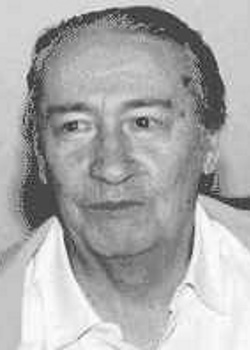 Composer Carlo Rustichelli died in Rome, Italy, on November 13, 2004, at the age of 87.
One of the most prolific and versatile composers in Italian cinema, Rustichelli wrote music for more than 250 films during a career spanning some five decades, working in virtually every genre from neorealist drama and comedy to horror, historical epics and spaghetti westerns.
Rustichelli was born in Carpi, near Modena, on December 24, 1916, into a musical family. He studied piano in Bologna before continuing his training in composition at Rome’s Santa Cecilia Academy, initially working in opera and theatre. He entered the film industry during the 1940s, but cinema became the focus of his career after meeting director Pietro Germi, beginning a collaboration that would last more than 25 years.
Their first significant collaboration was Lost Youth in 1947, followed by In the Name of the Law (1949) and The Path of Hope (1950). Rustichelli subsequently scored almost every major Germi film, including The Railroad Man (1956), A Man of Straw (1958), The Facts of Murder (1959), Divorce Italian Style (1961), Seduced and Abandoned (1964), The Birds, the Bees and the Italians (1966), and Alfredo, Alfredo (1972). His music became an essential part of Germi’s cinema, equally comfortable with intimate drama, Sicilian folk influences, sentiment and biting comic irony.
Divorce Italian Style, starring Marcello Mastroianni, was perhaps their most internationally famous collaboration. Rustichelli’s witty, deliberately exaggerated music perfectly complemented Germi’s savage satire of Sicilian morality and helped establish the composer’s reputation outside Italy. His gentler dramatic writing was equally effective, and A Man of Straw earned him his first Nastro d’Argento for Best Music in 1959.
The early 1960s were among Rustichelli’s busiest years. He scored Nanni Loy’s powerful wartime drama The Four Days of Naples (1962), Florestano Vancini’s The Long Night of ’43 (1960), Bernardo Bertolucci’s debut La commare secca (1962), and worked with Pier Paolo Pasolini on Accattone, Mamma Roma, Ro.Go.Pa.G. and The Gospel According to St. Matthew. His ability to draw on folk music, classical traditions and immediately memorable melodies made him exceptionally adaptable to the rapidly changing Italian cinema of the period.
Rustichelli also made an important contribution to Italian genre filmmaking. Under pseudonyms he scored several of Mario Bava’s horror films, including The Whip and the Body (1963), Blood and Black Lace (1964) and Kill, Baby… Kill! (1966), bringing atmospheric orchestral writing and darker musical colors to Bava’s stylized imagery. He also wrote extensively for historical adventures and westerns, including the comic western Ace High (1968).
One of his most enduring successes came with Mario Monicelli’s medieval comedy L’armata Brancaleone (1966). Its boisterous mock-medieval march became enormously popular in Italy and remains perhaps Rustichelli’s most instantly recognizable piece. The score earned him a second Nastro d’Argento in 1967.
His reputation eventually brought international assignments, including The Secret War of Harry Frigg (1968), starring Paul Newman, and Billy Wilder’s bittersweet romantic comedy Avanti! (1972), starring Jack Lemmon. Rustichelli continued composing for film and television throughout the 1970s and 1980s, although illness gradually reduced his output during his later years.
Rustichelli is survived by his wife Evi, his daughter Alida Chelli, a singer and actress, and his son Paolo, who also became a composer.

Shop at the Movie Music UK Store

Member of the


