Albert Glasser, 1916-1998
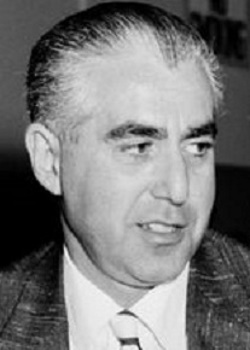 Composer, conductor and arranger Albert Glasser died in Los Angeles on May 4, 1998, at the age of 82, following a heart attack.
One of the most prolific composers in American low-budget cinema, Glasser wrote music for well over 100 films and became particularly associated with the science-fiction and horror pictures of the 1950s. His scores for The Amazing Colossal Man, The Cyclops, Beginning of the End, Earth vs. the Spider and Attack of the Puppet People helped define the sound of an entire era of B-movie filmmaking.
Albert Glasser was born in Chicago on January 25, 1916, the son of Latvian immigrants. He took up the flute as a youngster and developed an enthusiasm for orchestral music, especially Wagner and Richard Strauss. At 18 he received a scholarship to study composition and orchestration at the University of Southern California, and in 1935 joined Warner Bros. as a music copyist. There he encountered the work of Max Steiner, Erich Wolfgang Korngold and Hugo Friedhofer at close range, an invaluable practical education in the techniques of Hollywood scoring.
After further work as an orchestrator and arranger, Glasser received his first credited feature assignment with the Poverty Row horror film The Monster Maker in 1944. He subsequently wrote for westerns, crime pictures and adventure films, including several Cisco Kid features. His music for those films was later adapted for the popular television series, while he also composed extensively for radio programs including Hopalong Cassidy, Tarzan and Clyde Beatty.
Glasser’s reputation is principally based on the extraordinary run of science-fiction films he scored during the 1950s. He orchestrated Ferde Grofé’s score for Rocketship X-M in 1950, an early landmark of the genre, before establishing a particularly fruitful relationship with producer-director Bert I. Gordon. Beginning with The Cyclops, Glasser scored Gordon’s Beginning of the End, The Amazing Colossal Man, Attack of the Puppet People, War of the Colossal Beast, and Earth vs. the Spider.
The tiny budgets and accelerated schedules of these films demanded speed and ingenuity. Glasser often had only a few hours to record an entire score, using small orchestras to create music that sounded considerably larger than the productions themselves. Forceful brass, pounding rhythms, dramatic string writing and occasional electronic effects gave giant insects, mutated humans and alien threats a weight and menace that their visual effects could not always provide.
Other notable genre scores included Indestructible Man, Monster from Green Hell, The Neanderthal Man and Giant from the Unknown, while Glasser also worked with Roger Corman on Teen-Age Caveman and scored Edgar G. Ulmer’s Murder Is My Beat. His output was astonishing: between 1944 and 1962 alone he received credit on approximately 135 films, with several dozen more reportedly completed without screen credit.
As the traditional B-movie market declined during the 1960s, Glasser’s feature assignments became less frequent, although he continued arranging and occasionally composing. His work was rediscovered by science-fiction enthusiasts in the 1970s, particularly through the album The Fantastic Film World of Albert Glasser, which helped establish his cult reputation. Away from music he was also an enthusiastic amateur radio operator, painter and writer.

Shop at the Movie Music UK Store

Member of the


