Archive
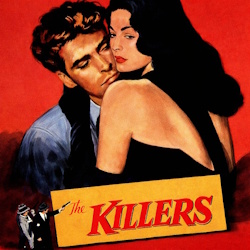
THE KILLERS – Miklós Rózsa
 GREATEST SCORES OF THE TWENTIETH CENTURY
Original Review by Craig Lysy
Successful producer Mark Hellinger decided to setup his own production company after departing Warner Brothers. He had recently paid Ernest Hemingway $36,750 for the film rights to his 1927 novel “The Killers,” which he intended to be his company’s inaugural effort. He would oversee production, Universal Pictures would manage distribution, Robert Siodmak would direct, and Anthony Veiller would write the screenplay. Hellinger assembled a fine cast, including Edmond O’Brien as Jim Reardon, Burt Lancaster in his acting debut as Pete Lund/Ole “Swede” Anderson, Ava Gardner as Kitty Collins, Albert Dekker as “Big Jim” Colfax, Jack Lambert as “Dum-Dum” Clarke, and Sam Levene as Lieutenant Sam Lubinsky. Read more…
JOHN WILLIAMS REVIEWS – 1960-1969
 In this latest installment of the new irregular series looking at the early career of some iconic composers, we switch to Hollywood to look at the work of John Williams.
Williams attended the University of California, Los Angeles, and studied privately with the Italian composer Mario Castelnuovo-Tedesco, before being drafted into the U.S. Air Force, where he conducted and arranged music for Air Force bands as part of his assignments. After his service, Williams moved back to New York, and studied both at the Juilliard School, and at the Eastman School of Music, while moonlighting as a jazz pianist.
After completing his studies, Williams worked in Hollywood, orchestrating and performing piano on film scores for composers such as Alfred Newman, Bernard Herrmann, Elmer Bernstein and Jerry Goldsmith. Williams made his film music composing debut in 1959 on the film Daddy-O at the age of 27 – credited as Johnny Williams – and these first reviews look at sixteen subsequent film scores Williams that wrote between 1960 and 1969.
Not included here are the multitude of episodic TV scores he wrote during the period for shows and anthology series like Alcoa Premier, Playhouse 90, M-Squad, Wagon Train, Impact, The Virginian, Lost in Space, The Time Tunnel, and Land of the Giants, and others. Nor am I including the two scores where Williams adapted music by other people: Valley of the Dolls (1967), where Williams worked with music by André Previn and Dory Previn and for which he received his first Oscar nomination for Best Adaptation Score of a Musical Picture, and Goodbye, Mr. Chips (1969), where Williams adapted music by Leslie Bricusse, and for which he earned his second nomination in the same category. Read more…

Shop at the Movie Music UK Store

Member of the

 MOVIE MUSIC UK