Archive
Michael Kamen, 1948-2003
 Composer Michael Kamen died on November 18, 2003 in London, England, after suffering a heart attack. He was 55.
Michael Arnold Kamen was born in New York in April 1948, where he attended The High School of Music and Art and the Juilliard School, where he specialized in composition and oboe performance. After being a part of the New York Rock & Roll Ensemble with fellow composer Mark Snow as a youth, Kamen moved to England in the 1970s and found work as ballet composer and as an arranger for pop and rock bands, notably for artists such as Kate Bush, David Bowie and Pink Floyd, for whom he arranged the album The Wall in 1979.
Having already dabbled in film music during the late 1970s, Kamen began embracing cinema fully in the early 1980s, writing the music for acclaimed films such as The Dead Zone and Brazil, and the TV mini-series Edge of Darkness, before cracking the Hollywood big-time with a trio of massively successful action scores between 1986 and 1989 – Highlander, Lethal Weapon and Die Hard. Read more…
Remembering Roy Budd, 1947-1993
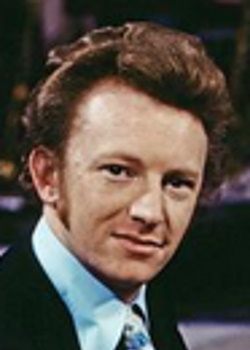 Composer Roy Budd died ten years ago today, on August 7, 1993, of a brain hemorrhage in hospital in London, UK. He was 46.
Roy Frederick Budd was born in London, England, in March 1947. A musical prodigy from a young age, Budd made his public debut on the piano at age six and was performing professionally by his teens. Deeply influenced by jazz legends such as Erroll Garner and Oscar Peterson, Budd quickly carved out a name for himself as a dynamic live performer, often appearing on British television and radio in the 1960s.
His entry into film scoring came in the late 1960s, but it was the 1971 crime thriller Get Carter that cemented his legacy, which he wrote when he was just 24 years old. The minimalist, percussive theme, composed and recorded in just a few days, went on become one of the most instantly recognizable pieces in British cinema history. Budd’s deft combination of jazz, funk, and moody atmospherics would become his signature, earning him further acclaim for scores to films such as Soldier Blue (1970), Fear Is the Key (1972), The Stone Killer (1973), The Marseille Contract (1974), Diamonds (1975), Paper Tiger (1975), Sinbad and the Eye of the Tiger (1977),The Wild Geese (1978), and The Sea Wolves (1980).
Over the course of his career, Budd scored more than 40 films, often working on films starring major British actors of the 1960s and 70s including Michael Caine, Richard Burton, and Roger Moore. In addition to his film work, he remained a passionate jazz performer, frequently recording albums and touring. Read more…
Ron Goodwin, 1925-2003
 Composer Ron Goodwin died on January 8, 2003, at his home near Reading, England. He was 77. Earlier that evening he had completed conducting a series of Christmas concerts with the Bournemouth Symphony Orchestra, and died in his sleep that night.
Ronald Alfred Goodwin was born in Plymouth, Devon, in February 1925, and raised in London . He studied trumpet and piano, eventually attending the Guildhall School of Music. After beginning his career in the 1940s as a music copyist and arranger for music publishers, he found early success orchestrating for dance bands and providing musical direction for celebrated vocalists such as Petula Clark and Jimmy Young, including the orchestration of Young’s hit “Too Young”.
Goodwin made his feature film debut in 1958 with Whirlpool, but it was in the following decade that he rose to prominence as a film composer. He became best known for his dynamic music for war and adventure films, notably 633 Squadron (1964), Where Eagles Dare (1968), and Battle of Britain (1969). His score for 633 Squadron, with its soaring main theme and martial energy, became a classic of the genre and remains one of his most widely recognized works, especially in the UK. Read more…
Remembering Georges Delerue, 1925-1992
 Composer Georges Delerue died ten years ago today, on March 20, 1992. He had a stroke, just hours after recording the last cue for the soundtrack to his last film, Rich in Love, and died two days later. He was 67.
Georges Henri Jean-Baptiste Delerue was born in Roubaix, France, in March 1925. A clarinet and piano player as a child, Delerue attended the Turgot Institute, the Roubaix conservatory, and the Conservatoire de Paris, where he studied composition with Darius Milhaud and Henri Büsser. His friends there included Maurice Jarre and Pierre Boulez, and together the three of them would make often make money on the side performing jazz in piano bars near the Paris Opera House.
He began writing stage music during the late 1940s, for the Théâtre National Populaire, the Comédie-Française, and the Théâtre Babylone, before being hired to direct the orchestra of the Club d’Essai for French National Radio and Television. His work for FRNT led directly to him scoring his first major project, television drama, Princes du Sang, in 1952. Read more…
Mario Nascimbene, 1913-2002
 Composer Mario Nascimbene died on January 6, 2002, at his home in Rome, Italy, after a short illness. He was 88.
Born in Milan in 1913, Nascimbene studied composition and orchestration at the Giuseppe Verdi Conservatory. His early work in Italian cinema during the 1940s quickly brought him attention for its originality and subtle emotional shading. He became one of the first Italian composers to find international success in Hollywood, scoring major American productions during the 1950s and 1960s.
Nascimbene’s distinctive style, which often incorporated unconventional instruments and electronic effects alongside traditional orchestration, set him apart. He was an early adopter of tape loops and ambient sound in film scoring, helping to modernize the language of cinematic music. He collaborated with legendary directors including Joseph L. Mankiewicz, Roberto Rossellini, and Michelangelo Antonioni, and scored over 150 films across genres, from historical epics to psychological dramas.
His score for Alexander the Great (1956), starring Richard Burton, and his evocative work on titles such as The Barefoot Contessa (1954), A Farewell to Arms (1957), The Vikings (1958), Room at the Top (1959), Solomon and Sheba (1959), Barabbas (1961), Light in the Piazza (1962), Swordsman of Siena (1962) earned him a place among the leading Italian film composers of his generation. Later in his career Nascimbene worked on several films for the Hammer studio in the UK, notably titles such as One Million Years B.C. (1966), The Vengeance of She (1968), The Mummy (1969), When Dinosaurs Ruled the Earth (1970), and Creatures the World Forgot (1971). Read more…
Remembering Alex North, 1910-1991
 Composer Alex North died ten years ago today, on September 8, 1991, at his home in Los Angeles, California, after a short illness. He was 80.
North was born Isadore Soifer in December 1910, in Chester, Pennsylvania, the son of Jewish immigrants from Ukraine. His father died during surgery for appendicitis in 1915, leaving the family in severe with financial hardships. In the late 1920s, Isadore’s older brother Jacob began writing articles for radical labor publications, and to shield his family from right wing political persecution, Jacob adopted the pseudonym “Joseph North”. Soon the family followed his lead, and Isadore Soifer became Alex North.
In the Second World War, North served as a captain in the U.S. Army Special Services division, where he was responsible for “self-entertainment” programs in mental hospitals. He also composed music for more than twenty-six documentary films for the Office of War Information, which kick-started his love for film music.
After the war North studied at the Curtis Institute, the Juilliard School in New York, and in Moscow with noted Soviet composer Dmitri Shostakovich. A lifelong advocate for serious music in American life, he began his career composing for theater and modern dance, working with such figures as John Steinbeck and choreographer Anna Sokolow.
North’s Hollywood breakthrough came in 1951 with director Elia Kazan’s A Streetcar Named Desire, where his use of dissonance, blues motifs, and psychological underscoring created a new musical language for film. North’s score for director Stanley Kubrick’s Spartacus (1960), with its sweeping orchestral palette and stirring themes, remains a landmark of epic film scoring. Read more…
Jack Nitzsche, 1937-2000
 Composer Jack Nitzsche died on August 25, 2000, in hospital on Los Angeles, of cardiac arrest brought on by a recurring bronchial infection. He was 63.
Bernard Alfred Nitzsche was born in Chicago, Illinois, in April 1937, the son of German immigrants, and raised on farm in Michigan. He moved to Los Angeles in the late 1950s with aspirations of becoming a jazz saxophonist, but soon found his calling in arranging and studio work. He initially worked for Sonny Bono, but later found his niche working as an arranger for producer Phil Spector. He played a pivotal role in shaping Spector’s the “Wall of Sound,” and was an important contributor to legendary recordings by pop and rock artists including The Ronettes, The Righteous Brothers, Jackie De Shannon (‘Needles and Pins’), and Ike and Tina Turner (‘River Deep Mountain High’).
Later, in the 1960s and ’70s, he collaborated with a wide array of artists, including The Rolling Stones – contributing keyboards and orchestration on several albums, especially songs such as ‘Paint It, Black’ and ‘You Can’t Always Get What You Want’ – and Neil Young, with whom he had a long and occasionally volatile creative partnership.
Nitzsche’s film work was equally distinguished. His first important score was for the 1970 thriller Performance starring Mick Jagger, and he provided ‘uncredited contributions’ to the soundtrack for The Exorcist in 1973. He received his first Oscar nomination for One Flew Over the Cuckoo’s Nest in 1975, and he won an Oscar for the song “Up Where We Belong” from An Officer and a Gentleman in 1982, which he co-wrote with Buffy Sainte-Marie and Will Jennings.
His other important scores include Cruising (1980), Starman (1984), The Razor’s Edge (1984), The Jewel of the Nile (1985), 9½ Weeks (1986), Stand By Me (1986), Revenge (1990), Mermaids (1990), and Blue Sky (1994). His last major score was the for the Sean Penn-director drama The Crossing Guard in 1995; he suffered a stroke in 1998 which ended his scoring career. Read more…
John Addison, 1920-1998
 Composer John Addison died on December 7, 1998, at his home in Bennington, Vermont, after a short illness. He was 78.
John Mervyn Addison was born in Chobham, Surrey, England, in March 1920, and studied composition at the Royal College of Music. His education was interrupted by service in World War II, where he served with distinction in the British Army, seeing action in Normandy and the Netherlands, and participating in Operation Market Garden. The experience would later inform one of his best-known works: the rousing score to A Bridge Too Far (1977), a film about the Allied operation that Addison survived.
Addison’s breakthrough in film came in 1950 with the British thriller Seven Days to Noon, and over the course of the subsequent decade he wrote scores for popular British films such as The Man Between (1953), The Cockleshell Heroes (1955), Reach for the Sky (1956), Three Men in a Boat (1956), Lucky Jim (1957), A Taste of Honey (1961), and The Loneliness of the Long Distance Runner (1962).
It was Addison’s sparkling, Oscar-winning score for Tony Richardson’s Tom Jones in 1963 that brought him international recognition. The music’s vivacious period stylings, full of energy and wit, became a defining element of the film’s success. Following his Oscar win Addison split his time between the UK and Hollywood, and in the years thereafter he composed scores for films such as Smashing Time (1967), The Honey Pot (1967), The Charge of the Light Brigade (1968), Sleuth (1972, his second Oscar nomination), Swashbuckler (1976), and The Seven-Per-Cent Solution (1976), earning both critical acclaim and popular success. Notably, Addison also composed the replacement score for Alfred Hitchcock’s film Torn Curtain in 1966, which is now remembered as the film which ended Hitchcock’s relationship with Bernard Herrmann. Read more…

Shop at the Movie Music UK Store

Member of the

 MOVIE MUSIC UK