Archive
Vangelis, 1943-2022
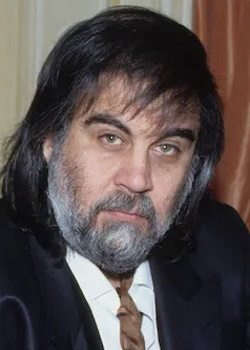 Composer Vangelis died on May 19, 2022, in hospital in Paris, where he was being treated for COVID-19. He was 79.
Evangelos Odysseas Papathanassiou was born in Agria, Greece, in March 1943, and in his youth was a self-taught musician, experimenting by combining pianos with traditional Greek folk music, jazz, and rock. After some early success in Greek pop music circles he co-founded the group Aphrodite’s Child with vocalist Demis Roussos, among others, and together they would enjoy great success in Europe, especially the single “Rain and Tears” in 1968. During this period Vangelis also dabbled in film music, writing music for several domestic films, before eventually making his international film music breakthrough in 1970 with the film Sex Power.
Throughout the 1970s Vangelis continued to have success both as a film composer and a recording artist; he scored popular documentary films such as L’Apocalypse des Animaux, La Fête Sauvage, and Opéra Sauvage, while simultaneously enjoying chart success, notably as one half of ‘Jon & Vangelis’ with Jon Anderson of Yes; their singles “I Hear You Now” and “I’ll Find My Way Home” were chart hits in the UK. His music was also notably used to score the groundbreaking 1980 PBS documentary series Cosmos: A Personal Voyage presented by Carl Sagan, which brought his music to American audiences for the first time. During this period Vangelis developed the iconic sound that would typify much of his career, combining lush and powerful orchestral forces with sometimes very experimental electronica. Read more…
Ennio Morricone, 1928-2020
 Composer Ennio Morricone died on July 6, 2020, in hospital in Rome, Italy, after suffering complications following a fall at his home, in which he broke his leg. He was 91.
Ennio Morricone was born in Rome, Italy, in November 1928. He studied at the Conservatory of the National Academy of Santa Cecilia, where he specialized in trumpet performance and composition. During the 1950s Morricone orchestrated and arranged pop songs for the RCA record label, including some for artists such as Paul Anka, Chet Baker and Mina. While working for RCA Morricone also wrote theater music and classical pieces, eventually going on to form Gruppo di Improvvisazione Nuova Consonanzsa, an avant-garde musical improvisation group considered to be one of the first experimental composers collectives.
Morricone began ghostwriting for composers such as Armando Trovajoli and Mario Nascimbene in the late 1950s, before making his credited film debut in 1961 for director Luciano Salce’s Il Federale (The Fascist). He worked almost exclusively in Italian cinema in the 1960s, but started to gain some international prominence for his work with director Sergio Leone, a former classmate, whose ‘spaghetti westerns’ starring a young American actor named Clint Eastwood became unexpected hits. A Fistful of Dollars (1964), For a Few Dollars More (1965), The Good the Bad and the Ugly (1966) and Once Upon a Time in the West (1968), as well as the Burt Reynolds vehicle Navajo Joe (1966), introduced the world to his idiosyncratic personal style, mixing a traditional orchestra with unusual percussion effects, gruff chanting voices, unusual whistles courtesy of Alessandro Alessandroni, and the soaring beauty of the voice of his friend, soprano Edda dell’Orso. These scores became hugely influential and massively popular, quickly cementing his reputation as one of Europe’s leading film composers. Read more…
Lennie Niehaus, 1929-2020
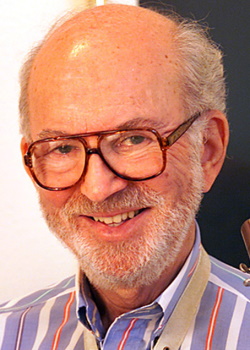 Composer Lennie Niehaus died on May 28, 2020, at his home in Redlands, California, of a heart-related illness. He was 90.
Leonard Niehaus was born in June 1929, in St. Louis, Missouri, but grew up in Los Angeles, where he developed his love for music. He graduated from California State University, Los Angeles, with a degree in music composition. Niehaus began his career as a jazz alto saxophonist, gaining prominence in the 1950s as a member of Stan Kenton’s orchestra. He was celebrated for his fluid improvisation and skillful arrangements, which earned him a respected place in the West Coast jazz scene.
In the 1960s Niehaus began orchestrating for television and film composer Jerry Fielding; Niehaus worked with Fielding on approximately seventy TV shows and films, including Straw Dogs (1971), Bring Me the Head of Alfredo Garcia (1974), the comedy The Bad News Bears (1976), and the horror film Demon Seed (1977). Read more…
André Previn, 1929-2019
 Composer André Previn died on February 28, 2019, at home in Manhattan, New York, after a short illness. He was 89.
André George Previn was born in April 1929, in Berlin, Germany, and he showed early musical talent and began studying piano and composition as a child. Fleeing Nazi persecution, Previn’s family emigrated to Los Angeles in 1938, where his uncle Charles Previn, a music director at Universal Studios, introduced him to Hollywood’s burgeoning film industry. He graduated from Beverly Hills High School – where he was a classmate of Richard M. Sherman – and he went to work at MGM Studios as a teenager in the 1940s, where he quickly became a key figure in their music department. Over two decades, he composed, arranged, and conducted music for over 50 films. His film scores displayed a sophisticated blend of lush orchestration and accessibility, contributing significantly to the Golden Age of Hollywood.
His first scores were written when he was still in his early 20s, and he worked on a wide range of films, from westerns like Bad Day at Black Rock (1954) and The Fastest Gun Alive (1956) to dramatic epics like Elmer Gantry (1960) and The Four Horsemen of the Apocalypse (1961), and lighthearted comedies like The Music Lovers (1970). His scores often reflected his classical training, jazz influences, and innate ability to capture the emotional essence of a story. Read more…
Michel Legrand, 1932-2019
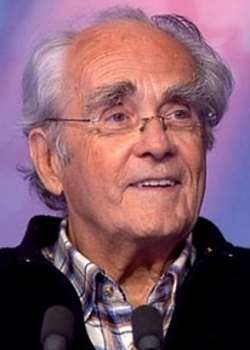 Composer Michel Legrand died on January 26, 2019, in hospital in Paris, France, after a short illness related to a pulmonary infection. He was 86.
Michel Jean Legrand was born in Paris, France, in 1932, the son of composer-conductor Raymond Legrand and his wife, Marcelle Ter-Mikaëlian, who was the sister of conductor Jacques Hélian. Legrand studied music at the Conservatoire de Paris from age 11, working with Nadia Boulanger among others, and as both a composer and a pianist. He achieved early career success in 1954 age 22 when his original jazz album I Love Paris became a surprise hit in Europe. He released numerous more albums in the 1950s, including the popular Paris Jazz Piano in 1959, and then established himself as a jazz composer, pianist, and bandleader in the United States, working with jazz stars such as Miles Davis, Stan Getz, and Lena Horne.
Legrand dabbled in film music from the mid 1950s onwards, but achieved his first significant success in 1960 when he scored director Jean-Luc Godard’s groundbreaking A Woman Is a Woman (Une Femme Est Une Femme) in 1961. Legrand quickly became a key musical component of the French New Wave, working for Godard and other directors such as Jacques Demy and Agnès Varda, among others, on such classics as Lola (1961), Vivre Sa Vie (1962), Cléo de 5 à 7 (1962), La Baie des Anges (1963), Bande à Part (1964), and La Chinoise (1967). His score for Demy’s 1965 musical film The Umbrellas of Cherbourg earned him his first Academy Award nomination, and from that point on Legrand split his time between Hollywood and Europe, working on both big-budget American and films and more artistic French fare. Read more…
Francis Lai, 1932-2018
 Composer Francis Lai died on November 7, 2018, at home in Paris, France, after a short illness. He was 86.
Francis Albert Lai was born in Nice, France, in April 1932. He moved to Paris in his twenties and began composing songs while working with lyricist Bernard Dimey. He accompanied Édith Piaf and wrote songs for French singers such as Mireille Mathieu and Yves Montand before transitioning into film scoring in the mid-1960s. His breakthrough came in 1966 with Un Homme et Un Femme [A Man and a Woman], directed by Claude Lelouch. The film won the Palme d’Or at Cannes, and Lai’s score – particularly its vocal theme – became a major success. He would go on to score more than 30 of Lelouch’s films, notably .
Lai’s most widely recognized international work came in 1970 with Love Story, starring Ryan O’Neal and Ali MacGraw. Its theme became a chart-topping hit in both instrumental and vocal versions, and Lai received the Academy Award and a Golden Globe for the score. His other notable works include Mayerling (1968), Rider on the Rain (1970), Emmanuelle II (1975), Bilitis (1977), and International Velvet (1978). He also composed for television and collaborated with artists such as Carly Simon. Read more…
Arthur B. Rubinstein, 1938-2018
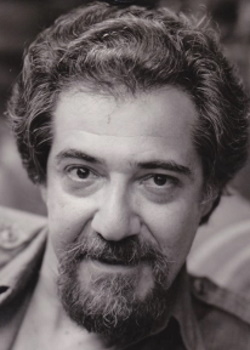 Composer Arthur B. Rubinstein died on April 23, 2018, in Los Angeles, after a short illness. He was 80.
Arthur Benjamin Rubinstein was born in Brooklyn, New York, in March 1938. He studied at the University of Hartford and the Juilliard School, and began his career in theater and concert music before moving into film and television.
Rubinstein’s subsequent career spanned over four decades. A frequent creative partner of director John Badham, Rubinstein’s propulsive electronic score for Blue Thunder (1983) and the suspenseful, thematically rich music for WarGames (1983) remain among his best-known works. His other acclaimed scores include titles such as Short Circuit (1986), Stakeout (1987), The Hard Way (1991), Another Stakeout (1993), and Nick of Time (1995).
He also wrote scores for numerous TV series, including episodes of Scarecrow and Mrs. King, the 1985 reboot of The Twilight Zone, Amazing Stories, Wiseguy, The Love Boat, Sledge Hammer, and even The Simpsons. He won the Primetime Emmy Award for Outstanding Achievement in Music Composition for a Series (Dramatic Underscore) for the episode “We’re Off to See the Wizard” from Scarecrow and Mrs. King in 1986. Read more…
Jóhann Jóhannsson, 1969-2018
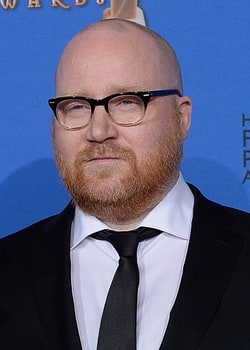 Composer Jóhann Jóhannsson died on February 9, 2018, at his home in Berlin, Germany, of an accidental drug overdose. He was 48 years old.
Jóhann Jóhannsson was born in Reykjavik, Iceland, in September 1969. After graduating from university he started his musical career in the mid-1990s as a guitarist playing in various Icelandic indie rock bands, before founding Kitchen Motors, an art organization that encouraged musical collaborations between artists from numerous different genres. He began scoring television projects and films in his native Iceland in 1999, beginning with the TV series Corpus Camera and the theatrical feature The Icelandic Dream [Íslenski Draumurinn] for director Robert Ingi Douglas, and went on to write several acclaimed scores for Icelandic directors over the next several years.
Jóhannsson scored his first English-language film, Personal Effects for director David Hollander, in 2009, first came to international prominence in 2013 when he was asked to score the dark thriller Prisoners starring Hugh Jackman and Jake Gyllenhaal by director Denis Villeneuve. He followed this with the score for the Steven Hawking bio-pic The Theory of Everything in 2014, for which he won the Golden Globe Award for Best Original Score, and was nominated for an Academy Award for Best Original Score, a BAFTA Award for Best Film Music, and a Grammy Award for Best Score Soundtrack for Visual Media. Read more…
John Morris, 1926-2018
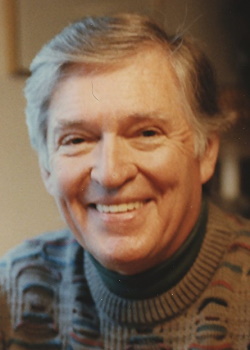 Composer John Morris died on January 25, 2018, at his home in Red Hook, New Jersey, following complications from a respiratory infection. He was 91.
John Leonard Morris was born in October 1926, in Elizabeth, New Jersey. After his family moved to Kansas while he was young, Morris continued studying piano, and by the late 1940s he moved back to the New York City are, where he studied at both Juilliard School and at The New School. He pursued a career as a concert pianist and musical director before transitioning to composing for theater and film. Morris began his long and fruitful collaboration with writer-director Mel Brooks in the late 1950s, and together they worked on two musicals, Shinbone Alley (1957) and All-American (1962).
Morris and Brooks continued to work together when Brooks brought his play ‘Springtime for Hitler’ to the big screen as The Producers in 1967, and their collaboration continued through a string of hits including Blazing Saddles (1974), Young Frankenstein (1974), Silent Movie (1976), High Anxiety (1977), History of the World, Part I (1981), and Spaceballs (1987), among many others. His deft orchestral parodies and lovingly crafted pastiches matched Brooks’ irreverent humor beat for beat. Read more…
Dominic Frontiere, 1931-2017
 Composer Dominic Frontiere died on December 21, 2017, in his home in Tesuque, New Mexico, after a short illness. He was 86.
Dominic Carmen Frontiere was born in New Haven, Connecticut, in June 1931. A classically trained accordion prodigy who performed at Carnegie Hall as a teenager, Frontiere went on to study at the Juilliard School before beginning a career in Hollywood that spanned more than four decades. He first gained recognition as musical director at 20th Century Fox, where he collaborated with Alfred Newman and contributed to a variety of studio productions.
His association with director and producer Leslie Stevens led to Frontiere scoring his first major film, The Marriage-Go-Round, in 1961. That relationship led Frontiere to became an executive of the television and film production company Daystar Productions, a company Stevens run. He composed several famous television themes of the 1960s, such as those for The Outer Limits, The Rat Patrol, Branded, and The Flying Nun, as well as The Invaders, The Fugitive, and 12 O’Clock High for producer Quinn Martin.
In cinema, he earned acclaim for his scores to films including Hang ‘Em High (1968), starring Clint Eastwood, and Freebie and the Bean (1974) while his score for The Stunt won a Golden Globe Award and earned him a Grammy nomination in 1980. Other notable films scored by Frontiere include On Any Sunday in 1971, Cleopatra Jones and the Casino of Gold in 1975, Brannigan in 1975, The Aviator in 1985, and Color of Night in 1994, which was his final major work. Read more…
Luis Enríquez Bacalov, 1933-2017
 Composer Luis Enríquez Bacalov died on November 15, 2017, at his home in Rome, Italy, after suffering a stroke. He was 84.
Bacalov was born in August 1933 in Buenos Aires, Argentina, to a Bulgarian Jewish family and studied music from an early age; his teachers included Enrique Barenboim, the father of famed conductor Daniel Barenboim, and pianist Berta Sujovolsky. Bacalov relocated from Argentina to Italy in the 1950s, and spent the majority of the rest of his life living and working there.
He scored his first film, a low-budget ghost story called Questi Fantasmi, in 1954, and then for many years fronted a rock group in the 1960s called Luis Enrique and His Electronic Men, but first came to prominence in 1964 when he arranged the music for Pier Paolo Pasolini’s film The Gospel According to St. Matthew, which earned him an Academy Award nomination for Best Music Adaptation or Treatment when the film was released in the United States in 1967.
Bacalov quickly established himself as one of the most popular and successful composers in the Italian film industry in the 1960s and 70s; his most famous scores were for spaghetti westerns such as Django (1966), Sugar Colt (1966), Quién Sabe (1967), Lo Chiamavano King (1971), and Il Grande Duello (1972), and gritty crime thrillers such as The Summertime Killer (1972), Milano Calibro 9 (1972), Il Boss (1973), and I Padroni Della Città (1976). He scored Federico Fellini’s City of Women in 1980, Fellini’s first film after the death of Nino Rota, and then achieved arguably his most prominent international success when he won the Academy Award for Best Score in 1995 for Il Postino, The Postman. Read more…
James Horner, 1953-2015
 Composer James Horner has been killed in a plane crash. Horner died when the single engine S312 Tucano plane he was piloting crashed in the Los Padres National Forest near Santa Barbara, California. He was 61 years old.
James Roy Horner was born in Los Angeles in August 1953, the son of Harry Horner, an Oscar-nominated Hollywood production designer and occasional film director who emigrated from Austria. He attended high school in California and Arizona, but spent most of his formative years living in London, where he attended the Royal College of Music, and later completed his PhD at UCLA in Los Angeles. After scoring several short film projects for the American Film Institute in the late 1970s, and spending several years teaching, Horner joined the staff at Roger Corman’s New World Pictures, scoring several low-budget genre films, including the popular Battle Beyond the Stars (1980), and working with soon-to-be Hollywood bigwigs such as director James Cameron and producer Gale Ann Hurd.
Horner launched into the big time in 1982 with his score for the critically acclaimed and commercially popular science fiction sequel Star Trek II: The Wrath of Khan, and from that point on Horner quickly rose to become one of the most in-demand composers in Hollywood. In the 1980s and 90s Horner became known for his grand, large-scale, emotional orchestral works; he scored a succession of box office hit movies including 48 HRS. (1982), Honey I Shrunk the Kids (1989), The Pelican Brief (1993), Clear and Present Danger (1994), Apollo 13 (1995) and Ransom (1996), and wrote enormously popular scores for films such as Krull (1983), Cocoon (1985), Willow (1988), Field of Dreams (1989), Glory (1989), Legends of the Fall (1994) and Braveheart (1995), culminating in the massive Titanic in 1997, which remains one of the biggest-selling orchestral score albums of all time. Following the turn of the millennium Horner’s career continued apace, with scores for further box office successes such as How the Grinch Stole Christmas (2000), The Perfect Storm (2000), A Beautiful Mind (2001), Avatar (2009) and The Amazing Spider-Man (2012) amongst his efforts. Read more…
Wojciech Kilar, 1932-2013
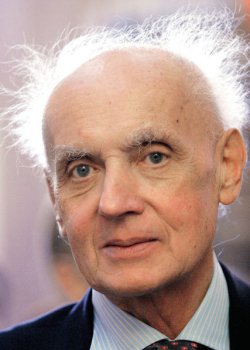 Composer Wojciech Kilar died on December 29, 2013 at his home in Katowice, Poland, after a battle with cancer. He was 81.
Kilar was born in Lvov, Ukraine, when it was still part of Poland, in July 1932, but moved to Katowice in Silesia in 1948 with his father, a gynecologist, and his mother, an actress. Kilar studied at the State Higher School of Music in Katowice under composer and pianist Władysława Markiewiczówna, at the State Higher School of Music in Kraków under composer and pianist Bolesław Woytowicz, and in Paris with the legendary Nadia Boulanger in the late 1950s. Upon his return to Poland, Kilar and fellow composers Henryk Górecki and Krzysztof Penderecki led an avant-garde music movement in the 1960s, during which time he wrote several acclaimed classical works.
Kilar scored his first film in 1959, and went gone on to write music from some of Poland’s most acclaimed directors, including Krzysztof Kieślowski, Krzysztof Zanussi, Kazimierz Kutz and Andrzej Wajda. He worked on over 100 titles in his home country, including internationally recognized titles such as Bilans Kwartalny (1975), Ziemia Obiecana (1975), Rok Spokojnego Słońca (1984), Życie Za Życie (1991) and Pan Tadeusz (1999), plus several others in France and across other parts of Europe. Read more…
Richard Rodney Bennett, 1936-2012
 Composer Sir Richard Rodney Bennett died on December 24, 2012, in New York, where he had lived since 1979. He was 76.
Bennett was born in Broadstairs, Kent, in March 1936, the son of novelist and lyricist Rodney Bennett, and singer/pianist Joan Bennett. His mother had trained with Gustav Holst and sang in the first professional performance of The Planets. He studied at the Royal Academy of Music under Howard Ferguson and Lennox Berkeley, and later in Paris with the avant-garde composer Pierre Boulez.
Bennett was best known to international audiences for his work in film and television, having composed more than fifty scores over the course of his career. He earned Academy Award nominations for Far from the Madding Crowd (1967), Nicholas and Alexandra (1971), and Murder on the Orient Express (1974), the latter of which contained a lavish orchestral suite evoking 1930s glamour and intrigue, and which remains one of his most celebrated. Other notable works include Lady Caroline Lamb (1973), Equus (1977), Enchanted April (1991), the smash hit comedy Four Weddings and a Funeral (1994), and the score for prestige BBC production of Gormenghast in 2000, which was one of his last major media commissions. Read more…
Richard Robbins, 1940-2012
 Composer Richard Robbins died on November 7, 2012, at his home in Rhinebeck, New York. He was 71, and had been suffering from Parkinson’s disease for many years.
Robbins was born in South Weymouth, Massachusetts, in December 1940, and studied at the New England Conservatory of Music and later later received a fellowship through a fund established by the philanthropist Frank Huntington Beebe to continue his studies in Vienna, Austria. He joined the film production company Merchant Ivory – co-owned by producer Ismail Merchant and director James Ivory – as a musical advisor in the early 1970s and went on to score over a dozen of the company’s films, with his work becoming an integral part of their cinematic identity.
Robbins crafted elegant, emotionally nuanced scores for the overwhelming majority of Merchant Ivory’s most celebrated films, including The Europeans (1979), Heat and Dust (1983), The Bostonians (1984), A Room with a View (1985), Maurice (1987), Mr. & Mrs. Bridge (1990), Howards End (1992), The Remains of the Day (1993), Jefferson in Paris (1995), and Surviving Picasso (1996); he received Academy Award nominations for Howards End and The Remains of the Day, and a BAFTA nomination for A Room with a View. Read more…

Shop at the Movie Music UK Store

Member of the

 MOVIE MUSIC UK