Archive
Klaus Doldinger, 1936-2025
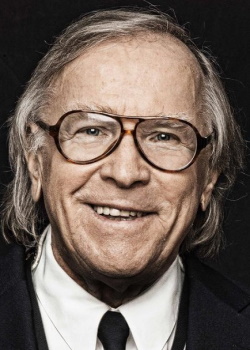 Composer Klaus Doldinger died on October 16, 2025, at his home in Germany after a short illness. He was 89.
Klaus Erich Dieter Doldinger was born in May 1936, in Berlin, Germany. He studied piano and clarinet at the Robert Schumann Conservatory in Düsseldorf before turning to the tenor saxophone, which quickly became his primary instrument. By the late 1950s he had established himself as a leading figure in West Germany’s post-war jazz scene, performing with ensembles such as the Feetwarmers and the Klaus Doldinger Quartet.
In 1971, he founded the fusion group Passport, a pioneering ensemble that combined elements of jazz, rock, and electronic music. The group’s long-running success earned Doldinger recognition as one of Europe’s foremost jazz innovators, and he was often referred to as “Germany’s jazz ambassador.”
Doldinger began writing music for film and television projects as early as 1968, but first came to international prominence with his score for Wolfgang Petersen’s claustrophobic submarine thriller Das Boot in 1981, which received worldwide acclaim for its tense, atmospheric writing. His sweeping and adventurous music for the 1984 children’s fantasy The NeverEnding Story, based on the classic novel by Michael Ende, raised his profile further in Europe, and it remains probably his most beloved work in film, although the North American release of the film saw his bold orchestral score mostly replaced with an electronic one by Italian disco composer Giorgio Moroder. Read more…
Mark Snow, 1946-2025
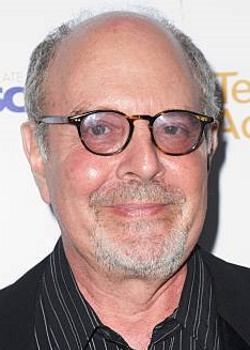 Composer Mark Snow died on July 4, 2025, at his home in Connecticut after a short illness. He was 78.
Martin Fulterman was born in August 1946, in Brooklyn, New York. He studied piano as a child, and he later attended New York’s High School of Music and Art and the Juilliard School of Music, where his roommate was fellow composer Michael Kamen. They co-founded the New York Rock & Roll Ensemble, and released several well-regarded albums.
Fulterman adopted the professional pseudonym ‘Mark Snow’ after he moved to Los Angeles in the mid-1970s. He began his film and TV career writing music for the ABC drama series The Rookies starring his then-brother-in-law, actor Georg Stanford Brown, and quickly established himself as one of the most in-demand composers working on American television, writing for massively popular shows such as Starsky & Hutch, The Love Boat, Hart to Hart, Dynasty, Cagney & Lacey, and T. J. Hooker.
However, it was his association with the 1993 sci-fi series The X-Files starring David Duchovny and Gillian Anderson that brought Snow to international fame. In addition to writing its iconic whistled main theme, Snow scored more than 200 episodes of the show across 11 seasons, as well as scoring its two spin-off theatrical movies in 1998 and 2008. The single of the instrumental main title theme was an unexpected chart hit in the United Kingdom and elsewhere, and he received five Emmy nominations for Outstanding Music Composition for a Series between 1997 and 2002 for different X-Files episodes.
Snow also received Emmy nominations for scoring the TV series Ghost Whisperer (2005-2010), writing the theme for Nowhere Man (1996), and for scoring the TV movies Something About Amelia (1984), An American Story (1993), Oldest Living Confederate Widow Tells All (1994), Children of the Dust (1995), and Helter Skelter (2004). Read more…
Lalo Schifrin, 1932-2025
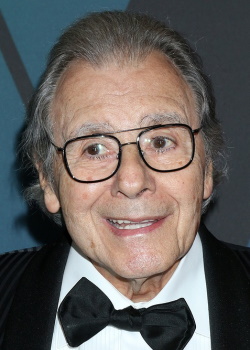 Composer Lalo Schifrin died on June 26, 2025, at the age of 93. He had been in ill health for several years, and died of pneumonia.
Boris Claudio Schifrin was born in Buenos Aires, Argentina, in June 1932, into a musically inclined family. His father was the concertmaster of the Teatro Colón, and young Lalo was immersed in classical music from a young age. He began piano lessons early, and his precocious talent led him to study with luminaries such as Juan Carlos Paz and, later, Olivier Messiaen in Paris. While still in Paris, he played in local jazz clubs and developed a deep appreciation for American musical idioms. This duality – rigorous classical training paired with a spontaneous, exploratory jazz sensibility – would define his voice as a composer.
Upon returning to Argentina, Schifrin formed one of the country’s first modern jazz orchestras, gaining acclaim before accepting an invitation to join Dizzy Gillespie’s band in the mid-1950s. Their collaboration signaled his arrival on the international stage and cemented his lifelong reputation as a jazz innovator with global instincts.
Schifrin moved to the United States in the early 1960s, and by mid-decade had become a sought-after composer in Hollywood, working across television and film. His first major television project was scoring episodes of The Man from U.N.C.L.E. beginning in 1965, but it was his theme for Mission: Impossible (1966) that catapulted him into pop culture immortality. Written in 5/4 time, the show’s theme was at once avant-garde and accessible, and became instantly iconic, so much so that it became a kind of musical shorthand for danger, intrigue, and ingenuity. It later powered the Tom Cruise-led film franchise to billion-dollar success. Read more…
Alf Clausen, 1941-2025
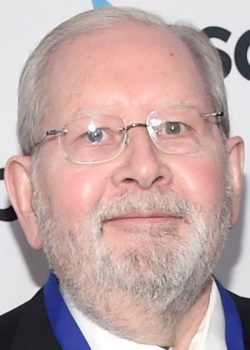 Composer Alf Clausen died on May 29, 2025, at his home in Los Angeles at the age of 84. He had been suffering from Parkinson’s disease since at least 2017.
Alfred Faye Heiberg Clausen was born in Minneapolis, Minnesota, in March 1941, and grew up in Jamestown, North Dakota. He learned piano and French horn as a child, and later studied music at North Texas State University and at Berklee College of Music in Boston. Clausen moved to Hollywood in 1967 in search of television work, wanting to become a full-time composer, and soon found himself working as a music director on shows as diverse as The Partridge Family, Donny & Marie, and The Mary Tyler Moore Hour.
Throughout the 1980s Clausen was a prolific television composer, scoring 62 episodes of Moonlighting between 1985 and 1989, and scoring 96 episodes of Alf between 1986 and 2004, while also working as a film orchestrator for composers such as Ira Newborn (Weird Science, Ferris Bueller’s Day Off, Dragnet, The Naked Gun) and Lee Holdridge (The Beastmaster, Splash).
Clausen’s career took a defining turn in 1990, when he was hired as the principal composer for the massively successful animated sitcom The Simpsons, beginning with its second season. Over the next 27 years, he wrote original music for more than 560 episodes, contributing an eclectic blend of parody, pastiche, and heartfelt orchestration that became a hallmark of the show’s identity. His work earned him two Primetime Emmy Awards – for the songs “We Put The Spring In Springfield” in 1997 and “You’re Checkin’ In” in 1998 – and over 21 nominations, which when combined with the six Emmy nominations he earned for Moonlighting made him one of the most nominated composers in television history. Read more…
Quincy Jones, 1933-2024
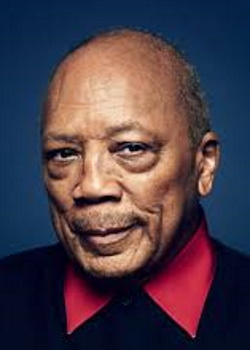 Composer Quincy Jones died on November 3, 2024, after a short illness. He was 91 years old.
Quincy Delight Jones Jr. – known to all as ‘Q’ – was born in Chicago, Illinois, in March 1933. Jones grew up in a challenging environment, with his mother battling schizophrenia and his father working as a carpenter and semi-professional baseball player. When he was ten, his family moved to Seattle, Washington, where he met future jazz great Ray Charles. The two became fast friends, and Jones, a natural musician, learned trumpet, piano, and arranging. He attended Seattle’s Garfield High School and later earned a scholarship to study at the prestigious Berklee College of Music in Boston. However, he left before finishing to tour with jazz great Lionel Hampton, marking his entry into the world of professional music.
In the 1950s, Jones moved to New York City and became immersed in the jazz scene, working with icons like Miles Davis, Dizzy Gillespie, and Count Basie. He also collaborated with major record labels as an arranger and conductor. By the late 1950s, Jones was touring Europe and later moved to Paris, studying composition and orchestration under Nadia Boulanger, a legendary music teacher. Read more…
Richard M. Sherman, 1928-2024
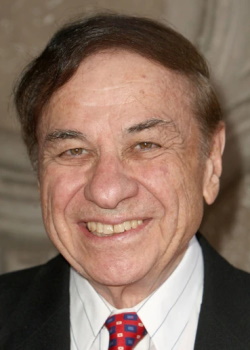 Composer Richard M. Sherman, one of the greatest and most influential songwriters in the history of Hollywood, died on May 25, 2024, after a short illness. He was 95 years old.
Richard Morton Sherman was born in New York, New York, in June 1928, the son of Russian Jewish immigrants. He grew up in a musical household – his father, Al, was a composer and arranger in Tin Pan Alley in New York, and was a contemporary of George Gershwin – and then after the Shermans relocated to Los Angeles in 1937 Richard attended Beverly Hills High School, where he was a classmate of André Previn. After completing his national service, Sherman and his brother Robert started a songwriting company, and they enjoyed success writing popular songs for artists including Annette Funicello. This success brought them to the attention of producer Walt Disney, who eventually hired them as staff songwriters for the Walt Disney Studio.
Sherman wrote songs for several Disney productions in the early 1960s, including The Absent Minded Professor (1961), The Parent Trap (1961), and The Sword in the Stone (1963), but achieved lasting fame and critical acclaim following the release of Mary Poppins in 1964. The songs that Sherman wrote for that production – “Feed the Birds,” “A Spoonful of Sugar,” “Supercalifragilisticexpialidocious,” “Chim-Chim-Cheree,” and “Let’s Go Fly a Kite,” among others – became immediate classics and pop culture icons, and won Sherman Oscars for Best Original Score and Best Original Song. Read more…
Jan A. P. Kaczmarek, 1953-2024
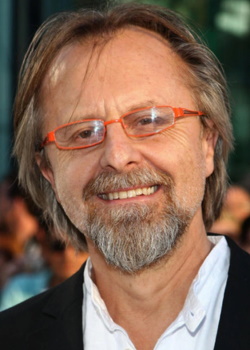 Composer Jan A.P. Kaczmarek died on May 21, 2024, at the age of 71. He had been in hospice care for several years, after being diagnosed with multiple system atrophy in 2022.
Jan Andrzej Paweł Kaczmarek was born in Konin, Poland, in April 1953. Originally intending to be a lawyer, he graduated from Adam Mickiewicz University in Poznań with a law degree, specializing in legal theory and philosophy of law. However, he switched careers to focus on music in the 1970s, and spent several years working with experimental theater companies, and writing music for stage productions. He and his first wife Elżbieta moved to Los Angeles in the 1980s, where he wrote music for the Mark Taper Forum and Chicago’s Goodman Theatre. In 1992 he won the Drama Desk Award for Outstanding Music in a Play for his incidental music for director JoAnne Akalaitis’s new version of ‘Tis Pity She’s a Whore.
Kaczmarek had written music for a handful of small-budget features and TV movies in his native Poland in the 1980s and early 1990s, but he first came to international attention in 1995 with his score for director Agnieszka Holland’s Total Eclipse, about the life of poet Arthur Rimbaud, played by Leonardo di Caprio. He continued to work on a series of acclaimed films throughout the 1990s and early 2000, including arthouse dramas like Bliss (1996), Washington Square (1997), Aimée & Jaguar (1999), and The Third Miracle (1999), and more mainstream fare like the horror thriller Lost Souls (2000), and the erotic drama Unfaithful (2002). He often worked with Polish directors making English-language films – Holland, Janusz Kamiński, Yurek Bogayevicz – and he invariably wrote music that was elegant, technically masterful, emotionally poignant, but subtle, conveying a distinctly European sensibility. Read more…
Laurie Johnson, 1927-2024
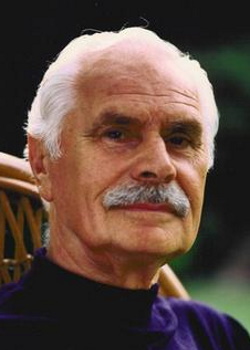 Composer Laurie Johnson died on January 16, 2024, at home in London after a short illness. He was 95.
Laurence Reginald Ward Johnson was born in London in February 1927. He studied composition at the Royal College of Music, where one of his tutors was Ralph Vaughan Williams. He undertook his national service, playing French horn with the Coldstream Guards, in the late 1940s, before moving to the entertainment industry in the 1950s.
He began his career as a composer and arranger in the West End theater, and he won an Ivor Novello Award in 1959 for his work on Lionel Bart’s Lock Up Your Daughters in 1959. He scored his first film, the British musical The Good Companions, in 1957, and went on to enjoy a long career in the British film music industry, writing for projects such as the swashbuckler The Moonraker (1958), the crime drama Tiger Bay (1959), Stanley Kubrick’s classic satire Dr. Strangelove (1964), the HG Wells science-fiction adaptation First Men in the Moon (1964), the cult Hammer horror Captain Kronos: Vampire Hunter (1972), the nature drama The Belstone Fox (1973), and the literary drama Hedda (1975), as well as a series of 1980s TV movies based on the works of his long-time friend, novelist Dame Barbara Cartland. Read more…
Carl Davis, 1936-2023
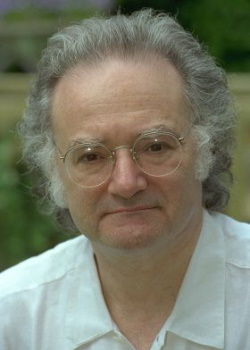 Composer Carl Davis died on August 3, 2023, at his home in Oxfordshire, England, following a brain haemorrhage. He was 86.
Davis was born in Brooklyn, New York, in October 1936, and studied composition there and in Copenhagen. He was working with the New York City Opera and the Robert Shaw Chorale, and writing music for off-Broadway productions, prior to traveling to the United Kingdom in 1961 to attend the Edinburgh Festival. It was while in Edinburgh that Davis was offered a job composing music for the satirical comedy series That Was The Week That Was; Davis subsequently spent the rest of his working career predominantly in the UK.
Over the next 30 years or so, Davis wrote hundreds of scores for British film and television. On the big screen, his works included The Bofors Gun (1968), I, Monster (1971), Up Pompeii (1971), Man Friday (1975), The Sailor’s Return (1978), The French Lieutenant’s Woman (1981), Champions (1983), King David (1985), Scandal (1989), The Rainbow (1989), Frankenstein Unbound (1990), The Trial (1993), Widows’ Peak (1994), and Topsy-Turvy (1999), the latter of which saw him adapting music by Gilbert and Sullivan.
On the small screen, his works included The Naked Civil Servant (1975), Oppenheimer (1980), Winston Churchill: The Wilderness Years (1981), The Hound of the Baskervilles (1982), The Far Pavilions (1984), The Pickwick Papers (1985), Hotel du Lac (1986), Silas Marner (1986), Pride and Prejudice (1995), Anne Frank Remembered (1995), and Cranford (2008), as well as the groundbreaking documentary series The World at War (1973). He won the BAFTA Award for Film Music for The French Lieutenant’s Woman, and was nominated on six other occasions between 1981 and 2008. He also received two Emmy nominations, in 1972 and 1993, and a Grammy nomination in 1983, again for The French Lieutenant’s Woman. Read more…
Mark Thomas, 1956-2023
 Composer Mark Thomas died on July 19, 2013, at his home in Wales, after a long illness. He was 67.
Thomas was born in Penclawdd, near Swansea, Wales, in April 1956. He attended Gowerton Grammar School, and studied music composition and orchestration at university, before starting his musical career as a professional violinist, working mostly as a session musician in London. He played on countless film soundtracks in the late 1970s and 1980s, working with composers including John Williams, Jerry Goldsmith, James Horner and John Barry, and was one of the violinists in the orchestra pit on the opening night of Andrew Lloyd Webber’s legendary musical The Phantom of the Opera in 1986.
Thomas began writing his own music for film in the early 1990s and quickly established himself as one of the most in-demand composers in the British film and television industry; Thomas took extra pride in writing music for Welsh cinema and television, and intentionally sought out Welsh-language projects. His most profile work included films such as Daisies in December (2005), Twin Town (1997), The Big Tease (1999), Dog Soldiers (2002), Agent Cody Banks 2: Destination London (2004), Shadows in the Sun (2005), and The Magic Roundabout (2005), while his TV work included writing for acclaimed mini-series such as Aristocrats (1999), and episodes of Shaun the Sheep, Doc Martin, Benidorm, and Dalziel and Pascoe. He was nominated for an Emmy in 2011 for his main title music for the TV series Episodes, and won a BAFTA Cymru Award in 1998 for his score for Twin Town.
Thomas leaves behind his wife, Luz Marie, and children Imogen, Rosana and Tristam.
Ryuichi Sakamoto, 1952-2023
 Composer Ryuichi Sakamoto died on March 28, 2023, in hospital in Tokyo, after a long battle with cancer. He was 71.
Sakamoto was born in Tokyo, Japan, in January 1952. He studied at the Tokyo National University of Fine Arts and Music, earning a B.A. in music composition and an M.A. with special emphasis on both electronic and ethnic music. He studied ethnomusicology there with the intention of becoming a researcher in the field, due to his interest in various world music traditions, particularly the Japanese (especially Okinawan), Indian and African musical traditions.
Sakamoto began his musical career while at university as a session musician, producer, and arranger. His first major success came in 1978 as co-founder of Yellow Magic Orchestra (YMO), and with bandmates Haruomi Hosono and Yukihiro Takahashi, Sakamoto influenced and pioneered a number of electronic music genres. He concurrently pursued a solo career, releasing the experimental electronic fusion album Thousand Knives in 1978, and then the influential B-2 Unit in 1980.
Sakamoto began working in films, as a composer and actor, in Nagisa Oshima’s Merry Christmas Mr. Lawrence in 1983. Sakamoto won the BAFTA Award for Best Film Music for his score – which was hugely popular in the UK. Then in 1987 Sakamoto wrote the score for Bernardo Bertolucci’s The Last Emperor with fellow composers David Byrne and Cong Su, and won the Academy Award, the Golden Globe, and a Grammy. Read more…
Christopher Gunning, 1944-2023
 Composer Christopher Gunning died on March 25, 2023, at his home in Hertfordshire, England, after a short illness. He was 78.
Christopher Gunning was born in Cheltenham, Gloucestershire, in August 1944, and studied at the Guildhall School of Music and Drama where his tutors included Edmund Rubbra and Richard Rodney Bennett.
Gunning beganm writing for film in the early 1970s, and his important early works included Goodbye Gemini (1970), the Hammer horror film Hands of the Ripper (1971), the film version of the smash hit sitcom Man About the House (1974), and Porterhouse Blue (1987), which which he received his first BAFTA Television Award.
Gunning’s most enduring contribution to film music came in 1989, when he composed the iconic theme tune for the TV series Poirot, starring David Suchet, for which he received his second BAFTA Television Award. Gunning would go on to score nearly all of the subsequent 70 Poirot TV films between 1989 and 2013. Read more…
Gerald Fried, 1928-2023
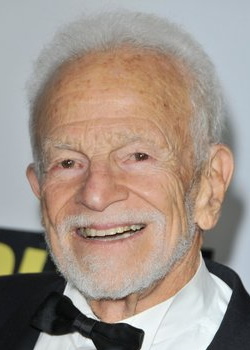 Composer Gerald Fried died on February 17, 2023, in Bridgeport, Connecticut, from pneumonia. He was 95.
Gerald Fried was born in New York, New York, in February 1928, and grew up in the Bronx. He attended the Juilliard School of Music, initially as an oboe player, and later as a composer and conductor. After his graduation in 1945 he was first oboist with the Dallas Symphony, Pittsburgh Symphony and New York’s Little Orchestras. He moved to Los Angeles in 1957 and played for one season with the Los Angeles Philharmonic.
Fried had been introduced to movies by director Stanley Kubrick, a childhood friend; Fried scored the director’s first short, the 1951 film Day of the Fight, and went on to score Kubrick’s first four features: Fear and Desire in 1953, Killer’s Kiss in 1955, The Killing in 1956, and Paths of Glory in 1957.
After his move to Los Angeles Fried began composing and arranging music for television, and worked on numerous popular shows, including M Squad, Shotgun Slade, Riverboat, Gilligan’s Island, The Man from U.N.C.L.E., Mission: Impossible, and Mannix, among many others. Perhaps his most famous piece of score was for ‘Amok Time’, the second season premiere episode of Star Trek, which featured a now-iconic fight sequence between Captain Kirk and Mr. Spock. Read more…
Burt Bacharach, 1928-2023
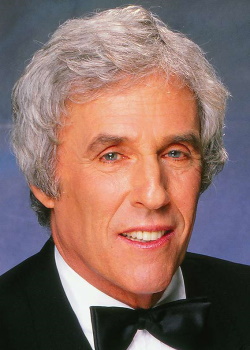 Composer Burt Bacharach died on February 9, 2023, at home in Los Angeles after a short illness. He was 94.
Burt Freeman Bacharach was born in Kansas City, Missouri, in May 1928, but grew up in Queens, New York. He developed a keen interest in jazz as a teenager, after visiting jazz clubs and watching performances by Dizzy Gillespie and Count Basie. He studied music at McGill University in Montreal, at the Mannes School of Music in New York, and at the Music Academy of the West in California, where his teachers included classical greats like Darius Milhaud and Bohuslav Martinů.
After a stint in the US Army he worked as a pianist at resorts in the Catskill Mountains of New York, before going on to work as an arranger and conductor for legendary actress Marlene Dietrich’s nightclub shows. He met lyricist Hal David in 1957, and they began writing songs together; they scored an immediate hit with “Magic Moments” by Perry Como, which reached number 1 in the charts when Bacharach was just 29 years old. Read more…
Angelo Badalamenti, 1937-2022
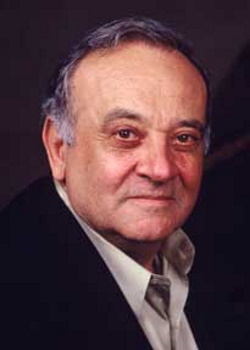 Composer Angelo Badalamenti died on December 11, 2022, at home in New Jersey after a short illness. He was 85.
Angelo Daniel Badalamenti was born in New York City in March 1937, the son of Italian immigrants from Sicily. A piano player from a young age, Badalamenti was already earning money as a pianist accompanying singers at resorts in the Catskill Mountains in his teens; he later studied at the Eastman School of Music at the University of Rochester, and then at the Manhattan School of Music, graduating with a master’s degree in 1959.
He began his career as a songwriter, penning works for singers such as Nina Simone and Shirley Bassey using the pen name Andy Badale. He made his film music debut was early as 1973, scoring the blaxploitation action pic Gordon’s War, but his break came when he was hired to be Isabella Rossellini’s vocal coach for David Lynch’s 1986 film Blue Velvet. Impressed with his work, Lynch asked Badalamenti to co-write the song “Mysteries of Love” for vocalist Julee Cruise, and then asked Badalamenti to composed the score for the entire film. Read more…

Shop at the Movie Music UK Store

Member of the

 MOVIE MUSIC UK