Archive
Golden Globe Winners 2020
 The Hollywood Foreign Press Association (HFPA) have announced the winners of the 78th Golden Globe Awards, honoring the best in film and American television of 2020.
In the Best Original Score category composers Trent Reznor, Atticus Ross, and Jon Batiste won the award for their work on the Pixar animated movie Soul, about a jazz musician who travels to an existential realm beyond the bounds of human existence, and must help a pre-born ‘soul’ to find the spark to inspire her to become human. This is the second Golden Globe for both Reznor and Ross, them having won the award for The Social Network in 2010, and the first award for Batiste. In his acceptance speech, which was conducted remotely via Zoom because of the COVID-19 pandemic, Batiste said:
“We must follow our dreams, because we only have one life to live, and one soul, and this soul is happy today to be recognized by the Hollywood Foreign Press for this masterpiece of a film. Pixar, thank you for the work, and the collaboration. Pete Docter, Dana Murray, Kent Powers, Trent Reznor, Atticus Ross, Jamie Foxx, everybody involved in creating this masterpiece that has touched people across the world, and I’d like to thank God for music and film and the togetherness that it brings when put together in such innovative and collaborative ways as this has been.”
Reznor continued by saying:
“Thanks John, and thank you Hollywood Foreign Press Association, it really means a lot. I’d just like to add Tom McDougall’s name to that list. Thanks for looking after us and shepherding us through this project. And also I think the first piece of art I’ve ever made in my life that I can actually show my kids, so thank you Pixar! Huge thanks to my wife Mariqueen, and all our kids, I love you guys more than anything.
Ross finished by saying:
“A big thank you to everyone who has already been thanked. I’d just like to add my wife Claudia, and my children, I love you. Thanks so much”
The other nominees were Alexandre Desplat for The Midnight Sky, Ludwig Göransson for Tenet, James Newton Howard for News of the World, and Trent Reznor and Atticus Ross again for Mank.
In the Best Original Song category, the winners were Niccolò Agliardi, Laura Pausini, and Diane Warren for their song “Io Sì (Seen)” from The Life Ahead, the Italian coming-of-age drama starring Sophia Loren.
The other nominees were Sam Ashworth and Leslie Odom Jr. for “Speak Now” from One Night in Miami; Andra Day and Raphael Saadiq for “Tigress & Tweed” from The United States vs. Billie Holiday; Dernst ‘D’Mile’ Emile II, Gabriella Wilson (HER), and Tiara Thomas for “Fight for You” from Judas and the Black Messiah; and Celeste Waite and Daniel Pemberton for “Hear My Voice” from The Trial of the Chicago 7.
IFMCA Award Winners 2020
 INTERNATIONAL FILM MUSIC CRITICS ASSOCIATION ANNOUNCES WINNERS OF 2020 IFMCA AWARDS
CHRISTOPHER WILLIS WINS SCORE OF THE YEAR FOR THE DICKENSIAN COMEDY “THE PERSONAL HISTORY OF DAVID COPPERFIELD,” CARLOS RAFAEL RIVERA WINS TWO AWARDS FOR HIT TV SERIES “THE QUEEN’S GAMBIT”
FEBRUARY 18, 2021 — The International Film Music Critics Association (IFMCA) announces its list of winners for excellence in musical scoring in 2020, in the 2020 IFMCA Awards.
The award for Score of the Year goes to composer Christopher Willis, for his score for the Dickensian comedy “The Personal History of David Copperfield,” directed by Armando Iannucci. In describing the score, IFMCA member Florent Groult called it a “luminous neo-romantic mini symphony,” while his colleague Olivier Desbrosses called it an “inspired score that in no way seeks to hide its many nods to the great masters of classical music,” and features “sensational orchestrations and constant elegance.” Similarly, IFMCA member Jon Broxton said the score was “the music of an idealized England; the contrast between the bustling streets of London and a more languid life in the countryside, the distinct beauty of its sun-kissed fields and its rugged sea shores, the depiction of lords and ladies and gentlemen, scoundrels and thieves, high society and common folk, and the way that this most profound of literary protagonists weaves his way through it all … there is not a dull moment … there is not a moment where Willis is not taking the time to say something interesting with his music – presenting a new theme, a variation on an existing one, or painting a vivid musical picture of this specific time and place.” The score is also named Best Original Score for a Comedy Film. These are the second and third IFMCA Awards of Willis’s career, him having previously won the Comedy award in 2017 for his score for his feature debut “The Death of Stalin”. Read more…
IFMCA Award Nominations 2020
 INTERNATIONAL FILM MUSIC CRITICS ASSOCIATION AWARD NOMINATIONS ANNOUNCED
DANIEL PEMBERTON AND HANS ZIMMER RECEIVE FIVE NOMINATIONS EACH; COMEDY CATEGORY DOMINATED BY WOMEN COMPOSERS; FIRST EVER JAPANESE FILM NOMINATED FOR SCORE OF THE YEAR
FEBRUARY 4, 2021. The International Film Music Critics Association (IFMCA) announces its list of nominees for excellence in musical scoring in 2020, for the 17th annual IFMCA Awards. British composer Daniel Pemberton and German composer Hans Zimmer lead the field with the most number of nominations, each receiving a total of five.
Pemberton’s nominations were for his work on three films: the literary adventure “Enola Holmes,” based on the popular young adult novels by Nancy Springer about the younger sister of the legendary sleuth Sherlock; the political drama “The Trial of the Chicago 7,” which looks at the real-life trial of a group of anti–Vietnam War protesters charged with inciting riots at the 1968 Democratic National Convention; and “Rising Phoenix,” an acclaimed documentary following the stories of nine Paralympic athletes. “Enola Holmes” is nominated for Score of the Year, and Pemberton is nominated for Composer of the Year. IFMCA member James Southall called Enola Holmes “a great orchestral adventure romp, whose quirks only add to its great sense of fun … conventional by recent Pemberton standards but still features a number of quirks and it feels so continually fresh and energetic … one of the year’s strongest scores”.
Zimmer’s five nominations were all for his work on one film, “Wonder Woman 1984,” the blockbuster sequel to the 2017 DC superhero film directed by Patty Jenkins, and starring Gal Gadot and Chris Pine. The score is nominated for Score of the Year and in its Fantasy/Sci-Fi/Horror genre, Zimmer is nominated for Composer of the Year, and two of Zimmer’s individual cues – “1984” and “Themyscira” – are nominated for Film Music Composition of the Year. IFMCA member Jon Broxton praised the score’s “upbeat attitude, its buoyant sense of fun and optimism, and the unashamed, un-ironic sincerity of its emotional content,” and said that “the depth and complexity of Zimmer’s thematic ideas makes the score satisfying from an intellectual point of view, meaning that the whole thing succeeds on every count.” Read more…
Golden Globe Nominations 2020
 The Hollywood Foreign Press Association (HFPA) has announced the nominations for the 78th Golden Globe Awards, honoring the best in film and American television of 2020.
In the Best Original Score category, the nominees are:
- ALEXANDRE DESPLAT for The Midnight Sky
- LUDWIG GÖRANSSON for Tenet
- JAMES NEWTON HOWARD for News of the World
- TRENT REZNOR and ATTICUS ROSS for Mank
- TRENT REZNOR, ATTICUS ROSS, and JON BATISTE for Soul
This is the 12th nomination for Desplat, who previously won Globes for The Painted Veil in 2006 and The Shape of Water in 2017; the second nomination for Göransson; the third nomination for Howard; and the fourth and fifth nominations for Reznor and Ross, who won the award for The Social Network in 2010. The sole debutante is Jon Batiste.
In the Best Original Song category, the nominees are:
- LESLIE ODOM JR. and SAM ASHWORTH for “Speak Now” from One Night in Miami
- DANIEL PEMBERTON and CELESTE WAITE for “Hear My Voice” from The Trial of the Chicago 7
- RAPHAEL SAADIQ and ANDRA DAY for “Tigress and Tweed” from The United States vs. Billie Holliday
- DIANE WARREN, LAURA PAUSINI, and NICCOLÒ AGLIARDI for “Io Sì (Seen)” from The Life Ahead
- GABRIELLA WILSON (H.E.R.), DERNST EMILE II (D’MILE), and TIARA THOMAS for “Fight for You” from Judas and the Black Messiah
The winners of the 78th Golden Globe Awards will be announced on February 28, 2021.
SCL Award Nominations 2020
 The Society of Composers and Lyricists (SCL) has announced the nominations for the second annual SCL Awards, honoring the best in film and television music in 2020. The SCL is the premier professional trade group for composers, lyricists, and songwriters working in the motion picture, television, and game music industry, and is headquartered in Los Angeles. The nominees are:
OUTSTANDING ORIGINAL SCORE FOR A STUDIO FILM
- TERENCE BLANCHARD for Da 5 Bloods
- LUDWIG GÖRANSSON for Tenet
- JAMES NEWTON HOWARD for News of the World
- TRENT REZNOR and ATTICUS ROSS for Mank
- TRENT REZNOR, ATTICUS ROSS, and JON BATISTE for Soul
OUTSTANDING ORIGINAL SCORE FOR AN INDEPENDENT FILM
- SHERRI CHUNG for The Lost Husband
- EMILE MOSSERI for Minari
- STEVEN PRICE for David Attenborough: A Life on Our Planet
- LOLITA RITMANIS for Blizzard of Souls
- TAMAR-KALI for Shirley
Movie Music UK Awards 2020
 2020 has been, by far, the strangest year in living memory for both films and film music. The rampant COVID-19 coronavirus pandemic shuttered cinemas around the world and pushed the overwhelming majority of the mainstream studio tentpoles to 2021, 2022, or to an ignominious debut on one of the several streaming services. As such, the list of scores that were released during the calendar year became something of a crapshoot, with no-one ever being quite sure what would come out from one year to the next. As a result of all this, my list of Scores of the Year for 2020 is an independent studio’s dream – there is only one major blockbuster score among my top ten.
It’s perhaps the most eclectic and non-commercial awards I have ever done, but with many of the traditional big guns missing from the list, it allowed a large number of exceptionally talented newcomers and perhaps lesser-known journeymen and women a chance to shine in the spotlight.
Ultimately four of my five nominees for Score of the Year came from British productions – perhaps an indication that circumstances on that side of the pond were slightly less impacted by everything – and amazingly none of those Top 5 scores were written by American composers – quite a change from the usual set of dominant markers. Instead, in addition to the Brits, we have scores from Japan and Spain in the top ten, and as you go further and further down the list you will find numerous unexpected choices, ranging historical dramas and adventure fantasies from Germany, horror films from Norway, super hero-themed thrillers from Spain, documentaries from Israel by way of China, romantic comedies from Ireland, and so much more! So, without further ado, here are my choices… Read more…
Claude Bolling, 1930-2020
 Composer, pianist and bandleader Claude Bolling died on December 29, 2020, at a hospital in Saint-Cloud, near Paris, at the age of 90.
One of the leading figures in French jazz, Bolling was also a prolific film composer who wrote more than 100 scores for cinema and television. His jaunty theme for Borsalino became one of the most recognizable pieces of French film music of the 1970s, while his parallel career combining jazz and classical music brought him international success.
Claude Jean Harry Bolling was born in Cannes on April 10, 1930, but spent most of his life in Paris. A precocious pianist, he discovered jazz through recordings by Duke Ellington, Fats Waller and other American musicians, and at 14 won a competition organized by Jazz Hot magazine and the Hot Club de France. He formed his first ensemble while still a teenager and later studied harmony, piano and orchestration, developing a particular devotion to Ellington that remained central to his musical personality.
By the 1950s Bolling was an established presence in French jazz, performing with visiting musicians including Lionel Hampton, Roy Eldridge, Rex Stewart and Cat Anderson. He formed his own orchestra in 1956 and subsequently worked extensively as an arranger and musical director for French popular singers, including Brigitte Bardot, Juliette Gréco and Henri Salvador. Cinema soon became another major part of his career. Read more…
Billy Goldenberg, 1936-2020
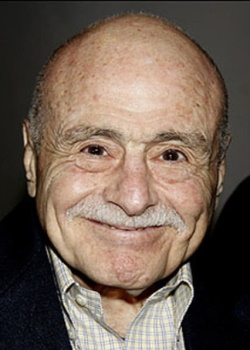 Composer, arranger and musical director Billy Goldenberg died at his home in New York City on August 3, 2020, at the age of 84.
One of the most prolific and versatile composers in American television during the 1970s and 1980s, Goldenberg wrote music for dozens of series and television movies, including Duel, Columbo, Kojak, The Legend of Lizzie Borden and The Lindbergh Kidnapping Case. He was also an acclaimed Broadway musician and served as musical director for Elvis Presley’s legendary 1968 television comeback special.
William Leon Goldenberg was born in Brooklyn, New York, on February 10, 1936. He studied piano from childhood and later attended Columbia College, developing interests in both classical and popular music. After beginning his professional career as a pianist and arranger, he became active in New York theatre and television, eventually working as musical director for several major variety programs.
An important early assignment came when Goldenberg served as musical director and arranger for Singer Presents… Elvis, the 1968 NBC television special that revitalized Elvis Presley’s career. Goldenberg helped shape the musical arrangements accompanying Presley, balancing the show’s large production numbers with the stripped-down performances that reminded audiences of the singer’s original energy. Read more…
Ennio Morricone, 1928-2020
 Composer Ennio Morricone died in Rome on July 6, 2020, at the age of 91, several days after suffering a fall in which he fractured his femur.
One of the most prolific and influential film composers in cinema history, Morricone wrote music for more than 500 films and television productions during a career spanning six decades. From the revolutionary westerns of Sergio Leone to The Battle of Algiers, Days of Heaven, Once Upon a Time in America, The Mission, Cinema Paradiso and The Hateful Eight, he created a body of work of extraordinary breadth, combining unforgettable melody with an endlessly adventurous approach to sound.
Ennio Morricone was born in Rome on November 10, 1928, the son of professional trumpet player Mario Morricone. He entered the Conservatory of Santa Cecilia, studying trumpet, orchestration and composition, most importantly under the distinguished composer Goffredo Petrassi. Although Morricone always regarded himself as a serious composer whose film work was only one part of his musical life, his early professional career was spent playing trumpet and arranging popular music. During the 1950s and early 1960s he became one of RCA Italy’s busiest arrangers while simultaneously writing concert music and participating in Rome’s avant-garde scene. He later became a member of the experimental Gruppo di Improvvisazione Nuova Consonanza, an experience that helped shape his willingness to use unconventional sounds.
After ghostwriting and arranging for other composers, Morricone received his first major screen credit on Luciano Salce’s Il Federale in 1961. His career changed permanently three years later when he was reunited with Sergio Leone, with whom he had briefly attended primary school. A Fistful of Dollars (1964), For a Few Dollars More (1965) and The Good, the Bad and the Ugly (1966) transformed both the western and the possibilities of film scoring. Working with limited budgets, Morricone replaced the traditional Hollywood symphonic sound with electric guitars, bells, whip cracks, gunshots, Jew’s harps, whistles, chanting voices and the extraordinary wordless soprano of Edda Dell’Orso. Alessandro Alessandroni’s distinctive whistling became another essential part of the sound. Read more…
Johnny Mandel, 1925-2020
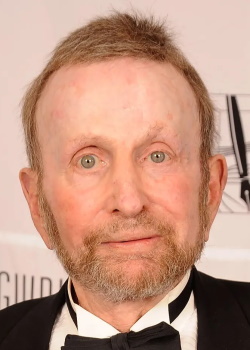 Composer, arranger and musician Johnny Mandel died at his home in Ojai, California, on June 29, 2020, at the age of 94.
One of the most sophisticated voices in American film, jazz and popular music, Mandel wrote scores for more than 30 films and created such enduring songs as “The Shadow of Your Smile,” “Emily,” “A Time for Love” and “Suicide Is Painless.”.
John Alfred Mandel was born in New York City on November 23, 1925. Blessed with perfect pitch, he studied at the Manhattan School of Music and briefly at Juilliard, and became a professional trumpeter and trombonist while still young. During the 1940s and 1950s he played or arranged for bands led by Buddy Rich, Jimmy Dorsey, Woody Herman, Artie Shaw and Count Basie, developing the deep understanding of jazz harmony and orchestral color that would define his later film music.
Mandel moved to Hollywood in 1957 and made an immediate impact with Robert Wise’s I Want to Live! (1958), starring Susan Hayward. The score integrated modern jazz directly into the dramatic fabric of the film rather than treating it merely as source music, and its soundtrack brought Mandel three Grammy nominations. He followed it with films including The Third Voice (1960), Drums of Africa (1963) and Arthur Hiller’s The Americanization of Emily (1964), whose lyrical main theme became the song “Emily” after Johnny Mercer added lyrics. Read more…
Lennie Niehaus, 1929-2020
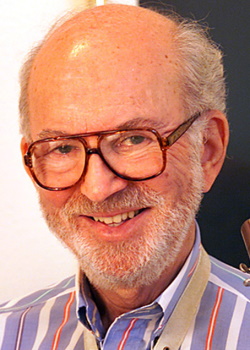 Composer Lennie Niehaus died on May 28, 2020, at his home in Redlands, California, of a heart-related illness. He was 90.
Leonard Niehaus was born in June 1929, in St. Louis, Missouri, but grew up in Los Angeles, where he developed his love for music. He graduated from California State University, Los Angeles, with a degree in music composition. Niehaus began his career as a jazz alto saxophonist, gaining prominence in the 1950s as a member of Stan Kenton’s orchestra. He was celebrated for his fluid improvisation and skillful arrangements, which earned him a respected place in the West Coast jazz scene.
In the 1960s Niehaus began orchestrating for television and film composer Jerry Fielding; Niehaus worked with Fielding on approximately seventy TV shows and films, including Straw Dogs (1971), Bring Me the Head of Alfredo Garcia (1974), the comedy The Bad News Bears (1976), and the horror film Demon Seed (1977). Read more…
Gerard Schurmann, 1924-2020
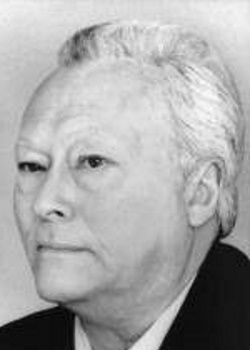 Composer and conductor Gerard Schurmann died at his home in the Hollywood Hills, California, on March 24, 2020, at the age of 96, following a period of declining health.
A distinguished figure in both film and concert music, Schurmann was best known for scores including The Long Arm, Horrors of the Black Museum, Konga, Dr. Syn, Alias the Scarecrow, The Bedford Incident and The Lost Continent. He was also an accomplished orchestrator whose work included two of the great epic scores of the 1960s, Exodus and Lawrence of Arabia.
Gerard Schurmann was born in Kertosono, Java, in the Dutch East Indies, on January 19, 1924, to Dutch parents. His mother was an accomplished pianist, and music became an important part of his childhood. He moved to England at 17 during the Second World War and served with the Royal Air Force, eventually using his talents as a pianist to provide musical entertainment for servicemen.
After the war Schurmann briefly worked as cultural attaché at the Netherlands Embassy in London while continuing to perform and compose. Encouraged by conductor Eduard van Beinum, he became associated with Dutch radio orchestras in Hilversum, but his principal ambition was composition. An important mentor was British composer Alan Rawsthorne, whose friendship eventually helped Schurmann enter the film industry. Read more…
IFMCA Award Winners 2019
 INTERNATIONAL FILM MUSIC CRITICS ASSOCIATION ANNOUNCES WINNERS OF 2019 IFMCA AWARDS; JOHN WILLIAMS REIGNS SUPREME WITH MULTIPLE AWARDS HONORING HIS FINAL STAR WARS SCORE, THE RISE OF SKYWALKER
FEBRUARY 20, 2020 — The International Film Music Critics Association (IFMCA) announces its list of winners for excellence in musical scoring in 2019, in the 2019 IFMCA Awards.
The award for Score of the Year goes to legendary veteran John Williams for his score for the ninth and final Star Wars film, “The Rise of Skywalker,” which concluded the sequel trilogy of adventures about the scavenger Rey, heroic former Stormtrooper Finn, and Kylo Ren, the leader of the Imperial First Order. The film is directed by J.J Abrams, and stars Daisy Ridley, John Boyega, and Adam Driver. In describing the score, IFMCA member James Southall described “The Rise of Skywalker” as ‘one last brilliant piece of musical adventure to call time on his signature work … a triumphant conclusion to an extraordinary musical saga,’ and also said that ‘it’s simply impossible to overstate Williams’s contribution to the series’ success’. The score is also named Best Original Score for a Fantasy/Science Fiction/Horror Film, while the main theme “The Rise of Skywalker” is named Film Music Composition of the Year. Read more…
Academy Award Winners 2019
 The Academy of Motion Picture Arts and Sciences (AMPAS) have announced the winners of the 92nd Academy Awards, honoring the best in film in 2019.
In the Best Original Score category composer Hildur Guđnadóttir won the award for her score for the dark comic book origin story Joker, directed by Todd Phillips, and starring Joaquin Phoenix. With this win Guđnadóttir became the first female composer to win an Oscar since Anne Dudley for The Full Monty in 1997, and became the first composer in history, of any gender, to win all the big five composing awards – Oscar, Globe, Emmy, Grammy, BAFTA – in the same awards cycle. In accepting her award, Guđnadóttir said:
“Wow. This is so touching. Thank you to the Academy for welcoming me so warmly, it’s just… I don’t know what to say! My fellow nominees, masters of the craft, it’s been such an honor to get to know you all, so special. A film composer is only as creative as the dialogue with the director. Todd Phillips was so generous to invite me on this journey, and listen to me the whole way, so attentively, and I thank you for that, so deeply. And Bradley [Cooper] as well! Thank you Bradley. My family, my beautiful family, who are here with me tonight. My incredible husband Sam, my love, my best friend, my other set of ears, I’d be lost without you. My, mother, my son Cody, I can’t see you, but I love you so much! I love you. To the girls, to the women, to the mothers, to the daughters, who hear the music bubbling within: please speak up. We need to hear your voices.”
The other nominees were Alexandre Desplat for Little Women, Randy Newman for Marriage Story, Thomas Newman for 1917, and John Williams for Star Wars: The Rise of Skywalker.
In the Best Original Song category, the winners were Elton John and Bernie Taupin for “I’m Gonna Love Me Again” from the Elton John biopic Rocketman.
The other nominees were Kristen Anderson-Lopez and Robert Lopez for “Into The Unknown” From Frozen II; Joshuah Brian Campbell and Cynthia Erivo for “Stand Up” from Harriet; Randy Newman for “I Can’t Let You Throw Yourself Away” from Toy Story 4; and Diane Warren for “I’m Standing With You” from Breakthrough.
IFMCA Award Nominations 2019
INTERNATIONAL FILM MUSIC CRITICS ASSOCIATION AWARD NOMINATIONS ANNOUNCED; HILDUR GUÐNADÓTTIR RECIEVES FIVE NOMINATIONS; MULTIPLE NOMINATIONS FOR ALEXANDRE DESPLAT, BEAR McCREARY, THOMAS NEWMAN, JOHN WILLIAMS
FEBRUARY 6, 2020. The International Film Music Critics Association (IFMCA) announces its list of nominees for excellence in musical scoring in 2019, for the 16th annual IFMCA Awards. For the first time in IFMCA history a female composer leads the field, with Icelandic composer and cellist Hildur Guðnadóttir receiving five separate nominations for her work on the critically acclaimed comic-book drama “Joker,” and for the devastating HBO television series “Chernobyl”. These are the first nominations for Guðnadóttir, who is nominated in the categories for Film Score of the Year, Composer of the Year, Drama Score, Television Score, and Film Music Composition of the Year. IFMCA member James Southall was particularly complementary about “Joker,” describing it as having ‘complexity in its extraordinary emotional depth,’ and calling it a ‘primal’ score which ‘made him think’.
Also nominated for both Score of the Year and Composer of the Year are veteran composers Alexandre Desplat, Thomas Newman, and John Williams. French composer Desplat’s most lauded score of 2019 is the one he wrote for director Greta Gerwig’s new adaption of the classic American novel “Little Women,” which is also nominated for Drama Score. IFMCA member Jon Broxton said that the score ‘overflows with gorgeous orchestrations, sublime instrumental combinations and harmonies,’ and has ‘a dramatic sense of freedom and movement, effortless elegance, and lush emotional content’. Desplat’s other major scores in 2019 include the French drama “Adults in the Room,” the animated sequel “The Secret Life of Pets 2,” and director Roman Polanski’s look at the Dreyfus Affair of 1906 in “J’accuse”. Desplat previously won the IFMCA Score of the Year award in 2008 for “The Curious Case of Benjamin Button”. Read more…

Shop at the Movie Music UK Store

Member of the


