Archive
Golden Globe Nominations 2005
 The Hollywood Foreign Press Association (HFPA) has announced the nominations for the 63rd Golden Globe Awards, honoring the best in film and American television of 2005.
In the Best Original Score category, the nominees are:
- ALEXANDRE DESPLAT for Syriana
- HARRY GREGSON-WILLIAMS for The Chronicles of Narnia: The Lion, the Witch and the Wardrobe
- JAMES NEWTON HOWARD for King Kong
- GUSTAVO SANTAOLALLA for Brokeback Mountain
- JOHN WILLIAMS for Memoirs of a Geisha
These are the first nominations for Gregson-Williams, Howard, and Santaolalla. It is the second nomination for Desplat, and the 20th nomination for Williams. Williams previously won for Jaws in 1975, Star Wars in 1977, and E.T. The Extra-Terrestrial in 1982.
In the Best Original Song category, the nominees are:
- MEL BROOKS for “There’s Nothing Like a Show on Broadway” from The Producers
- ALANIS MORISSETTE for “Wunderkind” from The Chronicles of Narnia: The Lion, the Witch and the Wardrobe
- DOLLY PARTON for “Travelin’ Thru” from Transamerica
- TONY RENIS for “Christmas in Love” from Christmas in Love
- GUSTAVO SANTAOLALLA and BERNIE TAUPIN for “A Love That Will Never Grow Old” from Brokeback Mountain
The winners of the 63rd Golden Globe Awards will be announced on January 16, 2006.
Remembering Brian Easdale, 1909-1995
 Composer Brian Easdale died ten years ago today, on October 30, 1995, at his home in London, England. He was 86.
FULL REMEMBRANCE COMING SOON.
Remembering Miklós Rózsa, 1907-1995
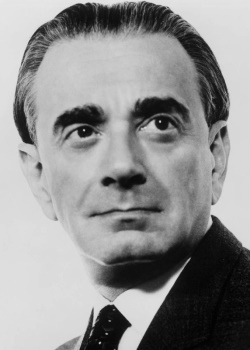 Composer Miklós Rózsa died ten years ago today, on July 27, 1995, at his home in Los Angeles, California, due to complications from a series of strokes. He was 88.
Born in Budapest in April 1907, Rózsa was a child prodigy who studied violin and composition from an early age. He completed his formal training in Leipzig, Germany, and initially made his name as a composer of concert music. In the 1930s he moved to Paris, and later London, having been encouraged by his friend, Swiss composer Arthur Honegger, to supplement his income writing music for cinema. His entry into film scoring came with Knight Without Armour (1937), produced by his fellow Hungarian Alexander Korda, and his success in British cinema led to a contract with MGM and a move to Hollywood in 1940.
Rózsa quickly distinguished himself in America with powerful, emotionally charged scores for films such as The Thief of Bagdad (1940), Lydia (1940), Sundown (1941), That Hamilton Woman (1941), Jungle Book (1942), Double Indemnity (1944), and Spellbound (1945), the latter of which earned him the the first of his three Oscar wins for Best Original Score. He was acclaimed for his ability to seamlessly blend traditional symphonic writing with dramatic storytelling, and often conducted extensive historical and ethnomusicological research to bring authenticity to his scores, resulting in a style that helped define the sound of Hollywood’s Golden Age.
He won his second Oscar for A Double Life (1947), and then a third for Ben-Hur (1959), which at time was heralded as one of the most ambitious film scores ever written, and which subsequently became a benchmark of epic film music. His other acclaimed and popular scores included such titles as The Lost Weekend (1945), The Killers (1946), The Red Danube (1949), Quo Vadis (1951), Ivanhoe (1952), Julius Caesar (1953), Knights of the Round Table (1953), Young Bess (1953), Valley of the Kings (1954), Lust for Life (1956), El Cid (1961), King of Kings (1961), Sodom and Gomorrah (1963), and The Golden Voyage of Sinbad (1974). Read more…
Academy Award Nominations 2004
 The Academy of Motion Picture Arts and Sciences (AMPAS) have announced the nominations for the 77th Academy Awards, honoring the best in film in 2004.
In the Best Original Score category, the nominees are:
- JOHN DEBNEY for The Passion of the Christ
- JAMES NEWTON HOWARD for The Village
- JAN A. P. KACZMAREK for Finding Neverland
- THOMAS NEWMAN for Lemony Snicket’s A Series of Unfortunate Events
- JOHN WILLIAMS for Harry Potter and the Prisoner of Azkaban
These are the first Oscar nominations for Debney and Kaczmarek. This is the 4th nomination for Howard, the 8th nomination for Newman, and the 38th nomination for Williams. Williams previously won for Fiddler on the Roof in 1971, Jaws in 1975, Star Wars in 1977, E.T. the Extra Terrestrial in 1982, and Schindler’s List in 1993.
In the Best Original Song category, the nominees are:
- BRUNO COULAIS and CHRISTOPHE BARRATIER for “Look to Your Path” from The Chorus
- JORGE DREXLER for “Al Otro Lado del Río” from The Motorcycle Diaries
- ADAM DURITZ, CHARLIE GILLINGHAM, JIM BOGIOS, DAVID IMMERGLÜCK, MATT MALLEY, DAVID BRYSON, and DAN VICKREY for “Accidentally in Love” from Shrek 2
- ANDREW LLOYD-WEBBER and CHARLES HART for “Learn to Be Lonely” from The Phantom of the Opera
- ALAN SILVESTRI and GLENN BALLARD for “Believe” from The Polar Express
The winners of the 77th Academy Awards will be announced on February 27, 2005.
BAFTA Nominations 2004
 The British Academy of Film and Television Arts (BAFTA) has announced the nominations for the 58th British Academy Film Awards, honoring the best in film in 2004.
In the Best Original Music category, which is named in memory of the film director Anthony Asquith, the nominees are:
- CRAIG ARMSTRONG for Ray
- BRUNO COULAIS for The Chorus
- JAN A. P. KACZMAREK for Finding Neverland
- GUSTAVO SANTAOLALLA for The Motorcycle Diaries
- HOWARD SHORE for The Aviator
These are the first nominations for Coulais, Kaczmarek, and Santaolalla. It is the third nomination for Armstrong, and the fifth nomination for Shore. Armstrong previously won for William Shakespeare’s Romeo + Juliet in 1997 and Moulin Rouge! in 2001.
The winners of the 58th BAFTA Awards will be announced on February 12, 2005.
Golden Globe Nominations 2004
The Hollywood Foreign Press Association (HFPA) has announced the nominations for the 62nd Golden Globe Awards, honoring the best in film and American television of 2004.
In the Best Original Score category, the nominees are:
- CLINT EASTWOOD for Million Dollar Baby
- JAN A. P. KACZMAREK for Finding Neverland
- ROLFE KENT for Sideways
- HOWARD SHORE for The Aviator
- HANS ZIMMER for Spanglish
These are the first nominations for Eastwood, Kaczmarek, and Kent, although Eastwood has been nominated three times previously as a director, winning for Bird in 1988 and Unforgiven in 1992. It is the third nomination for Shore, and the sixth nomination for Zimmer. Shore previously won for The Lord of the Rings: The Return of the King in 2003. Zimmer previously won for The Lion King in 1994 and Gladiator in 2000.
In the Best Original Song category, the nominees are:
- ADAM DURITZ, DAN VICKREY, DAVID BRYSON, MATT MALLEY, and DAVID IMMERGLÜCK (COUNTING CROWS) for “Accidentally in Love” from Shrek 2
- MICK JAGGER and DAVID A. STEWART for “Old Habits Die Hard” from Alfie
- WYCLEF JEAN, JERRY DUPLESSIS, and ANDREA GUERRA for “Million Voices” from Hotel Rwanda
- ANDREW LLOYD WEBBER and CHARLES HART for “Learn to Be Lonely” from The Phantom of the Opera
- ALAN SILVESTRI and GLEN BALLARD for “Believe” from The Polar Express
The winners of the 62nd Golden Globe Awards will be announced on January 16, 2005.
Elmer Bernstein, 1922-2004
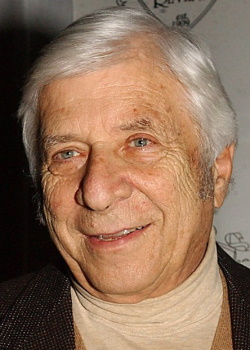 Composer Elmer Bernstein died on August 18, 2004, at his home in Ojai, California, after a lengthy battle with cancer. He was 82.
Bernstein was born in New York City in April 1922, the son of immigrants from Ukraine and Austria-Hungary. He studied piano as a child and showed early promise as a performer; during his childhood, he performed professionally as a dancer and an actor, but then switched to music and trained at the Juilliard School where he was encouraged by prominent figures such as Aaron Copland. During World War II, he served in the Army Air Forces, where he composed and arranged music for military radio programs.
Bernstein moved to California in in the early 1950s, when he was hired to score the thriller Sudden Fear in 1952. However, along with many other artists in Hollywood, Bernstein faced censure during the McCarthy era of the early 1950s, and was called by the House Un-American Activities Committee. After he refused to name names, pointing out that he had never attended a Communist Party meeting, he found himself composing music for Z-grade sci-fi movies such as Robot Monster and Cat-Women of the Moon.
His work on The Man with the Golden Arm (1955), one of the first major studio films to feature a jazz score, brought him back into the mainstream, earned him his first Oscar nomination and marked him as a daring and contemporary voice in film music. His score for The Ten Commandments (1956), an epic of biblical scale, demonstrated his facility with grand orchestration and established him as a composer of serious dramatic substance. He followed it with the heroic and unforgettable theme to The Magnificent Seven (1960), whose galloping rhythms and bold brass fanfares became one of the most enduring musical signatures in film history. Read more…
David Raksin, 1912-2004
 Composer David Raksin died on August 9, 2004, in Los Angeles, after a short illness. He was 92.
Raksin was born in Philadelphia, Pennsylvania, in August 1912. He studied at the University of Pennsylvania and the Curtis Institute of Music, and later with Isadore Freed in New York and Arnold Schoenberg in Los Angeles. He worked as an arranger for Charlie Chaplin on the score for Modern Times in 1936 when he was just 24 years old, and soon after began a long career as a composer for studio films.
With a career spanning more than six decades, Raksin composed music for over 100 films and numerous television programs, earning a reputation for melodic sophistication and dramatic sensitivity. His theme for the 1944 classic Laura is often cited as one of the most memorable in film history, and became a popular standard, with lyrics later added by Johnny Mercer. Raksin’s theme song for the 1953 film The Bad and the Beautiful (also called “Love is For the Very Young”) was also a hit.
Rakin’s other major composing credits include Forever Amber (1947), The Secret Life of Walter Mitty (1947), Force of Evil (1948), Whirlpool (1950), The Magnificent Yankee (1950), Across the Wide Missouri (1951), The Big Combo (1955), Bigger Than Life (1956), Separate Tables (1958), and Two Weeks in Another Town (1962), among many others. He received two Academy Award nominations and numerous honors for his work, which was admired for its lyrical beauty, harmonic depth, and keen dramatic sense. One of his last major scores was for the critically acclaimed nuclear holocaust-themed TV drama The Day After in 1983. Read more…
Jerry Goldsmith, 1929-2004
 Composer Jerry Goldsmith died on July 21, 2004 at his home in Beverly Hills, California, after a battle with cancer. He was 75.
Jerrald King Goldsmith was born in Pasadena, California, in February 1929, and started playing piano at an early age, before later being tutored by pianist Jakob Gimpel and composer Mario Castelnuovo-Tedesco. He studied music at both the University of Southern California – where he attended classes given by Miklós Rózsa – and Los Angeles City College, before securing a job as a clerk-typist in the music department of TV network CBS under music director Lud Gluskin. He began writing music as early as 1951, for radio shows and live television (one of his first gigs was the first ever James Bond story, Casino Royale, produced as part of the Climax! series), and quickly became a television mainstay, contributing scores to such series as The Lineup, Black Saddle, Playhouse 90, Perry Mason and The Twilight Zone.
Goldsmith scored his first feature film, the western Black Patch, in 1957 at the age of 28, and spent much of the 1950s and 60s scoring both feature films and television projects: he worked on hit TV shows such as Gunsmoke, Wagon Train, Rawhide, Cain’s Hundred, Dr Kildare, The Man from U.N.C.L.E., The Loner, Room 222 and The Waltons, while scoring such popular films as Freud (1962), for which he received his first Oscar nomination, The List of Adrian Messenger (1963), Seven Days in May (1964), A Patch of Blue (1965), In Harm’s Way (1965), The Blue Max (1966), The Sand Pebbles (1966), the groundbreaking and avant-garde Planet of the Apes (1968), and numerous revisionist Westerns, which seemed to be his forte for much of the first two decades of his career. Read more…
Remembering Henry Mancini, 1924-1994
 Composer Henry Mancini died ten years ago today, on June 14, 1994, at his home in Los Angeles, California, after a battle with pancreatic cancer. He was 70 years old.
Enrico Nicola Mancini, nicknamed Henry or Hank, was born in April 1924 in Cleveland, Ohio, the son of Italian immigrants, and raised in a rural steelworking town in nearby Pennsylvania. He showed early musical promise and studied at the Juilliard School, but his education was interrupted by World War II, during which he served in the Army and worked with the Glenn Miller Air Force Band. After the war, Mancini joined Universal-International’s music department, where he gained experience scoring dozens of B-movies, including classics such as Creature from the Black Lagoon (1954).
Mancini’s big break came in 1958 when he collaborated with director Blake Edwards on the television series Peter Gunn, which featured a groundbreaking jazz score that became a hit in its own right. Their partnership continued through numerous films, with Mancini’s music often becoming as iconic as the films themselves. He won an Oscar for scoring Edwards’s film Breakfast at Tiffany’s in 1961, and co-wrote the iconic song “Moon River” for lead actress Audrey Hepburn. He won another Oscar in 1962 for the title song for Edwards’s film Days of Wine and Roses, received an Oscar nomination for timeless slinky jazzy main theme from The Pink Panther in 1964, and earned critical acclaim for his work on several other Edwards-directed films including The Great Race (1965), Darling Lili (1970), 10 (1979), and Victor/Victoria (1982), among many others.
Mancini had a rare ability to blend classical technique with contemporary popular styles, from swing and jazz to lush romantic ballads. Throughout the 1960s and 70s Mancini combined his scoring career with an equally successful parallel career as a songwriter, recording artist, touring conductor, and media personality, which made him one the most famous and popular American classical musicians of his era. His songs were recorded by the most popular vocalists of the day – Andy Williams, Frank Sinatra, Perry Como, Johnny Mathis, Tony Bennett, dozens of others – and many of them topped the charts. Read more…
Academy Award Nominations 2003
The Academy of Motion Picture Arts and Sciences (AMPAS) have announced the nominations for the 76th Academy Awards, honoring the best in film in 2003.
In the Best Original Score category, the nominees are:
- DANNY ELFMAN for Big Fish
- JAMES HORNER for House of Sand and Fog
- THOMAS NEWMAN for Finding Nemo
- HOWARD SHORE The Lord of the Rings: The Return of the King
- GABRIEL YARED for Cold Mountain
This is the 3rd Oscar nomination for Elfman, the 7th nomination for Horner, the 7th nomination for Newman, the 2nd nomination for Shore, and the 3rd nomination for Yared. Horner previously won for Titanic in 1997. Shore previously won for The Lord of the Rings: The Fellowship of the Ring in 2001.
In the Best Original Song category, the nominees are:
- T-BONE BURNETT and ELVIS COSTELLO for “Scarlet Tide” from Cold Mountain
- BENOÎT CHAREST and SYLVAIN CHOMET for “Belleville Rendezvous” from The Triplets of Belleville
- MICHAEL McKEAN and ANNETTE O’TOOLE for “A Kiss at the End of the Rainbow” from A Mighty Wind
- ANNIE LENNOX, HOWARD SHORE, and FRAN WALSH for “Into the West” from The Lord of the Rings: The Return of the King
- GORDON SUMNER (STING) for “You Will Be My Ain True Love” from Cold Mountain
The winners of the 76th Academy Awards will be announced on February 29, 2004.
BAFTA Nominations 2003
The British Academy of Film and Television Arts (BAFTA) has announced the nominations for the 57th British Academy Film Awards, honoring the best in film in 2003.
In the Best Original Music category, which is named in memory of the film director Anthony Asquith, the nominees are:
- ALEXANDRE DESPLAT for Girl with a Pearl Earring
- ROBERT DIGGS (RZA) for Kill Bill, Volume 1
- BRIAN REITZELL and KEVIN SHIELDS for Lost in Translation
- HOWARD SHORE for The Lord of the Rings: The Return of the King
- GABRIEL YARED and T-BONE BURNETT for Cold Mountain
These are the first nominations for Desplat, Diggs, Reitzell, and Shields. It is the second nomination for Burnett, the third nomination for Yared, and is the fourth nomination for Shore. Yared previously won for The English Patient in 1996.
The winners of the 57th BAFTA Awards will be announced on February 15, 2004.
Golden Globe Nominations 2003
The Hollywood Foreign Press Association (HFPA) has announced the nominations for the 61st Golden Globe Awards, honoring the best in film and American television of 2003.
In the Best Original Score category, the nominees are:
- ALEXANDRE DESPLAT for Girl With a Pearl Earring
- DANNY ELFMAN for Big Fish
- HOWARD SHORE for The Lord of the Rings: The Return of the King
- GABRIEL YARED for Cold Mountain
- HANS ZIMMER for The Last Samurai
This is the first nomination for Desplat, the second nomination for Elfman, the second nomination for Shore, the third nomination for Yared, and the fifth nomination for Zimmer. Yared previously won for The English Patient in 1996. Zimmer previously won for The Lion King in 1994 and Gladiator in 2000.
In the Best Original Song category, the nominees are:
- PAUL HEWSON (BONO), GAVIN FRIDAY, and MAURICE SEEZER for “Time Enough For Tears” from In America
- ELTON JOHN and BERNIE TAUPIN for “The Heart of Every Girl” from Mona Lisa Smile
- ANNIE LENNOX, FRAN WALSH, and HOWARD SHORE for “Into the West” from The Lord of the Rings: The Return of the King
- GORDON SUMNER (STING) for “You Will Be My Ain True Love” from Cold Mountain
- EDDIE VEDDER for “Man of the Hour” from Big Fish
The winners of the 61st Golden Globe Awards will be announced on January 25, 2004.
Michael Kamen, 1948-2003
 Composer Michael Kamen died on November 18, 2003 in London, England, after suffering a heart attack. He was 55.
Michael Arnold Kamen was born in New York in April 1948, where he attended The High School of Music and Art and the Juilliard School, where he specialized in composition and oboe performance. After being a part of the New York Rock & Roll Ensemble with fellow composer Mark Snow as a youth, Kamen moved to England in the 1970s and found work as ballet composer and as an arranger for pop and rock bands, notably for artists such as Kate Bush, David Bowie and Pink Floyd, for whom he arranged the album The Wall in 1979.
Having already dabbled in film music during the late 1970s, Kamen began embracing cinema fully in the early 1980s, writing the music for acclaimed films such as The Dead Zone and Brazil, and the TV mini-series Edge of Darkness, before cracking the Hollywood big-time with a trio of massively successful action scores between 1986 and 1989 – Highlander, Lethal Weapon and Die Hard. Read more…
Remembering Roy Budd, 1947-1993
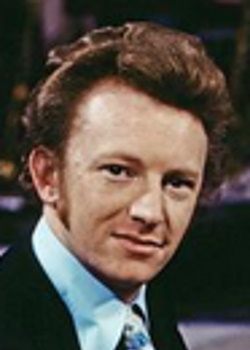 Composer Roy Budd died ten years ago today, on August 7, 1993, of a brain hemorrhage in hospital in London, UK. He was 46.
Roy Frederick Budd was born in London, England, in March 1947. A musical prodigy from a young age, Budd made his public debut on the piano at age six and was performing professionally by his teens. Deeply influenced by jazz legends such as Erroll Garner and Oscar Peterson, Budd quickly carved out a name for himself as a dynamic live performer, often appearing on British television and radio in the 1960s.
His entry into film scoring came in the late 1960s, but it was the 1971 crime thriller Get Carter that cemented his legacy, which he wrote when he was just 24 years old. The minimalist, percussive theme, composed and recorded in just a few days, went on become one of the most instantly recognizable pieces in British cinema history. Budd’s deft combination of jazz, funk, and moody atmospherics would become his signature, earning him further acclaim for scores to films such as Soldier Blue (1970), Fear Is the Key (1972), The Stone Killer (1973), The Marseille Contract (1974), Diamonds (1975), Paper Tiger (1975), Sinbad and the Eye of the Tiger (1977),The Wild Geese (1978), and The Sea Wolves (1980).
Over the course of his career, Budd scored more than 40 films, often working on films starring major British actors of the 1960s and 70s including Michael Caine, Richard Burton, and Roger Moore. In addition to his film work, he remained a passionate jazz performer, frequently recording albums and touring. Read more…

Shop at the Movie Music UK Store

Member of the

 MOVIE MUSIC UK