Archive
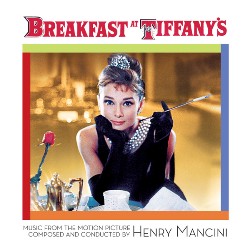
BREAKFAST AT TIFFANY’S – Henry Mancini
 GREATEST SCORES OF THE TWENTIETH CENTURY
Original Review by Craig Lysy
Hollywood producers Martin Jurow and Richard Shepherd saw opportunity beckoning with Truman Capote’s controversial 1958 novella Breakfast at Tiffany’s, and convinced Paramount Studios to purchase the film rights. They hired George Axelrod to write a screenplay that “softened” Capote’s edgy narrative, and Blake Edwards was given the director reigns. Edwards assembled a fine cast, which included Audrey Hepburn as Holly Golightly, George Peppard as Paul Varjak, Patricia Neal as Emily Eustace, Buddy Ebsen as Doc Golightly, Martin Balsam as O. J. Berman, and Mickey Rooney as Holly’s landlord Mr. Yunioshi. For the 1950’s, this truly sordid story broke all the sensibilities of the day – Holly was a foul-mouthed, bisexual, social-climbing and gold-digging prostitute, who has had an abortion and smokes marijuana! The fact that the story’s narrator was gay only added to the controversy. Jurow and Shepherd knew the story as written would never fly, so they chose not to make a modern and edgy social drama. They astutely recast the story’s narrative into a more conventional, and emotionally accessible direction – a romantic comedy. Well, Holly’s love affair with struggling writer Paul succeeded on all counts and won audience hearts worldwide. The film was also a critical success, earning five Academy Award Nominations, winning two for best Original Song and Best Score. Read more…
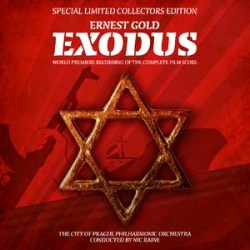
EXODUS – Ernest Gold
 GREATEST SCORES OF THE TWENTIETH CENTURY
Original Review by Craig Lysy
In 1958 Otto Preminger and United Artists studio purchased the film rights to Leon Uris’s forthcoming novel, “Exodus”. Preminger, who would both produce and direct the film, felt that this was a story that needed to be told, and for him it became a passion project. He hired Dalton Trumbo who had been blacklisted as a communist by the infamous McCarthy Committee to write the screenplay. From day one he had Paul Newman in mind to play the lead role of Ari Ben Canaan. The stellar cast rounded off with Eva Marie Saint as Kitty Fremont, Ralph Richardson as General Sutherland, Peter Lawford as Major Caldwell, Lee Cobb as Barak Ben Canaan, Sal Mineo as Dov Landau, and John Derek as Taha. Read more…
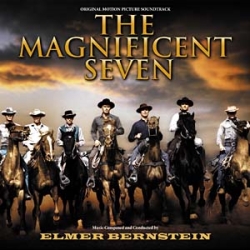
THE MAGNIFICENT SEVEN – Elmer Bernstein
 GREATEST SCORES OF THE TWENTIETH CENTURY
Original Review by Craig Lysy
Yul Brynner had long explored the idea of an American retelling of Akira Kurosawa’s epic 1954 Japanese film The Seven Samurai. Brynner related; “I felt it was one of the great westerns of all time, only it was made by the Japanese, in the Japanese idiom. But the form, the whole design of it was the ideal western.” He worked with fellow actor Anthony Quinn to develop the concept, but when they had a falling out, he took over the reigns alone and presented his pitch to producer Walter Mirisch. Mirisch believed an Americana retelling of this epic story would resonate with the public, and so purchased film rights from Toho Studios and a distribution contract with United Artists. This was a passion project for Brynner, and he brought in friend John Sturges who acquainted himself well with Gunfight at the OK Corral in 1957, to both produce and direct the film. Read more…
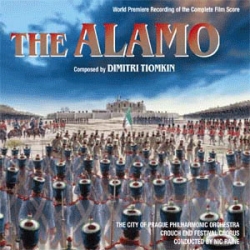
THE ALAMO – Dimitri Tiomkin
 GREATEST SCORES OF THE TWENTIETH CENTURY
Original Review by Craig Lysy
This historical epic directed by and starring John Wayne focuses on the famous battle at the Alamo. In 1836, Generalisimo Santa Anna and his grand Mexican Army marched into Texas, then a province of Mexico, to break a rebellion by the locals. The Texans are not fully prepared to engage Santa Anna in battle, so in order to buy time for General Sam Houston and his troops, his subordinate, Colonel William Travis, devises a bold plan. He will fortify and garrison a small mission fort called the Alamo to forestall Santa Ana’s advance northward. The odds are near impossible as they are greatly outnumbered in men, cavalry and artillery. Yet Travis is resolute in his determination to stop Santa Anna at all costs. Heroes of American folklore, the legendary Jim Bowie as well as Davy Crockett and his Tennessee Volunteers support him. And so this small band of 187 men stand their ground in the face of Santa Ana’s army of 5,000 only to find that relief is not coming. Resigned to their fate these American heroes fight an unwinnable battle, one where they will be slaughtered to the man, but a battle that will serve as a rallying cry that will inspire their fellow Texans to fight for and win independence. The movie has a stellar cast that included John Wayne (Davey Crockett), Richard Widmark (Jim Bowie) and Laurence Harvey as Colonel William Travis. The film was a critical success earning six Oscar nominations, but a commercial failure as ticket sales failed to recoup the production costs. Read more…
PSYCHO – Bernard Herrmann
 GREATEST SCORES OF THE TWENTIETH CENTURY
Original Review by Craig Lysy
After the much-heralded success of North by Northwest in 1959, Alfred Hitchcock chose to change career paths and direct his first Horror genre film. His secretary found an obscure novel, Psycho by novelist Robert Bloch, and it was exactly for what Hitchcock was seeking. He purchased the film rights for a mere $9,500, and then bought as many copies of the book as possible as he was determined to keep it’s ending a secret. He however ran into headwinds immediately when Paramount studio executives were taken aback by the sordid nature of the story. Yet Hitchcock was determined and negotiated a small budget, agreed to shoot in black and white on the Universal lots, agreed to employ his television series crews, and asked that Paramount only manage the film’s distribution. In addition he offered to take 60% of the film profits in lieu of his customary salary of $250,000. Paramount agreed as they expected the film to lose money. Remarkably, and to Paramount’s chagrin, the film was enormously profitable. In the end, Hitchcock had the final laugh, earning an astounding $15 million! Read more…
SPARTACUS – Alex North
 GREATEST SCORES OF THE TWENTIETH CENTURY
Original Review by Craig Lysy
Kirk Douglas’ pride was wounded when director William Wyler selected Charlton Heston over him for the titular role in Ben-Hur. He resolved to show Wyler and Hollywood that he could carry a Roman epic film. Fortune smiled when Edward Lewis, a studio executive in Douglas’ production company, came upon the novel Spartacus (1951) by Howard Fast. Its heroic story telling of a man who rises up to challenge the might of the Roman Empire offered a perfect opportunity for Douglas to showcase his talent. He purchased the film rights and then convinced Universal Studios to jointly finance the film. Douglas brought in Fast to adapt his own novel, but his unfamiliarity with cinematic screenplays led to his dismissal. Douglas was determined to succeed at all costs, and so stoked controversy by bringing in black listed screenplay writer Dalton Trumbo and insisting that he get screen credit. This decision was decisive in that it served to break the decade long blacklisting of writers in Hollywood. For his cast, we have one the finest ever assembled. Supporting Douglas in the titular role would be Lawrence Olivier as Crassus, Jean Simmons as Varinia, Charles Laughton as Gracchus, Peter Ustinov as Lentulus Batiatus, Tony Curtis as Antoninus, John Gavin as Julius Caesar, John Dall as Glabrus and John Ireland as Crixus. The film got off to a rocky start when Douglas fired his director Anthony Mann after one week of shooting – he felt he was in over his head. He brought in past collaborator Stanley Kubrick, and the rest is history. Read more…
NORTH BY NORTHWEST – Bernard Herrmann
 GREATEST SCORES OF THE TWENTIETH CENTURY
Original Review by Craig Lysy
In 1958 Screenwriter Ernest Lehman approached Alfred Hitchcock with an offer to “make a Hitchcock picture to end all Hitchcock pictures.” After brainstorming to find common ground, a plot coalesced around North By Northwest, a case of mistaken identity, murder, romance and a cross-country chase, which ends dramatically atop Mount Rushmore. Hitchcock secured a stellar cast, which included Cary Grant as Roger Thornhill, Eve Marie Saint as Eve Kendall, and James Mason as Phillip Vandamm. The story concerns a Madison Avenue advertising man, Roger Thornhill, who finds himself thrust into the hidden world of spies and espionage when he is mistaken for a man by the name of George Kaplan. He is pursued and hunted by foreign spy Phillip Vandamm and his henchman Leonard who try to eliminate him. When Thornhill is framed for murder he is forced to flee from the police, boarding a 20th Century Limited bound for Chicago. On board he meets Eve Kendall, a beautiful blond who assists him to evade the authorities. Yet all is not as it seems as he discovers that Eve isn’t the innocent bystander but instead Vandamm’s lover. But in another twist Eve is revealed as a double agent and they fall in love. They then join forces and survive a harrowing dramatic escape from Vandamm on the face of Mt. Rushmore. The film is considered to be Hitchcock’s most stylish thriller and was both a critical and commercial success. Read more…
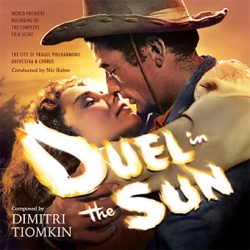
DUEL IN THE SUN – Dimitri Tiomkin
 GREATEST SCORES OF THE TWENTIETH CENTURY
Original Review by Craig Lysy
Famed studio executive David O. Selznick had long sought to recapture the past glory he achieved with Gone With The Wind (1939). He at last found his film within the pages of the novel Duel in the Sun (1944) by Niven Busch. He secured the film rights and joined with screenwriters Oliver H.P. Garrett and Ben Hecht to write the screenplay. For Selznick this film was a passion project, which he would produce and distribute. King Vidor was tasked with directing, and a stellar cast was brought in, which included; Jennifer Jones as Pearl Chavez, Joseph Cotton as Jesse McCanles, Gregory Peck as Lewt McCanles, Lionel Barrymore as Senator Jackson McCanles, Herbert Marshall as Scott Chavez, Lilian Gish as Laura Belle McCanles and Walter Houston as Jubal Crabbe – The Sinkiller. The film was beset with drama and controversy from day one. Its controversial sexual content resulted in Hayes Code censoring, causing numerous editing, which disrupted its storytelling and narrative flow. In addition, Selznick’s constant interference and micromanaging resulted in numerous rewrites of the script, and reshoots, which expanded the film to over 26 hours in length! In the end, this contributed to the breakup of Selznick’s marriage with Jennifer Jones, as well as King Vidor quitting the project. In total, seven directors and six cinematographers were casualties in the making of this film. Read more…
VERTIGO – Bernard Herrmann
 GREATEST SCORES OF THE TWENTIETH CENTURY
Original Review by Craig Lysy
Alfred Hitchcock had earlier taken notice of French authors Pierre Boileau and Thomas Narcejac but was frustrated in a failed bid to secure film rights to one of their novels. When they published their next book in 1954, “D’entre les Morts” (From Among The Dead), Hitchcock would not be denied and resolutely purchased the film rights. He was jubilant and prepared to finance, produce and direct the film, which was now a passion project. Writing the screenplay however was problematic. Hitchcock rejected the efforts of Maxwell Anderson and then Alec Coppel before accepting the 3rd and final version by Samuel Taylor. For his cast he chose his favorite Vera Miles for the role of Madeleine, however she had to drop out after becoming pregnant. When his second choice Lana Turner demanded too much money, Hitchcock turned to Kim Novak. James Stewart was chosen for the lead role of John “Scottie” Ferguson, with Barbara Bel Geddes as Margaret and Tom Helmore as Gavin Elster. When all was said and done Hitchcock related that both Stewart and Novak were miscast and the cause of the film’s poor reception. Read more…
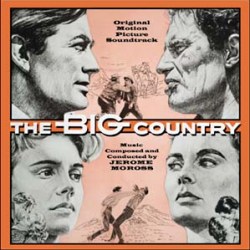
THE BIG COUNTRY – Jerome Moross
 GREATEST SCORES OF THE TWENTIETH CENTURY
Original Review by Craig Lysy
With The Big Country, MGM set out to bring an epic tale of Americana to the big screen. For this massive production they hired William Wyler as director and producer. A screenplay authored my a multitude of writers created a complex narrative, which sought to move beyond the genre’s traditional narratives to explore the darker and more ambiguous psychology of old west. A stellar cast was assembled, which included Gregory Peck (James McKay), Jean Simmons (Julie Maragon), Burl Ives (Rufus Hannassey), Charlton Heston (Steve Leech), Caroll Baker (Patricia Terrill) and Chuck Connors (Buck Hannassey). Read more…
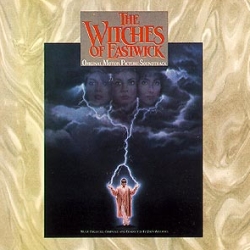
THE WITCHES OF EASTWICK – John Williams
 THROWBACK THIRTY
GREATEST SCORES OF THE TWENTIETH CENTURY
Original Review by Jonathan Broxton
A raucous fantasy comedy based on the novel by John Updike, The Witches of Eastwick stars Susan Sarandon, Michelle Pfeiffer, and Cher, as three women in a small New England town suffering from broken relationships: fiery artist Alexandra (Cher) is a widow, shy and insecure teacher Jane (Sarandon) is a divorcee, and mousy writer Sukie (Pfeiffer) was abandoned by her husband, leaving her to raise six children alone. Despite them living in a town with a history of magic, none of the women realize that they have powers of witchcraft, until an unusual stranger named Daryl Van Horne (Jack Nicholson) arrives in town and begins courting each of them in turn; before long, the women are spending time at Daryl’s mansion, learning about their powers, and finally indulging the passionate, sexual sides of their personality after years of being unfulfilled and repressed. However, as Daryl’s behavior starts to get more and more unpredictable, the women begin to worry about his intentions, and whether his arrival in Eastwick was a good idea. Read more…
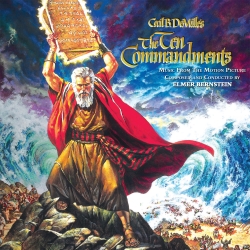
THE TEN COMMANDMENTS – Elmer Bernstein
 GREATEST SCORES OF THE TWENTIETH CENTURY
Original Review by Craig Lysy
Legendary producer-director Cecil B. DeMille, who at 72 was nearing the end of a great career, sought to reclaim past glory with a film that would serve as his crowning achievement. After much thought, he found his answer, in his past. He announced to the world in 1952 of his intention to remake his 1923 film, “The Ten Commandments.” DeMille stated that his retelling of the story would focus exclusively on the life of Moses. This epic film’s preparation took five years, with the script alone requiring three years to write, and the actual filming taking two years. DeMille insisted on a timeless script and so hired a quartet of screenplay writers headed by Aeneas MacKenzie to accomplish the task. The team drew upon three contemporary novels; “Prince Of Egypt” by Dorothy Clarke Wilson, “Pillar Of Fire” by Reverend J. H. Ingraham and “On Eagle’s Wing” by Reverend A. E. Southon. Lastly, DeMille insisted on historical accuracy and fidelity to the ancient texts, which included the works of Philo, Josephus, Eusebius, The Midrash and The Holy Scriptures. Read more…
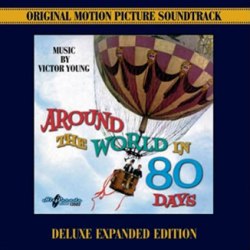
AROUND THE WORLD IN 80 DAYS – Victor Young
 GREATEST SCORES OF THE TWENTIETH CENTURY
Original Review by Craig Lysy
Ever-ambitious producer Mike Todd sought to bring an epic adventure tale to the big screen. He hired screenwriter James Poe to adapt renowned author Jules Verne’s novel “Around The World In 80 Days”. He gave the director reigns to Michael Anderson who brought in an amazing cast which included; David Niven as the classic Victorian English gentleman Phileas Fogg, Mexican icon Cantinflas as the resourceful “Jack of all Trades” Passepartout, Shirley MacLaine as the captivating Princess Aouda, her debut acting role, and Robert Newton as the redoubtable Inspector Fix. The story takes place in England circa 1872 and centers on an epic adventure taken by Phileas Fogg and his man servant Passepartout. Fogg makes the audacious claim that he can circumnavigate the world in eighty days. He offers a £20,000 wager with four skeptical compatriots of the Reform Club, thus setting the stage for the adventure. Read more…
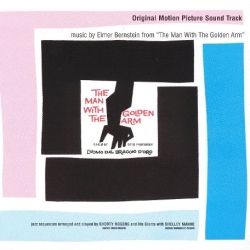
THE MAN WITH THE GOLDEN ARM – Elmer Bernstein
 GREATEST SCORES OF THE TWENTIETH CENTURY
Original Review by Craig Lysy
Actor John Garfield came across Nelson Algren’s novel The Man with the Golden Arm (1949) and was inspired to bring it to the big screen. He purchased the film rights and planned to take on the lead role of Frankie. He immediately ran into censoring problems as the Production Code Authority (PCA) and the Catholic National League of Decency (NLD) would not sanction the film because it featured drug trafficking and drug addiction. The film’s fate passed to renowned director Otto Preminger after he was bequeathed the film rights following Garfield’s death in 1952. Preminger related that he was attracted to the story because “I think there’s a great tragedy in any human being who gets hooked on something, whether it’s heroin or love or a woman or whatever.” Like Garfield, Preminger ran into a wall with the PCA and NLD, but he was determined to overcome all obstacles to fulfill his vision. He brought in Algren to adapt his novel, but personality clashes led to Algren’s replacement with screenwriter Walter Newman. Significant changes to the story were made, which led Algren to sue Preminger for the film rights, however the suit was later dropped as Algren could not afford the legal expenses. Read more…
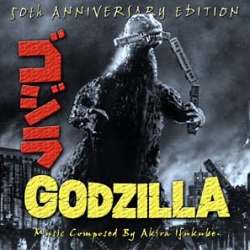
GODZILLA – Akira Ifukube
 GREATEST SCORES OF THE TWENTIETH CENTURY
Original Review by Craig Lysy
Toho studio producer Tomoyuki Tanaka was greatly impressed by the film The Beast From 20,000 Fathoms (1953) and resolved to create a Japanese version. He penned his own script and pitched it to Toho Studio executive Iwao Mori, who signed off on the project. Renowned special effects director Eiji Tsuburaya was hired and affirmed that it was financially and technologically feasible to create the monster, suggesting the use suitmation (an actor in a costume suit) over stop motion animation. Ishirō Honda was given the reigns to direct the film and he selected a fine cast which included Akira Takarada as Captain Hideto Ogata, Momoko Kochi as Emiko Yamane, Akihiko Hirata as Daisuke Serizawa and Takashi Shimura as Dr. Kyohei Yamane. The screenplay underwent several incarnations, evolving over time with contributions from many writers including Tsuburaya, science fiction writer Shigeru Kayama, Takeo Murata, and Honda. Read more…

Shop at the Movie Music UK Store

Member of the

 MOVIE MUSIC UK