BOY ON A DOLPHIN – Hugo Friedhofer
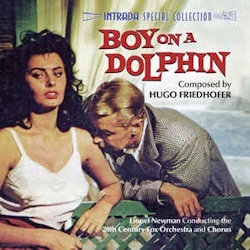 GREATEST SCORES OF THE TWENTIETH CENTURY
Original Review by Craig Lysy
20th Century Fox executives made the decision to bring writer David Divine’s 1955 novel Boy on a Dolphin to the big screen, purchasing the film rights prior to publication. Sam Engel was assigned as producer with a $2.8 million budget, Ivan Moffat and Dwight Taylor were hired to write the screenplay, and Jean Negulesco was tasked with directing. Casting proved problematic, with Cary Grant dropping out at the last minute to comfort his ailing wife; Robert Mitchum then declined, and Alan Ladd was ultimately cast as Dr. James Calder. His co-star, Sophia Loren, who played Phaedra, was two inches taller than the diminutive Ladd and was forced to walk in a trench or have Ladd stand on a box to ensure she did not dwarf him. Joining them were Clifton Webb as Victor Parmelee, Jorge Mistral as Rhif, Laurence Naismith as Dr. Hawkins, and Piero Giagnoni as Nikko.
The film is set on the Greek island of Hydra, where Phaedra, a sponge diver, works aboard her Albanian boyfriend Rhif’s boat. By chance, she discovers an ancient statue of a “Boy on a Dolphin,” a treasure lost 2,100 years ago and long sought by the island’s inhabitants. Seeking to profit, she offers the statue to the highest bidder, which pits an honest archaeologist, Dr. James Calder, against Victor Parmelee, an unscrupulous dealer in antiquities. Over time, Parmelee and Rhif betray her, while she falls in love with Calder. Eventually, her little brother Nikko thwarts Parmelee and Rhif’s theft by surreptitiously cutting the transfer ropes and, with help from the townspeople, helps recover the statue. The film was a commercial success, earning a profit of $500,000. Critical reception was moderately positive, and the film received one Academy Award nomination for Best Original Score.
Alfred Newman, as Director of Music at 20th Century Fox, assigned Hugo Friedhofer to the project. Friedhofer and director Negulesco had collaborated successfully on three prior films – Three Came Home (1950), Lydia Bailey (1952), and The Rains of Ranchipur (1955) – and they welcomed the opportunity to work together again. Upon viewing the film, Friedhofer understood its essential elements: a love story set amidst the beauty of the Aegean Sea islands. He also recognized that the underwater scenes required a leitmotif to capture the beauty and mystery of the Aegean Sea along the shores of an ancient Greek landscape. Friedhofer later described his initial impressions of scoring the film:
“The elements which constitute the score to Boy on a Dolphin are relatively few, and comparatively simple. I might almost say they are even quite conventional. The nature of the film calls for music written in an idiom which has been current for approximately fifty years. In other words, it is music essentially romantic, exotic, and impressionist in style.”
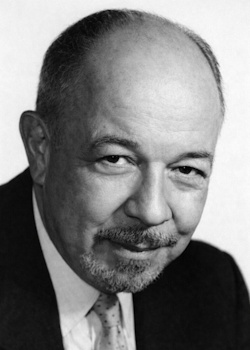 For his soundscape, Friedhofer composed four themes. The Main Theme (“Boy on a Dolphin”) is adapted from the popular song “Ti Einai Afto Pou To Lene Agapi,” which translates to “What Is This Thing Called Love?” He transforms its melody instrumentally to evoke sweeping romanticism and a warm Mediterranean atmosphere, borne by lush strings and a sultry saxophone. When rendered in song form, new lyrics were provided by Paul Francis Webster.
The Sea Theme evokes the beauty and wonder of the Aegean Sea’s shimmering turquoise and deep blue-green waters. Friedhofer employs aquatic impressionism, featuring rippling harp glissandi, cascading woodwinds, and shimmering string textures that simulate the sensation of immersion in an undersea world. The Siren Song Theme offers an alluring wordless vocalise, sung by soprano Marni Nixon on the soundtrack, and is used to impart an ethereal, mysterious quality to the underwater scenes. Lastly, Friedhofer draws upon folk-song traditions to reflect the Greek cultural setting, including nightclubs and tavernas. To impart an authentic cultural sensibility, his Folk Theme is rendered in the unusual 7/8 meter, which is common in Greek and Bulgarian folk music.
(*) “Logo” offers the iconic 20th Century Fox fanfare by Alfred Newman. “Boy On A Dolphin” opens with Friedhofer immersing us in middle-eastern auras as a map displays the islands of the Aegean Sea. A brief cultural and scenic tour takes us first to the island of Rhodes supported by a chorale of woodwinds exotica led by a meandering flute. At 0:35 we shift to a danza esotica draped with woodwind borne auras of the middle-east as we arrive at the island of Delos, then the islands of Mykonos, followed by Poros. At 1:32 a harp glissando brings us to Hydra, and usher in the song “Boy On A Dolphin”, sung by Miss Julie London in the film. Due to contractual issues, Mary Kaye, a Las Vegas lounge singer, performs the vocal in this Intrada release. The song offers a romantic ballad of yearning;
The song commences the opening credits, which display underwater with the statue of the Boy on a Dolphin front and center. We flow into the film proper without music as Phaedra swims back to the boat and finds her boyfriend Rhif sleeping again. She is angry at his laziness and empty promises of marriage, a house and a better life when she is the only one working. She dons her mask and leaps back into the water for another sponge run in “Phaedra Finds The Boy”. The cue offers a score highlight, where we are graced with exquisite writing for woodwinds. As she searches for sponges, Friedhofer offers aquatic impressionism borne by with rippling harp glissandi, cascading woodwinds, and shimmering string textures that simulate the sensation of one immersed in an undersea world. She tumbles in a rock slide to the bottom, looks up, and at 0:22 the Siren Theme, an alluring, ethereal, and mysterious wordless Vocalise sung by soprano by Marni Nixon on the soundtrack supports her beholding a statue of a glistening golden boy riding a dolphin. At 0:37 she tries to leave and finds herself pinned by fallen coral covered boat planks, she struggles and manages to free herself but has several cuts. The harp glissandi and woodwinds of the Sea Theme join as she struggles to swim to the surface as the Siren Song fades away. Tension enters at 1:10 as a concerned Rhif looks down into the waters. She surfaces and a dissonant instrumental rendering of the Siren Song Theme support Rhif helping her aboard. Distressed woodwinds support Rhif’s concern at her bleeding and he heads back to port with urgency to receive treatment by the English doctor Hawkins. A pensive musical narrative carries them back to port. Music after 2:38 in the cue stops for most of an intervening scene, which is unscored – the doctor treating a petulant Phaedra. However, when she mentions she saw a boy riding a dolphin, she piques his interest. Music resumes atop questioning woodwinds as the doctor holds up a nail removed from Phaedra’s leg. We shift to Phaedra sowing a torn windmill sail on her home, as her little brother Nikko runs up the hill supported by an ascent of spritely woodwinds. A beleaguered Main Theme supports her chastising him for not helping mama enough, and we conclude aggrieved as Phaedra set into motion the repaired windmill.
The doctor visits after three days to check her wounds, and they again discuss what she saw. When she describes a little boy riding a dolphin, he pulls out a drawing he made from a library book on Delos. She confirms it and he becomes ecstatic, saying they are both going to be very rich. Rhif overhears, and cuts himself in over the doctor’s objections. “The Acropolis” reveals the doctor advising that someone needs to go to Athens and recruit an antiquities expert as they are easy to find at the acropolis. An argument ensues over who should go, and Phaedra’s legendary temper prevails. Music enters on a meandering oboe as Phaedra goes to fetch her shoes. A bridge of sumptuous strings with harp adornment renders the Main Theme to support a panorama of the famed acropolis of Athens. The camera shifts to a truck carrying a big stone carved relief with Dr. James Calder sitting in the front passenger seat. At 0:48 we reprise a chorale of woodwinds exotica led by a meandering flute, that opened the film as the truck navigates the ruins. A misterioso unfolds as the truck arrives and James orders the men to be careful unloading the relief. At 1:20 the Main Theme declared by a solo trumpet supports James’ ascent through the acropolis with the magnificent Parthenon in the background. The melody shifts to strings and woodwinds as we see Phaedra sitting on a stone eating a sandwich. He walks by her whistling and we fade on a diminuendo as he is greeted by his assistant, Miss Dill. She reminds him that he is late for his appointment with the treasurer, and he departs.
In an extended unscored scene Phaedra confronts Miss Dill that she promised she could meet the doctor, yet she is dismissive, says he is a busy man, and departs. Phaedra enters the museum and explains that she has found. . . only to have James cut her off saying, “Let me guess, a treasure”. She says how did he know, and he recounts all the fraudulent claims brought to him each year. He is dismissive, she becomes angry, and storms off saying she will go to the French and Italians then. In the adjoining room she stops in amazement when she finds another boy like hers, mounted on a brass stand in “Jockey Boy”. The Sea Theme supports as she lifts her hand to touch it. Victor Parmalee says to stop, and as he recounts the tale of the Jockey boy of Artemisia the music shifts at 0:29 to solemn religiosity as he tells her that Jockey Boy is 2,100 years older than you. We shift to the Main Theme on woodwinds as she again tries to engage him, but when she asks if he is a rich American, he dismisses her as impertinent and directs her to go. She is now despondent and goes outside among the acropolis ruins. She finds Dr. Calder and this time she shows him the nail, and drawing of what she discovered in a ship wreck. His interest is now piqued, and he gives her money for a hotel room. He sets up a meeting in the morning and tells her if this discovery is true, she and Nikko will have their money.
“The Café” reveals Phaedra donning her new high heels and entering a taverna to discuss the statue with Dr. Calder. Friedhofer sets the ambiance by transforming the titular song is a lounge style version rendered with guitar, piano, bass, and percussion in a Latin rhythm. The maître d approaches her and says a single woman cannot be served. She sees Parmalee and sits with him, which he permits when she tells the maître d that she is waiting for Dr. Calder. Parmalee’s curiosity has been piqued and relates to her that his and Dr. Calder’s paths had often crossed. When she relates, she will soon have a lot of money for what she has found, Parmalee uses a ruse to convince her that Dr. Calder called and will be two hours late. He is determined to mine her secret and so convinces her to get out of the sun, and join him in his chauffeured limousine. They depart followed by the arrival of Dr. Calder. He searches the taverna, and then goes to the docks, where he sees the ferry to Hydra has just departed.
“Instructions” reveals Dr. Calder driving by a private dock where Parmalee’s limousine is parked. We see in the harbor Phaedra on a large yacht. Friedhofer supports with local color, using his Folk Theme with its distinctive, syncopated 7/8 meter common with Greek and Bulgarian folk songs. A guitar, and meandering flute with tambourine accents creates an exotic tapestry. In his cabin, Parmalee orders the captain, that Phaedra is his guest, has free rein of the ship, but must remain on board until he returns. Parmalee travels to the library at Epidhavros, and the curator apologizes that they did not have the book he was seeking. He departs and we flow into “On The Road” a score highlight of magnificence and grandeur. Parmalee travels to the six breath-taking monasteries perched atop 1,000-foot sandstone pillars. As they travel up a spiraling road, so too does the music on an anticipatory ascent. At 0:42 they arrive and stop at a gate as cars may not travel further. Parmalee gets out and Trumpets riverente offer a stirring declaration. We are bathed in solemn religioso auras as Parmalee mounts his donkey, and commences his ascent with guide. A solemn and mystical musical narrative unfolds as they reach the base of a monastery. At 1:36 a two-strike metallic chime supports the arrival of a wooden lift held by a metal cable. Parmalee gets in warily and ascends carried by the motif. He exits, and is dismayed when the rector informs him that he is the second man today to seek the same book. He enters the library warily, sees Dr. Calder below, and offers a wry smile as he descends to join. The music shifts to a misterioso with wordless men’s chorus singing in the background. Parmalee confirms with his eyes that they are seeking the same object. As he departs, Dr. Calder issues a warning of the illegality of removing any discovery from Greek territory. To which Parmalee responds smugly, that he was the reason they passed the law.
“The Shawl” reveals Parmalee returning to his yacht and finding an angry Phaedra. She demands to go, yet he with cunning, diffuses her anger and slowly entices her to partner with him. He offers her much more money than Dr. Calder, and she succumbs when he gifts her a beautiful shawl made of white Belgian lace. As she wraps herself in it, music enters with an exotic Folk Theme borne again a flute seducente, guitar, and strings romantico with tambourine and harp glissandi accents. She is won over, and when she asks the time, he gifts her his gold watch, which seals the deal. At 0:53 dreamy languorous strings join as he tells her that she need not seek the ferry, as his yacht has set sail to Hydra. We close on Hydra with Dr. Calder arriving at Phaedra’s house. He meets Nikko, Rhif and the doctor and says he is trying to find her. They become excited when Dr. Calder asks for assistance unloading his diving equipment. Parmalee’s yacht docks in the isolated Mondraki Bay, which upsets Phaedra as she wanted the whole island to see her in her beautiful shawl. He sets out how this ‘extra-legal’ enterprise will unfold. He stays here out of prying eyes; she returns and contacts him after she has placed a diving marker. He will then with his equipment bring up the statue. When she asks when she will be paid, he says, upon delivery.
In “Street Music” Phaedra returns and finds Nikko, Rhif and the doctor sitting at the harbor market square. She flaunts her new watch and is surprised when she turns and sees Dr. Calder whistling the Main Theme on the balcony of his hotel room. Friedhofer supports with local color, using his Folk Theme with its distinctive, syncopated 7/8 meter. A guitar, and meandering flute with tambourine accents creates an exotic tapestry. The discovery of Dr. Calder unsettles her, and so she returns to Parmalee with Rhif and the doctor. Parmalee formulates their plan; He will wait patiently as she dives with Calder repeatedly at the wrong sites. He asserts that eventually he will become frustrated, and will leave out of money and oxygen. Then we will make our move. They toast and then return to the harbor square where they find Nikko sitting with Dr. Calder. She negotiates 500 drachmas to purchase a boat and agrees to set sail at 8 am in the morning.
“The Dive” offers a score highlight. It reveals them scuba diving the next day and Friedhofer dazzles us with a wondrous exposition of the Sea Theme as we see them swimming among colorful coral, undulating plants and fishes of every shape, size and color. Afterwards she feigns frustration and declares that she wants to keep diving, he says her health is more important, and that she should rest. This makes an impression as she is not used to men being understanding. “The Search” reveals Phaedra laying down to rest in the sun as her and James’ eyes lock for a moment. Friedhofer supports with soft, and lazy, romantic atmospherics. At 0:39 a harp glissando takes them into the water again, and we are graced with another exposition of the Sea Theme. Woven within in its fabric is the Main Theme, with a solo saxophone which infuses romanticism into the musical narrative. A montage follows with cut aways to her home where we see her diving outfits drying in the breeze. Each subsequent dive reveals her in a different color. We close topside with him holding a broken vase, their only discovery after two weeks of diving, and we close on a dispirited statement of the Main Theme.
On shore James invites her for a drink 8pm at the taverna. She agrees and heads home. Nikko returns his polished shoes and charges three drachma. As James places it in his piggy bank, he notices it is a caviar container. When asked where he got it, he said the gentleman’s big yacht docked at Mondraki Bay. When asked about the bay, Nikko says it is on the other side of the island and people dock there not to be seen. This pique’s James’ interest as he returns to his hotel room. He takes a boat to “Mondraki Bay”, and joins Parmalee on shore. He takes a break from his water color painting and invites him to lunch, which he graciously accepts. Parmalee is direct and to the point; the girl has taken you on a wild goose hunt and will never divulge the location of the Boy on a Dolphin, which will soon be his. He adds, accept defeat, and lie down when you are dead. When he asks how he will smuggle it out of Greece, Parmalee replies, you mistake me as a man of honor. James then turns down a bribe of American money, and says the soup is cold, to which Parmalee replies, so is the bottom of the Aegean Sea as James departs. There is both overt, and covert tension in this scene as a mysterious man watches from above. However, Friedhofer juxtaposes the scene with a light and airy folksy exposition, borne by flutes, acoustic guitar, and light percussion. The music slowly dissipates as we shift to a stunning sunset panorama glistening on the waters.
(*) “Serenade” reveals Phaedra (Sophia Loren) singing with a guitarist (Tonis Maroudas) the song “Ti Einai Afto Pou to Lene Agapi” to her new found love interest James. Afterwards she accepts an invitation to dance the festive Greek Syrtos dance supported by a trio playing a bouzouki, guitar and a santouri. The trio continue to play a softer piece afterwards as he tells Phaedra it is a shame we are not on the same team. She denies this, saying they have fun together, enjoy our time together, but he counters with the reality of the fruitless dives to recover the statue. He then sets her back, informing her that he will find the statue without her, using science – a metal detector. With this news, she panics, calls for Nikko that they are going home as it is late. James calmly says, please come back afterwards as the mysterious man we saw during lunch with Parmalee watches from another table. Phaedra alerts Parmalee of Calder’s knowledge of their rouse, and that he has a metallic sonar device. Parmalee now agrees that the statue must be recovered tonight before Calder can make his move. He orders preparations and a plan.
“Nocturnal Sea” offers a wondrous score highlight with a magnificent and mysterious exposition of the Sea Theme and Vocalaise, as well as a gorgeous rendering of the Main Theme as a Love Theme romanza. Parmalee instructs Rhif that he is to remove the statue from the ship wreck and transport it to a grotto by the Hydra lighthouse. At an appointed time, he will transport the statue dangling under his hull using support ropes off his boat. They will make the exchange off the coast of the obscure whale shaped island. Foreboding music borne by eerie woodwinds enters here, which informs us that Parmalee is duplicitous, and plans treachery. We shift underwater with Rhif and Phaedra swimming with a flash light as Friedhofer immerses us with an ethereal Sea Theme rendered as a misterioso. An undercurrent by portentous, low register strings presage danger. At 0:35 the Siren Song Theme joins with a reprise of the alluring Vocalise sung by soprano by Marni Nixon as they visualize the statue. The two themes join into a new thematic identity, creating synergistic sublimity as Rhif attaches rope to secure the statue. He signals his shipmate above who secures his end. Rhif then torches off the chains holding the statue to the boat and the statue breaks free. At 3:05 the music darkens as Rhiff signals again, and the shipmate engages the engine and slowly begins transport of the statue as he guides its passage through rocks and plants. The haunting entwined Vocalaise-Sea Theme identity resumes graced by rippling harps. At 3:40 a wondrous shimmering ascent takes us to the surface joined by the Vocalaise as Rhif signals to stop, having reached the grotto. At 4:23 we shift to sunrise over Hydra Port carried by warm strings and woodwinds teneri. We see Phaedra asleep on her bed and a knock awakes her. She opens the curtains and discovers James, supported by a romantic rendering of the Main Theme. She asks if he was going to dive, and he says, not yet, adding it will be lonely out there and that he will miss her. At 4:42 the Main Theme now transforms into a romanza full of yearning as she is again overcome, not used to men treating her this way. When he says she is the prettiest woman who lived under a windmill, and kisses her arm, we she her heart has been captured. He then departs and we see in her eyes, that she is conflicted.
(*) “Help Me” reveals a troubled Phaedra visiting a church. She kisses a sacred relief of the Virgin Mary and beseeches her to help her. Friedhofer drapes the scene with religioso auras and tolling church bells. Later James prepares to depart with Nikko, who will assist him with the sonar device. For his help, he gifts him his pocket knife. Rhif arrives and makes veiled threats showing his knife is larger than Nikko’s, but suffers a rejoinder when James says in his experience, the larger the knife, the smaller the man. They reach the cove, and detect nothing, but when Nikko points out where Phaedra hurt her leg, James seizes upon the revelation and heads there. “Frustration” offers a darker rendering of the Sea Theme as James scuba dives at the site Phaedra was injured. He discovers the sunken ship, the torched chain, and blow torch debris, which inform him that the statue was here, but has been removed. At 2:23 the cue stops and we have an intervening unscored scene. We shift to Mondraki Bay where Parmalee is again painting on shore as James and Nikko arrive. He offers a wry smile and continues to paint. After some repartee, Parmalee offers James his yacht to search as he likes. James declines and heads out. Parmalee calls to his servant to deliver a message to Rhif, and we switch to town. Cue 14 resumes at 2:24 with a tense string descent, which carries Phaedra’s and the doctor’s run to Rhiff’s shack. We see Parmalee’s servant run out the door, and inside Rhif stashing away a cash payment when he hears Phaedra call for him. Inside Rhif offers his plan, ordering Phaedra to dance for Calder, while he transports the statue to Whale Island where he will be paid by Parmalee. When she objects, he slams her into the wall, and when the doctor discovers American dollars in his pants pocket, he is slapped down, making it clear he is now in charge. The music descends into despair and then dissipates as she rejects his kiss
“Love Scene” reveals Rhif warning to Phaedra – dance for Calder with you head and feet, not your heart. Forlorn woodwinds carry her departure. Afterwards, we shift to a sad and dispirited musical narrative as the doctor apologizes, and Rhif says if you want your money, follow my orders and watch Phaedra. At 0:42 the cue stops for an intervening source cue (*) “Hasapiko”, as a four-man band of two violins, and a bazouki, led by a clarinet support a festive Greek Hasapiko dance by a line of four women dancers and a line of four men dancers. The doctor, and the mysterious man watch from private tables. Calder arrives, is greeted by the doctor, but refuses a drink, as he walks to meet with Phaedra. He sees Rhif sitting at a table with two women as he compliments her. Rhif bolts from his table, tells the doctor he is drunk and not to blow it, as he departs with his wine bottle. The mysterious man sitting at the next table over hears, turns, addresses him as Dr. Hawkins, and offers wine. They toast to trust-worthy friends. Phaedra takes to the dance floor and joins five couples with mandilia to dance the festive Greek dance Mandilatos. Nikko runs to James and advises that Rhif left about thirty minutes ago. Phaedra see James run off, as the mysterious man follows. James searches Rhiff’s shack, finds nothing and notices his boat has left. He turns to leave and beholds Phaedra in the doorway. They come to words as she reproaches him for being a rich American who does not have to fight to survive, as he accuses her of betraying her country, and the people of Hydra of what legitimately belongs to them. She says she never wants to see him again, and we resume cue 15 at 0:43 with yearning strings that bely her words. She opens the door, only to have him take her into a hugging embrace supported once more by the Main Theme again rendered as a Love Theme romanza by sumptuous strings romantico and sultry woodwinds. The transfer of the melodic line among the instruments reveals the theme’s hidden beauty. She weeps, as he consoles, and she promises to take him to the grotto tomorrow so he may see the statue as the music crests on a crescendo romantico. At 2:21 a harp glissando brings forth the dawn, and then a shift to the rocky shoreline as we see Rhif. A foreboding Sea Theme supports Phaedra coming up from a dive. She is distraught and cries out in frustration that she does not know what has happened as Rhif smiles, and departs unnoticed.
James is bitter, saying he threw away something he valued, for something whose value does not matter. She counters, I am sorry for this morning, but I will never be sorry for what happened last night. She asks what will he do, and what should I do. In “Disillusion” he declares that what you do is between you and Rhif, what I do is between me and the Greek government. I’ll give them the facts, get off the island, and return to my excavations. Music enters here with a sad descent by dispirited strings. At 0:28 a descent motif carries Nikko to the shore, and he waves for Phaedra to join, and she dives in and swims to him a churning swimming motion motif carries her progress. James notices but continues to motor away. Nikko says Rhif has said you must come right away, and at 1:04 a spirited musical narrative of urgency supports their run. She sees Parmalee yacht below, tells Nikko to remain, and runs down to find Rhif carried by at 1:28 by a descending cascade of strings. A menacing musical narrative unfolds as she demands to see the statue and an argument breaks out. He says you are coming with me; she refuses and says she is returning home with Nikko. He says you mean to Calder and slaps her. She is furious and slaps him back three times, but he gut punches her, she passes out, and he carries her to the row boat.
On shore, James finds the Chief of Police playing backgammon with Miltiiades Nadapoulos, an agent of the Greek government – the mysterious man. Nadapoulos thanks him for his assistance and says they intend to arrest Parmalee, and that the statue will be yours. “The Captive” reveals Phaedra a bound prisoner on Rhif’s boat. He dives in joined by the Sea Theme. At 0:19 a fluttering piccolo with harp adornment supports Nikko tossing a rock and getting Phaedra’s attention. She points to two ropes holding the statue underneath with her foot, and signals for him to go get help. We shift below water on the Sea Theme as we see Rhif securing the statue support ropes. The music darkens as he asks if he set her free would she swim away, and she spits in his face. At 1:09 high register woodwinds carry Nikko’s descent down stairs to town, joined by pizzicato strings. He finds a drunk doctor Hawkins and informs him of Phaedra’s capture and the location of the statue. At 1:31 dark chords support a silhouette of Parmalee boat departing in the moonlight. Music after 1:39 was dialed out of the film. The Chief, Nadapoulos and James also head for a police boat in the harbor and depart. They make a stealth approach, cut engines and wait in the dark by Parmalee’s yacht. Now out to sea Rhif removes Phaedra’s bonds. He informs her that in two days they will be in Albania, married, rich and happy. They rendezvous with Parmelee’s yacht and cut engines. Parmalee deploys the winch, but Rhif demands his money. Parmalee tosses him a large billfold and then the Chief orders a spotlight, which exposes the transaction. The remaining part of the cue after 1:39 energetically sows tension. At 2:03 we slow on a diminuendo misterioso from which arises at 2:18 the haunting Siren Song voclaise by flute. We close grandly for what I believe was intended to support the spotlight moment.
In an unscored scene Rhif tosses the money into a rope coil as they board. Calder discovers that the two support ropes have been cut, and finds the money, however charges cannot be pressed as there is no evidence of a crime. They depart and Parmalee orders course set to Monte Carlo. “End Title” reveals the police boat bringing James, Phaedra and Rhif back to town, empowered by interplay of the Sea Theme and a sad Main Theme. The find an empty town when they dock, and James asks Nadapoulos if he could hitch a ride back to Athens. He agrees, and James goes to collect his luggage. Conon fire erupts and at 0:59 and harp glissandi usher in a glorious choral empowered paean of joy orchestrated like the mystical Sea Theme, which swells with magnificence as the Hydra fishing fleet sails into the harbor. We see Nikko on a bow of a boat with his hand resting on the Boy and the Dolphin statue. Nikko yells to Phaedra and waves his knife saying “I cut! I cut!” And says it is good? And she replies with tears, it is good. At 1:34, we shift to a heartfelt instrumental rendering of the Main Theme, which usher in a reprise of Julie London singing the titular song. Phaedra walks away, and James follows. When she sees this, she runs, he pursues, and tackles her and they fall on some fish nets. She resists, but his smile disarms her and she pulls him into a kissing embrace as London sings “I would wish that you love, only me.” We close gloriously on a soaring choral empowered flourish to bring us to, “The End”.
I commend Douglass Fake and Nick Redman for the Intrada Special Collection world premiere release of Hugo Friedhofer’s Academy Award winning score for Boy on a Dolphin. I discern a significant upgrade in sound quality over previous releases, featuring the complete stereophonic score mixed directly from the 20th Century Fox 35mm magnetic stereo master elements. The audio quality is clean, crisp, and revealing of orchestral nuances, especially the underwater music, that were previously buried. I believe Hugo Friedhofer’s Oscar-nominated score for the 1957 film Boy on a Dolphin to be a lush, evocative work, which excels with his conception, and execution of aquatic impressionism, and the integration of Greek folk cultural sensibilities. The underwater passages are wondrous and when joined with the alluring, and mysterious Siren Song Vocalaise sung by soprano by Marni Nixon we achieve, sublimity. Friedhofer’s reworking of a Greek folk song for the Main Theme, which permeates the score, was spot on in supporting a wonderful musical narrative. The theme’s transformation during the film into a Love Theme romanza brought Phaedra and James’ romance to life. The majestic grandeur his music offered for the acropolis of Athens and the solemn religiosity of the Meteora Monastaries achieved a stirring confluence with the cinematography. Folks, Friedhofer remains for me an under loved and underappreciated composer of the Golden Age. If you like adventure, mystery, romance and perhaps the finest undersea compositions in cinematic history, then this is the score for you.
For those of you unfamiliar with the score, I have embedded a YouTube link to the Main Theme; https://www.youtube.com/watch?v=UOXbl3aqL0g
Buy the Boy on a Dolphin soundtrack from the Movie Music UK Store
Track Listing:
- Boy On A Dolphin (4:11)
- Phaedra Finds The Boy (4:03)
- The Acropolis (2:09)
- Jockey Boy (1:07)
- The Café (3:00)
- Instructions (1:37)
- On The Road (3:39)
- The Shawl (1:11)
- Street Music (2:11)
- The Dive (2:08)
- The Search (2:27)
- Mondraki bay (2:39)
- Nocturnal Sea (6:20)
- Frustration (3:17)
- Love Scene (3:02)
- Disillusion (2:41)
- The Captive (2:54)
- End Title (3:12)
- Boy On A Dolphin [Demo] (01:57)
Intrada Special Collection Volume 78 (1957/2008)
Running Time: 53 minutes 45 seconds
Music composed by Hugo Friedhofer. Conducted by Lionel Newman. Orchestrations by Edward Powell. Recorded and mixed by Doug Williams. Edited by XXXX. Score produced by Hugo Friedhofer. Album produced by Douglass Fake and Nick Redman.

Shop at the Movie Music UK Store

Member of the

 MOVIE MUSIC UK