BETWEEN HEAVEN AND HELL – Hugo Friedhofer
 GREATEST SCORES OF THE TWENTIETH CENTURY
Original Review by Craig Lysy
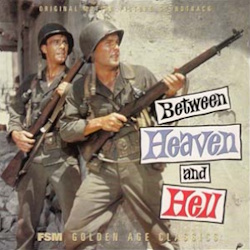
20th Century Fox studio executives made the decision to bring Francis Gwaltney’s popular WWII novel The Day the Century Ended (1955) to the big screen re-titled Between Heaven and Hell. They hired playwright Rod Serling, who served as a paratrooper in the Philippines during the war, to write the screenplay, several years before he would create pop culture history with his groundbreaking TV series The Twilight Zone. His voluminous script, which would have resulted in a nine-hour film, was rejected. Additional writers were brought in, with Harry Brown eventually crafting the final version. David Weisbart was assigned as producer with a $1.52 million budget, and Richard Fleischer was tasked with directing. The cast would include Robert Wagner as Private Sam Gifford, Terry Moore as Jenny Gifford, Broderick Crawford as Captain “Waco” Grimes, and Buddy Ebsen as Corporal Willie Crawford.
The film’s title served as an allegory for Purgatory, and the story is set in the Philippines in 1945 during the final year of WWII. Sergeant Sam Gifford has been demoted to private for striking an officer, and is reassigned to a “punishment” company as a consequence of his actions. Captain Broderick “Waco” Grimes commands the company of misfits, and the film explores how Sam is transformed by the trials and tribulations of war thanks to the friendship of sharecropper Willie Crawford. They discover a superior-sized Japanese platoon armed with mortars and fight their way against the odds to American battalion headquarters to warn them of an impending surprise attack. Crawford ends up being wounded and orders a reluctant Gifford to abandon him and complete the mission. He does so, and much to his relief, Crawford is rescued. The film ends happily, with the wealthy Gifford inviting Crawford to come back to Arkansas, live with him and his family on their cotton farm estate, and take a job in his company. The film was a commercial success, earning a profit of $480,000. Critical reception, however, was mixed, with some critics panning the screenplay and acting. The film received one Academy Award nomination for Best Film Score.
Alfred Newman, as Director of Music at 20th Century Fox, assigned Hugo Friedhofer to the project. Friedhofer and director Richard Fleischer had worked together on his last film, Violent Sunday (1955), and he looked forward to another collaboration. Upon viewing the film, Friedhofer astutely understood that while outwardly it offered a traditional WWII backdrop of Americans battling the Japanese, it was, at its emotional core, a more intimate story. He perceived a story of a man caught in the brutal and unforgiving currents of war, trapped between Heaven – his former idyllic life as a wealthy plantation patrician – and Hell, the violent and bloody carnage of war. Private Sam Gifford’s personal journey as a man trapped in Purgatory between these two worlds is where Friedhofer focused his score. He expressed his enthusiasm for scoring the film:
“It was a very strong picture, and I was pleased with one thing, as far as the music goes, that in a picture where the tendency on most everybody’s part was towards blockbusters, here was a, comparatively speaking, unassuming little picture, that didn’t have an intermission in it and yet I managed to snag an Academy Award nomination on the thing”.
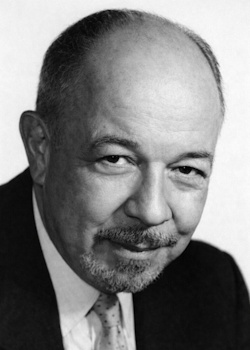 For his soundscape, Friedhofer offered three themes and some motifs. Foremost is the famous “Dies Irae” (Day of Wrath) theme, which is derived from the Roman Catholic Requiem Mass. Within the words of the Dies Irae chant is revealed the Day of Judgment, which devout Christians believe will see them ascend to Heaven while the accursed will descend into the fire pit of Hell. Friedhofer utilizes it to express the horrors and oppression of war, and the resultant feelings of despair and hopelessness. The theme is pervasive throughout the film, operating as a foreboding and oppressive pall, whether rendered in fragmentary form or with its four opening notes fully declared. Juxtaposed with this is the Love Theme, which supports the idyllic love between Sam and his wife Jenny. Its melody is heartfelt, draped in quintessential Americana colors, borne tenderly with yearning and bittersweetness by strings with woodwind and harp adornment. It serves as a tether to his former life that keeps hope alive, suggesting that he may yet escape his horrific purgatory. The theme also provides emotional counterpoint to the violent war sequences. The Nostalgia Theme offers a sentimental yearning for his past life amidst the horrors of the battlefield. It is used to support flashbacks, which evoke the idyllic life Sam left behind, highlighting his transformation from a spoiled, affluent socialite and ruthless businessman into a more empathetic and loving human being.
In terms of motifs, the Shaking Motif is used to underscore Sam’s panic attacks, which cause uncontrollable nervous shaking. Friedhofer uses eerie string harmonics, with psychologically stabbing piano and percussion strikes. The Trek Motif speaks to scenes where Sam and his unit are trekking through the jungles. Friedhofer supports these texturally, with a dissonant, rhythmic, brooding, and psychologically complex musical narrative. He empowers it with a steady, drum-propelled grim march, dark chords, and fragments of Dies Irae, which sow unease and lurking danger. Lastly, we have the Japanese Motif, which is textural and atmospheric, relying on pentatonic woodwind figures.
Cues coded (*) contain music not found on the album. (*) “Logo” offers Alfred Newman’s iconic 20th Century fanfare. Friedhoffer intended the rumbling field drums militare to replace the fanfare, but was overruled. The martial bugling, which supports narrative script “An Island in the Pacific 1945”, was added post production. Score and film synchrony commence at 0:40 in “Main Title”, a score highlight where Friedhofer masterfully set the tone of the film. Sam Gifford is released from the stockade, and escorted to Colonel Miles office. A grim filed drum cadence joined by foreboding timpani strikes supports their travels through the camp, and the flow of the opening credits in red script. At 1:01 the film title displays as trombones declare the Dies Irae Theme buttressed by a martial drum cadence, and rendered as a marcia oppressiva. French horns and trumpets join the trombones, to create a rich and compounded timbre, thus strengthening the march. Friedhofer then shifts the declarations among the horns, which add drama and power. At 2:07 the march slowly dissipates on a diminuendo. In an unscored scene Colonel Miles decides against court martial due to Gifford’s exemplary record and silver star. He reassigns him to George company on the front line. He acquaints himself with his jeep driver Willie Crawford as they drive to the camp.
“George Company” reveals Willie stopping to reveal George Company headquarters, commanded by Captain ‘Waco’, who Sam will discover is, a psychopath. As he exits the jeep, he sees the grim faces of his comrades who seem singularly unimpressed. Inside the Captain is gruff and demands to be addressed as “Waco”, not sir. After a brief acquaintance where he mocks Sam’s middle name of Francis, as a “Girl’s name”. He assigns him as his radioman with the threat that he will not survive if he attacks him. Friedhofer offers a foreboding and truly bleak musical narrative which includes dire contrapuntal fragments of the Dies Irae Theme. Waco departs and Sam sits and pulls out a picture of his wife. Waco’s goons, Millard and Savage, demand to see it, and Sam pushes them back. Waco returns, demands to see the photo, and then burns it, telling Sam it is divisive. He then orders Sam to get out and departs. The other two men berate Sam for upsetting Waco, who they will now have to calm down. Sam leaves and sits down next to Willie, who introduces him to Lieutenant Joe Johnson AKA Little Joe. When they find out that Sam is from “A” Company, Old First, Little Joe asks if he was familiar with Colonel Cousins, the finest man he ever knew. Sam stuns them by saying, yes – I married his daughter.
“Retrospect No. 1” offers a gorgeous romantic highlight. It reveals Sam walking away weary, and despondent, which Friedhofer expresses with a textural, atmospheric woodwind narrative using the Nostalgia Theme. He begins tossing stones into a pool of water, and at 0:51, the music slowly begins to brighten and coalesce until 1:03 when the muddy pool transforms into a refulgent swimming pool where he hugs Jenny. The Love Theme blossoms as they get out of the pool, kiss, and lay down in a lover’s hug for an intimate, romantic respite. Friedhofer graces us with an exquisite romanza rendering of their Love Theme. In an unscored scene, Sam agrees to take Jenny on tomorrow’s Saturday drive visiting the sharecroppers working on their vast lands in their employ as cotton farmers. She is dismayed at Sam’s rudeness, ruthlessness, and inhumanity, sides of him she had never seen before. Back home they argue, with him expressing condescension and no empathy for the sharecroppers, who he believes lazy, and need to understand their place in the scheme of things. She admonishes him arguing that they are human beings who deserve to be treated decently, with respect. He is impervious to her arguments, and she storms out, saying that she does not want to see him for the rest of the day. On Monday at the Gifford cotton processing mill, Sam castigates sharecropper Raker for not working hard enough, and threatens to evict him and give another family the land to farm. Back home with fellow cotton tycoon and neighbor Ray Mosby, he pours some bourbon, which patriarch Colonel Cousins declines. He then drops a bombshell – that he, Sam, Ray and the rest of the county’s national guard have been ordered to report for service, needed for America’s war effort.
“Retrospect No. 2” reveals Sam laying on the bed pondering his future. Jenny joins and the two reconcile their love for each other, but his deployment weighs on both of them. Friedhofer supports the intimate moment with the Love Theme romanza expressed with greater emotive power. At 1:54 the past slowly dissipates and we return to the present with Sam starring into the muddy pool. The music darkens, and becomes foreboding as the pool again transforms, this time into the Pacific Ocean, where we see a convoy of troop transport ships enroute to the Philippines empowered by a menacing, horn declared, dissonant, war-like musical narrative. Below deck, Colonel Cousins has a pleasant and paternal chat with the men in his division, all of which are sharecroppers who work for him, or people from town. He asks Sam to join him on deck, and they discuss their mortality, and hope that Sam returns home safe. He counsels him that when he does return home, he will be a changed man, just as the old South, is changing to the New South. Sam is not receptive and the Colonel shifts gears and ponders the landing tomorrow. The next day a withering naval and aerial bombardment is followed by LCVP boats transporting troops to the beach. The LCVPs come under heavy mortar fire but land, as the men spill out onto the beach Japanese machine guns strafe the beach, pinning them down. Never the less they charge and overwhelm with their greater numbers, suffering many casualties.
“Strategic Sam” reveals Sam’s squad moving cautiously into the island’s interior. Friedhofer supports texturally, with a steady drum propelled grim march, dark chords, fragments of Dies Irae, and dissonance, which sow unease and lurking danger. At 1:22 as they cross a shallow river a Japanese machine gun nest on the cliff above opens fire, killing many. Friedhofer supports this attack, and three more with a textural Japanese Motif. Sam orders the unit to hold while he circles the nest. At 2:28 horns eroiche declarations propels Sam’s lateral run to join the other half of his squad. They fashion a knot in some rope and scale the hill; his plan attack from above. The grim march motif carries their ascent. At 2:53 tense strings with quotes of Dies Irae support Sam being lowered down with grenades, joined by stabs by the Japanese Motif. At 5:04 horns eroiche resound as Sam throws in two successive grenades, which takes out the nest. Horns trionfante crown the victory, and the Colonel Cousins orders the unit forward empowered by the grim Trek Motif, as Sam is pulled up to the top. At 6:24 Friedhofer evokes anxiety as we segue into “Scared”, which reveals Sam’s hands shaking nervously supported by the introduction of the Shake Motif, which consists of eerie string harmonics, with stabbing piano and percussion strikes. At 6:45 horns trionfante resound as we return to the beach as see supplies being brought in as the island has been secured. We conclude with a drum propelled marcia militare as the men march into camp.
“Death Of Colonel Cozzens” reveals Sam being summoned to the medical tent as Colonel Cousins was hit by sniper fire. A musical narrative of dire urgency propels Sam’s run. At 0:09 strings affanato offer a lamentation as he discovers the Colonel covered by a blanket. He kneels, lift up the blanket and sees the face of death, and recoils. His grief catalyzes another episode of the Shaking Motif at 0:42. The lament, embedded with Dies Irae carries him back to the present, where he again stairs at the muddy pool water. Little Joe joins and apologizes for bringing up Cousin’s death, and departs. We close ominously at 1:39 with the eerie Shaking Motif as Sam stairs at a jeep mounted machine gun. “Berserk” reveals Lieutenant Ray Mosby leading Sam and his three best friends on a reconnaissance mission to determine if headquarters could be moved forward to an abandoned village. On arriving, Ray is spooked, and orders Sam to lead the squad and confirm no Japanese are present. As they walk, Ray is very nervous, gets rattled by the noise of a roof collapsing, and fires his machine gun, killing Sam’s three friends. Sam turns, fueled by rage and slowly walks towards Roy, propelled by a crescendo irato, which crests as he rifle butts Ray to the face, and then tries to smash his face to death, only to be punched out by Little Joe. We return to the present and close with the Shaking Motif as Sam again stares at the machine gun. His stupor is shattered by Waco yelling to “Get in here!”.
In “Norzagaray”, Waco says he wants to test Sam to see if he still merits his Silver Cross. He sends him with a squad on an unnecessary, and dangerous reconnaissance mission to a known Japanese camp, with a specific directive to check on the church. On patrol, they evade three Japanese patrols. After the third passes, Sam orders the squad to follow at a discreet distance. As they proceed, a fourth patrol follows them, placing them in peril from ahead and behind. They reach a fork, and Sam orders a run up the left fork as they hear the fourth patrol approaching from behind. After they disappear, we see the fourth Japanese patrol take the right fork. Music finally enters with the Trek Motif as they arrive on a hilltop overlooking the town. Friedhofer evokes anxiety with an eerie misterioso as the squad stealthily moves through a town, which looks deserted. At 1:30 Dies Irae supports Sam’s entry into the church. To confirm he accomplished the mission, he tears of a metal plaque on the door; “The First Baptist Church of Norzagaray”, and places it in his pocket. “Millard’s Death” reveals Waco’s disbelief and condescension when debriefed by Sam. When Little Joe defends him, it elicits Waco’s ire and he orders him and Sam to relieve the Parade George, a front-line observation outpost, located on a cliff. A mortar attack sends every one fleeing as we see the camp pummeled by the attack, and Waco’s goon Millard killed. Friedhofer supports with a musical narrative, which is bleak, and disoriented as the men slowly emerge from their hidings. At 0:32 the Shaking Motif rears up as Little Joe comforts Sam, again plagued by a panic attack and nervous shaking. At 1:05 elegiac horns support the discovery of Millard’s corpse, which intensify on a crescendo of distress. Wailing woodwinds offer a lament as Waco turns the body over and pulls back with a bloodied hand. Waco walks away with the anguish of a father who had lost his son. As Waco returns to his quarters, the men remark with disbelief that that he was crying.
“Parade George” reveals Little Joe leading a squad, which includes Sam to relieve the Parade George outpost. Foreboding, dissonant horns initiate their departure in two jeeps. After they disembark, Friedhofer masterfully supports their trek ascent through the jungle atmospherically with the Trek Motif. What unfolds is a dark rhythmic, brooding, and psychologically complex musical narrative, within which is woven the oppressive Dies Irae Theme. Lieutenant Little Joe relieves Lieutenant Tom Thumb and his squad of four. Tom warns of increased activity on the opposing riverbank, and to watch at night. “Flash Raid” reveals the squad observing the river. Sam is assigned with Corporal Willie Crawford, who discloses that he was former sharecropper from neighboring Walnut Creek. Sam discloses that he was in the cotton business in Gray’s Landing and that he owns three cotton gin, and employs several croppers. They bond after Willie admits that he figured him for quality folks and that he liked him from day one, as he did not act like he was. Distant gunfire erupts at a neighboring outpost, and then Sam alerts Willie that he hears rustling at the trail head. A grenade attack causes casualties; however, a flare launch exposes the Japanese and they are mowed down with their machine gun. Afterwards the Shaking Motif consumes Sam who collapses in a panic attack and is comforted by Willie. The next day at 0:28, elegiac trumpets support the burial of a fallen private Sellers, joined by an aching lament led by strings triste. Little Joe discovers that the radio’s batteries were destroyed in the attack and orders Terry and Sam back to camp to acquire replacements. At 1:55 dire horns declare the oppressive Dies Irae, which empowers their return to camp.
“Sniper” reveals Sam and Terry’s return to camp where they discover that Waco has been removed from command by Colonel Miles, with Lieutenant Thumb is temporary command. Thumb overrules Waco’s command to head back without the batteries. Waco yells that while relieved of command he remains the ranking officer and that Sam and Terry are not dismissed. The pathetic rant of a broken man, unscored by Friedhofer, unfolds as Waco realizes his career is over. He dons his helmet with its Captain insignia, and commends Sam for his raid of Norzagaray, adding that he will seek to get his sergeant stripes back. He then walks out in his captain’s uniform, orders the men to salute, and then gets into a jeep. As he prepares to depart a sniper’s bullet pierces his helmet and kills him, causing the men to flee for cover. Music enters with dissonant ferocity as they take out the sniper. The oppressive Dies Irae Trek Motif resumes and carries Sam and Terry’s return to Parade George outpost with the batteries. (*) “Terry Dies” reveals him discovering a dead Japanese officer with a bright red sheath enclosing a Samurai sword. Sam tells him to leave it alone, but to no avail. Terry pulls the sword out and is consumed in a booby trap explosion, which Friedhofer supports with a grotesque dissonant eruption, punctuated by death horns declarations.
“Death Of Little Joe” reveals men arriving in the black of night and declaring they are a relief squad in perfect American English. Little Joe is wary when they say Waco did not give them the password. Little Joe, with flare gun in hand tells them to advance slowly, and as they do, he fires the flare to reveal a Japanese squad of twelve men. A ferocious fire fight erupts, and they kill all the Japanese, but they suffer casualties, and Little Joe is mortally wounded with a chest shot. Music enters in the aftermath, as Little Joe falls dead, with Friedhofer offering eerie, dissonant atmospherics. This bleak narrative is joined horrifically at 0:25 by the Shaking Theme, which overcomes Sam when he suffers another panic attack after Willie informs him Little Joe is dead, and they are the only two survivors. In the morning we close at 0:39 on elegiac trumpets as the camera pans the battlefield. In an unscored scene, the camera shifts to their fox hole, where Willie cleverly uses banter, to pull Sam out of his panic attack. When he says that he intends to relocate to Gray’s Landing after the war, Sam is pleased. When he says he is a good truck driver and can he work for him, Sam smiles, and says, you’re hired! When Willie asks how much? Sam says $150 a month, and Willie smiles saying pretty good for a man used to living on $300 a year. Sam then discloses his epiphany, learned from croppers like him, which he will henceforth treat with respect and greater wages in repayment of their kindness to him, adding, especially you Willie.
“Don’t Argue” the intimate moment is shattered when a Japanese soldier, feigning death, rises and tosses a grenade into the fox hole. Sam manages to leap out, but Willie is too slow and suffers a serious leg wound. Sam kills the Japanese soldier, but as he dresses the wound, a grim and forlorn musical narrative with martial drums and trumpet accents commences as Willie points to the river and we see a large Japanese unit of more than fifty men crossing the river in boats. Sam says that they do not have a chance against that many. Willie orders Sam to return to base, and an argument ensues. Willie prevails when he reminds Sam that he has a wife who needs him. Sam reluctantly agrees, leaves Willie some ammo, and we segue at 1:08 into “Desperate Journey” where Sam runs back through the jungle with urgency empowered by a marcia bellicoso, propelled forceful by a relentless martial drum cadence. He surprises a lone Japanese soldier who he pummels with his rifle butt, and we see a unit of four soldiers stopped on the trail reading a map, and Sam runs right through them. Flight and pursuit follow with the fleetfooted Sam outpacing them; however, he falls, and as he retrieves his rifle he comes under fire. He takes out three with his BAR machine gun, but as he reloads, a fourth soldier wings him in the shoulder. Sam manages to kill him also and at 3:19, the dire Dies Irae Theme repeatedly resounds atop horns as he resumes his run. Slowly, we see the Dies Irae Horn declarations shifting to brighter horns trionfanti as we see him bleeding and nearing exhaustion, yet resolute in his determination to reach the camp. A diminuendo brings him into camp where he demands to see the colonel. He tells his story, and Colonel Miles orders two halftracks and medics up to rescue Willie, and for a doctor to attend to Sam.
“End Title” reveals Sam and Willie reuniting on a transport truck, which will take them to the airport for a flight back to the mainland. Both their wounds mean discharge and a return to civilian life. Sam promises Willie a homecoming dinner of fried chicken and real drinking whiskey. Music joins as they drive off, Friedhofer supports with a heartfelt and hopeful musical narrative, which culminates with a horns eroica flourish. “Sam And Jenny’s Theme” is not a score cue, but rather a bonus cue, and album highlight, which features a full exposition of one of Friedhofer’s most beautiful compositions. It is a heartfelt Love Theme, draped in quintessential Americana auras, borne tenderly with yearning, and bittersweetness by strings with woodwind and harp adornment.
I commend Lukas Kendall, and am thankful that he and his creative team have restored two of Hugo Friedhofer’s scores, “Between Heaven and Earth” and “Soldier of Fortune”. Unfortunately, too many of Friedhofer’s scores sustained serious degradation after a half century of storage due to the magnetic sources losing their emulsion. The digital score remix and mastering was outstanding and the resultant audio quality supports an enjoyable listening experience. Friedhofer discerned correctly, that “Between Heaven and Earth” was not a traditional war movie, but instead an intimate character driven psychological story set during a war. As such he eschewed conventional Hollywood Americana heroics and bombast in favor of composing a musical narrative, which is bleak, brooding, desolate, with textured harmonies and dark chords. In the end, this textural and atmospheric take on the ambiguities of war, coalesces into a striking, unsettling, yet memorable listening experience.
The nexus of the film’s narrative follows the evolution of Sam Gifford, a ruthless, exploitive, hard-assed businessman completely devoid of empathy. His transformation is catalyzed by the Shaking Motif, a metaphor for the pedestal that grinds down his psyche in a crucible of suffering and pain, to potentiate his rebirth as a decent, kind, more loving and respectful man. Juxtaposed is the gorgeous, yearning and bittersweet Love Theme for Sam and Jenny, one of the finest in Friedhofer’s canon, which provides emotional counterpoint to the violence of war. Folks, in my judgement, this 1956 score was a departure from conventional Hollywood war film scores, which serves as a forerunner that presages the scoring approach used in many Modern Age war films, such as “Dunkirk” by Hans Zimmer, and “All Quiet on the Western Front” by Volker Bertelmann. I believe Friedhofer succeeded on all counts, and highly recommend you purchase the album and stream the film to see it work in context.
For those of you unfamiliar with the score, I have embedded a YouTube link to the Main Theme; https://www.youtube.com/watch?v=8gcht8kVLos
Buy the Between Heaven and Hell soundtrack from the Movie Music UK Store
Track Listing:
- Sam and Jenny’s Theme (2:08)
- Main Title (2:23)
- George Company (1:40)
- Retrospect No.1 (2:50)
- Retrospect No.2 (2:42)
- Strategic Sam/Scared (7:27)
- Death of Colonel Cozzens (1:54)
- Berserk (0:48)
- Norzagaray (2:02)
- Millard’s Death (2:42)
- Parade George (2:45)
- Flash Raid (2:21)
- Sniper (1:33)
- Death of Little Joe (1:01)
- Don’t Argue/Desperate Journey (4:44)
- End Title (0:31)
Film Score Monthly FSMCD Vol. 4 No. 9 (1956/2001)
Running Time: 40 minutes 12 seconds
Music composed by Hugo Friedhofer. Conducted by Lionel Newman. Orchestrations by Edward Powell. Recorded and mixed by Jan Holzner. Edited by Philippe Pélissier. Score produced by Hugo Friedhofer. Album produced by Lukas Kendall.
Leave a comment

Shop at the Movie Music UK Store

Member of the

 MOVIE MUSIC UK
t
The 1955 20th-Fox film Friedhofer scored was “Violent Saturday” not “ Violent Sunday”.