THE DAM BUSTERS – Lucas Leighton, Eric Coates
 GREATEST SCORES OF THE TWENTIETH CENTURY
Original Review by Craig Lysy
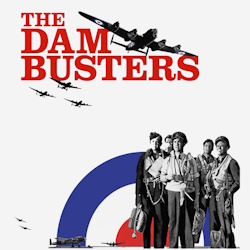
In the late 1940s, interest arose in bringing the historic Dam Busters raid of WWII to the big screen. It took the publication of two books, Enemy Coast Ahead by Guy Gibson in 1944, followed by The Dam Busters by Paul Brickhill in 1951, to catalyze production. Robert Clarke, the Head of Production at Associated British Picture Corporation, approached writer Paul Brickhill and the British Air Ministry. When the Ministry decided to support the project and offered four Lancaster bombers at low cost, Clarke purchased the screen rights from Brickhill for £5,000. Robert Clarke and W. A. Whittaker would oversee production with a £260,000 budget, Michael Anderson was tasked with directing, and R. C. Sherriff would write the screenplay, drawing inspiration from both books. A stellar cast was hired, with Richard Todd starring as Wing Commander Guy Gibson, joined by Michael Redgrave as Barnes Wallis, Patrick Barr as Captain Joseph “Mutt” Summers, Ernest Clark as Air Vice Marshal Ralph Cochrane, Basil Sydney as Air Chief Marshal Sir Arthur Harris GOC-in-C, Stanley Van Beers as David Pye, Air Ministry Director of Scientific Research, and Ursula Jeans as Mrs. Molly Wallis.
In the spring of 1942, aeronautical engineer Barnes Wallis struggles to develop bomb technology that can be used to destroy Germany’s Ruhr dams. The three dams, Möhne, Edersee, and Sorpe, power Germany’s heavy industry, and destroying them would severely cripple their war production. Barnes eventually develops a bomb that, when dropped at very low altitude, would bounce on the water’s surface, thus avoiding the torpedo nets. Upon impact with the dam, it would not detonate, but instead sink along the wall and then detonate at a lower depth to cause maximum damage. After dogged fights with bureaucracy, he finally convinces RAF Bomber Commander-in-Chief Sir Arthur Harris, who in turn secures the approval of Prime Minister Winston Churchill. Wing Commander Guy Gibson commands the mission with a squadron of Lancaster bombers and succeeds in destroying the Möhne and Edersee dams, but only damages the Sorpe Dam, the largest of the three. In the end, the British lost eight bombers and fifty-six men died. On the German side, the raid caused catastrophic flooding, destroying factories, mines, airports, rail lines, and homes. It severely hampered German war production until September 1943, and nearly 1,600 Soviet laborers were killed. The film was a massive commercial success in the United Kingdom, earning £419,528, but performed poorly in American markets. Critical reception was universally positive, the film has aged well, and today it is cited as one of the best British war films and one of the greatest films of the 20th century. The film received one Academy Award nomination for Best Special Effects.
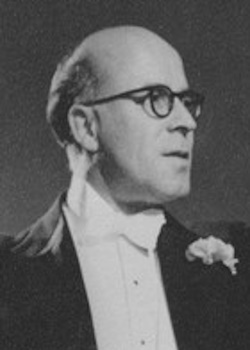 Producers W. A. Whittaker and Robert Clarke sought to recruit classical composer Eric Coates for the scoring assignment. Coates, however, disliked writing music for movies, especially after he saw how Arthur Bliss’s score for Things to Come was edited in post-production, and so declined. However, in the end he was persuaded by the producers and his publishing company, Chappell, that this movie was of national importance and that his career would benefit from his contribution. He submitted a pastiche of the well-known Trio section of Pomp and Circumstance March No. 1 by Edward Elgar, which he had just written. Because of the film’s success, the march became iconic, was renamed The Dam Busters’ March, and made an indelible mark on the collective consciousness of the British people, offering an enduring testament to their heroism against overwhelming odds.
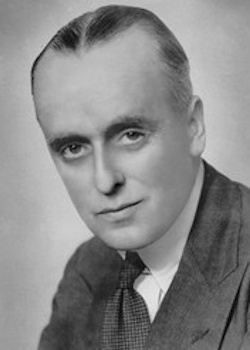
For the film’s soundscape, Coates’ Dam Busters’ March is the main theme, yet it is only utilized in the Main Title, the training sequences, and the finale. The march serves as a transpersonal theme for the mission and the people associated with it, as well as for the resolute determination, ingenuity, and resourcefulness of the British people. It emotes with the sensibility of a concert march rather than a traditional marcia militare. Declared in bright C major, it is jaunty, noble, and soars heroically with a quintessential British sensibility. It concludes as a testament to British pride in a grand and sweeping triumph. The majority of the underscore in the film was composed by fellow composer Leighton Lucas. He composed his own main theme, which I believe is linked to our protagonist Barnes Wallis, serving as both a personal leitmotif and, by extension, the Dam Busters Project. It opens nobly with four declarative notes, which lead to an exposition that is optimistic, determined, and dogged. In many ways I found Lucas’ score to be motivic, using shifting motifs with fragments of the Dam Busters’ March embedded, and then rendered in his own harmonic language. I believe this approach served to weave the contributions of both composers into a cogent and unified musical narrative. Lastly, I also believe Lucas channeled Sibelius when scoring the flood scenes by using dark, moody tempests and atmospherics to sow tension and convey the destructive, irresistible power of the flood torrent.
There is no commercial release of the score; as such, I will review the music using film time indices and scene descriptions. 0:00 “StudioCanal Logo” opens with Alexandre Desplat’s dreamy, whimsical, yet elegant composition, in which he sought to evoke the “magic of film.” 0:40 “Main Title” offers a composition that earns Eric Coates immortality. It supports the flow of the opening credits, set against an expansive cloud- filled firmament. We behold a proud and grand exposition of the Dam Busters’ March in all its heroic magnificence. Declared in bright C major, this jaunty, noble, marcia eroica soars with a quintessential British sensibility. It concludes as an enduring testament to British pride in a grand and sweeping triumph. The credits conclude, and we shift to a narrative script of acknowledgement. 2:22 “Spring 1942” commences with soft horns nobile, which support the camera’s descent to the English countryside. Muted heraldic horn declarations empower a pastoral rendering of the main theme in non-march form to support the arrival of a limousine bearing the doctor to Wallis’ country estate. The doctor enters the garden and finds Barnes working tirelessly with his children, shooting projectiles at different angles to see if any glance off the surface of the water in his test pool. The doctor takes Elizabeth in for an examination and finds her without fever. At 4:42 musical pleasantries unfold as Molly frets that Barnes’ obsession with this project is harming his health. He returns to join them for tea, but it has gone cold, and Molly goes to make some new tea, while the doctor and Barnes listen to the distant humming of Luftwaffe bombers doing yet another night raid on London.
 Back inside, Barnes explains that the Ruhr dams empower Germany’s industrial might, and while a conventional assault on these dams would fail, he asserts that his original concept of a surface-skipping bomb would work. The committee meets tomorrow, and Barnes relates that they may deep-six his project. 9:26 “Time To Go” reveals the clock chiming 9:30 p.m. and Barnes bidding goodnight to the doctor. Barnes’ Theme plays softly, yet with determination, under the dialogue. The next day Barnes solicits the support of committee chair Dr. Pye to secure him a two-week extension to test a new theory. There is strong resistance by the committee to accommodate him because Barnes withholds specifics; however, Dr. Pye’s support secures an extension of two weeks. 13:16 “Success!” reveals Dr. Pye and two committee members witnessing Barnes’ latest experiment. We see a miniature cement dam and two small canisters designed to simulate ten- and five-ton bombs. The first experiment simulates a 10-ton bomb exploding 50 feet from the wall at a depth of 30 feet. The first explosion is ineffective, the fifty feet of intervening water serving to cushion the dam from the bomb’s explosive force. The second detonation at a depth of 30 feet is a 5-ton bomb, which is affixed to the dam wall. The second explosion shatters the dam, causing a flood. Music enters atop a dire chord to punctuate the success. Lucas supports Barnes’ Theme rendered as a four-note stepped, chromatic ascent by confident horns as Barnes explains that a 6,000- pound RDX bomb, which can easily be carried by a Lancaster bomber, properly delivered against the wall, will bring down the dams. The music darkens and becomes foreboding when they challenge him to prove how he will overcome the torpedo nets to deliver the bomb. He asks for a massive tank of water and is granted access to the National Physical Laboratory’s experimental ship tank at Teddington. We close with another chromatic ascent of hope when Dr. Pye congratulates Barnes as he departs.
In two unscored scenes, the director of the National Physical Laboratory complains to Dr. Pye and the committee that after five months he is out of patience and asks that he regain control of the tank. Inside, Barnes finally succeeds in bouncing a mock bomb over the water to strike the dam wall. The director and committee walk in, and an exuberant Barnes declares this is perfect timing, as he has succeeded! They watch as Barnes demonstrates twice that the settings necessary to deliver the bomb allow it to skip over the surface of the water to the dam. They are all amazed and give him a week to submit his final report. Later, the Director of Aircraft Production resists allocating precious resources to do live tests with Barnes’ dummy bombs, yet in the end, Barnes’ determination overcomes all obstacles. Barnes secures a Wellington bomber and prepares for a simulation run with his spherical bomb. He verifies airplane speed and height above the water and launches the bomb at 20:20, “It Works!”, and we see it bouncing over the water, empowered by a tense, charging ostinato embedded with four-note declarations of Barnes’ Theme, which becomes celebratory atop horns trionfanti as the test succeeds! In an unscored scene, Barnes is told by the Director of Aircraft Production that despite his success, he cannot support the project, saying that at this time, he cannot produce enough of our existing types of bombs, let alone build Barnes’ bomb, which is completely new and completely unpredictable. Barnes argues the benefits of destroying German bomb production, but the director explains he must implement orders from the Ministry.
Barnes is stymied and frustrated, and so in an audacious move he secures an interview with Sir Arthur “Bomber” Harris, the head of RAF Bomber Command. Harris is circumspect and at first reluctant to take the idea seriously; however, after watching Barnes’ films demonstrating the bomb’s effectiveness, he secures his blessing. In the interim, Whitehall admonishes Barnes for being a nuisance with government officials and terminates his project. Barnes resigns and returns home, finding comfort with Molly. She relates that the Ministry of Aircraft Production scheduled him for an appointment tomorrow morning; however, Barnes refuses, saying he has had enough. 26:40 “Barnes Muses” reveals him contemplating a quieter, more intimate, and enjoyable life, telling Molly of his desire to take up gardening again. His theme plays gently on strings tenero under the dialogue, but gains confidence as he accepts Molly’s advice to meet with them. The next day, in an unscored scene, Barnes is stunned when the Director of Aircraft Production says that his project has been green-lighted by the Prime Minister, who enthusiastically offers his support. He is directed to expedite production as the mission must be flown in two months, during May, when the water level is the highest. General Harris orders that Wing Commander Guy Gibson will command the 617 Squadron assigned to the mission.
Guy has just completed his latest tour of duty and is looking forward to a well-deserved leave. He is, however, summoned to the office of Air Vice Marshal Cochrane the next morning. Upon arriving, he is tasked with commanding a special mission with a new squadron. To man this new squadron he will need to procure experienced crews from other squadrons, which will not be well-received. Captain John Whitworth joins him and reacquaints himself with his friend Guy. Cochrane assigns him to Guy’s command, and the two are advised that the mission is Top Secret and will be revealed later. The first order of business is to procure crews for a new squadron and then to begin extensive low-altitude training flights at night. In the office, Guy and John review the personnel files of each of the squadrons and select their crews. Later, Guy informs his crew that he will be commanding a new squadron and will not be joining them on leave. They, in turn, cancel their leaves and insist on joining him, much to Guy’s delight. At a briefing the next day, the squadron is told that their mission is top secret and has not been revealed. The first order of business is extensive training flying at very low level over bodies of water. A montage of beautiful panoramic shots, which are unscored, reveals the low-level flight training.
Guy then meets with Barnes, who does not disclose the location or nature of the target. He does disclose, with his short film, the nature of the bomb and how it skips over the water to its target, impacts, sinks, and then detonates at a specific depth. He closes with strict instructions: only one bomb per plane, which must be dropped at a precise speed of 240 mph, at a height of 150 ft, and from a distance of 600 yds. The next day Cochrane shows Guy the targets, with the caveat that he will be the only one in the squadron to know. A few days later Guy and government ministers observe practice bombings. In all three drops, the bomb casing shatters on impact. Barnes remains optimistic, saying he will just need to strengthen the casing. 49:41 “Barnes Unfazed” reveals Guy, with a wry smile, watching Barnes remove his socks and shoes and wade in to retrieve the bomb shell fragments. A pensive Barnes Theme carries him wading out into the water. On the train returning to base, Guy frets to John about how they can precisely determine a height of 150 ft in the dark without an altimeter. 50:34 “Let’s Have Some Fun” reveals John relating that they can get off in London, dine with wine, and catch a musical with lots of dazzling girls. We see the two watching a line of women dancing on stage to the song “Sing Everybody Sing” (1942) by John P. Long. The number opens instrumentally, and then singer June Powell begins singing the buoyant lyrics. As she sings, the gears in Guy’s mind start churning as he assesses the spotlights illuminating the singer. We shift to a night flight with a bomber flying low over water with spotlights on its underside. Guy relates that they are set to converge at 150 ft, which solves the altitude problem.
53:43 “Oh My God!” reveals representatives of the air force and government assembled seaside for a demonstration of Barnes’ bomb with a reinforced casing. We open on Barnes’ Theme borne by confident trumpets as the plane drops the bomb. It shatters on impact, all in attendance look at each other in disbelief and depart, as Barnes declares, “Oh My God!” Lucas supports the scene with a somber musical narrative of despair as Air Vice Marshal Cochrane informs Barnes that, with only a month left, he has one week to succeed, or the mission is scrubbed. Gibson joins, and Barnes believes that reinforcing the casing is not sufficient, as he must lessen the force of the impact. He turns and asks if Gibson could drop it at 60 feet. Gibson is wary, saying one hiccup and they’ll be in the drink. Nevertheless, Gibson agrees, saying he needs to adjust the lamps on the plane to converge at 60 feet, and then they can make some practice runs at the new altitude tomorrow. The next few days Gibson does some practice runs at 60 feet and clips a tree. He declares the team ready, and a final test run with the bomb is scheduled late in the day. Once again everyone assembles for this make-or-break test. 1:00:33 “Success!” reveals the arrival of the plane, which descends to a very low 60 ft. It launches the spherical bomb, which survives impact and skips over the water, impacting the dummy target dam. Lucas supports the sequence with a flurry of harp glissandi and dazzling piano runs, joined by trumpets trionfanti declarations of Barnes’ Theme as he and Guy hug and celebrate. At 1:00:52 his solemn theme carries Barnes’ departure from the test site with government ministers. A spritely rendering of the theme unfolds as the ministers commend and praise Barnes for his genius idea. They are taken aback when he says with all humility that he borrowed it from Fleet Admiral Horatio Nelson, who discovered that by firing his cannons short, the resultant skipping of the cannon balls over the water caused greater damage to enemy ships.
Air Vice Marshal Cochrane informs Gibson that they are good to go and hands him a calibrated hand-held metal bomb-sighter device that the pilot will use to determine a distance of 600 yards. A montage of three test flights using the device follows, with all three dummy drops hitting within a few feet of 600 yards. 1:07:52 “Mission Scheduled” reveals Gibson advised that weather conditions are good, the bombs are arriving for loading, and the mission is scheduled for tomorrow night. Later, at dusk, Lucas sows a foreboding musical narrative as we see the bombers lined up and ready for take-off the next evening; a trumpet-declared coda of Barnes’ Theme concludes the scene. At 1:08:22 a dignified rendering of the Dam Busters’ March supports the scene as we see all the mission crewmen walking to the briefing room. Gibson then discloses the mission – destroy the three Ruhr dams. The attack will consist of a first group of nine bombers, divided into three waves of three, for the Möhne Dam, and then onward to the Edersee Dam. The first wave he will lead, Young will lead the second wave, and Maudslay will lead the third wave. McCarthy will lead a second group of five bombers farther north to attack the Sorpe Dam and create a diversion for enemy fighters. Townsend will lead the third mop-up group of five bombers. He closes by saying that they will have to fly to the targets at zero feet, which causes uneasy mumbling in the room. We shift with musical unease to the airfield at 1:11:30 and see ground crew readying the bombers. Returning to the briefing, Barnes explains how the bombs are delivered and work; the crews then review code words: “Goner” for a successful bomb explosion, “Nigger” for breach of the Möhne Dam, and “Dinghy” for breach of the Edersee Dam. 1:18:00 “Waiting” reveals two pilots relaxing in their room as the radio plays a swing tune. A montage of other pilots preparing unfolds. At 1:20:07 the Dam Busters’ March is rendered as a somber lament as Guy spots Nigger’s collar and reminisces. We end with discord as he tosses the collar into the trash bin. We shift to a montage of the men playing cricket, chess, and cards to kill time, with the March again rendered with palpable unease.
At 1:21:41 “Time To Go” reveals Guy announcing that it is time to go, and all the men rise and head to their bombers, empowered by a refortified yet solemn Dam Busters’ March, which swells on a crescendo drammatico, cresting with pride at 1:22:11 as trucks carry them to their planes. Group 1 fires up their engines, taxis to the runway, takes off, and soars over the countryside, followed by Groups 2 and 3, leaving Cochrane and Barnes to ponder their destiny. The mission at this point is unscored as we see bombers flying at zero elevation over the North Sea, and then return to the Situation Room at Headquarters. Returning to the squadron, Group 1 crosses the Netherlands coast and begins its flight inland over enemy-occupied territory, followed by Group 2 several minutes later to the north, and then Group 3. The planes continue to fly at zero elevation, barely clearing trees and church steeples. Group 1 sights the canal, turns, and proceeds to the Möhne Dam. They have to climb fast to avoid electrical pylons and then descend to zero elevation. They acquire the Rhine River and turn left to follow it. They encounter anti-aircraft fire, which takes out one bomber, which crashes and is consumed in a massive explosion. Group 2 comes under anti-aircraft fire and is blinded by massive searchlights. They change course to 165, which takes them out of harm’s way. Back at Headquarters, Cochrane informs Harris that Group 2 is down to one plane, with McCarthy proceeding to the Sorpe Dam.
They sight the Möhne Dam and come under fire. Guy receives acknowledgement from the remaining eight bombers and says to stand by to attack in order on his command. Guy then takes his plane down and commences an attack run on the dam. He holds speed at 240 mph, aligns the spot lamps to 60 ft, dons the sight finder, and launches the bomb at 600 yards, flying through intense anti-aircraft fire. It hits and explodes, yet the dam still stands, and he radios Headquarters, “Goner”. Maltby now begins his attack run. He drops late, the bomb bounces over the dam, explodes on the other side, and he is shot down. P-Popsey begins his attack run and successfully launches the bomb, which impacts the dam. He escapes with starboard wing damage and the bomb explodes. He notifies Headquarters: “Goner”. A pall of grave concern descends on the room as Barnes turns away. A-Apple begins his attack run, with Guy alongside to draw enemy fire. He launches the bomb, which strikes the dam, and Headquarters receives the message, “Goner”. Once again, a direct hit, but the dam still stands. Barnes sits in silence, inconsolable, as Johnny signals his attack run. The other empty bombers flank him to draw fire; the bomb is dropped successfully and strikes the dam. 1:49:10 “Möhne Destroyed!” reveals a massive explosion, yet the dam remains standing for several seconds, and then suffers a cataclysmic collapse. Lucas supports the moment with a horrific, cacophonous storm. As the men celebrate, a triumphant Dam Busters’ March joins, with interludes of menacing strings, which support the tidal torrent. Guy orders P-Popsy and J-Johnny home and proceeds with five Lancasters. At Headquarters the message arrives, “Nigger!” and the room erupts in jubilation as people converge on Barnes to congratulate him.
Dave and two planes locate the Edersee Dam, which has the shortest run and is surrounded by hills, making the attack run very difficult, as there is less time to achieve the drop criteria, and the subsequent pull-up is problematic. Dave proceeds on the first attack run. He descends too slowly, misses the drop point, and makes an emergency ascent, barely clearing the local hills. Guy dispatches Z-Zebra, who drops the bomb late, causing it to bounce over the dam and explode on the other side. Guy then watches as Z-Zebra crashes into a hill, unable to pull up fast enough. Headquarters receives “Goner” Z-Zebra, followed by “Goner” L-Leather. N-Nuts is ordered to commence his attack run, descends, successfully drops the bomb, and the impact destroys the dam. 1:56:06 “Edersee Destroyed!” reveals Headquarters receiving the news and erupting in celebratory joy, empowered by a triumphant exposition of the Dam Busters’ March. At 1:56:20 Lucas unleashes a surging orchestral torrent joined with fanfare declarations of the march as we see the flood waters destroying everything in their path. Guy orders the squadron home, and in the valley below swirling string vortices empower the unstoppable flood waters, which consume everything in their path – farms, bridges, trains, airports, and finally the munitions factories themselves, crowned with horns trionfanti declarations of the Dam Busters’ Theme. A montage of the Ruhr Valley’s destruction unfolds, again joining the Surging Water Motif and the Dam Busters’ Theme.
1:57:44 “Squadron 617 Returns Home” reveals Guy and the eight other surviving planes returning home, supported by a proud and thankful rendering of the Dam Busters’ March. The men are exhausted and thankful to have carried out the mission and survived. 2:00:15 “Victory Announcement” reveals Gibson, Cochrane, and Harris walking to Headquarters as the BBC announces to the nation that a vital mission of Lancaster Bombers under the command of Wing Commander G. P. Gibson attacked, with mines, the German dams at Möhne, Edersee, and Sorpe, which control two-thirds of the storage capacity of the Ruhr basin. It took great courage, precision, and determination to carry out the mission, and the BBC announces that the Möhne and Edersee dams, and their power generation stations, were destroyed. Regretfully, eight Lancasters failed to return, and the camera shows several empty breakfast tables. A solemn rendering of the Dam Busters’ March plays under the commentary. A new montage unsupported by music follows, focusing on the personal effects of the fallen. Outside, Guy meets up with Barnes, who is distraught at the loss of fifty-six men. Guy reassures him that the men knew the odds and all willingly took the assignment. When Barnes asks if he is going to get some well-earned sleep, he says, not now, as I have to write letters to the lost airmen’s next of kin. 2:03:44 “Finale” reveals Guy walking away to a solemn Dam Busters’ March, which swells gloriously on a crescendo eroica, cresting triumphantly to support “The End”. 2:04:27 “Cast Credits” are supported by a solemn rendering of the Dam Busters’ March, which closes on a crescendo grandioso flourish.
Sadly, as is too often the case, there is no commercial release of Leighton Lucas’ score. There are, however, numerous recordings of Eric Coates’ immortal Dam Busters’ March. While Coates receives from posterity the lion’s share of the credit for his iconic march, I believe that credit should also be given to Leighton Lucas, who masterfully wove this iconic march into the fabric of his score. I believe he correctly understood that too much of anything is not good, and his judicious spotting of the March was spot on. I do, however, offer some criticism. This film was shot in documentary style and has a narrative that is plodding and very detailed, to the point of offering minutiae. I appreciate that the film was a testament to a historic raid and carried the desire to inform the audience of every detail. And so, I argue, that Lucas really needed to score more scenes to propel narrative pacing and maintain the film’s forward momentum. He did not, and so watching the film becomes tedious. Despite this singular flaw, I believe he created, in the scenes he does score, the drama, tension, suspense, and destructiveness needed to empower the story. Folks, in film score art, some compositions become iconic and make an indelible mark on the collective consciousness of society. The Star Wars theme by John Williams, the Tara Theme from Gone with the Wind by Max Steiner, and the Desert Theme from Lawrence of Arabia by Maurice Jarre come to mind. The Coates Dam Busters’ March is such a composition for British culture. The sheet music for the march was published in 1955, and Carlene Mair added the following lyrics, which in my view achieve a perfect confluence:
“Proudly, with high endeavour,
We, who are young forever,
Won the freedom of the skies.
We shall never die!
We who have made our story
Part of our Empire’s [later: ‘country’s’] glory
Know our hearts will still live on
While Britons fly!”
Today, the march is so ingrained as to have become a cornerstone of British cultural identity, representing resilience, patriotism, and wartime heroism. Its rousing, upbeat melody has made it a staple of military bands, football terrace anthems, and a nostalgic cultural symbol often used to evoke British pride.
For those of you unfamiliar with the score, I have embedded a YouTube link to a wonderful live performance conducted by Ben Palmer and the Philharmonia Orchestra at the Royal Albert Hall: https://www.youtube.com/watch?v=kvyaLAdLmo4&list=RDkvyaLAdLmo4&start_radio=1
Track Listing:
- NOT AVAILABLE
Music composed by Leighton Lucas. Conducted by Louis Levy. Orchestrations by Leighton Lucas. The Dam Busters March written by Eric Coates. Recorded and mixed by XXXX. Score produced by Louis Levy.

Shop at the Movie Music UK Store

Member of the

 MOVIE MUSIC UK