WUTHERING HEIGHTS – Anthony Willis, Charli XCX
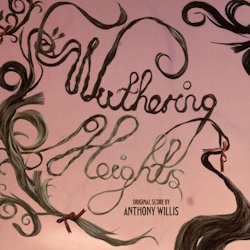 Original Review by Jonathan Broxton
Heathcliff, it’s me, I’m Cathy, I’ve come home…
Wuthering Heights is one of the undisputed classics of British literature. Written in 1847 by Emily Brontë, it is a vivid story of all-encompassing love, obsession, cruelty, and revenge, with more than a splash of the English class system and an exploration of the crushing effects of poverty thrown in for good measure. The story chronicles the ill-fated relationship between the spoiled but free-spirited Catherine Earnshaw and the handsome, rugged foundling Heathcliff, who was brought as a child by Catherine’s father to live with them at their ancestral home, the Wuthering Heights of the title, an imposing house sitting atop one of the bleakest parts of the Yorkshire moors. As they grow up, Catherine and Heathcliff’s relationship develops from childhood friendship to adult romance, but circumstances conspire to keep them apart – not least Catherine’s simultaneous relationship with the wealthy Edgar Linton, heir to the neighboring property Thrushcross Grange.
Wuthering Heights was the only novel Emily Brontë wrote prior to her death just a year later, in 1848, when she was just 30 years old. The book was a revelation when it first appeared; it scandalized Victorian society through the brutality of its characters, the moral ambiguity of Heathcliff, and its depiction of obsessive, destructive love. At the same time, it redefined romantic love in literature, and the relationship between Catherine and Heathcliff became one of the most famous (and debated) love stories in Western literature. In writing it, Brontë essentially invented the Gothic romance genre, building on some of the ideas introduced by Mary Shelley in her novel Frankenstein some thirty years previously, and taking them to previously unexplored places. What a legacy.
Wuthering Heights has been adapted for the big screen numerous times. Laurence Olivier and Merle Oberon starred as Heathcliff and Cathy in the classic 1939 version scored by Alfred Newman. Timothy Dalton and Anna Calder-Marshall played them in the 1970 version scored by Michel Legrand. Ken Hutchison and Kay Adshead portrayed them in a 1978 BBC miniseries, widely regarded as the version most faithful to the original novel, which also features a terrific score by Carl Davis. Ralph Fiennes and Juliette Binoche played them in the 1992 version scored by Ryuichi Sakamoto. This new version, written and directed by Emerald Fennell, stars Jacob Elordi and Margot Robbie, and is controversial for several reasons.
 First, it is by far the sexiest, kinkiest, most explicit version of the story ever made, pulling no punches in how it depicts not only the carnal aspects of Heathcliff and Cathy’s love, but also their encounters with others. Fennell also takes a lot – a lot – of liberties with the source material. In interviews she has said that she decided against a faithful retelling of the story; her main intention was instead to recreate the feeling of a teenage girl reading the book for the first time. The film essentially covers only the first half of the novel, and even then she alters the storyline substantially, changing the roles of certain characters and omitting others entirely. Cathy’s brother Hindley does not appear at all, and some of the things she has the servants Joseph and Zillah do… well, it’s probably best to discover those for yourself.
The one thing that Fennell’s Wuthering Heights has in abundance, though, is style. The cinematography, production design, costumes, hair, and makeup are all exceptional, forming a striking visual palette of blacks, whites, and vivid, garish reds. The performances by Robbie and Elordi in the lead roles are committed (Elordi’s Yorkshire accent is excellent), and they are ably supported by the rest of the cast, especially Hong Chau as Nelly, Alison Oliver as Isabella Linton, and teenage phenom Owen Cooper from Adolescence as young Heathcliff. Despite its lack of fidelity to the original book, I thought the film was outstanding, both visually sumptuous and emotionally compelling.
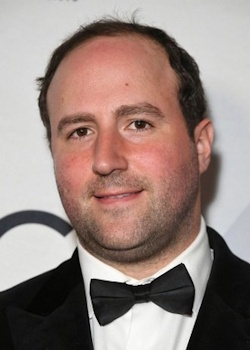
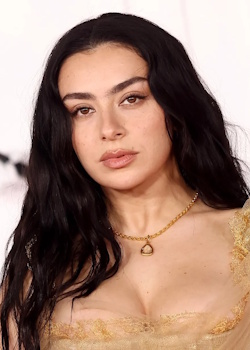
This technical excellence also carries over into the music, which represents a collaboration between composer Anthony Willis and pop music superstar Charlotte Aitchison, better known as Charli XCX. Willis has worked with Fennell before, picking up a pair of BAFTA nominations for her films Promising Young Woman and Saltburn. His other work includes the cult camp horror hit M3GAN, as well as additional music on numerous scores for John Powell. Charli, meanwhile, was responsible for making 2024 “the Summer of Brat,” single-handedly reviving the color chartreuse green, and winning a host of awards for a catalog of massively popular songs.
Willis’s score is something of a departure for him. In the album’s press material, Willis describes his ‘rustic theme’ for Cathy and Heathcliff, and talks about emotions that are intimate, yearning, and restrained, exploring ‘that fragile void between tender and stark, ethereal and haunting, hope and doom’. It’s all appropriately dark, evocative, and poetic, but this isn’t a traditional romance score in any sense of the word: it features all the right instruments – strings, woodwinds, piano, some vocals, and some specialty instruments including a dulcimer, a banjo, and a ukulele – but Willis applies them in a series of unorthodox ways that focus more on the story’s underbelly of tragic violence and recrimination, and less on the windswept romance.
There are three main recurring themes in the score. The theme for Wuthering Heights itself is somewhat harsh and unforgiving, intended to represent Father Earnshaw’s increasingly unhinged nature, and the overall squalor and decay that overtakes the place as time goes on. Willis uses eerie, shimmering string harmonics to evoke the wind, combining them with bowed guitars, grunting cellos, dirty low synths, and percussion to create a sound that feels forbidding, grim, ominous, and oppressive, not only in terms of the building itself, but also in terms of what it does to the people who live there.
The theme for Thrushcross Grange, the family home of the Linton family, is a twisted waltz designed to sound outwardly elegant, representing the visual contrast between it and Wuthering Heights, while ultimately feeling hollow. Willis uses light, airy sounds to depict it – harp scales and flourishes, music-box-style pianos, string trills, alto flutes, and a dulcimer, backed by girlish voices and percussion that sounds like a heartbeat. Thrushcross Grange couldn’t be more different from Wuthering Heights – it’s all frills and lace, ribbons and bows, lacquered floors and opulent furniture – but this frivolousness masks a disturbing underbelly that makes Cathy feel confined, stagnant, and oppressed.
The escape for both Cathy and Heathcliff lies in each other, and Willis’s theme for their relationship is the score’s main theme. Subtitled ‘The Pike Hymn,’ after the isolated rocky crag where they meet in secret, the Cathy and Heathcliff love theme is soulful and romantic, yet also yearning and ultimately tragic. It has elements of folk music in the cello solos, and Willis surrounds it with a string quartet and piano, often allowing it to express itself in intimate, tender ways. There’s also an arpeggio variation of the Pike Hymn that Willis employs in moments where he wants to depict Heathcliff’s vision of Cathy as a fantasy, a distant memory, or perhaps a ghost haunting his dreams.
These three main themes, plus a small number of minor motifs, combine throughout the score, creating an excellent musical illustration of these iconic characters and the love they share – or, at least, Emerald Fennell’s idiosyncratic version of them as presented here. The first performance of the Pike Hymn appears during the opening cue “C&H,” accompanying the pair as they bond as children, especially in one key moment where Heathcliff lies to Cathy’s father to protect her after they are caught in a rainstorm. The music sounds like the melody of an old English hymn – slow and reverent – and the section that begins at the 1:10 mark feels especially poignant. The first performance of the Wuthering Heights theme comes during “The Kindest Man Alive,” accompanying a scene of Father Earnshaw leaving Wuthering Heights to go out drinking and gambling, an enduring problem that ultimately results in the downfall of both himself and his family as the years pass.
There’s a lovely, sentimental version of the Pike Hymn in “Again & Again,” as young Heathcliff makes his lifelong promise to Cathy that he’ll always be there for her. There is a quirky, almost medieval-sounding groove to the statement of the Wuthering Heights theme in “A Very Important Family,” which underscores our introduction to the adult Cathy and accompanies her as she describes the history of the Earnshaw family. However, this is quickly overtaken by the magical, bucolic sounds of the Thrushcross Waltz in “Thrushcross Mirage,” which gently flutters and twitters in the background as Cathy sees Thrushcross Grange for the first time while on a walk. A more vibrant and strident version of the Thrushcross Waltz appears in “Kitten in Clover,” underscoring the passage of Edgar’s carriage across the moors, taking Cathy back to Wuthering Heights following her recuperation at Thrushcross after spraining an ankle. Cathy comes back a changed woman, having been seduced by the luxury in which the Linton family lives, and Heathcliff notices this immediately, as evidenced by the solemn reprise of the Pike Hymn as he observes her from the Wuthering Heights roof.
Cathy and Heathcliff’s relationship fully breaks down during “I Cannot Play With You,” a dark and mournful version of the Wuthering Heights theme that captures their diverging feelings, and Cathy’s ultimately fateful decision to leave Wuthering Heights, marry Edgar, and move to Thrushcross – a decision which ultimately inspires Heathcliff to leave too. This cue also features the first instance of what Willis calls the ‘Wuthering Stable Sex Vibe,’ a set of guttural synth and percussion textures that appear during the decidedly spicy BDSM-adjacent sexual encounters in the stables between Joseph and Zillah, and Cathy’s unexpectedly aroused reaction as she spies on them from Heathcliff’s loft above.
The version of the Thrushcross Waltz in “Isabella’s Dollhouse” is a childlike rendition carried mainly by a music-box piano, as her new sister-in-law, the perennially infantilized Isabella, shows Cathy her dollhouse, gives her a doll made with Cathy’s own hair, and gives her a tour of the Thrushcross house, which includes a bedroom that has been upholstered in some unholy material that mimics the tone of Cathy’s skin. The explorations of the Thrushcross Waltz continue in “Dog in a Manger,” which underscores a scene after a time jump where a now-antagonistic Cathy and Isabella bicker as one pushes the other on a floral swing; Heathcliff has now returned, wealthier and more refined than he was when he left, and his presence and sexual magnetism have caused consternation among the women.
From this point on the score is dominated almost entirely by the Pike Hymn and its arpeggio variation, as Cathy and Heathcliff embark on a torrid sexual affair right under Edgar’s nose, while Isabella lusts for Heathcliff from afar. In “Shall I Come Fetch You?” the themes are underpinned with tension, finally addressing the misunderstanding that led to their years-long estrangement, and the associated betrayal by Cathy’s paid companion Nelly. There is a vibrant, driving version of the theme underpinned with a violin ostinato in “You’re Not Enough for Her!” as Cathy gallops across the countryside on horseback after hearing of her father’s death.
The pivotal “So Kiss Me and Be Damned” is the most lush and romantic version of the Cathy and Heathcliff love theme, as they break years of tension and kiss under the Pike; the music is slow, tender, longing, and deliberate, and in the aftermath of the scene the pair embark on a series of lustful, erotic encounters in a variety of settings, as their desire for one another becomes all-encompassing, verging on the obsessive. Things come to a head during “Wounded Swallow,” when Heathcliff comes to visit Cathy in the Thrushcross garden and she reveals that she is pregnant with Edgar’s son. This revelation shocks Heathcliff, and Willis emphasizes this with a stripped-down arrangement for stark cellos; the subsequent “This Is How He Loves You?” features a piano version of the Pike Hymn similar to, but thinner than, the music in “So Kiss Me and Be Damned,” fractured and fragile, as Cathy and Heathcliff have sex for the last time and then finally break up for good.
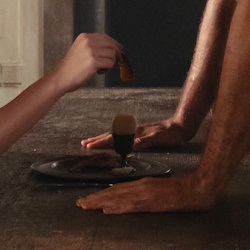 The finale of the film – which accompanies Cathy’s sickness and eventual death from pregnancy-related septicemia – begins in “I Will Wait For You,” a montage showing the underhanded Nelly burning the letters Heathcliff writes to Cathy before she sees them, as well as Cathy hallucinating visions of young Heathcliff in her room and outside her window. Willis uses increasingly distraught and anguished variations on the Pike Hymn to accompany all this, climaxing with the haunted, agonized version in “I’ve Never Believed You!” as Heathcliff desperately rides to Thrushcross to be with her before she dies. Tragically, Heathcliff arrives too late, and in “Be With Me Always” he cradles her body and weeps while their love theme plays on high cellos at its most vulnerable and fragile. The grandest version of their theme comes roaring back at the 2:06 mark as Heathcliff implores her to haunt him from beyond the grave and drive him mad; the piece then concludes with Willis’s piano arrangement of the traditional English folk song “Dark Eyed Sailor,” which is performed in context by vocalist Olivia Chaney, though this version is not included on the album.
Also not included on the album are any of the arrangements Willis did of Charli XCX’s songs, so we have to address that. The fact that she is involved in this project at all is somewhat unusual, considering that her usual musical style does not appear to lend itself to a film of this type, but in fact it all works very well. Fennell had asked Charli to record one song for the end credits of the film, but after reading the screenplay she apparently felt immediately inspired and decided to work with her frequent collaborator Finn Keane to create a full concept album for the film with songs connected to the world of Wuthering Heights. Charli describes the musical style of the album as an “elegant and brutal sound palette” that reflects “a world that felt undeniably raw, wild, sexual, gothic, and British”.
She wrote the lead song, “House”, after watching a documentary film about The Velvet Underground, and after asking John Cale for feedback on the music she had been working on, he agreed to record the spoken-word poem featured in the song. Critics have described “House” as a ‘neoclassical darkwave song’, and it actually has a great deal of similarity to Willis’s Wuthering Heights theme with its sonic distortions, vivid string harmonics, and aggressively dissonant instrumentation. The other main song, “Chains of Love,” is more modern and has a synth-pop vibe that feels closer to Charli’s established musical sound.
 In terms of the other songs, I quite like the euphoric tone of “Wall of Sound,” the dance music vibes of “Dying for You,” the stripped-down ghostliness of “Always Everywhere,” and the similarly spectral “Open Up”. However, I do feel that there was perhaps a missed opportunity here, where Charli could have capitalized on the post-Stranger Things cult popularity of Kate Bush and done a cover of her 1978 classic “Wuthering Heights.” Either way, existing fans of Charli XCX’s music will likely find this departure to be an interesting artistic side project; fans of film scores, less so.
However, it is supremely disappointing that the instrumental arrangements of Charli’s songs that Willis did for the film are not included on either album. These include a stirring arrangement of “House” with driving folk strings, an emotional version of “Open Up,” a string quartet version of “Dark Eyed Sailor,” the statements of “Always Everywhere” and “Dying for You” that appear in the end credits, and the rich arrangement of “Wall of Sound,” the latter of which appears in the scene where Heathcliff catches Cathy masturbating beneath the Pike. Many of these musical moments underscore key scenes and are enormously important in terms of bringing the two musical styles together and showcasing them as a cohesive whole, and so the fact that the label has, for whatever reason, chosen not to make them available feels short-sighted and is likely to annoy both Charli’s fans and fans of the film.
This one issue aside, however, I found the Wuthering Heights soundtrack to be a compelling, intellectually satisfying, emotionally fulfilling listen. Look: this is not your grandmother’s Wuthering Heights. Emerald Fennell has done some drastically different things to the story that have sent purists into a tizzy, but she has created a visually dazzling piece of cinema which, although it may not be an accurate representation of what Emily Brontë had in mind, is nevertheless a sumptuous piece of entertainment. Likewise, Anthony Willis is not Alfred Newman, and nor was he trying to be, but what he has done is create a musical world that matches Fennell’s vision of what the story is all about: all-encompassing love, underpinned with madness, jealousy, and violent retribution, set against the backdrop of the bleak Yorkshire moors.
Buy the Wuthering Heights soundtrack from the Movie Music UK Store
Track Listing:
- SCORE ALBUM
- C & H (2:24)
- The Kindest Man Alive (1:08)
- Again & Again (2:47)
- A Very Important Family (1:05)
- Thrushcross Mirage (1:31)
- Kitten In Clover (1:42)
- I Cannot Play With You! (4:09)
- Isabella’s Dollhouse (1:48)
- Watch Me Grope For Them! (1:49)
- Dog In A Manger (2:02)
- Shall I Come Fetch You? (4:02)
- You’re Not Enough For Her! (2:46)
- So Kiss Me And Be Damned. (3:25)
- Nelly’s New Position (2:17)
- Wounded Swallow (2:28)
- This Is How He Loves You? (4:19)
- Mrs. Heathcliff (1:20)
- It Is My Name (2:16)
- I Will Wait For You (3:07)
- I’ve Never Believed You! (4:55)
- Be With Me Always (5:54)
- Wuthering Heights Suite (4:29)
- Thrushcross Grange Suite (3:01)
- SONG ALBUM
- House (written by Charlotte Aitchison, John Cale, Finn Keane, and Nathan Klein, performed by Charli XCX feat. John Cale) (3:18)
- Wall of Sound (written by Charlotte Aitchison and Finn Keane, performed by Charli XCX) (2:24)
- Dying for You (written by Charlotte Aitchison, Finn Keanema and Justin Raisen, performed by Charli XCX) (3:02)
- Always Everywhere (written by Charlotte Aitchison, Finn Keane, Justin Raisen, and Lewis Pesacov, performed by Charli XCX) (3:03)
- Chains of Love (written by Charlotte Aitchison, Finn Keane, and Justin Raisen, performed by Charli XCX) (2:50)
- Out of Myself (written by Charlotte Aitchison and Finn Keane, performed by Charli XCX)
- (2:19)
- Open Up (written by Charlotte Aitchison and Finn Keane, performed by Charli XCX)
- (1:26)
- Seeing Things (written by Charlotte Aitchison, Finn Keane, and Justin Raisen, performed by Charli XCX) (2:30)
- Altars (written by Charlotte Aitchison and Justin Raisen, performed by Charli XCX) (2:56)
- Eyes of the World (written by Charlotte Aitchison, Finn Keane, Justin Raisen, and Sky Ferreira, performed by Charli XCX feat. Sky Ferreira) (3:43)
- My Reminder (written by Charlotte Aitchison and Justin Raisen, performed by Charli XCX) (3:33)
- Funny Mouth (written by Charlotte Aitchison, Finn Keane and Joe Keery, performed by Charli XCX) (3:33)
Running Time: 64 minutes 34 seconds – Score Album
Running Time: 34 minutes 40 seconds – Song Album
Music composed by Anthony Willis. Conducted by Hugh Tieppo Brunt. Performed by the London Contemporary Orchestra. Orchestrations by Brett Bailey, Hugh Tieppo Brunt, Ananda Chatterjee, Talia Morey and Stephen Coleman. Recorded and mixed by Nick Wollage. Edited by Peter Clarke. Album produced by Anthony Willis.

Shop at the Movie Music UK Store

Member of the

 MOVIE MUSIC UK