K-POP DEMON HUNTERS – Marcelo Zarvos
 Original Review by Jonathan Broxton
One of the most fascinating trends to emerge in recent years has been the emergence of Korean popular entertainment into the western mainstream. When I was a kid, there were no really popular films from countries in East Asia – China, Japan, South Korea – outside of highbrow movies by directors like Akira Kurosawa, and to the best of my recollection no widely known Japanese or Korean pop songs charted in the UK as mainstream hits in the 1980s or 1990s, with the possible exception of a couple of instrumentals by Kitaro and Ryuichi Sakamoto. The first truly massive mainstream Asian pop hit was Psy’s “Gangnam Style” in 2012, which soared to #1 on the UK Singles Chart and stayed in the charts for many weeks.
Since that breakthrough, however, East Asian popular culture has spread successfully throughout the west, with Korean media becoming especially prominent. K-Pop groups like BTS and Blackpink fused American hip-hop, EDM, and R&B in a way that resonated enormously with western youngsters, resulting in a massive boom in popularity. Building on the cult success of previous films like Snowpiercer and The Host, Joon-Ho Bong’s Parasite won the Academy Award for Best Picture in 2019, and then Squid Game swept the Emmys in 2021. Both of those projects combined popular action and thriller tropes with explorations of Korean social realities, which allowed American audiences to connect instantly without needing to any cultural homework.
Other elements of Korean culture broke subsequently through via Netflix, YouTube, TikTok, and Spotify, where K-Dramas, idol content, and a litany of hybrid projects bypassed traditional gatekeepers and find global audiences through subtitles and algorithms, and this in turn has influenced an explosion of interest in Korea cuisine, fashion, and more. It’s actually been quite fascinating to watch, and now the mainstream popularity has peaked with K-Pop Demon Hunters.
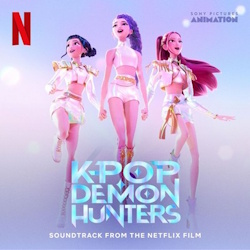
The film is an animated musical action-fantasy directed by Maggie Kang and Chris Appelhans from a screenplay they co-wrote with Danya Jimenez and Hannah McMechan. The story centers on Rumi, Mira, and Zoey, members of a globally famous K-Pop girl group called Huntrix, whose rise to stardom is secretly tied to an ancient duty. Unbeknownst to their fans, the group belongs to a long lineage of protectors tasked with battling demons that prey on negative human emotions. Their concerts are actually rituals designed to channel a collective positive energy, which then reinforces a mystical protective barrier between the human world and the demon realm. However, threat to this barrier emerges in the shape of a rival boy band, the Saja Boys. The Huntrix girls quick determine that the Saja Boys are demons masquerading as pop stars, with their charismatic lead singer Jinu posing a special threat, and they resolve to stop them – but begin to run into problems when Huntrix’s lead singer Rumi starts to develop feelings for Jinu.
I know I am absolutely not the target demographic for this, but I actually thought the film was pretty good. The story was interesting and original, and often very funny. I thought the film’s explorations of some of the more mystical parts of Korean culture were fascinating. I liked the animation style, and how they occasionally flashed into other styles – Studio Ghibli, Doraemon, etc – for a few seconds. I thought Derpy the Demon Tiger was especially adorable. I’m not sure I got *everything* about it – I’m sure I missed dozens and dozens of references to that entire sub-culture that its most ardent fans would appreciate – but I can certainly see why it’s so popular
 Music naturally plays a massive part in K-Pop Demon Hunters, as both the protagonists and antagonists are pop singers, and the songs they sing contain literal magic. Huntrix’s songs, choreography, and fan energy is intended to be wholly positive and euphoric, because the fan response to it helps sustain ancient protective magic that keeps darker spirits at bay. Meanwhile, the Saja Boys songs are intended to do the exact opposite, designed to break down the walls between the human world and the demon world so that the demons can take over.
The score for K-Pop Demon Hunters is by Brazilian composer Marcelo Zarvos, whose previous major film and TV scores include Remember Me, Fences, Wonder, The Equalizer 3, five seasons of The Affair, and the most recent seasons of The Diplomat. However, more on that later, because first I want to talk about the songs. The main driving forces behind them are musical theater songwriter Mark Sonnenblick (who contributed lyrics to Elton John’s Broadway musical of The Devil Wears Prada), singer-songwriter Eun-Jae Kim (“Ejae”) who provides the singing voice of Rumi in context, and music producer Ian Eisendrath. They enlisted an array of additional songwriters and music producers to work with them on numerous chart-worthy K-Pop tracks. These individuals include rapper Danny Chung; Costa Rican composer Daniel Rojas; Teddy Park and Byung-Koon Kim (aka “Kush”) of the entertainment company The Black Label; Hun-Seol Jeong (aka “24”); Joe “Vince” Rhee; Hee-Dong Na, Gyu-Kwak Joong, and Yu-Han Lee of the music collective Ido; and a trio of Grammy-nominated and winning producers comprising Michel ‘Lindgren’ Schultz, Stephen Kirk, and Jenna Andrews, all of whom have worked on music for other K-Pop artists such as BTS and Blackpink. Between them they emerged with a half dozen or so original songs that have become some of 2025’s most popular, and have driven parents across the globe insane as their children play them over and over and over and over and over and over and over…
Four songs are performed by Huntrix, with Ejae providing the singing voice of Rumi, Audrey Nuna providing the singing voice of Mira, and Rei Ami providing the singing voice of Zoey. “How It’s Done” is the film’s opening number, set on a plane where the members of Huntrix dispatch a group of demons disguised as airline pilots and stewardesses, and was inspired by the “Jet Song” from West Side Story as it sets out the background, the history of world and its central conflict, who the characters are, and what their place in it is. I’m not actually huge fan of the song from a musical perspective – it leans into hip-hop and contemporary R&B too closely for my personal taste – but it’s important in context.
 The most popular song on the soundtrack by far is “Golden,” which in context in intended to be the Huntrix song that finally brings about the ‘golden honmoon,’ the final closing of the portal between the human universe and the demon universe, which would finally end the threat from the supernatural beings forever. Eisendrath described “Golden” as the film’s ‘I Want’ song – it’s an it’s an upbeat, glittering pop anthem celebrating confidence, unity, and the glow of stardom. There’s also an idea in the song relating how Rumi has trouble hitting the song’s high note (the plot explains why) which adds a layer to the song’s in-context dramatic application. It’s going to be nominated for an Oscar.
“Takedown,” on the other hand, is a warrior anthem that expresses the senses of rage and vengeance the members of Huntrix feel regarding the Saja Boys; essentially it’s a diss track that is supposed to intimidate and drive away the demons, but is also has several layers of double meanings: the negativity and aggressiveness in the lyrics reflect the fact that the Saja Boys have successfully undermined the uplifting positivity that Huntrix usually projects, and it also addresses the internal struggles of Rumi who – in the film’s major plot twist – turns out to be a secret half-demon herself.
My own personal favorite song, though, it “What It Sounds Like,” which is performed during the film’s conclusive scene in which Huntrix battles against the demon king Gwi-Ma and his Saja Boys during a live televised ‘idol competition’. The song is an upbeat and defiant, addressing Rumi’s half-demon secret, and how her band mates eventually come to accept her and move on: in the end, this and other selfless acts are what eventually bring about the ‘golden honmoon’ and end the human-demon battle forever. It has a driving sense of forward momentum and inevitability, an aspirational chorus, and several soaring crescendos that build on the central chord structure of “Golden” and are very satisfying from a musical point of view.
Two songs are performed by the Saja Boys, with Andrew Choi providing the lead singing voice of Jinu, backed by ‘Neckwav,’ rapper Danny Chung, Kevin Woo, and ‘SamUIL Lee’. “Soda Pop” is the introduction number for the Saja Boys and on the surface is an intentionally silly bubblegum K-Pop boy band song, but this masks the fact that when you actually listen to them the lyrics are unexpectedly unnerving and reveal the predatory nature of the demons. Later the unexpectedly dark “Your Idol” acts as a counterpoint to “Golden” and in context is used by them to summon the film’s main antagonist, Gwi-Ma, so that they can feed him the souls of their magically entranced audience.
The final major song is “Free,” which is a duet between Ejae as Rumi and Andrew Choi as Jinu, and is an emotional ballad that plays across several scenes of Jinu and Rumi sharing their deepest secrets, and falling for each other despite the demon/demon hunter conflict. It’s very West Side Story/Romeo and Juliet in terms of its aims, and it’s actually a quite pretty song in places, although again the rap/hip-hop elements undermine my personal enjoyment of it overall.
The end credits of the film contain a performance of “Takedown” performed by Jeong-Yeon Yoo, Ji-Hyo Park, and Chae-Young Son of the real-life South Korean girl group Twice and the soundtrack also includes three previous released K-Pop songs: “Strategy” by Twice, “Love, Maybe” by MeloMance, and “Path” by Jokers.
 What’s clever about all this music is how it all fits together as a logical, dramatic story arc, and how each song has hidden meanings and references to some of the more abstract concepts and emotional drivers within the story. Western critics of K-Pop music often focus on its negatives – formulaic song structures, over-reliance on production and electronic manipulation, shallow and generic lyrics – but what’s fun about K-Pop Demon Hunters is how Sonnenblick, Kim, and the others initially lean into these tropes and almost intentionally replicate them, but quickly subvert them by having the characters themselves acknowledge the issues . I honestly didn’t expect to react to this music this way – I have virtually no experience with any other K-Pop music, so I have no frame of reference, but these particular songs are all very, very good indeed. One other thing I noticed is how freely the songs move between English and Korean lyrics, often in consecutive lines, which results in a fascinating cross-cultural blend of language dubbed ‘konglish’ that I’ve never really experienced before.
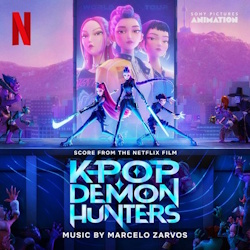
Moving on to Zarvos’s score, it’s a nice accompaniment to the songs, but naturally it plays second banana to them on all fronts. In terms of approach, it is a modern orchestral-electronic hybrid with some prominent influences from east Asian culture in the orchestration. Tonally it treads a fine line between mysticism and action; sometimes it sounds similar to something like Kung Fu Panda, and then at other times it is a fairly standard modern action score, with all that implies. One thing I do appreciate is how frequently Zarvos quotes melodies from the songs in his score – thematic ideas derived from the choruses of “Golden” and “What It Sounds Like” appear quite regularly, while the love theme for Rumi and Jinu that is introduced in the gorgeous “Listen To These Voices” is clearly inspired by the more romantic parts of “Free”. By doing this Zarvos ensures that the songs and the score together feel like a cohesive whole, all in service of the same time, and considering how often that doesn’t happen, I need to give everyone involved praise for doing that here.
 In terms of other specific cues from the score, the opening “Prologue” is quite lovely, and has a fascinating ‘Eastern’ sound that appeals. “Rumi’s Signs,” “Bracelet,” and parts of “You’re a Demon” have an emotional, bittersweet central theme for a solo cello that directly addresses the secret about her demonic parentage, and sometimes morphs into the theme from “Golden”. There are some light horror textures in cues like “Demons on a Plane,” “Underworld,” and the aforementioned “You’re a Demon,” including some that make use of some unusual dissonances, processed vocals, and manipulated electronic tones. The “Bathhouse Fight” is a driving rock instrumental with a roaring vocal performance.
There’s a cute little motif for Derpy the Demon Tiger in “Rumi Meets Derpy” that later turns into something more emotional in the tender and intimate “We Both Win/Flying With Derpy”. The conclusive pair, “Rumi Confronts Celine” and “Jinu’s Death,” initially revisit some of the textures from the opening “Prologue,” including the ‘hunter’s mantra’ performed by actress Rumi Oak as young Rumi, before moving through a nervous instrumental hip-hop interlude blended with the light horror textures, to a dark and moody ending. The album then concludes with a 7-minute “End Credits Suite,” which reprised several of the score’s main themes.
Honestly, I don’t think the majority of traditional film music fans are going to really find much in K-Pop Demon Hunters that suits their tastes. Marcelo Zarvos’s score is fine, and does what it needs to do in context, but it doesn’t really have much of a personality of its own to make it stand out from any crowd, and the majority of the thematic highlights come from the songs anyway. As for the songs; look. It’s K-Pop, and it intentionally adopts a particular aesthetic, and is expressly designed to appeal to fans who are already in love with the genre. You don’t hire the songwriters and producers behind BTS and Blackpink if you’re not trying to appeal that demographic. “Golden” is an euphoric earworm, “Soda Pop” is catchy, and “What It Sounds Like” is genuinely good. However, what I like the most here is the way that Eun-Jae Kim and Mark Sonnenblick have taken that authentic K-pop sound and made it work as an actual musical with a real dramatic arc and narrative progression in film context. That’s never easy to do in any circumstances, and the fact that is works here is impressive.
What you also can’t deny is this music, and this film, has become a absolute pop culture phenomenon in a way that hasn’t happened for many, many years, and as such the Korean invasion of the American mainstream is likely to continue for many years to come. Whether the army of six-year-olds around world that have been driving their parents crazy by listening to these songs a million times will continue to do so is yet to be determined.
Buy the K-Pop Demon Hunters soundtrack from the Movie Music UK Store
Track Listing:
- SONG ALBUM
- Takedown (written by Michel Schulz and Melanie Fontana, performed by Twice) (3:01)
- How It’s Done (written by Danny Chung, Eun-Jae Kim, Daniel Rojas, Mark Sonnenblick, Hun-Seol Jeong , Hee-Dong Na, Gyu-Kwak Joong, Yu-Han Lee, and Teddy Park, performed by Huntrix) (2:56)
- Soda Pop (written by Danny Chung, Byung-Koon Kim , Joe Rhee, Hun-Seol Jeong, and Min-Seok Do, performed by Saja Boys) (2:30)
- Golden (written by Eun-Jae Kim, Mark Sonnenblick, Hun-Seol Jeong, Hee-Dong Na, Gyu-Kwak Joong, Yu-Han Lee, and Teddy Park, performed by Huntrix) (3:14)
- Strategy (written by Boy Matthews, Cleo Tighe, Tae-Seok An, and Woo-Hyun Lee, performed by Twice) (2:48)
- Takedown (written by Michel Schulz and Melanie Fontana, performed by Huntrix) (3:02)
- Your Idol (written by Eun-Jae Kim, Byung-Koon Kim, Mark Sonnenblick, Joe Rhee, Hun-Seol Jeong, Hee-Dong Na, Gyu-Kwak Joong, and Yu-Han Lee, performed by Saja Boys) (3:11)
- Free (written by Jenna Andrews, Stephen Kirk, and Mark Sonnenblick, performed by Eun-Jae Kim as Rumi and Andrew Choi as Jinu) (3:07)
- What It Sounds Like (written by Eun-Jae Kim, Jenna Andrews, Stephen Kirk, Mark Sonnenblick, Daniel Rojas , Hun-Seol Jeong, Hee-Dong Na, Gyu-Kwak Joong, Yu-Han Lee, and Teddy Park, performed by Huntrix) (4:10)
- Love, Maybe (written by Min-Seok Kim and Dong-Hwan Jeong, performed by MeloMance) (3:05)
- Path (written by Woon-Beom Jang, Joon-Woo Kang, Gap-Chui Jo, Young-Hyeon Kim, and Soo-Young Lee, performed by Jokers) (3:41)
- Score Suite (3:00)
- SCORE ALBUM
- Prologue (1:37)
- Rumi’s Signs (2:30)
- Demons on a Plane (0:50)
- Bathhouse Fight (2:13)
- Jinu’s Story (2:01)
- Underworld (1:32)
- Rumi Meets Derpy (0:54)
- Listen To These Voices (0:55)
- Bracelet (1:43)
- Fans’ Choice Awards (1:13)
- The Disaster (0:55)
- You’re a Demon (3:50)
- We Both Win/Flying With Derpy (1:13)
- Rumi Confronts Celine (3:16)
- Jinu’s Death (2:47)
- End Credits Suite (6:51)
Netflix Music (2025)
Running Time: 37 minutes 51 seconds – Song Album
Running Time: 34 minutes 12 seconds – Score Album
Music composed by Marcelo Zarvos. Conducted by Randy Miller. Orchestrations by Randy Miller and Mark Baechle. Recorded and mixed by Andrew Dudman, Nick Taylor, Lawrence Manchester and Erich Talaba. Edited by Oren Yaacoby. Score album produced by Marcelo Zarvos. Song album produced by Mark Sonnenblick, Eun-Jae Kim, and Ian Eisendrath.

Shop at the Movie Music UK Store

Member of the

 MOVIE MUSIC UK