BALTO – James Horner
 THROWBACK THIRTY
Original Review by Jonathan Broxton
Balto is an animated adventure film very loosely inspired by true events that happened in Nome, Alaska, in 1925, during an especially harsh winter. Balto is a half-wolf, half-husky who lives on the outskirts of town and is teased by other dogs because of his mixed heritage; his only close friends are a goose named Boris, two polar bears named Muk and Luk, and a young human girl named Rosy. When a diphtheria epidemic breaks out, threatening the lives of the town’s children – including Rosy – the townspeople organize a relay team of sled dogs to bring a lifesaving antitoxin from a remote railway station to Nome. Balto enters a race to join the team, and initially wins, but is later disqualified when a rival dog named Steele reveals his wolf ancestry. However, the sled team carrying the serum gets lost and stranded, and so Balto – with the help of his friends – sets out to find the team, navigate treacherous terrain, and bring the medicine back to Nome.
The film was directed by Simon Wells for Amblin Animation and Universal Pictures, and featured a voice cast that included Kevin Bacon as Balto, Bridget Fonda as Rosy’s husky (and Balto’s love interest) Jenna, Phil Collins as the comedy polar bears, and Bob Hoskins as Boris. It was a reasonably successful film at the time – enough to inspire two direct-to-video sequels – but it was criticized for taking far too many significant creative liberties with the historical events, which were heroic and dramatic enough in their own right to have inspired a more faithful re-telling. In reality more than 20 mushers and about 150 dogs participated in the relay, covering more than 650 miles through blizzards and sub-zero temperatures, and eventually getting the serum to Nome in about five and a half days. Balto was one of the lead dogs on the final stretch, and became the most famous figure associated with the mission, largely because he led the team that finished the run amid terrible weather conditions. Afterwards Balto became a national celebrity; a statue of him was erected in New York City’s Central Park to honor the courage of all the sled dogs that took part, and the relay helped inspire later cultural traditions, including the Iditarod Trail Sled Dog Race, which follows much of the same historic route, and continues to be run today.
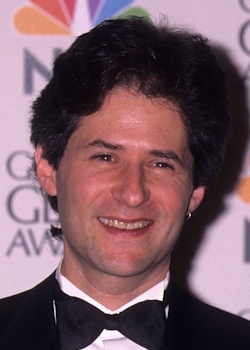 Responding to all this heroism with music was composer James Horner, who wrote the final animation score of his career for Balto. I always thought it was a shame that Horner was never offered the opportunity to score more animated films after 1995 because his work in the genre – on two American Tail films, The Land Before Time, and more obscure things like Once Upon a Forest, or We’re Back: A Dinosaur’s Story – suggests that he was one of the best to ever work in the genre. Balto was his final score of 1995, one of the most creatively outstanding years of his entire career, during which he wrote several highlight scores including Braveheart, Casper, and Apollo 13, but even in the face of all that excellence Balto should not be overlooked.
The score was recorded in England with the London Symphony Orchestra and, like those other animation scores, is a large-scale, mostly serious, symphonic work full of rich instrumental textures, exciting action, and emotional themes. It draws both from the classical canon and his own prior work – more on that later – but what impresses the most is how sophisticated it all is. Unlike some of his contemporaries, Horner never dumbed his music down just because he was writing for animation – instead he used the opportunity to write detailed, technically complicated music that would go on for minutes, through-composed, hitting each emotional beat as required, and filling the time between them with soundtrack magic.
Balto is based around one main theme, one ‘major’ secondary theme, plus a couple of minor motifs, but it’s what Horner does with that prominent main theme that’s most impressive. The album’s liner notes talk in great technical detail about it – major and minor keys, Lydian modes, variations in orchestration and color and instrumentation – but as someone who understands very little about music theory this doesn’t mean much to me, so the bottom line for the layman is to say that Horner uses the theme everywhere in the score and is constantly playing with it, unraveling it, deconstructing it, and putting it back together in an assortment of creative ways, all in support of the emotional needs of the film.
The theme is introduced right at the beginning of the first cue, “Main Title/Balto’s Story Unfolds,” and it plays for the next couple of minutes with a dreamy, romantic, fantasy sound, but then as the cue develops the music slowly becomes more powerful and action packed until the 3:12 mark when it all explodes into life like the chase music from Willow, and you realize that this music is the main theme too, but this time it is underpinned with powerful brass clusters, leaping string runs, wintry sleigh bells, and snare drum rhythms, to give it an entirely different flavor. It’s just brilliant, and Horner does this over and over again throughout the score.
The statement in “The Dogsled Race” is carried by jaunty, bright trumpets backed by more wintry percussion items, and constantly shifts in tone from light playfulness to serious drama; the depth of the orchestra here, especially the counterpoint in the brass, is sensational, reminding me of some of the things he was doing on scores like Krull back in the 1980s. There is a playfulness and child-like wholesomeness to large parts of “Rosy Goes to the Doctor” that is wonderful, full of energy and expressiveness, although again this is counterbalanced by a warm but bittersweet oboe version of the main theme in its second half.
The version of the main theme that runs through the short comedic interlude “Boris and Balto” feels like Prokofiev and Peter and the Wolf with its fast stylistic changes and occasionally slapstick sensibility, but then “The Journey Begins” raises the stakes considerably with a wonderful sense of adventurous anticipation. The cue sees Horner constantly shifting statements of the main theme between major and minor keys, while surrounding them with a multitude of dynamic orchestral forces that hint at the dangers to come. Horner was always excellent at this sort of action scoring; he always found ways to bring the orchestra into play in a variety of different ways, combining instruments to create gorgeous, sweeping textures and elicit powerful emotional responses. The subtle use of the chorus here is an especially lovely touch.
The action music in “Grizzly Bear” is epic and pulse-pounding, and yet again finds Horner placing different parts of the main theme into an orchestral frenzy; there are again echoes of scores like Krull and Willow in some of the brass writing, while the relentless snare drum tempos that underpin the whole thing recall “Samuel’s Death” from Legends of the Fall, and also foreshadow some of the things he would later do on both Titanic and The Mask of Zorro. The lovely minor motif for Balto’s canine love interest Jenna appears at the beginning of “Jenna/Telegraphing the News” on romantic woodwinds, while the second half of the cue features an inventive idea whereby a flute frantically plays morse code over the top of a majestic, stately brass variant on the main theme. The other minor motif, for Balto’s canine rival Steele, anchors much of “Steele’s Treachery,” and it is naturally much darker, featuring sometimes quite guttural brass outbursts and moments of dissonance.
The final two cues in the album are the score’s highlights, and it starts with the sensational “Heritage of the Wolf”. The cue underscores the moment in the film where Balto – exhausted, apparently defeated, wandering alone in the snowy wastes – has a vision of some sort of lupine deity, which encourages him to embrace the ‘wolf side’ that he had always suppressed, and use that as a source of strength to fulfil his task and deliver the medicine. Horner’s music for this scene is built around a proud, searching, searingly emotional motif for undulating strings that first appears at the 1:29 mark. The motif has its origins in Mahler’s 8th Symphony, was used previously in the scores for both Sneakers and Apollo 13, and would later go on to be used even more prominently in scores like Titanic, The Perfect Storm, and especially Enemy at the Gates. Some internet wags have suggested that Horner copied this theme from John Williams’s score for Schindler’s List, which was written two years previously, but this is categorically not true – Horner was using this exact same idea in the summer of 1992, before Schindler’s List was written – and the reality is that both men were likely inspired by the same Mahler piece independently of one another.
Actually, I think this is another example of the ‘Horner career symphony’ theory, and how he consistently reacted the same way, musically, to the same visual and conceptual stimuli in different films – in this instance, this motif appears to be how Horner musically responded to the concept of ‘struggling with the despair of enormously difficult circumstances’, whether those circumstances are the possible deaths of loved ones on a space shuttle, the imminent sinking of an ocean liner, the misery of a years-long siege, or in this instance the exhaustion of a lonely animal, caught in a snowstorm and close to death.
Either way, the music is magnificent in context, and the way Horner plays the ‘Heritage of the Wolf’ motif in conjunction with several stirring refrains of the main theme is outstanding, especially in the track’s massive action-packed finale. The conclusive “Balto Brings the Medicine” then ends the score in tremendous fashion with back-to-back triumphant statements of the main theme for full orchestra and choir as Balto – having fully embraced his wolf side and taken control of Steele’s sled team – successfully leads his dogs into Nome, thereby saving the town and securing his place in history.
The album is bookended by two versions of an original song, “Reach for the Light,” which Horner co-wrote with songwriting duo Barry Mann and Cynthia Weil, and is performed by Steve Winwood. Some have criticized the song’s power-ballad pop arrangement and lyrical earnestness, calling it ‘cheesy’ or ‘ludicrous,’ but I have always really liked it. The main melody is based on Horner’s main theme, which is something I always appreciate, and the lyrics (“Reach for the light/You might touch the sky/Stand on the mountain top/And see yourself fly/Reach for the light/To capture a star/Come out of the darkness/ And find out who you are”) capture the essence of the whole film and its theme of bettering yourself despite your past, and have an inspirational quality that has always felt sincere to me.
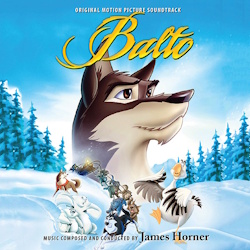 The original album for Balto was a generous 55-minute presentation which I have always enjoyed, but there is always room for expansion, and in 2018 Intrada Records and producer Douglass Fake released just that, offering a decent amount of previously unreleased music, alternate takes, and more. Highlights of the previously unreleased music include action cues like “Avalanche,” additional statements of the Balto/Jenna love theme in “Balto Sees Jenna,” brief comedy hi-jinks for the slapstick polar bears in “Muk & Luk Arrival,” the magical and haunting “Balto’s Aurora,” and especially some additional statements of the ‘Heritage of the Wolf’ idea in cues like “Not Dog Nor Wolf”. The sound quality of the recording is also noticeably better and crisper on the expanded release, and the whole thing is presented in a striking package featuring multiple album cover choices and excellent liner notes by Frank K. DeWald.
As I said, Balto was massively overshadowed by scores like Braveheart, and Apollo 13 at the time it was released, but over the course of the subsequent 30 years it has been re-evaluated to the point where it is now rightly appreciated and acknowledged at the level it should be. It’s certainly one of James Horner’s best scores for animation, a vivid and compelling orchestral work full of great themes, intelligent variations on those themes, and strong emotions that bely its roots as a film for children.
Buy the Balto soundtrack from the Movie Music UK Store
Track Listing:
- ORIGINAL 1995 ALBUM
- Reach for the Light – Theme from Balto (written by James Horner, Barry Mann, and Cynthia Weil, performed by Steve Winwood) (4:24)
- Main Title/Balto’s Story Unfolds (4:40)
- The Dogsled Race (1:41)
- Rosy Goes to the Doctor (4:05)
- Boris and Balto (1:29)
- The Journey Begins (5:06)
- Grizzly Bear (5:23)
- Jenna/Telegraphing the News (2:22)
- Steele’s Treachery (4:38)
- The Epidemic’s Toll (3:29)
- Heritage of the Wolf (5:54)
- Balto Brings the Medicine (4:53)
- Reach for the Light – Theme from Balto [Long Version] (written by James Horner, Barry Mann, and Cynthia Weil, performed by Steve Winwood) (5:27)
- EXPANDED 2018 INTRADA ALBUM
- Main Title/Opening Scene (4:38)
- Boris and Balto (1:27)
- The Dogsled Race (1:39)
- Balto Sees Jenna (2:09)
- Not Dog Nor Wolf (1:30)
- Not Dog Nor Wolf – Part 2 (0:58)
- Muk & Luk Arrival (1:29)
- Rosy Goes to the Doctor (4:06)
- Balto’s Aurora (1:11)
- Quarantine (2:25)
- The Journey Begins (5:02)
- The Epidemic’s Toll (1:38)
- To The Rescue (3:23)
- Grizzly Bear (5:20)
- Telegraphing the News (2:19)
- Steele’s Treachery (4:36)
- Heritage of the Wolf (5:50)
- Avalanche (0:47)
- Deadly Ice (0:48)
- Balto Returns/Balto Brings Medicine (4:50)
- Reach for the Light – Theme from Balto [Long Version] (written by James Horner, Barry Mann, and Cynthia Weil, performed by Steve Winwood) (5:40)
- Not Dog Nor Wolf (Original) (1:29) BONUS
- Muk & Luk Arrival (Revised) (1:29) BONUS
- Rosy Goes to the Doctor (Album Edit) (4:02) BONUS
- Balto Returns/Balto Brings Medicine (Original) (4:50) BONUS
- Reach for the Light – Theme from Balto (written by James Horner, Barry Mann, and Cynthia Weil, performed by Steve Winwood) (4:22)
Running Time: 53 minutes 31 seconds — Original
Running Time: 77 minutes 57 seconds — Expanded
MCA Records MCAD-11388 (1995) — Original
Intrada Special Collection Volume ISC 414 (1995/2018) — Expanded
Music composed and conducted by James Horner. Performed by The London Symphony Orchestra. Orchestrations by Steve Bramson, Don Davis, Arthur Kempel and Thomas Pasatieri. Recorded and mixed by Shawn Murphy. Edited by Jim Henrikson. Score produced by James Horner. Expanded album produced by Douglass Fake.
Leave a comment

Shop at the Movie Music UK Store

Member of the

 MOVIE MUSIC UK
I am enjoying reading your website. This post was especially detailed. Thank you for making it! One thing, the amazon links to the Movie Music UK Store, don’t quite work, in that they send me to Amazon dot com, not do UK. Is it me?
Amazon is sneaky like that.
I hope this helps:
1. Go to the USA flag next to ‘Hello Sign In’
2. Click onto the downwards pointing arrow on the right. of the flag.
3. This will invite you to Change country /region – click on there.
4. Now on the left side there is a Website country / region heading showing USA
5. Click on there and you’ll get a menu of nations, find UK and click
6. Then click on the ‘Go To Website’ and you’ll reach the UK .
Roger
One of my all time favourite films and an impressive score.
Thank you for this informative appraisal of the music…. I honestly never thought to check for a soundtrack album…
2026 and I intend to make good on that!
Roger