HAMNET – Max Richter
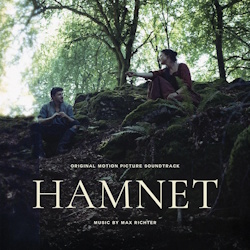 Original Review by Jonathan Broxton
Director Chloe Zhao’s film Hamnet, which is based on the 2020 novel by Maggie O’Farrell, is a lyrical reimagining of the brief life and death of Hamnet Shakespeare, the son of the legendary poet and writer William Shakespeare and his wife Agnes “Anne” Hathaway, musing on the fact that his passing may have inspired the creation of one of the greatest works of literature in history. The story centers mostly on Agnes, who is portrayed as a perceptive, intuitive woman with a deep connection to nature; the first half of the film looks at Agnes and William’s early courtship, their subsequent marriage, and offers a portrait of family life in Elizabethan England circa 1580, following the birth of their twin children Hamnet and Judith. In time William begins traveling to London to write and perform his plays, but eventually the spread of plague brings sickness to the Shakespeare household, and Judith falls gravely ill. Hamnet, who has been charged by his father with looking after the family in his absence, desperately attempts to help her, and asks God if he can swap places with her; Judith eventually recovers, but Hamnet contracts the plague too, and dies aged just eleven. After Hamnet’s death, the story then explores how Agnes and William grieve differently: Agnes’s sorrow is visceral and consuming, while William channels his grief into his work.
The film sees director Zhao returning to her preferred filmmaking style after her brief dalliance in the Marvel Cinematic Universe with Eternals. Hamnet is a slow, meditative, contemplative, beautifully transcendent film that is less about Shakespeare and his work that we all know, and more about Shakespeare the man that we don’t. It’s about love and death, family, grief, and loss, all the things that everyone goes through in their lives no matter what time period we live in, and how those experiences shape different people in different ways. It’s a gorgeous film to look at, and is obsessed with nature as a metaphor for life, the camera often lingering on the subtle details of trees, flowers, and rivers. It explores the dark and candle-lit corners of Stratford’s Tudor houses and London’s back alleys, revealing the minutiae of what it was actually like to live in 16th century England. Then, it stares in raw, unflinching close-ups of Agnes and William as they experience all the emotions a husband and wife can experience, daring you to look away when it all gets too real and uncomfortable.
The film is anchored by two exceptional performances by Jessie Buckley and Paul Mescal as Agnes and William. Buckley is full of unbridled passion, screams of anguish, and full emotions, while Mescal is more circumspect, more restrained, but still full of powerful emotions, although he chooses to express them on paper rather than shouting them at the world. They are ably supported by real-life brothers Jacobi Jupe and Noah Jupe, the former as young Hamnet, and the latter as the actor who plays Hamlet on stage at Shakespeare’s Globe Theater and becomes the avatar for the courageous young man Hamnet is destined never to become. It’s going to be nominated for a ton of Oscars
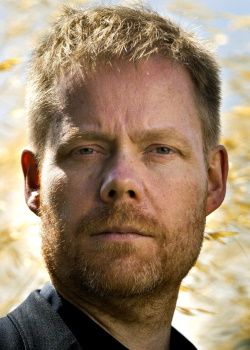 The score for Hamnet is by the German-born British composer Max Richter, who is widely recognized for his work in the contemporary classical music scene, but who has also written some acclaimed and popular film music over the last decade or so, including Waltz with Bashir, Mary Queen of Scots, and the TV series The Leftovers, among many others. The collaboration between Zhao and Richter is very much a return to Zhao’s preferred musical aesthetic; although Eternals featured a traditional super hero score by Ramin Djawadi, her Oscar winning film Nomadland was scored with pre-existing classical music by Ludovico Einaudi, and that feels much more her style.
In an interview with Ethan Alter for Gold Derby, Richter explains that Zhao essentially gave him no instructions, but that the script “immediately suggested a thematic approach that looked at the grammatical principles of Elizabethan music and took some little sonic fingerprints from period instruments.” In response to those initial thoughts Richter wrote about a half-hour of music and sent it over to her, and she used it on set when they were shooting. Richter describes his personal ethos as “trying to get the maximum from the minimum,” and explained that his musical palette for Hamnet was based on Renaissance bowed instruments like viols, hurdy-gurdies, and nyckelharpas, as well as folkloric instruments and vocal textures which speak to the “witchy thing” in the texture of the film related to Agnes’s relationship with the natural world.
Occasionally Richter also augments his orchestra with electronic textures, mostly in scenes later in the film following Hamnet’s death. Richter explains, “Even though Hamnet dies, he’s in this other space and there’s still a dialogue and a communication between him and his parents. I treated a lot of that with vocal material, because I saw voice as being a way that Agnes can reach beyond this world, and then I also made a lot of electronic material for those sequences – sounds that are more abstract and hard to define. If you hear a score played on violin, there’s a tiny part of your brain that knows it’s hearing a violin, but with an electronic sound that kind of visual reference doesn’t pop into your head, and that speaks to the unknown in a fundamental way in the same way that the movie does.”
Intellectually, this all makes sense, but unfortunately the in-context effectiveness of the score, and the album listening experience, do not live up to the expectations. I understand that Zhao is a filmmaker who values quietness and understatedness, and I understand that Richter is a composer who values minimalism, small gestures and subtlety, but the impact of the music in the film is so understated and so minimalist as to be virtually negligible. Truthfully, this isn’t a film which needed much score; larger orchestral forces and demonstrative thematic content would have overpowered it, and undermined the realism and immediacy of the drama. It could easily have been scored with the ambient sounds of nature, birds and bees and the sounds of breezes rustling through the trees, and maintained its overall ambiance. But, even with that in mind, the music that is there is rather underwhelming.
One or two cues do leave a positive impression when heard in album context. “Of Agnes,” “Look At Me,” and “Of The Sky,” use the soft, wordless female voice textures and slow, hypnotic strings to capture the essence of the character. “Of Orpheus” introduces the sound of a harp to echo the sound of the lyre that features in the Greek myth of Orpheus and Eurydice which William relates to Agnes during their courtship, and this instrument features later during the first half of “Of Earth and Heaven” where it is sometimes combined with an almost imperceptible church organ. The delicate piano musings of cues like “See Things That Others Don’t,” the second half of “Of Earth and Heaven,” and the morose “Of Remembrance,” are pretty but insubstantial to the point where you fear they may whisper away entirely.
There is anguish, dissonance, and abstract design in “An Abysm of Time,” “Of the Heart,” and “Of a Ghost,” which are some of the cues which deal with Hamnet’s illness and death. There is a sense of more forceful drama and searing emotion in the larger-scale orchestral writing of “I Was the More Deceived,” and Agnes’s arrival at “The Great Globe Itself” is Richter’s one moment of spectacle music, a rich and powerful dirge full of wordless vocals and imposing brass. The rest of the score, however, is little more than a series of musical breezes, fleeting, almost imperceptible gestures that are pleasant enough, but offer nothing in terms of dramatic depth or narrative progress.
The finale of the film, where Agnes and her brother Bartholomew travel to London to attend the premiere of Hamlet at the Globe Theater, is scored with Richter’s composition “On the Nature of Daylight,” which first appeared on his studio album The Blue Notebooks in 2004. At this point the piece has been used in at least three major settings – in Shutter Island, Arrival, and the television series The Handmaid’s Tale – and many commentors noted that its familiarity resulted in a disconnect between film and audience that left some people with negative feelings.
Originally, the piece was not included in the score. Richter explains that it found its way into Hamnet by a circuitous route. “In the original script, when Hamlet says ‘the rest is silence,’ the film cut to black … but then Jessie Buckley sent Zhao a recording of “On the Nature of Daylight” and she listened to it and had this epiphany of an image of the audiences’ hands reaching out.” When Zhao got back to the set she changed the entire finale and shot what she saw in her dream. Richter subsequently wrote a new piece of music for that scene, but then got into a conversation about the pros and cons about using that new track versus “Daylight.” Richter felt that as “Daylight” had been in other movies they should use the new music, but after Zhao told Richter the story about how “Daylight” inspired the new ending he relented to her vision and agreed to use “Daylight” instead. I think it’s fine, but I understand why some people might disagree.
The first part of the end credits features a new recording of the song “My Robin to the Greenwood Did Go” performed by young actress Olivia Lynes, who plays Judith Shakespeare. It is a sort-of-variation sort-of-adaption of the English renaissance folk tune “My Robin Is To The Greenwood Gone,” also known as “Bonny Sweet Robin,” and it is used in this context because the character Ophelia sings the last line of the tune during her ‘madness’ in Act 4 of Hamlet. The attractive final cue, “Of the Undiscovered Country,” is heard over the second part of the end credits and contains references to several of the instrumental textures heard in the score proper. The title, of course, is taken from Hamlet’s famous ‘to be or not to be’ soliloquy, and is a metaphor for death and the afterlife.
The score for Hamnet has been receiving a great deal of positive press from mainstream film critics. It’s the sort of score that those critics fall over themselves to praise – slow, minimalist, ambient, unobtrusive – and as such it is likely to earn Richter his first Academy Award nomination when they come out in the new year. Personally, however, I can’t help thinking that it is only part of the conversation because it accompanies a genuinely excellent film. In reality, and while the album listening experience is agreeable enough, Richter’s music has little to no impact on the film itself in context, mostly because it is virtually inaudible for long periods, and then when it is audible it rarely rises to much above a delicate whisper. Compositionally it offers nothing new – other ‘contemporary classical’ composers are writing this kind of stuff in their sleep – and had this exact same music been written for a less acclaimed film, no one would pay it any attention. In the end, fans of Richter’s style will find it appealing, but others may find themselves shuffling off this mortal coil, or being lulled to sleep, perchance to dream.
Buy the Hamnet soundtrack from the Movie Music UK Store
Track Listing:
- Of Agnes (2:16)
- Of Orpheus (3:44)
- See Things That Others Don’t (1:46)
- Look At Me (1:38)
- In All My Philosophy (2:25)
- Of Earth and Heaven (7:38)
- An Abysm of Time (1:59)
- Of the Heart (4:52)
- Of Remembrance (2:30)
- Of the Sky (5:01)
- I Was the More Deceived (5:37)
- Inward (1:41)
- Who Are You Looking For? (1:49)
- The Great Globe Itself (1:49)
- Of A Ghost (8:46)
- On the Nature of Daylight (6:37)
- My Robin to the Greenwood Did Go (traditional, performed by Olivia Lynes) (1:44)
- Of the Undiscovered Country (5:22)
Decca Records (2025)
Running Time: 67 minutes 03 seconds
Music composed by Max Richter. Conducted by Hugh Brunt. Orchestrations by Max Richter and Dave Foster. Featured musical soloists Max Richter, Vicky Lester, and Sam Wilson. Special vocal performances by Grace Davidson, London Voices, and Tenebrae. Recorded and mixed by Rupert Coulson and Tom Bailey. Edited by Katrina Schiller. Album produced by Max Richter.

Shop at the Movie Music UK Store

Member of the

 MOVIE MUSIC UK