KING OF THE KHYBER RIFLES – Bernard Herrmann
 GREATEST SCORES OF THE TWENTIETH CENTURY
Original Review by Craig Lysy
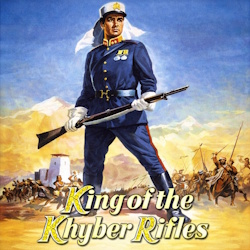
In 1938 20th Century Fox decided to remake its 1929 film “The Black Watch,” which itself was adapted from the 1916 novel “King of the Khyber Rifles” by Talbot Mundy. However, the onset of WWII caused the studio to shelve the project until 1951 when it was selected to finally move into pre-production. Frank P. Rosenberg was placed in charge of production with a budget of $2.19 million, Ivan Goff and Ben Roberts wrote the screenplay drawing from a story by Harry Kleiner, and Henry King was tasked with directing. The cast included Tyrone Power as Captain Alan King, Terry Moore as Susan Maitland, Michael Rennie as Brigadier General J. R. Maitland, and Guy Rolfe as Karam Khan.
The film is set in India during the British colonial Raj circa 1857 and centers on Captain Alan King, a mixed blood British soldier (his mother was an Indian Muslim). When his maternal familial roots are discovered, he encounters significant bigotry from his fellow British officers. His commander General Maitland however enforces full equality among whites, and therefore assigns King to organize, train and command a calvary regimen to be comprised of native Indians. The plan is to engage rebels lead by Karram Khan before he can consolidate his power and unite the many tribes under his banner. During preparations, King saves the General’s daughter Susan from a kidnapping attempt and they fall in love. The film was a commercial success earning a profit of $1.31 million. It was however not received well by critics who felt Tyrone Power at 39 years old was too old to play Alan King who was in his twenties. The film failed to earn any Academy Award nominations.
Composer Hugo Friedhofer was originally assigned by Alfred Newman; however, he withdrew his services and so Newman tasked Bernard Herrmann to take on the project. He accepted the assignment with the understanding that the film would be a British adventure tale à la Kipling. However, upon viewing the dreary film Herrmann would later quip; “Everybody’s life has some rain in it”. Nevertheless he brought his usual passion, and understanding to the story, using orchestral militarism and a formidable villain theme to propel its narrative. He would again assiduously research Indian music to support the setting, and provide the requisite cultural and musical sensibilities. Lastly, he had to support the romance between Alan and Susan.
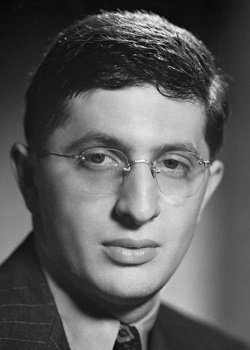 For his soundscape, Herrmann provides three primary themes, four secondary themes, and some motifs. For the primary themes, King’s Theme, supports our hero, and offers a martial, rousing marcia eroica, which speaks of pride, superiority and strength. Forthright and resolute in expression, and buttressed by trumpets and percussion. It serves as his personal emblem, and by extension the British army. Khan’s Theme supports our villain Karram Khan as the leader of the rebellion, and by extension, his warriors. Herrmann understood that the film’s narrative offered a clash of civilizations, and so he conceived an east-west juxtaposition. It is clear to me that Herrmann immersed himself in his research of Indian cultural and musical sensibilities as Khan’s Theme is infused to its very sinews with its auras, rhythms and indigenous instruments. Menacing horn declarations rise and fall joined by woodwinds Indiani and percussion textures. The Serpent woodwind, whose abyssal, dark and ominous sound evokes a primal, growling effect, magnifies the theme’s menace. The Love Theme for Alan and Susan offers a valse lente, which Herrmann used in his career to evoke romantic yearning and love, with two other examples being found in his string quartet “Echoes” (1965), and the film “Obsession” (1976). It offers exquisite compositional elegance and romanticism, which transcended its introductory scene.
For secondary themes we have for military pomp, the Cock o’ the North, also known as Gordon Highlanders Regimental March. This renown Scottish 6/8-time military march empowered by bagpipes and drums is part of British military tradition and Herrmann employs it throughout the film. The Indian Theme is used in scenes where Alan, or Alan and Susan travel through Indian villages or the countryside. It drapes us with exquisite orientalism, offering an exotic narrative with a flute Indiani leading a retinue of woodwinds and soft percussion. The Locket Theme speaks to Alan’s love for his mother, who along with his father was killed in the rebellion, and whose photo he keeps in a locket. It offers a wistful and tender musical narrative, which blossoms with filial love atop a flute with harp adornment. The Holy Man Theme supports Hasan, Alan’s Indian adoptive father, who has in his later years has become a holy man. Herrmann supports with an exotic mistero mistico, which offers a wondrous joining of ethereal and Indian auras. Lastly, Herrmann composed a number of exotic dances for Indian dancing women, as well as some classic waltzes used during the Queen’s Birthday Ball celebration.
Cues coded (*) contain music not found on the album. “Prelude” offers a rousing score highlight where Herrmann opens the film with dramatic force. He sheds Alfred Newman’s iconic 20th Century Fox fanfare for the resounding horns militari of his galloping Cavalry Theme that offers repeating five-note phrases, draped with Indian auras replete with pounding martial timpani and trilling woodwind accents. We see a proud British cavalry brigade galloping across the aired Indian countryside as the opening credits unfold with bright orange script. The credits conclude with narrative script; “India – 1857 – the hundredth year of British rule”, punctuated with a massive gong strike and foreboding orchestral sustain. “The Pass” opens with an ominous chord joined by the monstrous growl of the serpent woodwind. Karram Khan’s rebel forces populate the hills above the narrow pass intent on ambush. Herrmann sows an amorphous sinister menace texturally with guttural growls by the serpent, and woodwinds Indiani. Khan orders dynamite fuses set to bury the column under an avalanche, but at 1:15, Ahmed, a member of the Afridi tribe, rides down propelled by horns of alarm, and alerts Captain King of the ambush. He halts the column, organizes the wagons, as the explosions initiate a, avalanche that misses the column. A fire fight breaks out, with the British pinned down.
(*) “Rescue” Bugles militari resound as a relief column commanded by Lieutenant Heath arrive from the other direction. Khan realizes that he is now outgunned, and orders a retreat into the mountains. King orders cease fire supported by bugling. After the rescue of a native soldier who fell down the hillside, they return to the fort, their arrival marked by a British bagpipe Cock o’ The North march. Upon arriving, King is ordered to report to General Maitland for debriefing. He warns the General of the impending “Night of the Long Knives”, which will launch a widespread attack against the British infidels. Ahmed joins, and advises the General with King interpreting, that his brother opposed Khan, and was sadistically murdered. He asks to join the native regimen under his command. His request is granted, and King is dismissed and provided quarters with Heath. Afterwards the general relates that there is something odd about Captain King to Major MacAllister, and they review his service record. “The Locket” reveals King acquainting with bungalow mates Lieutenants Heath and Baird. He discloses that he is familiar with the Pashto language as he was born in India. He pulls out a locket, which bears a photo of his father, Major King, yet when they flip it, a second image of his mother, a Pashtun woman is displayed. He says Pashtun women are beautiful, are they not? Herrmann supports initially from King’s perspective, offering a tender musical narrative, which blossoms at 0:10 as a flute with harp adornment weaves a melody of a son’s affection for his mother. At 0:25 King departs and foreboding portentous strings join as Heath and Baird are stunned and speechless with the discovery that King is a half-breed.
(*) “King Seeks The Holy Man” reveals King riding through the bustling streets. Herrmann infuses Orientalism, with a flute Indiani leading a retinue of woodwinds and soft percussion. He enters an estate courtyard, enters the mansion and we behold a woman performing a danza esotica for several men sitting on cushions. He is greeted by the owner, who professes that he runs a legal business. King inquiries about Ahmed, a silversmith who once worked here. The owner says he worked here years ago and is told, to seek the holy man who dwells behind the city mosque. In “The Holy Man” we find him preaching as Lady Susan Maitland and her servant and translator listen from their carriage. She translates that he declares the prophecy of the “Night of the Long Knives”, which will end of British rule after 100 years, and that this is the 100th year. Herrmann supports with an exotic mistero mistico. At 1:00 a rising tension supports the crowd becoming agitated by the presence of Lady Maitland and Captain King. King grabs orders them to leave at once and they escape unharmed and we close the scene with a return to the misterioso as an Indian woman whisper into a man’s ear. At 1:35 woodwind borne Indian Theme caries King and the carriage’s travel through the countryside. He arrives at the fort and a foreboding woodwind motif supports as he walks into his quarters. Blair advises that Heath moved out after discovering King’s parentage. Baird offers him a drink and King states, you may also leave if you wish. Baird says no as we half breeds need to stick together, adding, my mother was Irish, which elicits a smile and a toast.
In a pivotal unscored scene, we shift to Susan in her father’s bungalow where she recounts her adventure to suitor Lieutenant Geoffrey Heath. Heath advises that King is a half breed, which seems to elicit her interest. The general joins and rebukes Heath when he learns that he moved out of his bungalow because King was a half breed, stating that all whites, half breeds and Indians under his command will be treated equally, and with respect. King arrives and his reception is cordial by all, including Heath. She takes King’s arm and asks that he sit next to her at dinner as thanks for his gallantry. After dinner, the General tasks command of the native Khyber Rifle troops to King, saying that they lack discipline. King then drops a bombshell, advising that the holy man he sought was Hasan, who took him in and raised him with his son after his parents were killed, and that his son’s name is Karram Khan. When the General asks in light of this personal issue do you seek reassignment? King answers no, and then asks to retire as it has been a long day.
(*) “King Trains the Khyber Rifles” opens with reveille as we see a montage of King training the Khyber Riflemen in calvary riding and tactics. Each scene of the montage opens with bugling, with the General, Heath, and Susan watching. In time he wins the men’s hearts and loyalty. After he dismisses the troops, he rides past Susan, who calls to him, which causes the General to stiffen with discomfort. She praises him for how he handles men, yet does not seem to know how to handle women. Adding, since I can’t get you to notice me, I have written you in for two dances at the Queen’s Birthday Ball tonight. In (*) “The Ball” we open with a valzer elegante performed by the military orchestra. After Susan completes the waltz with Heath, her father takes her to the floor for a valzer gentile. She notices that Alan is not present and ask was he not invited? The General says no. She responds, because of his mother? And he answers, yes, which elicits her anger as she bolts the dance floor with the caveat, “It’s stuffy in here.” The waltz music wafts out as the general joins her on the terrace and explains that this was not of his doing, but instead rules of the Officer’s Club, which he, even as commander, may not violate. He counsels that traditions here in India change slowly and that the best he can do is lead by example. She apologizes and he kisses her on the forehead. His adjutant arrives, and advises that the Royal Commissioner wishes to meet with him. He departs, and Susan turns down a dance with Heath saying her feet hurt. After he departs, she runs to Alan’s bungalow.
“Valse Lente” reveals Susan finding Alan sitting on his bungalow’s deck. She relates her dissatisfaction on how he has been treated. He is philosophical saying he hopes for the best and that the world is still young. Music joins and reveals Herrmann’s insight as he introduces the melody of what will become Alan and Susan’s Love Theme in the form of a valzer romantico, which wafts across the courtyard from the Officer’s Club. She shows him her book that reveals dance six was to be theirs and asks if he will dance with her. He consents and they begin dancing and they become world unto themselves. The waltz ends, and she says dance seven was to be the Major’s. She adds that she never enjoyed a ball as much as she did tonight and runs back to the club. (*) “New Rifles” opens with Scottish bagpipe Cock o’ The North march, which support the arrival of a courier, who hurries into headquarters. The general receives a dispatch and orders the Major summoned to his office. As he waits, he sees King ride out of the fort, followed shortly by his daughter. The major arrives and is told they are being shipped six hundred new Enfield rifles, which have twice the shooting range, which greatly pleases him. We shift to the countryside where Susan joins Alan who informs her that she is not permitted outside the fort without escort. She says, that is why I am joining you sir, and then rides off saying there is no way he can get rid of her. We flow into “Dance and Air” where Herrmann weaves an exotic Indian ambiance as soft as an evening breeze, but a melody tinged with sadness. Alan relates that his father was disowned after the marriage as was his mother, with both dying in the rebellion. He tells her that this was his childhood home where Hasan raised him with Karram as his son. As she sits, he adds that this was his bedroom and that the house is now an inn and restaurant. Music on the album ends here, but in the film, a man joins, sits on the window bench and plays a Vina as he sings in a tenor voice, the shepherd’s song. Alan drifts away lost in thought as she gazes at him seeking understanding.
“The Hammer of God” reveals that on their ride back the approach of a massive cyclonic storm, which Alan relates are rare and called by Indians, “The Hammer of God”. They cannot outrun it and so they ride to nearby temple ruins to ride out the storm. We open with an ominous orchestral thunderclap empowered with Indian sensibilities as the massive storm looms. They reach the ruins, dismount, and Herrmann sow an eerie misterioso as they enter and explore. In “The Ruins” they sit and Alan relates the lore of the ruins with Herrmann supporting with a bleak, haunting textural misterioso infused with dark echoes of the past. At 1:35 both realize they are in love and the Love Theme unfolds as he moves forward to kiss her. We flow seamlessly into “The Storm” as an ominous Khan’s Theme resounds to shatter the moment. Four warriors on horseback arrive, and are greeted by Alan, yet they open fire. Alan kills one and they hunker down as the remaining three encircle the ruins. An eerie, and foreboding soundscape unfolds as they call out to Alan from three different directions. At 0:56 a thunderous horn declared Storm Motif resounds as the storm hits the ruins, punctuated with a lightning strike at the entrance. Herrmann unleashes the swirling tempest of the storm and Alan takes Susan’s hand, says do not let go, and they run into the sandstorm. Back at headquarters Major MacAllister dispatches to search and rescue teams, with Lieutenant Heath riding to Pashtar, and Lieutenant Baird to the Khyber Pass. After they depart MacAllister tries to reassure a visibly agitated General Maitland.
“The Dunes” reveals Alan wandering the dunes and searching the horizon as Susan lays under a canopy made by his sword and tunic. Herrmann sow a bleak musical narrative, which speaks to the barrenness and vastness of the desert. At 0:53 foreboding woodwinds and horns surge as he sees riders in the distance. He discerns they ride in an orderly fashion, determines that they are British, and shoots his pistol to alert them. At 1:04 trumpets brillante resound as the British patrol rides towards him, and he rushes with joy, joined by the Love Theme at 1:16 as he reaches a dehydrated Susan. At 1:27 Heath arrives carried by martial horns. He lifts Susan up, and declares he will take her and we close with sadness as Alan picks up his tunic and sword. In an unscored scene the general makes the decision to send Susan back to England given the Khan’s second attempt to take her hostage. “Meditation” reveals a ponderous Alan returning to his bungalow. Herrmann supports with a musical narrative of sadness rendered with a descending contour. It opens with a clock-like motif draped by strings tristi. At 0:27 woodwinds replace the strings as he opens his locket, and ponders its memories as the theme reprises. He removes his sword and tunic, lays down on his bed, and stares at the ceiling, supported now at 0:47 by the Love Theme, which informs us that having at last found love, he does not want to lose it.
“The Sentries” reveals the general joining Susan in her bedroom. He advises that he has made arrangements for her to return to England. She refuses saying she in in love with Alan. He tells her, he cannot consent as society judges him an outcast and that you would never be accepted. This greatly disappoints her and she asks him to leave. She sobs, supported by a plaintive rendering of the Love Theme as he departs. At 0:20 a menacing Khan Theme resounds as we see a war party release a lone horse with a dead soldier tied to it. A foreboding narrative supports fort sentries in a tower. At 0:48 Khan’s Theme resumes as they sight the horse, and order the rider to stop. Yet the horse rides past the guards into the fort causing the bugler to declare the alarm. They identify the dead man as Corporal Stuart, and we flow seamlessly into “The Message” dire trumpets as Alan extracts a letter from his tunic. A grim musical narrative unfolds as General Maitland reads the letter. The general relates that the Khan has captured Lieutenant Baird. He knows of the shipment of 600 rifles and demands that he will return Baird and his men in exchange for the rifles. If he is refused, he will send a dead soldier to the fort every day until his demands are met. The general advises that he will not accommodate the demand. He orders the caravan with the rifles intercepted, the rifles unloaded and sent to safety, and then the caravan proceeding as scheduled with empty gun boxes. The men are dismissed, but King remains.
In “The Letter” King volunteers to assassinate Khan given his skills and personal relationship. The general says this is a suicide mission unlikely to succeed. A foreboding musical narrative unfolds led by strings grave as the general contemplates the deaths of his men. At 0:41 forlorn woodwinds replace the strings as we shift to King writing a letter in his bungalow. He hears a noise, blows out the candle, we hear Susan call “Alan”, and the scene goes black. The next cue, “Nocturne”, which I surmise was intended for a love scene, where Alan says goodbye to Susan. However, the scene is not found in the film, which for me is a tragedy as it is the finest composition of the score, and one of the most beautiful that Herrmann has composed for film. (*) “King is AWOL” opens with reveille supporting the morning raising of the British flag. Maitland seeks the advice of his friend MacAllister regarding taking King up on his offer to assassinate Khan. The matter is rendered moot when they are advised that King left the fort before sunrise.
“The Mirror” reveals an Indian sentry signaling with a mirror of King’s approach supported by foreboding drum motif. At 0:12 King sees the mirror signal but pushes on with a march-like cadence buttressed by trumpets. As he rides through a gorge the two motifs entwine as we see clearly visible warriors watching his progress. At 1:10 Khan’s Theme surges, buttressed by the Serpent as he reaches Khan’s camp and is pushed forward on foot. The theme is sustained throughout the scene as King is denied and audience by Khan’s second in command. King persists, is threatened, but the Indian relents when King declares that Khan is his friend. He is led to his tent and the brothers reacquaint. King declares he is a deserter who could no longer endure the constant humiliation as a half breed. Khan is wary, but seems to be won over. He declares to all that Alan is his brother and must be treated as such, given a tent, and provided clothes. After Alan departs, he orders his men to watch him carefully as the British are full of tricks.
(*) “Feast” reveals Karram hosting a feast in honor of his brother. A woman provides entertainment with a seductive danza esotica with music performed by a small ensemble of indigenous instruments. In “The Courier” the brothers reminisce with fondness about their childhood. Music enters when the conversation turns to their father, and wistful and mystical musical narrative unfolds as Khan speaks how he was rejected for his choice to free India by violence. At 0:36 the music surges with drama as a courier arrives and races to Khan’s tent. After delivering the message, Khan challenges Alan if he knew of the plan to take the rifles and send a decoy caravan? Alan says no, indicating the general respected your astute leadership. He summons a warrior, issues an order and the man departs. We flow into “The Khan’s Rage” where Herrmann unleashes a tempest of rage violence as the Khan loses his temper, begins throwing things in the tent, and yells for everyone to get out as Alan calmly sits and observes. After everyone has fled, the tempest dissipates and a foreboding and ominous musical narrative filled with tension unfolds as Khan approaches Alan with a Kukri. He asks again why he was sent here, and he says he was ordered to kill you, but everything changed when I realized that I could no longer stay there. Khan asks about her, the one with the white skin, which surprises Alan. He denies she had anything to do with this, but Khan sees through it, declaring the general refused to give his daughter to a half breed. He then asks Alan if he loves her, and he replies yes. Warriors bring Lieutenant Baird in who pleads with King to help, only to have King angrily cast his drink in his face. Baird is stunned, escorted out, and Khan tells Alan that he begins to believe him.
“The Knife” reveals Alan slowly moving by an army crawl in Khan’s tent with a Kukri held by his teeth. Herrmann sows a misterioso of tension with a repeating seven-note motif draped with exotic textural accents. He reaches the head of the bed, draws his knife, yet hesitates. We flow dramatically into “The Awakening” as Khan wakes, rolls over and points a pistol at Alan. Karam reproaches him for hesitating saying you failed because you have a conscience, where I will always prevail as I have no conscience. He then orders his guards to take Alan away. Herrmann supports the scene with a dire musical narrative using music kindred to the Khan’s Theme. In (*) “Khan is Merciful”, the next morning King, Baird, and three other British soldiers are tied to posts. The Khan orders the first of five men on horseback bearing spears to ride forth. He charges and impales the first soldier, followed by three more, leaving King for the last. Khan however, takes the spear himself, rides forth, yet lowers his spear, declaring that even he is not totally without conscience. Adding that since you spared my life, I now spare yours. You will be escorted safely to Pashtar. Yet know this, the next time we meet, I will kill you as any other man. The scales are now balanced, and there is no past.
(*) “Rebellion” reveals King debriefing the general and major on his encounter with Khan, the deaths of Baird and his men. He then states that he failed to execute Khan and can offer no explanation. The general orders him to his quarters with a court martial to follow. Heath escorts him and the Scottish bagpipe Cock o’ The North march supports the last of all the women’s belonging departing to join them in Simila. He adds that he conveys a message from Susan who says nothing has changed and that she will write him. A courier rides with great urgency and delivers a communique to the general; mutiny in several garrisons, civil uprising throughout Bengal, riots in Delhi, take immediate security measures. He orders all officers to his office, including Captain King. He decides to attack Khan using the element of surprise before he mobilizes all the tribes. King will lead the Khyber Rifles through the mountains to launch an attach from the rear. Yet first he must address the men refusing to use the new Enfield rifles as a pig grease cap is used in its casing, which must be bitten off before loading the bullet. He declares himself to the men as a man of India and that the rumors about the bullets are lies. He says he would never defile his mother’s faith, and demonstrates how to load and fire the rifle. He then challenges the men to stand up if they will not follow him. None do.
“The Trail” reveals the general commending King for his courage and commitment to duty. They shake hands, salute, and King orders the column forward. Herrmann empowers their departure with a forthright, trumpet declared marcia militari. At 0:43 we shift to King leading the column up a steep mountain trail supported by a tense and foreboding musical narrative. They reach the deployment point and King orders everyone to dismount, load their rifles, and proceed by foot. The sergeant refuses, as do the men saying they will not defile their faith biting into pig grease. King pulls out he pistol and points it at the sergeant, who again refuses. Unable to proceed, King orders a retreat, again the men refuse, instead pulling out their Kukri knives saying they will fight the way of their ancestors and die in his service. He orders the men to move out and we flow into “The Night Watch” as King leads the men upwards. Herrmann supports with a strong rendering of Khan’s Theme, as they are entering his domain and stronghold. At 0:33 a diminuendo usher in an ethereal musical narrative of tension as we see the men walking one by one in a line along a narrow and perilous cliffside path. At 1:03 somnolent strings offer Khan’s Theme as we see his tent and guards. The travel motif entwines as King moves ever closer as the guards stand watch below. King reaches an outcrop above the tent and we see him and a dozen men silhouetted against the sky. The pull back, reposition, and at 2:06 a lurking, six-note motif full of menace supports King’s order for the sergeant and the other men to prepare to leap down and kill Khan’s guards.
“The Fight” offers a tour de force and the score’s premier action set piece. It opens with King’s men all jumping down on the guards and atop encampment tents. King jumps through the Khan’s tent roof and the brothers begin hand to hand combat. The element of surprise gives King’s forces the initial advantage, but slowly the Khan’s rifles begin to take a toll. But they are single shot, which leaves them vulnerable as they try to reload. Herrmann unleashes maelstrom of violence with the Khan’s Theme dominant, empowered by thundering timpani and trumpets bellicoso. The music is as aggressive, brutal, and violent as the battle with an astonishing infusion of exotic accent instruments, which enriches the musical narrative. In the end Khan’s munitions tent is set afire and explodes, and he killed by the sergeant with a kukri strike to the back just as he was about to kill King. In “The Return (Finale)” pensive strings and woodwinds join with the ticking clock motif to support General Maitland’s anxiety as he paces back and forth at the fort’s main gate. At 0:51 muted horns and woodwinds support the tower sentry declaring horses and mounted men on the horizon. At 1:03 we shift to King’s weary column, which is burdened with dead and wounded men. The march is plodding, yet determined, buttressed by trumpets militari declaring British pride. Slowly, we commence a crescendo di trionfo which crests gloriously in a flourish. (*) “Epilogue” reveals a marching band playing the Scottish bagpipe Cock o’ The North march as a review of the victorious troops by General Maitland, his staff and Susan proceeds. King salutes the general, and then orders his Khyber cavalry troops to right about wheel by section to impress their general. We reprise the proud reprise of the film’s opening, galloping British Theme to end the film.
 The original source was the Cinemascope stereo recordings tapes, and the restoration, editing and mastering by the technical staff is excellent, allowing Bernard Herrmann’s genius to shine through. Herrmann, upon viewing the film was clearly let down, never the less he did an incredible job conceiving and executing this score, which in many ways mitigated the film’s significant flaws. Herrmann was renowned for his research of indigenous instruments for his exotic genre films, and acquaints himself well in establishing the cultural setting, auras, and sensibilities of India. This film was at its core a clash of civilizations, pitting British imperialism against a proud indigenous culture longing to shed its shackles and regain it pride, dignity and freedom. Khan’s Theme captures these feelings and offers a proud, aggressive, and menacing identity that contrasts well against the military pomp of the British identities. His Love Theme for Alan and Susan, a Valse Lente offered exceptional beauty and elegance and provided a well-needed respite from the aggressive action music. Regretfully, the score’s finest composition, cue 15 “Nocturne”, which offers exquisite romanticism for a love scene was dialed out of the film to reduce its running time. The decisive final battle, cue 23 “The Fight” offers an astounding tour de force, an orchestral maelstrom of violence, brutality and aggression. Herrmann so liked this composition that he intended to add it to a planned compilation album, only to suddenly die before the recording session. Folks, this score will not be found on any Herrmann greatest score lists, however, it masterfully supports a flawed film’s narrative, elevating it, and nearly overcoming its deficits. Regretfully the recoding used for this review comes from the prized 14 CD box set Bernard Herrmann at 20th Century Fox, which is for all intents and purposes, unattainable. As such, I recommend you take the score in while watching the film to experience Herrmann’s brilliance.
For those of you unfamiliar with the score, I have embedded a YouTube link to a 13-minute suite: https://www.youtube.com/watch?v=a2yQ0Iet1aA
Buy the King of the Khyber Rifles soundtrack from the Movie Music UK Store
Track Listing:
- Prelude (1:54)
- The Pass (1:37)
- The Locket (0:34)
- The Holy Man (1:54)
- Valse Lent (2:12)
- Dance and Air (1:06)
- The Hammer of God (1:04)
- The Ruins (2:01)
- The Storm (1:31)
- The Dunes (2:00)
- Meditation (1:08)
- The Sentries (1:09)
- The Message (0:28)
- The Letter (0:53)
- Nocturne (3:48)
- The Mirror (2:20)
- The Courier (0:49)
- The Khan’s Rage (1:43)
- The Knife (1:10)
- The Awakening (1:12)
- The Trail (2:32)
- The Night Watch (3:05)
- The Fight (3:39)
- The Return (Finale) (1:42)
Varese Sarabande CD Club VCL 1211 1128 (1953/2011)
Running Time: 41 minutes 31 seconds
Music composed and conducted by Bernard Herrmann. Orchestrations by Bernard Herrmann. Recorded and mixed by XXXX. Score produced by Bernard Herrmann. Album produced by Nick Redman and Robert Townson.

Shop at the Movie Music UK Store

Member of the

 MOVIE MUSIC UK