Under-the-Radar Round Up 2025, Part 5
 Original Reviews by Jonathan Broxton
I’m pleased to present the latest installment in my on-going series of articles looking at the best under-the-radar scores from around the world.
This article, the fifth of 2025, covers another six scores released in the first half of the year from a wide array of genres and countries, including spooky sitcom from France, a gorgeous nature documentary from the Basque country of Spain, a French-Canadian comedy-drama, a Chinese military action film, a Japanese animated romantic drama film set during the French Revolution, and a French comedy-adventure film set in North Africa, with music by a recent Oscar-winner!
GHOSTS: FANTÔMES EN HÉRITAGE – Matthieu Gonet
 The ‘Ghosts’ franchise of sitcoms that began in the UK in 2019 has now been adapted into multiple different languages for multiple different markets across the world, including one for the United States which is now in its fifth season on CBS. Ghosts: Fantômes en Héritage is the French language version, which debuted on TF1 in April 2015. It essentially follows the same formula as the others: a couple inherits a large property called Château de Mérudeaux, which they intend to turn into a hotel, only to find that is haunted by a group of benevolent and (mostly) friendly ghosts who do not take kindly to their “peaceful death” being disrupted, The show was developed by Joris Goulenok and Arthur Sanigou, and stars Camille Chamoux, Hafid F. Benamar, Frédéric Testot, Tiphaine Daviot, Bruno Sanches and Paul Scarfoglio.
Each iteration of Ghosts has its own unique musical identity – the UK version is by Arthur Sharpe, the American version is by Jeff Cardoni – and, true to form, the score for Ghosts: Fantômes en Héritage is it’s own thing too. The composer is Matthieu Gonet, who has written some terrific scores since first emerging onto the international film music scene; I especially like Madame and Santa & Cie from 2017, and Josephine s’Arrondit from 2019. His music for Ghosts is a quick, light, comedically spooky jaunt through light horror tropes, underwritten with moments of levity and charm and some quick diversions into pretty sentiment.
His main theme, “Ghosts,” has a definite magical Harry Potter-esque vibe, eerie strings and light chimes adding to the overall atmosphere of the piece, perhaps combined with the amusingly macabre sound of Danny Elfman’s score for Tim Burton. Gonet uses a dark orchestra augmented with a harpsichord and other ‘haunted house’ sounds to excellent effect, but the music is never truly frightening – it’s clear that, for the most part, this is light-hearted stuff.
This overall sound continues through much of the first part score; initially it is a little more sinister, as the owners of the chateau first experience the ghostly going-on in their new building in cues like “Hanter Les Lieux” and “Le Château,” but once the true nature of the funny phantoms is revealed, it’s mostly all hi-jinks from then on. “Jamais Seule” is a fun, energetic dance that picks up a real head of steam as it develops, and then parts of “Une Stratégie” and “Le Plan de Georges” entertain some light action interludes.
Once in a while Gonet is given the space to write something with a little more depth and emotional impact, and these cues are among the score highlights. “Auguste” is unexpectedly moving, a pretty flute solo, while “Les Retrouvailles de Daniel,” “La Lune,” and the sweeping “Une Voute Étoilée” are all allowed to become something unexpectedly tender over the course of their length. The conclusive “Isabelle” is just gorgeous.
Considering that this music is written for a half-hour sitcom, Matthieu Gonet’s contribution is unexpectedly large-scale and sophisticated, and shows once again that one can never use the nature of the project to predict what a score is going to sound like. Fans of magical John Williams and morbid Danny Elfman will especially love this quick 20-minute diversion. Unfortunately the score or Ghosts: Fantômes en Héritage has not been released on CD, but the music is available to download and stream from all the usual online resources, via BBC Studios France and Une Musique.
Track Listing: 1. Ghosts (1:33), 2. Hanter Les Lieux (0:55), 3. Le Château (0:53), 4. L’Accident (0:41), 5. Jamais Seule (1:49), 6. Une Stratégie (0:38), 7. Auguste (0:24), 8. Le Plan de Georges (0:55), 9. Un Complot (1:15), 10. Les Retrouvailles de Daniel (3:12), 11. La Lune (1:51), 12. Une Voute Étoilée (0:52), 13. S’en Aller (1:03), 14. Bel Accueil (0:38), 15. Devenir Parents (1:24), 16. Isabelle (1:55). BBC Studios France/Une Musique, 19 minutes 59 seconds.
KANTAURI – Joseba Beristain
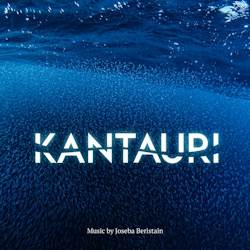 Kantauri is a Basque-language Spanish nature documentary directed by Xabier Mina and Isaías Cruz which looks at the richness of life on the seabed of the Cantabrian Sea that borders northern Spain and western France within the Bay of Biscay; specifically, the complex relationships between living beings and the physical environment they inhabit.
The score for a Kantauri is by Spanish composer Joseba Beristain, who some may remember from the full-blooded seafaring action adventure score he wrote in 2019 for the animated film Elcano y Magallanes: La Primera Vuelta Al Mundo, about the voyages of Ferdinand Magellan. Despite the fact both films involve the ocean, Kantauri is a very different musical animal. It was recorded in Slovakia with the Bratislava Symphony Orchestra, and features special vocal performances by Aiora Renteria from the Basque rock band Zea Mays.
We are in a golden age of nature documentary scores right now, and Kantauri is yet another one to add to the list of excellent albums for films exploring the strange beauty and diversity of the world around is. Beristain’s music is rich, expressive, and varied, ranging in style from quirky comedy to bold action to sweeping symphonic celebrations of life and nature. The score is full of highlights, but I especially appreciated number of standout cues.
The opening “Amanecer” is gentle and pastoral, with a lovely central piano melody that shimmers like light on the water. “La Vida Rebosa” is magical and full of wonderment. The cascading harps in “Tras El Pulpo” give the life of an octopus an eccentric sense of mischief. “Reproducción” is beautiful, romantic and sentimental and featuring tender, lyrical strings. “En La Oscuridad” has a haunted, spiritual quality to it, achieved by the inclusion of a distant choir. “De Caza” is more energetic, appropriate for its musical representation of how carnivores hunt in the sea.
There’s a soft, almost lullaby-like quality to the gorgeous “Zooplancton” that is tremendously appealing, and this carries over into the subsequent “Microscópicos”. The choir returns to heavenly affect in “Atunes Contra Anchoas,” which starts out beautifully, but quickly becomes superbly rhythmic in its second half, one of the score’s few moments of intense action. The cello writing in “Tiborones” is heartbreaking. The more majestic symphonic parts of the film are a little bit James Horner, a little bit George Fenton, while the action has a touch of James Newton Howard to it, and the more abstract electronic parts at times start to veer into Vangelis territory. It’s all excellent, a series of wonderfully vignettes that paint a captivating picture of that part of the ocean.
This is a terrific album, engaging from start to finish, and yet another example of the strength of Spanish film music; Joseba Beristain might be a new and somewhat unfamiliar name, but he is unquestionably a very talented man. Unfortunately the score for Kantauri has not been released on CD, but the music is available to download and stream from all the usual online resources.
Track Listing: 1. Amanecer (1:13), 2. Latidos (2:27), 3. Pueblo Vasco (feat. Aiora Renteria) (2:34), 4. La Vida Rebosa (2:57), 5. Oleaje (feat. Aiora Renteria) (4:23), 6. Tras El Pulpo (1:15), 7. Soledad (1:06), 8. Primavera (2:11), 9. Reproducción (3:10), 10. Hacia Aguas Profundas (2:32), 11. En La Oscuridad (2:56), 12. Sin Mirarte (feat. Aiora Renteria) (2:01), 13. Noches Llenas De Belleza (1:49), 14. Los Peligros Acechan (1:09), 15. De Caza (1:00), 16. Egunon (1:39), 17. Zooplancton (2:24), 18. Microscópicos (1:10), 19. Atunes Contra Anchoas (3:14), 20. Migraciones (1:45), 21. Tiburones (2:22), 22. Nosotros (feat. Aiora Renteria) (1:47). Quartet Records, 47 minutes 04 seconds.
MA MÈRE, DIEU ET SYLVIE VARTAN – Nicolas Errèra
 Ma Mère, Dieu Et Sylvie Vartan is a French-Canadian comedy-drama film written and directed by Ken Scott, starring Leïla Bekhti and Jonathan Cohen, and featuring French singer Sylvie Vartan as herself. The film is based on the life of writer and TV host Raymond Perez, who was born in 1963 with a club foot and was told by doctors that he would spend his life in a wheelchair; however, thanks to his mother’s unwavering devotion, and Vartan’s music, Roland is able to overcome the physical challenges and the social barriers that come with it.
The score for Ma Mère, Dieu et Sylvie Vartan is by French composer Nicolas Errèra, who has been spending quite a lot of time of late writing for Chinese cinema, but is back working at home in his native language here. Errèra’s score is a wonderful exploration of vintage jazz, full of deliciously rich passages for pianos, stand-up bass, brushed snares, and vibrant muted horns. Cues like “En Route Vers l’Hôpital,” “Les Docteurs,” “Un Nouveau Docteur,” and the conclusive “Manigances et Petits Arrangements” reverberate to this richly-textured music; there are hints of John Barry, Henry Mancini, and some of the early jazz-funk pioneers like Lalo Schifrin in Errèra’s superb writing, which gives you an idea of how excellent it is. Interestingly, the jazz part of the score seems to specifically represent the medical side of the story and how Raymond deals with his disability, which is a bold tonal choice.
Although Sylvie Vartan is massively famous in Francophone countries, and had countless hits working alongside her then-husband Johnny Hallyday throughout the 1960s and mid-1970s, I’m personally not familiar enough with her music to know whether Errèra worked in any references to her most famous songs, but either way Errèra’s score is terrifically authentic and perfect for the period.
When Errèra is not embracing his jazzy side, the rest of the score is more intimate and poignant, and features lovely writing for soft strings and tender pianos to represent the loving relationship between Raymond and his mother; cues like the title track “Ma Mère, Dieu et Sylvie Vartan,” “Admiration,” “L’Émancipation,” and the two “La Plus Belle Pour Aller Danser” cues are lovely, sweet, gentle, a little melancholy at times, but ultimately hopeful and affirming. The unexpected use of a soprano vocalist in the gorgeous “La Médaille” made for a lovely touch.
Ma Mère, Dieu et Sylvie Vartan is a good score; a short, but engaging combination of authentic jazz and warmly affectionate orchestral scoring that leaves a wholly positive taste in the mouth. Unfortunately the score has not been released on CD, but the music is available to download and stream from all the usual online resources, via Gaumont Music.
Track Listing: 1. En Route Vers l’Hôpital (2:40), 2. Ma Mère, Dieu et Sylvie Vartan (3:07), 3. Admiration (1:27), 4. Les Docteurs (1:17), 5. L’Émancipation (1:58), 6. La Plus Belle Pour Aller Danser (Piano Solo) (0:50), 7. Je Te Donne Ma Vie (2:08), 8. Un Nouveau Docteur (2:21), 9. La Médaille (2:14), 10. La Plus Belle Pour Aller Danser (2ème Version Piano) (1:59), 11. Derniers Moments (0:56), 12. Souvenirs des Moments Passés (1:29), 13. La Vie Après (2:11), 14. Manigances et Petits Arrangements (3:24). Gaumont, 28 minutes 02 seconds.
OPERATION HADAL – Elliot Leung
 Operation Hadal is a Chinese action film directed by Dante Lam, and is a sequel to the 2018 film Operation Red Sea. It stars Huang Xuan, Yu Shi, Zhang Hanyu, and Du Jiang and follows the exploits of a group of elite commandos from the Chinese Navy as they are sent to intercept and destroy an advanced super-submarine from a foreign power which is plotting a top-secret military operation against cities along China’s southeastern coast.
The score is by the very talented young Hong Kong-based composer Elliot Leung, who also scored Operation Red Sea, and he builds on his excellent work for that film which equally excellent work here. There is no thematic overlap between the two scores as far as I can tell, but in terms of approach and ultimate quality there is a lot of similarity; I described the first score as ‘a Chinese take on the contemporary action writing of Hans Zimmer and his Remote Control compatriots,’ and Operation Hadal could be described using very similar terms.
However, as was the case on Operation Red Sea, Leung’s writing here is energetic and inventive, combining a full orchestra and a whole host of throbbing, pulsating electronic loops and beats that are endlessly creative, rhythmically and thematically. A lot of the score adopts the Batman Begins/Dark Knight aesthetic, but somehow seems fresher and more engaging; cues like the title track “Operation Hadal” and action cues like “Deploy and Assault,” “A New Mission,” “Triumph,” “Commence Dive,” and “Sonar Scouting” are outstanding, full of captivating string ostinatos, inventive electronic elements, and plentiful bursts of satisfying brassy heroism.
Moments of intimacy and introspection are usually carried by somber cello performances, as in cues like “Two Brothers,” but these are rare moments of calm in a score which is otherwise dominated by kinetic action. I can certainly see how some people may baulk at this, especially those to decry the overall sound of contemporary action music in comparison to how it was especially in the 1980s and 90s, but what Elliot Leung is doing here with scores like this is on the upper echelon of the genre in terms of creativity, and for me that warrants acknowledgement.
The score for Operation Hadal is available as an import CD from retailers like YesAsia, and is also available to stream and download from most of the usual online sources, from H1 Music/Milan Records/Sony.
Track Listing: 1. Troubled Waters (1:21), 2. Condition Yellow (1:45), 3. Operation Hadal (1:52), 4. Deploy and Assault (3:02), 5. Hostile Submarine (3:04), 6. Phlegethon’s Waters (3:16), 7. Two Brothers (1:08), 8. A New Mission (3:06), 9. The Longjing (2:24), 10. Triumph (1:12), 11. Commence Dive (1:24), 12. Sonar Scouting (3:09), 13. Two Brothers: The Backstory (1:53), 14. The Secrets of Phlegethon’s Waters (feat. AZ) (1:06), 15. Mutiny (2:46), 16. Sunken Shadow Class Attack Submarine (2:40), 17. Jiaolong Squad Departs (3:31), 18. Tactical Retreat (2:21), 19. I Am a Submariner (1:21), 20. Sun Base/Moon Base (3:31), 21. Assault on the Bases (1:38), 22. Submarine Warfare (6:13), 23. KIA (1:23), 24. Dog (2:16), 25. Remember Your Duty (2:24), 26. Mission Complete (5:24), 27. Training Montage – AZ Remix (1:34). H1 Music/Milan Records/Sony, 66 minutes 57 seconds.
THE ROSE OF VERSAILLES – Hiroyuki Sawano, Kohta Yamamoto
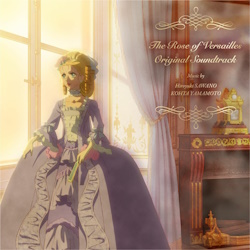 The Rose of Versailles is Japanese animated romantic drama film directed by Ai Yoshimura, and is based on the classic 1972 manga story by Riyoko Ikeda, which has itself been adapted into various animated and live action TV shows and movies several times previously. Set in 18th century France before and during the French Revolution, it follows is the intertwined lives of two people: the real Queen of France, Marie Antoinette, and the fictional Oscar François de Jarjayes, who serves as commander of her Royal Guard, and is secretly in love with the Queen. The twist comes by way of the fact that Oscar is actually female, but had been raised as a boy by their father, and has been hiding their true identity for years.
The score for The Rose of Versailles is by Japanese composers Hiroyuki Sawano and Kohta Yamamoto, and it is quite exceptionally beautiful. The best way to describe it, really, is French late-Renaissance classical music filtered through the lens of orchestral music for Japanese anime, with all the quirky and idiosyncrasies that implies, but for all it’s occasional moments of odd culture clash, the whole thing is very endearing, and engaging from top to bottom. Sawano and Yamamoto have written some really outstanding scores in the past – I’m personally very fond of Attack on Titan (2013), Kabaneri of the Iron Fortress (2016), and his two Seven Deadly Sins score – but overall this might be the best thing I have heard from them in terms of pure romantic beauty.
There is a timeless elegance to a lot of the music, often combined with a sense of regal grandeur, which is very engaging. Themes abound – one for Marie Antoinette, one for Oscar, one for their relationship – and they dance around each other in multiple cues. In terms of orchestration, the score is heavy on strings, augmented by light choral textures, magical swirls of percussion, magical chimes and cymbal rings, and even an occasional harpsichord. There are clear intentional references to Western classical music throughout the work, and Sawano often places his themes into waltz-time to capture the opulence of the setting, but the score also has that ‘pop music sheen’ that anime shows often have, as well as some of the distinctive chord progressions that come from Japanese folk music.
Cues like the opening “The Rose of Versailles – Prologue,” “Audience with the Dauphine,” the unexpectedly dramatic and Latin-flavored “Antoinette the Prodigal Queen,” the poignant “Antoinette & Fersen,” “Oscar’s Caution,” the luxurious “Lady Oscar,” “Louis XVI and the Truth,” the rousing “Your Heart is Free,” “All About André,” and the lovely finale “Liberty, Equality, Fraternity” are outstanding in this regard, and leave a wholly positive impression.
Other cues of note include the pretty writing for acoustic guitar and piano in “Oscar & André.” “Reunion with Fersen,” and “Because I Love You ,” the darker and slightly sinister “Petition to the King,” and the gentle pianos and ticking-clock percussion of “André’s Oath”. There are also a few moments of lively action interspersed between all the pretty lyricism, including the powerfully percussive “Runaway Horse,” “The Time of Intense Turmoil,” “Angry Citizens,” the bombastic “Paris: The City of Despair,” “The Three Estates,” and the appropriately forceful “French Revolution”. Many of these cues showcase chanted Latin choral lyrics which really add to their strength and passion, and often weave the themes for Marie Antoinette and Oscar through in action arrangements.
This an outstanding score, one of the best from Japan in 2025, and anyone who needs intensely lyrical romanticism in their film music will find this to be especially appealing. The score for The Rose of Versailles is available as an import CD from retailers like YesAsia, and is also available to stream and download from most of the usual online sources, on the Avex label.
Track Listing: 1. The Rose of Versailles – Prologue (2:34), 2. Fanfare of the Royal Guard (0:19), 3. Antoinette Bride (1:05), 4. Oscar & André (1:18), 5. Audience with the Dauphine (0:36), 6. Runaway Horse (0:38), 7. Petition to the King (2:19), 8. How Rude! (0:14), 9. André’s Oath (1:13), 10. Oscar’s Concerns (2:06), 11. Antoinette the Prodigal Queen (1:46), 12. Reunion with Fersen (1:29), 13. Antoinette & Fersen (2:06), 14. Oscar’s Caution (2:01), 15. Lady Oscar (1:12), 16. The Time of Intense Turmoil (1:29), 17. Angry Citizens (2:39), 18. Oscar’s Determination (1:06), 19. To the Guard (0:47), 20. Louis XVI and the Truth (2:29), 21. Paris: The City of Despair (1:18), 22. Because I Love You (2:22), 23. Your Heart is Free (2:30), 24. Girodelle: Proof of Love (0:52), 25. The Three Estates (1:04), 26. Farewell to Antoinette (0:49), 27. Become André Grandier Wife (1:06), 28. French Revolution (3:28), 29. All About André (3:18), 30. To the Bastille (2:07), 31. Liberty, Equality, Fraternity (2:26). Avex Pictures, 50 minutes 59 seconds.
LE ROUTARD – Ludovic Bource
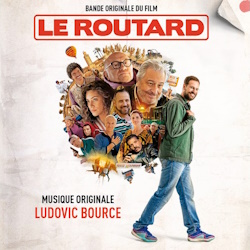 Le Routard is a French comedy-adventure film directed by Philippe Mechelen, starring Hakim Jemili, Christian Clavier, and Michel Blanc. Jemili plays Yann, an ordinary man who miraculously lands the job of tester for the famous Routard guidebook, despite having never traveled in his life. What starts out as a dream adventure for him soon turns into a hilarious nightmare, when he is sent on an assignment to Marrakech, Morocco, and his inexperience and naivety of the world is immediately put to the test – with hilarious results.
The score for Le Routard is by the Oscar-winning French composer Ludovic Bource, who came out of nowhere to take home the Academy Award for The Artist in 2011, and then promptly disappeared back into obscurity away from the Hollywood mainstream. Very few of his scores post-The Artist made any kind of impression – I liked Le Dindon (2019), Rebelles (2019), and Le Petit Nicolas (2022) fine enough, but nothing more – but Le Routard is the first score of his in more than a decade that I appreciated enough to want to review and recommend it.
The score is a modern symphonic score which blends lightly comedic adventure caper music with elements of traditional Moroccan and other vaguely North African stylistics. There is a vague hint of James Bond to some of the music – like a holdover from Bource’s experiences writing for multiple entries in the ‘OSS 117’ series of French spy films – which appealed to me greatly, and added a sheen of style and unexpected masculine seductiveness to the whole thing.
The main theme, “Le Routard Theme,” is a superb ear-worm, catchy, lively, friendly, and energetic, built around a sophisticated orchestral theme which is surrounded by cool flute textures, jazz/rock percussion grooves, and some exotic rhythmic sounds which lend it an alluring sense of mystique and spice. The theme, which acts as a recurring theme for the central character Yann, features in multiple cues, notably the flamboyant and dance-like “Red City,” the lighter and more playful ‘Madame Boniek,” the laid-back licks of “Bled and Breakfast,” the slightly sinister “Inspecteur Slimane,” the bittersweet “Yann’s Secrets,” the more romantic “Seules Ces Montagnes Sont Eternelles,” and during the finale in “Swiss Knife” and “Bienvenue Au Riad Sattouf”.
Other elements of the score I appreciated include the prog rock throwback “1978 Le Dog,” the bossa nova riffs and samples toothbrush sounds in “Yann Tatin Theme,” the Maghreb yacht rock sound of “Au Palais Rhoul,” and several frenetic action cues, including the jazzy finger-snapping antics of the “Souk Pursuit” and “Hunt in the Souk,” the moody “La Marchande de Sable,” and the more traditionally heroic “Desert Transaction”.
The score for Le Routard is a timely reminder of what a great composer Ludovic Bource is, and why his Oscar win for The Artists should not be considered a one-off flash-in-the-pan in terms of excellent film music; anyone who appreciates light hearted throwback action-caper music with both a hint of jazz and a hint of the bazaar will find much to enjoy. Unfortunately the score has not been released on CD, but the music is available to download and stream from all the usual online resources, via Xanadu Music.
Track Listing: 1. Le Routard Theme (2:23), 2. Red City (2:26), 3. Madame Boniek (1:51), 4. 1978 Le Dog (1:40), 5. Yann Tatin Theme (0:52), 6. Bled and Breakfast (1:26), 7. Taverne Macao (1:24), 8. Souk Pursuit (0:38), 9. Inspecteur Slimane (1:18), 10. Au Palais Rhoul (1:24), 11. La Marchande de Sable (2:41), 12. Charoux Theme (1:33), 13. Hunt in the Souk (1:36), 14. Tatin Garde A Vue (2:25), 15. Yann’s Secrets (1:44), 16. Seules Ces Montagnes Sont Eternelles (3:08), 17. Desert Transaction (2:38), 18. Agafay Desert (1:03), 19. Swiss Knife (1:29), 20. Bienvenue Au Riad Sattouf (1:44). Xanadu Music, 35 minutes 23 seconds.

Shop at the Movie Music UK Store

Member of the

 MOVIE MUSIC UK