Under-the-Radar Round Up 2025, Part 4
 Original Reviews by Jonathan Broxton
I’m pleased to present the latest installment in my on-going series of articles looking at the best under-the-radar scores from around the world.
This article, the fourth of 2025, covers another six scores released in the first half of the year from a wide array of genres and countries, including a Japanese drama TV series set in a high school, a British true life period crime drama about the last woman to executed in the UK, a Ramadan TV drama series from Syria, a German children’s fantasy adventure film, a Norwegian period drama TV series about the Norwegian royal family, and a French comedy-adventure film about a high-flying air hostess!
AL BATAL/THE HERO – Suad Bushnaq
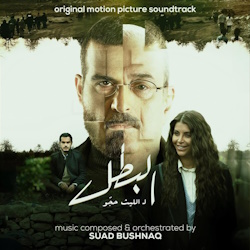 Al Batal, which translates from Arabic into English as ‘The Hero,’ is a Syrian TV drama series directed by Al-Laith Hajo which premiered back in March as part of the Arabic-speaking world’s Ramadan season for 2025. It stars Mahmoud Nasr as Faraj, a middle-aged man who becomes a local hero after risking his life to pull a teenager from a devastating fire. However, proving that the concept of ‘no good deed unpunished’ is universal, Faraj’s newfound status soon sees him entangled in a fierce power struggle between local criminal gangs.
The score for Al Batal is by the Jordanian-Canadian composer Suad Bushnaq, whose scores for projects such as Al Munataf [The Curve] (2015), Corvine (2022), and From the Ashes (2024) impressed me greatly in the past. Her score here is mostly orchestral, comprising a decently-sized string section augmented with a number of prominent instrumental soloists, including an accordion, a trumpet, a ney flute, and what may be a buzuq, a tanbur, or some other kind of Middle Eastern lute. Some of the music does appear to be sampled, mostly likely due to budgetary constraints, and although you can occasionally hear the difference clearly, it doesn’t really affect the score as a whole.
The score is also very emotional and dramatically straightforward; there are no pulling punches here. Bushnaq tackles her story head-on with music that conveys the full story – it’s sad when things are sad, it’s intense during action sequences, it’s poignant and truthful, and it also offers counterpoint and juxtaposition when it needs to, especially in scenes where Faraj is suffering the most, and Bushnaq contrasts his experiences with music that is often very beautiful.
Several cues caught my attention. The “Main Title” melody is outstanding, lush and evocative, with a sound that actually feels more French than middle Eastern, and this is reprised several times in tracks like “Dream Ride” and “My Ride or Die” in a variety of interesting ways that showcase different lead instrumental textures. The writing for solo trumpet “The Irony of Destiny” has a haunted, faraway quality that’s quite captivating. There is a beautiful duet for solo cello and piano in “Love Letters,” a tragedy-laden piece featuring a heartbreaking dance for the ney and lute in “Between Life and Death,” and even some hints of American jazz in the languid, melancholy phrasing of the trumpet in “Goodbye Marwan”. The intimate wordless vocals in the second half of that cue are outstanding too.
“Chasing Time” is more energetic and lively, again with a prominent central focus on the lute. The extended “Liberation” is at times deeply moving, and the conclusive “Lullaby for the Departed” is beautifully understated and tender, while the “End Credits” feature a splendid vocal performance by Syrian pop star Carmen Tockmaji. This is all very impressive stuff from Suad Bushnaq, who will hopefully attain a more prominent international profile as time goes on. It’s an intimate, moving, emotionally resonant score which will appeal especially to anyone who appreciates the musical conventions of the Middle East in this type of setting.
Unfortunately the score for Al Batal is not available for purchase as a physical CD, but it available to stream and download from all the usual online resources, on Bushnaq’s own label ‘Cirque de Suada’.
Track Listing: 1. Main Titles (2:12), 2. Dear Youssef (2:54), 3. Forgive (1:19), 4. The Irony of Destiny (3:14), 5. Dream Ride (1:35), 6. Saudade (3:13), 7. Good Morning Mr. Youssef (1:30), 8. Love Letters (1:15), 9. Faraj & Samra (2:34), 10. Between Life & Death (5:40), 11. Silver Lining (0:59), 12. Goodbye Marwan (5:12), 13. My Ride or Die (1:35), 14. Chasing Time (3:18), 15. Brokenhearted (2:18), 16. Promenade (0:47), 17. Liberation (6:18), 18. Lullaby for the Departed (3:33), 19. End Credits (3:32). Cirque de Suada, 49 minutes 47 seconds.
A CRUEL LOVE: THE RUTH ELLIS STORY – Samuel Sim
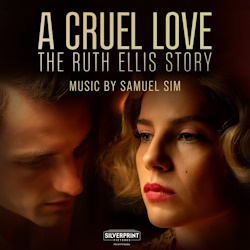 A Cruel Love: The Ruth Ellis Story is a 4-part British TV mini-series based on Carol Ann Lee’s acclaimed biography ‘A Fine Day for Hanging: The Real Ruth Ellis Story,’ which tells the true story of 28-year old Ruth Ellis, a glamorous London nightclub manager who in 1955 became the last woman in Britain to be hanged after she was convicted of murdering her racing driver boyfriend David Blakely. In the years since Ellis’s death there have been numerous revelations about her case, suggesting she may have been innocent, or at least not entirely guilty; her case introduced the of concept of ‘diminished responsibility’ as a legal defense and, eventually, the end of capital punishment itself in the UK. The show was directed by Lee Haven Jones, stars Lucy Boynton, Toby Jones, Nigel Havers, and Juliet Stevenson, and has an original score by composer Samuel Sim.
Sim is one of those British composers who sort of floats under the radar – hence his inclusion in this article – but he’s done some great work in the past that I really enjoy, notably Emma (2009), Home Fires (2015), The Halcyon (2017), and his part of The Dark Crystal: Age of Resistance (2019) which he wrote with Daniel Pemberton. This score is another great entry on that list.
The score is deeply emotional, sometimes tragic, sometimes romantic, but always tonal and approachable. The score was recorded in London with a decent-sized orchestra, with solo cello performances by the great Caroline Dale, and occasional ghostly vocals performed by soprano Joanna Forbes-l’Estrange. In the album’s press material Sim explains that his score is built around a central theme for Ruth that ‘serves as a sonic representation of her hope – ethereal yet ever-present, even in the darkest of circumstances.’ However, the theme changes significantly as the score progresses; initially it is delicate and intimate, but gradually it begins to unravel as Ruth’s situation becomes more desperate, and she eventually faces the hangman’s gallows.
To further emphasize Ruth’s psychological descent, Sim also engages in some sound manipulation whereby the orchestra is augmented by unsettling, distorted textures which Sim says he achieved by reprocessing string recordings through modular synth effects and broken tape machines, trying to make them increasingly disturbing.
There are several excellent statements of the main theme for Ruth, from the straightforward rendering in “The Last Woman,” the light and ebullient “Champagne Picnic,” and the poignant “Worse Than All,” to the deeply moving conclusive statement in eponymous finale cue “Ruth Ellis”. In these final moments Sim is clearly following the filmmakers’ lead by pitching Ellis as more victim than villain, a catalyst for change in an unjust justice system.
Forbes-l’Estrange’s ethereal vocals add a spiritual quality to cues like “Holloway,” “Morning of the Trial,” the haunting “Manslaughter,” “The English Machine,” and the somber “Buzzing Cell Lights,” while Dale’s sonorous cello is the anchor of cues like “Four Defences” and “Last Breath,” which reverberate with rich, meaningful, sometimes haunting tones, but then several of these also start to explore the more abstract sonic manipulation discussed earlier. Other interesting cues include the incessant forward motion of the pianos and ticking sound effects in “Everything They Fear,” the searching and poignant string passages in “Lovers & Lies”. It’s all very good, appropriately emotional without being maudlin, and delivered with skill and dramatic intelligence.
Unfortunately the score for A Cruel Love is not available for purchase as a physical CD, but it available to stream and download from all the usual online resources, or directly from Silva Screen Records here: https://www.silvascreen.com/siled1806-a-cruel-love-the-ruth-ellis-story/.
Track Listing: 1. The Last Woman (2:15), 2. Holloway (3:24), 3. Morning of the Trial (2:32), 4. Four Defences (2:40), 5. Champagne Picnic (1:33), 6. Manslaughter (2:53), 7. Everything They Fear (2:47), 8. Lovers & Lies (1:36), 9. Last Breath (3:11), 10. The English Machine (1:19), 11. Lamb to the Slaughter (2:56), 12. Provocation & Reprieve (1:38), 13. Buzzing Cell Lights (2:40), 14. Determined to Die (3:17), 15. Out of Time (2:16), 16. Make Him Listen (6:56), 17. Worse Than All (2:18), 18. Ruth Ellis (4:58). Silva Screen SILED1806, 51 minutes 10 seconds.
EIN MÄDCHEN NAMENS WILLOW – Fabien Römer
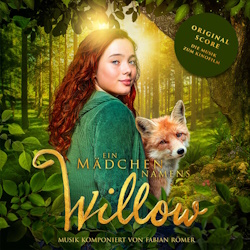 Ein Mädchen Namens Willow is a German children’s fantasy adventure film directed by Mike Marzuk, based on the novel by Sabine Bohlmann. The film stars Ava Petsch as Willow, a teenage girl who inherits a cottage, a plot of land in a forest, and – most importantly – magical powers following the death of her great-aunt Alwina, who is revealed to have been a witch. Willow meets a warlock named Grimmoor, who tells her that she has to find three other girls who also have magical abilities, and that they have to come together to stop a company of unscrupulous property developers who want to cut down the forest and build a shopping center.
The score for Ein Mädchen Namens Willow is by German composer Fabien Römer, a comparatively new name in European cinema, but who wrote a score that I really liked for the TV series Unsere Mutter Unsere Vater back in 2013. As one would expect considering the film’s genre, Römer is a magical, fantastical delight, fully orchestral, but with elements of folk music woven through it. There is a gorgeous central theme for Willow that anchors the score; it’s child-like and innocent on the surface, and has a pastoral sound that illustrates the character’s closeness to nature, but it also has a determination and a strength to it that comes to the fore in the some of the action and fantasy adventure cues during the score’s second half.
Cues like the opening “Ein Neuer Ort,” “Willows Thema,” the idyllic “Die Geheimnisvolle Hütte,” the determined-sounding “Die Ahnen,” the lovely “Die Zeremonie,” “Die Entschuldigung,” and the heroic “Nicht Allein” all feature the theme for Willow prominently. Römer changes the orchestration and the tone of the theme constantly; sometimes it is pretty and wholesome and led by soulful woodwinds, sometimes it is supernatural and whimsical surrounded chimes and other metallic percussion textures, but it’s always done with intelligence and skill.
Other important elements to the score include the lightly ebullient comedy in the Elfmanesque “Zu Spät” and “Kein Tütü,” the mystery and wonderment of “Der Fuchs Weist Den Weg” and “Zeigdichzauber,” the tender intimacy of “Schlechte Nachrichten” and “Deine Schuld,” the darker and slightly more menacing music for the warlock “Grimmoor” that continues on through the various “Element” cues, and the hesitant romance of “Gemeinsam Durch Den Wald”.
The largest moments of bombastic action come during the score’s final third, where cues like “Gegen Den Sturm” and “Hexenschwestern” reverberate to more powerful symphonic and choral forces. These cues occasionally have a tone that reminded me a little of James Horner’s score for Something Wicked This Way Comes; in fact, the whole thing has an overarching Horner-esque sheen, which is probably why it’s sound appeals to be so much.
Overall, this is a lovely piece of music for a fun family film, with a prominent and memorable central identity for the young magical protagonist, some excellent action, and a warm and appealing orchestral sound. Unfortunately the score Ein Mädchen Namens Willow is not available for purchase as a physical CD, but it available to stream and download from all the usual online resources, on the Moviescores Records label.
Track Listing: 1. Ein Neuer Ort (2:32), 2. Zu Spät (0:41), 3. Der Fuchs Weist Den Weg (2:43), 4. Willows Thema (2:05), 5. Geier Und Geier (0:55), 6. Schlüsselbaum (0:51), 7. Schlechte Nachrichten (2:39), 8. Die Geheimnisvolle Hütte (4:25), 9. Grimmoor (1:17), 10. Element Feuer (1:10), 11. Die Anderen Junghexen (1:08), 12. Zeigdichzauber (1:35), 13. Gemeinsam Durch Den Wald (1:59), 14. Element Wasser (1:44), 15. Die Ahnen (2:33), 16. Kein Tütü (0:47), 17. Element Erde (0:40), 18. Die Vorbereitung (1:39), 19. Zeit Verrinnt (1:25), 20. Die Zeremonie (2:21), 21. Gegen Den Sturm (4:47), 22. Deine Schuld (1:16), 23. Unter Geiern (3:18), 24. Die Entschuldigung (1:42), 25. Hexenschwestern (3:13), 26. Nicht Allein (1:43), 27. Gerettet (1:49), 28. Ein Mädchen Namens Willow (1:50). Moviescores Records, 54 minutes 51 seconds.
HARALD OG SONJA/THE COMMONER – Gaute Storaas
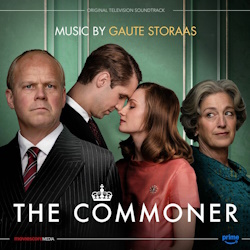 Harald og Sonja, or The Commoner, is a Norwegian television drama series directed by Vibeke Idsøe, starring Sindre Strand Offerdal, Gina Bernhoft Gørvell, and Anders Baasmo. Set in the 1960s, it tells the true story of the romantic relationship between Crown Prince Harald, the son of then King Olav V, and commoner Sonja Haraldsen, whose fight for their right to marry threated to cause a constitutional crisis, and possibly the end of the monarchy in Norway, as the Norwegian constitution barred Harald from marrying without royal consent.
The score for The Commoner is by one of my favorite composers in all of Scandinavian cinema, Norwegian Gaute Storaas, whose previous scores for films like A Man Called Ove, The Last King, Dyrene i Hakkebakkeskogen, Elias og Storegaps Hemmelighet, Halvdan Viking, Jul På Kutoppen, Tre Nøtter Til Askepott, Sagan Om Karl-Bertil Jonssons Julafton, Folk Og Røvere I Kardemomme By, and Christmas with Astrid Lindgren I have praised here before.
In the album notes for The Commoner, Storaas says his music “had to reflect the love, the burden of royal duty, the frustrations, the public fear and anger that this affair could jeopardize the monarchy, and then, the final victory. As we are in a royal environment, it felt natural to use horns and strings as the main elements of the score. But both I, and the director, wanted the story to be told in a contemporary way, so I also used synths and electronics, more than I usually do.” Storaas also says he wrote some jazz cues “intended to sound like they could have been recorded in the late fifties, performed by a quintet of good friends.”
The whole score is excellent, but several cues standout. “The Commoner Titles” and “Akershus Castle” are as regal and emotionally stirring as one would expect, capturing the life of wealth and privilege embodied by the Norwegian royal family, while the magically ambient “Butterflies” and the fluttery “Media Uproar” are more traditionally romantic and pretty, illustrating the unexpected love that develop between Harald and Sonja, prince and commoner, with lush strings and gentle pianos and harp glissandi, an appropriate amount of Nordic restraint
Other cues of note include the busy, resolute thrust of “Politicians,” the similarly energetic “The Fourth Estate,” both of which have an Alexandre Desplat edge to them. “Early Morning” has more than a hint of Clare de Lune about it, “There You Are” and “The King Looks Back” are quite dramatic and intense, and “then as far as the jazz is concerned, cues like “Dagny’s Lament” are wonderfully authentic, smoky and indulgent. Storaas is, of course, well known in Norway as a jazz musician, alongside his film music career, and the quality of the jazz here reflects that.
In the conclusive trio, “The Palace Square,” “The Bride,” and “Harald & Sonja,” Storaas blends the regal stings to Harald and Sonja’s theme, culminating in their wedding in 1968, prior to their eventual accession to the throne as King and Queen of Norway in 1991. It’s a lovely way to end a superb score, and yet another work to add to the list of excellent albums from this exceptionally talented composer.
The score is available to purchase as a CD On-Demand, or to stream or download, from Moviescore Media here: https://moviescoremedia.com/newsite/catalogue/the-commoner-gaute-storaas/
Track Listing: 1. The Commoner Titles (1:08), 2. Akershus Castle (2:14), 3. Politicians (3:05), 4. Butterflies (2:38), 5. The Fourth Estate (4:06), 6. Early Morning (2:20), 7. Silent Sea (2:35), 8. Call of Duty (1:48), 9. Denial (1:56), 10. There You Are (2:06), 11. Unwanted (3:40), 12. The King Looks Back (1:32), 13. Media Uproar (1:56), 14. Dagny’s Lament (5:16), 15. Prince Ponderous (1:04), 16. The Prayer (2:18), 17. Young Mothers (1:36), 18. Trygve Bull (2:26), 19. Christmas Star (1:36), 20. The Audience (2:50), 21. Not to Advice Against (1:03), 22. Meeting Bratteli (2:50), 23. The Greatest Gift (1:26), 24. The Palace Square (3:24), 25. The Bride (1:46), 26. Harald & Sonja (1:22). Moviescore Media MMS25002, 59 minutes 59 seconds.
MR. MIKAMI’S CLASSROOM – Shiro Sagisu
 Mr. Mikami’s Classroom is a Japanese drama TV series directed by Miyazaki Yohei and Komaki Sakura. It stars Tori Matsuzaka in the titular role as Takashi Mikami, an idealistic young teacher recently graduated from Tokyo University, who joins the Ministry of Education wanting to reform Japan’s education system for the better. However, Mikami and his equally idealistic group of high school seniors find themselves thwarted by Japan’s formidable bureaucratic system, leading them to try to find increasingly innovative solutions to their problems.
The score for Mr. Mikami’s Classroom is by Japanese composer Shiro Sagisu, whose most prominent and popular past scores have been in the sci-fi and action genres, for titles like Neon Genesis Evangelion, and the Bleach series of light horror movies and TV series. Mr. Mikami’s Classroom is a very different animal, being much more dramatic in tone, and much more traditionally orchestral in approach.
The main theme, “Ceremony,” is a stately and noble-sounding piece that speaks of stability and tradition; even though the melodies are very different, it feels rooted in the English classical tradition of composers like Edward Elgar, albeit with the slightly less pomp and circumstance. Sagisu has several versions of it through the score, including a lovely chamber orchestra version, a soothing vocalise, and versions led by solo cello and piano.
Several other themes also reappear frequently throughout the score. “Tribute to Mr Mikami” and “Worthy of Respect” both appear to be themes which reference Mikami directly and the positive impact he has on his students, and the school as a whole, and are similarly noble and heartfelt, with perhaps a little more bittersweet emotion than the main Ceremony theme. The main orchestral version of the Tribute theme especially gorgeous,.
“Les Pleurs,” which translates as ‘the tears,’ is a little more whimsical and charming, but it deeply emotional in its rendering for solo cello. I also really like the piano waltz version of “Infinity,” and the wonderful “Never Sleep Symphony,” which is a bit more enewrgetic and contemporary but really engaging, and has an unexpected operatic vocal part; it reminded me a little of Nicholas Britell’s theme for the TV show Succession, as a frame of reference.
The score for Mr. Mikami’s Classroom is available as an import CD from retailers like YesAsia, and is also available to stream and download from most of the usual online sources, on the Anchor Records label.
Track Listing: 1. Ceremony (1:49), 2. Ceremony – Vocalise (1:32), 3. Infinity – Piano Waltz (2:33), 4. Tribute to Mr. Mikami (3:16), 5. Les Pleurs – Vocalise (3:21), 6. The Ship Comes – Unplugged (3:00), 7. Worthy of Respect – Vocalise (2:25), 8. Ceremony – Solo Cello (2:30), 9. Infinity – Hard House (3:10), 10. Tribute to Mr. Mikami – Vocalise (3:08), 11. Les Pleurs – Pizzicato (2:28), 12. A Scotsman Sings a Song for the Close of School (3:04), 13. Wait Until The Good Ship Comes Home (3:00), 14. Unplugged: The Song for the Close of School (3:04), 15. Tribute To Mr. Mikami – Guitars and Orchestra (3:16), 16. Quiet Emotions (2:03), 17. Worthy of Respect – Sequenced Rhythm (3:35), 18. Les Pleurs – Violoncelle (2:58), 19. Worthy of Respect – Tutti e il Flauto (3:20), 20. Never Sleep – Symphony (2:39), 21. L’Univers Scolaire (2:36), 22. Worthy of Respect – Piano and Cello (2:46), 23. Ceremony – Pianissimo (2:51), 24. Quiet Emotions – Vocalise (2:17), 25. The Ship Comes – Solo e Tutti (5:34), 26. Le Violoncelle Pour La Fermeture Des Classes (3:00), 27. Ceremony – Alterna (1:37). Anchor Records, 76 minutes 52 seconds.
NATACHA (PRESQUE) HÔTESSE DE L’AIR – Erwann Chandon
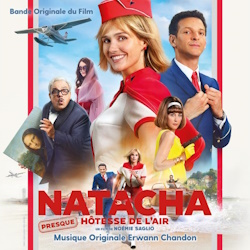 Natacha (Presque) Hôtesse de l’Air is a French comedy-adventure directed by Noémie Saglio, starring Camille Lou as the titular protagonist. The film is a loose adaptation of a famous comic strip of the same name, and is set in the 1960s; the story follows Natacha, who has dreamed being an air hostess since she was a small girl, with all the freedom and glamor the profession promises. However, when her dream finally comes true, she immediately finds herself embroiled in an incredible adventure in pursuit of thieves who have stolen the Mona Lisa – hi-jinks and hilarity ensues.
The score for Natacha (Presque) Hôtesse de l’Air is by the excellent young French composer Erwann Chandon, who has written a few decent scores over the last few years, including Quand on Crie au Loup in 2019, La Dernière Vie de Simon in 2020, and La Sorcière au Cœur de Pierre in 2022, and whose score for the action-comedy Nice Girls I reviewed last year. For this score, Chandon goes back to the sixties with a score that blends the jazzy European sound of that era with some fun moments of action and comedy.
The score’s main theme, “Le Transatlantique,” is a wonderful throwback to the era, charming and romantic and full of Gallic flair, lightly jazzy, and immediately engaging. The scatted wordless vocals, lithe saxophones, and pop beats are indescribably French, a perfect reflection of the period and of the music that was being written in that decade by composers like Georges Delerue, François de Roubaix, Michel Magne, and others. Natacha’s theme reappears frequently throughout the rest of the score, towards the end of “Arrêt Pour Saint Paul De Vence,” and in later cues like the tropically romantic “Rêves d’Hôtesse,” “Hotesse de Terre,” and the conclusive “Un Beau Cadeau.” This is the music of Saint-Tropez, the Côte d’Azur and the French Riviera, Brigitte Bardot and Alain Delon, re-imagined for 2025.
The rest of the score is no less entertaining. There is a good-natured sense of lightness and energy flowing through the entire score, which Chandon conveys with bright instrumental passages, perky rhythms, and la-la-la vocals, all of which speak to Natacha’s pleasant (if slightly naïve) demeanor. There’s also a mock-sinister theremin march theme for the villainous “Fidel Castor” that also appears in cues like “Pendant Ce Temps,” and is amusingly appropriate.
Meanwhile, the film’s Mona Lisa central heist plot is covered by some surprisingly engaging and at times quite exciting orchestral action and suspense music, which is fast-paced and rhythmic, and sometimes packs quite a punch. Cues like “Arrêt Pour Saint Paul De Vence,” “Hurluberlus Sur La Plage,” “Joconde et Malabards,” “L’Éventualité d’un Indice,” ‘Side-Carjacking,” “Mona Gheradrini,” “Consignes de Sécurité,” and “Rattrapez-Les” are really unexpectedly terrific; at times they’ve a got a bit of Lalo Schifrin Mission Impossible vibe, while at others they have the 1960s/70s Euro-thriller sensibility of Ennio Morricone and many his contemporaries, and it’s especially satisfying when Chandon weaves Natacha’s theme into the mix. The music isn’t heavy or overbearing, but energetically nimble and agile, and always delightfully engaging, if sometimes perhaps a tiny bit mickey-mousey.
Overall, though, Natacha (Presque) Hôtesse de l’Air is a delight, a bright and breezy heist comedy score with a knockout central theme and which further showcases Erwann Chandon’s talents as a composer whose music is always worth exploring. Unfortunately the score Natacha (Presque) Hôtesse de l’Air is not available for purchase as a physical CD, but it available to stream and download from all the usual online resources, from the Plaza Mayor Company.
Track Listing: 1. Direction Can-Carpiquet (2:39), 2. Le Transatlantique (2:00), 3. Arrêt Pour Saint Paul De Vence (1:38), 4. Quand On Veut, On Peut (1:09), 5. Rêves d’Hôtesse (0:48), 6. Deux Centimètres de Trop (1:55), 7. Hurluberlus Sur La Plage (2:00), 8. Fidel Castor (0:38), 9. Joconde et Malabards (2:01), 10. Pendant Ce Temps… (1:25), 11. Perdonami! (1:24), 12. Hotesse de Terre (0:49), 13. Feu Joconde (1:22), 14. L’Éventualité d’un Indice (1:57), 15. Side-Carjacking (1:13), 16. La Villa Colette (0:32), 17. Madeleine (0:39), 18. Mona Gheradrini (1:09), 19. Le Transatlantique (Ciao Ciao Version) (1:00), 20. Consignes de Sécurité (1:14), 21. Moi, Je Te Crois (1:13), 22. Personne N’est Parfait (0:56), 23. La Famiglia Gherardini (0:34), 24. L’Espoir s’envole …Lui (0:59), 25. La Vraie Joconde (1:02), 26. Perfetto (0:57), 27. Laquelle Est La Vraie (1:51), 28. Rattrapez-Les (2:01), 29. Un Beau Cadeau (0:48). Plaza Mayor Company, 37 minutes 55 seconds.
-
February 6, 2026 at 8:01 amMovie Music UK Awards 2025 | MOVIE MUSIC UK

Shop at the Movie Music UK Store

Member of the

 MOVIE MUSIC UK