Under-the-Radar Round Up 2025, Part 3
 Original Reviews by Jonathan Broxton
I’m pleased to present the latest installment in my on-going series of articles looking at the best under-the-radar scores from around the world.
This article, the third of 2025, covers another six scores released in the first half of the year from a wide array of genres and countries, including a couple of Japanese TV series – one of which is an adaptation of a beloved piece of classic Canadian literature – plus a French romantic drama film, an Italian historical drama film, a French historical drama TV series, and an epic fantasy film from China that is the sequel to one of the best scores of 2023.
ANNE SHIRLEY – Michiru Oshima
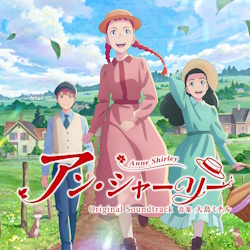 Anne Shirley is a Japanese anime television series directed by Hiroshi Kawamata, based on the first three classic Anne of Green Gables novels by Lucy Maud Montgomery. Set in the late 19th century, the story recounts the adventures of 11-year-old orphan girl, the titular Anne, who is sent by mistake to two middle-aged siblings, Matthew and Marilla Cuthbert, who had originally intended to adopt a boy to help them on their farm in the fictional town of Avonlea on Prince Edward Island, Canada. The novel recounts how Anne makes her way through life with the Cuthberts, in school, and within the town.
There has been a great deal of excellent music written for the character over the years, not least the classic score by Canadian composer Hagood Hardy for the 1970s Anne of Green Gables and Anne of Avonlea films, but the score for this version is by the prolific and widely acclaimed Japanese composer Michiru Oshima. Oshima has written scores for over 300 films, television series, video games since she first emerged in the mid-to-late 1980s and, while she is adept at turning her hand to any genre that presents itself, she is especially known for her outstanding melodic writing and for the traditional orchestral beauty in her music. Anne Shirley is a score that overflows with that.
The bulk of the score comprises a series of gently romantic, gorgeous, evocative pieces for the full orchestra which capture not only the sweetness of Anne’s personality, but also the pastoral beauty of the setting. Cues like the opening “Dreaming Anne,” “Gentle Morning Light,” the bittersweet “The Shape of Connection,” “A Promise in the Silence,” the elegant “Dear Someone,” the thoughtful and wistful “Skybound and Drifting,” the deeply moving “Someone I Love, Something I Treasure,” and literally dozens of others, are filled with tender string passages, idyllic woodwinds, lovely pianos, and magical textures for harps and light percussion, bathing Anne’s adventures in a nostalgic golden sheen.
The music is clearly western in terms of how it is intended to depict the historical North American setting, but it also full of that distinct, undefinably ‘Japanese-ness’ that comes from anime. It’s just delightful, from start to finish; in places it reminds me of the softer and more tender moments of James Horner’s Legends of the Fall, while in other places there are echoes of Howard Shore’s ‘shire’ music from The Lord of the Rings, and this should tell you how much I appreciated it.
The other major part of the score – and this surprised me – are the series of lively folk-like pieces that Oshima wrote to capture the hustle and bustle of Avonlea itself. For these cues Oshima uses a small folk-rock ensemble comprising guitars, pennywhistles, tapped percussion, and what sounds like a hurdy-gurdy, to create a sort of renaissance faire/festival atmosphere, and cues like “A Gift Called Today,” the inquisitive “As Words Flow,” “From the Classroom Window,” and “New Season” really leave a positive impression in this regard. As a basis for comparison, I was very much reminded of Mark Isham’s score for the 1995 Jodie Foster film Nell, and this is also a good thing.
Other fun diversions include the marimba-led mischief of “Am I The Weird One?,” the sparkling woodwind scherzo “The Key to Open the Door,” and the slightly more contemporary-sounding “Feelings That Expand”. There’s also a sublime original song, “Beautiful Memories,” which appears in several guises, twice with lyrics performed by an unnamed female vocalist in both Japanese and English, and once as a piece built around a solo flute, which for me is one of the highlights of the entire score.
For the most part, though, Anne Shirley luxuriates in the gentle, intimate romance of Oshima’s beautiful orchestral writing, and for this alone it receives an unhesitating recommendation. Despite being a household name superstar in her native Japan, Michiru Oshima remains something of an unknown quantity amongst film music fans in the west, and this needs to change – hopefully this review will encourage the previously unaware to explore her extensive back catalogue of outstanding work.
The score for Anne Shirley is available as an import CD from retailers like YesAsia, and is also available to stream and download from most of the usual online sources, on the Fabtone Music label.
Track Listing: 1. Dreaming Anne (1:54), 2. Gentle Morning Light (1:41), 3. A Gift Called Today (1:39), 4. Am I The Weird One? (1:47), 5. Thoughts That Overflow (1:48), 6. As Words Flow (1:46), 7. The Shape of Connection (1:57), 8. A Promise in the Silence (1:45), 9. From the Classroom Window (1:46), 10. The Things I Want (1:42), 11. Dear Someone (1:50), 12. Beautiful Memories – Flute Version (3:23), 13. In The Eyes of Doubt (1:44), 14. Skybound and Drifting (2:10), 15. Someone I Love, Something I Treasure (2:39), 16. The Key to Open the Door (1:46), 17. Feelings That Expand (1:43), 18. The Road I Walk With You (2:25), 19. I Know I’m Not Alone (1:49), 20. The Joy of Imagination (2:03), 21. When Loneliness Covers Me (2:25), 22. Beautiful Memories (3:22), 23. Fly, My Heart, Through the Sky (2:33), 24. New Season (1:37), 25. The Pain No One Sees (2:06), 26. What Stands By My Side (2:02), 27. A Friend Like A Star (1:45), 28. In Gentle Moments (2:05), 29. Hey, Cut It Out! (1:54), 30. When I Looked Up At The Sky (2:52), 31. Watch Over Me Gently (1:48), 32. May This Reach You (1:45), 33. Beyond Time and Sky (1:40), 34. I Can’t Grow Up (1:46), 35. In Innocence (1:48), 36. Lavender (2:18), 37. Recipe For Mischief (1:48), 38. Breaths of Pain (2:49), 39. A Quiet Murmur (2:00), 40. Dreaming Anne – Piano Version (2:09), 41. Beautiful Memories – English Version (3:21). Fabtone Music, 84 minutes 48 seconds.
CREATION OF THE GODS II: DEMON FORCE – Gordy Haab
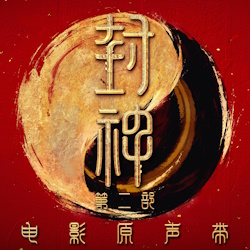 Creation of the Gods II: Demon Force is an epic fantasy film from China directed by Wuershan, and is the sequel to the 2023 film Creation of the Gods I: Kingdom of Storms. It is the second film in the trilogy adapting the Feng Shen Trilogy, 16th-century fantasy novels by author Xu Zhonglin written during the Ming dynasty (1368–1644), and which deal with the origins of the gods and demons in Chinese folklore, and the prolonged mythical wars between humans, immortals and monsters, which happened more than three thousand years ago. This film follows the events of the first film, and sees the citizens of the city of Xiqi mounting a defense against the tyrannical King Zhou of the Shang dynasty and his ‘demon Force’ warriors, who are laying siege to their home.
As was the case with the first film in the series, the score for Demon Force is by American composer Gordy Haab, who won a Grammy for his video game score a Star Wars Jedi: Survivor in 2024, and is establishing himself as one of the best ‘traditional’ orchestral composers working today. As was the case with the first score it is a spectacular achievement of symphonic power and depth. The score is awash in sweeping epic themes and massive action sequences, tempered with more lyrical moments of romance and beauty.
It blends a huge symphony orchestra with an array of east Asian specialty instruments in a style that I adore, and there are literally dozens of recurring themes that run through the work, creating a lavish melodic tapestry. As I wrote in my review of the first score, this is the kind of score you don’t get in western cinema very much any more – a score with all the emotions dialed up to the max, which isn’t afraid to present prominent memorable themes, and which simply revels in the enormous scale and scope of the whole thing.
The whole score is outstanding, without a low point in the entire hour and a half, but I just wanted to highlight a couple of specific cues that really left an impression. “Yellow River Ambush” and “Beast Attack” are bombastic, fast paced action cues with some notably ferocious brass writing. “Homeland Under Siege” has an epic, heroic sweep in its second half which is tremendously satisfying. “Night Raid on the Camp” is bold and energetic, with a dramatic thrust in the strings. Theirs is great beauty and delicacy in the woodwind writing in “Who Are You Fighting For,” but the subsequent cues like “Safeguarding Xiqi” and “Release Ji Fa” return to the richly textured action style with some brass writing that reminded me of classic Hollywood Miklos Rozsa, amid some fascinating clattering percussion textures.
The conclusive set piece is the monumental 15-minute sequence comprising “Wen Zhong Casts the Ten Absolute Formation” and the “Invasion of Xiqi,” which contains some of the most intense and broad-scope fantasy orchestral action music in years, matching the tone of the things Howard Shore was doing on The Lord of the Rings. After one final flurry of thunderous action in “Defend for Xiqi” the album ends with the beautiful and emotional “The Homeland Is Saved,” which is sweeping and majestic in all the best ways.
I adore this kind of writing. In terms of scope and approach it is in the same vein as scores like Tan Dun’s Crouching Tiger Hidden Dragon, Shigeru Umebayashi’s House of Flying Daggers, Klaus Badelt’s The Promise, and Christopher Young’s Monkey King, and considering how much I loved those scores, you’ll understand how much of a compliment that is.
The score for Creation of the Gods II: Demon Force is available as an import CD from retailers like YesAsia, and is also available to stream and download from most of the usual online sources, on the Starsing Music label.
Track Listing: 1. Kunlun in Distress (2:30), 2. Yellow River Ambush (2:26), 3. Homeland Under Siege (3:45), 4. Revival of Yin Jiao (2:23), 5. Mourning Ji Chang (2:08), 6. Beast Attack (2:06), 7. Time for Fishing (1:57), 8. Childhood Dreams Awakened (2:32), 9. Flying to Xiqi (2:11), 10. Inauguration of Wen Zhou (3:49), 11. Guard (1:01), 12. Night Raid on the Camp (3:01), 13. Who Are You Fighting For (2:49), 14. Safeguarding Xiqi (6:31), 15. The New Skin (3:29), 16. Release Ji Fa (4:22), 17. I Have No Family Only Enemies (4:50), 18. Protect the Homeland (2:15), 19. Wen Zhong Casts the Ten Absolute Formation (3:30), 20. Invasion of Xiqi (10:21), 21. The Faces of Yin Jiao (4:57), 22. Defend for Xiqi (6:58), 23. Defeating General Wen Zhou (3:05), 24. The Homeland Is Saved (3:31). Starsing Music, 86 minutes 27 seconds.
L’ABBAGLIO/THE BLUNDER – Michele Braga, Emanuele Bossi
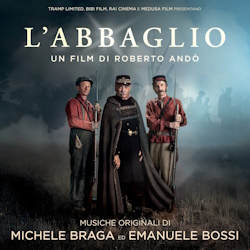 L’Abbaglio, which translates to ‘The Blunder,’ is an Italian historical drama directed by Roberto Andò, starring Toni Servillo, Salvo Ficarra and Valentino Picone. The movie follows the story of a Sicilian colonel, Vincenzo Giordano Orsini, who leads of a ragtag unit of soldiers as they try to outsmart the enemy during Giuseppe Garibaldi’s 1860 military campaign that eventually resulted in the unification of Italy.
The score for L’Abbaglio is by composers Michele Braga and Emanuele Bossi, who over the last few years have really established themselves as two of the busiest and most stylistically diverse composers working in the Italian film and TV industry; this was the first of seven scores by them that I heard in 2025 alone, all of which really showcase their versatility across multiple styles and genres.
The score treads a fascinating fine line between militaristic grandeur, serious drama, and light comedy bordering on farce, sometimes all within the same cue, cleverly capturing both the real historical importance of the events depicted, and the slightly ludicrous antics of Colonel Orsini and his men. This dichotomy is perfectly encapsulated by the first cue “I Mille,” which blends bulbous brass marches and light waltz rhythms with lyrical string passages. Further cues like “Il Popolo Siciliano,” the slightly anarchic “La Schioppettata,” “Le Monache,” and the almost carnival-esque pair of “La Sottana” and “Sulla Nave” build on this unconventional style, resulting in a score which keeps the listener on their toes, never quite sure where it is going next. I quite like that.
Cues like “Osman Bey” are more rhythmic, adopting a light action sound that at times reminds me of a less bombastic take on Hans Zimmer’s score for Gladiator, while at the other end of the scale cues like “L’Arruolamento” and “Assuntina” are more intimate and romantic, adopting the pretty folk music sound of the period though accordions and banks of guitars and mandolins, backed by lush Nino Rota strings.
Cues like “Agguato Nel Bosco,” the outstanding “La Battaglia di Calatafimi,” and “Alle Fiamme” are completely serious, dark marches which sees layers of strings competing in unison for the attention of the listener, often while a menacing version of the score’s main theme plays in the forefront. There is a mournful religioso quality to the choral writing in “L’Attesa” to counterbalance this, before the conclusive “Vita Nel Monastero” ends the score with a satisfying romantic orchestral sweep.
There’s a great deal to admire about the score for L’Abbaglio, not least in the way it successfully navigates an unusually complicated set of emotions and musical styles in order to bring together something that is more cohesive than one would expect. The action music is especially noteworthy, and overall it further enhances the reputations of Michele Braga and Emanuele Bossi as composers who music is always worth investigating.
Unfortunately there is no physical CD of L’Abbaglio available, but the score is available to stream and download from most of the usual online sources via the Edizioni Curci label.
Track Listing: 1. I Mille (2:32), 2. Osman Bey (3:13), 3. L’Arruolamento (1:44), 4. Agguato Nel Bosco (3:21), 5. Il Popolo Siciliano (2:37), 6. La Schioppettata (0:52), 7. La Battaglia di Calatafimi (4:51), 8. L’Attesa (2:35), 9. Assuntina (2:52), 10. Alle Fiamme (1:54), 11. Le Monache (2:45), 12. I Disertori (5:13), 13. La Sottana (1:05), 14. Lo Sbarco a Marsala (2:00), 15. Orsini Dalla Madre (1:58), 16. Sulla Nave (2:40), 17. Gli Imbonitori (2:38), 18. Partita a Carte (1:38), 19. Vita Nel Monastero (2:22). Edizioni Curci, 48 minutes 51 seconds.
MY HAPPY MARRIAGE, SEASON 2 – Evan Call
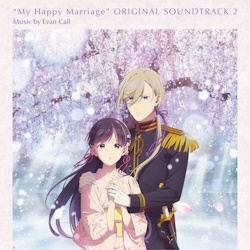 My Happy Marriage is a Japanese animated drama TV series based on the anime novel series written by Akumi Agitogi. It is set in an alternative version of 1920s Japan in which magic is real. It follows the story of Miyo Saimori, who was born without supernatural abilities, and as such is condemned to a life of servitude by her cruel stepmother. When she comes of age, her hopes for escape are dashed upon learning that she has been betrothed in an arranged marriage to Kiyoka Kudou, a feared military commander whose past brides fled within days. With nowhere else to go, Miyo accepts her fate – only to discover that Kiyoka is far kinder than rumored. As they gradually open their hearts, both begin to realize they may have found a path to true love and happiness.
A live-action movie adaptation of the My Happy Marriage story was released in March 2023, and this was followed by an animated TV version of the same story, the first season of which premiered later that same year, in July 2023. Now Season 2 has been released, premiering on Netflix in January 2025. Both seasons of the TV version of My Happy Marriage were scored by Tokyo-based American composer Evan Call, and they are outstanding. I didn’t discover the music for Season 1 until after my ‘review window’ for covering it closed, but I can review Season 2 now, although I will advise people to explore it all, and that my recommendation here covers both seasons.
The music Call wrote for the show is stunningly good, moving effortlessly between dreamy, lyrical, romantic passages in the score’s first half, and more vibrant and intense fantasy-action in the second. For lovers of elegant romance, a great deal of the first half of My Happy Marriage will be their bread and butter. Cues like “The Awakening of Miyo Saimori” “A Kind Heart,” as well as later tracks “Usuba Memories” luxuriate in tender piano melodies and sweetly beguiling strings carrying delicate melodies that perfectly capture Miyo’s personality, her innocence, and purity, and the love that develops between her and Kiyoka.
Cues like “Autumn Evening,” “Blush,” and the upbeat and lively “My Hand in Yours” blend this lovely romantic sound with traditionally Japanese-sounding rhythms and instrumental textures that are just gorgeous, light and playful; occasionally Call also makes use of a wordless voice that adds yet another level of tenderness to the whole thing.
Then, in the second half of the score, the music begins to change, and adopt a more intense, aggressive, dramatic sound that sometimes emerges into a sequence of unexpectedly powerful action. This music accompanies the plot development that sees Miyo’s military leader husband Kiyoka dealing with invaders from outside his country, and Call responds to this with music of genuine gravitas. Cues like the nervous “Lies and Illusion,” “Whispers on the Wind,” and the unnerving “Gifted Communion” start to shift the focus of the score with an increase in the use of brass and percussion, ghostly vocals, and thrusting underlying rhythms, and then in “Opinokinesis” the music fully erupts into life.
Through subsequent action cues like the outstanding “Ice and Fire,” “Razor’s Edge,” the highly classical “The Occult and the Unknown,” “Like Thunder From the Heavens,” “Stand Your Ground,” the evocative “Looming Darkness,” and the galloping, flamboyant trio comprising “Dreams Become Nightmares,” “The Rushing Shadow,” and “Kiyoka Rising,” Call adopts a hugely entertaining, fully orchestral, fantasy action adventure sound full of vivid string passages, densely clustered brass, and rousing choral work. Interestingly, Call maintains a lightness and fluidity throughout all of this; the music isn’t heavy or oppressive, but instead had a sparkle, an effervescence, a sense of speed and fleet-footedness, that carries through and allows the score to develop a quite distinct personality.
This is tremendous music from top to bottom, and is yet another example of why Evan Call is clearly establishing himself as one of the best media composers working anywhere in the world today. The score for My Happy Marriage is available as an import CD from retailers like YesAsia, and is also available to stream and download from most of the usual online sources, on the Rambling Records label.
Track Listing: 1. The Awakening of Miyo Saimori (2:37), 2. Autumn Evening (2:14), 3. A Kind Heart (2:10), 4. Blush (1:48), 5. Welcome Home (1:41), 6. Just One Bed (1:34), 7. My Hand in Yours (1:44), 8. Where Do I Belong? (1:45), 9. Lies and Illusion (2:02), 10. Whispers on the Wind (1:39), 11. The Man Called Usui (1:50), 12. Gifted Communion (1:56), 13. Matters of the Empire (1:51), 14. Opinokinesis (1:42), 15. Ice and Fire (1:47), 16. Razor’s Edge (2:01), 17. Follow the Trail (2:09), 18. Infiltrate (2:01), 19. The Occult and the Unknown (1:49), 20. Like Thunder From the Heavens (2:05), 21. Stand Your Ground (2:00), 22. Usuba Memories (2:20), 23. The Young Boy Called Usui (2:08), 24. Spiritual World (2:05), 25. Arata’s Past (2:06), 26. Looming Darkness (1:55), 27. Dreams Become Nightmares (1:51), 28. The Rushing Shadow (1:45), 29. Kiyoka Rising (2:15), 30. Burden of Betrayal (2:06), 31. Wither (2:41), 32. Dream-Sight (2:29), 33. Miyo (2:47), 34. My Happy Marriage (4:12). Rambling Records RBCP-3579, 71 minutes 05 seconds.
LA FILLE D’UN GRAND AMOUR/CHILD OF TRUE LOVE – Grégoire Hetzel
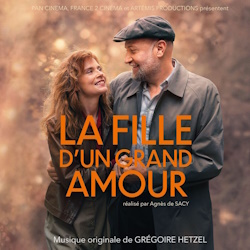 La Fille d’Un Grand Amour, which translates to ‘Child of True Love,’ is a French-language romantic drama film written and directed by Agnès de Sacy, starring Isabelle Carré, François Damiens, and Claire Duburcq. The movie follows a couple who separated years ago but reconnect when their daughter is screening a documentary she made about them.
The score for La Fille d’Un Grand Amour is by French composer Grégoire Hetzel, and it just lovely, a short, but wholly engaging, serious romantic delight. A lot of the score is made up of interactions between a classical violin and an expressive piano, with added textures for what sounds like a Spanish guitar, dancing around and adding colors to the central melodies.
Despite “La Fille d’un Grand Amour (Thème d’Anna)” and “Thème d’Yves” being ostensibly themes for a ‘grand romance’ between those two characters, the music in them is actually quite fragile and fractured, likely a comment on the fact that the two lovers at the center of story eventually ended their relationship in a bittersweet way. You can feel the echoes of this timeless love coming through in Hetzel’s passages, but it never properly comes together in the way one would expect. It’s very clever and adds intellectual depth to the whole thing.
The combination writing for piano and woodwinds in “La Mort de Franco” has some clear similarities to the early work of Alexandre Desplat, which is something I very much appreciate. There is a sense of loss and tragedy to the violin writing in “Les Aptitudes,” the delicate interplay between strings and flutes in “La Fugue d’Anna” is lovely, and then the playfulness of “L’Oie du Paradis” is just charming, again focusing on dancing woodwind textures and soft, restrained strings.
Grégoire Hetzel is one of those prolific French composers whose music never really seems to catch on outside France, and he seems to perpetually live in the shadow of composers like Desplat, or Philippe Rombi, or others of that type, despite him having a similar musical sensibility and a not inconsiderable amount of talent. Although La Fille d’Un Grand Amour is just a short soupçon of a score, it’s still worth exploring for anyone whose tastes follow similar patterns.
Unfortunately there is no physical CD of La Fille d’Un Grande Amour available, but the score is available to stream and download from most of the usual online sources via the B Original Music label.
Track Listing: 1. La Fille d’un Grand Amour (Thème d’Anna) (2:31), 2. Thème d’Yves (1:18), 3. La Mort de Franco (1:46), 4. Retour Sous La Pluie (0:49), 5. Les Aptitudes (1:45), 6. La Fugue d’Anna (1:35), 7. L’Oie du Paradis (3:01), 8. Mon Père (2:35). B Original Music, 15 minutes 20 seconds.
UNE AMITIÉ DANGEREUSE/A DANGEROUS FRIENDSHIP – Cyrille Aufort
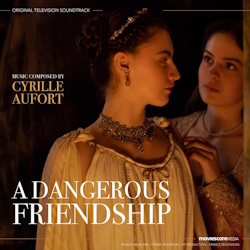 Une Amitié Dangereuse, or A Dangerous Friendship, is a French-language TV series directed by Alain Tasma, adapted from Juliette Benzoni’s 2004-2005 historical romance novels, ‘Marie des Intrigues’ and ‘Marie des Passions’. The series explores the unlikely friendship that develops between extremely different but powerful women in 17th century France: the free-spirited and sexually liberated Marie de Rohan, Duchess of Chevreuse, and Anne of Austria, Queen of France, a shy, straight-laced young woman who was married to Louis XIII at the age of 14, but quickly abandoned by the monarch as he went off in search of other conquests.
The score for Une Amitié Dangereuse is by composer French Cyrille Aufort, who previously wrote outstanding scores for projects such as La Glace et le Ciel in 2015, Past Life in 2016, Knock in 2017, L’Empereur also in 2017, and Voyage Au Pôle Sud last year. I have been an admirer of his work for well over a decade now, and Une Amitié Dangereuse is another scores which can be added to his impressive résumé.
In the liner notes for this album, Aufort explains that director Tasma “wanted the music not merely as accompaniment, but as a narrative force in its own right, one that guides the audience through the complex moods and shifting tones of the story.” He says that “the score had to move fluidly across different musical genres, from Baroque music, featuring the viola da gamba, lute, and baroque violin, to the sultry, suspenseful tones of an erotic and poisonous thriller. Then, as the narrative darkens and the emotional stakes rise in the final episodes, the music transforms, becoming more modern, more sensuous, and more dangerous – mirroring the seductive and treacherous elements of the story.”
All this is a very apt description of the score. Cues like the opening “Anne and Louis,” the unexpectedly lullaby-like “Marie de Rohan,” and “Maréchal d’Ornano” do indeed embrace a dark baroque sound that is very authentic and appropriate, and at times reminded me of the more lyrical and tonal parts of Elliot Goldenthal’s score for Interview with the Vampire, especially in its unmistakable use of the viola da gamba. Subtle vocal textures, soft and beguiling, add another layer to the overall sound, while church organs bring a religioso element into the proceedings which is very compelling.
Elsewhere, cues like “Secret Rendezvous” and “Journey to England” adopt an almost Jerry Goldsmith-like sound, almost like a French period version of Basic Instinct, while “A New Friendship” is warm and earnestly romantic, and “Open Windows” is a charmingly playful festival of pizzicato. The more sinister drama and suspense is carried by cues like “Concini’s Murder,” “The Queen’s Tears,” “The Queen Mother Escapes,” and the astonishing “Attempted Sexual Assault” which are wonderfully dark and ominous but sometimes erupt into rich crescendos.
Anyone who enjoys period drama scores that combine a rich classical sound with a heavy dose of brooding darkness will find Une Amitié Dangereuse to be extremely satisfying, and yet another impressive entry in Cyrille Aufort’s increasingly notable filmography.
The score is available to purchase as a CD On-Demand, or to stream or download, from Moviescore Media here: https://moviescoremedia.com/newsite/catalogue/a-dangerous-friendship-cyrille-aufort/
Track Listing: 1. Anne and Louis (2:29), 2. Concini’s Murder (2:06), 3. Marie de Rohan (1:58), 4. The Queen’s Tears (1:54), 5. A New Friendship (1:29), 6. The Queen Mother Escapes (1:56), 7. A Gift to the Queen (1:34), 8. Secret Rendezvous (1:50), 9. Attempted Sexual Assault (2:22), 10. Holland’s Intrusion (2:01), 11. Duchess and Holland: A Poisonous Story (1:34), 12. Rohan vs Medicis (1:31), 13. Marie’s Strategem (2:30), 14. Journey to England (1:29), 15. I Won’t Give You What You Came For (2:22), 16. Open Windows (1:06), 17. The Chalais Conspiracy (1:50), 18. Maréchal d’Ornano (2:06), 19. Queen vs the Queen Mother (1:37), 20. Let Him Live (3:08), 21. So We Will Be Even, Madame (2:50). Moviescore Media MMS25012, 41 minutes 43 seconds.
-
February 6, 2026 at 8:00 amMovie Music UK Awards 2025 | MOVIE MUSIC UK

Shop at the Movie Music UK Store

Member of the

 MOVIE MUSIC UK