THE SCARLET LETTER – John Barry
 THROWBACK THIRTY
Original Review by Jonathan Broxton
Nathaniel Hawthorne’s 1850 work The Scarlet Letter is widely considered one of the greatest American novels, blending psychological depth, historical setting, and moral allegory into a story of sin, adultery and redemption. Set in 17th-century Puritan Boston, the story follows Hester Prynne who, while estranged from her cruel husband Roger, had an affair, conceived out of wedlock, and ultimately gave birth to a daughter, Pearl. Convicted of adultery, Hester is punished and forced wear a scarlet letter “A” sewn onto her clothing as a constant reminder of her sin. Hester refuses to publicly reveal the identity of Pearl’s father, but the reader eventually learns that the father is Reverend Arthur Dimmesdale, a young and respected local minister. Dimmesdale is consumed by guilt over what happened to Hester but lacks the courage to confess; things are then made worse when Roger returns to Boston and vows to uncover and torment the man responsible for what happened to Hester.
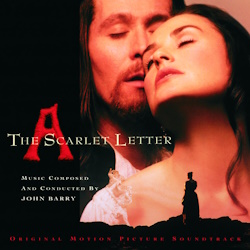
The story offers a complex look behind the façade of Puritan society, which is obsessed with outward displays of morality and piety towards God, but is nevertheless riddled with corruption and hypocrisy. Hester Prynne herself is now regarded as an early example of a feminist figure – strong, independent, and resilient against an oppressive patriarchal society that seeks to define her solely by her one sexual transgression – and many of the ideas and allegories Hawthorne brought to the book have become icons and touchstones of American literary culture. The story has been adapted numerous times, on both stage and screen, but this review is of the 1995 film directed by Roland Joffé, which starred Demi Moore as Hester, Gary Oldman as Dimmesdale, and Robert Duvall as Roger.
Despite the pedigree of the filmmakers – Roland Joffé was the Oscar-nominated director of The Killing Fields and The Mission, remember – and its star-studded cast, the film was both a critical and commercial disaster, with critics dismayed by how screenwriter Douglas Day Stewart diverged significantly from the source material, adding an entire sub-plot about a war between the Puritans and the local Algonquian natives. It grossed just $35 million off a $46 million budget, and was nominated for seven Razzie Awards as one of the worst films of 1995.
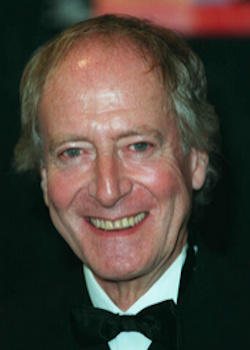 Even the scoring process was not free from problems. Initially director Joffé asked Ennio Morricone to submit demo pieces, them having enjoyed an enormously successful collaboration on The Mission, but none of his music was accepted. Then the great Elmer Bernstein was hired, and he wrote and recorded a complete orchestral score which was ultimately rejected for reasons which have never fully been revealed to this day (it was, along with other rejected works by the composer, released as a limited Varèse Sarabande album in 2008, and it’s insanely beautiful). The final score was composed by John Barry, who was apparently recommended to the director by Demi Moore after he scored her film Indecent Proposal in 1993. Barry’s resulting score is, more or less, a more intimate and romantic version of his score for Dances With Wolves, and for me is one of the last great works of the esteemed Englishman’s career.
By the mid-1990s Barry had settled down into a familiar musical rhythm in all his music. Every score he wrote was dominated by slow, deeply romantic string themes backed by simple brass harmonies and counterpoint, and The Scarlet Letter is very much cut from this same cloth. However, what sets The Scarlet Letter apart from other Barry scores of the period is its thematic depth; rather than simply presenting one central theme, this score contains several recurring ideas – a theme for Hester, as theme for Dimmesdale, a theme for Roger, and an overarching love theme that doubles as the score’s main theme.
In addition to these central themes Barry also employs some larger orchestral forces for the action and battle scenes involving the Algonquian natives and the conflict that erupts between them and the Puritans; this music is clearly an offshoot from the Pawnee battle music from Dances With Wolves, with its low brass clusters and insistent snare drum riffs. The score includes a small amount of native percussion parts, subtle electronic textures, and vocals chants courtesy of composer Peter Buffett (who also worked with Barry on Dances With Wolves), plus a superb performance of Samuel Barber’s classical masterpiece ‘Agnus Dei’ from “Adagio for Strings” performed by Robert Shaw and the Robert Shaw Festival Singers.
After a low-key opening in “Main Title/The Arrival/Search for Home,” the gentle and elegant theme for Hester is introduced in the lovely “Hester Rides to Town”. Her theme is prevalent in much of the score, but once her relationship with Arthur begins, it starts to drift into the background. Likewise, the theme or Gary Oldman’s Reverend Arthur Dimmesdale is introduced in “The Bird” and it is a little more forthright and masculine, with more emphasis on brass and a stronger melodic drive, that speaks to his goodness, but again it declines in the face of what he would eventually see as his moral failing in terms of his relationship with Hester.
Instead, by far the standout element in the score is the love theme for Hester and Arthur. It is introduced subtly, carefully, on quiet woodwinds in “A Very Exhilarating Read,” and is reprised in “I’m Not the Man I Seem,” before it is given a full and sumptuous airing in the spectacular, achingly romantic 7-minute “Love Scene,” which for me is one of the most beautiful and passionate pieces Barry ever wrote – and that’s quite a thing considering just how much spectacularly beautiful music he wrote over the course of his long career. All the familiar Barryisms I mentioned before are here in abundance – the long, lush, tender strings; the solid, steady-paced horns; the soft, eloquent woodwind melody – but, as ever, the style and thematic excellence wins you over every time. It may be familiar to long-time fans of his style, but I just can’t help being swept away by it.
Later cues such as “A Small Act of Contrition” the more trumpet-forward “I Baptize This Child/Pearl,” and the emotionally devastating “Hester Walks Through Town” also feature the love theme prominently, but numerous cues in addition to the love theme also stand out. “Are You With Child” is darker and more threatening, the orchestra underpinned with ominous rumbling drums as Hester’s secret starts to show. There is an earthy but sentimental and determined-sounding theme for “The Birth” of Hester and Arthur’s illegitimate daughter Pearl, agitated and nervous fluttering woodwinds pitted against what appears to be a minor-key variation on the love theme in “She Will Not Speak,” and a frightening piano-heavy motif for Hester’s estranged husband “Dr. Roger Prynne” that also appears in “The Savages Have Killed Him”. “Poor Fatherless Child” has a sinewy, slightly sickly sound that gradually becomes sterner and more dominant, and there is a strangely unnerving staccato theme in “An Attempt at Rape”.
The three-cue action sequence comprising “The Round-Up,” “I Am the Father of Her Child,” and “The Indians Attack” underscores the scene where the natives – having been provoked by a vengeful Roger murdering a colonist and making it seem like the Algonquians were responsible – attack the colony. The sequence features a series of dramatic, forbidding cues full of deep, sonorous horns and harsh clattering percussion, often underpinned with slow, deliberate, deeply tragedy-laden string performances of one or more of the main themes. There is quite a lot of Barry’s 1980s James Bond action music in these cues, and it wouldn’t surprise me if Trevor Jones’s The Last of the Mohicans was in the temp track too, although the music here is less bombastic and flamboyant and more oppressive.
The conclusive “The Letter Has Served a Purpose” offer a sense of relief and respite from the chaos with a lovely reprise of Hester’s theme in a warmer setting, and as a redeemed Hester removes her scarlet letter and leaves Massachusetts with Dimmesdale, Barry’s horns rise to a rich climax; this then melts into the gorgeous “End Title” cue, which offers a final luxurious statement of the love theme.
The Scarlet Letter just goes to prove that the quality of the music bears no relation to the quality of the film it was written for. Many, many spellbinding soundtracks have been written for films which really did not deserve it, adding a real depth and emotional resonance that would otherwise not have been present. John Barry does this and more here, going a long way to salvaging the dramatic depth of what ultimately became a widely criticized film. Fans of John Barry’s luxurious romantic orchestral scores of the 1980s and 90s will especially love it, but there is also enough depth and variety to the rest of the score to satisfy others too.
Buy the Scarlet Letter soundtrack from the Movie Music UK Store
Track Listing:
- Main Title/The Arrival/Search for Home (6:15)
- Hester Rides to Town (1:05)
- The Bird/The Swimmer (3:07)
- A Very Exhilarating Read (2:10)
- I’m Not the Man I Seem (2:40)
- Agnus Dei (Adagio for Strings) (written by Samuel Barber, performed by Robert Shaw and the Robert Shaw Festival Singers) (10:51)
- I Can See What Others Cannot (1:04)
- Love Scene (6:44)
- Are You With Child (2:06)
- A Small Act of Contrition (2:24)
- The Birth (2:05)
- I Baptize This Child/Pearl (2:01)
- She Will Not Speak (3:24)
- Dr. Roger Prynne (1:40)
- Hester Walks Through Town (1:50)
- Poor Fatherless Child (2:08)
- An Attempt at Rape (3:00)
- The Savages Have Killed Him (1:50)
- The Round-Up (1:54)
- I Am the Father of Her Child (2:16)
- The Indians Attack (2:47)
- The Letter Has Served a Purpose (2:36)
- End Title (4:13)
Running Time: 70 minutes 21 seconds
Epic Soundtrax EK 67431 (1995)
Music composed and conducted by John Barry. Performed by the English Chamber Orchestra. Orchestrations by Nic Raine. Additional music by Peter Buffett. Recorded and mixed by John Kurlander. Edited by Cliff Kohlweck. Album produced by John Barry.

Shop at the Movie Music UK Store

Member of the

 MOVIE MUSIC UK