DOWN TO THE SEA IN SHIPS – Alfred Newman
 GREATEST SCORES OF THE TWENTIETH CENTURY
Original Review by Craig Lysy
20th Century Fox Studio CEO Darryl F. Zanuck had always been drawn to seafaring tales. He began planning for one in 1939, but it took seven years to set his dream into motion. In 1946 he purchased the screenplay “The Princess and the Pirate, 13 Rue Madeleine” by Sy Bartlet, and tasked John Lee Mahin to rewrite the story into this film, entitled Down to the Sea in Ships. Zanuck was satisfied with the rewrite, and placed Louis D. Lighton in charge of production with a $2.5 million budget, with Henry Hathaway tasked with directing. A fine cast was hired, including Richard Widmark as First Mate Dan Lunceford, Lionel Barrymore as Captain Bering Joy, and Dean Stockwell as Jed Joy.
The story is set in 1887 and follows the fortunes of the whaling ship The Pride of New Bedford. Aged Captain Bering Joy is preparing for his last voyage and desires to pass on the family’s whaling tradition to his grandson Jed. It is necessary that the boy pass a maritime test to qualify, sadly however, he flunks. Andrew Bush, is the principle who once served under Captain Joy. In deference and out of loyalty to his former captain, he changes the boy’s score to a passing one. Captain Joy meets with the ship’s owner Captain Jason Briggs who grants him command with the caveat that Dan Lucenford serves as his first mate. They set out to sea with Dan, who has a college degree in Marine Biology, assuming the role as tutor for Jed. Jed gains experience and one day earns the right to man the tiller of a hunting boat. Fog sets in, the boat fails to return, and Captain Joy refuses to send a second boat, preferring to pray. Dan violates that order, lowers a second boat and rescues Jed and the men adrift at sea on a wrecked boat. Dan is punished for insubordination, and will be discharged at their next port of calling, Valparaiso. Yet Captain Joy becomes ill after commanding a hunting boat and is forced to yield command to Dan. Eventually after an existential crisis from an iceberg collision, Dan saves the ship, as Captain Joy passes in the very cabin in which he was born. The film was popular, but not a commercial success, losing $850,000 as the budget was bloated due to the cost of actually building the ship. Critical reception was universally favorable, however the film received no Academy Award Nominations.
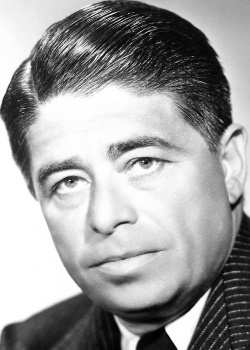
Alfred Newman was Director of Music at 20th Century Fox, and it was his habit to personally score studio chief Darryl F. Zanuck’s passion projects. After viewing the film, Newman decided to infuse his soundscape with a number of choral empowered Sea Shanties and Hornpipe. To that end he brought in his trusted orchestrator Edward B. Powell to assist in selecting and arranging these songs, and Ken Darby to write the lyrics for the men choristers, serve as a vocal coach, and choral arranger. Additionally, for authenticity, these songs he would need to augment his orchestra with the use of harmonica, banjo and accordion. Several other traditional folk songs were utilized to impart the requisite cultural sensibility, including “Song of the Fishes” “The Rio Grande”, “On the Plains of Mexico”, “A-Roving”, Shenandoah”, and “Rolling Home”.
 For his soundscape, Newman composed three themes. For the Main Theme he composed a sea shanty, with lyrics provided by Ken Darby. The song makes me believe Newman and Darby were whalers in another life time. It is a wonderful song, with a vibrant and buoyant melody espousing confidence. The melody often declared by horns orgogliose is pervasive throughout the film, and also serves as a leitmotif for the ship, “The Pride of New Bedford”. Associated with the Main Theme, and often woven within it as counterpoint, is an authentic Hornpipe. It unfolds as traditionally as a dance empowered by strings vivaci and horns, and often is used to empower the ships sailing progress. Only one character received a theme, little Jed. The boy’s theme is tender, woodwind borne and oozing sentimentality, worming the kid into our hearts. The film is nearly two hours and only twenty-five minutes of music was written. I discern this was due to the director Henry Hathaway as none of Newman’s scores are sparsely scored.
Scenes coded (*) contain music not included on the album. (*) “Logo” offers Newman’s iconic 20th Century Fox fanfare. We flow into “Main Title” atop heraldic fanfare and the opening credits unfold against the backdrop of a whaling ship sailing on the open seas. Newman supports with his Main Theme, a proud sea shanty sung with confidence by men’s chorus, enriched orchestrally with a vibrant hornpipe by contrapuntal strings and horns. This score highlight perfectly sets the tone for this nautical tale. We flow into the film proper with narrative script; “New Bedford 1887”. “New Bedford” reveals a panoramic shot of the whaling town. We open with serenity as Jason Briggs looks out from his business deck and sees the return of his whaling vessel, “The Pride of New Bedford. At 0:10 strings solenne join with a descending contour tinged with sadness as Jason Briggs, owner of Briggs Whaling Company, is contemplating the end of a long and very productive relationship with his aged friend and ship’s captain Bering Joy. His declining health has resulted in an insurance problem, that needs to be addressed.
“Old Briny” reveals Jason traveling to the harbor and boarding his ship. Newman supports with the main title sea shanty softly sung in the background. Captain Joy joins Ned in his cabin. The kid is packing and it is obvious he has grown and needs longer pants. Ned says he looks forward to rising from cabin boy to a member of the crew, but Captain Joy scowls, and exhorts him to read his books as he must pass his fourth-grade tests to be assigned another voyage. Jason joins him, and a cordial welcome becomes tense as Jason complains at Bering’s ongoing health issues. Bering counters with a potent argument, that what matters is performance and profit. When he reveals that he has broken the port record of 2,217 barrels of oil, with a haul of 2,246 barrels, Jason offers his praise, but then brings up retirement. He says the board has voted to offer retirement with a salary of $3,000 a year for the rest of his life, and this will be your final voyage. Bering is adamant, that no board or insurance company is going to decide when he retires. Jason relents, and invites Bering to join him ashore, to which he agrees. “Captain Joy’s House” reveals a carriage taking Bering and Jed through town to his cottage. Newman offers his sprightly Hornpipe to carry their progress. At 0:18 they arrive, and Bering looks with happiness at his cottage supported by warm and inviting strings. Inside Jed’s Theme, borne by woodwinds evoke a sense of uncertainty as he scans the room, which is full of memorabilia. At 0:54 a warm and comforting Main Theme sounds on horns nobile as Jed looks up at a portrait of Bering, followed by one across the room of his father.
“Home Schooling” reveals Jed struggling with his studies, with grandpa trying to assist by covertly looking up words in the dictionary so as to not reveal his ignorance. Jed’s oboe led theme offers a tentative musical narrative tinged with uncertainty as he is struggling to understand. These feeling are made worse by grandpa’s pressure. But as Jed bows his head, grandpa realizes that he is pushing too hard and at 0:40 a warm and tender Main Theme supports him affectionately patting Jed on the head. In an unscored scene, Jed frets that he might fail and grandpa says if he does, it may be that God has other plans for you. This causes Jed to cry as he says I want to go to sea. In “Putting Out To Sea” Bering and Andrew reacquaint and Andrew is thankful that Bering said he was not cut out for the sea, as he now has a rewarding career. Jed takes the test; however, he fails. Andrew, however realizes that Jed has character and so makes an exception, changing his failing grade of 32 to 70 allowing him to pass. Jason then introduces him prospective first mate Dan Lunceford. His resume reveals a college education and degree in marine biology. It is a rough introduction, but Captain Joy accepts him and say he looks forward to how book smart competes with experience smart while whaling. Music enters with the first log entry atop optimistic Main Theme as script reads fair weather and favorable winds. The Main Theme reprises with pride as Captain Joy sets forth his expectations to his crew; fair and just treatment by him, and dedication and an honest day’s work from them. We conclude with religious auras and he orders the men to bow their heads as he leads them in prayer.
“Song of the Fishes” reveals a private meeting during which Captain Joy assigns Jed’s schooling to Dan, overriding his objections. Music enters later as we see Jed studying on deck as Dan reviews his textbooks, and asks him math questions. Jed cannot answer correctly, and becomes distracted by a pod of porpoises leaping along the ship’s port bow. The classic sea shanty is sung by men’s chorus of bass voices. Dan is frustrated, ends the day’s lessons, and coaches Jed to study harder. The next day Dan assigns two boat leaders and selects men for each. Jed desperately wants to join, but Dan refuses to choose him. Afterwards he announces that he rewards hard work and those that show they want to learn. He advises Jed, that since he does not want to learn, to report to the galley and assist the cook. “Looking for Whales” reveals a log entry, that they have crossed the equator into southern waters and have yet to sight any whales. The Main Theme supports, swelling with pride as we switch to an exterior shot of the ship.
(*) “Jed Confronts Dan” We see Jed eating in the galley with the cook Tubbs. Dan enters carried by the Main Theme and asks for coffee. It softens under the dialogue as Dan once again pocks Jed for not working hard enough to learn. Jed stands up and face to face recites the correct answers to each of the four questions he missed the other day, and the storms out. Up on deck the two talk, with Dan saying he is impressed with Jed’s progress. He then brings up the importance in a man’s life of the number seven, saying; at 7 you shift from a child to a boy, at 14 from a boy to becoming a man, and at 21 you enter your manhood. At this point Dan hears Captain Joy approaching and says let’s talk about 70, an age where a man has accomplished everything in life, and should have the wisdom to step aside and let younger and better men take over. This infuriates Bering who walks away grumbling. (*) “Tubb’s Rebuke” reveals he and Dan discussing Jed. He rebukes him when he says the old man does care about the boy, only whaling and oil profits. He informs him that the boy means everything to him, and is the only reason he embarked on this final voyage, adding that he does not want to see the boy hurt. Newman supports softly under the dialogue with a banjo strummed version of the Main Theme.
The next day Dan distances himself from Jed, refusing to meet or have a discussion after the kid brings him his dinner. Later that evening Jed joins Dan on deck in “Jed’s Confusion”, which offers a wonderful score highlight with a tender extended exposition of Jed’s Theme. We open with a proud declaration of the Main Theme, which dissipates into a woodwind led nocturne. At 0:38 Jed’s Theme, full of uncertainty, and insecurity joins as he expresses puzzlement at why Dan has become harsh and remote. He asks what he has done to make him muckled with him. We see realization in Dan’s eyes that he has shifted his anger of the captain onto the boy, which is hurting him. Dan softens, and say get some sleep so you are sharp for our lessons tomorrow. “Still No Sighting” reveals another log entry, which offers mounting frustration that they still have not had any whale sightings, the longest in the ship’s history. He adds that a fight broke out among the crew. Like the previous entry, the Main Theme supports the script.
“The First Whale” offers an energetic score highlight. It opens with an ecstatic Jed shouting “She Blows!” from the crow’s nest. A single Sperm whale is sighted and Dan launches three boats, which begin to pursue. Dan’s boat harpoons the whale and a wild ride ensues as they are dragged. The whale sounds, resurfaces charging the boat and as it turns a mate’s arm is pinned hard by the rope. Dan chops off the line before the man’s arm is severed ad the other boats continue the hunt. On board Dan is surprised when the captain commends him for making the right choice quickly. Newman chose to not support the hunt, which surprised me as the scene lacked energy and drama. Music enters with the energetic Hornpipe Theme as the processing of the whale commences; cutting, boiling and filling barrels with oil. In “A Roving Maid of Amsterdam” offer source music A-roving rendered as a danza piacevole. We flow seamlessly into (*) “Log Entry” as the log indicates 98 barrels in the ship’s hold. A proud trumpet led declaration of the Main Theme supports an exterior shot of the ship and the log entry. In “Captain’s Cabin” Dan secures Captain Joy’s permission to place Jeb as an oarsman. He offers the captain to oversee this milestone himself, but is rebuffed, which angers Dan who offered this gesture out of goodwill. An accordion offers the Main Theme softly under the dialogue.
As Dan ascends to the deck, we hear “She Blows!”. Dan notifies the captain and goes topside where he informs Jed that he will take a bow-oar. He assigns him to Mr. Thatch’s boat and Jed is ecstatic, as he boards the boat. In “Jed Goes Bow Oar” we see Jed launch and music joins with the Main Theme rendered with sentimentality as the camera focuses on Captain Joy’s eyes, which hold back tears. The ship enters a fog bank, and anxiety mounts as Sewell’s and Thatch’s boats have not returned. Sewell finally returns and says that Thatch hooked on to a lively one, and then he lost sight of them. Captain Joy orders Dan to place lanterns on the mask tops and to keep ringing the bells to help guide them back. After Dan sees the captain praying fervently, he becomes frustrated that the captain refuses to lower a second boat as experience gained from fifty years of whaling has ingrained this into him. Dan however has had enough, and in violation of orders, lowers a second boat and personally goes out to search. Dan finds survivors, including Jed clinging to boat wreckage and rescues them. Captain Joy weeps as he sees that Jed is alive. The boat is brought up, and the captain says it is good to see you Mr. Thatch, and orders rum be served to the survivors. He then walks past Dan to his cabin without a look or saying a word.
The next day, Dan reports to the captain, who relates his heartfelt thanks and gratitude for saving his grandson. He then says, that in violating his order you jeopardized the safety of this vessel and its entire crew, for who he is solely responsible. He asks if he knew he was violating his order, and Dan answers, yes. The captain relieves him as first mate for insubordination, but allows him to keep the first mate cabin, and the freedom of the ship. He adds however that when they dock at the next port of Valparaiso, he must leave the ship. As Dan leaves, Captain Joy says he wants him to know that he takes no joy in making this log entry. As Dan leaves the cabin, we see in the captain’s expression his pain. We close with the captain making the log entry of dismissing Mr. Lunceforth of his duties. Topside in “The Wide Missouri” reveals Dan watches a pod of porpoises swimming a beam. He is contemplative and Newman supports with a wistful rendering of the traditional folk song “Shenandoah”, and later “The Rio Grande”. Jed joins and asks why he is no longer on duty, and he confides that he was relieved by the captain for violating his orders not to send out another boat to search for him.
In “The Bigler” Newman drapes the night watch in somber auras. Jed informs Mr. Thatch that he wants to speak to the captain. He rebuffs Thatch’s inquiry as to why, saying it is personal. Thatch usher him in to the captain’s cabin and departs. Dialogue alone carries the scene. Jed asks to be let off at the port of Valparaiso and expresses his grievance in very personal terms, accusing Captain Joy of willing to let him die at sea, as he cares more about this boat and making a profit. He adds that he doesn’t want to be a master and stay on this stinking ship with you. Captain Joy is enraged and smacks Jed across the face. Jed maintains his composure and asks to be dismissed. The captain dismisses him, and as he is leaving, he says he smacked him out of anger, not anger at him, but anger with himself for failing to raise you proper to be the man I had hoped. He adds that you can file charges against me if you wish. “The Captain Falls Ill” opens with a log entry showing four whale kills of 98, 100, 96 and 98 barrels. He adds sightings of ice as they prepare to cross Cape Horn. A beleaguered statement of the Main Theme supports, which weakens and becomes foreboding as Thatch orders the captain brought aboard quickly. He has taken to the boat for the hunt to pick up the slack after relieving Dan of his duties. At 70 years of age, his body cannot take the strain, and he is slowly weakening. At 0:37 a forlorn Jed’s Theme joins as he watches, keeping his distance from the captain. Dan tells Tubbs that neither the captain or the boy appears to be weakening. Tubbs speaks of his frustration getting the captain to eat proper. At 1:23 an affectionate rendering of the Main Theme joins as they say they will not worry until the day he stops swearing.
In unscored scenes, the captain again rejects Tubb’s soup, and summons Mr. Lunceforth to his cabin. Dan, who was waiting for Tubbs outside, goes in. Captain Joy notifies him that he is stepping down for health reasons, and appointing him as the ship’s master. Dan accepts with sadness, and when Bering says he will vacate the cabin, Dan bars his way, offers a smile, and Bering agrees to stay and sits down. He relates that he was born in the bed while his father was whaling in the Bering Sea, which is why he has his first name. He forbids Dan to stop whaling so as to take him into port for treatment. He lays down to rest a bit, and Dan covers him with a blanket. Dan summons Mr. Blair and they enter Bering’s cabin to perform a health examination. He refuses to unbutton his shirt until Dan quotes Section 7 of the Seaman’s Act, which empowers the Ship Master to examine all members of the crew and to render aid as he deems fit. Bering relents with rancor and they perform the examination. Later Dan orders a course change to Montevideo to secure a physician, and tasks Tubbs with removing the Bering’s compass so he cannot detect the course change. Later in Dan’s cabin, Jed asks about his grandpa’s health, and is told it is bad. He wants to visit and say he is sorry that he is sick, and Dan gets up and lectures him. Saying as Ship Master he always puts the welfare of the ship above his personal feelings, which sometimes is hard to do. What he did in relieving me was the right thing to do, and that he is a better man than both of us. He exhorts Jed to gone to him and say this, and that he was right, but Jed is stubborn, will not relent, and asks to go. Dan, with disappointment, grants him leave to go.
In unscored scenes, Dan is cautiously sailing through fog through a sea with lurking icebergs. Tubbs delivers Bering’s breakfast and Bering relates that it was providence that brought Mr. Lunceforth aboard. He is the right age to be Jed’s father, that he loves the boy as he went out to rescue him, and that he will help Jed become the man I always wanted him to be. Back topside, Dan and the men are tense as they will have to react quickly to any iceberg sighting. They keep sounding a fog horn listening for an echo, which would mean an iceberg ahead. They hear an echo, spot an iceberg off the starboard bow, and Dan turns the rudder hard over to port. They clear it, the fog resumes and soon they detect an even larger iceberg. Dan takes her hard to port, but this time they fail to clear a submerged outcrop and collide, puncturing the hull. Dan repels down to inspect, and finds that ship lays on a ledge and has a hole below the water line. As long as they remain on the ledge, the hole remains above the water. He orders pumps and a repair crew to seal the hole. A team of three men repel down to help place the patch, but one is crushed and Dan’s arm is broken. Back on deck Captain Joy assumes command, and countermands Mr. Thatch’s order to abandon ship. He goes overboard in a sling and personally supervises the installation of the patch. I found it most curious that the score is absent from this very tense scene, which I believe would have benefited from musical support.
That night as the ship is sailing to port, Dan grants Jed’s request to see his grandpa, who is on his deathbed. Jed acknowledges that he was wrong, says he understands what is required to be a Ship Master, and says he is withdrawing his request to leave the ship. He then lays his head on Bering’s chest and hugs him as he weeps. We see in Bering’s eyes, his gratefulness that they reconciled in his final hours. When Jed returns topside, he tells Dan that they made up, but then grandpa stopped breathing. We flow into “Burial at Sea”, which reveals the ship sailing in open ocean, followed by Dan’s log entry: “Buried at sea today, Captain Bering Joy. Born on this vessel, died on this vessel”.
Newman supports with a solemn rendering of the Main Theme, which slowly shifts to a sentimental in memoriam. As the Pride of New Bedford sails with her new captain, Dan promises Jed that there will be many new voyages together with him at his side. When a vessel from Boston hails them, Dan says they are “The Pride of New Bedford”, 180 days out to sea, with the Main Theme swelling with refulgence. In “Finale”, when asked who is the captain, Dan answers, “Captain Bering Joy”, which initiates at 1:33 a proud reprise by men’s chorus of the Main Title song that concludes when “The End” displays: “Ol’ Father Briny takes the tired whalin’ man, and holds him forever in the deep. Safe and eternal there in Ol’ Briny hand, no storm ever disturbs his sleep. Whailin’ man, now ye belong to the sea”
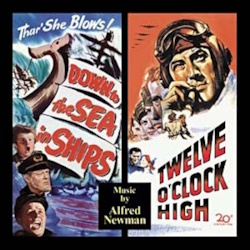
This compilation album features two scores by Alfred Newman from 1949: Down to the Sea in Ships and Twelve O’clock High. The original 35mm optical elements were used with some deterioration noted. Because Newman used close shot and long shot microphones when recording, the technical team was able to offer full-bodied stereophonic sound. The overall audio quality is good, however cue 18 opens with significant audio distortion. Despite the single flaw, the CD provides an enjoyable listening experience. This was billed as a nautical tale, which offered whaling adventure. However, this only serves as a backdrop to a boy’s coming of age tale, and the two men who mentored him and competed for his affection. Newman’s soundscape was one of his simplest with just three themes supporting his musical storytelling. The Main Theme, a classic Sea Shanty, and his second theme, a vibrant Hornpipe are so good as to make me believe that he was a whaler in his former life. They empower and sustain the film’s forward momentum and sense of adventure. His woodwind borne theme for Jed, was tender and instantly endeared us to him. This is one of Newman’s sparsest scores with only 25 minutes for a nearly two-hour film. I believe the director’s decision not to score the actual whale hunts detracted as I believe the music would have enhanced the action, drama and exhilaration of the hunt. I believe the suspenseful scene navigating the fog shrouded iceberg field would also have greatly benefited from music. Never the less, when music is present, it is wonderful, and enjoyable. Folks, these two obscure scores will not be found on any Newman’s Best Scores list, however, if you are a Newman lover and collector, I recommend them to fill in your collection.
For those of you unfamiliar with the score, I have embedded a YouTube link to a nine-minute suite: https://www.youtube.com/watch?v=zOpooO6mK7g
Buy the Down to the Sea in Ships soundtrack from the Movie Music UK Store
Track Listing:
- Main Title (1:06)
- New Bedford (0:31)
- Old Briny (2:53)
- Captain Joy’s House (1:57)
- Home Schooling (1:09)
- Putting Out To Sea (0:53)
- Song of the Fishes (2:16)
- Looking for Whales (0:18)
- Jed’s Confusion (2:31)
- Still No Sighting (0:14)
- The First Whale (1:20)
- A Roving Maid of Amsterdam (0:30)
- Captain’s Cabin (0:32)
- Jed Goes Bow Oar (0:40)
- The Wide Missouri (2:29)
- The Bigler (1:13)
- The Captain Falls Ill (2:30)
- Burial at Sea/Finale (2:02)
Screen Archives Entertainment SAE-CSR-0005 (1949/2002)
Running Time: 25 minutes 04 seconds
Music composed and conducted by Alfred Newman. Orchestrations by Edward Powell. Recorded and mixed by XXXX. Edited by XXX. Score produced by Alfred Newman. Album produced by Ray Faiola and Craig Spaulding.

Shop at the Movie Music UK Store

Member of the

 MOVIE MUSIC UK