DR. JEKYLL AND MS. HYDE – Mark McKenzie
 THROWBACK THIRTY
Original Review by Jonathan Broxton
A classic sci-fi horror tale with a comic twist, Dr. Jekyll and Ms. Hyde is a modern reimagining of Robert Louis Stevenson’s 1886 novella The Strange Case of Dr Jekyll and Mr Hyde. Directed by David Price, the film stars Tim Daly as Dr. Richard Jacks, a chemist working at a fragrance company, who also happens to be the great-grandson of Dr Henry Jekyll, the protagonist of the original story. After he receives his great-grandfather’s scientific notes as part of an inheritance, the shy and bumbling Jacks tinkers with and creates a new serum, intending to use it as a base for a new women’s perfume; unfortunately, when he tests the serum on himself, he finds himself transformed into the beautiful, confident, and very female Helen Hyde (Sean Young) – and Helen is determined to take over Richard’s life. However, despite having a fun supporting cast – Lysette Anthony, Harvey Fierstein, Stephen Tobolowsky, Jeremy Piven – the film was both a critical and commercial flop, and is mostly forgotten today.
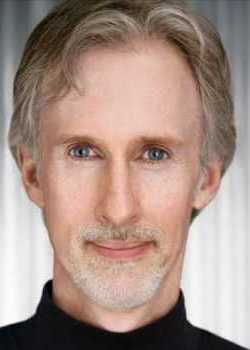
Amongst film music fans, however, the film is widely known for its excellent, massively over-achieving score by composer Mark McKenzie. By the mid-1990s McKenzie was enjoying a successful dual career both as an orchestrator for others (notably Danny Elfman, James Newton Howard, Marc Shaiman, Cliff Eidelman, many others), and as a composer in his own right. His own work was improving in quality with each subsequent score – 1991’s Son of Darkness: To Die For II was surpassed by 1993’s Warlock: The Armageddon, which was then surpassed by 1994’s Frank & Jesse – and, true to form, Dr. Jekyll and Ms. Hyde continued the upward trend.
When I say that this score is massively over-achieving, I really can’t emphasize enough how much this is true. The score is so much better than the film it accompanies, it’s almost laughable; somehow, McKenzie was inspired to write a score which emulates the most playful music of both John Williams and Danny Elfman, is big and lush and bold and sweeping and fully orchestral, contains a pair of knockout recurring themes, and at times reaches such wonderfully grandiose heights that the producers of the Academy Awards would later use it during two different Oscars broadcasts.
 The six-minute “Overture” introduces two of the main themes in a suite which, even thirty years down the line, remains one of the most satisfying pieces of McKenzie’s entire career. The first half of the cue is dominated by the score’s romantic theme, a nostalgic piece for the full orchestra that pulls no punches in reaching for melodramatic and sweeping heights as it develops; the passage that begins at the 1:17 mark wherein the majestic strings are underpinned by a bank of resounding trumpets, is simply sensational. Cymbals crash, triangles ring, harps erupt in waves; it’s just glorious, classic, passionate Hollywood movie music at its finest.
The middle section of the “Overture” is very different, as it focuses more on the ‘mischief/mad science’ aspect of the score, and brings together the devilish danse macabre sound of John Williams’s Witches of Eastwick with the playfully ghoulish style of Danny Elfman’s Beetlejuice, with perhaps a touch of Pee-Wee Herman thrown in for good measure. This theme is equally terrific, full of sparkle and movement, darting Saint-Saëns-style violins and bouncy accompanying piano rhythms which gradually grow to embrace the full orchestra, each one taking on the lead melody in turn.
The final third of the “Overture” comes back to the Romance theme with equally powerful gusto, and finishes with a final blast of merriment that sees the Romance theme arranged with the Science/Mischief theme’s orchestrations, but also finds time to explore something a little moodier and more alluring, a secondary theme for Helen Hyde when she is in her ‘seductive’ mode, using her feminine wiles to impose her will on Richard’s hapless colleagues, all of whom are all unaware that Richard and Helen are the same person!
One thing I want to mention about the “Overture” – and, indeed, the score as a whole – is just how wonderfully orchestrated it is. McKenzie’s command of the orchestra is, of course, masterful – you don’t have his career without it – but it’s scores like these that really drive home just how brilliant he is at this sort of thing. Every section gets its moment in the sun, the different combinations of instruments that come to the fore work in perfect harmony, and when the music is performed by the entire ensemble the richness of the sound, the depth and the clarity, comes shining through.
The rest of the score is, essentially, a series of explorations of these main themes, plus a few one-off cues that introduce a new quirk or new flavor to the music as required. “Old Movie Music” features an organ performance by McKenzie himself that combines with stirring and bombastic orchestral passages that brilliantly reach even further back into the history of classic Hollywood and emulate the old Wurlitzer scores that would accompany films from the earliest days of motion pictures. “Off to Work” is a delightful scampering scherzo for flutes and frolicking strings that effectively captures Richard’s offbeat personality, and is a sort of variation on/deconstruction of both themes, before everything goes to the dogs.
“Great Grandfather’s Books” is built around a mysterious passage for eerie strings accompanied by electronic tingling effects, illustrating the revelatory moment where Richard discovers who his famous ancestor was, and what his alchemy may mean for him in the present day. These electronic tingles actually feature semi-regularly throughout the rest of the score as sort of a musical marker for the transformation potion itself, and are heard whenever something magical is about to happen. The massive symphonic flourish at the beginning of “Something Electrical” leads into a superb variation on the Science/Mischief theme featuring a prominent xylophone part, and then the final moments of “A Little Surprise” feature a version of the Romance theme where the melody is carried by twittery, flighty flutes.
There is a brassy grandiosity to the early statements of the Science/Mischief theme in “Breakfast Transformation,” before it heads off down a more anarchic and festive path in the cue’s second half. There is a lovely poignancy to the statement of the Romance theme at the beginning of “Charades,” but that quickly disappears and is replaced by something that almost feels like a ‘quirky western’ dance arrangement inspired by Aaron Copland. “Irresistible Helen” reprises the Seduction theme with a set of sultry woodwind flavors that are one part Gershwin New York jazz, one part John Barry erotic thriller. Then there is a sense of “Helen Deflates” being a caper, as the music becomes bulbous and more traditionally comedic, increasing its sense of frenetic energy as the cue progresses, as Helen tries to flee out a bathroom window before her latest sexual conquest notices her turning back into Richard.
The first half of “The Unstable Gene” is a rich and vibrant reprise of the Science/Mischief theme for full orchestra, which eventually gives way to a reprise of the mysterious music from the “Great Grandfather’s Books” sequence, as Richard starts tinkering with the formula of the serum even more, trying to prevent Helen from returning to take over his body. “Taking Back my Chromosomes” then arranges the Science/Mischief theme as a brilliant, unexpectedly forceful militaristic march that reminded me very much of John Williams’ score for the Steven Spielberg comedy 1941, perhaps crossed with Jerry Goldsmith’s Patton. The subsequent “Narrow Escapes” then showcases McKenzie’s seriously impressive action chops, with an arrangement of the Science/Mischief theme as part of a bold and muscular fully orchestral action sequence.
“Footsy” is, amusingly, a direct quote from Georges Bizet’s opera “Carmen,” performed with lovely vocal tones by soprano Patricia Swanson, and then the conclusive pair “Final Transformation” and “Acid Love Potion” reprise both main themes at their fullest extent, amid some wonderfully dramatic orchestral textures that celebrate Richard’s victory and Helen’s demise. The huge statement of the Romance theme during “Final Transformation” is the closest McKenzie comes to recapturing the sweeping flamboyance of the performance in the “Overture,” and then the final reprise of the Science/Mischief theme ends the score on a massive high. Unforgivably, the movie’s end credits are mostly accompanied by a performance of Devo’s rock song “Girl U Want,” denying audiences a cathartic reprise of McKenzie’s sensational overture – but at least we have this album.
I really can’t stress enough how terrific the score for Dr. Jekyll and Ms. Hyde is. Considering that this was, more or less, the fourth solo score of Mark McKenzie’s career, the talent he shows for writing memorable themes, and then performing them in a variety of interesting, technically proficient, emotionally satisfying ways is remarkable, and it’s no surprise that his aptitude as an orchestrator allowed him to collaborate with many of the greatest composers of the day.
I just wish that all this could have translated to a more rewarding composing career of his own; as I said in my review of his score for The Greatest Miracle back in 2011 McKenzie writes some of the most beautiful, lyrical and emotionally resonant music ever written for film – and I do mean ever written for film – but almost none of it gets heard by mainstream cinema audiences, because at this point (and with a few exceptions) it mostly accompanies Hallmark TV movies and straight-to-DVD sequels.
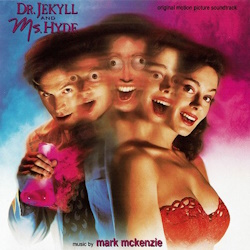
However, in 1995, the score Dr. Jekyll and Ms. Hyde still had with it the promise of the career that Mark McKenzie should have had. In an alternate universe he went on to write a series of acclaimed orchestral scores for 2-3 major studio features a year, across multiple different genres, for 20 years straight, picking up a handful of Oscar nominations along the way. Back in this timeline, if you ignore the quality of the film, and if you can find the album (which is now a rare collectable) while avoiding looking at its nightmarish cover art, this is an unhesitating recommendation.
Buy the Dr. Jekyll and Ms. Hyde soundtrack from the Movie Music UK Store
Track Listing:
- Overture (6:08)
- Old Movie Music (2:20)
- Off to Work (2:29)
- Great Grandfather’s Books (2:37)
- Something Electrical (2:18)
- A Little Surprise (1:47)
- Breakfast Transformation (2:35)
- Charades (2:20)
- Irresistible Helen (1:41)
- Helen Deflates (2:02)
- The Unstable Gene (2:12)
- Taking Back my Chromosomes (1:57)
- Narrow Escapes (2:18)
- Footsy (1:55)
- Final Transformation (2:46)
- Acid Love Potion (2:46)
Running Time: 40 minutes 13 seconds
Intrada MAF-7063D (1995)
Music composed by Mark McKenzie. Conducted by Randy Thornton. Orchestrations by Mark McKenzie and Patrick Russ. Recorded and mixed by Andy Waterman. Edited by Dick Bernstein, John Finklea, and Jim Young. Album produced by Mark McKenzie.

Shop at the Movie Music UK Store

Member of the

 MOVIE MUSIC UK