THE STRANGE LOVE OF MARTHA IVERS – Miklós Rózsa
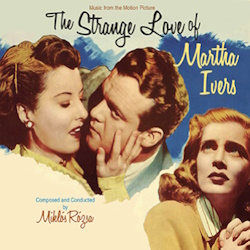 GREATEST SCORES OF THE TWENTIETH CENTURY
Original Review by Craig Lysy
The Paramount Pictures development team was seeking a new film noir project given that the genre was blossoming in the 1940s, captivating audiences far and wide. They believed they found it in the short story “Love Lies Bleeding” by playwright John Patrick, which was re-titled The Strange Love of Martha Ivers for the big screen. Screenwriter Robert Rossen acquired the film rights for $35,000 and was tasked to write the screenplay. Hal B. Wallis was placed in charge of production and Lewis Milestone would take the reins directing. For the cast Barbara Stanwyck would star in the titular role as Martha Ivers, joined by Van Heflin as Sam Masterson in his comeback role following his discharge from the military, Lizabeth Scott as Toni Marachek, Kirk Douglas in his acting debut as Walter O’Neil, and Judith Anderson as Mrs. Ivers.
The film offers a sordid tale of deception, betrayal, murder and suicide. It is set in a small town and follows the fortunes of Martha Ivers and her childhood friend Sam Masterson. She is petulant and rebellious young girl, bringing much grief to her aunt. Her attempt to run away with boyfriend Sam, whom she instigated, is foiled with he taking the blame. Years later Martha has been coerced through blackmail into marrying Walter O’Neal. It is a loveless marriage with her choosing to focus on running the family business while Walter works as a district attorney. One day Sam returns to town, falls in love with Toni, only to discover Martha, who rekindles his feelings for her. A classic romantic triangle ends in tragedy when Sam refuses Martha’s demand that he murders Walter, who is unconscious, and instead wakes him, and leaves Martha for Toni. As Martha lies to cover up her murder plot, Walter embraces her feigning forgiveness and then fires a pistol killing her. Sam returns to investigate the gun shot only to see Walter kill himself. The film was a stunning commercial success, which relaunched Van Heflin’s career, and launched Kirk Douglas’s. Critical reception saw it universally praised, and the film received one Academy Award Nomination for Best Writing, Original Story.
Miklós Rózsa was much in demand in the 1940s, and he not only had a contract with Universal Pictures, but also with Paramount Pictures. Given that he had won universal praise for his Film Noir scores to “Double Indemnity” (1944), “The Man in Half Moon Street” (1944), and “The Lost Weekend” (1945), producer Hal Wallis of Paramount offered him the scoring assignment. Upon viewing the film, I believe Rózsa realized that Martha, was an irredeemable Feme Fatal, the nexus of the film’s narrative, and the sordid intersection of intrigue and ignominy. His music would need to drape the film with the requisite dark and grim auras, to establish the mood, and animate the pervasive and diabolical undercurrents which bring ruin and self-destruction to both Martha, and her husband Walter.
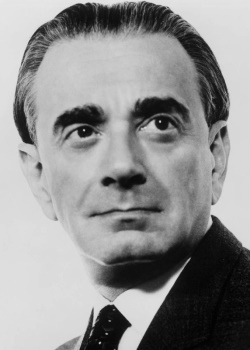 For his soundscape Rózsa employs two kindred primary themes. The dark, pervasive Main Theme consists of ever shifting four-note phrases, which never resolve, an idée fixe utilized by Rózsa drape the film with a grim, foreboding and sometimes sinister pall. Martha’s Theme speaks to her selfish, discontented, defiant, and rebellious nature. She was orphaned and taken in as a ward by her oppressive and imperious aunt, who after she murders, is replaced by Walter’s blackmailing father. Rózsa masterfully captures her very essence with her minor modal theme. The notes are heavy, angry, and defiant, and we discern that its restless repeating phrases never resolve as nothing will ever satisfy her. These two themes often join in an unholy synergy of dark purpose. Composing the language of love was complex, and challenging as Rózsa needed to express feeling for an interconnected dual romantic triangle; Walter and Sam both love Martha, but Walter’s love is unrequited, and Sam’s ultimately lost. Martha and Toni both love Sam, but Sam is conflicted, and unsure of his feelings. For Martha, Rózsa transmutes her theme into a major modal romanza full of ardor and passion. Toni’s Theme is quintessential Rózsa, its repeating eight-note phrases borne passionately by strings romantico, and the shifting to French horns with strings shifting to counterpoint. It exudes tenderness, warmth and optimism. The melody joins with lyrics by Edward Heyman for the theme song “Strange Love”, which producer Hal Wallis tasked Rózsa to write. Theme songs had come into fashion with films of this era, as they were broadcast as plugs for the film. Rózsa’s search took him back to his Parisian days and he decided to adapt the song “Strange Love” by Nic Tomay. But he was further instructed to use the song for rising blonde starlet Lizabeth Scott, as the studio wanted to promote her.
Scenes coded (*) contain music not found on the album. “Prelude” opens ominously atop horns grave declarations of the Main Theme, which launch an ascent accelerando by strings appassionato. We soar and crest at 0:13, flowing into the florid Love Theme as the film title displays. The opening credits unfold against the Ivers Estate beset by a rain storm and we are graced by an extended exposition of the theme. At 0:59 we segue into the film proper with “Fugitives” atop forlorn French horns with tremolo strings adornment. “Iverstown 1928” displays and Rózsa sow suspense as we see an adolescent Sam running stealthily through a train yard at night as two police search. At 1:19 Martha’s Theme joins as he whistles to alert her of his arrival. His whistling also alerts the police who move in as Martha opens a freight train car door. Sam closes the door, lights a candle, and Martha runs to his arms, frightened by the thunder. He shares food and says they will stowaway on the circus train that will soon pass. The tension slowly rises as they hear train car doors being opened. The police catch them, and assist the two kids getting off. But at 1:48 Sam pushes a policeman to the ground and runs away propelled by the Main Theme. The officers inform Martha that they are taking her back to her aunts carried by her dispirited theme. At 2:12 an oboe triste offers a variation of her theme as we return to the Ivers estate. The music from 2:21 was apparently dialed out of the film. I surmise it was intended to support Walter, Martha’s tutor mate, who snitched to alert her of Martha’s plot, and his father being rewarded by Mrs. Ivers, matriarch of the Ivers family.
“Hatred” offers one of the score’s most powerful and contentious passage. It reveals the police bringing Martha home. She is furious and hatred burns in her eyes. The butler takes her cat, and directs her to join her aunt in the study. Her aggrieved theme entwines with the Main Theme and carries her into the parlor, and it takes three commands to come closer to bring her face to face with her aunt, with her theme intensifying, rising in register with swelling anger each time. She tells Martha that she does not seem sorry, to which she replies with anger, that she is sorry, sorry she got caught, which earns her a slap across the face, which Rózsa punctuates at 1:08. Tension begins to slowly rise on an impassioned crescendo irato as her aunt tries to relate the futility of her defiance, and her power in this town, with her lacky Mr. O’Neil joining. At 2:00 the crescendo irato begins to swell with rage when her aunt insults her father and says she is trying to make an Ivers out of her. When she says that she is like her mill hand father, who did the best thing for her by dying, the crescendo crests at 2:15 as Martha snaps and screams repeatedly that she is going to kill her, forcing Mr. O’Neil to come between them. The fury subsides on a diminuendo and a grim, and oppressive musical narrative unfolds as Aunt Ivers sends her to her room to change, and then to join her for dinner. Martha’s dispirited theme carries her up to her bedroom where she finds Walter playing with her cat.
In an unscored scene the storm causes the lights to go out and they light candles. Lightning frightens Martha, and as Walter goes to close the curtains, Sam arrives. Walter obeys and lets him in and Martha is happy to see him. He says that he is leaving and thinks it is better for her to stay. She refuses, and insists she is going too. Sam gives in, but is told to wait while she gets some personal things from the attic. As she departs with candles we flow into “Murder” with woodwinds, tremolo strings and muted trumpets fostering tension with the Main Theme. The cat escapes and begins going downstairs. She dispatches Sam to retrieve her and he slides down the banister and falls off with a thud. This elicits Aunt Ivers to investigate, she comes out and hears Martha whispering for Sam to hurry before that witch hears them. Sam flees in the darkness out the front door and at 0:40 a woodwind borne crescendo of tension escalates as Aunt Ivers ascends the stairs. At 1:00 the crescendo shifts to strings as she hears and then sees the cat. At 1:09 a tempest of violence erupts as she begins beating the cat with her cane. A furious Martha’s Theme brings her down the stairs. She wrestles the cane out of Aunt Ivers hand, and then strikes her on the forehead, causing her at 1:27 to fall and tumble to her death supported by a cascading descent in register. In the aftermath, Walter is stunned, but Martha seems unaffected as they descend the stairs, carried by a molto tragico rendering of her theme. At 1:59 we segue into “Conspiracy” as the lights turn on, and Mr. O’Neil comes out and sees Aunt Ivers motionless on the stairs. A horrific string borne rendering of her theme supports as he goes to Aunt Ivers and declares she has no pulse. He looks at Martha with suspicion, and her theme becomes beleaguered, slowly swelling with desperation as she says a large man did this. Sha adds that he ran out the door, which is why it is open. He is unconvinced as she is holding Aunt Ivers’ cane. She quickly adds that she picked it up, and then forcibly adds, is that not right Walter! The music subsides at 3:03 as Walter, hesitates, but says it is true. The music darkens, and become grim as Mr. O’Neil instructs her to put down the cane, and go upstairs and wait while he calls the police. At 3:02 her theme shifts to aggrieved woodwinds as she and Walter argue over what she did. She becomes angry when he asserts that Sam was a witness and will tell. As she says Sam would never tell, the door opens to reveal Mr. O’Neil. Her theme shifts to strings tristi as he takes them aside and says they must tell the story exactly as they told him when the police arrive. He then takes her hand and says that she is now alone in the world, but that she will always have him and Walter. At 4:59 we switch to Sam waiting for the circus train, which comes into view empowered by a churning locomotive motif. It enters a tunnel at night, and emerges in daylight as script displays “Iverstown 1946”.
“Accident” opens with musical pleasantry (not on the album) and reveals the train passing, a railway car gate lifting, which allows a car to proceed. Sam, now 31, is driving with a sailor hitchhiker. He spots a sign, which reads; “Welcome to Iverstown – America’s fastest Growing Industrial City”. He keeps his eye on the sign as he relates that after eighteen years, he had forgotten about growing up here. He turns his eyes back ahead of him, slams the brakes, but it is too late as the car plows into a telephone pool. Rózsa supports with a musical crash. A sardonic musical narrative unfolds as a chagrined Sam inspects his car. At 0:19 woodwinds comici support waking up the sleeping sailor, and become mocking as the sailor departs saying next time, he needs to pick a driver who does not sleep. (*) “The Repair Shop” reveals Sam driving his car to a repair shop. He asks for service, and the owner says to drive into the bay, with Swing source music supporting. Inside four men are gambling playing craps. Sam decides to join, bets four and wins. He takes his winnings, grabs his clothes from the car, and stops by to ask the owner the repair cost. On the radio he hears that Walter O’Neil, who is running for district attorney, has taken ill, and so his wife, will speak for him. The owner shuts off the radio, saying its malarky and Sam discloses that he knows the Walter, but is surprised when the owner says that his wife is Martha Ivers, who inherited the estate after her aunt died. As he walks down the street a pleasant strolling motif carries his walk.
In (*) “Sam Meets Toni”, as Sam walks by a boarding house, a gorgeous blonde comes out the door and stops him dead in his tracks. Rózsa introduces us to Toni, who has just been released from jail. They acquaint and we see he is attracted to her, and she is receptive. They chit chat and as she waits for her taxi to take her to the train terminal. They part ways, and later she stops the taxi and asks for him to join her, which he does. She misses the train, and decides to stay overnight at the hotel, which he pays for. He then accepts her offer for a drink and they take a table at the hotel café. Source music offers a soothing ambiance. We find out they both came from broken families, with his father a drunk, and hers, an abuser. He says once his car is repaired that he intends to head west to find his fortune, and she decides that this is her destiny also as the depart the hotel. In a change of scene, Martha arrives home by a grim rendering of her theme and goes to her bedroom, where she discovers Walter passed out from drinking. She rouses him a we discover that he drinks as his psyche is tortured, as an innocent man was framed for the murder by his testimony. Testimony coerced by his greedy father, and she, the actual murderer. She says he needs to go away to heal, but he refuses and here we return to cue 4 at 0:52 “Frustration”. He takes her into a kissing embrace, yet she is rigid, cold, and unresponsive. An anguished rendering of her theme is rendered from his perspective as he relents and pours himself a drink. The music shifts to a Pathetique as he asks her what he should do with his love for her, why he should just abandon it, and throw it back in her face, to which she responds coldly, you tell me, Walter.
“Love” offers a beautiful romantic score highlight, where we are graced by an extended exposition of the Toni’s Theme. It reveals that they are sharing a suite, two bedrooms linked by a common bathroom. We see nascent romance growing as her theme shifts from a woodwind prelude to a string borne romanza. She is happy as she showers and at 0:41 the Love Theme blossoms on a solo violin d’amore. Afterwards she decides to visit and makes him an offer, a book for two cigarettes. He agrees, and receives a Gideon Bible, only to show here his copy, as each room has one. As she sits on his bed, he asks her not to leave, with the theme again shifting at 1:48 to solo violin. She is thankful that tomorrow she will join him for the drive to California. Yet at 2:08 the music begins to sour when she says she has something to tell him. Before he can respond, she says she was just released from jail. He says it does not mater, opens the bible to a passage he says she should read. The music regains its romanticism as he departs to take his shower. When he returns, he finds her asleep, and the Love Theme again blossoms, shifting at 5:07 to solo violin. He removes the bible, and then takes a comforter and gently covers her. We close tenderly on a diminuendo romantico as he shuts off the light and departs to the other bedroom. The next day, at 6:25 the music darkens as the bellboy lets two detectives into the room. They search the room and find no one, only a note. Rózsa escalates the suspense as the walk into the other room and loudly snap up the shades, which awakens Sam. After verifying his ID, they inform him that Toni has been arrested for a parole violation – failing to return to her home town as ordered. They depart over Sam’s objections with her suitcase.
“An Idea” reveals Sam picking up the newspaper as a grim musical narrative unfolds. He opens it and at 0:13 the music surges with optimism as he sees Walter’s photo on the front page and declares that he is about to do his old pal a great big favor. The vibrant and sunny narrative carries him into Walter’s office, where he meets his secretary, Bobbie, with whom he immediately begins to flirt when he sees she is very interested. At 0:36 we segue into “Foreboding” as we see Walter taking a shot and then advising Bobbie that he is ready to start the day. A foreboding Martha’s Theme supports as Bobbie enter and hands him a note with the name of a man that wants to see you. Rózsa sow tension as Walter becomes very nervous, but then he collects himself and goes out to offer a warm and happy greeting to Sam. The cue is stopped at 0:44 with just the dialogue of reacquaintance carrying the scene. Sam relates that he has become a gambler and then springs a personal request, that Walter intervene to get his girl Toni sprung for a parole violation. At this point Walter is buzzed by Bobbie and advised that his wife is here, and after hesitating, asks that she be sent in at Sam’s request. They joyfully hug and reacquaint, and we see Walter watching with envy. Sam says he has to depart and reminds Walter to help with his request. Now alone Walter comments on how unsettled she became with Sam. She deflects only to witness Walter’s paranoia surface as he expresses that Sam’s real motives are to blackmail them for money. She is dismissive and says grant his wish to free his girlfriend and we will see if he leaves or makes demands. Rózsa supports the tense dialogue with an extended, tense exposition of Martha’s Theme, which animates Walter’s fear of being blackmailed. Later, at 2:39, a narrative of joy offers a major modal rendering of Martha’s Theme, which carries her down the stairs to the library, where she happily greets Sam. As she offers a tour of the house each asks the other probing questions, with she evasive regarding her relationship with Walter’s father, and why she married Walter.
“Memories (Part 1)” is a score highlight, which offers exquisite romanticism. It reveals her taking him into her bedroom, which Rózsa imbues with an ethereal, twinkling refulgence. Wistful woodwinds join as he says he remembers the room, and that night when Walter let him in out of the rain, something she also recalls it with fondness. Her theme transforms into a molto romantico iteration as she holds his hand, informing us that she has never fallen out of love with him. At 1:05, as she drops all pretenses and caresses him, the melody is taken up by a solo violin d’amore. She lets it be known that she still has feelings for him, but it seems these feelings are unrequited with the music souring at 1:36 when he pulls away. We segue into (*) “For Old Times Sake” with her theme becoming aggrieved when she asks why he came here, and demands to know what he wants. He bristles at her demand and provokes her anger when he says she sounds like her dead aunt, her theme darkening with anger as she says; “Never say that again”. He counters that he will not be here long enough to repeat it because after Toni is freed, they will be driving to California. He asks if she objects, and she answers no, but the music informs us of the contrary as a yearning romanticism builds. She again puts her arms around him, and asks for a kiss, for old times’ sake. As they kiss, her theme, now full of romantic yearning, blossoms. Her eyes reflect love’s desperation, while his reveals that he indeed still has feelings for her. Yet, he pulls away and says goodbye Martha as muted trumpet tristi offer her theme.
In an unscored scene, after he leaves, she calls Dempsey’s Repair Shop and requests that he delay the repairs to Sam’s car, which the detective Walter tasked with investigating Sam overhears. Later in Walter’s office the detective debriefs Walter on Sam’s history as a gambler, and war hero. He then says that Dempsey was asked to delay repairs on Sam’s broken radiator. When Walter asks who made the request, the detective hesitates, but then says, your wife. This unsettles Walter and feeds his paranoia. He calls the jail and orders that Toni be brought to his office at 8 pm. (*) “Sam Waits for Toni” reveals him and a stranger waiting for a release. A foreboding Main Theme supports, joined by a quote of Toni’s Theme as he says he is waiting for her. We close on woodwinds comici as the stranger attempts to mimic a coin Sam is dancing on his hand. In an unscored scene, Walter offers Toni two choices; serve the full five-year sentence, or make a deal. When she asks what does she have to do, he turns to the detective, who walks to her as the scene goes black. Later we see her, luggage in hand departing the police station. Sam rushes to her and is ecstatic she is out. She however is unresponsive, and clearly conflicted. She asks for a drink, and Sam hails a taxi.
“Double Cross” opens with festive swing music supports the Italian café’s ambiance as they arrive and get a table. Spaghetti is served, but she says her stomach is in a knot, so he offers her some wine. The Main Theme supports with a musical narrative imbued with a pathos of regret as she insists, he hear why she was on probation. She says she was wrongfully convicted for theft. He brushes it aside, and says it does not matter to him. She remains nervous and an aggrieved crescendo crest at 1:32 with dissonant horns as she nervously looks around the café. At 1:49 an ominous Main Theme rears its ugly head as a man pulls up a chair and sits down. The music flows with a mounting tension as he orders Toni to get her jacket, as she says I do not want any trouble, Joe. Sam prepares to fight but is stunned, when Joe declares that he is her husband. Sam is enraged at her betrayal, and tells Joe that he can have her in spades. He attempts to leave, but Joe demands that wise guys need to be taught a lesson. Sam is now riled, and says inside or out, to which Joe replies, out. As they leave Toni grabs and calls Sam’s name, and he with disdain says, shut up. Joe follows Sam and signals four other guys at the bar to follow. Toni collapses at the table at 2:19 supported by a molto affanato rendering of her theme as the detective joins her. He toasts, saying sister, you did a swell job, now blow. She says yes sir, and her theme aching with sadness carries her exit. At 2:32 she emerges onto the street and her theme swells on a crescendo affanato as she sees a bloodied Sam being punched in the back seat as a car departs with the four men. At 2:56 ominous bass usher in a torturous rendering of the Main Theme, which supports a bloodied Sam crawling out of ditch. At 3:16 a crescendo irato swells as he wipes blood from his mouth and face, and we crest with rage when he opens his hand to display a badge; “Private Detective”. A beleaguered musical narrative carries his walk back, and the flagging down of a bus, which takes him back to Iverstown. At 3:26 the Main Theme swells atop a crescendo irato as he sees Toni heading for a bus. We crest with fury as he grabs her from behind and pulls her off.
At 3:45 we segue into “Tell The Truth”, where he forces her into an alley. A molto tragico narrative with the Main Theme now supports, swelling on a crescendo appassionato. He is furious, and she is crying as he threatens to beat it out of her. When she says she deserves it, he pulls back and she discloses her meeting with O’Neil and his threat to lock her up for five years unless she set him up. She says O’Neil does not want you in town, and had his private detective setup the ambush. We crest dramatically at 4:22 when she says that she has it coming. The music’s fury dissipates, and slowly brightens as he says that the only thing she has coming is a break. At 4:44 we segue into “Revenge” on a menacing Main Theme as he says he is going back to town, and that she should get on a bus and let him know where she is going. She begs him to leave with her, but he is intent on revenge. At 5:21, when she says, she is going with him, a solo violin d’amore emotes her theme as they walk away hand in hand. At 5:37 we shift to the Ivers estate atop a menacing musical narrative of revenge as Sam, forces the butler to take him to Walter’s room. He demands that Martha be brought down, and Walter directs the butler to bring her. Tension swells as Sam says they all need to talk, and Walter offers him a drink. As Sam pours, he sees Walter reaching for a gun in his desk drawer and slams the drawer on his hand at 6:23 with Rózsa punctuating Walter’s pain. He then punches Walter and knocks him out. We close with a foreboding Main Theme as Walter sits down at Walter’s desk, pours two shots of Scotch, and sees a report titled; “A Report on Sam Masterson”. He pulls Walter up and gives him a shot, while expressing his relief that he was not dead.
(*) “Aftermath” reveals Martha joining and distraught at Sam’s appearance. Sam advises Walter that he read the report, and then returns the badge of the private detective Walter hired. Walter comes clean, admits that he hired the detective and men to rough him up to get him to leave town. He says since you will not go, it is clear you are here to blackmail us, so please state your terms. When he says to whom he should negotiate, Martha says I will, and sets up an appointment in her business office. Sam accepts, but when Sam says, after this, it ends, or the next men he sends will finish the job. Sam returns his gun, and adds if he tries it again, he will kill him. Rózsa punctuates this threat with a dire, menacing quote of the Main Theme as Sam walks out. In the bathroom, Martha tends to Walter’s wounds and then bandages them. All pretenses are dropped as he reveals knowledge that she asked Dempsey’s to slow repairs so Sam could not leave. As he presses and she denies or tries to deflect, a tense musical narrative unfolds with interplay of her theme and the Main Theme. At a coffee shop, Toni tells Sam that she is curious about the O’Neil’s and their relationship with him. Martha’s Theme plays under the dialogue as she wonders if he is in love with Martha, and he rebuts by saying she sounds jealous. He plans to leave tonight, and the music lightens when she suggests to kill time, that they look into what happen to his family. He reviews the records, and then meets with Martha. She believes he is blackmailing her and Walter and so agrees to give him 50% share in the company. Sam is unsure why he has such leverage, but artfully plays along.
(*) “Sam Shares Good News” reveals him returning to the hotel room carried by a happy musical narrative. He says he has struck a deal, and that she brings him luck. He takes her into a kissing embrace and their Love Theme blossoms. She says she bought a new dress, models it, but the moment is lost when Martha enters unexpectantly, carried by her dark theme. After some taunts Martha apologizes, and the Love Theme joins when Sam says that they have a business engagement, but he will return for her. Now alone, Martha makes another pass, with her theme supporting her seduction. She is however rebuffed when Sam says this meeting is business only, as they depart for dinner. At the restaurant we see Sam and Martha slow dancing to source music and she continues to probe regarding Toni. As they return to their table, another slow dance unfolds and she continues her probing, and he admits that he has known her only a day and a half, but adds that he believes he still does not think he really knows her (Martha). As they depart, he sees Joe at the bar, he approaches and pummels him unconscious as he drew is pistol. He gives the gun to the bartender, and says he always pays his tab.
“Passion” reveals Sam driving up into the hills for a panorama of Iverstown. A bass clarinet sets a nocturnal ambiance, and as they get out and gaze upon the city, her theme shifts to a romantic iteration. He smells smoke, turns and see a campfire, and starts to put it out. She stops him, reminding him that when they were kids, they would come up her and light campfires. Wistful strings and nocturnal woodwinds support her reminiscences, but slowly at 2:06 we descend into sadness and regret as she always wished she could have joined him that night, adding that things would have been different had he not run away. She says that then I could have had you instead of Walter. She then asks why he did not stop her when she lifted the cane, know how much she hated her. He says; “I wasn’t there Martha”, and at 2:41 dire horns of retribution resound with her theme, joining in an unholy synergy with the Main Theme as his words shatter her. He says he ran away and did not see anything, and only found out tonight about your aunt and that man, the one they hung and that you and Walter killed. At 3:12 she grabs a small log from the fire and tries to strike Sam empowered by desperate strings appassionato. He disarms her as she struggles, and Rózsa unleashes a crescendo dramatico, swelling with romantic fervor as he forces passionate kisses, which she at first resists, but then finally succumbs with her theme blossoming as all impediments are stripped away.
(*) “Martha Opens Up” reveals her unburdening herself at last, informing Sam that the police, doctor and coroner all believed her story and that she slept well that night. However, she realized that she had replaced one tyrant with another as Mr. O’Neil took control of everything, and blackmailed her into marrying Walter. Until the point Rózsa has supported under the dialogue with her theme, aggrieved, and tinged with regret. Now she becomes desperate, tearful and begins pleading with Sam to not leave her again as she cannot go on living without him. A crescendo di desperazione erupts with fervor to support her pleads, and this time Sam succumbs and the join in a passionate kissing embrace, which dissipates on a diminuendo romantico. At the hotel, Toni gazes out the window supported by a pensive rendering of her theme. Martha and Sam drive up, and as he gets out, they kiss, supported by her theme rendered as a Love Theme. Toni is tearful, broken-hearted, and returns to her bed. Woodwinds tristi support Sam entering, joined by her aching Love Theme as she gives him permission to come in. He sees a still lit cigarette at the window, finds her crying, and deduces that she saw him and Martha kiss. He tries to explain his feelings regarding Martha, and his disappointment in himself. She asks that since I here as a rain check, should I leave. He says, that he needs to think, as he is just not sure of his feelings. Rózsa supports this pathos with Toni’s wounded theme, which yearns for what she fears is someone unattainable. Martha returns home to find a drunk Walter on the phone with Sam who he demands must come and see him. He hangs up, and they argue as he exposes her infidelity. She without blinking an eye turns and offers a rejoinder – “I am going to change as I would not want Sam to see me in the same dress twice”. Back at the hotel Sam finds Toni is dressed and going to leave on a bus. She says she sees that it is over, and offers him advice, to leave her, and leave this town as you are going to get hurt. He offers her money, and she says no, I want a clean break.
Sam arrives at the Ivers estate and Walter greets and escorts him to Martha’s room. We witness Walter’s bitterness as he again makes veiled threats of murder to Sam as Martha pleads for Sam to go. Walter calls out all the low-end jobs Sam worked, and how he failed at them all. Sam counters that your father forced her into this marriage, and asks how long to you expect her to be paying off, and Walter answers, forever. He then asserts that Martha will ask you to kill me. Adding she got me to lie as we both sent an innocent man to the gallows. The argument surges with anger and we flow into “Unmasked” as Martha pounds her fist and yells; “Let go!” He turns to Sam, its either you or me, and if its me, you better do it now. A dire, repeated Main Theme carries Walter’s drunken gait away. The theme shifts to anguish as he says, I am sick inside, and pleads with Martha to help him, to no avail. He stumbles away and at 1:27 a swirling descent of string carries his rolling fall down the stairs, landing the same place as Aunt Ivers. Sam and Martha run to the balcony carried by a dire, repeating Main Theme. At 1:45 we segue into “Conflict” empowered by a malevolent Martha’s Theme as she grasps Sam and seduces him to murder Walter, saying; “Now Sam. Do it now Sam. Set me free. Set both of us free. We’ll say he was a drunk, fell down the stairs, and fractured his skull.” At 2:00 Sam begins his descent carried by a crescendo dramatico. He steps over him, kneels and the crescendo dissipates at 2:25 with astonishment on Martha’s face as Sam carries Walter to a lounge chair in the study with a grim Martha’s Theme replete with elegiac horns supporting. Martha joins and says; “I thought you loved me? He says I thought so too”. She counters; “Now you hate me.” To which he counters; “No, I am sorry for you.” He admonishers her for no longer knowing the difference between right and wrong. When she counters that you killed others, he looks her in the eye and offers a searing rejoinder; “I never murdered”, punctuated at 3:29 by muted trumpets. A grim Main Theme carries Sam to Walter who he wakes with a glass of water.
At 4:03 we segue into “Retribution” atop horns malevoli declaring Martha’s Theme as she retrieves Walter’s pistol from his desk drawer. Walter looks at Sam and says you had your chance, but instead carried me here. Martha says without remorse that killing her cruel aunt and that drunk was right. She then boasts of her business achievements, each one punctuated by dire quotes of the Main Theme. We shift back to her malevolent theme as she says killing both of them was no crime as neither deserved to live. Sam response makes an impression on Walter; “You said the same thing about Walter”. He says goodbye Martha, and a 5:00 grotesques dissonance supports her pointing a pistol at Sam. Her diabolic theme supports as she tells Walter he cannot leave with knowledge of what they did. I’ll say you barged in, threatened them, and that I shot you in self-defense. She adds, that’s legal right? But Walter just offers a wry smile and remains silent. Sam sow doubt in her mind when he says it is a perfect alibi, if Walter agrees. At 6:00 the Main Theme rendered as a crescendo dramatico supports as Sam calls her bluff, walks out and departs saying that he is sorry for both of you. At 6:29 she drops the gun, and runs to the window carried by her desperate theme as Walter picks up the pistol and places it in his suit pocket. A foreboding Main Them joins when he asks if she loves him? She says she hates him, and that she dropped the gun because she was afraid you would not support me. At 7:38 her theme warms when he consoles her, and says things will be alright, as though nothing ever happened. The theme crests at 8:10 when he asks for a kiss, but we see it lacks passion. At 8:26 she says; “You do believe me.” But his eyes are cold, and the music darkens as he pulls out the pistol.. She looks down sees the gun, and at 8:36 her theme swells on a crescendo di orrore as she reaches down, pushes the pistol into her chest, and then at 8:51 pulls the trigger. A wailing solo violin supports Sam’s voice in her mind saying; “Ivers. Ivers. Ivers”, and she responding; “No, Martha Simpson.” She falls dead, and a molto tragico reprise of her theme brings Sam back running to the front lawn, where he sees in the open window Walter kill himself. Back at the hotel, Sam packs his suitcase and discovers Toni. She says that she missed a bus once and got lucky. She adds that she wanted to see if she could be lucky twice. We switch to Sam’s car and as they pass the Iverstown sign. Sam says don’t look back like Lot’s wife. She asks whose wife, and he answers, with a smile, Sam’s Wife. We segue into “End Title” as she smiles, snuggles, and says Sam’s wife. We conclude with a reprise of the Love Theme, with fanfare heralding “The End”.
The technical team utilized the original acetate tapes preserved in the Paramount vaults. They were able to transfer and master nearly fifty minutes with only a handful of missing cues. The stereophonic audio quality is good and the album offers a wonderful listening experience. Fans always relate how magnificent Miklós Rózsa’s music was for biblical epics. I would add that I believed he also excelled in the Film Noir genre, a genre where he often revealed a profound and intuitive understanding of human nature, and mastery of his craft. Martha Ivers was a truly despicable, deplorable, and irredeemable woman, with an amoral diabolical nature that would earn the Devil’s envy. What is so remarkable about this score is the pervasive interplay, and entwinning of the Main Theme and Martha’s Themes, which often join in unholy communion. Like a cinematographer manipulates light to create mood, Rózsa does the same thing from the first notes of the film, draping it with dark, sinister, and foreboding auras. Also remarkable is the musical catharsis achieved when he transmutes Martha’s malevolent, minor modal theme into a fervent major modal Love Theme, full of passion and ardor. Sam realizes in the end that to love her is to suffer the moth’s fate flying into a flame. The Love Theme for Toni and Sam is exquisite, offering pure and lyrical romanticism of the highest order. Also impressive is how Rózsa catalyzes the passion, anger, hate and love of the actors with breath-taking melodramatic crescendos. I believe that in the end, the story succeeds because the music synergistically intensifies and enhances the film’s narrative and the actor performances. Folks, this score offers Film Noir at its finest, as well as Rózsa at his finest. I highly recommend this quality album as essential for your collection.
For those of you unfamiliar with the score, I have embedded a YouTube link to a six-minute suite: https://www.youtube.com/watch?v=ombOP3XgOYk
Buy the Strange Love Of Martha Ivers soundtrack from the Movie Music UK Store
Track Listing:
- Prelude/Fugitives (4:06)
- Hatred (3:11)
- Murder/Conspiracy (5:30)
- Accident/Frustration (2:09)
- Love (7:36)
- An Idea/Foreboding (3:00)
- Memories (Part 1) (1:49)
- Double Cross/Tell The Truth/Revenge (7:14)
- Passion (4:03)
- Unmasked/Conflict/Retribution (9:37)
- End Title (0:14)
Kritzerland KR20022-9 (1946/2012)
Running Time: 48 minutes 29 seconds
Music composed and conducted by Miklós Rózsa. Orchestrations by Eugene Zador. Recorded and mixed by XXXX. Edited by XXX. Score produced by Miklós Rózsa. Album produced by Bruce Kimmel and Lukas Kendall.
-
November 23, 2025 at 10:17 amIs Blackmail Illegal in Texas? - Texas Dallas Criminal Immigration Lawyer

Shop at the Movie Music UK Store

Member of the

 MOVIE MUSIC UK