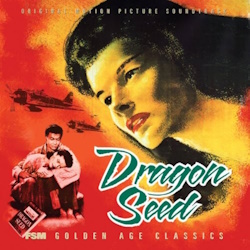
DRAGON SEED – Herbert Stothart
 GREATEST SCORES OF THE TWENTIETH CENTURY
Original Review by Craig Lysy
MGM achieved stunning commercial and critical success adapting novelist Pearl S. Buck’s “The Good Earth” 1937 to the big screen. As such they decided to purchase the film rights to Buck’s subsequent novel “Dragon Seed,”, which was also set in 1930’s China. Pandro Berman was placed in charge of production with a $3 million budget, Jack Conway and Harold S. Bucquet would share directing duties, and Marguerite Roberts and Jane Murlin would write the screenplay. For the cast, Katherine Hepburn would star as Jade, joined by Walter Huston as Ling Tan, Aline MacMahon as Ling Tan’s wife, Akim Tamiroff as Wu Lien, Turhan Bey as Lao Er Tan, and Lionel Barrymore providing narration.
The film is set during the Second Sino-Japanese War circa 1937 and unfolds in a small town located outside Nanjing China. They witness the horrific “Rape of Nanjing”, the Chinese capital by the Japanese, one of WWII’s most horrific atrocities where 200,000 people were slaughtered and 80,000 Chinese women and children raped. The film’s narrative explores how people reacted to Japanese brutality, with some choosing to collaborate, while most chose to acquiesce and adopt subservience. One woman, Jade, wife of Lao Er Tan, however is defiant, and refuses to submit to her husband’s will. She rises to become a member of the resistance and ultimately inspires her fellow villagers to regain Chinese pride and fight for the motherland. The film was warmly received by the public; however, its lavish production costs could not be overcome and it incurred a loss of $281,000. Critical reception was scathing, criticizing casting, and a poorly written, mechanical script, which induced boredom and unintentional laughter. Never the less the film received two Academy Award Nominations for Best Cinematography and Best Supporting Actress.
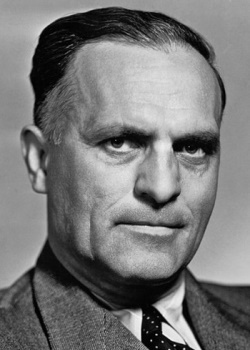
Co-Director John Conway had enjoyed his collaboration with Herbert Stothart on two prior films; “Viva Villa!” in 1934 and “A Tale of Two Cities” in 1935. Stothart had also acquainted himself well scoring MGM’s first Buck adaptation “The Good Earth” in 1937, as well as composing “China: A Symphonic Narrative”, a tribute to Madame Chiang Kai-shek, wife of Nationalist Chinese leader. And so, with MGM Studio support Stothart was offered the scoring assignment. Stothart understood that given the setting in China, that he would once again have to infuse his soundscape with orientalism, utilize a pentatonic idiom, and augment his orchestra with indigenous instruments, including erhu, guzheng, gongs and drums.
 For his soundscape thirteen themes were employed. The Valley Theme speaks to the tranquility and beauty of the Tan Valley. Stothart weaves a canzone, an idyllic musical narrative, where solo and a choir of woodwinds gentile gently carry us over the verdant rice fields. Conversely, the Turmoil Theme speaks to the loss of the serenity, and idyllic life of the Tan Valley. It is also woodwind borne and kindred to the Valley Theme, however Stothart shifts it to a minor modal articulation, with a descending contour draped with a pervasive sadness. Ling’s Theme supports this kind, gentle and wise man. Stothart offers a meandering flute tenero that wafts like a spring breeze, joined by erhu. The melodic line shifts among the woodwinds, some in counterpoint and we realize that his theme is kindred to the valley. Indeed, he and the valley are one in spirit, with a shared fate.
Jade’s Theme embraces her rebelliousness, willfulness, and unwillingness to conform to the traditional, restrictive gender roles for women. Like a man, she speaks her mind and offers opinions, which shocks the women of the household and elicits the men to exhort Lao Er to control and beat his wife. Stothart offers a musical narrative of determination led by a plucky solo clarinet, col legno strings and a march-like cadence, which eschews the usual feminine sensibilities. The Intimacy Theme speaks to the quiet, intimate times when Lao Er can lower his guard and the traditional patriarchal role of a husband, which requires dominance and control in front of the family and public. Alone, he is soft, tender, and able to express his feelings. The theme is led by solo oboe tenero with a retinue of kindred woodwinds, and string tresses. The theme’s usage often serves as a prelude, which usher in the Love Theme. Their joining is exquisite and offer some of the score’s most beautiful moments. Love Theme speaks to the love of Jade and her husband Lo Er. Stothart offers a classic romanza borne tenderly by yearning strings romantico. I believe that the theme, is expressed from Lao Er’s perspective as he truly loves her, yet complains to his brother Lao Ta that she is untamed like the west wind and beyond his control. Her rebelliousness, opposition to tradition, and unwillingness to conform to the traditional, restrictive gender roles for women are vexing to Lao Er. Yet his love is true, and when the theme’s melodic line shifts to solo violin d’amore, we achieve, sublimity. The Ancestor’s Theme speaks to one of the greatest joys of Chinese culture, bearing children. This sustains the family line over time and serves as a vital link between past, present and future. The joyous theme unfolds as a beautiful flute led passage with kindred woodwind adorned with florid string tresses.
Lao San’s Theme offering a playful and carefree melody borne by a meandering flute orientale with soft percussion esotiche. It reflects his aloofness and refusal to get dirty working in the muddy fields. His theme darkens as the story develops to support his transformation into a blood lusting monster. The Men Chiang Lullaby offer a sweet, and tender lullaby sung by Jade and her mother-in-law. The Travel Theme fully embraces orientalism in its rhythms and orchestrations. It offers an energetic piece by woodwinds animato, spritely strings, and percussion esotiche, which carry Lao Er on his travels. The score required nationalistic music, as such Stothart interpolated two national anthems; “San Min Ch-i” (The Three Principles of the People) by Che’ng Mao-yün for the Nationalist Chinese and “Chee Lai” (March of the Volunteers) by Nie Er for the Communist Chinese. Both are forthright, proud, exude patriotism and empowered in march form, often buttressed with chorus. For our villains, the Japanese Theme offers ominous four-note declarations by horns malevoli, which speak to the brutal, savage, and monstrous atrocities of the Japanese, who considered Chinese people as inferior.
In Chinese culture the family name precedes the personal name, and so I refer to the characters of the Tan family by their trailing personal names; Tan Ling, Tan Lao Er, etc. The opening two cues are score highlights, in which Stothart masterfully establishes the film’s tone and setting. “Opening Title” reveals the MGM lion logo empowered by trumpets austere, which from the film’s onset portend grim times. At 0:11 we flow into the opening credits as Stothart graces us with exquisite pentatonic orientalism, joined by women’s chorus, which perfectly establishes the film’s setting. At 0:38 sweeping strings romantico usher in a grandiose statement of the Love Theme. At 0:52 San Min Chu-I (The Three Principles of the People), the Republic of China national anthem joins, rendered solemnly as a marcia maestoso buttressed by mixed chorus.
At 1:13 we segue into “This Is the Valley of Ling”, a beautiful set piece, where narration informs us of an idyllic valley with rich farmland. We are informed that Ling Tan and his family dwell here and are much respected. We see Ling and his two eldest sons planting the rice stalks in the muddy waters. Stothart supports with his Valley Theme, which drapes us in Chinese auras and offers an idyllic musical narrative adorned with pentatonic woodwind orientale figures, ehru, plucked harp, and exotic percussion. The music becomes happily playful as his wife, calls him to the house and lectures him that his is no longer a young man and that he should let his sons plant the fields. Their banter informs us that they continue to be much in love. “The Youngest Son” reveals the arrival of Ling’s youngest son, Lao San, who rides in on an ox. Stothart introduces us to Lao San’s Theme, which offers a playful and carefree melody borne by a meandering flute orientale with soft percussion esotiche. It reflects his aloofness and refusal to get dirty working in the muddy fields. At 0:28 the melody becomes spritely as the elder brother’s tease Lao San a lazy. He artfully deflects their criticism and at 0:52 an accelerando propels his ride past them and into the house courtyard. At 1:07 the music is dialed out of the film, leaving dialogue alone to carry the remainder of the scene. Second son Lao Er relates is confusion to Lao Ta that women to not act or think like men. He complains that Jade, his wife of four months, is untamed like the west wind and beyond his control.
“Flute Addenda” reveals Lao Ta and Loa Er washing up in the pond before dinner. Lao San shows up playing his theme on his flute and the brothers begin splashing him. Lao San smacks the water with a handled bucket and then angrily moves out of reach. In the courtyard the Lao San’s Theme plays under the dialogue as mother tells Ling that it is time Lao San married and brough grandsons into the house. Father deflects, and mother declares that she knows he is his favorite son, which is why he indulges him. Loa Er is displeased when mother brings him a towel as Jade again has left the house. In “To Find Jade”, Lao Er is angry, and says perhaps he should start beating Jade to end her wandering ways. He sets off to the village to find her propelled by woodwinds energico, spritely strings and syncopated percussion of the Travel Theme. He grabs a small branch to use as a whip as he enters the village. At 0:31 a decelerando brings him to a window of his third cousin, joined by the Love Theme as he searches for Jade. At 0:41 a distorted, and disconsonant rendering of the Main Title misterioso supports Loa Er’s discovery by his cousin’s wife. She is aggrieved and unfriendly, saying Jade is not here. After he departs, she harangues her husband for not accepting 30 silver pieces for Jade to marry their son. Now she surmises that their will be trouble between the two over Jade.
“Home From the Meeting” reveals Lao Er arriving at a rally in the town center where students exhort the crowd to prepare to defend the motherland against Japanese aggression as he shows horrible photos of atrocities committed by them. Lao Er searches for his wife, and finds her when the student asks is anyone willing to stand up, and Jade stands up and says, I am. Lao Er tells her, come home, I am hungry, and the crowd mocks her saying she should be home cooking for her husband. The bustling musical narrative that carried Lao Er to the village, now carries him home, with Jade walking three steps behind. As they walk through atop the rice pond bund embankments. He lectures her on his humiliation of not having her at home serving him, and having to retrieve her from the village. She counters that these are not the ancient times, and that she must have her freedom. He threatens to beat her, and she counters that she has done nothing wrong. At 1:01 a harp glissando and followed by a xylophone glissando reveal him flustered, and retracing his steps as he went down the wrong path. At 1:08 the music shifts to strings romantico when he stops and asks why she did not choose me over my fourth cousin? And if the choice was again offered, would she pick me? She says both of you have two arms and two legs, so what difference does it make. 1:31 we shift to a tender rendering of the Love Theme as he frets that he cannot find the words to express his feelings. When they agree to speak of their feelings tonight, they hold hands and reconcile, with the Love Theme blossoming on strings romantico at 2:14. They arrive home, he releases her hand, and walks into the house at 2:41 carried by the bustling travel theme. In front of the family, he orders Jade to serve him dinner in the courtyard, and then clean all the dishes since she did not cook. She bows her head, and says yes husband, as Lao Er regains his face.
“The Magic Pictures” reveals discussion between Ling and his third cousin over the disposition of his land after he returns the earth. Ling says his eldest will answer, and Lao Ta says he will ensure the land fills the bellies of all three families. Ling turns to third cousin and says he can die a contented man. Jade then breaks tradition by joining the discussion (women may not engage in discussions as this is the domain of men), and says to Ling that he would not be so content if he heard student speak of the Japanese atrocities. Jade’s Theme is introduced, and offers a musical narrative of determination led by a plucky solo clarinet, col legno strings, and a march-like cadence, which eschews the usual feminine sensibilities. The family is shocked at Jade’s violation of gender roles, and Lao Er immediately jumps in and explains what they saw with the magic pictures (a film). Ling is not impressed as the magic pictures have been wrong before. The peaceful and idyllic Valley Theme joins as he says that men of decency cannot be harmed by evil.
“My Shadow” reveals Ling showing third cousin to the gate and musing about ridiculous claims that the earth is round. As Ling returns his theme is introduced on a meandering flute tenero, joined by erhu. The melodic line shifts among the woodwinds, some in counterpoint and we realize that his theme is kindred to the valley. At 0:20 the Turmoil Theme joins on woodwinds, shifting the Valley Theme to a minor modal articulation, with a descending contour draped with a pervasive sadness as Ling frets that a man on the other side of the Earth farms his land. His wife relates that she does not like Lao Er’s wife, but Ling gently admonishes her, saying she is just like you, and just as Lao Er will never tire of her, I never tire of you. At 1:51 we segue into “I’ve Found You Waiting” a beautiful score romantic highlight. Lao Er goes to the bedroom and is please to find Jade awake and waiting for him. The woodwind borne Intimacy Theme weaves its tender tresses joined briefly at 2:00 by her them on oboe as sit together and talk. The Intimacy Theme resumes as we see Lao Er is enjoying sitting by her side. At 3:01 he asks about her feeling for him and a molto romantico rendering of the Love Theme unfolds on a solo violin d’amore. He asks if she has everything she wants, and she asks for a gift. When he asks what, she hesitates, and at 3:48 the music sours as she says earrings, and gets up. He says he will buy them tomorrow, and asks if he has made her happy. She says yes, but then says no. She says she would rather have a book. He is shocked, because reading resides within the purview of men. She says she was taught one word at a time by her brother. The Love Theme resumes as he says that he never imagined a woman reading in his house. She says there must be changes and he counters that the old ways worked for his parents. But Jade again argues asserting that they are the old, and that we are the new. He agrees to buy the book, and she asks if he is angry. He says he could not be angry with her, and that instead, he just does not understand. At 4:57 it is the next day and we segue into “A Farmer Buys a Book”. Stothart drapes us with orientalism as woodwinds animato, spritely strings and wood percussion offer the Travel Theme to support Lao Er walking to the village. At 5:24 the music softens, and shifts to erhu as he enters the shop to speak to his brother-in-law Wu Lien. He is directed to the house quarters in the back where he finds Lien. They reacquaint and Lien suggests the book “All Men Are Brothers”, as it is a morality tale.
“Student Uprising” reveals that the pleasant moment is shattered by the store clerk who alerts Lien that the students have returned. Lien is upset by their harassment and goes out to deal with them again. The communist student leader demands that he either stop, selling Japanese merchandise and support the motherland, or we will brand you a traitor. Lien says as a merchant he sells these goods as this if what his customers want. This enrages the leader and he orders his fellow students to teach him a lesson. They smash the shop windows, and pillage the store, tossing all the merchandise in the street, where they light a great bonfire. The leader then declares to the people gathered that Wu Lien is a traitor to the motherland who loves his cash box more than his country. He orders all the other merchants to purge their Japanese goods and shun Wu Lien or suffer the same fate. Stothart unleashes a maelstrom of violence propelled by the Communist anthem “Chee Lai” rendered as a furious marcia di distruzione. At 1:08 a diminuendo of disbelief and uncertainty follows as the communist march recedes. When fellow merchants shun Lien, he confides to Lao Er that he is uncertain on how to proceed and must carefully weigh his options. At 1:40, Jade’s Theme closes the cue as we see her happily examining the book gifted by Lao Er.
“Teach Me to Read” offers and intimate romantic score highlight. Lao Er enters the bedroom and finds Jade reading. She invites him over and they snuggle as she reads to him from her book. Stothart entwines the Intimacy Theme and a happy Jade’s Theme to support the tender moment. He is clearly amorous, but she keeps sliding away, only to have him again snuggle. He persists, his intentions clearly obvious to her, and she acquiesces. As she blows out the candle at 2:25 the Love Theme blossoms on violin d’amore for an exquisite performance as they drop all pretenses, with Lao Er affirming his undying love, a love he says is greater than his love for his parents. The gift of the book, and his confession elicits her saying that at last you understand what I think and feel, and for that I shall give you many children, tend to your house, and be contented. The scene closes with they joining in a kissing embrace. At 3:24 we segue into “We Shall Be Ancestors”, which reveals the brothers and farmers working the fields of Ling’s plantation. We are again graced by the Valley Theme. Lao Er takes a break to get a drink of water, and at 3:35 Jade’s Theme carries her arrival. He is happy to see her and runs to her. The banter and she slowly reel him in with clues that explain her happiness. At 4:01 the Ancestor’s Theme unfolds as a beautiful woodwind bridge adorned with florid string tresses that usher in at 4:28 the Love Theme, which blossoms with her revelation that she is with child. He is joyous, declares that they will be ancestors, and that this is the happiest day of his life.
In “The Flying Birds Bewilder Them” the intimate moment is shattered by the approach of a Japanese bomber squadron. One drops a single bomb, which causes a massive explosion. Music enters as an agitato crowned by dire horns as they gather around a fifty-foot crater. A forlorn musical narrative unfolds as the villagers struggle to absorb what has happened as they see fires and smoke plumes rising from the capital Nanjing. We close at 1:15 atop Ling’s agitated theme as Lao Ta volunteers to run to the town and discover what has happened. “Annihilated Village” reveals Ling’s relatives arriving with horror stories of the bombing, which destroyed large swaths of the city, including his shop. He says that many died, and they are appalled by the ruthlessness of the Japanese. Ling says that he needs to see this with his own eyes and sets of with his sons supported by a grim and ominous musical narrative, empowered by an aggrieved Ling’s Theme. At 0:34 horns writhing in pain sound to support a woman discovering her dead husband in the rubble. Lao San cannot bear to watch. His father sympathizes, but coaxing him to assist. We close with a toiling, despondent musical narrative of woe as we see a long winding line of villagers fleeing the city for Ling’s plantation.
“Grandfather Speaks” reveals that Ling, the patriarch of the family announces that what happened today will happen again. He has decided to stay as his fate is tied to the land. Lao Ta and Lao San agree to remain, however Lao Er shocks the family saying he will flee. He then shocks them again by say he flees not out of fear, but to protect his child. The news of Jade’s pregnancy brings joy to Ling, who gives Lao Er his blessing to leave over the objections of mother. Stothart provides poignant interplay of the Turmoil Theme and the Ancestors Theme, which speaks to Lao Er’s conflict between duty to his family, and duty to his wife who is with child. “They Seem to Have a Plan” reveals Ling accepting his father’s blessing with Jade’s Theme supporting. The next day the music bears sadness as Jade watches the unending line of people fleeing the city. At 0:54 we shift to an oppressive march, with a toiling narrative of woe as we see men transporting heavy metal factory gears and equipment. At 1:32 a buoyant Ling’s Theme supports his gracious offer to the leader to accept his hospitality and bed down for the night on his land. The leader is grateful, and orders camp be set up. We close on the Turmoil Theme as we see the valley’s verdant fields now alight with desperate people huddled around campfires. At 2:25 we segue into “These Are the People” we see Lao Er and Jade strolling through the camp as a man leads a men’s chorus is singing a solemn rendering of the Communist anthem “Chee Lai”.
The chorus fades into the background as Lao Er and Jade inform Ling that they will be joining the resistance as they are strong and full of courage. When the three approach the leader, he asks where are you going. He says a thousand miles up into the mountains where they will make guns and bullets for the army. When asked where is the army, he replies fighting to keep the Japanese from you. Lao Er and Jade offer to join, and the leader welcomes them.
“Rain Came” reveals the onset of rain, which sends Lao Er and Jade fleeing for cover under a tree. Stothart supports the storm and run with an impressionist narrative. Under the tree our lovers discuss the future of their son supported by a tender violin borne rendering of the Intimacy Theme. To commemorate their son’s roots, they etch the tree bark. In the morning, we segue at 1:03 into “Take Your Places”, a very moving score highlight, which opens with muted horns and the Chai Lee Theme as the leader signals that they will soon be moving out supported. Stothart evokes the sadness of parting with Ling’s Theme as he escorts the two out and asks that they send notice when the child is born; with a red cord indicating a boy, and a blue cord a girl. Lao Er and Jade are sad that they could not find mother to say goodbye. We see in Ling’s eyes uncertainty as to whether he will ever see them again. At 2:13 we segue into “The March Begins” as the leader hand Lao Er his pull loop rope to pull the heavy cart with machinery. Jade takes his backpack and decides to walk by his side. A solemn, yet determined choral rendering of the “Chee Lai” anthem propels their departure as first Jade and Ling’s eyes lock, and then Lao Er and Ling’s. Their eyes speak volumes as they turn away. The camera pans the entire family and third cousin as they watch the departure. At 3:03 the anthem’s melody is joined by men’s chorus, for a forthright, solemn and traditional rendering.
The song slowly fades aways as the column disappears on the horizon. At 3:33 we segue into “I Miss Them” as Ling finds his wife washing clothes in the stream. He tricks her into revealing that she indeed saw them depart. She says she already misses them as she lovingly cradles Ling in her arms to examine a mosquito bite on his neck. He expresses his undying love for her, which deeply moves her. Stothart supports the intimate moment tenderly under the dialogue with the Turmoil Theme, which bears both the sadness of parting in its notes, but also the safe harbor of love. At 5:13 we segue into “The Enemy Came Closer” atop foreboding strings, which usher in the Valley Theme as narration supports a montage of farmers harvesting the wheat fields of the valley. The Turmoil Theme supports, and is tinged with apprehension as we are informed that day by day the Japanese bombers bomb the city as the sound of artillery explosions move ever closer to the valley. The music progressively becomes grimmer atop dire horns as the rains come early wreaking havoc with the harvest and a mounting fear as the Japanese conquer the Nanjing. We close with grim uncertainty as the planes disappear from the sky, and a pall of unsettling silence descends over the valley.
In an unscored scene Ling and the valley farmers meet to decide on how to respond to the Japanese. Some say flee as they have no guns to fight, while Wu Lien says stay and learn to live under them. Ling decides that he will seek a way to submit and live under the Japanese, while maintaining his pride and dignity. He heads out with the elders and wait to greet as a massive Japanese regiment with tanks approaches. The car with the Japanese commander stops, and Ling greets him, saying that they a farmers and men of peace. The commander is curt, and demands that he be shown to the inn as he drives off. At the inn the commander demands service for his men as the farmers are lined up against the back wall. They serve tea, which the commander spits out. He demands wine, and when they say they have none, he demands their women. Third Cousin’s son panics, tries to run away, and his shot dead. Ling advises the commander that they have wine in their homes and that they will bring their women to serve it. In “Get to Your Homes”, outside Ling says, get to your homes and an urgent and ominous music narrative carries everyone’s run. At home Ling assembles the household and says they must flee. Before they can, they are alerted of an approaching Japanese patrol. Stothart sow a mounting terror and desperation as they all escape by a hidden door in the back and flee into the forest. Ling, his wife and Wu Lien’s obese mother remain. They hide Wu Lien’s mother, and crawl into the attic, as a soldier hops the wall, shoots the dog, and opens the gate. They pillage the house and while searching the courtyard, find the old woman and torture her. In the forest Lao Ta leaves to surveil the Japanese, instructing Orchid to stay still and hide until he returns.
“Orchid Ravished” reveals her alone and hiding with her infant and young boy. A menacing musical narrative unfolds as they hide in terror. At 0:26 quotes of “San Min Chu-I” support as she comforts her boy. The baby cries, and the Japanese sergeant turns and says if there is a baby, there must be a woman and they head towards them. As they move ever closer, the music becomes increasingly menacing. She gives the infant to her boy, and then crawls off to pull the soldiers away. They spot her, smile with a leering lust, and at 1:10 she flees, propelled by desperate flight music. She falls with a sprained knee, and at 1:35 the music swells with menace as they surround her, and then gang rape her. At 1:51 we segue darkly into “Sounds of Death” with a grim Turmoil Theme supporting Ling and his wife’s descent to their ransacked house. A narrative empowered by dire horns join with strings full of apprehension unfolds in a long exposition as Ling surveys the house. At 2:51 a loving Ling’s Theme supports as he comes to comfort his wife, who weeps when she discovers that her wedding gifts are gone. Tension mounts as he takes her to the courtyard, joined at 3:31 by an erhu led lament when they find Wu Lien’s mother’s dead body. At 4:35 the music darkens when they hear a door open, and are fearful as someone joins. They are relieved when they find it is Lao San. He runs to them sobbing and distraught, saying he was separated from the rest and found the streets of the city running with blood and strewn with the corpses of women who had been raped. At 4:56 strings and woodwinds affanato emote an aching narrative of loss and devastation, which support the arrival of Lao Ta who is carrying his dead wife Orchid, followed by his son carrying the infant. Lao San can take no more of this and declares he is leaving to join the resistance. He walks out and Ling dispatches his wife to assist him for his travels. At 6:45 dire horns sound and usher in a lament as Ling and Lao Ta complete the grave of his beloved wife. At 7:16 strings usher in the Turmoil Theme as Ling orders Lao Ta to accompany his brother so as to watch over him and keep him safe. He dutifully obeys and departs as Third Cousin shares Ling’s pain saying that they have both lost sons. At 7:52 we segue into “Sign of Wu Lien” atop the horns sinistri of the Japanese Theme. He hears gun shots from his shop, peers out, and sees villagers dying from a firing squad.
“Chinese Quisling” reveals Lien greeting the Japanese commander at his shop. He gifts him fish in oil and advises that he hates no one, and would like to do business. The commander is pleased to have secured a collaborator who can read and write. He declares if you respect and work with us in peace, you will find us gracious. They depart, hoist a Japanese flag at his shop front, and orders him to report to his residence tomorrow, as he will be living in the Japanese compound. Lien confides to his clerk that he is a man of peace and only wishes to continue his business. Music enters ominously, draped with sinister Japanese auras as he turns and finds the clerk gone. He then hears a tearing sound, goes outside and finds the flag shredded. In terror he takes it down and runs inside. At 0:27 we shift to Ling’s Valley empowered by a dire and sinister Japanese narrative as the take all the fish, and livestock. They tell Ling that his people are conquered and will plant and harvest the crops as directed. When he says that you leave us no food, he answers, live off your fat. When he says without my ox, how will I plow, and the commander answers, you look strong enough. His wife is incensed, but Ling tells her that if he resists, he loses his land.
“Through the Elements” reveals narration for a montage of the rebels struggling with great hardship to transport their equipment, through monsoon storms, forging rivers, and pulling hard up snow swept mountain passes. Stothart supports with a toiling “San Min Chu-I” rendered as a Sisyphean narrative of woe. We close on Jade’s Theme as Jade and Lao Er pause, and we are told her time is close at hand. At 1:32 we segue into “Some Met Death” where narration supports a new montage as we see deprivation, starvation, desperation and death has come to Ling Valley. We open with Japanese soldiers marching past three hung men. Ling, his wife and his friends all forage for roots and lost kernels of grain under the snow. The Turmoil Theme joins with the Japanese Theme for a torturous musical narrative. At 2:29 dire horns sound as the Japanese cook tosses waste and rotted food on to the street below, with people fighting like animals for the rancid, inedible scraps. Ling’s Theme carries him home with a root they can eat for dinner. At 3:10 strings lamentosi support as he enters the bedroom, and is devastated when his wife advises that his grandchildren have both died. He is deeply anguished and Stothart supports with an aggrieved narrative as Ling decries that he should go on living while his grandchildren die. He curses the Japanese, the women who gave birth to these men, and all those who are their kin. At 5:16 we segue into “The Cord Is Red” as Third Cousin and his wife arrive with a letter. Ling opens it and it contains a red cord, which means they have a grandson. This brings joy, however the music become embittered when third cousin’s wife declares that by right this should be her grandson, as Jade should have married her son. Third Cousin apologizes, scolds her, and escorts her. At 5:58 the music brightens on oboe tenero, kindred woodwinds and strings gentile as Ling and his wife find a kernel of hope for the Ling family line to continue. At 6:19 we segue harshly into “The Seasons Bring a Grandson Part 1” with the four-note declarations of the Japanese fanfare, which heralds the arrival of spring. Narration supports a montage, which reveals that Ling, and the other emaciated farmers are ordered to plow the fields and sow the seeds, fully aware that the Japanese will take the entire harvest and let them all starve. We see Ling pulling a plow, while his wife steers it, and later they plant rice stalks. Stothart supports with interplay of the Valley and “San Min Chu-I” themes, which are tinged with sadness and a sense of futility.
“The Seasons Bring a Grandson Part 2” reveals the surprise arrival of Lao Er, Jade and their son. Mother is overwhelmed, takes her grandson into her arms, and weeps. It is a blessed event for the family and Stothart offers joy, familial love, and sentimentality with interplay of the Valley and Jade Themes. At 2:38 we segue into “The Call for Volunteers”, which offers a montage of Lao Er mobilizing the resistance by exhorting his countrymen to oppose and kill the invaders. A proud and determined rendering of the “Chai Lai” anthem empowers the montage. At 3:45 Jade’s Theme supports Lao Er comforting her, and we close sadly with the Turmoil Theme as Ling is dismayed by Lao San’s lust for violence. In “Dealing With the Enemy”, Stothart offers an unsettling musical narrative as they are served dinner by mother, and discuss how Wu Lien collaborates with the Japanese. We see hatred burn in Lao San’s eyes and the turmoil Theme joins as dinner is interrupted by the arrival of a scout who warns of the approach of a small Japanese unit. At 0:43 we segue into “This Is the Beginning” as Lao Er orders everyone to get a rifle and prepare for an ambush. A martial “Chai Lai” anthem empowered by trumpets bellicoso propel the rebel’s stealth entry into town. Stothart intensifies the tension with an accelerando dramatico as they take up positions to ambush. At 2:03 horns bellicoso resound as Lao Er orders the attack and the Japanese are cut down in a withering crossfire. We conclude at 2:33 with desperate strings joined by the Turmoil Theme as a Japanese soldier flees in a cart, which is stopped by Lao San. He boards it, the soldier surrenders, and Ling watches in horror at 2:43 as Lao San with lustful glee viciously stabs the man with his dagger. At 2:54 we conclude with “All Men Are Brothers” where Ling and his wife recall the book “All Men Are Brothers”. Ling and Jade’s themes interplay as he deplores the violence, and laments the loss of his gentle son, who has become a vicious monster.
“Lullaby (Men Chiang)” reveals Jade bathing her son as she and mother sing the traditional lullaby “Men Chiang”. They begin humming the melody and we flow into “Visit to Parents”, which opens with an idyllic rendering of the lullaby melody as the camera shifts to Ling and Lao Er listening as they make a new plow. At 0:39 the music becomes ominous as Lao Er sees a caravan approaching and runs for cover as Ling goes out to greet his visitors. Ling calls out that it is elder sister, and Lao Er and Jade advise mother that they are going to the hidden room. Woodwinds sinistri support Ling and his wife going to the gate joined at 0:56 by the Japanese horn motif as he says there are soldiers. The motif underpins the scene with a reprise of a dire Turmoil Theme. Ling offers his daughter and Lien a cold and inhospitable welcome. His daughter enters with his three grandsons, however when Lien insists that the guards accompany him in, Ling refuses. As such at Lien’s request stools are brought out for them to sit and talk. Inside mother makes it very clear how the family has suffered starvation, and death of La Ta’s children. In “Contempt” the Japanese horn motif sounds as Lien admits collaboration and Ling spits with disdain and rebuffs his offer to benefit from his patronage and status. Ling’s daughter departs weeping saying they are hard of heart, and an offended Lien joins her, saying we are not wanted here. Strings tristi speak to mother weeping that Lien has estranged her from her daughter. At 0:37 a pleasant travel motif supports Lien’s caravan crossing a bridge, as Third Cousin’s wife relates that her relative Lien has become rich, and perhaps he needs to be put to use. Later Third Cousin and his wife travel and visit Lien, who now resides in a great mansion with the Japanese commander. Stothart offers a foreboding narrative as they enter the ornate mansion.
In two unscored scenes the wife of Third Cousin out of pettiness, greed and spite betrays Ling and his family. She informs Lien that not only are his three sons, Jade and her son living with him, but they have a hidden gun stash and are leading the rebellion. Third Cousin storms out enraged, calling her talk lies. She asks Lien for money and goods for her information, and when gifted a coin, she promises to be his eyes and ears. Lien is summoned by Captain Sato and he presents his latest propaganda poster, which they approve. He and his command staff then exert great pressure, with veiled threats of burning all the villages and killing all the peasants if he does not ferret out information of who is commanding the rebellion. Lien leaves the meeting shaken and we segue into “Are You Afraid?”. Stothart sow unsettling tension as his wife again asks if he can forget what he heard as she does not want her family killed. He says he will keep silent as long as his life is not endangered. At 0:43 we segue into “Traitor” as Third Cousin visits Ling and his wife and informs them of his wife’s treachery. Jade joins and Third Cousin says that he has beaten her into silence, but should have killed her as she spoke. An anguished Turmoil Theme supports his revelation, which unsettles everyone. Jade speaks, empowered by her theme, which is buttressed by the “Chee Lai” anthem saying that to protect our family, Lien must die. Ling is conflicted and asks Third cousin to walk with him. After they leave mother supports Jade’s plan to kill the traitor Lien to save her family. At 1:59 we segue into “Buying Poison” where Jade obtains poison from an apothecary. A plaintive English horn and strings voice Jade’s Theme supports as we see she is troubled by what she must do. Stothart sow an unsettling narrative as Jade travels to the Japanese mansion to visit Wu Lien. As she enters, she is uncomfortable as all the soldiers leer at her.
“My Husband’s Handiwork” reveals Jade and her sister-in-law reacquainting. Slowly, and with the finesse of a surgeon Jade reveals the deprivation, of the people, shocking her sister-in-law who lives insulated in a gilded cage. The musical narrative under the dialogue offers exposition of the sinister Japanese Theme. At 1:04 we segue into “Sweets With Opium” where Jade reveals that Japanese soldiers lace the candy they give our children with opium. A woodwind shock punctuates Jade’s revelation, followed by an eerie narrative of disbelief. Jade adds how the Japanese tied families together, soaked them in oil, and burnt them alive as they cried for mercy. Madame Wu can bear no more and she flees to the kitchen to retrieve some tea. In “Are You With Us?” Lien rejoins and Jade confronts him with a direct challenge to his complicity with the Japanese, and the betrayal of his people. He claims he is not against the resistance, and music enters when she asks, then are you for us? When he counters that he is neither for or against anything, which earns a rebuke as she says what you are not for, you are against. Stothart supports their tête-à-tête, with a musical tête-à-tête of her theme versus his sinister theme embedded with Japanese accents. Jade attempts to lure Wu to have tea with her as she slowly reaches in her jacket for the poison, but he declines, and she pushes the poison back in her jacket as the Japanese officer in charge of the kitchen arrives.
In “We Are Not Dogs”, after the soldier departs, Jade prepares to depart. Lien asks that she take some food back to her family, otherwise it will go to the dogs. She declines, and when he asks why, she says with disdain, “Because we are not dogs” and slams the door. The music was composed by Daniele Amfitheatrof and Al Colombo and Jade’s rebuke is empowered by tremolo strings and harsh horns. In an unscored scene Jade enters the kitchen by offering herself that night to the Japanese officer cook. He violates rules and allows her into the kitchen and orders her to wait as he must attend to urgent banquet demands. She then surreptitiously slips the poison into the duck sauce, which is taken to the table where the Japanese high command sits. As they partake, we flow into “Jade Discovered”, which reveals her running escape from the kitchen as Lien enters. Stothart unleashes a tempest, channeling desperation and urgency. Lien suspects foul play and runs back to the banquet. A crescendo di orrore empowered by declarations of the Japanese fanfare unfolds as Lien finds dozens of Japanese dead and dying, including the Commander. The dying commander sees Lien call out to him, and as he turns, the crescendo crests as he shoots him. At 1:51 “The Death of Wu Lien” Stothart offers a narrative of death throes as Lien stumbles into his apartment. He says they blame him for the poisoning deaths of the Japanese commanders and orders her to flee with the kids to her father, as he collapses at 2:54 unto death. At 2:59 Jade washes her hands and her beleaguered theme informs us that she is very troubled by her deed. The Turmoil Theme joins as the family discusses when to kill Wu Lien, with Lao San asking for heaven’s help so he may drive his dagger into his Lien’s heart.
“Reflection” offers a beautiful romantic score highlight. It reveals a distraught madame Wu returning home to tell her family that the Japanese killed her husband, blaming him for the poisoning of Japanese officers. She weeps that she is a widow, only to have Lao San storm out shouting that he was robbed of his kill. A guilt plagued Jade withdraws and sits gazing into a reflecting pool. A solo violin triste emotes her theme as she struggles to accept the consequences of her actions. Lao Er joins and discloses that based on mother and her reactions, that she performed the deed. She admits it, and wonders if he still loves her. Lao Er takes her into his arms supported by the Intimacy Theme. As he comforts her, assuages her distress, and declares his undying love, the Love Theme blossoms for one of its finest performances. At 2:26 we segue into “Summer Was Gone”, which reveals a vista shot of Ling and wife tending their crops in the early days of autumn as they prepare for the harvest. An idyllic Valley Theme supports as mother turns and sees Lao Er and Jade returning from a meeting with the rebels. He asks Ling to summon all the farmers for a secret meeting tonight as he has orders from the rebel commander. In an unscored scene Lao Er says the commander orders that they burn down their houses and the entire valley to deny the enemy food. This is met with fierce opposition by the farmers, but also Ling and Third Cousin who refuse. Jade also tries to convince Ling, but fails, and the meeting breaks up with the farmers all following the leadership of Ling. In “I Can Kill” Lao Er, Jade and Ling return home to find Lao Ta and Lao San eating. Lao Er informs them that the farmers, led by father refuse the commander’s order. Lao San is furious and in and unforgiveable cultural transgression lashes out at his father declaring that he is old, has lived too long and needs to dies to make room for the young. Music enters harshly as Ling walks up to La San and slaps him. Lao San raises his hand and responds with an even greater transgression when he replies, I could easily kill you too. This ruptures the familial bond as Ling walks away and says I will kill no more. As father and son argue, a despondent Ling’s Theme interplays with a strident “Chee Lai’s” Theme. Lao San leaves in a fury saying he will never return. Then Lao Ta declares that he will join him and departs, a bitter and implicit rebuke to his father. We close with the Valley Theme rendered as a lamentation as Ling declares his hatred for Lao San who he says should die for the good of all.
“A Cloud Covers My Mind” offers a testament to Hepburn’s mastery of her art when she gives an impassioned speech to Ling asserting that the Japanese must be defeated as they destroy our culture, our people and damn our posterity to servitude like animals. She beseeches him to change his mind, and as he walks away to ponder what he has heard, we see that he is conflicted, seared by truthfulness of Jade’s oration. Music enters with his departure with “San Min Chu-I” reflecting Ling’s anguish that his family has fallen apart. Mother asks what will you do, and Lao Er says that he, Jade and his son will join his brothers in the mountains to fight for the motherland. Later that night at 0:49 Ling returns empowered by a forthright declaration of “Chee Lai”. He declares that he will join Lao Er and Jade in the fight, and that he will burn his house and fields. Mother is stunned when he adds that he asked the other farmers to do the same. At 1:26 we segue into “Mark the Land” as Ling and his wife bury personal belongings in a hole so they may reclaim their land when they return. The themes for Ling and the Valley entwine as she begins to weep, recalling that ling’s ancestors lived here, and their children were born here, and should die here. At 2:41 we segue into “Men Who Love Peace” borne by the Chee Lai” Theme as mother worries that the man on the opposite side of the earth will steal their belongings. At 2:59 The Turmoil Theme sheds its usual tone, instead offering optimism as Ling explains that the earth is for all men, and that it must be shared, a revelation that brings smiles to Lao Er and Jade. At 4:10 we segue into “It Is Time Now” where Ling rejects Lao Er’s offer to burn the house, saying he will do it. He tasked him with burning the fields leaving the north last as they will escape the valley there. As Mother looks back strings affanato join as Ling sets the house aflame. At 4:44 we segue into “Flames for China” as Stothart offers up a swirling, impressionistic musical conflagration as the flames consumes their house, soon joined by a defiant rendering of the “San Min Chu-I” anthem as Jade and Lao Er set the fields aflame. At 6:18 a stepped crescendo carries the family up to a steep hill.
At 6:44 we segue into “Final Episode” on a diminuendo of exhaustion as the family reunites on a hilltop above their valley. Slowly the “Chee Lai” anthem begins to swell as to their amazement; they realize that they are not alone as one by one the other farmers set their houses and fields aflame. A montage follows showing farmer after farmer setting their house and fields aflame. As the family watches the music transforms from the anthem of defiance, to a lamentation as they watch their beloved valley laid to waste. At 8:12 the idyllic Valley Theme with interplay of the “Chee Lai” Theme support the return of the prodigal son Lao San. He expresses his shame, and admiration of his father as the two are reconciled. The brothers, sister, and Jade choose to remain with the rebels, while Ling and his wife intend to journey to free China land and grow food to support them. He commands his sons that they must reclaim our family land when the war is over. As they depart, Jade and Lao Er escort them out of camp supported by a gentle strolling motif. At 10:15 a warm, and tender Jade Theme supports her giving their son to Ling and his wife to raise, believing his grace, nobility and wisdom will serve their son well. At 10:38 a choral rendering of “San Min Chu-I” supports narration, which says that although Ling Tan left his valley, he did not leave hope, which was carried in Jade’s Child, who was truly the “Seed of the Dragon”. As they walk away, the choral anthem supports, “The End”, and is sustained in the end credits. At 11:39 we segue into “Coda” atop fanfare as script reveals that the film is given for free to our armed forces in combat around the world. “Trailer” is a wonderful bonus cue, which served as the film’s theatrical trailer. It offers a suite, which opens with a grand and heraldic declaration of the “Chee Lai” Anthem, which unfolds as a marcia patriottica, at 0:58 we are graced by a tender rendering of the Intimacy Theme. At 1:54 we flow into the rich orientalism of the Travel Theme by woodwinds energico, spritely strings, and percussion esotiche, followed by a reprise of the “Chee Lai” anthem. At 2:17 the misterioso orientale motif joins and we conclude grandly with fanfare declarations of the “San Min Chu-I” anthem.
I am most thankful to Lukas Kendall for remixing and remastering the complete score to Stothart’s masterpiece, “Dragon Seed”. MGM utilized dual microphone perspectives in its recording studio, which allowed the technical team to mix nearly all of the score in genuine stereo. The sound quality achieved is quite remarkable and provides a wonderful listening experience. Stothart followed up his superb score for “The Good Earth”, with another, which I believe was even better. He effortlessly seems to thrive composing with the Pentatonic scale, long associated with orientalism, which is known for its pleasing, consonant sound, and melodic lines. I wonder is Stothart in another lifetime was Chinese, so masterful is his capture of its cultural essence and sensibilities. An astounding thirteen themes were composed, and upon reflection, I believe the score’s finest moments are found in intimate settings. The story is set against the backdrop of the brutal 2nd Sino-Japanese War, but this is a story of a patriarch guiding his family through truly horrible times, an intimate, character driven narrative involving complex intra-familial emotional dynamics and conflicts. The Ling Valley Theme offers a beautiful example of musical idyllicness, which is transformed into the Turmoil Theme, which shifts to a distressed, minor modal inversion of itself under the brutality and savagery of the Japanese occupation. The Intimacy and Love Themes for Lao Er and Jade humanized this story, gave it heart, and offers some of the score’s most sublime moments. The use of two national anthems was well conceived and executed. “San Min Ch-i” and “Chee Lai” resolutely expressed the pride, patriotism and determination of the Chinese people to defend the motherland and throw out the Japanese invaders, and their use, especially when buttressed by chorus, offered some of the score’s most inspiring moments. Folks, this score I believe competes for the honor of being Stothart’s Magnum Opus. If you love orientalism, beautiful intimate and stirring love themes, idyllic serenity, and rousing patriotism, then this is a score for you. I highly recommend you purchase this quality album for your collection, as well as taking in the film, which Stothart elevates in every way.
For those of you unfamiliar with the score, I have embedded a YouTube link to Main Title: https://www.youtube.com/watch?v=p6761xymT4c
Buy the Dragon Seed soundtrack from the Movie Music UK Store
Track Listing:
- Opening Title/This Is the Valley of Ling (4:42)
- The Youngest Son (1:32)
- To Find Jade (1:07)
- Home From the Meeting (3:04)
- The Magic Pictures (1:30)
- My Shadow/I’ve Found You Waiting/A Farmer Buys a Book (6:04)
- Student Uprising (2:01)
- Teach Me to Read/We Shall Be Ancestors (5:38)
- The Flying Birds Bewilder Them (1:29)
- Annihilated Village (1:41)
- Grandfather Speaks (1:02)
- They Seem to Have a Plan/These Are the People (Chee Lai) (3:56)
- Rain Came/Take Your Places/The March Begins/I Miss Them/The Enemy Came Closer (7:07)
- Get to Your Homes (2:48)
- Orchid Ravished/Sounds of Death/Sign of Wu Lien (8:11)
- Chinese Quisling (0:56)
- Through the Elements/Some Met Death/The Cord Is Red/The Seasons Bring a Grandson Part 1 (7:24)
- The Seasons Bring a Grandson Part 2/The Call for Volunteers (4:18)
- Dealing With the Enemy/This Is the Beginning/All Men Are Brothers (4:06)
- Visit to Parents (2:36)
- Contempt (1:37)
- Are You Afraid?/Traitor/Buying Poison (4:13)
- My Husband’s Handiwork/Sweets With Opium (1:46)
- Are You With Us? (1:31)
- We Are Not Dogs (1:23)
- Jade Discovered/The Death of Wu Lien (3:40)
- Reflection/Summer Was Gone (2:57)
- I Can Kill (1:42)
- A Cloud Covers My Mind/Mark the Land/Men Who Love Peace/It Is Time Now/Flames for China/Final Episode/Coda (11:54)
- Trailer (2:55) BONUS
- Opening Title (English voices)/This Is the Valley of Ling (4:22) BONUS
- Flute Addenda (1:06) BONUS
- These Are the People (Chee Lai) (3:17) BONUS
- Lullaby (Men Chiang) (traditional)/Visit to Parents (2:51) BONUS
- Chee Lai (1:32) BONUS
Film Score Monthly FSM Vol. 13, No. 10 (1944/2010)
Running Time: 117 minutes 58 seconds
Music composed and conducted by Herbert Stothart. Orchestrations by Murray Cutter and Paul Marquardt. Additional music by Bronislau Kaper, Daniele Amfitheatrof and William Axt. Recorded and mixed by M.J. McLaughlin and Edward Baravalle. Edited by XXX. Score produced by Herbert Stothart. Album produced by Lukas Kendall.

Shop at the Movie Music UK Store

Member of the

 MOVIE MUSIC UK