F1: THE MOVIE – Hans Zimmer
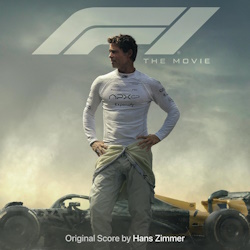 Original Review by Jonathan Broxton
It’s lights out and away we go!
Anyone who knows me in real life knows that I have been a massive fan of Formula 1 motor racing for many, many years. My grandfather, who was also a big fan, introduced me to it in the late 1980s – the first race I actively remember watching was the 1987 British Grand Prix, when I was 11, which was won by Nigel Mansell in extraordinarily emotional circumstances – and since then I have watched virtually every race of every subsequent season, cheering on a succession of great British drivers, from Mansell to Martin Brundle, Damon Hill and Johnny Herbert, Jenson Button, and now Lando Norris and George Russell. I love everything about the sport; the incredible skill and strength of the drivers, the chess-like tactics and strategies of the teams, the world-class engineering. You become invested in the lives of everyone involved, their triumphs and tragedies, and you watch it unfold across the world every two weeks at speeds approaching 200mph. There’s nothing like it.
The one thing that there hasn’t been an abundance of over the years is great F1 movies. There have been some excellent documentaries about people like Ayrton Senna and Michael Schumacher. Grand Prix from 1966 and Bobby Deerfield from 1977 both looked at the lives of drivers, but mostly concentrated on their private lives rather than the racing world. Ron Howard’s 2013 film Rush examined in great detail the rivalry between 1970s drivers James Hunt and Niki Lauda, and is probably the best ‘historical’ F1 movie of all time, but there has never been an attempt to accurately portray what the contemporary sport is really like – until now. Director Joseph Kosinski’s film was made in conjunction with the FIA and with the full co-operation of the current F1 management and other key personnel (Lewis Hamilton, Toto Wolff, and Stefano Domenicali are credited producers), and saw the filmmaking team fully embedded with the sport for an entire year, shooting during actual race weekends, with the actual drivers, and with lead actor Brad Pitt driving a real car at full racing speeds.
The story is a hoary old sports movie cliché – an aging driver comes out of retirement to mentor a younger driver and save his old friend’s ailing team – but what sets F1: The Movie apart is its authenticity. Great lengths have been taken to ensure that the portrayal of the sport is as realistic as it possibly can be, and although some creative license has of course been taken for dramatic purposes (there isn’t a chance in hell that a 61-year-old could endure the physical rigors of competing at this level), and although some of the things that happen in the races would lead to immediate disqualifications for cheating, it’s still an entertaining diversion, and a terrific advertisement for the speed and glamor of the sport. One thing I did appreciate was how much F1 lore was included in the detail, from them name-checking ‘older’ drivers like Louis Chiron, to them using Martin Donnelly’s real crash at Jerez in 1990 as a key plot point. Pitt stars as the ageing driver Sonny Hayes, Damson Idris plays his upstart protégé Joshua Pearce, and Javier Bardem, Kerry Condon, Tobias Menzies, and Kim Bodnia appear in major supporting roles.
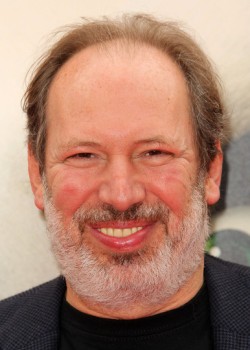 When I was growing up the BBC used the instrumental bridge from Fleetwood Mac’s seminal hit “The Chain” as the theme music for their coverage of Formula 1, and to this day I associate that piece’s bass-heavy, guitar-driven rock vibe as being the musical sound of the sport. Composer Hans Zimmer apparently did too, as he brought a similar sound to his score for Rush several years ago, in combination with a more emotional core centered around Tina Guo’s solo cello. Zimmer has now returned to the sport again more than a decade later with his score for F1, and is again following a similar path with this new work. I’m actually a little surprised that Zimmer was given this gig considering that they hired Brian Tyler to write the sport’s official theme music several years ago, but Zimmer’s relationship with producer Jerry Bruckheimer stretches back decades, to another classic racing movie Days of Thunder, and those things mean a lot in Hollywood.
In much the same vein as Rush was, F1 is basically a rock score, featuring a reasonably sized orchestra, augmented with a large percussion section, solos for electric guitars, a rock drum kit, and lots and lots of synthesizers. It’s also very, very good. In an interview with Rolling Stone magazine, Zimmer explained “One of the things that I felt very strongly about was creating a sort of hybrid score between electronics and orchestra.” He said he envisioned the orchestra as “the human that sits inside the machine,” while the electronics represented the machine itself. Zimmer also stated that for him electronic music was key to capturing the unpredictability of racing, saying “with synthesizers, it’s the same as in the race – you don’t quite know who’s going to do what next. There’s always the element of surprise built in, and I think that’s very important in a movie like this: you score for surprise.” Zimmer also had conversations with Lewis Hamilton, and admitted that the F1 champion influenced how the music came together, how the orchestra sounded, and how the tunes were written, as a way to capture the “grace and the beauty” of the cars.
The score is built mostly around two recurring main themes. The cornerstone of the score is the theme for Pitt’s character, Sonny Hayes, which Zimmer calls the ‘gunslinger motif” and which he described as “slightly cheeky, slightly robust, and very recognizable.” The second theme is less well defined, but appears to be a more general theme for the concept of racing itself, as it tends to appear in cues that underscore the actual race sequences themselves, and is especially prominent throughout the climactic final race at the Yas Marina circuit in Abu Dhabi.
 There are two F1 albums. The commercial soundtrack album features numerous high profile original songs by various artists – including “Lose My Mind” by rappers Don Toliver and Doja Cat, “Don’t Let Me Drown” by Burna Boy, “Messy” by Rosé of the Korean girl group Blackpink, “Baja California” by Puerto Rican rapper Myke Towers, “Just Keep Watching” by Canadian singer Tate McRae, and “Drive” by English singer-songwriter Ed Sheeran – but no score. Zimmer had a hand in producing and/or co-writing “Lose My Mind” and “Don’t Let Me Drown,” and both songs feature melodic ideas from the score, but none of the others do, so I’ll leave it at that, suffice to say that the sometimes euphoric “Lose My Mind” might be one of my favorite hip-hop songs ever, and Ed Sheeran’s “Drive” is terrific.
The extended ‘cinematic edition’ combines the song album with just over an hour of Zimmer’s score, and it is this music that will be the focus of the review. The opening cue of the score album, “F1,” sets the tone immediately with a barnstorming version of the main theme arranged with nostalgic synthwave undertones that have an attitude similar to the brilliant sound that Trent Reznor and Atticus Ross brought to their score for Challengers last year, or to Daft Punk’s score for Tron: Legacy. It’s a driving, upbeat, pulsating, energetic, effortlessly cool sound, a perfect encapsulation of the image the sport wants to portray to the world, and its use in context is outstanding, accompanying scintillating footage of Joshua Pearce hurtling round Silverstone during a test session.
A more low-key version of the main theme appears in “Anything You Wish You’d Done Differently” along with some melancholy textures of regret carried by Tina Guo’s solo cello. Then, in cues like “Run for the Podium,” the determined and noble-sounding “Built for Combat,” and the brilliant, hypnotic “Drive Fast,” the theme often has a grungier, heavier, but no less intoxicating sound full of throbbing bass lines, endlessly energetic electronic textures in numerous styles, and snarling Lindsay Buckingham-style guitar riffs courtesy of Tim Henson of the band Polyphia, and Zimmer’s tour band mate Guthrie Govan.
In these cues the electronic sounds Zimmer makes seem to sometimes feel like high energy dance music, while at other times they appear to be directly influenced by engine noises; not in a ridiculous ‘vroom vroom’ or ‘neeeeeeow’ sort of way, but more as a reflection of the constant growling power that F1 drivers have at their disposal under their right foot. When Zimmer allows the melody of the main theme to emerge from these cues it is usually carried by a bank of strings or a set of powerful brasses, and the effect is startlingly good. Once in a while something in a particular rhythmic idea or particular chord progression reminded me of the action music from earlier Zimmer scores like Inception, or The Dark Knight, sometimes even all the way back to things like Drop Zone and Backdraft, and I appreciated this enormously.
The first significant performance of the secondary theme appears in “Road to Recovery,” underscoring the aftermath of Joshua’s devastating crash at Monza with subtle hints of guilt-stricken poignancy. “Tell Me About Kate” is not really a love theme per se – the score doesn’t really have one – but the phrasing of the strings here gives the relationship between Sonny and APXGP’s feisty genius Irish technical director at least a hint of romance. This contrasts greatly with the punishing, harshly insistent electronic dissonance of “Keep It In One Piece,” a stark musical depiction of the conflict and pent-up anger in Sonny’s head.
The final half dozen or so cues – from the second half of “No One Drives Forever” through to the end of “See You Down the Road” – primarily underscore the pivotal Abu Dhabi Grand Prix sequence, and it is here that the score really comes into its own in a more symphonic way that is tremendously satisfying. No one musically encapsulates that sense of masculine heroism better than Zimmer does – you could make a case that no-one else ever has – and the repeated statements of the main theme for Sonny throughout this sequence are the closest Zimmer has come to re-capturing the iconic swaggering machismo of his 1990s power anthems in many years.
The heroic sweep of the strings in “It’s All Just Noise,” the relentless dynamism of “Elbows Out,” and the breathless anticipation and drama of “Red Flag,” all culminates in the brilliant “Three Laps Is a Lifetime,” the climax of which contains some the most powerful, traditionally symphonic, emotionally rewarding music Zimmer has written in quite some time. The sweeping explosion of the main theme at 4:28, complete with a heroic brass countermelody, is majestic in film context, and doesn’t sound half bad on album either.
Although F1 lacks the cocky bravado that defined Days of Thunder back in the early ’90s, and although it contains less raw emotion than the score for Rush, it more than makes up for that with a sense of high-stakes intensity and a bold, self-assured attitude. The rhythm-heavy, dance-like, techno club vibe of the score is at times intoxicating, giving the whole thing an appropriate European tone, while the full-throttle dynamism of the music in the racing scenes really drives home the power, precision, and speed of these flawlessly engineered machines and the daredevils that pilot them. Formula 1 has, for its entire history, been accompanied by a sense of glamor and wealth, a chic style to match its globally cosmopolitan attitude. With this score, Hans Zimmer has combined all those things together and brought it all roaring into the 21st century, better than the FIA and Liberty Media could have ever dreamed. The resulting work is one of my favorite scores by him from the last ten years.
Buy the F1 soundtrack from the Movie Music UK Store
Track Listing:
- SCORE ALBUM
- F1 (3:13)
- Anything You Wish You’d Done Differently? (2:10)
- Run for the Podium (6:32)
- Road to Recovery (3:29)
- Built for Combat (3:05)
- Drive Fast (6:17)
- Tell Me About Kate (1:34)
- Keep It In One Piece (2:57)
- No One Drives Forever (6:05)
- Lining Up on the Grid (2:10)
- It’s All Just Noise (4:00)
- Elbows Out (7:28)
- Red Flag (4:02)
- Three Laps Is a Lifetime (5:33)
- See You Down the Road (2:51)
- SOUNDTRACK ALBUM
- Lose My Mind (written by Caleb Toliver, Amala Dlamini, Hans Zimmer, Ryan Tedder, and Grant Boutin, performed by Don Toliver feat. Doja Cat) (3:29)
- No Room for a Saint (written by Dominic Matheson, Nathan Nicholson, and Toby Le Messuier, performed by Dom Dolla feat. Nathan Nicholson) (3:56)
- Drive (written by Ed Sheeran, Blake Slatkin, and John Mayer, performed by Ed Sheeran) (3:07)
- Just Keep Watching (written by Tate McRae, Ryan Tedder, and Tyler Spry, performed by Tate McRae) (2:22)
- Messy (written by Chae Young Park, Cleo Tighe, Brittany Amaradio, Peter Rycroft, and Matthew James Burns, performed by Rosé) (2:58)
- Don’t Let Me Drown (written by Damini Ogulu, Asia Smith, Calvin Tarvin, Kevin Yancy, Munashe Kugarakuripi, and Shae Jacobs, performed by Burna Boy) (3:05)
- Underdog (written by Rodrick Moore Jr., David Doman, Israel Houghton II, Adrienne Byrne, and Keith Parker, performed by Roddy Ricch) (2:22)
- Grandma Calls the Boy Bad News (written by Rachel Keen, Mark Ronson, Christopher Braun, Homer Steinweiss, Nick Movshon, and Victor Axelrod, performed by Raye) (3:26)
- Bad as I Used to Be (written and performed by Chris Stapleton) (5:00)
- Baja California (written by Michael Torres, Pablo Diaz-Reixa, Oscar Adler, James E. Alexander, Ben Cauley, Allen Jones, John R Smith, Andres Vargas-Titus, and William McLean, performed by Myke Towers) (2:24)
- OMG! (written by Tijs Verwest, Janae Wherry, Mathieu Arnaud, Mila Falls, and Reece Pullinger, performed by Tiësto and Sexyy Red) (2:33)
- All at Once (written by Madison Beer, Peter Rycroft, Lucy Healey, and Leroy Clampitt, performed by Madison Beer) (2:34)
- D.A.N.C.E (written by Kim Min-Ji, performed by Peggy Gou) (3:15)
- Double C (written by David Esekhile, performed by PAWSA) (3:46)
- Attention (written by Olawutosin Ajibade, Udoma Amba, and Joshua Nkansah, performed by Mr Eazi) (2:53)
- Give Me Love (written by Oluwafisayo Isa, Ekeh Joseph, and Samuel Awuku, performed by Darkoo) (2:20)
- Gasoline (written by Steven Umoh and Samuel Knowles, performed by Obongjayar) (3:39)
Atlantic Records (2025)
Running Time: 61 minutes 52 seconds – Score
Running Time: 53 minutes 16 seconds – Soundtrack
Music composed by Hans Zimmer. Conducted by Gavin Greenaway. Orchestrations by Òscar Senén and Nacho Cantalejo. Additional music by Steve Mazzaro. Featured musical soloists Tim Henson, Guthrie Govan, Marco Minnemann, Aicha Djidjelli and Tina Guo. Recorded and mixed by Geoff Foster and Alan Meyerson. Edited by Ryan Rubin. Album produced by Hans Zimmer.
-
February 6, 2026 at 8:01 amMovie Music UK Awards 2025 | MOVIE MUSIC UK

Shop at the Movie Music UK Store

Member of the

 MOVIE MUSIC UK