Lalo Schifrin, 1932-2025
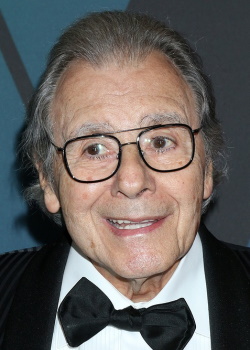 Composer Lalo Schifrin died on June 26, 2025, at the age of 93. He had been in ill health for several years, and died of pneumonia.
Boris Claudio Schifrin was born in Buenos Aires, Argentina, in June 1932, into a musically inclined family. His father was the concertmaster of the Teatro Colón, and young Lalo was immersed in classical music from a young age. He began piano lessons early, and his precocious talent led him to study with luminaries such as Juan Carlos Paz and, later, Olivier Messiaen in Paris. While still in Paris, he played in local jazz clubs and developed a deep appreciation for American musical idioms. This duality – rigorous classical training paired with a spontaneous, exploratory jazz sensibility – would define his voice as a composer.
Upon returning to Argentina, Schifrin formed one of the country’s first modern jazz orchestras, gaining acclaim before accepting an invitation to join Dizzy Gillespie’s band in the mid-1950s. Their collaboration signaled his arrival on the international stage and cemented his lifelong reputation as a jazz innovator with global instincts.
Schifrin moved to the United States in the early 1960s, and by mid-decade had become a sought-after composer in Hollywood, working across television and film. His first major television project was scoring episodes of The Man from U.N.C.L.E. beginning in 1965, but it was his theme for Mission: Impossible (1966) that catapulted him into pop culture immortality. Written in 5/4 time, the show’s theme was at once avant-garde and accessible, and became instantly iconic, so much so that it became a kind of musical shorthand for danger, intrigue, and ingenuity. It later powered the Tom Cruise-led film franchise to billion-dollar success.
Over the next decades, Schifrin scored dozens of films, including Bullitt (1968), with its groundbreaking jazz-inflected action cues; and Dirty Harry (1971), whose gritty, funk-laden music defined urban thriller scoring for years. His music could be lushly orchestral, spare and eerie, or explosively percussive, sometimes all in the same film. Other popular and critical favorites include Cool Hand Luke (1967), The Fox (1967), Kelly’s Heroes (1970), George Lucas’s THX 1138 (1971), Bruce Lee’s Enter the Dragon (1973), Voyage of the Damned (1976), The Amityville Horror (1979), The Competition (1980), and The Osterman Weekend (1983), plus several Dirty Harry sequels. Later, his score for Rush Hour (1998) re-introduced his music to a new generation of fans. Simultaneously, on the small screen, Schifrin continued to provide memorable themes for several popular TV shows, including Mannix (1967), Planet of the Apes (1974), Petrocelli (1974), Bronk (1975), and Starsky & Hutch (1975).
Schifrin earned six Academy Award nominations, three Golden Globe nominations, and four Primetime Emmy nominations. He won four Grammy Awards, including two for Best Original Jazz Composition, and was nominated 15 other times. In 2019 he received an Honorary Academy Award from the Academy of Motion Picture Arts and Sciences, “in recognition of his unique musical style, compositional integrity and influential contributions to the art of film scoring.”
Away from film, Schifrin conducted major symphonies around the world and wrote commissioned works for orchestras in London, Los Angeles, and Vienna. His concert works such as the Concerto for Double Bass and Orchestra, or the Gillespiana Suite – demonstrated a command of form and emotional narrative on par with 20th-century masters. Despite his deep classical pedigree, Schifrin also remained deeply attuned to popular culture and unafraid of the commercial sphere. He collaborated with Quincy Jones, Sarah Vaughan, Ella Fitzgerald, and Stan Getz, and his music was sampled by hip-hop artists long before that became commonplace.
Schifrin is survived by his wife, Donna, and their children, including filmmaker son Ryan whose low-budget horror film Abominable (2006) features one of Lalos’s last scores.

Shop at the Movie Music UK Store

Member of the

 MOVIE MUSIC UK