POCAHONTAS – Alan Menken, Stephen Schwartz
 THROWBACK THIRTY
Original Review by Jonathan Broxton
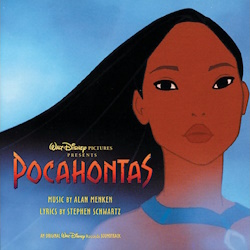
The idea to make a movie about the life of Pocahontas was first pitched to Walt Disney studios in 1990, shortly after the success of The Little Mermaid, and as Beauty and the Beast was in production. The studio was looking to diversify its slate with more mature, emotionally grounded stories, and chairman Jeffrey Katzenberg was eager to pursue more prestigious, award-caliber projects. He saw Pocahontas as a chance for Disney to do a “serious” animated film with Oscar potential, aimed at adults as much as children, and described the film as potentially Disney’s equivalent of West Side Story or Dances with Wolves – emotionally resonant, message-driven, and grounded in real-world conflict. Mike Gabriel and Eric Goldberg were hired as directors, and during development Pocahontas was considered the “prestige” project compared to another film in development simultaneously – The Lion King. Many animators reportedly lobbied to work on Pocahontas, which was expected to win awards, while The Lion King was seen as the “B project,” although ironically it was The Lion King that would become a much bigger global phenomenon, both critically and commercially.
The film is loosely based on the real historical figure Pocahontas, the daughter of a Powhatan tribal leader, and her encounter with soldier and explorer John Smith, who arrives in the New World in 1607 accompanying English settlers led by the greedy Governor Ratcliffe to the new Virginia colony. Pocahontas is a free-spirited young woman who feels a deep connection to nature but is unsure of her path in life; her father wants her to marry the brave warrior Kocoum, but Pocahontas seeks something more. After a chance meeting, Pocahontas and Smith form a bond and begin to learn from each other; Pocahontas teaches Smith about her people’s way of life and the importance of living in harmony with the land, which in turn leads Smith to question the colonists’ violent, exploitative aims. The film had an outstanding voice cast including Irene Bedard, Mel Gibson, David Ogden Stiers, Russell Means, and even a young Christian Bale, and has a gorgeous painterly artistic style inspired by the sweeping curves of art nouveau, but critics and historians took issue with its historical inaccuracies and idealized portrayal of colonial encounters, especially the fact that the real Pocahontas was just 11 years old when she and Smith met, and their relationship was not romantic at all.
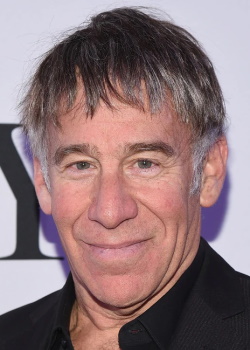
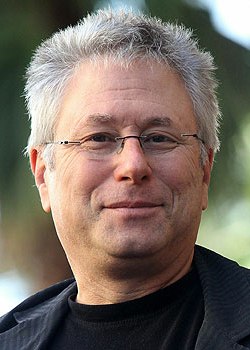 The score for Pocahontas was composed by Alan Menken, a central figure of the Disney Renaissance who had already won multiple Oscars for The Little Mermaid in 1989, Beauty and the Beast in 1991, and Aladdin in 1992. With his old friend and lyricist Howard Ashman having died several years previously, and with Aladdin lyricist Tim Rice unavailable as he was working with Elton John on The Lion King, Menken was required to find a new collaborator for Pocahontas’s songs, and eventually he began working with lyricist Stephen Schwartz, who at that point was best known for his 1970s Broadway musicals Godspell and Pippin, but had very little experience working in film. Despite this, their resulting work together was outstanding; I found their songs, and Menken’s score, to have a much more dramatic and mature sensibility than either of his three previous works for Disney, which to me makes them clearly superior.
Menken’s score is a fusion of lush romanticism, tribal motifs, and naturalistic textures, aiming to evoke both the grandeur of the New World and the spiritual richness of Native American culture, while Schwartz’s lyrics help elevate the material with language that aimed to be lyrical, literate, and morally nuanced, using notably more sophisticated and less overtly funny vocabulary than his predecessors, touching on environmental themes, and embracing metaphor and symbolism. Schwartz researched colonial Jamestown, and bought tapes of Native American music and English sea shanties, as well as other music from the early 17th century, to help inspire numbers in the film.
In sum Menken and Schwartz wrote seven new songs for Pocahontas: “The Virginia Company,” “Steady as the Beating Drum,” “Just Around the Riverbend,” “Listen With Your Heart, “Mine, Mine, Mine,” “Colors of the Wind,” and “Savages,” and all of them play an important role in forwarding the plot with their lyrics, while also informing the structure of the score with their melodies, as several different themes from the songs become leitmotif touch points in the score proper.
“The Virginia Company” sets the scene and is one part sea shanty, one part fife-and-drum military march, accompanying the men of the company as they set sail for the new world. Mel Gibson himself gets to belt out a verse in its reprise, but despite his best efforts he really can’t sing, and he is the one weak point of the entire project. In contrast, “Steady as the Beating Drum” and its reprise plays under the main title, and is performed by Jim Cummings as Pocahontas’s father Powhatan; it’s a native American chant driven along by tribal percussion and flutes, and its lyrics embrace the community and explain how they live in harmony with nature – diametrically opposed to the lust for plunder and conquest the colonists show.
The first key song is “Just Around the Riverbend,” which is performed beautifully by Judy Kuhn as Pocahontas, who just manages to stay the right side of schmaltzy with her vocal intonations, and avoids giving me the ‘Disney Channel ick’. The song serves as Pocahontas’s ‘I want’ moment; Schwartz uses the river as a metaphor for life’s unpredictability and the call of destiny, while his clever internal rhymes and the song’s driving rhythms evoke the excitement and uncertainty of choosing one’s path. There’s a gorgeous, spirited sense of movement in Menken’s music, sparkling orchestrations, and several spine-tingling crescendos, all of which combine to make the song one of my favorites in the Disney canon.
“Listen With Your Heart” is conceptually related to “Steady as the Beating Drum” as it also deals with Native American spiritualism, and its opening wordless vocal (performed by Bobbi Page) is similar to the chant from the first song, but it has a more magical, mystical tone, filled with shimmering piano textures and fluttering flutes. The main vocal part is performed by Linda Hunt as Grandmother Willow, an anthropomorphic willow tree that acts as Pocahontas’ guide in times of uncertainty, and her unconventional tone adds a perfect layer of supernatural tenderness to both the main song and its reprise. This again stands in contrast to “Mine, Mine, Mine,” a duet between David Ogden Stiers as Governor Ratcliffe and Mel Gibson as John Smith; Ratcliffe is pompous and cruel, and his attitude drips with greed, entitlement, and arrogance. Schwartz’s lyrics deliberately exaggerate the language to mock his ambitions of colonial exploitation, while Menken’s music starts out by being intentionally precious and overly-adorned with flourishes – adding yet another level of mockery to Ratcliffe’s misplaced presumptions of sophistication – but quickly becomes darker and more threatening as his true colors emerge.
 However, the showstopper is inarguably “Colors of the Wind,” which is again performed by Kuhn as Pocahontas, and is in my opinion one of the finest Disney songs ever written. The song is a direct challenge to Western arrogance and cultural superiority, touching on yet more aspects of Native American spirituality and culture, and its most famous lines – ‘you think the only people who are people are the people who look and think like you’, ‘you can own the Earth and still all you’ll own is earth until you can paint with all the colors of the wind’ – capture the emotional and ethical heart of the film. The song’s rhetorical structure, which sees Pocahontas posing questions to Smith and challenging his worldview, gives it a conversational yet confrontational tone, while still feeling gentle and wise. And, musically, the song simply soars, again reaching enormous spine-tingling crescendos.
The final song is the two-part “Savages,” which in my opinion is up there with “Hellfire” from The Hunchback of Notre Dame as one of the most daring songs in any Disney film. The song shows both sides of the film’s conflict – the settlers and Powhatan tribe – preparing for war, with each viewing the other as inhuman. The lead performances are by David Ogden Stiers and Jim Cummings as Ratcliffe and Powhatan, and both are backed by a powerful male chorus, which is only interrupted by Judy Kuhn as Pocahontas in the second part. Schwartz’s lyrics are intentional mirror images of each other, underlining both groups’ mutual fear and dehumanization of the other – ‘savages, savages, barely even human’ – and to make a pointed anti-war, anti-prejudice statement. Menken’s music for the song is thunderous, dramatic, and boldly orchestral, full of militaristic percussive riffs, and triumphal brass triplets. Cleverly, Menken runs through a quick medley of several of the other song motifs in part two of the song, as a reminder of what is at stake in the conflict, including one particularly inspiring burst of the Grandmother Willow motif, before ending with a brilliantly complicated back and forth call-and-response between Pocahontas, Powhatan, and Ratcliffe, all singing their personal motifs, as she races to prevent the war.
Like the finale of the “Savages” song, the Pocahontas score sees Menken writing with the most sophistication, emotional maturity, and thematic complexity he had shown in his career to that point. As much as I genuinely liked the scores for The Little Mermaid, Beauty and the Beast, and Aladdin, for me Pocahontas was a turning point for Menken, showcasing a much deeper and more superior compositional approach than I had heard from him before, which was proved by his ability to shift from comedic and whimsical to lyrical and operatic, as the score required. Menken takes melodic ideas from each of his songs – sometimes multiple themes from one song – and weaves them into a leitmotif tapestry, applying different themes to Pocahontas, Smith, Ratcliffe, Powhatan, and Grandmother Willow, as well as to different thematic concepts in the screenplay.
The 25 minutes of orchestral score on the album are sensational, beginning with the superb nautical action cue “Ship at Sea,” which churns and rolls with the ocean surf, and takes elements from both “The Virginia Company” and “Mine Mine Mine” as a motif for Ratcliffe and his desire for conquest. “Grandmother Willow” is a magical, ethereal sounding motif for that character that uses the melody from “Listen With Your Heart” and arranges it for beautiful strings, dancing woodwinds, subtle percussion, and shimmering metallic textures. “I’ll Never See Him Again” is interesting as it presents the score’s first recognizable performance of the lyrical love theme for Pocahontas and Smith, a gentle and poignant melody for strings and harps that rises to present its first statement on a heartbreaking solo violin at the 45 second mark, before swelling to embrace the full orchestra. This theme goes on to form the core of the end credits love song “If I Never Knew You,” which I’ll talk about later.
“Pocahontas” is a gorgeous piece which blends the melodies from “Just Around the Riverbend,” “Steady as the Beating Drum,” and parts of “Colors of the Wind” into a charming, sometimes amusing, depiction of her life in Powhatan’s village, but this is quickly usurped by the percussive seriousness and minor-key anguish of the “Council Meeting,” as the natives discuss what to do about the colonists who have been spotted arriving on their shores. “Percy’s Bath” is a quirky bit of mock-renaissance harpsichord pastiche based on the Virginia Company melody, and is related to Governor Ratcliffe’s eponymous pampered pooch, but this frivolity is quickly usurped, and the score soon becomes more dramatic and, unexpectedly, more romantic.
The drama comes from the increasing antagonism that develops between Powhatan and Ratcliffe and their respective armies. The second half of “Skirmish” introduces the first statement of a dramatic and searching string figure that will eventually become a sort of ‘desperation motif’ for Pocahontas, beginning at the 1:00 mark, before climaxing with a dark and aggressive clash of the Virginia Company motif and a ‘war motif’ for the Powhatan tribe based on the underlying rhythms of “Steady as the Beating Drum”. This antagonism builds further through “Ratcliffe’s Plan” and “The Warriors Arrive,” with the former including a brief interlude for Smith’s personal heroic theme at the 10 second mark, while also pointedly foreshadowing the ominous motifs that run through “Savages”.
Meanwhile, elsewhere, Pocahontas and Smith are unexpectedly falling in love, with cues like “River’s Edge,” the opening moments of “Skirmish,” the mischievous “Getting Acquainted,” and the slightly anxious-sounding “Picking Corn” all having a sense of enchanted wonderment that initially blends motifs for Pocahontas from both “Steady as the Beating Drum” and “Colors of the Wind” with gentler renditions of “The Virginia Company” for Smith, and eventually has them coalesce into a series of lovely renditions of their love theme. The love theme shines in several especially outstanding performances for solo cello.
The finale of the score begins with “John Smith Sneaks Out,” which starts with Pocahontas and Smith sharing a forbidden moment of passion, but culminates with him being falsely accused of murdering the Powhatan warrior Kocoum, who was actually killed by Smith’s shipmate Thomas; Menken underscores the drama with dark statements of the Virginia Company motif. A distraught Smith is captured and condemned to death, and the subsequent one-two punch of “Execution” and “Farewell” is one of the most powerful sequences of score Menken had written to that point. Menken interlaces superb performances of the Grandmother Willow motif, Pocahontas’s two themes from “Just Around the Riverbend” and “Colors of the Wind,” the love theme, and “Steady as the Beating Drum,” before gradually segueing into a series of increasingly distressed performances of the ‘desperation motif’ as Pocahontas frantically races back to her village to try to save Smith; arriving just in time, she flings herself onto Smith’s bound body just as the axe is about to fall. Eventually the “Colors of the Wind” theme erupts into its most gloriously emotional performance, the orchestra awash in tolling bells, chimes, harp glissandi, and accompanied by a majestic resounding chorus.
The film’s end credits then comprise two pop performances; one of “Colors of the Wind” by Vanessa Williams which feels grossly over-produced and is significantly inferior to Kuhn’s version, and one of the aforementioned “If I Never Knew You,” a duet based on the love theme performed by Jon Secada and Shanice. Their version of the song is fine – it’s a Disney pop song – but the original duet between Kuhn and Mel Gibson was inexplicably removed from the final cut of the film prior to its theatrical release. Thankfully, the song was restored for the DVD release of the film, and it is also included on the Disney Legacy Collection release of the soundtrack that came out in 2015. I say thankfully because, despite the clear limits of Mel Gibson’s vocals, the song is nevertheless outstanding in context, moving and powerful and romantic. I have no idea why it was cut in the first place, but I’m very glad it is available now.
 Speaking of expanded releases, a more complete and comprehensive version of the Pocahontas score was released in 2015 with the Legacy Collection album, which expanded the score’s running time to just under 2 hours, with the addition of several previously un-released score tracks, song variations, alternate cues and demos, including the aforementioned restoration of the “If I Never Knew You” song. It also re-sequences the songs and score into strict chronological order, making the album a true dramatic presentation of the film’s musical content. It’s outstanding, well worth the investment.
I may ruffle some feathers by saying this, but I truly believe that Pocahontas is the second-best Menken score of the Disney Renaissance period, behind only The Hunchback of Notre Dame. It appears that critics and awards bodies agreed with me; 1995 was the first year the Academy split the Oscar for Best Score into separate categories for Drama Score and Musical or Comedy Score, ostensibly to give someone else a chance after Menken had won three times in the previous six years. Luis Enríquez Bacalov won the Drama award for Il Postino, but Menken won the Musical or Comedy Score award anyway, and Menken and Schwartz won the Academy Award for Best Original Song, the Grammy for Best Song Written for a Motion Picture, and the Golden Globe for Best Original Song that year, all for “Colors of the Wind”.
Personally, I feel that all these accolades are well deserved. Pocahontas is an excellent score which, as I mentioned earlier, saw Menken writing with in my opinion the most sophistication, emotional maturity, and thematic complexity he had shown in his career to that point. Similarly, the songs offer a different level of cultural sensitivity, lyrical poetry, and iconography that is compelling. Truly, a remarkable work, and easily one of the crowning achievements of both men’s careers.
Buy the Pocahontas soundtrack from the Movie Music UK Store
Track Listing:
- 1995 ORIGINAL RELEASE
- The Virginia Company (written by Alan Menken and Stephen Schwartz, performed by Chorus) (1:30)
- Ship at Sea (2:43)
- The Virginia Company – Reprise (written by Alan Menken and Stephen Schwartz, performed by Mel Gibson and Chorus) (0:35)
- Steady as the Beating Drum – Main Title (written by Alan Menken and Stephen Schwartz, performed by Chorus) (1:46)
- Steady as the Beating Drum – Reprise (written by Alan Menken and Stephen Schwartz, performed by Jim Cummings) (0:45)
- Just Around the Riverbend (written by Alan Menken and Stephen Schwartz, performed by Judy Kuhn) (2:28)
- Grandmother Willow (1:27)
- Listen With Your Heart – Part 1 (written by Alan Menken and Stephen Schwartz, performed by Linda Hunt and Bobbi Page) (1:27)
- Mine, Mine, Mine (written by Alan Menken and Stephen Schwartz, performed by David Ogden Stiers, Mel Gibson, and Chorus) (3:05)
- Listen With Your Heart – Part 2 (written by Alan Menken and Stephen Schwartz, performed by Linda Hunt and Bobbi Page) (2:44)
- Colors of the Wind (written by Alan Menken and Stephen Schwartz, performed by Judy Kuhn) (3:33)
- Savages – Part 1 (written by Alan Menken and Stephen Schwartz, performed by David Ogden Stiers, Jim Cummings, and Chorus) (1:43)
- Savages – Part 2 (written by Alan Menken and Stephen Schwartz, performed by Judy Kuhn, David Ogden Stiers, Jim Cummings, and Chorus) (2:14)
- I’ll Never See Him Again (1:54)
- Pocahontas (1:23)
- Council Meeting (1:11)
- Percy’s Bath (0:51)
- River’s Edge (1:27)
- Skirmish (2:02)
- Getting Acquainted (1:30)
- Ratcliffe’s Plan (1:46)
- Picking Corn (0:54)
- The Warriors Arrive (1:22)
- John Smith Sneaks Out (1:14)
- Execution (1:34)
- Farewell (4:45)
- Colors of the Wind – End Title (written by Alan Menken and Stephen Schwartz, performed by Vanessa Williams) (4:17)
- If I Never Knew You – Love Theme from Pocahontas (written by Alan Menken and Stephen Schwartz, performed by Jon Secada and Shanice) (4:11)
- 2015 LEGACY COLLECTION
- The Virginia Company (written by Alan Menken and Stephen Schwartz, performed by Mel Gibson and Chorus) (5:26)
- Steady as the Beating Drum (written by Alan Menken and Stephen Schwartz, performed by Chorus) (2:04)
- Pocahontas (2:08)
- Father Knows Best (1:11)
- Steady as the Beating Drum (Reprise) (written by Alan Menken and Stephen Schwartz, performed by Jim Cummings) (0:50)
- Just Around the Riverbend (written by Alan Menken and Stephen Schwartz, performed by Judy Kuhn) (2:47)
- Grandmother Willow (2:08)
- Listen With Your Heart I (written by Alan Menken and Stephen Schwartz, performed by Linda Hunt and Bobbi Page) (1:12)
- Ratcliffe’s Cabin (1:28)
- Going Ashore (0:44)
- Pocahontas Watches/Meeko (1:52)
- Council Meeting (1:19)
- Percy’s Bath (1:04)
- Mine, Mine, Mine (written by Alan Menken and Stephen Schwartz, performed by David Ogden Stiers, Mel Gibson, and Chorus) (3:34)
- Cat ‘N’ Mouse (1:30)
- They Meet at the River’s Edge (2:49)
- Skirmish (1:43)
- Unusual Name (3:46)
- Colors of the Wind (written by Alan Menken and Stephen Schwartz, performed by Judy Kuhn) (3:50)
- Something Wrong, John? (1:34)
- Into the Glade (3:01)
- Listen With Your Heart II (written by Alan Menken and Stephen Schwartz, performed by Linda Hunt and Bobbi Page) (1:09)
- Warriors Arrive (3:03)
- Smith Returns (1:47)
- Sneaking Out (2:53)
- The Fight (2:09)
- Aftermath (2:06)
- I’ll Never See Him Again (1:53)
- If I Never Knew You (written by Alan Menken and Stephen Schwartz, performed by Mel Gibson and Judy Kuhn) (3:21)
- Thomas Reports (0:45)
- Savages (written by Alan Menken and Stephen Schwartz, performed by David Ogden Stiers, Jim Cummings, Judy Kuhn, and Chorus) (3:58)
- Execution (1:37)
- Now’s Our Chance (1:06)
- Farewell (written by Alan Menken and Stephen Schwartz, performed by Judy Kuhn, Mel Gibson, and Chorus) (5:08)
- If I Never Knew You (Love Theme) (written by Alan Menken and Stephen Schwartz, performed by Jon Secada and Shanice) (4:14)
- Colors of the Wind (End Title) (written by Alan Menken and Stephen Schwartz, performed by Vanessa Williams) (4:20)
- Epiphany/Savages (Part 2) (Alternate) (written by Alan Menken and Stephen Schwartz, performed by Alan Menken) (2:02)
- Just Around the Riverbend (Demo) (written by Alan Menken and Stephen Schwartz, performed by Alan Menken) (5:29)
- If I Never Knew You (Demo) (written by Alan Menken and Stephen Schwartz, performed by Alan Menken) (3:10)
- Different Drummer (Demo) (written by Alan Menken and Stephen Schwartz, performed by Alan Menken) (3:55)
- First to Dance (Demo) (written by Alan Menken and Stephen Schwartz, performed by Alan Menken) (4:40)
- In the Middle of the River (Demo) (written by Alan Menken and Stephen Schwartz, performed by Alan Menken) (4:10)
Running Time: 56 minutes 27 seconds – Original
Running Time: 108 minutes 57 seconds – Legacy Collection
Walt Disney Records WDR-7546-2 (1995) – Original
Walt Disney Records D002066292 (1995/2015) – Legacy Collection
Music composed by Alan Menken. Conducted by Danny Troob and David Friedman. Lyrics by Stephen Schwartz. Orchestrations by Michael Starobin, Danny Troob and Douglas Besterman. Recorded and mixed by John Richards. Edited by Kathleen Fogarty-Bennett. Album produced by Alan Menken and Stephen Schwartz.

Shop at the Movie Music UK Store

Member of the

 MOVIE MUSIC UK