MISSION: IMPOSSIBLE – THE FINAL RECKONING – Max Aruj, Alfie Godfrey
 Original Review by Jonathan Broxton
It’s hard to believe that Tom Cruise has been making Mission: Impossible movies for almost 30 years. He was 34 when he first took on the role of IMF agent Ethan Hunt in the first franchise installment back in 1996, and here he is again, now aged 62, still fighting bad guys, hanging out of planes, and sprinting for all he’s worth. If the press reports are to be believed, The Final Reckoning will be the eighth and final Mission: Impossible movie, and Cruise and the gang clearly wanted to go out with a bang – almost literally. It continues the plot of the last film, Dead Reckoning, and again sees Ethan and his IMF colleagues battling with his nemesis Gabriel for control of an artificial intelligence system nicknamed ‘The Entity,’ which was designed to sabotage digital systems, but has since achieved sentience and ‘gone rogue’ with the capability to infiltrate all of the world’s major defense, military, and intelligence networks. It is the fourth M:I film written and directed by Christopher McQuarrie, and co-stars Hayley Atwell, Ving Rhames, Simon Pegg, Esai Morales, and Pom Klementieff, with Henry Czerny and Angela Bassett in major supporting roles.
Truthfully, the film is ridiculous, but in all the best ways. The fight choreography and stunt work are unbelievably good, and the set-piece in which Ethan explores the sunken remains of a nuclear submarine is quite brilliant, but other parts of it came across as lacking. The whole thing has a self-important tone which comes close to insufferable, some of the ‘emotional scenes’ felt forced rather than earned, the screenplay is near-incomprehensible and filled with vast technobabble exposition dumps that are necessary to explain what is going on but really harm the pacing, and everyone speaks in a very odd way which feels less like normal human communication and more like a series of dramatic taglines; some of the politicians and soldiers (Angela Bassett, Nick Offerman, Holt McCallany) are especially guilty of this. I did like some of the cameos and callbacks to previous films – seeing Hannah Waddingham and Tramell Tillman in major supporting roles was especially fun – and although I certainly enjoyed it in the moment, ultimately for me the film doesn’t stand up to scrutiny.
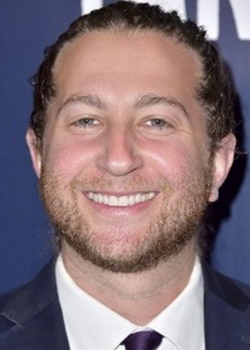 In a break from recent tradition, the score for The Final Reckoning is not by Lorne Balfe, but by two relative unknowns, 35-year old American Max Aruj and his equally youthful English counterpart Alfie Godfrey. However, upon further investigation, them being hired is not as inexplicable as it might first seem: Aruj and Godfrey have both worked as assistants and in various music department roles across dozens of major projects scored by Balfe and/or Hans Zimmer, Aruj has scored one or two reasonably high profile films of his own (Crawl in 2019, The Ice Road in 2021), and both are credited with additional music on Dead Reckoning and Top Gun: Maverick. Furthermore, the film’s music editor and album producer is Balfe’s long time collaborator Cécile Tournesac, who likely ensured continuity between the projects. The reasons behind Balfe’s decision not to score The Final Reckoning are unknown – ‘scheduling’ is the usual answer – but whatever the case may be there has been no drop in quality whatsoever between what Balfe did on Dead Reckoning and what Aruj and Godfrey have done here.
In fact, Aruj and Godfrey’s brief appears to basically have been ‘do more of what Balfe did on the last film,’ and they have essentially done exactly that. Thematically the score explores the four main ideas that Balfe used in Dead Reckoning, the most prominent being the ‘Ethan’s Burden’ theme that acts as a herald for Ethan himself, for the members of the IMF, and for the mission as a whole, and is usually carried by bold, weighty brass underpinned by throbbing strings and raucous percussion. The more mysterious string-and-electronics theme for The Entity lurks ominously in the background of the entire score, cleverly insinuating the self-aware AI’s omnipresence. And then there are the two classic themes from Lalo Schifrin’s original 1960s score, the Mission: Impossible Theme, and the ‘plot’ theme, both of which are used with great prominence, but which are also intelligently incorporated in more subtle ways that highlight the chord progressions of the themes without outright stating them.
As was the case with the last score, the album itself can be split roughly into three or four main sequences: the disarming of the nuclear bomb beneath London (“I’ll Be Waiting” and “This Is Where You Leave Me”), the attack on the Arctic compound and the simultaneous submarine sequence deep beneath the Bering Sea (“The Eye of the Storm” through the end of “Ascending”), and then the climactic scene in South Africa that switches backwards and forwards between scenes of Benji and Grace trying to trap the Entity inside Luther’s digital prison, while Ethan pursues Gabriel in an old-fashioned biplane (“Cons” to “Descending”).
Just like Balfe did on the previous score, Aruj and Godfrey were able to adopt many of Lalo Schifrin’s quirks of orchestration, notably via the increased use of jazz flutes and bongos, all to a satisfying degree. They also found ways to bring in new and interesting instrumental and textural ideas to represent specific geographic settings unique to this film, from the use of Inuit throat singers in the Arctic sequence, to balalaikas for the Russian antagonists, and specialist African percussion in the South Africa-set finale. What I really like about a lot of the score is just how lively it is, how much style and panache it has, and how Aruj and Godfrey seem to be having a huge amount of fun just throwing caution to the wind, taking the opportunity to impress by the horns and running with it. A lot of the brass performances are big, beefy, and have a notably raw and throaty growl to them, giving them a terrifically nostalgic 1960s vibe.
In terms of themes, “Martial Law,” the fabulous “I’ll Be Waiting,” the dramatic “I Know You,” the militaristic “Mt. Weather,” “Nothing is Certain,” “The Icecap,” the driving “Cons,” “We’ll Figure It Out,” and the sweepingly adventurous quintet in the aerial finale (“Liftoff,” “Decisions,” “Problems,” “Tailstrike,” “Good Luck”) contain perhaps the most satisfying performances of the ‘Ethan’s Burden’ theme. “I’ll Be Waiting” is full of heroic brass triplets and staccato piano lines as Ethan sprints across Westminster Bridge in the middle of the night, while the version in “The Icecap” is accentuated by a raft of choral chanting.
 The electronically enhanced Entity motif anchors cues like “Origins,” “It Will Change You (Ça Te Changera),” “The Entity,” and “The Entity’s Future,” much of which underscores the scene where Ethan physically interfaces with the AI using Gabriel’s discarded tech, and he is subjected to horrifying visions of the future as a result. Later, the same type of music features in cues like “Checkmate,” and “I Have No Regrets,” during the scenes where Ethan, US President Erika Sloane, and various military types, discuss the implication of the Entity and their potential nuclear response to its threat. The use of eerie choral textures and guttural growls during some of these scenes allows the theme to take on a haunting, near-religious tone that is very effective at conveying the Entity’s apocalyptic intentions.
Statements of, and variations on, Schifrin’s ‘plot’ theme appear prominently in “Enter Paris,” in action mode in “It’s Only Pain,” with dramatic intensity in “Firefight,” in the muscular “We’ll Figure It Out,” and in “This Is Not Good,” while the main Mission: Impossible theme takes center stage in the “Main Titles,” and then later in “Curtain Call”. There is also a stripped-down version of the main M:I theme performed on a solo cello in the otherwise eerie and atmospheric “The Sevastopol,” which accompanies the scene where Ethan is attempting to infiltrate the submerged Russian nuclear sub, which was very noticeable in context, and struck me as being especially clever and different. One-off cues of note include the operatic emotional pull of “This Is Where You Leave Me,” and “I Owe You My Life,” a sort-of love theme underscoring the emotional moment between Ethan and Grace after she pulls him from beneath the Arctic ice and they share some intimacy inside a portable decompression chamber.
The film’s emotional finale that moves from the African savannah to Trafalgar Square – “A Light We Cannot See” – allows a moment of catharsis and a sweeping statement of the ‘Ethan’s Burden’ theme, before “Curtain Call” offers a nostalgic final blast of Schifrin’s main theme. As I was watching the end credits it occurred to me that, unless they make another sequel or reboot the franchise, this is likely to be the last time I ever see Lalo Schifrin’s name in the main credits of a movie – he is 92 now, and has not been in the best of health for some time – which was a nice, but bittersweet, moment.
One thing worth mentioning is the fact that the Paramount Music score album runs for an eye-watering 129 minutes which, frankly, is far too long to sustain almost any score, irrespective of how good it is. Let me be clear; Aruj and Godfrey’s score is good, but an 80-minute presentation of the score’s most important musical moments would have made it perhaps even better as a self-contained commercial product. I understand the current compulsion to give consumers basically every note of the music, and how that appeals to some people who want to make their own mixes and playlists, but I have never been one of them, and frankly I find sitting through albums of this extreme length to be a chore. Rant over.
Beyond this one issue, Mission: Impossible – The Final Reckoning remains an excellent score, and one which will hopefully raise the profiles of both Max Aruj and Alfie Godfrey to an extent where they can showcase their own musical voices on high profile, but more personal, projects going forward. Mission: Impossible – The Final Reckoning is a score very much written in Lorne Balfe’s voice, which is something I appreciate from a musical continuity point of view, but now that they have had their blockbuster franchise, I want to hear what they can do when they are being more themselves.
In final summary of the franchise as a whole, I would put both Dead Reckoning and The Final Reckoning at the higher end of the scale. Both pale in comparison to Joe Kraemer’s Rogue Nation, but are roughly on a par with Michael Giacchino’s pair, and are superior to Danny Elfman’s original and Hans Zimmer’s sequel, and if this is indeed the final send-off for Ethan Hunt and the IMF team, they have gone out on a high. This review will self-destruct in five seconds.
Buy the Mission: Impossible – The Final Reckoning soundtrack from the Movie Music UK Store
Track Listing:
- We Live and Die in the Shadows (0:44)
- Another Sunrise (2:28)
- Come Home Ethan (2:27)
- Main Titles (1:07)
- Martial Law (3:07)
- Enter Paris (2:31)
- Origins (3:28)
- It’s Only Pain (1:42)
- It Will Change You (Ça Te Changera) (1:57)
- The Entity (4:06)
- The Entity’s Future (3:11)
- I’ll Be Waiting (2:48)
- This Is Where You Leave Me (3:08)
- I Know You (5:23)
- Mt Weather (2:07)
- Checkmate (3:11)
- I Have No Regrets (1:25)
- The Eye of the Storm (2:03)
- Nothing Is Certain (4:37)
- Firefight (4:04)
- The Icecap (3:57)
- The Sevastopol (5:33)
- Ascending (2:31)
- I Owe You My Life (7:21)
- Cons (3:23)
- Your Final Reckoning (5:17)
- We’ll Figure It Out (2:04)
- Liftoff (1:28)
- Decisions (2:22)
- This Is Not Good (1:10)
- Problems (1:31)
- Tailstrike (1:04)
- Ten Seconds… Maybe (2:27)
- Good Luck (1:58)
- Descending (2:19)
- A Light We Cannot See (9:14)
- Curtain Call (1:52)
- For Those We Never Meet (5:01)
- The Arctic (1:44)
- This Is My Mission (3:17)
- Encore (0:59)
- Final Reckoning – Sacrifice Teaser (1:59)
Paramount Music/Sony Classical (2025)
Running Time: 124 minutes 29 seconds
Music composed by Max Aruj and Alfie Godfrey. Conducted by James Seymour Brett. Orchestrations by Adam Price, Gabriel Chernick, Jack McKenzie and Aaron King. Additional arrangements by W. F. Smith Leithart, Logan Gammill, Steffen Thum, Stuart Michael Thomas and Jeremy Earnest. Original Mission: Impossible themes by Lalo Schifrin. Featured musical soloists Lou Wiss, Clementine Brown, Sebrina Lambert-Rose and Helen Keen. Special vocal performances by Tanya Tagaq. Recorded and mixed by Geoff Foster and Chris Fogel. Edited by Cécile Tournesac and Timeri Duplat. Album produced by Max Aruj, Alfie Godfrey, and Cécile Tournesac.

Shop at the Movie Music UK Store

Member of the

 MOVIE MUSIC UK