THE KING AND I – Richard Rodgers, Oscar Hammerstein II, Alfred Newman
 GREATEST SCORES OF THE TWENTIETH CENTURY
Original Review by Craig Lysy
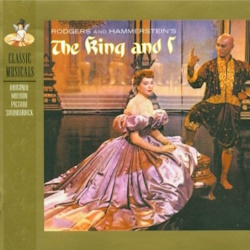
In 1950 composer Richard Rodgers and lyricist Oscar Hammerstein II adapted the play “Anna and The King of Siam” (1944) by Margaret London into a Broadway Musical titled “The King And I”. It had a very successful run of 1,246 performances and in 1951 they secured backing from Darryl F. Zanuck of 20th Century Fox Studios to do a film adaptation. Charles Brackett was assigned production with a $4.55 million budget, Ernest Lehman was hired to write the screenplay, Jerome Robbins was tasked with creating the choreography, and Walter Lang given the reins to direct. Casting was problematic as Rodgers rejected Maureen O’Hara who had a trained soprano voice, which led to Deborah Kerr landing the role of Anna Leonowens, although her singing voice required dubbing by Marni Nixon. Joining her would be Yul Brynner as King Mongkut of Siam, Rita Moreno as Tuptim, Terry Sanders as Lady Thiang, Martin Benson as Kralahome, and Rex Thompson as Louis Lenowens.
The story is set in the Kingdom of Siam during the reign of King Mongkut circa 1862. The widow Anna Leonowens arrives in Bangkok to accept her assignment of tutor to the royal household, of fifteen sixty children. Conflicts between culture and the role of women cause friction between Anna and the King, yet when she assists him make a grand European welcome dinner for the British ambassador, all is forgotten and forgiven. The two forge a bond of friendship, which both values. All comes undone however when a recently added concubine Tuptim causes a scandal and Anna is found complicit in her elopement with her Burmese lover. She is captured and ordered whipped while her lover Lun is killed. When Anna calls the King a barbarian publicly, he is deeply wounded, and suffers a heart attack. On his deathbed they reconcile with the king expressing his deep gratitude, and Anna pressing her cheek to his hand as he passes. The film was a modest commercial success, earning a profit of $450,000. Critical reception was generally positive and today the musical is regarded as Richard Rodger’s favorite from his canon. The film earned an astounding nine Academy Award nominations, including; Best Picture, Best Director, Best Cinematography, Best Lead Actress, and winning five for Best Actor, Best Art Direction, Best Costume Design, Best Sound Recording and Music Score for a Musical Picture.
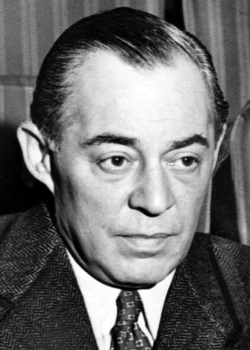 In describing his approach to the film, Richard Rodgers related why he purposely eschewed embracing Oriental musical sensibilities
“In composing the score, I followed my usual custom of writing the best music for the characters and situations without slavishly trying to initiate the music of the locale in which the story is set. Not only would I have been incapable of creating anything authentically Siamese, but even if I could, I wouldn’t have done it. Western audiences are not attuned to the sound of tinkling bells, high nasal strings and percussive gongs, and would not find this music attractive”.
Your reviewer could not disagree more and finds this reasoning, chauvinist and regrettable. Nevertheless, I acknowledge that the final product, creative disagreements aside, was a magnificent achievement.
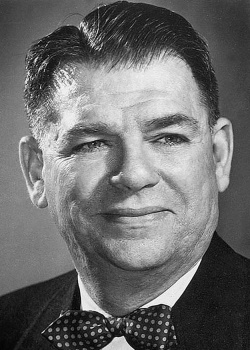
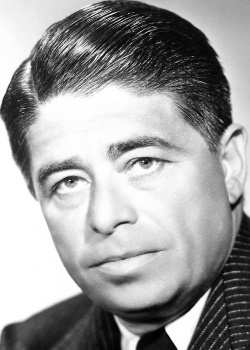
Richard Rodgers and lyricist Oscar Hammerstein II did not have full creative control, as such edits were made to the musical with some songs cut. Management of the music and song arrangement were handled by Director of Music Alfred Newman and Ken Darby, which is why they were awarded the Academy Award for Best Music for a Musical Picture. Studio executive Darryl F. Zanuck had given Alfred Newman complete creative control of the score and he used his team of orchestrators along with assistant Ken Darby to take Rodgers’ melodies and impart them with “the Newman sound”, offering incredibly rich, sumptuous, and colorful cues. Lastly, Newman did infuse Oriental adornment to the music by adding sixteen percussionists, an array of gongs, triangles and drums, vibraphones, marimbas, bass marimba, and an array of tuned gas pipes.
Newman was peerless at scoring musicals and would once again adapt song melodies and use them as leitmotifs that would weave together the various song vignettes into a cogent and unified musical narrative. The song melodies were adapted; the Siamese March uses the melody of the “The March of the Siamese Children”, a marcia tenero rendered with child-like gentility when Anna is introduced to King Mongkut’s children. Yet Newman renders it grandly for important state affairs where it speaks to the pride, regality and formality of the royal Siamese Court. Expressed in ABA form, the proud and declarative A Phrase offers a classic marcia maestoso, while the more lyrical B Phrase emotes with grandeur and grace as a danza elegante. The melody for “Getting to Know You” speaks to Anna’s love and bond with the children, and it emotes with happiness, which flows cantabile. Lastly, the yearning and romantic melody of “Hello Young Lovers” is first heard as Anna sings wistfully about the love of her life, her dead husband Tom. Newman employs the melody as a Love Theme for the doomed romance of Lun Tha and Tiptum.
(*) “Logo” offers Alfred Newman’s iconic fanfare, which supports the 20th Century Fox and Cinemascope 55 logos. “Main Title” offers a grand score highlight, which establishes the regality of the royal Siamese court. The commencement of the opening credits unfolds set in gold script against a crimson rug background stylized with Siamese imagery. “The March of the Siamese Children” melody is rendered in ABA form with the A Phrase expressed in grand style as a proud marcia maestoso, and the lyrical B Phrase as a danza elegante. (*) “Siam 1862” reveals the ship carrying Anna Leonowens and her son Louis’ arrival in the port of Bangkok. Newman bathes us in orientalism with and an array of triangles, gongs and nativist drums. In the distance the royal barge bearing Kralahome, the Prime Minister approaches. Captain Orton offers Anna advice, that she stay on the good side of Kralahome. Louis has trepidations and Anna counsels him on how she manages her fears by singing her happy song, “I Whistle a Happy Tune”. The melody offers an uplifting happy-go-lucky sensibility. Afterwards the meeting with Kralahome gets off on the wrong foot when he states that she will reside in the palace. She refuses, and declares that she will inform the king personally that she insists he honor his pledge of her living in a private brick house outside of the palace.
 (*) “Journey to the Palace” reveals Anna and Louis’ traveling by foot to the palace through the bustling streets of Bangkok behind the open-air liter of Kralahome. Newman offers a sprightly musical narrative of delight and wonderment draped with twinkling orientalism. As the walk inside the palace, woodwinds sereni, adorned with chimes, and triangles support a sense of mystery. In the royal audience hall, the king is angry with petitioners and Kralahome suggests another day would be better to voice her grievances. But Anna is headstrong and insists they proceed. “My Lord and Master” was the first of four songs recorded for the film, but not utilized as the associated scene was never shot. It was intended to reveal Tuptim’s displeasure of becoming a concubine to the king as she and Lun Tha are in love. (*) “Tuptim” opens with a gong strike, which usher is a processcione orientale as Lun Tha, the emissary from the king of Burma, brings a gift to the King Mongkut, Tuptim, a new concubine. He presents his papers and is curtly dismissed. A flute d’amore with twinkling adornment supports he and Tuptim gazing with eyes full of longing as he departs. A gong strike ends the King’s court and he departs. Anna refuses to wait and against Kralahome’s protests walks forward to address the king. After his interrogation, he declares he is pleased and takes her by the arm to visit his harem, where she is introduced to Lady Thiang, his chief wife.
“The March of the Siamese Children” offers a delightful score highlight. It reveals the king ordering Anna to meet his children. One by one they arrive, prostrate themselves to the king and then offering “Wai” to Anna as a gesture of respect. While the march was rendered maestro in the Main Title, here it emotes with child-like gentility. At 1:35 it shifts regally to a marcia imperiosa as the proud Crown Prince Chulalongkorn struts in. After his presentation, the remaining younger siblings are presented, with the march resuming its child-like gentility. “Anna and the Royal Wives” reveals a dozen of the king’s wives giggling with delight and fascination as they go through Anna’s clothes. Newman offers a playful musical narrative full of wonder and delight. A 1:05 the music loses vitality, and becomes tinged with sadness, and longing as they discover a photo of a handsome young man, who Anna says was her husband, Tom. An aching string born romanza unfolds and informs us that he was the love of her life. We flow seamlessly atop plucked harp into “Hello, Young Lovers”, a tender and wistful love ballad.
The next day in (*) “First Lesson” reveals Anna with the King’s children in the open-air palace classroom. A group of chanting monks walk by as more children arrive singing the song “Home Sweet Home” (1823) by John Howard Payne. The king stops crown prince Chulalongkorn and tasks him to recite some things he has learned. The king commends him, and says one day you will know all things. When he asks when will that be, and how will I know it? The king answers, you will know it when you are king! The crown prince departs, and we see that the king is vexed. Horns regale resound, crowned with a gong strike, and the king begins singing “A Puzzlement”. The song shifts from questioning and uncertainty, to buoyant determination as the king struggles to how best prepare his son for kingship;.
“Getting to Know You” offers a musical highlight and one of the finest songs in Rodgers and Hammerstein’s canon. Anna has acclimated to Siam and in this song, she expresses the happiness that she gained and treasures, from getting to know all of the children. The song’s happiness flows cantabile; at 3:02 we shift to an instrumental rendering of the song with oriental adornment, which supports a woman performing the traditional Buddhist fan dance, and then at 3:37 we resume singing the song.
“Garden Rendezvous” offers a romantic score highlight. Newman showers Anna with a twinkling effervescence as she returns to her quarters through the garden at night,. Lun Tha surprises her and pleads for her to help him see Tuptim again. She counsels him to go at once for it is death for him if he is discovered in the pavilion of women. As she walks away, aching strings full of yearning and woodwinds tristi usher in at 0:55 the Love Theme. Anna relents, asks him to wait, and Tuptim eanters the garden. A crescendo romantico carries her run to him, with their theme blossoming as he takes her into a kissing embrace. As our lovers walk together, we are graced with a gorgeous romanza. Yet at 2:10 the music descends into sadness as he kisses her and says that meeting like this is not enough. She kneels in sadness and tells him what he desires cannot be, as she is always watched. With this we flow into “We Kiss in a Shadow” a romantic song highlight, which offers a ballad of yearning love where lyrics, melody and vocals achieve a stirring romantic confluence. He asks her, when can we be together, and she answers; “It can never be Lun Tha”. We shift to the song rendered instrumentally as they kiss, and he promises that when he returns, he will take her away so they can begin their lives together. He picks a white Chaba flower and says when you see this in your path, it means that he comes for her and to be ready. He says watch for it, and she says that she will be ready. We close exquisitely atop a solo violin d’amore as our lover’s part.
 “I Have Dreamed”, which offered an impassioned duet by Lun Tha and Tuptim was the second of four songs recorded for the film, but not utilized as the associated scene was never shot. We are thankful that Newman used in in the Overture bonus cue. (*) “Bad News” reveals Kralahome bringing news that after the seizure of Cambodia by the French, that the Europeans are contemplating carving up Siam among themselves. The king frets on how to counter this but becomes angry from the distraction of Anna leading the children in singing the song “Home Sweet Home”. They quarrel, the issue of the brick house resurfaces, and Anna leaves aggrieved when he declares her his servant and refuses to honor his word. She storms out and declares her intention to return to England. “Shall I Tell You What I Think of You?”, which speaks to Anna’s outrage is the third song that but not utilized as the associated scene was never shot. Later in the day Lady Thiang visits Anna and discloses that the king is in distress as letters have been intercepted that indicate the British believe the king to be a barbarian, and that they plan to make Siam a protectorate of the British Empire. Lady Thiang pleads with Anna to assist the king. When Anna says her principles will not allow her counsel the king, an oboe led prelude usher in Lady Thiang singing “Something Wonderful”, a loving and heartfelt canto di scuse.
“Prayer to Buddha” Anna relents, and agrees to visit the king. To navigate around his imperious ego, she deftly leads him to believe that her idea, was actually his. The solution to dispel the allegation that he is a barbarian is to entertain the visiting British dignitaries with a banquet presented in European fashion, cuisine, and music. His wives would also be presented wearing European fashion. He summons his wives and drags Anna to the temple where he beseeches Buddha to give us his strength and wisdom.
(*) “The Banquet” reveals dignitaries arriving at the palace, including Lun Tha disguised as one of the rickshaw coolies. A spritely European source tune wafts out from the palace. Inside the woman’s pavilion the wives are all giggling at themselves in their new hooped dresses. The king joins for the final inspection and the band takes up the British anthem “Rule Britannia” to support the arrival of the British ambassador Sir John Hay. After the formal greeting, the ambassador and Sir Edward Ramsay are introduced to the king’s wives. In “Waltz of Anna and Sir Edward” the king and the ambassador return to the banquet, while Anna and Edward reacquaint. It is clear that Edward, who once proposed marriage, is still enamored with Anna. As they dance together, a valzer elegante supports in the finest traditions of the Vienna school. The king enters and he is clearly jealous. He orders that there be no dancing until after dinner, and then insists Anna rejoin the guests as both he and Edward offer their arms. Anna accepts the king, much to his satisfaction, and Edward makes a polite exit. (*) “Anna’s Instructions” reveals the king handing her a note, which outlines topics to which she should steer the conversation so he may demonstrate his scientific intelligence. He then takes her arm and escorts her to the banquet hall. Newman supports with a grand and regal rendering of the Siamese March. They greet the dignitaries, take their seats at the resplendent, gold-plated set dining table, followed by their guests. Anna dutifully directs the conversation to a discussion of Moses, much to the delight of the king. We shift to the outside where Lun Tha watches coolies engaging in a wrestling contest. He sneaks away, grabs a bundle of ornate clothes, and departs. Returning to the banquet, Sir Hay makes a toast to the king, who reciprocates with a toast of praise to Queen Victoria.
“The Small House of Uncle Thomas” reveals the king announcing the evening’s entertainment with a Siamese version of a great American story. It opens with massive gong strikes adorned with twinkling hand shaken metallic effervescence as enormous panels are opened to reveal a stage filled with dancers. A prelude by gongs and twinkling metallic shakers usher in opening commentary by Tuptim. The performance is supported musically with orientalism, with the actors all dressed in ornate Siamese costumes. At 4:35 a menacing drum empowered musical narrative supports the entrance of our villain. At 5:35 a steady drum cadenced supports Eliza’s flight, which escalates into a strident crescendo of desperation as Simon closes in. At 7:06 a gong strike usher in a diminuendo tranquillo, from which is born a danza felice; twinkling metallic effervescence by chimes and glockenspiel support Buddha’s gift. At 8:13, as she crosses the frozen river, the gossamer-like melody of the Love Theme emerges. At 9:03 stylized snowflakes, stars sent from heaven descend, evoking a sense of wonderment. At 9:49 the ferocious drums empower the strident menace of Simon. At 10:11 a musical paean of joy is manifest; here the king realizes that Tuptim is speaking to him directly and he snaps his fingers to force her into submission. She returns to her role as Eliza, and continues; at 11:45 a gong strike initiates a musical narrative of sadness. We close at a refulgent farewell as we see Eliza ascend through the clouds to join Buddha.
The guests are delighted and applaud as the actor’s line up on stage and take their bows. The king is visibly displeased as Sir John calls out for the author, but she is not to be found, with only a white Chala flower seen on the lectern. Outside Lun Tha brings a veiled Tuptim to the gate in a rickshaw, claiming his mistress is ill and needs to return home. The guards are fooled, and allow them to exit. “Song of the King” was the last of four songs recorded for the film, but not utilized as the associated scene was never shot.
Later that night in “Shall We Dance?” the guests have all left and Anna joins the king who is eating alone at the banquet table. He asks her to sit and she commends him for his hospitality as host She tells him that she believes Sir John Hay will make a favorable report to Queen Victoria. He thanks her for all that she has done, and gifts her a beautiful jade ring, which she graciously accepts. He relates the discovery of a white elephant, a harbinger of a gift from heaven. The sexual tension that has been simmering now becomes noticeable as he looks at her and says everything is good between us. Anna is uncomfortable and repositions her shawl closing off her bodice. Tuptim comes up in the conversation, and he says she is hiding in the palace to avoid his anger. This elicits a conversation on the role of women with the obvious result of a clash of cultures. She relates her experience as a young woman who waited with nervous anticipation for a dashing young man to ask her to dance. And we flow into another iconic Rogers and Hammerstein song and one of the musical’s finest scenes.At 1:18 we shift to an instrumental rendering of the melody as she begins to dance. The king is intrigued, and when she expresses discomfort dancing alone, he joins her and at 1:57 the two begin to dance together. At 2:38 we shift back to the orchestra as they continue to dance two hands out-stretched to each other and he stops. At 3:15 we shift to the B Phrase which is less formal and more lyrical. He drops all pretenses and says this is not how he saw European’s dancing, instead he saw the men hold the women in their arms. She sees where this is going, hesitates, but acquiesces as he puts his hand around her waist, brings her into him gently taking her left hand and at 3:42 the dance blossoms as the two dance joyously. They stop, gaze at each other, and we see that the long suppressed sexual tension has been forced to the surface. He slowly moves toward her, but instead of kissing her, says, “Let’s do it again!” We reprise the passage at 3:42 when the music again blossoms as they circle the banquet hall. A gong strike shatters the moment as Kralahome arrives with news that Tuptim has been captured, and that they are still searching for her lover Lun Tha. The king is outraged, has her brought in, and orders her whipped. An argument for the ages erupts as Anna vigorously comes to her defense, calling him a barbarian and challenging his kingship. When he takes his whip and she stands resolute over Tuptim, the king acquiesces, loses face in front of Kralahome and his guards, and storms out humiliated. As Kralahome orders Tuptim removed, a guard arrives and informs them that Lun Tha drowned in the river, which shatters Tuptim. Kralahome rebukes Anna for destroying the king. He says he wished she had never come to Siam. She gives him the ring gifted to her by the king and answers, “So do I!” as she runs out sobbing.
(*) “Anna Prepares to Depart” reveals strings affanato supporting guards carrying her luggage to the docks. Anna goes to the window of her bedroom, looks across to her classroom, and hears a ghostly refrain of the children singing “Getting to Know You”. Lady Thiang and Crown Prince Chulalongkorn arrive and a sad musical narrative unfolds as she relates her request to visit the king, as he is dying. She says that since the night of the banquet he has been a broken man, refusing to eat or drink. “The Letter” offers a profoundly moving score highlight. Lady Thiang hands Anna a letter from the king, which she reads aloud;
“Why I am lying here, I think, perhaps I die. This heart, which you say I have not got, is matter of concern. It occurs to me that there shall be nothing wrong, that men shall die. For all that matters about man… is that he shall have tried his utmost best. In looking back, I discover that you think much…on those people…who you require that you live up to best of self. You have spoken truth to me always, and for this I have often lost my temper on you. But now I do not wish to die… without saying this gratitude, and large respect, et cetera, et cetera. I Think it very strange that a woman… shall have been most earnest help of all. But Mrs. Anna you must remember…that you have been a very difficult woman…and much more difficult than generality.”
Newman supports with an aching string borne Pathétique, which leaves Anna sobbing, and full of regret. (*) “Anna Visits the King” reveals Anna confiding to Louis that she liked the king very much as she dons her bonnet and departs to visit him. In his study his wives and Chulalongkorn hold a bedside vigil as monks chant. She arrives, and he bids her to come to him. He again gifts her his jade ring and confirms that he too will soon be leaving. His children arrive and he bids them to enter. He then permits Princess Ying Yaowalak to give Anna a message from the children, begging her to stay as she means so much to them. The children all plead for Anna to stay as she cries and hugs the princess. The boat horn sounds its departure and the melody of Getting to Know You” joins and we see it preying on Anna’s conflicted mind. She orders Louis to the docks and to have Captain Orton unload all their luggage as they are staying.
“Something Wonderful” (Finale) reveals King Mongkut declaring that he is increasing Anna’s salary to £25 / month. He the declares that Chulalongkorn shall succeed him and be king. He asks what proclamations he will decree and he declares fireworks and boat races for New Year’s celebration, and that he will end the practice of prostration. Mongkut places the blame of this on Anna, whom accepts responsibility with pride. The king’s life is ebbing and Newman weaves sentimentality into a very moving lamentoso. As the king passes, mixed chorus enters at 1:44 for a heartfelt homage, which culminates with a glorious flourish.
“Overture” offers a magnificent album highlight, a bonus cue, that was not used as was the practice, to play before the film. Instead, marketing decided to have Alfred Newman record one, which would be added to the studio’s LP release of the musical. We open grandly with two fanfare orientale declarations, crowned by a gong strike, and adorned with twinkling effervescence. At 0:25 we segue into “I Have Dreamed” rendered as elegant valzer romantico. At 1:49 we flow with delight into “Getting To Know You”. At 2:30 we flow into “We Kiss In The Shadow”, which offers an aching and yearning romanticism. At 4:24 we conclude with the molto romantico “Hello Young Lovers” rendered also joyously in waltz form.
I commend Didier C. Deutsch and Charles K. Granata for this wonderful re-issue of the Academy Award winning musical, “The King and I”. The technical team remixed and remastered the 20th Century Fox original six channel stereo magnetic film session recordings, and the 1958 Capital Records ½ inch 3 track, 15 ips stereo master tapes. Minor audio imperfections exist due to some deterioration of the master sources. I believe however these do not detract from one’s enjoyment or listening experience. I believe Alfred Newman understood that while the song vignettes are the heart of any musical, how they are woven together, and how the intervening non-song scenes are supported musically are essential determinants of a musical’s success. The film’s narrative was set in the royal court of Siam, and offered stories of Anna’s love of her pupils, as well as the tragic romance of Lun Tha and Tuptim. Newman masterfully utilized three of Rodger’s song melodies, and infused exquisite orientalism into them, to support the setting, as well as these stories so as to create a cogent and unifying musical narrative. The “March of the Siamese Children” was transformed into a grand Siamese March, which was used to symbolize the king’s power, dominion, and Siamese pride. The tender “Getting To Know You” spoke of Anna’s love of the king’s children, while “Hello Young Lovers” tragically portended a love, which could not be. I believe Newman’s handiwork masterfully enhanced the film’s narrative flow, emotional power, and storytelling, elevating it in every way. As a lover of Rodger’s and Hammerstein, Alfred Newman, and Golden Age Hollywood musicals, I submit that this album is an essential purchase, along with a viewing of the film.
For those of you unfamiliar with the score, I have embedded a YouTube link to the Overture; https://www.youtube.com/watch?v=By56OpCY8KA&list=PLh3-icSKvfhl3maTtKmY3np17zLUOz_pR
Buy the King and I soundtrack from the Movie Music UK Store
Track Listing:
- Main Title (1:40)
- I Whistle a Happy Tune (2:41)
- My Lord and Master (2:10)
The March of the Siamese Children (3:23) - Anna and the Royal Wives (2:29)
- Hello, Young Lovers (3:28)
- A Puzzlement (3:27)
- Getting to Know You (5:00)
- Garden Rendezvous (2:31)
- We Kiss in a Shadow (2:38)
- I Have Dreamed (3:36)
- Shall I Tell You What I Think of You? (3:37)
- Something Wonderful (3:09)
- Prayer to Buddha (2:16)
- Waltz of Anna and Sir Edward (1:40)
- The Small House of Uncle Thomas (12:57)
- Song of the King (1:32)
- Shall We Dance? (4:22)
- The Letter (3:02)
- Something Wonderful – Finale (3:11)
Overture (6:36)
Angel Classic Musicals 7243 5 27351 2 9 (1956/2001)
Running Time: 75 minutes 25 seconds
Music and lyrics by Richard Rodgers and Oscar Hammerstein II. Score adapted by Alfred Newman. Conducted by Alfred Newman. Orchestrations by Edward B. Powell, Robert Russell Bennett, Bernard Mayer and Gus Levene. Recorded and mixed by XXXX. Edited by XXXX. Score produced by Alfred Newman. Album produced by Didier C. Deutsch and Charles K. Granata.

Shop at the Movie Music UK Store

Member of the

 MOVIE MUSIC UK