Under-the-Radar Round Up 2025, Part 2
 Original Reviews by Jonathan Broxton
I’m pleased to present the latest installment in my on-going series of articles looking at the best under-the-radar scores from around the world.
This article, the second of 2025, covers another six scores released in the first quarter of the year from a wide array of genres and countries, including a quirky Italian comedy-drama, a Spanish documentary feature about a contemporary Christian music group, an Italian WWII drama, a French animated film about Frida Kahlo, a Finnish crime drama TV series, and a Swedish animated film about a super-hero baby!
AMICHE MAI – Carlo Siliotto
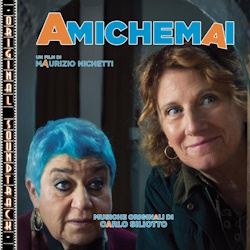 Amiche Mai is an Italian comedy-drama film written and directed by Maurizio Nichetti. The film stars Angela Finocchiaro as Anna, an enthusiastic veterinarian who divides her time between managing her family farm and the many roles that, in turn, make her an enamored wife, an affectionate daughter, an anxious mother, and a patient grandmother. The sudden death of Gino, Anna’s sick father, provides her with the opportunity to finally free herself of her father’s caregiver, Aysè, with whom she has a tense relationship. However, circumstances result in Anna having to travel with Aysè to her native Turkey with the old bed that Gino bequeathed to her, on a journey through the Balkans that is destined to change both their lives forever. The title of the film translates to English as ‘never friends,’ which perfectly sums up Anna and Aysè’s relationship.
The score for Amiche Mai is by composer Carlo Siliotto, who in my opinion is one of the great underrated composers of European cinema. Siliotto has been working in film since the mid-1980s, and has written some outstanding scores – I particularly like La Corsa dell’Innocente (1992), Fluke (1995), Nomad (2006), and Instructions Not Included (2013), among many others – but for some reason he is not as well known as many of his contemporaries, and he gets fewer high profile assignments, despite him being (in my opinion) a better composer than many of them. In many ways, Siliotto is one of the last links to the heyday of Italian film music, in that he has maintained the sense of thematic beauty and orchestral richness that other Italian composers of his generation – Pino Donaggio, Nicola Piovani, Fabio Frizzi, Guido and Maurizio De Angelis – also had, and which is now often sorely lacking.
Amiche Mai is a great example of exactly that. It is performed by the Orchestra di Roma and is a warm, inviting, sunny comedy-drama score filled with lyricism, heart, and no small amount of good humor. The score is bookended by an original song, “Nennede Nenne,” which is written by Siliotto and is performed in what appears to be a combination of Italian and Turkish by vocalist Yasemin Sannino. It’s a lovely work; slow, intimate, soulful, with a lullaby-like melody and delicate orchestrations led by an acoustic guitar.
The rest of the score is just as lovely. Cues like “Primo Viaggio,” the more playful and whimsical “Voglio La Metà,” and “Preko Rieke” have an ancient-sounding violin part that is just wonderful, somehow exotic and familiar at the same time, and which has flavors of Balkan folk music running through its melodic content. In many of these cues the main ‘Nennede Nenne’ theme is referenced frequently, sometimes in plucked basses, sometimes in high flutes, all expertly linking both the score and song together. “Preko Rieke” features also a prominent performance by Balkan bagpipes, which until I recently didn’t even know where a thing, but here offer a wholly unexpected sound.
Elsewhere, “I Soldi” is quirkily comedic, with a prominently featured clarinet part duetting with a violin. “Morte del Padre” is as tenderly emotional as one would expect. “Presepi e Bambini” has an appropriate touch of Christmas in its orchestrations. “La Coltellata” adopts a darker and more mysterious tone, and augments the strings with whooping vocal textures and a marimba.
Amiche Mai is a small, low-key, understated work that may not set heart-rates aflame or appeal to anyone who needs more action in their film music, but I personally found to be lovely – beautifully orchestrated, subtly emotional, and with a beguiling folk music element that makes the whole thing charming. It’s also a welcome reminder that Carlo Siliotto is still writing excellent melodic film music, forty years down the line, and needs to be heard in the mainstream more frequently than he is. Unfortunately, the score for Amiche Mai has not been released on CD, but the music is available to download and stream from all the usual online resources, via Didyme Music.
Track Listing: 1. Nennede Nenne (performed by Yasemin Sannino) (2:23), 2. Primo Viaggio (3:00), 3. Voglio La Metà (2:46), 4. I Soldi (2:16), 5. Stanza d’Albergo (1:51), 6. Morte del Padre (1:39), 7. Presepi e Bambini (2:39), 8. Ultimo Marito (1:05), 9. La Coltellata (0:56), 10. Preko Rieke (1:20), 11. Drone Casa (1:36), 12. La Camera dei Bambini (Nennede Nenne Ripresa) (performed by Yasemin Sannino) (3:27). Warner Music Italy, 24 minutes 58 seconds.
DESCALZOS – Óscar Martín Leanizbarrutia
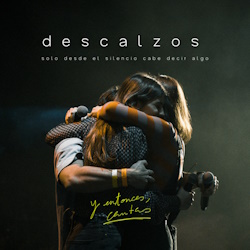 Descalzos is a Spanish documentary feature directed by Santos Blanco about ‘the transformative power of music,’ and specifically looks at the work of the Hakuna Group Music, the musical branch of the Catholic youth movement ‘Hakuna’ based in Madrid, Spain, which creates and performs faith-based contemporary Latin pop music.
The score for Descalzos is by composer Óscar Martín Leanizbarrutia, whose recent scores for faith-based Spanish-language dramas and documentaries such as Red de Libertad, Claret, Petra de San Jose, Libres, and others, earned him three IFMCA Award nominations, and a reputation as one of the outstanding young composers in Spanish cinema.
The score is an interesting combination of thematic orchestral passages, more intimate writing, traditional instruments including guitars, and more contemporary rock and pop beats that reference the upbeat, modern sound that Hakuna uses to spread their faith. One thing Leanizbarrutia has always shown in his writing is a penchant for deeply emotional, ravishing string writing, and that is definitely the case again here; in cues like the opening “Introducción,” throughout “Necesidad de Expresión” and “Hora Santa,” and in the warm, spiritual “El Sentido de la Maravilla” Leanizbarrutia’s cello writing is just beautiful.
Elsewhere, “Creación” is soft and quiet, almost whispery piece for ethereal flutes and rattling percussion textures, the vocal parts of “El Sentido de la Maravilla” have an air of Ennio Morricone’s The Mission, and large parts of “Hora Santa” features some appealingly expressive writing for a solo Spanish guitar. It’s all lovely, and it rises to a magnificent high during the conclusive “Final”.
However, depending on your point of view, the fact that the album regularly incorporates extracts from Hakuna’s Spanish-language pop and rock songs – sometimes, right in the middle of cues – will either be an intense irritation, or an appropriate reflection of what the film actually about. I can appreciate both arguments but, from my point of view, I would have preferred Leanizbarrutia’s score and the songs to have been separated out entirely – irrespective of how appropriate they are, the songs do somewhat interrupt and undermine the flow of his otherwise outstanding writing.
With that one caveat in mind, Descalzos still gets a recommendation from me, especially for anyone who has heard and loved Leanizbarrutia’s gorgeous string elegies in any of his previous acclaimed works. Unfortunately the score for Descalzos has not been released on CD, but the music is available to download and stream from all the usual online resources.
Track Listing: 1. Introducción (de Nacidos de lo Alto) (3:34), 2. Necesidad de Expresión (4:05), 3. Creación (2:18), 4. El Sentido de la Maravilla (4:20), 5. Hora Santa (de Noche) (9:40), 6. Ser Como Niños (de Descalzos) (2:45), 7. Final (de Trueno) (4:54). Hakuna Group Music, 20 minutes 03 seconds.
LA FARFALLA IMPAZZITA/THE CRAZY BUTTERFLY – Giuliano Taviani, Carmelo Travia
 La Farfalla Impazzita, translated as The Crazy Butterfly, is an Italian drama TV movie directed by Enrico Rosati, that tells the true story of Giulia Spizzichino, a Roman Jew who managed to escape the roundup of the ghetto of Rome on October 16th, 1943, and, subsequently, survived the Massacre of the Fosse Ardeatine, a mass killing of hundreds of civilians and political prisoners carried out in by German occupation troops during the Second World War.
The score for La Farfalla Impazzita is by the Italian composing duo Giuliano Taviani and Carmelo Travia. Giuliani is the son of legendary film director Vittorio Taviani, and he has been working with Travia for many years – they won the David di Donatello Award for Best Score for Cesare Deve Morire in 2012. Despite their success in Italy, Taviani and Travia have for some reason never gained an international profile, and I only really discovered them properly last year with their score for director Ferzan Özpetek’s Diamanti, but with that score and now this one they have quickly become composers for whom each new release is a vital listen.
The music here is bold and melodramatic, but also imbued with a sense of romance and hopefulness, as befits the story of a man who suffered so much tragedy in his life but survived against all the odds. The main theme, “La Farfalla Impazzita,” is a stunner, a rhapsodic piano melody that erupts into sweeping strings in its second half. This theme is present in numerous subsequent cues, which anchors the score in a clear and recognizable melodic identity for Spizzichino and his story.
Other cues of note include the slightly abstract “21 Marzo 1944” which shifts in tone from dourly painful to quirkily optimistic, the Rota-esque waltzing period string sound of “I Fiori dell’Anima,” the hypnotically haunting piano writing in “La Casa della Memoria,” the overwhelmingly tragic pair “Sette Stelle” and “Ultimo Viaggio”.
La Farfalla Impazzita is a serious, dramatic score, full of weighty strings and heavy emotional content, but it confirms without a doubt that Giuliano Taviani and Carmelo Travia are among the most important and vital composers working in the Italian film industry today, who are helping Italy have a film music renaissance that could in time bring them back to its purple period of the 1960s and 70s. Unfortunately the score for La Farfalla Impazzita has not been released on CD, but the music is available to download and stream from all the usual online resources, via Didyme Music.
Track Listing: 1. La Farfalla Impazzita (1:51), 2. 21 Marzo 1944 (2:51), 3. I Fiori dell’Anima (2:54), 4. La Casa della Memoria (1:59), 5. La Verita’ (1:31), 6. La Farfalla Impazzita Versione 1 (1:56), 7. Rascianim (2:05), 8. Sette Stelle (1:19), 9. 21 Marzo 1944 Versione 2 (1:32), 10. Collana di Conchiglie (1:54), 11. Inchiostro (2:36), 12. Ultimo Viaggio (1:51), 13. I Fiori dell’Assassino (1:51), 14. Marcolino (2:45), 15. La Farfalla Impazzita Versione 2 (1:02), 16. Desaparecidos (1:53), 17. Ultimo Viaggio Versione 1 (4:40). Didyme Records, 36 minutes 30 seconds.
HOLA FRIDA – Laetitia Pansanel-Garric
 Hola Frida is a French-language animated film directed by André Kadi and Karine Vézina which tells a fictionalized story of the childhood adventures of Frida Kahlo, growing up in Coyoacán, Mexico City, in the 1910s as she overcomes adversity by using her vibrant imagination. Kahlo would, of course, grow up to become an acclaimed and influential artist, known for her vibrant, intimate, and symbolic self-portraits that explored themes of identity, sexuality, and death.
The score for Hola Frida is by French composer Laetitia Pansanel-Garric, who is likely to be a new name for most people reading this; she has actually been working in French television and cinema since the mid-2010s, but I only discovered her music a couple of years ago, and I was immediately impressed with her scores for Pamfir from 2022 and L’Home Dels Nassos last year.
Pansanel-Garric’s score is a bold, energetic delight, bursting with life and color, in much the same way as Kahlo’s paintings popped from the canvas. She blends a small orchestra with regional instruments – accordions, guitars, specialty percussion, Mariachi-style trumpets and violins – into a series of gorgeous, thematically strong passages that speak to Frida’s life and her youthful exuberance, while also touching on the tragedy and hardships she endures.
Cues like the opening “Récit d’Enfance Sur Un Air de Llorona, the celebratory “Une Belle Journée,” the impressionistic and varied “Le Rêve,” “Patte de Poulet,” “Envol Du Grand Aigle,” the flamboyant “L’Entraînement,” and “La Course” cover a myriad of emotions and approaches, but all have a real sense of style and elegance, playful vivaciousness, and all have a distinct song-like and dance-like musicality that is just lovely. Some cues also occasionally feature a soft, almost spiritually angelic choir, which adds a beautiful and different dimension to the score.
At the other end of the scale, cues like “Le Peuple Des Nuages,” “Souvenirs,” and “La Maladie” are softer and more intimate, and often feature the tender Spanish guitars more prominently to excellent effect. “Les Zapotèques” uses ethnic woodwinds to create an unusual, haunting atmosphere that speaks to Mexico’s Aztec history. “L’Accident,’ of course, underscores the pivotal scene where 17-year-old Frida is seriously injured in a bus crash, changing her life forever in an instant. Pansanel-Garric scores the scene with a sort of detached serenity combined with dissonant anguish and even a moment of intense orchestral action, a very clever and moving approach, and then the whole thing ends on a sweeping high in the rapturous, positive “Combat Contre La Muerte”.
Also included is the original title song, “Hola Frida,” co-written by Pansanel-Garric with French nouvelle-chanson pop singer Olivia Ruiz, and performed by Ruiz in two versions, one in French and one in Spanish. It’s lovely, one of my favorite original songs of the year to date.
The whole thing is a delight, a warm and inviting and emotional celebration of Frida Kahlo’s life and art, of Mexican culture in general, and earmarks Laetitia Pansanel-Garric as composer worth watching going forward. Unfortunately the score for Hola Frida has not been released on CD, but the music is available to download and stream from all the usual online resources, via 22D Music.
Track Listing: 1. Hola Frida – Version Française (performed by Olivia Ruiz) (3:39), 2. Récit d’Enfance Sur Un Air de Llorona (3:32), 3. Dessin Au Vent (1:22), 4. Le Peuple Des Nuages (1:37), 5. Une Belle Journée (1:03), 6. Le Rêve (4:55), 7. Les Zapotèques (1:04), 8. Souvenirs (1:54), 9. La Muerte (1:06), 10. La Maladie (1:46), 11. Frida Retourne à l’École (0:50), 12. Patte de Poulet (1:59), 13. Une Femme Déterminée (2:21), 14. Envol Du Grand Aigle (1:10), 15. L’Entraînement (2:26), 16. Le Ruban (0:53), 17. Célébrations (1:50), 18. La Course (2:16), 19. La Preparatoria (1:04), 20. Découverte De La Fresque (0:52), 21. L’Accident (4:16), 22. Combat Contre La Muerte (2:08), 23. Hola Frida – Version Espagnole (performed by Olivia Ruiz) (3:39). 22D Music, 47 minutes 42 seconds.
QUEEN OF FUCKING EVERYTHING – Lauri Porra
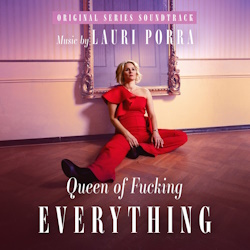 Queen of Fucking Everything is Finnish TV series directed by Tiina Lymi starring Laura Malmivaara as Linda, a successful real estate agent who wakes up one day to find out that her husband is gone, and has left her millions of Euros in debt. In order to survive and maintain her lifestyle, Linda reluctantly turns to a life of crime, and finds herself navigating Helsinki’s criminal underworld. However, despite some initial misgivings and one or two initial mistakes, Linda soon finds that she is unexpectedly at home and accomplished in her new surroundings.
The score for Queen of Fucking Everything is by Finnish composer Lauri Porra, who enjoyed a breakout year in 2024 via his spectacular score for the drama film Stormskerry Maja. Porra is the great-grandson of famous Finnish classical composer Jean Sibelius, and is well known in Finland not only for his work scoring film and TV projects, but as a recording artist and classical composer in his own right, and through his high-profile gig as the bass guitarist in the power metal band Stratovarius.
Queen of Fucking Everything is a very different score from Stormskerry Maja, but no less impressive in its own way. It is upbeat, lively, jazzy, and infectious, playing a bit like a 1970s action caper score, often infused with an unexpected flavor of Latin dance music. The opening title track is a knockout, a flurry of scintillating strings backed by hand-clap percussion and jazz grooves; several subsequent cues adopt a similar sound, including “00700 Hustle,” the more languid “Luxury and Lies,” and the spirited and energetic “Finders Keepers,” all of which add a sense of style and espionage-thriller energy to Linda’s increasingly perilous forays into Finnish organized crime.
Elsewhere, cues like “Pawnshopping,” “I Never Haggle,” “Good Olives,” have a seductive, spicy, tango-like tone, cleverly illustrating the intellectual dances Linda must perform in order to succeed. “Queen’s Move” is dramatic and intense, full of highly classical thrusting string flurries. Many of the cues in the second half of the score, notably “Warning Lights,” “Candyman,” and “Victor’s Spoils,” are darker and moodier, eerie synth tonalities and harsh electric guitars playing over banks of nervous strings and staccato pianos to illustrate the more dangerous side of Linda’s new life. “Good Day,” on the other hand, is almost euphoric, and has a distinct Thomas Newman vibe in the percussion notes.
Overall this is great stuff, hugely entertaining, and confirms to me the fact that Lauri Porra’s success with Stormskerry Maja was not any kind of flash in the pan, and that he in fact clearly has a great deal of versatility and the talent to tackle any genre. Unfortunately the score for Queen of Fucking Everything has not been released on CD, but the music is available to download and stream from all the usual online resources, via Platoon Music.
Track Listing: 1. Queen of Fucking Everything (1:17), 2. 00700 Hustle (1:43), 3. Pawnshopping (1:55), 4. Luxury and Lies (1:45), 5. I Never Haggle (2:17), 6. Finders Keepers (1:04), 7. Good Olives (1:42), 8. Frozen Lake (1:49), 9. Queen’s Move (2:10), 10. Warning Lights (2:17), 11. Candyman (2:01), 12. The Echo of Us (1:51), 13. Victor’s Spoils (1:50), 14. Queen’s Lament (1:02), 15. Good Day (3:04), 16. Bad Piano (2:05), 17. Sad Sine (3:29), 18. Point of No Return (2:35), 19. Sine and Bass I (2:48), 20. Sine and Bass II (2:34), 21. Day Spa (1:39). Platoon Music, 42 minutes 57 seconds.
SUPER CHARLIE – Jonas Wikstrand
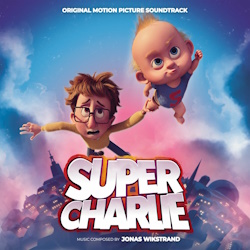 Super Charlie is a Swedish animated children’s adventure film directed Jon Holmberg. It tells the story of ten-year-old Wille, a precocious young boy who has always dreamed of becoming a superhero and taking down criminals with his policeman father. However, his dream is dashed when a new little brother named Charlie is born – because not only does the little one get all the attention, Wille also discovers that Charlie has real, actual superpowers.
The score for Super Charlie is by Swedish composer Jonas Wikstrand, who I only discovered last year via his excellent score for the Cold War action-drama TV mini-series Whiskey on the Rocks, but who has been working solidly in the trans-Scandinavian film and TV music industry for many years. Based on the quality of those two scores he is clearly an impressive talent.
The music is great – a classic bombastic super hero score with a rousing main theme, plenty of action, and some moments of emotional depth, all with a playful and kid-friendly tone that makes for a super easy and enjoyable listen. After the unexpectedly moody “Super Charlie Titles,” cues like “All About The Family” and “Lost & Forgotten” offer light and whimsical takes on Swedish suburban life with light rock grooves and pleasant orchestral accents, although these are interspersed with some more jazzily dynamic sequences that touch on young Wille’s super hero fantasies.
Once the super hero aspect of the story begins in earnest the score changes tack, and Wikstrand’s resulting action music is terrific – rhythmic, punchy, beefy, superbly orchestrated, hugely entertaining. Cues like “Stardust” and “Through the Warehouse” are impressive, and then the statements of the rousing main theme in “Super Charlie Begins,” “Charlie vs. the Bullies,” and the outstanding “The Stroller Chase” are just terrific. These cues contrast with the more emotional, sometimes darker string writing in cues like “He Can Talk,” the nervous energy of “The Origin Story,” and then rousing finale “Inferio”.
Honestly, why aren’t guys like Jonas Wikstrand being asked to write scores like this for mainstream American action super hero movies? They deserve the chance, and the end result would be ten times more entertaining and engaging than most of the stuff that Hollywood puts out for these types of films these days. Unfortunately the score for Super Charlie has not been released on CD, but the music is available to download and stream from all the usual online resources, via GL Music Entertainment/Warner Music.
Track Listing: 1. Super Charlie Titles (0:50), 2. All About The Family (3:29), 3. Stardust (3:08), 4. Responsibility (1:43), 5. Lost & Forgotten (2:03), 6. Super Charlie Begins (4:17), 7. Lost Traces (2:09), 8. Anton’s Lab (1:41), 9. He Can Talk! (2:10), 10. Charlie vs. the Bullies (1:48), 11. The Origin Story (3:56), 12. The Stroller Chase (2:01), 13. Through the Warehouse (4:08), 14. Behind the Scenes (2:37), 15. A Child Is Born (1:26), 16. Inferio (5:37). GL Music Entertainment/Warner Music, 43 minutes 03 seconds.
-
February 6, 2026 at 8:01 amMovie Music UK Awards 2025 | MOVIE MUSIC UK

Shop at the Movie Music UK Store

Member of the

 MOVIE MUSIC UK