CAROUSEL – Richard Rodgers, Oscar Hammerstein II, Alfred Newman
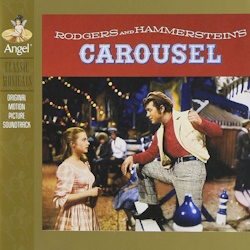 GREATEST SCORES OF THE TWENTIETH CENTURY
Original Review by Craig Lysy
In 1945 composer Richard Rodgers and lyricist Oscar Hammerstein II adapted the 1909 play “Liliom” by Hungarian playwright Ferenc Molnár into a Broadway Musical titled “Carousel”. It had a very successful run and in 1955 they secured backing from 20th Century Fox Studios to do a film adaptation. Studio executive Darryl F. Zanuck and Henry Ephron would manage production with a $3.3 million budget. Ephron would also write the screenplay, and Henry King was given the reins to direct. A fine cast was brought in, including Gordon MacRae (replacing Frank Sinatra) as Billy Bigelow, Shirley Jones as Julie Jordan, Cameron Mitchell as Jigger Craigin, Barbara Ruick as Carrie Pepperidge, and Gene Lockhart as the Starkeeper. Ruick, of course, would go on to become John Williams’s first wife when they married later in 1956.
The story is set in the Maine town of Boothbay Harbor. Billy Bigelow a roughneck Carousel barker and Julie Jordan a mill worker, meet, fall in love and get married. In dual strokes of bad luck, both are simultaneously fired from their jobs. They move in with her cousin Nettie, but Billy becomes bitter from being unable to find work and become physically abusive to Julie. His old boss offers him his job back if he leaves Julie, which he considers, but then declines when she advises him that she is pregnant. Now desperate for cash, Billy plans a robbery, which goes south, results in him being accidentally killed, and he dies in Julie’s arms full of regret. Years later Billy gets permission from Heaven for a brief visit to see his daughter Louise, to which he gifts a heavenly star. Julie catches a brief glimpse of him and believes he came back for a reason. His wish for a second trip back is granted for Louise’s high school graduation where they are at last united in love. The film was a modest commercial success, earning a profit of $450,000. Critical reception was generally positive and today the musical is regarded as Richard Rodger’s favorite from his canon. The film however failed to earn any Academy Award nominations.
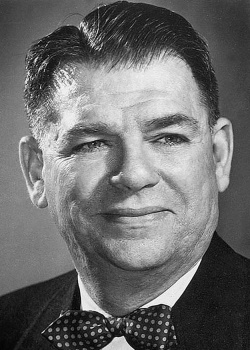
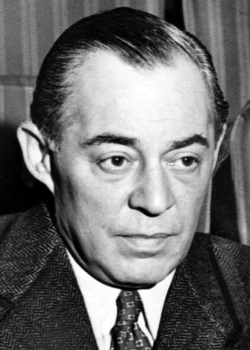 Unlike their award-winning musical “Oklahoma!”, 20th Century Fox executive Darryl F. Zanuck did not relinquish creative control to Richard Rodgers and lyricist Oscar Hammerstein II. As such edits were made to the musical with some songs cut, the film opening with a scene in Heaven with flashbacks, and several instances where the studio offered alternative lyrics, which it believed would allow the songs to pass the censors.
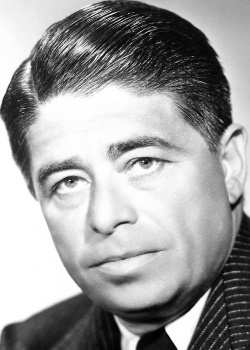
Composer Alfred Newman was tasked with adapting music for the underscore. He was renowned in Hollywood for this, having previously won multiple Academy Awards for adapted scores for musicals, including Alexander’s Ragtime Band in 1938, Tin Pan Alley in 1940, Mother Wore Tights in 1947, With A Song In My Heart in 1952, Call Me Madam in 1953. Newman just excelled in adapting and reorchestrating song melodies and using them as leitmotifs in which he would weave the many song vignettes together to create a unified musical narrative. In conceiving their songs, Rodgers and Hammerstein II strove to imbue them with local color, intimacy, yet also with a dark undercurrent running throughout. In relating how the two worked together for the first time Rodgers related that Hammerstein II said;
“I’ll write the words and you’ll write the music. Rodgers asked, “In that order? And added; “If that’s all right with you. I prefer it that way.” Hammerstein II closed with; “You won’t hear from me until I have finished the lyric.”
Rodgers went on to explain his creative process;
“When I get an idea for a song, even before jotting down the notes, I can hear it in the orchestra, I can smell it in the scenery, I can see the actor who will sing it, and I am aware of the audience listening to it…once I had Oscar’s words before me, it did not take long to create the music.
For Newman’s score, four song melodies were adapted, reorchestrated and embellished. The first was the Carousel Waltz, which earns Richard Rodgers, immortality. Rendered with an ABA construct, the A Phrase is simply glorious, a sumptuous and vibrant valzer felice which just sweeps you away. The B Phrase strongly contrasts, offering a more masculine, strident and aggressive quaternary cadence. The waltz is closely identified with Billy, who worked as a carousel barker, someone who uses good humor and charisma to entice people to ride the carousel. Second, we have the song melody from “If I Love You”, which serves as a Love Theme for Billy and Julie. It is aspirational, yearning and achingly romantic. Third, we have the song melody for “June Is Bustin’ All Over”. The tune is vibrant, celebratory and propulsive, and Newman employed it to maintain the film’s narrative pacing, add excitement, and even a wondrous nautical flavor as the town sails to the clam bake island. Lastly, we have the tear-evoking song melody for “You’ll Never Walk Alone”, which just soars with an uplifting, inspirational and hopeful message to persevere no matter how hard, or how long, to reach your goals.
 (*) “Logo” offers Alfred Newman’s iconic 20th Century Fox – CinemaScope 55 fanfare. We flow into “Introduction” where we see Billy sitting on a ladder in Purgatory and whistling the melody of the Carousel waltz as he polishes crystalline stars. For the ensuing conversation, Newman drapes the us with ethereal with a shimmering effervescence. Billy’s friend joins and advises that there is trouble with his kin folk on Earth. Yet when Billy asks if it was Julie, or his girl, his friend answers he does not know, which irritates Billy. He then tells Billy that everyone is given one day to visit, and perhaps he wanted to use his and go back and help. Now intrigued, Billy asks who must he ask, and he is told, the Star Keeper. He goes to the Star Keeper’s office and asks to be sent back. When he is asked about his life, he begins to reminisce and we flashback to his days as a carousel barker carried by a magnificent score highlight – “Main Title: The Carousel Waltz”. A crescendo glorioso launches the Carousel Waltz melody that unfolds grandly, which supports the film’s title display, and the commencement of the opening credits. Newman graces us with a wondrous and vibrant rendering of the Carousel melody rendered as a vibrant valzer felice. Julie arrives and becomes transfixed and smitten on Billy, who welcomes the attention. To her delight, he joins her on the carousel for a ride. Afterwards an argument ensues between Mrs. Mullin who is Billy’s boss, Julie, and her friend Carrie. Billy comes to Julie’s defense, which escalates the argument and ends with him being terminated. Afterwards, he invites her to join him on a lakeside bench under a tree after he has had a beer at the saloon.
“You’re A Queer One, Julie Jordan” was dialed out of the film to reduce the film’s running time. As Julie and Carrie walk together Carrie is giddy, telling Julie that now that she has a man, that she can tell her about her man. We flow into “When I Marry Mr. Snow” sung by Carrie. It offers a love-struck ballad of a girl singing happily of her beau, which Newman infuses a waltz-like sensibility. Julie and Carrie reach the rendezvous bench and are joined by Billy. He asks Carrie to go, but she says Julie can’t stay as it is almost curfew. Billy is curious, and is told that they work and board at Bascombe’s Cotton Mill. The owner has strict standards and if a girl comes home late, she is locked out and then fired the next day. Julie decides to stay, and Billy chases off Carrie. As they acquaint, Mr. Bascombe joins and advises that it is too late for her to make curfew. Billy takes offense at the intrusion, but is shut down by a policeman that joins and advises Bascombe that Bigelow is a con man, who takes advantage of young girls and weasels’ money out of them, only to then dump them and move on to the next girl. Bascombe offers to take her home personally and give her a second chance, but she declines. Bascombe and the policeman then depart and Julie and Bill begin a tête-à-tête about the nature of love. Newman supports with a prelude by warm French horns, woodwinds pastorale and strings romantico as Julie discloses how she would know if she was in love. We flow seamlessly into one of Rodgers and Hammerstein’s immortal songs, one of the most romantic ballads in cinematic history: “If I Loved You”.
(*) “Billy and Julie Kiss” reveals him gently taking her into his arms and joining in a kissing embrace. Newman supports with the song melody carried by strings romantico, which fades on a diminuendo d’amore as they walk away hand in hand. Days later cousin Nettie is at the dock buying lobsters from lobsterman Clem Hoops. She is unhappy with is intimations of Julie and Billy both losing their jobs and disappearing. Julie then arrives and drops a bombshell – she is married. Nettie welcomes Billy, and says it will take some time to get used to it. We shift back to Purgatory where Billy relates to the Star Keeper that he just could not get the hang of being married. Returning to the flashback, a group of young guys and girls are feeling the exuberance of Spring fever and begin a happy-go-lucky performance of the celebratory song “June Is Bustin’ Out All Over”. We segue seamlessly into the “June Is Bustin’ Out All Over Ballet” where an extended dance performance unfolds. Newman masterfully adapts the song’s melody, providing new orchestration, tempi and embellishments, which find perfect synchrony and confluence with the dance routines, which feature acrobatics, and virtuosity, as well as sailor and Irish Jig numbers.
(*) “Julie is Sad” reveals that the town is having its first clam bake of the season. Julie has searched everywhere for Billy to no avail. He is hiding from her and a sad rendering of the Love Theme carries her to cousin Nettie’s lakeside café. Carrie joins and criticizes Billy as just being lazy. Julie counters that he does not know any trade, only to have Nettie join and disclose that last Monday Billy hit her. We shift to an unscored scene where Jigger tries to convince Billy to partner with him in a robbery on the mainland. But the plan involves using knives and Billy declines. Back on the deck Carries introduces Julie to her fiancé, Enoch Snow. Julie is polite and wishes them well. Billy arrives with Jigger and after introductions he is ungracious, mocking Enoch, a herring fisherman for the fishy smell. Carrie then discloses that she had convinced Enoch to let him crew on his second boat. Billy insults them saying he would never do such smelly work, which causes Carrie and Enoch to depart in a huff. Afterwards Billy continues his belligerency with Julie with a litany of his faults, yet she remains loving and offers to serve him dinner. In an unscored scene Mrs. Mullin arrives and asks for Billy, and Julie directs her to his table. She makes an offer for him to return to his old job since he is out of work, unhappy, and beating his wife. In (*) “I Am Pregnant” Julie arrives as ask for a minute of privacy as she something important to say, yet he callously blows her off and tells her to go away. She persists, Mrs. Mullin steps away, and Julie informs him that she is going to have a baby. Billy immediately transforms from a callous brute, to a loving and dutiful husband as he escorts her up the stairs to their room. Newman artfully supports the scene with the Love Theme, which initially wallows in sadness, yet with Julie’s revelation, it transforms and blossoms with happiness. As he returns to meet Mrs. Mullin, he sings to the Love Theme melody.
He is stopped by her giving him an advance on his salary. He turns her down saying he is going to be a father, which cause her to break out in a mocking laugh as she departs. In “Soliloquy” Billy heads down to the sea shore and begins singing a heartfelt song of an aspiring father whose life will now be changed. He struts and sings with pride and jauntiness. The song’s proud and jaunty melody soon transforms and becomes reflective and questioning, and then for the song’s finale, Billy’s vocal soars powerfully with determination and resolve, bringing goosebumps ending.
 “Blow High, Blow Low” was dialed out of the film to reduce the film’s running time. Billy rejoins Julie and says he now wants to celebrate by going to the clam bake. (*) “Sail to the Clambake” Julie secures passage on Enoch’s boat, where a penitent and thankful Billy tries to make amends with Enoch. They join a flotilla of boats and Newman propels the voyage with a nautical and exuberant rendering of the “June Is Bustin’ Out All Over” song melody. Slowly a diminuendo supports Billy saying he would like to take her and the baby to San Francisco for a new beginning. Behind them Enoch imagines his life with Carrie at home with a family. He launches into the song “When The Children Are Asleep”, where he envisions an idyllic life full of happiness for them and the kids. Newman uses the song’s melody as a prelude, and then as the vocals begin, the tender and aspirational song unfolds with a gentle strolling cadence.
“A Real Nice Clambake” reveals everyone picnicking on an island around a large bed of coals where the clams bake. Nellie declares the butter has melted, and men remove a tarp, revealing dozens of lobsters, clams and fish ready for eating. A hand accordion offers the song’s melody as a prelude, as every one grabs their food. After dinner Jigger leads a chorus singing the song which unfolds with a carefree strolling cadence. The melody becomes spritely as Enoch sings, a mixed chorus sees the song shifts to a valzer felice, and it ends with a choral flourish.
“Stonecutters Cut It On Stone” reveals Jigger duping a very naïve Carries into letting him teach her self-defense moves, which he instead uses for some shameless gropes. Enoch comes upon them, and with righteous anger calls off their engagement. Carrie runs after him, as does Jigger who begins singing in front of everyone a song of mocking, directed at Enoch. In “What’s The Use Of Wond’rin’” the hunt for the hidden treasure begins, with the women left behind. Carrie sobs in Julie’s arms because Enoch will not forgive her. Julie breaks into a love ballad, which informs her that love is not a bed of roses and that you have make do with the best you can do, and expect. Julie sees Billy and Jigger leaving the island in a row boat and runs calling them to no avail as women’s chorus finishes the song.
In (*) “Billy Dies” Jigger and Billy are on the mainland. Jigger waits to ambush Bascombe as Billy frets that something could go wrong. Jigger promises to split the take $1,500 a piece. Bascombe arrives, is jumped by Jigger, who is surprised to discover that Biscombe has a pistol. Bascombe summons the police, Jigger runs away and as Billy tries to escape up a stack of crates, he falls and is mortally wounded by his own knife. The police summon a doctor and the people returning from the clam bake sing the opening lines of “June Is Bustin’ Out All Over”. The police stop them and disclose that Billy is injured, and a desperate Julie runs to him. An anguished Love Theme supports as he relates that he saw no road ahead for them, and gave in to Jigger’s scheme to steal some money, which he wanted to use to start a new life. Billy dies and the Love Theme becomes a string borne threnody. Mrs. Mullin fights her way through, kneels, and caresses Billy’s hair and the music shifts to a sad, dissonant reprise of the Carousel Waltz melody. The anguished Love Theme returns after Mrs. Mullin departs, and Julie kneels, covers Billy with her scarf, and says sleep. She says there is something she never told him; I love you, I love you, I love you.
In “You’ll Never Walk Alone” the aching Love Theme carries her sobbing into Nellie arms. She consoles her and asks her to recall the sampler she gave her and Julie begins tentatively in anguish to sing one of Rodger’s and Hammerstein’s immortal songs. Julie is unable to continue and Nellie takes up the song, which rises up past tears of loss to soar triumphantly to the heavens for a sublime cinematic moment. We return to the Star Keeper’s office in Purgatory, and the Star Keeper tries to get Billy to show remorse for his life mistakes to no avail. Billy is shown his 15-year daughter Louise running barefoot on the beach, which elicits a change of heart. (*) “Billy Returns to Earth” reveals that Billy is granted a visitation, takes a small crystalline star, and transports to a beach with a Guide, where we observe his daughter dancing free form, to a beautiful danza felice. We flow seamlessly into “Ballet” as three boys arrive performing acrobatics. Louise joins and Newman supports with a spritely and acrobatic danza energico rendering of the B Phrase of the Carousel Waltz. At 1:59 Enoch Snow arrives empowered by a dour plodding promenade with three sons and four daughters. They are all formally dressed, and Enoch shows his visible disapproval, which is mimicked by his children. They depart carried by a dour promenade, except the eldest daughter. She is pretentious and brags about the fine dress her father bought her. Louise counters that her father was a Carousel Barker and that if he was alive, he would have bought her a dress such as this. The girl says your father was a thief! The musical narrative becomes angry as the girls fight, with the music becoming triumphant at 2:10 as Louise emerges with the girl’s bonnet. The other girl runs away and the dance resumes joyously as Louise and the boys run to join a garden party. The girl locks the gate, and so Louise climbs over the wall. Inside the boys and girls dance playfully, but rigidly. Louise’s attempt to join is rebuffed, and she is thrown out. She and the three boys dance away indignantly with the fingers held to their noses. At 3:23 a diminuendo supports the arrival of a wagon displaying “Starlight Carnival”. As it pulls away a dance troupe of six couples and a carousel barker stand motionless as the Carousel Waltz melody slowly gains life from the orchestra, finally taking form at 3:52. Rendered by a calliope the six couples move in a circle in rigid poses of carousel horse and riders as the barker begins dancing balletically. Soon the waltz’s articulation shifts to its pure form as the six couples also begin dancing balletically. Louise sits with eyes of wonderment as the barker performs balletic twirls and leaps as the waltz blossoms. At 5:37 a diminuendo on the B Phrase supports Louise trying to join, but being rebuffed by one of the female dancers. The barker sends her on her way and gifts Louise his handkerchief. An interlude of sadness follows as she sees, and then caresses a carousel horse. Slowly the B Phrase transforms to a romantic rendering as the young man moves in and solicits her to dance. She joins and at 6:48 the two dance balletically to a resplendent Love Theme rendered as a danza d’amore, which achieves a sublime confluence. He concludes the dance with a kiss, which startles her at 8:23 and causes her to pull away. Sadness follows joined by the other children taunting her in unison by repeatedly shouting; “Shame on You! Shame on you!”. A crescendo of pain swells, buttressed by repeating shouts of; “Shame!”, which cause Louise to sob, yell “I hate all of you”, and then to flee to the beach where she lay sobbing.
(*) “The Visit” reveals a distraught Louise has run home, and Billy is saddened that his daughter is suffering. The Guide reminds him that he came down to help and they walk to her house. The pretentious Enoch Promenade carries him and his family to Julie’s front door. He calls for his wife, and Carrie emerges with a toddler, and a baby – their 8th and 9th children. They head off to attend graduation and say they will see Julie there. Enoch Jr. is granted permission for a short stay, and he and Louise talk. But when she says she intends to join a traveling dance company, Enoch says no, as he intends to marry her. Things go south when he says he will have to persuade his father to let him marry beneath his station. Louise becomes furious when he tells her that her father was a loser who beat her mother. She chases him away and sobs. Billy asks the guide if she can see him, and he replies, if you want her to. He does, taps her and father and daughter reacquaint, although he only discloses that he was a friend who knew her father. She hungers to hear good things about him, and he speaks of his good humor and good looks. But things sour when he tries to gift her a heavenly crystalline star. She resists, becomes frightened and when she tries to run away, he slaps her hand. Julie comes out, catches a fleeting glance of him before he disappears and the Love Theme slowly builds. Louise said the slap did not hurt, and was more like a kiss. She asks is that possible, and Julie says, yes. She sees the star on the table clutches it and brings it up to her chest and we flow into a reprise of “If I Loved You” full of regret.
Afterwards, she smiles and walks into the house carried by a refrain of the song’s melody. Billy asks for an extension to assist Louise, which the Guide grants, and we shift atop school bells to the commencement ceremony. “You’ll Never Walk Alone” reveals Louise receiving her certificate with guest speaker, Dr. Sheldon exhorting them to rely on themselves, not their parents and if they keep their faith and courage, they’ll turn out all right. He then closes with a song he often sang as a boy. The graduates, begin singing, joined by Louise, the parents and finally Julie for a tear evoking finale. The Guide signal to Billy that it is time to go and they depart, and the song culminates in a glorious choral flourish to end the film. “Carousel Waltz” offers a sublime score highlight, a 2001 digital remastered version of the original LP version rendered fully in ABA form, which is glorious!
The technical team took the original Capitol Records ½ inch, three track, 15-ips stereo master tapes, which were derived and mixed from the original 20th Century Fox four track magnetic film recordings. A moderate level of tape hiss and mild audio distortion remain, which I believe does not irreparably harm the listening experience. Alfred Newman was gifted two immortal songs, and a waltz by Richard Rodgers, and he masterfully adapted them to weave a wondrous musical narrative. Billy, a carousel barker is the herald that entices people to ride and experience the joy of the carousel. He, and the waltz are thus intrinsically bound, and when the waltz is unfurled, we are swept away by its timeless, joyous and celebratory melody. Billy is embodied by its B Phrase, which emotes with a more masculine, strident and aggressive quaternary cadence. Julie falls for Billy, her first love, who is a callous, insufferable lout, and loser. Newman utilized the melody of “If I Love You”, as a Love Theme throughout the film to support their romance. How he shifts its articulation to express the vicissitudes of Julie’s long-suffering, frustrating, and disappointing romance, which perseveres and is ever hopeful, offers a testament to Newman’s mastery of his craft. And then there is the song melody from “You’ll Never Walk Alone”. Newman uses it to great effect, allowing it to soar with an uplifting, inspirational and hopeful message, that one must persevere no matter how hard, or how long, to reach your goals. I contend that Newman merited an Academy Award nomination, however, I believe that because of the film’s down beat narrative tone, which included unrepenting wife beating, and an unsympathetic womanizing lead character (Billy) played by Gordon MacRae, that the score sank with the ship, its magnificence notwithstanding. Folks, if you want to be graced by two immortal songs with virtuoso vocalists, and one immortal waltz, then this is a musical worthy of exploring.
For those of you unfamiliar with the score, I have embedded a YouTube link to the immortal Carousel Waltz; https://www.youtube.com/watch?v=OFHyBiKEpZg
Buy the Carousel soundtrack from the Movie Music UK Store
Track Listing:
- Introduction (1:57)
- Main Title: The Carousel Waltz (1:51)
- You’re A Queer One, Julie Jordan (1:23)
- When I Marry Mr. Snow (3:52)
- If I Loved You (6:20)
- June Is Bustin’ Out All Over (3:39)
- June Is Bustin’ Out All Over Ballet (5:12)
- Soliloquy (7:52)
- Blow High, Blow Low (1:27)
- When The Children Are Asleep (4:48)
- A Real Nice Clambake (2:39)
- Stonecutters Cut It On Stone (2:20)
- What’s The Use Of Wond’rin’ (3:31)
- You’ll Never Walk Alone (2:29)
- Ballet (9:35)
- If I Loved You (Reprise) (2:03)
- You’ll Never Walk Alone (Finale) (2:02)
- Carousel Waltz (LP Version) (7:12)
Angel Classic Musicals 7243 5 27352 2 8 (1956/2001)
Running Time: 70 minutes 12 seconds
Music and lyrics by Richard Rodgers and Oscar Hammerstein II. Score adapted by Alfred Newman. Conducted by Alfred Newman. Orchestrations by Edward B. Powell, Nelson Riddle, Herbert Spencer, Bernard Mayer, Earle Hagen and Gus Levene. Recorded and mixed by XXXX. Edited by XXXX. Score produced by Alfred Newman. Album produced by Didier C. Deutsch and Charles K. Granata.

Shop at the Movie Music UK Store

Member of the

 MOVIE MUSIC UK