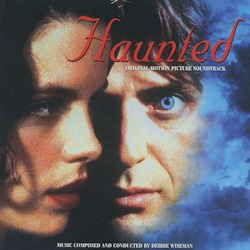
HAUNTED – Debbie Wiseman
 THROWBACK THIRTY
Original Review by Jonathan Broxton
Set in 1920s England, Haunted is a British supernatural romantic drama which stars Aidan Quinn as Professor David Ash, a skeptical psychologist and academic who specializes in debunking claims of the supernatural. Still grieving the death of his twin sister Juliet many years earlier, Ash is invited to Edbrook House, a remote English country estate, to help a young woman named Christina Mariell (Kate Beckinsale), who believes her home is haunted. At Edbrook, David meets Christina and her two brothers, Robert (Anthony Andrews) and Simon (Alex Lowe), along with their old nanny Miss Webb (Anna Massey). While David initially maintains his scientific skepticism, he begins experiencing inexplicable phenomena – ghostly visions, eerie voices, disorienting memories, and suchlike – and then as David becomes romantically involved with Christina, the house’s sinister secrets slowly begin to reveal themselves.
The film is based on the 1988 novel by the bestselling British horror author James Herbert, and was one of the final films directed by the legendary Lewis Gilbert, known for directing films such as the Michael Caine classic Alfie and the James Bond films You Only Live Twice, The Spy Who Loved Me, and Moonraker. While somewhat forgotten today, I have always had a soft spot for the film; it boasts visually rich cinematography with classic gothic horror aesthetics — foggy grounds, dim corridors, and decaying grandeur – while the performance from the then 22-year-old Kate Beckinsale is lovely, one of her first leading roles after her breakthrough on Much Ado About Nothing in 1993.
The score for Haunted was by Debbie Wiseman, and was just her second major theatrical score, coming hot on the heels of the critically acclaimed Tom & Viv in 1994. For me, it’s also the score that really cemented her then-new reputation as one of British film music’s great lyrical composers. Haunted is a classic gothic orchestral score, a beautiful combination of sweeping strings that evoke a sense of melancholic nostalgia, appropriately chilly piano and woodwind motifs which lend a spectral whispering quality to the more supernatural sequences, and sudden dissonant chords which are used to underscore the various ghostly encounters or unsettling revelations.
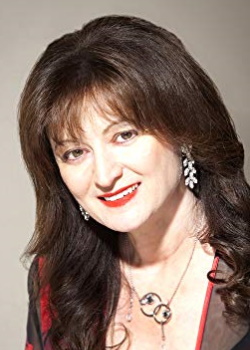 Everything is then tied up by a trio of themes: one representing David’s memories of his late sister Juliet, a more moody theme for Christina Mariell that plays as a gentle minuet, and finally a lush but delicate romantic theme that accompanies the complicated relationship that develops between David and Christina. There is also a sinister 5-note ‘ghost’ motif that plays in some of the more spooky moments involving the spectral inhabitants of Edbrook House.
The opening cue, “Underwater,” features the first incarnation of the five-note ghost motif, rattling flutes surrounded by ticking woodblocks, mysterious harp textures, and long, sustained synth chords, before the album moves into the first performance of “Juliet’s Theme” in the cue of the same name. Initially presented as a piano solo performed by Wiseman herself, Juliet’s Theme is the emotional anchor of the score, as it speaks to the sense of love and regret David feels for what happened to her, and his desire to somehow make amends.
The theme has a tender, yet slightly mysterious quality which remains with you throughout, and Wiseman offers numerous renditions of it as the score develops: on slightly detached-sounding flutes and minor key strings in “Life Portrait,” in the quietly sinister “The Mirage,” in the lovely but oddly ominous “The Ghost Appears,” and in the cathartic “Hand in Hand”.
Meanwhile, the ghost motif plays a major role in cues like “Spirits in the House,” the second half of “The Ghost Appears,” “Missing Link,” and “Imagining Things,” the latter of which also includes a significantly slowed-down version of Juliet’s Theme which is very effective. Some of these cues are also enhanced further by the inclusion of a high range choir that at times becomes almost spiritual in nature, and really sends chills down the spine. The way Wiseman combines Juliet’s Theme and the Ghost Motif in “Follow Me” and in the wistful “Together Forever” is superb; there is a sense of quiet desperation here which really captures David’s rising panic at what he is experiencing, and how that relates to the revelations about Christina and her brothers.
Other cues of note include the sunny, vibrant “David at Edbrook,” a perfect musical depiction of English country life at its best, which is full of dancing strings and elegant passages for oboes – the whimsical calm before the storm. The theme for Christina in “Christina’s Minuet” is a little more downbeat and a little more somber than Juliet’s Theme, and although Wiseman again performs it beautifully on a solo piano, the starkness of the single instrument is somehow much more apparent here than in other cues. Elsewhere, in “Lovers,” Wiseman beautifully merges smooth extracts from the classic George Gershwin standard song “But Not For Me” with the main theme – similar to how she would work Gilbert and Sullivan’s “Ah, Leave Me Not To Pine” into the score for Wilde – although its inclusion here is slightly incongruous as Gershwin originally wrote it for the 1930 musical Girl Crazy, which came out five years after this film is set!
After one final spooky scare in “Christina Returns?” we come to the conclusive cue, “Haunted,” which plays over the film’s end credits, and for me is the best cue on the album. It is here that the full orchestra finally replaces Wiseman’s piano solo in a gorgeous three-minute rendition of Juliet’s Theme to finish the score, which leaves lush strings and delicate woodwinds ringing in the ears upon the track’s completion. This type of music is, in my opinion, where Wiseman absolutely excels.
What I also like about Haunted is that it shows that, right from this early stage in her career, she had a personal and unique musical voice; there are compositional stylistics and techniques heard here that she would later go on to develop on scores like Wilde, Tom’s Midnight Garden, Wolf Hall, even Arsène Lupin and Lesbian Vampire Killers, and this is all to Wiseman’s credit – having a recognizable voice in the crowded film music market is not something that is easy to develop. So, how would I sum up Haunted as a whole? Well, it’s wonderfully composed, it’s romantic, yearning, sometimes scary, and often a little sad, but it’s always utterly, utterly beautiful. It’s an essential score for anyone interested in Debbie Wiseman’s music.
Buy the Haunted soundtrack from the Movie Music UK Store
Track Listing:
- Underwater (1:09)
- Juliet’s Theme (4:03)
- David at Edbrooke (1:38)
- Life Portrait (1:44)
- Spirits in the House (2:05)
- The Mirage (2:48)
- The Ghost Appears (2:41)
- Missing Link (4:22)
- Christina’s Minuet (4:32)
- Imagining Things (3:19)
- Lovers (4:15)
- Follow Me (1:42)
- Discovery (2:26)
- Together Forever (2:32)
- Hand in Hand (1:20)
- Christina Returns? (0:48)
- Haunted (3:10)
Filmtracks TRXCD-2002 (1995)
Running Time: 44 minutes 41 seconds
Music composed and conducted by Debbie Wiseman. Orchestrations by Perry Montague-Mason. Featured musical soloists Debbie Wiseman, Andrew Bottrill, and Justin Pearson. Recorded and mixed by Dick Lewzey. Edited by Dina Eaton. Album produced by Debbie Wiseman.

Shop at the Movie Music UK Store

Member of the

 MOVIE MUSIC UK