SINNERS – Ludwig Göransson
 Original Review by Jonathan Broxton
There’s a moment in Sinners, director Ryan Coogler’s outstanding new horror-drama, where the lead characters in the ‘juke joint’ are listening to live blues music, rich and authentic. As the crowd becomes entranced by the performances, overcome by the songs, something magical happens: slowly, almost imperceptibly, avatars representing the entire history of black American music emerge from within the massed dancers, ghosts of the past and foreshadowings of the future of what this music would eventually become over the span of multiple subsequent generations. There are tribal drummers and Zaouli dancers from Côte d’Ivoire, who brought their music and their traditions with them when they were forcibly removed from Africa as slaves, and which eventually became the work songs and ‘Negro spirituals’ of the plantations and the cotton fields. There is 1940s jazz, and 1950s rock and roll. There are 1980s breakdancers, 1990s DJs and rappers, and references to contemporary hip-hop and R&B. It’s a brilliant distillation of one of the major things that Coogler is trying to say with his film – that African music and Black music is at the core of so much of modern American culture, and that that history remains very much overlooked and under-appreciated by too much of the mainstream.
Oh, and then there are the vampires.
The film is set in 1932 in the Mississippi Delta and stars Michael B. Jordan in dual roles as twin brothers Smoke Moore and Stack Moore, who return to their hometown after many years away working for gangsters in Chicago. Stack and Smoke intend to open a ‘juke joint’ bar and music venue for their community, and enlist many of their friends and relatives to help them set up for the opening night: singer and guitarist Preacher Boy (Miles Caton in his film debut) joins with alcoholic pianist Delta Slim (Delroy Lindo) and singer Pearline (Jayme Lawson) to perform, while Chinese shopkeeper Grace (Li Jun Li) supplies Smoke’s estranged wife Annie (Wunmi Mosaku) with food to cook. Meanwhile, Stack reconnects with his ex-girlfriend Mary (Hailee Steinfeld), a quarter-black woman who passes for white, and who resents Stack for abandoning her when he left for Chicago. Despite Preacher Boy’s father warning his son that blues music is supernatural and can attract demonic forces, the juke joint opens, Preacher Boy plays, and for a while everything appears to be a roaring success – until Irish vampire Remmick (Jack O’Connell) arrives at the juke joint with a couple of newly-undead members of the local KKK, all of whom have been attracted by the power of Preacher Boy’s song.
It’s a tremendous film, intelligent and thoughtful, full of depth and meaning, and with a rich historical and cultural aspect that is not explored enough in contemporary cinema. It’s beautifully shot by Coogler and his cinematographer Autumn Durald Arkapaw, and has authentic and detailed period production design. It’s also exciting and scary, when the vampires attack, and has several bloody horror-action sequences. The turn from period drama to all-out neck-biting vampire horror was inspired by Quentin Tarantino and Robert Rodriguez’s From Dusk til Dawn, and the twist is no less shocking when it comes along here, resulting in a film-going experience that asks interesting and pertinent questions about the time, just before it rips your throat out.
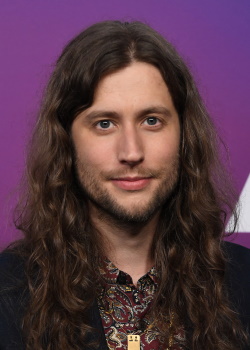 Music is an utterly vital cornerstone of what makes Sinners the film it is, and so to help him realize this part of the experience Coogler turned to his old college friend and musical collaborator on Fruitvale Station, Creed, and two Black Panther movies, composer Ludwig Göransson. Despite growing up in suburban Sweden, Göransson had been exposed to the music of the American south at an early age as his father Tomas was a blues aficionado; this in turn led to an obsession with rock and heavy metal, and an eventual move to the United States to study. For Sinners, Göransson was asked to create a multi-pronged musical language for the film: first, adapting and arranging a series of classic Delta Blues songs from the period; second, sourcing several traditional Irish ballads and drinking songs to be performed in context by Remmick and his merry band of Celtic blood-suckers; third, writing half a dozen original songs, including new rock and blues numbers; and, finally, creating an original score which brings all these disparate elements together alongside traditional orchestral drama and horror elements.
To talk about the songs first, Göransson entrusted his wife Serene with their production. According to the film’s publicity material, the couple worked with blues producer Lawrence “Boo” Mitchell, recorded at classic blues venues, and collaborated with contemporary blues musicians such as Alvin Youngblood Hart, Cedric Burnside, Bobby Rush, Christone Kingfish Ingram, and the legendary Buddy Guy. They also collaborated with multiple songwriters in order to create original songs for artists like rapper Don Toliver, English pop singer James Blake, and Brittany Howard from Alabama Shakes, as well as several members of the cast for them to sing on-camera. I’m not going to go through all the songs, but instead I’m going to pick out some highlights which I thought were especially outstanding.
The melody of Toliver’s “Flames of Fortune” is based on Göransson’s theme for the Smokestack Twins, has unexpectedly dark lyrics that explore the gangster pasts of the characters, and brings a wholly new sound to the rapper’s oeuvre. “Travelin,” which was written by Alvin Youngblood Hart, and “I Lied to You,” which was co-written by composer Raphael Saadiq, are brilliant showcases for Miles Caton’s astonishing baritone voice, with the latter blending into the groundbreaking ‘black music history montage’ that I discuss above.
James Blake’s “Séance” is dreamy and ethereal. “Dangerous,” which was co-written and performed by actress Hailee Steinfeld, is a good contemporary pop song inflected by a blues harmonica. “Pale, Pale Moon” is an intoxicating piece of musical seduction, sweaty, breathy, sexy, co-written by Brittany Howard and performed with rowdy allure by Jayme Lawson in character as juke joint singer Pearline. “Last Time (I Seen the Sun)” is a duet between Caton and soul singer Alice Smith, and has a soaring aspirational chorus. The smooth end credits song “Sinners” is performed by soul trap hip-hop pioneer Rod Wave, and is already very popular, while “Troubled Waters/Homesick” was co-written by Göransson with the director’s brother Noah Coogler aka OG DAYV, and also sources the main Smokestack Twins theme, as well as its associated dobro and harmonica textures, into a dramatic contemporary hip-hop tone poem. These songs are all vital contributions to the film’s soundscape, and most importantly illustrate one of the film’s key musical ideas by seamlessly blending different genres and sounds together.
Finally, for the score, Göransson took all of this history and cultural depth, and turned it into a fascinating, if not always successful, mélange of blues, rock, electronica, and orchestra, with some added horror and action cues for good measure. My first reaction to the score upon hearing it was one of disappointment; while I certainly appreciated its ambition – when was the last time a horror movie was scored for classic blues instruments? – I just didn’t care for the tone or approach. However, having now experienced it in context, I have a much better understanding of what Göransson is doing and why, and so my feelings towards it have warmed, but I still find it a very difficult score to connect with as an album.
 The one thing the score has going for it in spades is authenticity. Göransson blends his orchestra with numerous specialty instruments, each intended to represent the different ethnic groups and cultural histories of the characters. For the Smokestack twins and their friends at the blues juke joint, Göransson uses a multitude of different guitars, particularly a Dobro resonator and an electric guitar, alongside banjos, harmonicas, and a jew’s harp. For the Irish vampires, Göransson collaborated with Gaelic music specialist Iarla Ó Lionáird, who brought along fiddles, pennywhistles, accordions, and bodhrán drums to give voice to that music culture. Interestingly, Göransson occasionally uses the unique sound of a West African djambe drum to act as a bridging link between the blues and the African tribal music of the ancestors, and then in one key scene he also uses the sound of a Choctaw native American chanter to act as a leitmotif for the native ‘vampire hunters’ who are chasing Remmick at one point in the film.
There are a couple of recurring themes that anchor the score and provide a melodic framework. After the atmospheric opening cue “Filídh, Fire Keepers and Griots” – which illustrates the cross-cultural concept of music being able to blur the line between the past and the present, the living and the dead – the primary theme for the Moore Brothers is introduced in “Smokestack Twins”. Their theme is a hopeful, upbeat, determined-sounding guitar theme that has roots from deep in the Mississippi, and its subsequent performances in cues like “Playin’ Games, Tellin’ Ghost Stories” and the emotionally fraught “Together Forever” are very welcome.
There is an understated love theme that pulls double and triple-duty, appearing in various intimate scenes between Smoke and Annie, Stack and Mary, and Preacher Boy and Pearline, as the film demands. In “Clarksdale Love” it is first carried by a haunting harmonica backed by a bank of warmly shimmering strings, before transferring to an inviting electric guitar. Later, in “Why You Here/Before the Sun Went Down,” it accompanies the emotional reunion between Smoke and Annie with a hesitant, slightly antagonistic, but also oddly erotic blend of off-kilter twangy guitars, magically fluttering Thomas Newman-esque strings, and a raw wordless vocal performance by Miles Caton. Finally, in “Mount Bayou/Proper Black Folks,” the theme is performed with careful tenderness by blues rock guitarist and singer Christone Ingram, whose tone very much reminds me of Eric Clapton.
For the vampire antagonists Göransson leans into lead vampire Remmick’s cultural heritage with an unexpectedly lyrical theme for Irish fiddles, but then also introduces a low, dark, ominous five-note motif for orchestra, electronics, and an occasional choir, that clearly hints at their sinister purpose. The Vampire Theme is introduced first in “Not What He Seems/Sé Abú,” and it then plays with increasing frequency throughout the finale as the vampire clan attacks the juke joint with murderous ferocity.
Interspersed throughout all of this is a great deal of textural, ambient brooding, some of which occasionally erupts into jump-scare loudness, but mostly contains a whole load of wonderfully evocative guitar riffs and grooves that exude the sweat and heat of the American south from every pore. I really like how the throbbing guitars of “Grace, Bo, and Lil’ Lisa” accompany the hustle-and-bustle of daily life on the main street of Clarksdale, Mississippi, especially around the grocery store that Chinese immigrants Grace and Bo run. These guitars then combine with a howling harmonica in “Delta Slim’s Patch,” acting as a sort of leitmotif for Delroy Lindo’s grizzled musician character.
“Magic What We Do (Surreal Montage)” is the cue which, in context with the “I Lied to You” song, underscores the centerpiece musical moment where the past, present, and future collide on the sawdust dance floor of the juke joint, as Preacher Boy’s music conjures up the spirits of African tribesmen, and has them dancing with rockers, hip-hop rappers, and more. Göransson layers all these different elements on top of one another in a dizzying musical kaleidoscope of styles and sounds: one minute you are hearing Miles Caton’s soaring blues guitars and vocals, the next you are hearing 1980s break dancing beats, ragtime pianos, African tribal drums, hummed spiritual work songs, 1970s funk, and contemporary R&B riffs, sometimes three or four or five things simultaneously. It’s cacophonous, and it shouldn’t work, but it does – as I said in my opening paragraph, it’s a brilliant distillation of one of the major things that Coogler is trying to say with his film, about how centuries of Black music is at the core of so much of modern American culture.
The sequence from “She Said, We?” through to “Grand Closin’“ sees a distinct shift in the tone of the score, away from the inviting blues, and towards more abstract and intense horror textures, as Remmick and his vampire clan are drawn to the juke joint by Preacher Boy’s music, and slowly begin picking off the revellers, turning them into vampires, and turning them on the living – until the Smokestack Twins fight back.
Göransson continues to use many of the same orchestrations and instrumental ideas from earlier in the score, but with the increasing prominence of the orchestra and the choir, he makes them darker, and more ominous, and terrific in context. Cues like “Hole Up ‘Til Sunrise,” “Together Forever,” the powerful and driving “Thy Kingdom Come,” and the mesmerizing “Bury That Guitar,” take on a distinct prog rock/power metal vibe, notably thanks to the contributions of Metallica drummer Lars Ulrich and rock guitarist Eric Gales. There are moments of real dominant power and unexpected beauty here in these cues, but there are also several sequences of quite harsh dissonance too, which may test the patience of those who aren’t fully on board with that sort of thing.
The sense of bittersweet calm and relief in “Elijah” is palpable, and Eric Gales’s guitar solo sizzles, while the conclusive “Free for a Day” sees Miles Caton again performing a mass of layered vocals over the main Smokestack Twins theme for the unusually magnanimous pre-and-post credits sequences featuring an acting performance by real life blues legend Buddy Guy. The music is cathartic, almost celebratory at times, and it ends the score album on a genuine high.
The thing about Sinners, for me, is that unless you already have a predisposition to enjoy instrumental blues and Southern prog rock, you have to understand why it sounds the way it sounds in order to fully appreciate it. Göransson’s score is tremendously authentic. The research he conducted to get all aspects of the score right was meticulous, and the care he took to properly depict the unique sounds of a time, a place, and a culture, is commendable. The instrumental and vocal performances are all top-notch. And, in context, it is outstanding; Coogler’s film is as much a celebration of Black music, and the history of Black music, as it is a vampire horror action flick, and so Göransson’s score and the original songs are of key importance throughout. But, even while acknowledging this, I still have trouble enjoying this music. And, you know what? That’s OK. Not everything is for me, and for me to criticize it for that would be a disservice to everything that Coogler and Göransson have achieved, and to the points they are making.
Buy the Sinners soundtrack from the Movie Music UK Store
Track Listing:
- SCORE ALBUM
- Filídh, Fire Keepers and Griots (2:32)
- Smokestack Twins (3:29)
- Grace, Bo and Lil’ Lisa (3:44)
- Delta Slim’s Patch (4:01)
- Clarksdale Love (3:23)
- Why You Here/Before the Sun Went Down (3:40)
- Not What He Seems/Sé Abú (2:46)
- Magic What We Do (Surreal Montage) (3:45)
- Mount Bayou/Proper Black Folks (3:26)
- She Said, We? (3:14)
- Playin’ Games, Tellin’ Ghost Stories (4:17)
- Hole Up ‘Til Sunrise (3:31)
- Together Forever (5:04)
- Thy Kingdom Come (7:55)
- Bury That Guitar (3:20)
- Grand Closin’ (4:05)
- Elijah (3:44)
- I’ve Seen Enough of This Place (1:36)
- Free for a Day (3:55)
- SOUNDTRACK ALBUM
- This Little Light of Mine (traditional, performed by Miles Caton feat. DC6 Singers Collective and the Pleasant Valley Youth Choir of New Orleans) (2:25)
- Flames of Fortune (written by Don Toliver and Ludwig Göransson, performed by Don Toliver) (3:51)
- Wang Dang Doodle (written by Willie Dixon, performed by Cedric Burnside, Sharde Thomas-Mallory, and Tierinii Jackson) (2:24)
- Travelin’ (written by Alvin Youngblood Hart, performed by Miles Caton) (1:34)
- Juke (written by Bobby Rush, Miles Caton, and Ludwig Göransson, performed by Bobby Rush and Miles Caton) (1:11)
- Séance (written by James Blake and Ludwig Göransson, performed by James Blake) (4:08)
- Dangerous (written by Hailee Steinfeld, Sarah Aarons, and Ludwig Göransson, performed by Hailee Steinfeld) (3:33)
- I Lied to You (written by Raphael Saadig and Ludwig Göransson, performed by Miles Caton) (5:14)
- Pick Poor Robin Clean (written by Geeshie Wiley, performed by Jack O’Connell, Lola Kirke, and Peter Dreimanis) (1:45)
- Can’t Win for Losin’ (written and performed by Cedric Burnside and Tierinii Jackson) (2:16)
- Old Corn Liquor (written by Joe Thompson, performed by Rhiannon Giddens and Justin Robinson) (3:37)
- Wild Mountain Thyme [Will Ye Go, Lassie Go?] (written by Francis McPeake, performed by Lola Kirke, Peter Dreimanis, Brian Dunphy, Darren Holden, and Jack O’Connell) (4:19)
- Pale, Pale Moon (written by Brittany Howard and Ludwig Göransson, performed by Jayme Lawson) (4:45)
- Rocky Road to Dublin (traditional, performed by Jack O’Connell, Brian Dunphy, and Darren Holden) (3:38)
- In Moonlight (written by Edward Elgar, performed by Jerry Cantrell and Ludwig Göransson) (4:21)
- Travelin’ (written by Alvin Youngblood Hart, performed by Buddy Guy) (1:09)
- Last Time (I Seen the Sun) (written by Alice Smith, Miles Caton, and Ludwig Göransson, performed by Alice Smith and Miles Caton) (3:17)
- Sinners (written by Rodarius Green, Tarkan Kozluklu, Kyris Mingo, Leonard Denisenko, Darius Povillinis, and Travis Harrington, performed by Rod Wave) (3:08)
- Troubled Waters/Homesick (written by Noah Coogler and Ludwig Göransson, performed by OG DAYV feat. Uncle James) (4:05)
- Pale, Pale Moon (written by Brittany Howard and Ludwig Göransson, performed by Brittany Howard) (5:01)
- I Lied to You (Radio Edit) (written by Raphael Saadiq and Ludwig Göransson, performed by Miles Caton) (2:54)
- Pick Poor Robin Clean (written and performed by Geeshie Wiley) (3:12)
Sony Masterworks/Sony Classical (2025)
Running Time: 71 minutes 27 seconds (Score)
Running Time: 72 minutes 10 seconds (Soundtrack)
Music composed by Ludwig Göransson. Conducted by Anthony Parnther, Pete Anthony and Vince Mendoza. Orchestrations by Pete Anthony. Featured musical soloists Miles Caton, Buddy Guy, Ludwig Göransson, Eric Gales, Christone Ingram, Rhiannon Giddens, Lars Ulrich, Cedric Burnside, Sharde Thomas Mallory, Chris Mallory, Bobby Rush, Ross Garren, James Super Chikan Johnson, Alvin Youngblood Hart, Thomas Drayton, Charlie Bereal, Magette Sow, Lester Snell, Victor Campbell, Jim Carmon, Niamh Fahy, Justin Robinson, Charlie Bisharat, Peter Dawson, Leyla McCalla, Sabine McCalla, Tony Davoren, and Jeffrey Broussard. Special vocal performances by Iarla Ó Lionáird and Jaeden Ariana Wesley. Recorded and mixed by Chris Fogel. Edited by Felipe Pacheco. Albums produced by Ludwig Göransson and Serena Göransson
Leave a comment

Shop at the Movie Music UK Store

Member of the

 MOVIE MUSIC UK
Nice review! It sounds like a very complex/complicated mix of songs and score that you parsed through in detail as usual. I enjoyed it in context, but with a couple of especially rhythmic parts, don’t think I’d enjoy hearing any of it on its own. And I look forward to the day where Hollywood monsters are more than just Vampires and Zombies! 😀