SNOW WHITE – Jeff Morrow, Benj Pasek, Justin Paul
 Original Review by Jonathan Broxton
In 1937 producer Walt Disney and his team of artists made history when they released Snow White and the Seven Dwarfs, the world’s first ever feature-length animated motion picture. It was based on the famous fairy tale ‘Schneewittchen’ by Jacob and Wilhelm Grimm, and tells the story of a kind and beautiful princess who is abused by her wicked stepmother, the Queen. When the Queen’s magic mirror announces that Snow White, and not the Queen, is the ‘fairest of them all,’ the jealous and vengeful Queen banishes Snow White to the forest to be killed by a huntsman; however, the huntsman takes pity on Snow White and secretly releases her, and she eventually begins a new life with seven dwarf miners who live nearby. However, when the Queen learns that Snow White is still alive, she hatches a plan: to poison Snow White with an enchanted apple, which will place her in a death-like sleep, from which she can be awakened only by true love’s kiss.
To say that the 1937 Snow White and the Seven Dwarfs was a sensation is an enormous understatement. Lauded for its then groundbreaking technical innovations, it grossed millions at the box office – adjusted for inflation, almost $2.3 billion – and held the record as the highest-grossing animated film for 55 years. The entire Walt Disney Corporation is essentially built on the back of the success of Snow White and the Seven Dwarfs, and today – almost 90 years later – it remains a beloved cinematic classic. It is also the latest Walt Disney animated film to receive the ‘live action remake’ treatment, following on from The Jungle Book, Beauty and the Beast, Aladdin, Dumbo, The Lion King, and The Little Mermaid, among others. Marc Webb directs, Rachel Zegler stars as Snow White, Gal Gadot plays the evil Queen, and stage actor Andrew Burnap plays Jonathan, a new character created for this film based on the Prince from the original film.
Unfortunately, response to the film has been tepid at best, outright hostile at worst, with most of the criticism being aimed at Zegler and Gadot, as well the film’s look, the way the dwarves are presented, and at the changes made to the original story in order to make the plot and relationships more palatable to contemporary audiences. I’m not going to go into much about the film itself, but I will say that the re-designed seven dwarves are nightmarish abominations, and leave it at that.
 The original 1937 Snow White and the Seven Dwarfs had an original score by Disney staff composers Frank Churchill, Leigh Harline, and Paul Smith, plus original songs by Churchill and lyricist Larry Morey. Many of their songs – “Heigh-Ho,” “Whistle While You Work,” “Some Day My Prince Will Come” – have become legendary parts of the Disney canon, beloved by generations of movie goers. Naturally, stepping into their shoes for the new film would be a huge task for anyone, so spare a thought for composer Jeff Morrow, and songwriters Benj Pasek and Justin Paul, who were asked to do just that.
Pasek and Paul are, of course, the EGOT-winning artists behind La-La Land, Dear Evan Hansen, and The Greatest Showman, while Morrow is a relative newcomer whose previous experience is limited mostly to animated short films, Snoopy-related film and TV productions, and writing additional music and orchestrating for composers like Christophe Beck and Henry Jackman. He wrote additional music for the Little Mermaid remake last year, which is probably how he ended up in the conversation to score this film, but Morrow’s hiring is actually indicative of a new trend at Disney/Pixar that has seen several comparative unknowns being given big breaks on major films recently – Germaine Franco on Encanto, Dave Metzger on Wish and Mufasa: The Lion King, Andrea Datzman on Inside Out 2, and so on. It’s a trend I like, and Morrow acquits himself admirably – but more on his score in a moment.
To ensure that the musical links between the old film and the new film are maintained, three of Churchill and Morey’s original songs carry over: “Heigh-Ho,” “Whistle While You Work,” and “The Silly Song,” the majority of which are performed by the voice actors playing the seven dwarfs (Jeremy Swift, George Salazar, Jason Kravits, Tituss Burgess, Martin Klebba, and Andy Grotelueschen), with Zegler also contributing significantly to “Whistle While You Work”. The fuller orchestrations on these songs are fun, although I think that there has been some significant alteration to the lyrics – or at least different versions of the song have been combined – because they are all much longer here than they were in 1937, and they all feel much more verbose.
Interestingly the two songs performed as solos by Snow White in the original film – “With a Smile and a Song” and the iconic “Someday My Prince Will Come” – are omitted entirely, as is the Prince’s “One Song”. This is likely to do with the fact that Snow White’s motivations in this new film have changed, and she has more agency, so she is no longer sitting around simply waiting for a handsome stranger to rescue her; as such, her pining “Someday My Prince Will Come” feels wrong for the character as she is in this version of the story. While I understand that, I still feel that not including a performance of the song at all was a mistake; “Someday My Prince Will Come,” and Adriana Caselotti’s operatic performance of it, is iconic in Disney Snow White context. In AFI’s 100 Years…100 Songs, it was ranked the 19th greatest film song of all time, for heaven’s sake. Hints of the melody are apparently heard instrumentally in Morrow’s underscore, but for that to be it’s only inclusion feels insufficient, and I think that Snow White fans will miss it.
 To replace them, we have six new songs from Benj Pasek and Justin Paul, a couple of which will likely be contenders for Best Original Song at next year’s Oscars. “Good Things Grow” is the film’s scene-setting song, akin to something like “Belle” from Beauty and the Beast, and is performed by the ensemble supporting cast led by Hadley Fraser and Krystina Alabado as Snow White’s parents the Good King and the Good Queen, and Emilia Faucher as young Snow White; it’s a broad and enjoyable celebration of what life is like in the kingdom before the Evil Queen usurps the throne, and it has a hint of folk music in its arrangements that I find very appealing.
“Waiting on a Wish” is the in-context replacement for “Someday My Prince Will Come,” and is performed by Rachel Zegler as Snow White’s ‘want song’. It’s a powerhouse ballad anchored by Zegler’s soaring lead vocals, bolstered by Dave Metzger’s lush orchestrations, and is mostly excellent. Occasionally Zegler does adopt the overly-earnest theater-kid Disney Channel vocal inflections that makes my teeth itch, but she’s not as egregious as some of her contemporaries, and when she belts out the most emotional parts of the song, the effect is outstanding. The only criticism of the song I have is that the central melody is perhaps a bit insubstantial and ephemeral; it doesn’t quite have the memorable kick that the best Disney songs do, but perhaps this will become more concrete over time.
“All Is Fair” is a new villain song performed in character by Gal Gadot as the Evil Queen. Gadot is clearly attempting to channel the energy of Pat Carroll from The Little Mermaid, perhaps with a splash of Jeremy Irons from The Lion King, and I really like the orchestrations, which combine the theatrically sinister with more than a touch of the circus, but try as she might Gadot just doesn’t have the vocal range to do it all justice, and in the end she comes across as whiny and petulant rather than dangerous.
“Princess Problems” is a laid-back comedy song performed mainly by Andrew Burnap as Jonathan, the sarcastic but kind-hearted bandit who steals Snow White’s eye and eventually her heart; it’s fine, cheerful, but a little forgettable. Much better is “A Hand Meets a Hand,” the duet love song for Snow White and Jonathan, which is again performed by Zegler and Burnap, but this time swoons with old fashioned romantic emotion. The use of guitars as part of the instrumental ensemble gives it a contemporary, almost country-esque edge that I quite like. Again, though, as was the case with “Waiting on a Wish,” for me the song doesn’t have a real hook that will allow it to plant itself in the public’s memory, and in the long run this will hurt its chances of joining the pantheon of classic Disney songs.
 Finally, we come to Jeff Morrow’s score, which is as magical and whimsical and emotional as one would hope for it to be but, again, lacks that spark of memorability. Part of the issue is the fact that Morrow’s score and Pasek & Paul’s songs mostly exist in isolation from each other – there virtually no clear and obvious quotes of the song melodies in the score proper, and for me that renders the score a little anonymous. It’s a shame, because almost all the great Disney scores – especially those by Alan Menken from the beginning of the Disney renaissance – felt like cohesive musical wholes, songs and score sitting side by side and complementing each other. Although there are a few notable exceptions to this rule I have mostly found that when the songs and the score are written by two different groups of people the end result is never as engaging, and this is certainly the case with Snow White.
Having said that, there is still plenty to enjoy from a pure entertainment point of view. As I said, the score is lush and expansive, sometimes magical, sometimes playful and whimsical, sometimes dark and moody, sometimes romantic, and there are even a few moments of action to underscore the film’s rousing girl power finale.
There is around 40 minutes of Morrow’s score on the album, and several cues stand out. “I Remember” introduces the score’s powerful three-note main theme for Snow White, initially carried by resplendent brasses. “Mirror Mirror” is a darkly bombastic cue that features the first major performance of the theme for the Evil Queen, which captures the malevolence and seductive cruelty of the character better than the Gadot song does. “The Queen’s Table” builds on the creepy Evil Queen sound with some effectively atmospheric woodwind writing, and then “The Orchard” even enters some light horror territory with brass dissonances that foreshadow the creation of the apple that the evil queen later uses the poison Snow White. The frantic sequence at the end of the piece accompanies Snow White’s helter-skelter escape into the forest, and shows that Morrow has the potential to write some terrific action somewhere down the line.
There is a gentle, pastoral, magical quality to the tender woodwind passages that run all the way through “Animal Friends,” some of which occasionally reminded me of the music that James Horner would write to capture the feeling of nature; the three-note Snow White theme from the opening cue returns here, too, in a more enchanted setting. There is more than a touch of classic Disney mickey-mousing in “Don’t Be Afraid,” which underscores the scene where the dwarves first encounter Snow White sleeping in their house, and then later “Food Fight” erupts into a knockabout full-on comedy instrumental version of ‘Heigh-Ho’.
I really like the swashbuckling extravagance of the action in “Unfair Fight,” the ominous darkness of “Jonathan Captured,” the delicious (but brief) romance of “Fearless, Fair, Brave, True,” and then the culmination of the Evil Queen’s plan in the outstanding “The Apple”. Deconstructed versions of the three-note theme for Snow White and the motif for the Evil Queen play off each other throughout this cue, but Morrow surrounds their statements with some really quite brutally effective action and light horror, including some moments that make use of a full choir.
 There is some gorgeous writing for a bitterly solemn solo cello in the beautiful “Requiem,” lamenting poor Snow White’s apple-induced fate, and the subsequent “The Dungeon” has a raw, anguished version of Snow White’s theme at its core, representing Jonathan’s realization that he loves her, and that he needs to escape th Queen’s clutches in order to rescue her. This rescue comes in the sweepingly romantic “True Love’s Kiss,” which actually does feature a brief statement of the song melody from “A Hand Meets a Hand,” but unlike in the original film this is not the conclusion, and instead Snow White and Jonathan storm the castle and overthrow the Queen with the help of the dwarves and their furry woodland friends. There is some effective light action and suspense music in both “We’re Not Afraid” and “Time to Restore Our Kingdom,” the latter of which also features the final desperate performance of the Queen’s theme as she is finally vanquished. The conclusive “Waiting on a Wish (Main on Ends Version)” rounds out the album with an outstanding orchestra-only rendition of the song melody, which allows the score to finish with a satisfying flourish, and everyone lives happily ever after.
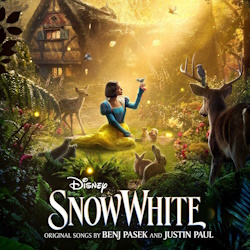
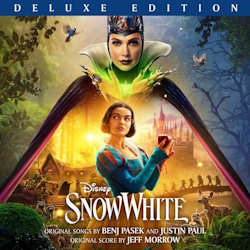
There are two versions of the Snow White soundtrack: one 30-minute commercial release which contains only Pasek & Paul’s songs, and then a 100+ minute deluxe edition which also features all of Morrow’s score, plus instrumental-only versions of all the songs which are excellent too. Naturally, I recommend the deluxe edition as it gives a much more rounded and comprehensive presentation of the film’s music, notably the score.
In the end, if you are going to get anything out of this new version of Snow White, it is going to be necessary for you to let go of any preconceptions you have of what Snow White music should sound like, and approach this as essentially a brand new take on the story. It’s not 1937 any more, and while some remnants of what Frank Churchill and Larry Morey and the others did remain, the rest of the film’s music has changed beyond all recognition. Taken at face value Pasek & Paul’s songs are good, with “Waiting on a Wish” clearly the standout. Similarly, Jeff Morrow’s score is competent and appropriate, well-structured, and well-orchestrated, and although it is perhaps a little on the anonymous side it nevertheless provides exactly what this film needs, and there are some really excellent highlights. I hope that, going forward, he is able to show his obvious skill on something that gives him a bigger chance to showcase his talent. However, this is clearly not your great-grandparents’ Snow White. The dwarves may still be going off to work, but the prince is no longer coming, and you’re just going to have to be OK with that.
Buy the Snow White soundtrack from the Movie Music UK Store
Track Listing:
- STANDARD ALBUM
- Good Things Grow (written by Benj Pasek and Justin Paul, performed by Hadley Fraser, Krystina Alabado, Dean Boodaghians-Nolan, Jonathan Bourne, Felipe Bejarano, Emilia Faucher, and Ensemble) (3:42)
- Good Things Grow – Villagers’ Reprise (written by Benj Pasek and Justin Paul, performed by Vivienne Rowe and Rachel Zegler) (0:45)
- Waiting on a Wish (written by Benj Pasek and Justin Paul , performed by Rachel Zegler) (4:52)
- Heigh-Ho (written by Frank Churchill and Larry Morey, performed by Jeremy Swift, George Salazar, Jason Kravits, Tituss Burgess, Martin Klebba, and Andy Grotelueschen) (3:45)
- All Is Fair (written by Benj Pasek and Justin Paul, performed by Gal Gadot and Ensemble) (3:32)
- Whistle While You Work (written by Frank Churchill and Larry Morey, performed by Rachel Zegler, Jeremy Swift, George Salazar, Jason Kravits, Tituss Burgess, Martin Klebba, and Andy Grotelueschen) (3:02)
- Princess Problems (written by Benj Pasek and Justin Paul, performed by Andrew Burnap and Rachel Zegler) (2:18)
- The Silly Song (written by Frank Churchill and Larry Morey, performed by Jason Kravits, Fletcher Sheridan, Jeremy Swift, Andy Grotelueschen, Dujonna Gift, Jimmy Johnston, George Salazar, and Ensemble) (1:08)
- A Hand Meets a Hand (written by Benj Pasek and Justin Paul, performed by Rachel Zegler and Andrew Burnap) (4:08)
- All Is Fair – Reprise (written by Benj Pasek and Justin Paul, performed by Gal Gadot) (1:48)
- Waiting on a Wish – Reprise (written by Benj Pasek and Justin Paul, performed by Racel Zegler) (1:20)
- Snow White Returns (written by Benj Pasek and Justin Paul, performed by Rachel Zegler and Ensemble) (1:22)
- Good Things Grow – Finale (written by Benj Pasek and Justin Paul, performed by Rachel Zegler, Andrew Burnap, and Ensemble) (1:13)
- DELUXE ALBUM
- Good Things Grow (written by Benj Pasek and Justin Paul, performed by Hadley Fraser, Krystina Alabado, Dean Boodaghians-Nolan, Jonathan Bourne, Felipe Bejarano, Emilia Faucher, and Ensemble) (3:42)
- Good Things Grow – Villagers’ Reprise (written by Benj Pasek and Justin Paul, performed by Vivienne Rowe and Rachel Zegler) (0:45)
- Waiting on a Wish (written by Benj Pasek and Justin Paul , performed by Rachel Zegler) (4:52)
- Heigh-Ho (written by Frank Churchill and Larry Morey, performed by Jeremy Swift, George Salazar, Jason Kravits, Tituss Burgess, Martin Klebba, and Andy Grotelueschen) (3:45)
- All Is Fair (written by Benj Pasek and Justin Paul, performed by Gal Gadot and Ensemble) (3:32)
- Whistle While You Work (written by Frank Churchill and Larry Morey, performed by Rachel Zegler, Jeremy Swift, George Salazar, Jason Kravits, Tituss Burgess, Martin Klebba, and Andy Grotelueschen) (3:02)
- Princess Problems (written by Benj Pasek and Justin Paul, performed by Andrew Burnap and Rachel Zegler) (2:18)
- The Silly Song (written by Frank Churchill and Larry Morey, performed by Jason Kravits, Fletcher Sheridan, Jeremy Swift, Andy Grotelueschen, Dujonna Gift, Jimmy Johnston, George Salazar, and Ensemble) (1:08)
- A Hand Meets a Hand (written by Benj Pasek and Justin Paul, performed by Rachel Zegler and Andrew Burnap) (4:08)
- All Is Fair – Reprise (written by Benj Pasek and Justin Paul, performed by Gal Gadot) (1:48)
- Waiting on a Wish – Reprise (written by Benj Pasek and Justin Paul, performed by Racel Zegler) (1:20)
- Snow White Returns (written by Benj Pasek and Justin Paul, performed by Rachel Zegler and Ensemble) (1:22)
- Good Things Grow – Finale (written by Benj Pasek and Justin Paul, performed by Rachel Zegler, Andrew Burnap, and Ensemble) (1:13)
- I Remember (3:35)
- Mirror Mirror (2:01)
- Once Upon a Time (0:59)
- The Queen’s Table (1:03)
- The Orchard (2:23)
- Animal Friends (3:40)
- Don’t Be Afraid (1:43)
- The Fairest Lives (0:55)
- Food Fight (0:58)
- Whistling Lesson (0:47)
- Unfair Fight (2:41)
- Faith in Each Other (0:39)
- Jonathan Captured (1:43)
- Fearless, Fair, Brave, True (0:40)
- The Apple (4:56)
- Requiem (2:43)
- The Dungeon (2:30)
- True Love’s Kiss (1:28)
- We’re Not Afraid (1:44)
- Time to Restore Our Kingdom (3:14)
- Waiting on a Wish (Main on Ends Version) (1:05)
- Good Things Grow – Instrumental (written by Benj Pasek and Justin Paul) (3:42)
- Good Things Grow (Villagers’ Reprise) – Instrumental (written by Benj Pasek and Justin Paul) (0:45)
- Waiting on a Wish – Instrumental (written by Benj Pasek and Justin Paul) (4:52)
- Heigh-Ho – Instrumental (written by Frank Churchill and Larry Morey) (3:45)
- All Is Fair – Instrumental (written by Benj Pasek and Justin Paul) (3:32)
- Whistle While You Work – Instrumental (written by Frank Churchill and Larry Morey) (3:02)
- Princess Problems – Instrumental (written by Benj Pasek and Justin Paul) (2:18)
- The Silly Song – Instrumental (written by Frank Churchill and Larry Morey) (1:08)
- A Hand Meets a Hand – Instrumental (written by Benj Pasek and Justin Paul) (4:08)
- All Is Fair (Reprise) – Instrumental (written by Benj Pasek and Justin Paul) (1:48)
- Waiting on a Wish (Reprise) – Instrumental (written by Benj Pasek and Justin Paul) (1:20)
- Snow White Returns – Instrumental (written by Benj Pasek and Justin Paul) (1:22)
- Good Things Grow (Finale) – Instrumental (written by Benj Pasek and Justin Paul) (1:13)
Walt Disney Music (2025)
Running Time: 33 minutes 01 seconds – Standard
Running Time: 107 minutes 33 seconds – Deluxe
Music composed by Jeff Morrow. Original songs by Benj Pasek and Justin Paul. Conducted by XXXX. Score orchestrations by Jordan Siegel and Evan Rogers. Song orchestrations by Dave Metzger. Score recorded and mixed by Casey Stone. Songs recorded and mixed by Andrew Dudman. Edited by Fernand Bos, Robin Morrison, Peter Clarke, Gerard McCann, and Jon Mooney. Album produced by Jeff Morrow, Benj Pasek, Justin Paul, Ian Eisendrath and Dave Metzger.

Shop at the Movie Music UK Store

Member of the

 MOVIE MUSIC UK