MICKEY 17 – Jae-Il Jung
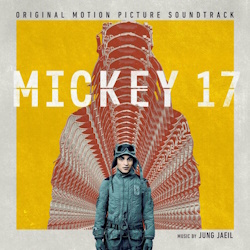 Original Review by Jonathan Broxton
After Korean director Joon-Ho Bong won multiple Oscars for his film Parasite in 2019 many people wondered what he would do as a follow-up to that success. The answer is Mickey 17, a genre-defying sci-fi/action/comedy based on the novel by Edward Ashton. Set in a dystopian future, the plot follows a man named Mickey who joins a space colony expedition to a distant planet called Niflheim where he is employed as an “expendable” – a disposable human worker who is intentionally allowed to die for research purposes, but who is immediately ‘re-born’ as a clone of himself the next day, with all his memories and personality intact. The film stars Robert Pattison as Mickey, Naomi Ackie as Mickey’s girlfriend Nasha, and Steven Yeun as Mickey’s friend Timo, and features Toni Collette and Mark Ruffalo in major supporting roles as the sinister husband-and-wife leaders of the Niflheim expedition.
To reveal more of the plot would do the film a disservice, but what I will say is that the film is an ambitious – perhaps overly-ambitious – attempt to combine multiple different genres and plot ideas, and although I found it to be hugely entertaining it is not entirely successful. Bong combines dystopian sci-fi and alien monster horror with elements of comedy that sometimes approach Chaplinesque slapstick. There are philosophical discussions about life, death, and the nature of identity and individualism. There are political and satirical overtones which touch not only on current global issues (Mark Ruffalo’s Kenneth Marshall is clearly a thinly-veiled caricature of Donald Trump), but long-standing conversations about colonialism and racism. At times some of Bong’s political satire reminded me of what Paul Verhoeven did with Starship Troopers back in 1997, even going so far as to have ‘disgusting bugs’ be the sympathetic heroes of the story. It’s at times deeply weird, and I do think that Bong perhaps bit off more than he could chew by trying to cover so much ground and touch on so many ideas, but honestly I would rather filmmakers take big swings at meaty original concepts like this, than stay firmly in the world of safe and predicable franchises.
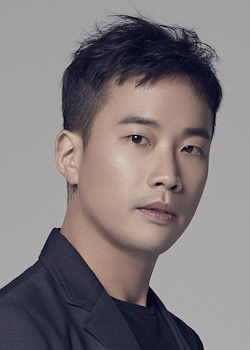 This whole thing is tied in with the fascinating recent increase in the global popularity of Korean culture – its cuisine, TV shows like Squid Game, K-Pop music acts like BTS and Blackpink, and of course the movies made by Bong and his contemporaries. In film music too there have been several outstanding composers who, although some of them have been prominent in the Korean film industry for many years, have recently started to make in-roads internationally; Yeong-Wook Jo, Byung-Woo Lee, Dong-June Lee, Hye-Seung Nam, Mowg, and Dalpalan among them. However, the most prominent of these is undoubtedly Jae-Il Jung, who scored both Parasite and Squid Game, became the first Korean composer to be nominated for a major American award when he picked up an Emmy nod in 2022, and has now I believe become the first Korean composer to score a major American-financed film here with Mickey 17.
The score was recorded mostly in the England with the London Symphony Orchestra and London Voices, with some additional recording done in Berlin and Budapest, and like the film itself is an ambitious amalgam of different styles and tones – some of which are superb, some of which are downright confusing. Eclectic doesn’t really do it justice, and in context the emotional tonality of the score is sometimes not what one would expect, but as a musical experience it is a ton of fun.
For a significant amount of the score’s running time Jung actually seems to be focusing mostly on the budding relationship between Mickey and Nasha. Their romance is clearly seen by both Bong and Jung as the heart of the story, and Jung captures this element through a series of quite lovely passages for solo pianos, often backed with lush ‘classic Hollywood’ strings. Rhythmically a lot of it is in waltz-time, which gives their love theme a pretty but curiously old-fashioned and occasionally slightly downbeat sound that I really like; cues such as “Bon Appetit,” the gorgeous “Nasha,” “Ulsang,” and “Bon Appetit with Strings” are great examples of this. The two “Nasha Is Amazing” cues are similarly beautiful, both containing a tender and sentimental piano theme that swells with warm romance.
Once in a while Jung adds a different instrumental texture to the score to flesh it out – a breathy saxophone here, an accordion there, a fiddle over there – and when he does it brings new depth to the theme. At times it reminds me of Jewish klezmer music, or of some sort of gypsy folk tune, which was probably not the intention, but despite it all it works. It’s actually really quite fascinating seeing Jung playing around in this instrumental sandbox in this way, because it illustrates what appear to be some cultural differences between how a Korean might interpret this sound vs. how a westerner interprets it. I have no idea whether Jung picked these instruments for subtle political or satirical reasons, or whether he thought they just sounded good, but it’s an interesting topic to think about considering some of the broader themes the film addresses.
When he is not following the ups and downs of Nasha’s liaisons with Mickey 1, Mickey 2, Mickey 3, and so on and so on, Jung provides short vignette-like one-off cues that deal with specific ideas on a moment-to-moment basis. There is very little thematic development of any of the motifs that exist outside the central love theme, but even without that there is still a lot of enjoyment to be had.
For example, “Immigrant” has a prominent woodwind part embedded into the florid and highly classical-sounding orchestra that is just delicious. “Vaccine” is bold and unexpectedly forthright, again with a strong string-based idea at its core. “Multiple” cleverly uses two ravishing, dramatic pianos together for the scene where Mickey 17 meets his unexpected doppelgänger, Mickey 18. There is a calming, almost hymnal, gospel-like vibe to “Barnes,” a driving intensity to “Calm Before the Storm,” and a music-box lullaby sound in “Umma,” while “Attention” has the seductive tone of an Argentine tango.
Later, “Mayhem” – which underscores the frantic scene where someone tries to assassinate Marshall but only succeeds in revealing the existence of two ‘creeper babies’ to the Niflheim explorers – is initially darkly dramatic, with rumbling timpanis under the strings, but then explodes into a riot of almost vaudevillian comedic energy, before climaxing with a fiercely grandiose choral part. The fantastic “Corridor of Love” almost plays like an overblown parody of Hollywood romance, but is all the more impressive for it.
Jung uses the iconic sound of Tuvan throat singers to give voice to the Niflheim native ‘creeper’ creatures in the atmospheric and striking “Why Kill Luco?” before launching into the score’s only two action sequences – “Set Off” and “Chaos” – to accompany the film’s final sequence in which Mickey and the Creepers do battle with Mitchell’s army on the snow-bound surface of the planet. Jung’s action music is outstanding, bold and masculine, full of rhythmic brass pulses and intense string figures, swirling around in unexpected percussive patterns. The throat singers come back for an occasional guest appearance here too, and the whole thing climaxes with some more of that apocalyptic chorus.
Whatever else Mickey 17 is, one thing it is not is conventional. Jae-Il Jung’s score is full of idiosyncratic choices that an established Hollywood composer would likely never make, and the fact that director Joon-Ho Bong encouraged this approach is commendable; for me, in the end, this is what makes Mickey 17 the success that it is. The surprising instrumental palette, the unexpected tonal shifts, and the general quirkiness of its overall sound, combines with some genuinely beautiful romantic writing and some excellent action material, resulting in a score which – like the film that it accompanies – swings for the fences, and is perhaps a little overly-ambitious, but nevertheless works in spite of itself.
Buy the Mickey 17 soundtrack from the Movie Music UK Store
Track Listing:
- Bon Appetit (2:31)
- Immigrant (2:42)
- Frog (1:39)
- Nasha (5:26)
- Vaccine (1:38)
- Multiple (2:30)
- Barnes (2:12)
- Calm Before the Storm (0:44)
- Umma (2:58)
- Ulsang (1:07)
- Attention (1:57)
- Arrival (1:58)
- Nasha Is Amazing I (1:01)
- Bon Appetit with Strings (1:08)
- Mayhem (3:47)
- Corridor of Love (3:14)
- Why Kill Luco? (1:41)
- Set Off (3:00)
- Chaos (3:55)
- Nasha Is Amazing II (3:17)
- Rejoice in the Lord (written by Jae-Il Jung and Sharon Sung Jae Choi, performed by Mark Ruffalo, Toni Collette, Daniel Henshall, and Anamaria Vartolomei) (1:00)
WaterTower Music (2025)
Running Time: 49 minutes 25 seconds
Music composed by Jae-Il Jung. Conducted by James Brett. Performed by the London Symphony Orchestra and London Voices. Orchestrations by James Brett and Balint Sapszon. Recorded and mixed by Lewis Jones, Rene Muller, Denes Redly, and Byung-Keuk Kim. Edited by Jae-Il Jung. Album produced by Jae-Il Jung.

Shop at the Movie Music UK Store

Member of the

 MOVIE MUSIC UK