Under-the-Radar Round Up 2024, Part 7
 Original Reviews by Jonathan Broxton
I’m pleased to present the latest installment in my on-going series of articles looking at the best under-the-radar scores from around the world.
This article, the seventh and last of 2024, is a massive bumper crop covering NINE scores from across the world, all of which deserve to be considered in people’s end-of-year best lists. The scores include a Spanish animated adventure film, an acclaimed WWII documentary, an Italian comedy-drama, a Hungarian historical epic film, an uplifting and life-affirming Norwegian documentary , a sultry Italian thriller TV mini-series, a Spanish Christmas-themed animated action-adventure comedy, a Spanish horror-thriller TV series for Netflix, and a Japanese drama television series!
BUFFALO KIDS – Fernando Velázquez
 Buffalo Kids is a Spanish animated adventure film directed by Pedro Solís and Juan Galocha. It tells the story of two orphaned siblings from Ireland, Tom and Mary, who arrive in New York City in 1886, expecting to be met at Ellis Island by their uncle Neil. When Neil doesn’t show up, Tom and Mary – accompanied by a stray dog named Sparky – embark on a wild cross-country journey aboard a transcontinental train, trying to find their family.
The score for Buffalo Kids is by the outstanding Spanish composer Fernando Velázquez, who over the last few years has enjoyed a great deal of success scoring children’s adventure films and animated films like Zipi y Zape y El Club de la Canica, its sequel Zipi y Zape y la Isla del Capitán, Deep, and Mummies. For Buffalo Kids Velázquez was able to blend his own personal style with conventions of classic American westerns, resulting in a wonderfully adventurous and enjoyable score from start to finish.
The whole thing starts with the rousing, ear-catching “The Arrival” a terrific orchestral mash-up between an Irish jig and a sweeping western theme. The Irish sound, which clearly is intended to represent Tom and Mary’s cultural heritage, comes back in several cues, notably “Where’s Uncle Neil,” “On Our Way,” and “The Mine/Brother’s Lullaby,” all to excellent effect. Velázquez uses familiar traditional Irish instruments, including fiddles and pennywhistles, to capture the spirit of the Emerald Isle, but is careful not to fall into the trap of fiddle-de-dee cliché. The depth of the brother-sister relationship is also explored in cues such as “The Way,” “Different,” and the first half of “Adventures in the Train,” parts of which are quieter and more intimate.
The big Americana sound asserts itself in cues such as “The Way,” “Sound of the Eagle/Goodbye,” and “Uncle Neil,” capturing the excitement and sense of boundless adventure that awaits Tom and Mary as they head west across the country on a train. Velázquez channels the spirit of all those great western scores of the 1940s and 50s – Elmer Bernstein and Jerome Moross and Alfred Newman – as well as the sound that James Horner adopted in scores like An American Tail: Fievel Goes West, and he does it with real style. Once in a while Velázquez engages in a little bit of country/bluegrass pastiche, in cues like “Gathering Money” and “Fixing the Carriage,” and these cues are mostly vivacious and fun. There are also some mid-album cues that adopt a more lyrical, mystical tone, notably “The Cheyenne Encounter,” “The Moon Dance,” and the exciting “Cheyenne & Calvary,” which underscore scenes in which Tom and Mary have encounters with Native American tribespeople.
There also is some outstanding action music, notably in cues like “Adventures in the Train,” “Amazing Buffalos,” the superb “A Dark Night,” the quirky “In Action,” “Escape & Chase,” and the rambunctious “Rescue Plan Executed,” all of which reverberate to powerful orchestral forces, with some notably outstanding writing for brass, but are mostly on the lighter and more playful side rather than being overly dark and intense. One exception to this is “The Bandits,” which is slow and imposing and puts a solo harmonica into the orchestra for moody emphasis. One thing I did note is that the score is perhaps a little thematically ambiguous – there is really only one central recurring idea that anchors the score, which despite its quality I found to be a little limiting – but this is easily overlooked, especially when the overall sound and richness of the orchestration is this good.
Buffalo Kids is a great score, fun and lively, a superb combination of both Irish and American Western musical tropes that engages from start to finish, and reinforces Fernando Velázquez excellent pedigree at this type of score. The score for Buffalo Kids is available to purchase on CD, and to stream and download from most of the usual online sources, on the Quartet Records label.
Track Listing: 1. The Arrival (1:21), 2. Where’s Uncle Neil? (3:47), 3. Gathering Money (2:43), 4. A Journey Starts (2:44), 5. The Way (2:13), 6. Different (2:17), 7. Adventures in the Train (1:50), 8. Amazing Buffalos (2:48), 9. Fixing the Carriage (1:51), 10. The Attack (1:23), 11. On Our Way (2:21), 12. A Dark Night (2:52), 13. The Cheyenne Encounter (2:01), 14. Money (2:00), 15. The Moon Dance (1:59), 16. Sound of the Eagle/Goodbye (2:37), 17. The Bandits (2:28), 18. The Mine/Brother’s Lullaby (2:51), 19. I Have A Plan (2:02), 20. Uncle Neil (1:33), 21. In Action (2:28), 22. Escape & Chase (2:46), 23. Cheyenne & Calvary (2:45), 24. Rescue Plan Executed (3:34), 25. Nick’s Dream (1:20), 26. All Together in the End (3:53), 27. Show Me the Things You Like (2:31), 28. We Are Together on the Road (0:52). Quartet Records QR-565, 65 minutes 50 seconds.
CHURCHILL AT WAR – Jeff Danna
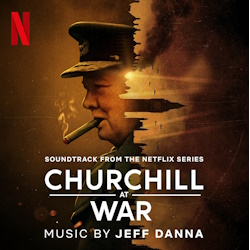 Churchill at War is a documentary-drama series for Netflix, written by Frederick Rendina and directed by Malcolm Venville. Netflix’s publicity material describes it as ‘a captivating docuseries which examines Winston Churchill’s pivotal role in World War II and the formative events that made him an ideal leader for the era,’ and it appears to be a combination of a scholarly documentary looking at Churchill’s life and career, combined with dramatic re-creations of certain key moments of life, in which Churchill is played by British character actor Christian McKay.
The score for Churchill at War is by Canadian composer Jeff Danna, with additional music by Valeri Ortiz and Jeff’s son Arden Danna, and it really is quite special indeed. On his personal website, Danna states that he and the director ‘discussed a classic, theme- based score for his historic subject matter. Electronic sounds married to 1940s footage was not a route he wanted to take, and I happily wrote a melodic, orchestral score for him, with recognizable motifs for Sir Winston, Nazi Germany and the British Citizenry, among others. Among the familiar tenacious and heroic aspects of Churchill’s character, I strove to keep a facet of whimsy for some of WC’s moments in the film, a musical representation of the famous cheeky grin and knowing glance.’
Danna’s resulting score is really quite outstanding, full of rousing militaristic patriotism, intense drama, moments of small-scale intimacy. There is plentiful melodic content, multiple themes, and rich and lush orchestrations, and it’s all wrapped up in that indefinable sense of musical ‘Englishness’ that so many classic film scores contain, and which Danna has captured perfectly.
I love the thrusting drama in the opening “Write History Myself,” which pairs dancing pianos and elegant strings with a propulsive brass component and heavy slapped percussion that is tremendously compelling. Several subsequent cues, notably “The Influential Figure of World War Two,” the slightly more subdued “A Modern-Day Celebrity Officer,” and “A Bitter Cup” build on this style to outstanding effect; through these cues, Danna seems to almost be pitching Churchill like a contemporary super hero, standing up to Nazi aggression and inspiring his country to follow him in doing so.
Other cues of note include the dainty playfulness of “The Young Churchill,” the lyrically pretty woodwind-heavy romance of “Clementine,” the solemnity of “The French Are Evidently Cracking,” the inspirational tone of “All Europe May Be Free,” the eerie slurred strings of “For the Life of Britain,” the understated earnestness of “Churchill in the Arena,” the heartfelt sadness conveyed through lovely cello writing in both “Roosevelt Is Unwell” and “A Sharp Stab,” and the militaristic somberness of “The President is Dead”.
And then there is the action material, which builds on the stylistics of the opening two cues and really starts to assert itself in the second half of the score after Churchill takes over from Neville Chamberlain as Prime Minister in 1940 and World War II and energizes Britain to fight back against Hitler in the aftermath of Dunkirk. Cues like “Fifty Feet Below Ground,” “Churchill Watches the Bombs Fall,” “Britain Was Still in the Ring, the ominous “Hitler Breaks the Pact,” and “The Fall of Tobruk” are especially outstanding in this regard.
Honestly, there isn’t a low point in the entire album, and it is to the credit of both Danna and his director that they allowed this film to inspire a compelling scored; for me, Churchill At War is one of the best documentary scores of the last few years, and now joins The Gospel of John as the best solo score of Jeff Danna’s career. Unfortunately there is no physical CD of Churchill At War available, but the score is available to stream and download from most of the usual online sources on Netflix Music.
Track Listing: 1. Write History Myself (2:53), 2. The Influential Figure of World War Two (1:27), 3. The Young Churchill (1:01), 4. Churchill Wanted Dead or Alive (1:00), 5. Clementine (1:44), 6. A Modern-Day Celebrity Officer (1:24), 7. The Wilderness Years (1:08), 8. I Felt a Sensation of Despair (1:08), 9. A Bitter Cup (1:50), 10. Chamberlain Resigns (2:25), 11. An Ordeal of the Most Grievous Kind (1:52), 12. The French Are Evidently Cracking (0:55), 13. A Telegram to Roosevelt (1:13), 14. How Many Can You Really Save? (1:57), 15. We Shall Never Surrender (1:38), 16. All Europe May Be Free (1:25), 17. For the Life of Britain (3:22), 18. RAF Fighter Command (2:05), 19. Action This Day (1:08), 20. Fifty Feet Below Ground (2:21), 21. Churchill Watches the Bombs Fall (2:04), 22. Churchill in the Arena (2:01), 23. Britain Was Still in the Ring (2:36), 24. The Lend-Lease Act (1:38), 25. Harry Hopkins (2:24), 26. Hitler Breaks the Pact (1:58), 27. Churchill’s Presence in the White House (2:05), 28. The Fall of Tobruk (2:07), 29. Bring the War to an End (0:58), 30. Roosevelt Is Unwell (1:06), 31. The President Is Dead (2:23), 32. Cheer Churchill, Vote Labour (1:26), 33. A Sharp Stab (3:01), 34. A Remarkable Comeback (1:38). Netflix Music, 61 minutes 21 seconds.
DIAMANTI – Giuliano Taviani and Carmelo Travia
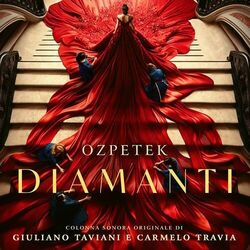 Diamanti is an Italian comedy-drama film written and directed by Turkish-Italian filmmaker Ferzan Özpetek. The film brings together an astonishing cast of 18 actresses – many of whom are legends of Italian cinema who have worked with Özpetek in the past – and tells the story of a film and theatre dressmakers shop in the early 1970s, which is run by two sisters (Luisa Ranieri and Jasmine Trinca). When an acclaimed director and an Oscar-winning costume designer hire the sisters to provide all the costumes for huge and lavish new movie set in the eighteenth century, the two sisters get to work – but old rivalries, bitter jealousies, and squabbling families threaten to prevent them from completing the order.
The score for Diamanti is by composers Giuliano Taviani and Carmelo Travia, who have worked together on several of Özpetek’s previous films. Giuliani is the son of legendary film director Vittorio Taviani, and he has been working with Travia for many years – they won the David di Donatello Award for Best Score for Cesare Deve Morire in 2012. Despite their success in Italy, Taviani and Travia have for some reason never gained an international profile, but they really should be better known than they are, and Diamanti might be the score to change all that.
It is, in a word, spectacular. Taking their cue from Özpetek’s visual style and the setting of the film, Diamanti is a lush, sweeping, gorgeous homage to all the best Italian cinematic melodramas of that period, capturing the essence of composers like Piero Piccioni, Piero Umiliani, Stelvio Cipriano, and especially Nicola Piovani and Ennio Morricone, the latter of whom worked with Giuliano’s father back in the day, on Allonsanfàn in 1974, Il Prato in 1979, and La Notte di San Lorenzo in 1982.
The score is anchored by the central “Diamanti Theme,” a wonderfully evocative piece for the orchestra, which has a lilting central melody initially carried by a tender acoustic guitar, which then switches to the main string ensemble. The theme is gorgeous; warm, romantic, a little bit sultry, a little bit melodramatic, even perhaps a little dangerous, and for me it’s one of the most memorable themes of the entire year. As is often the case with Italian scores, the main theme is arranged in a variety of different ways, including as a soft and gentle piano solo (“Intimate”), with more focus on the acoustic guitar (“La Lettura”), with lush and evocative romance (“Notturno”), with a massive symphonic sweep in the “Extended” finale, and even as an original song performed with gusto by the popular Italian singer-songwriter Giorgia Todrani.
Outside of this main theme, other cues of note include the bittersweet piano tenderness of “Gioco di Sguardi,” the sexiness of “Rumba di Velluto,” the pretty waterfall of sound in “Di Seta e di Ferro,” the moving combination writing for piano and cello in “Perline Colorate,” the slightly chilly beauty of “Evanescente,” and the darker tones of “Jaquard”. It’s all just superb.
I was very surprised at how much I loved the score for Diamanti, and upon hearing it I was immediately inspired to go and seek out other scores by Giuliano Taviani and Carmelo Travia. Now that I know how great they are, I will be eagerly anticipating whatever they do next, and I strongly hope this review inspires others to seek out their work too. The Italian film music industry has been in a little bit of a slump since the heyday of legendary artists like Morricone, Nino Rota, and others, and needs to be re-invigorated by composers like Taviani and Travia. Unfortunately there is no physical CD of Diamanti available, but the score is available to stream and download from most of the usual online sources, on the FM Records label.
Track Listing: 1. Diamanti (performed by Giorgia) (3:14), 2. Diamanti Theme (3:24), 3. Gioco di Sguardi (2:26), 4. Rumba di Velluto (2:28), 5. Di Seta e di Ferro (1:36), 6. Perline Colorate (2:16), 7. Bianca Vega (5:36), 8. Evanescente (2:27), 9. Diamanti Theme (Intimate) (1:42), 10. Jaquard (2:44), 11. Evanescente (Harp Version) (0:51), 12. Diamanti Theme (La Lettura) (1:52), 13. Diamanti Theme (Notturno) (4:08), 14. Diamanti Theme (Extended) (5:36). FM Records, 40 minutes 20 seconds.
MOST VAGY SOHA/NOW OR NEVER – Robert Gulya
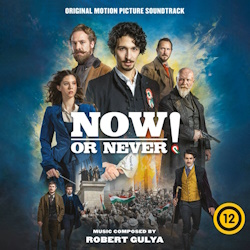 Most Vagy Soha, also known as Now Or Never, a Hungarian historical epic film directed by Balázs Lóth. The movie tells the story of Sándor Petőfi, a Hungarian poet and liberal revolutionary, who is considered Hungary’s national poet, and was one of the key figures of the Hungarian Revolution of 1848. He is the author of the Nemzeti Dal (National Song), which is said to have inspired the revolution, and which eventually grew into a war for independence from the Austrian Empire. The film stars Nándor Berettyán as Petőfi and was one of the most popular Hungarian-language films of 2024. The title of the film comes from the second line of the Nemzeti Dal, which reads in part: “On your feet, Magyar, the homeland calls! The time is here, now or never! Shall we be slaves or free? This is the question, choose your answer! By the God of the Hungarians we vow, we vow, that we won’t be slaves any longer!”
The score for Most Vagy Soha is by Hungarian composer Robert Gulya, who some may remember from his IFMCA-nominated score for Tom Sawyer and Huckleberry Finn in 2015. It is a large, expansive, old fashioned thematic action adventure score, and is tremendously entertaining from start to finish, somehow managing to maintain its momentum and interest throughout its 94-minite run time For a lot of the score Gulya leans into a classic ‘heroic military war anthem’ sound to give voice to Petőfi’s important and inspirational actions, but he is also able to bring out a great deal of depth and nuance too, addressing different aspects of Petőfi’s life beyond the things for which he is most noted.
My understanding is that some of the score contains elements and influences from traditional Hungarian folk music and some well-known patriotic songs, but unfortunately my knowledge of those is virtually non-existent, and so I was unable to pick any specific references out. I even listened to the current Hungarian national anthem, “Himnus” or “Isten, Áldd Meg a Magyart,” but I heard no references to it either. What is left instead is an excellent combination of inspirational patriotic anthems with references to regional folk music, moving moments of strong emotion, and powerful action.
The ”Main Title,” and subsequent cues like “In the Hall of the Law,” “You Are the Spark,” and the soaring “Bridge to Victory or Death” are great examples of the inspirational patriotic anthems and the regional folk music, upbeat march-like pieces with rousing horns, militaristic percussion, dance-like rhythms, and sparkling, striking, vivacious string runs which light up the entire score. Conversely, cues like “I’m With Child,” the perkier and more whimsical pair “Rise and Shine” and “Snowdrop Girl,” and “In The Name of the People” tender and lyrically, and emotionally poignant, and often feature lovely writing for strings, pianos, and woodwinds.
However, for me, it is the notably excellent action music that stands out the most. Cues like “The Raid,” the spectacularly dashing “En Garde,” the flamboyant “Who’s With Me,” “On Your Feet Now,” “Battle of Thugs and Gentlemen,” “A Poet Walks Home,” “The Sacred Words of Freedom,” the sometimes brutal-sounding “Corridors of Power,” and large parts of “Assassination” and “Julia in Peril” reverberate to powerful orchestral and choral forces that are really very impressive; in these cues and others Gulya uses his ensemble to its fullest, his percussion writing is notably intricate and interesting, and the use of choirs and solo voices is targeted to have the most impact. Some of this action music does sometimes have a quite modern sound that stands at odds with the film’s historical setting – including some occasional electronic tonalities – but this modernity is counterbalanced by some impressively varied arrangements, which highlight different instrumental textures and combinations in different cues, and keep the score interesting. Stylistically I got strong flavors of Basil Poledouris and Jerry Goldsmith from the 1980s and 90s in Gulya’s writing, which is course is perfectly tailored to my taste.
The 16-minute finale comprising “Lay Down Your Arms,” “Victory,” “The Youth of March,” and the “End Credit” is just spectacular, moving from massive modern action to rousing heroism to stirring emotion with ease and grace. It’s a perfect representation of Hungarian patriotism, the fight for freedom, and noble sacrifice, and Gulya’s musical depiction of this shines.
Most Vagy Soha is a lengthy album, but to its credit it never runs out of steam, maintaining interest throughout. This score is a perfect example of what I’m talking about when I say ‘there is so much great film music being written out in the world, if you are prepared to put in a little effort and look for it’. I mean… this is a Hungarian historical action movie written by a composer who (despite his IFMCA nomination) still has very little international profile. But it’s outstanding, one of the best scores of its type this year. Unfortunately there is no physical CD of Most Vagy Soha available, but the score is available to stream and download from most of the usual online sources from Records DK.
Track Listing: 1. The Raid (5:00), 2. Main Title (2:11), 3. En Garde! (1:55), 4. Who’s With Me? (2:20), 5. I’m With Child (1:37), 6. Lay a Trap and Wait! (2:25), 7. Rise and Shine! (3:50), 8. It Has Begun (1:06), 9. On Your Feet Now! (4:11), 10. Snowdrop Girl (1:21), 11. Meyer (1:52), 12. Give Them Hell Boys! (1:32), 13. In the Hall of the Law (3:44), 14. Battle of Thugs and Gentlemen (3:21), 15. Burn the Print Shop Down! (3:02), 16. In The Name of the People (1:41), 17. Umbrella Revolution (2:35), 18. To the Market (0:45), 19. Find Him at All Costs! (1:11), 20. A Poet Walks Home (2:27), 21. You Are the Spark (3:46), 22. The Sea Has Risen (1:43), 23. The Sacred Words of Freedom (1:43), 24. To Buda Castle! (3:42), 25. Bridge to Victory or Death (1:44), 26. Revolution March (2:28), 27. Corridors of Power (2:22), 28. The Colonial Government (1:18), 29. Assassination (6:49), 30. Julia in Peril (1:38), 31. Petőfi’s last Stand (1:45), 32. Lay Down Your Arms! (0:43), 33. Victory! (2:22), 34. The Youth of March (7:24), 35. End Credit (6:48). Records DK, 94 minutes 25 seconds.
THE REMARKABLE LIFE OF IBELIN – Uno Helmersson
 The Remarkable Life of Ibelin is an uplifting and life-affirming documentary film directed by Benjamin Ree about Mats Steen, a Norwegian man born with muscular dystrophy. Unable to unable to participate in everyday activities and increasingly physically disabled, Steen finds solace playing video games, particularly World of Warcraft. The film tells the story of his life in the WoW guild Starlight — where he played the character Ibelin Redmoore until his death from the disease at the age of just 25— through animations based on the game, and interspersed with retrospectives from his guild members, family, and excerpts from his blog.
The score for Ibelin is by Swedish composer Uno Helmersson, and it is just as uplifting and life-affirming as the film itself, a powerful musical tribute to a man who could only fully live online. The score is warmly thematic, full of melody and varied emotional content, and uses the full orchestra and soloists in a myriad of engaging ways.
The opening “Ibelin Waltz” is actually the film’s end credits cue and is a beautiful, lush orchestral piece that swoons with lyrical melodiousness. “The Birth” is a lovely child-like piece for pianos and metallic percussion. Cues like “Rewinding the Tapes,” “The Leader of the Starlight,” and “Lisette Gone” contain sparkling, classically rich string passages that are highly engaging. “The Kiss” has some gorgeous cascading pianos backed by romantic dancing woodwinds. There is a whimsical playfulness about cues such as “Lisettes Perspective” and “Always There”.
Some of the middle sections of the album do coalesce into a lengthy period of low key string-and-electronic textures that some may find a little dull, but personally I connected with the thoughtful and intimate atmosphere that Helmersson’s music creates. Everything builds up to the conclusive “Ibelin Theme,” a respectful, slow, morose, but exceptionally beautiful string elegy that builds to grand proportions and explores great emotional depths as it develops over the course of six minutes.
This is really excellent work from Helmersson, one of the most engaging documentary scores of 2024, which will likely appeal to fans of that low-key style of Scandi-scoring, which here is peppered with more prominent classical textures. Unfortunately, there is no physical CD of Ibelin available, but the score is available to stream and download from most of the usual online sources, on the ABHL Records label.
Track Listing: 1. Ibelin Waltz (2:15), 2. The Password (1:27), 3. The Birth (2:10), 4. Screentime Increasing (2:05), 5. Last Footage (2:15), 6. Rewinding the Tapes (3:34), 7. The Leader of the Starlight (3:17), 8. The Kiss (1:46), 9. Lisette Gone (3:24), 10. Lisettes Perspective (1:31), 11. The Letters (3:04), 12. Hugging (2:27), 13. Always There (2:32), 14. Betrayed Frustrated (5:31), 15. A Second Chance (1:52), 16. Running Away (2:02), 17. Last Login (5:04), 18. The Funeral (8:36), 19. Ibelin Theme (6:10). ABHL Records, 61 minutes 20 seconds.
SE POTESSI DIRTI ADDIO – Paolo Vivaldi
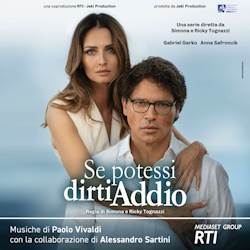 Se Potessi Dirti Addio is an Italian TV mini-series directed by husband-and-wife filmmakers Ricky Tognazzi and Simona Izzo. The series stars Anna Safroncik as Elena, an acclaimed neuropsychiatrist, whose husband was recently killed, but whose killer has never been found. Elena takes in a new patient named Marcello (Gabriel Garko) who is suffering from amnesia; however, as Elena and Marcello work together, and Marcello starts to piece his memories back together, Elena discovers details about him that may have to do with her husband’s death.
The score for Se Potessi Dirti Addio is by composer Paolo Vivaldi – no relation to the legendary classical composer – with additional music by Alessandro Sartini, and it’s absolutely superb. Vivaldi has been around the Italian film and TV music scene for well over a decade, but none of his music has really captured the imagination of an international audience – my hope is that Se Potessi Dirti Addio might just do that, and people will become aware of his talent and work.
The best way to describe Se Potessi Dirti Addio might be ‘a modern-day version of those 80s and 90s erotic thriller scores’. There is an elegance, a sense of romance, but also a sense of mystery and an underlying sense of danger and intrigue to this music, and it is all conveyed with full orchestrations and a thematic sensibility that is immediately appealing.
The opening cue, “Absolute Love,” is superb, a rolling and passionate theme for strings and piano that builds in intensity as it develops; subsequent cues like “Apologies,” the almost bashful “Intimate Glances,” the yearningly beautiful “Emotional Passion,” the pretty “Flying Hands,” and especially the two stunning, passionate “Elena’s Love Theme” tracks revisit this style with outstanding results. This is the music that represents Elena’s relationship with her late husband, and then the fiery intensity of the new relationship that develops with Marcello as they move from the psychology office to the bedroom. I adore music like this; music that presents simple, clear, emotionally direct themes with great beauty and grace. Se Potessi Dirti Addio is overflowing with it.
Once Elena and Marcello’s relationship deepens and she starts to dig into his potentially dangerous past the music switches gears and becomes less romantic and more interested in a dramatic thriller sound. Cues of note include the more turbulent “Torment,” the dark and electric-guitar laden “Suspicious,” and the edgy and spiky “Black Mind,” as well as “Open the Eyes,” “Bravery’s Path,” the energetic “Worry,” and the tremendous, vivid “Unexpected Death”.
Elsewhere, “Free Dreams” features a sumptuous and luxurious cello solo that feels inspired by Wojciech Kilar, “Empathy” leans on tender acoustic guitars, and “Kanji Is Back” overflows with positive warmth. “Confusing Memories” blends Sartini’s piano with the unexpectedly sultry sound of an alto saxophone, “Solving a Mystery” has a cool electronic vibe that reminds me of 1990s James Horner, and it all concludes in magnificent fashion with the revelatory and cathartic pair “Comprehension” and “Tension and Discovery”.
Most of director Tognazzi’s previous films – La Scorta in 1993, Vite Strozzate in 1996, Canone Inverso in 2000, Il Papa Buono in 2003 – were scored by the late great Ennio Morricone, so the fact that he has turned to Paolo Vivaldi to fill that musical void tells you something about the quality and sound of this score. Vivaldi is no Morricone – clearly – but there is still much to recommend here in his absence. Unfortunately there is no physical CD of Se Potessi Dirti Addio available, but the score is available to stream and download from most of the usual online sources, on the RTI Music label.
Track Listing: 1. Absolute Love (2:36), 2. Apologies (2:37), 3. Intimate Glances (3:00), 4. Emotional Passion (2:50), 5. Torment (2:33), 6. Elena’s Love Theme (2:08), 7. Suspicious (3:14), 8. Black Mind (2:39), 9. Open the Eyes (3:18), 10. Elena’s Love Theme 2 (1:55), 11. Free Dreams (2:48), 12. Wait for the Truth (3:34), 13. Flying Hands (3:00), 14. Bravery’s Path (2:02), 15. Worry (2:01), 16. Empathy (2:06), 17. Kanji Is Back (2:07), 18. Discovery (1:59), 19. Unexpected Death (1:48), 20. Expectations (1:31), 21. Confusing Memories (1:26), 22. Solving a Mystery (2:26), 23. Determination (3:29), 24. Comprehension (3:07), 25. Tension and Discovery (4:36), 26. Waiting for Serendipity (1:57), 27. Leak (1:22). RTI Music, 68 minutes 09 seconds.
SUPERKLAUS – Diego Navarro
 SuperKlaus is a Spanish animated action-adventure comedy film directed by Steven Majaury and Andrea Sebastià, featuring the voices of Colm Feore, Harland Williams and Millie Davis. The story is a combination of Christmas fantasy and super hero fare, which begins when Santa Claus accidentally bumps his head and knocks himself out; when he wakes up Santa starts believing he is a super hero named SuperKlaus, ands with the help of his elf assistants Billie and Leo endeavors to take on an unscrupulous toy-obsessed businessman to save Christmas.
The score for SuperKlaus is by the great Spanish composer and conductor Diego Navarro. Navarro has pedigree writing for animated films – his score for Atrapa la Bandera was nominated for an IFMCA Award in 2016 – and he builds on that expansive orchestral sound again here, although this time he adapts his symphonic sound to incorporate a traditional comic book super hero sound, and some references to classic Christmas melodies. I have been a huge fan of Navarro’s work for years, not only Atrapa la Bandera but subsequent scores like Pasaje al Amanecer (2017), El Fotógrafo de Mauthausen (2018), and El Páramo (2022), among many others, and SuperKlaus is another one to add to that list of excellent scores.
In the accompanying information for the CD release, Navarro says: “Animation, one of the most complex and demanding genres within the noble art of scoring, has always had a special place in my heart. Writing the score for SuperKlaus was a huge challenge. Our film, aimed at families and children, presents nowadays situations, such as the use of new technologies by the young ones, or the challenge of family reconciliation. We have a very special superhero, Santa Klaus, who has to defend Christmas values and his mission, endangered by a heartless villain. This unscrupulous manufacturer wants to sell his terrible quality toys, aiming to take the place of our protagonist by promoting excessive consumerism.” He goes on to say: “It was a great pleasure to manage and work on a powerful musical production that featured a great symphony orchestra, my beloved City of Prague Philharmonic Orchestra, with whom I have collaborated so many times. The symphonic score is full of emotions: magic, tenderness, comedy, action and adventure. It is always a challenge for the composer to balance all these emotional mood changes.
The main theme, as heard in the opening cue “SuperKlaus,” is an absolute knockout, a perfectly-judged super hero anthem in the classic John Williams mold, sweeping adventurous strings and soaring brass fanfares a-plenty. The theme comes back numerous times in the score proper, appears embedded into several of the score’s action cues, and features with notable gusto in the “End Credits”. The action is music tremendous, lively and energetic, but also fun and light; cues like “A Rare Confrontation,” “Santa Is Coming With Me,” the modernistic “Mall Fight,” the oddly Scottish “Life Size Action Figure,” “We Are Here to Rescue Santa,” “Candy Cane Missiles,” and “Saving Santa’s Workshop” are especially outstanding.
Other cues of note include the serpentine theme for the villain in “Fafnir’s Theme” and “Fafnir’s Discovery,” the sparkling cheerfulness of “The Plan,” the fantastic lounge muzak pastiche in “Christmas at the Mall,” and the Jerry Goldsmith-inspired “Rescue,” which seems to have elements of both The Man from UNCLE and Gremlins to it.
To add to a touch of seasonal whimsy and festive spirit Navarro also incorporates the melodies from numerous Christmas songs and carols into his score. Sometimes the statements are clear and overt – ‘We Wish You a Merry Christmas’ in “Merry Christmas” and “Santa’s Factory,” for example – but sometimes allusions are a little more oblique, cleverly referencing the chord progressions or rhythms of different songs without actually quoting its melody.
What I also really like about SuperKlaus is just how colorful it is. Navarro is a superb composer, and a dynamic conductor, but I think his work as an orchestrator is underrated and needs to be praised: he brings out endless lovely details in all the different sections throughout the score, uses his ensemble in a variety of interesting ways, and always looks for ways to make his music more dynamic and engaging. It’s an increasingly lost art, and I always want to highlight things like this when I hear them.
SuperKlaus is an excellent score, one of the year’s best animated works, and yet another confirmation of what a terrific composer Diego Navarro is. The score is available to purchase as a CD On-Demand, or to stream or download, from Moviescore Media here: https://moviescoremedia.com/newsite/catalogue/superklaus-diego-navarro/.
Track Listing: 1. SuperKlaus (1:52), 2. Merry Christmas (2:58), 3. Super Sleigh (2:48), 4. Santa’s Factory (3:26), 5. Fafnir’s Theme (2:36), 6. The Plan (2:28), 7. I Won’t Rest Until I Find You (1:50), 8. Lazy Reindeers (1:44), 9. Follow Me (1:58), 10. Christmas at the Mall (0:50), 11. A Rough Landing (1:40), 12. Fafnir’s Discovery (1:42), 13. A Rare Confrontation (2:10), 14. Santa Is Coming With Me (2:14), 15. Mall Fight (2:56), 16. Billie’s Friend (1:42), 17. Bad Intentions (1:34), 18. Rescue (3:44), 19. Life-Size Action Figure (1:56), 20. We Are Here to Rescue Santa (4:24), 21. Billie Won’t Give Up (2:16), 22. Epic Team (1:48), 23. Candy Cane Missiles (4:42), 24. Not So Fast, Fafnir! (3:14), 25. Saving Santa’s Workshop (4:56), 26. Working Together (1:44), 27. Back Home (0:52), 28. Theme from SuperKlaus (End Credits) (4:00). Moviescore Media MMS-24048, 70 minutes 04 seconds.
LA ÚLTIMA NOCHE EN TREMOR/THE LAST NIGHT AT TREMORE BEACH – Fernando Velázquez
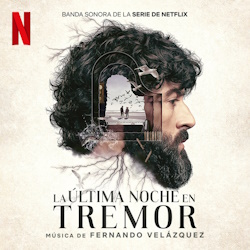 La Última Noche En Tremor is a Spanish Netflix TV series created by Oriol Paulo and Jordi Vallejo, based on the novel of the same name by Mikel Santiago. The series stars Javier Rey as Peter Harper, prestigious soundtrack composer who, after a traumatic divorce, takes refuge in a remote village on the Irish coast to regain his inspiration and finish his latest score. However, in the aftermath of a raging storm which pummels the area, Peter starts experiencing eerie and frightening visions about his neighbors.
The score for La Última Noche En Tremor is by the outstanding Spanish composer Fernando Velázquez, and joins an increasingly impressive list of outstanding horror and thriller scores by him, alongside titles like El Orfanato (2007), Crimson Peak (2015), El Guardián Invisible (2017), Marrowbone (2017), Alma (2022), and Los Renglones Torcidos de Dios (2022), among many others. The score is a classic orchestral thriller score of the highest order; its influences are clear and obvious – it’s a bit Bernard Herrmann, a bit Jerry Goldsmith – but Velázquez is talented enough to work with these established styles and craft something that still sounds fresh and engaging.
Most of the score is focused on strings and pianos, but Velázquez nevertheless consistently brings out the depth of the full orchestra to flesh it all out in a variety of interesting ways. There are numerous cues where there is a dominant brass element, or a particular flourish in the woodwinds, or a new and interesting percussion texture and when they appear they are invariably excellent. There is a haunting lyricism in the opening cue “Cicatrices,” and this general sound continues throughout much of the rest of the score, even as the sense of drama and horror increases and Peter’s nocturnal nightmares emerge into what appears to be startling reality.
The more intense action suspense and horror cues – things like “La Primera Visión,” “Están Muertos,” “No Salgas De Casa,” the superb “La Furgoneta Roja,” the relentless “Invocación,” the brilliant “Tenemos Que Irnos” – occasionally augment the symphonic sound with some subtle electronic textures, but personally I found that they actually added a new and engaging element to the score. Some of these cues are quite hair-raising in their final execution, but still remain strongly musical and deeply effective. I also really like the dark lullaby sound in “Alicia Blanchart,” the somber elegance in “Te Vi A Ti” and “El Viaje de Judy,” the gentle romance of “El Día Que Te Conocí,” and the revelatory power of “La Confesión” and late album cues like “Está Escrito,” “No Puede Cambiarse,” and “Las Piezas”.
One thing I did note is that, despite its geographic setting, there is little to no acknowledgement of Irishness in Velázquez work, which instead concentrated solely on Peter’s emotions and the frightening experiences he endures. I also thought it was interesting that Velázquez doesn’t really touch on the fact of Peter’s job; I can’t think of many other movies where the lead character is a film composer, so that’s something that could have given La Última Noche En Tremor an interesting angle – maybe working in some diegetic stuff related to the fictional score Peter is writing – but Velázquez essentially ignores this. It doesn’t make the score any better or worse as a result of this, but it’s worth at least mentioning.
In the end, I found La Última Noche En Tremor to be an outstanding modern thriller score whose musical roots are very much based on the great genre scores of the past. Unfortunately there is no physical CD of La Última Noche En Tremor available, but the score is available to stream and download from most of the usual online sources, on the Netflix Music label.
Track Listing: 1. Cicatrices (5:05), 2. La Tormenta (1:52), 3. La Primera Visión (6:30), 4. Las Musas (2:13), 5. Alicia Blanchart (1:52), 6. Están Muertos (5:01), 7. No Salgas De Casa (3:19), 8. Para Judy (3:23), 9. Te Vi A Ti (2:56), 10. La Furgoneta Roja (5:14), 11. El Viaje de Judy (2:47), 12. El Día Que Te Conocí (5:55), 13. Para Estrella (0:48), 14. Mamá (3:11), 15. Kauffman (1:40), 16. La Confesión (4:09), 17. Kauffman Te Dijo (1:17), 18. Invocación (5:00), 19. Está Escrito (3:41), 20. Tenemos Que Irnos (3:25), 21. No Puede Cambiarse (7:41), 22. Las Piezas (6:14), 23. Mi Madre Tenía Un Don (4:53). Netflix Music, 88 minutes 06 seconds.
UMI NI NEMURU DIAMOND – Naoki Sato
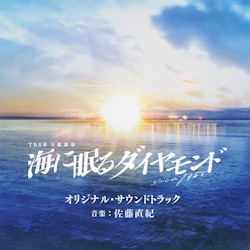 Umi Ni Nemuru Diamond, or Diamonds in the Sea, is a Japanese drama television series written by Akiko Nogi and directed by Ayuko Tsukahara. It tells the epic multi-generational story of the Araki family, coal miners on Hashima Island in Nagasaki Prefecture, over a period of 70 years, from 1955 to the present day. The show is ‘an epic story of love, youth, friendship and family,’ and looks at how the family built a new life and a new business in Japan’s post-World War II reconstruction period, overcoming numerous hardships along the way.
The score for Umi Ni Nemuru Diamond is by the great Naoki Sato, who continues to excel as one of the leading composers in the Japanese film and television industry. One of the things I appreciate about Sato is how diverse his talent is; he can turn his hand to any genre, any style, and writing something compelling. However, all my personal favorite Sato ones tend to be ones where he takes a full orchestra and writes big, thematic, emotional music, and Umi Ni Nemuru Diamond is one of those.
Almost every cue offers a gorgeous new take on the large orchestral sound. One of the few negatives of the score is its general lack of thematic structure – almost every track introduces new melodies and new ideas, resulting in a score which feels more like a concept album than a fully cohesive work – and so anyone who values that may find the score to be frustrating. However, even with that in mind, the music itself is so beautiful that it overcomes those flaws and remains a hugely enjoyable experience.
Sato structured his score mostly around an array of light dancing high strings arranged in layers, bolstered by a wide range of sonorous cellos, elegant pianos, and twittering and lively woodwind textures, all in service of capturing the different emotional and social experiences of the Araki family over the decades. The opening cue “Island of Hope,” as well as later cues like “Move Ahead” are rousingly upbeat and positive. “Be Alive,” the rhapsodic “Memories,” and “In Grief” are more profoundly emotional and serious, but still effortlessly pretty. “Believe” is sparkling and hopeful and has a touch of Mozart in its phrasing. “Youth Story” has a lovely rhythmic element for pianos and guitars that gives it a touch of innocent romance. “Benevolent Voice” has gorgeous, soothing wordless vocals.
Cues that stand out as being notably different include the rhythmic, aggressive, percussive sound of “Flashback” which makes interesting use of waterphones set against menacing cellos, and the more abstract and unnerving low string tones of “Someone Who Escapes” and “Remission of Sins”. These cues specifically appear to relate to the parts of the series set during, and in the immediate aftermath of, the atomic bomb drops on Hiroshima and Nagasaki, and are of course appropriately harrowing.
Elsewhere, “Coal Mine” is a dramatic string-based action cue, full of propulsive energy, and which has a touch of The Matrix to it in its use of brass. “Pleasant Days” has an almost Caribbean calypso sound, and full of relaxing harp waves and jaunty hand-claps. “Code Name” is spiky and urgent, full of plucked pizzicato sounds and almost gypsy-flavored impressionistic violin runs, all quite brilliant.
Anyone who appreciates, or is drawn to, the strongly orchestral, thematic, lyrical, and mostly serious side of Naoki Sato will find this score to be completely their cup of tea. The lack of prominent recurring thematic material across the whole work is a negative, but the tone-poem style that develops instead is certainly well worth exploring. The score for Umi Ni Nemuru Diamond is available as an import CD from retailers like YesAsia, and is also available to stream and download from most of the usual online sources.
Track Listing: 1. Island of Hope (4:22), 2. Be Alive (4:05), 3. Believe (2:28), 4. Move Ahead (2:56), 5. Youth Story (3:25), 6. Memories (7:34), 7. Flashback (3:22), 8. Someone Who Escapes (5:07), 9. Coal Mine (3:16), 10. Benevolent Voice (4:18), 11. Pleasant Days (2:00), 12. Remission of Sins (6:20), 13. In Grief (5:29), 14. Glow in the Cloud (5:19), 15. Past and Present (3:26), 16. Code Name (3:10), 17. Nostalgia (3:52), 18. With Pride (2:41). Anchor Music UZCL-2300, 73 minutes 20 seconds.
-
February 7, 2025 at 7:01 amMovie Music UK Awards 2024 | MOVIE MUSIC UK

Shop at the Movie Music UK Store

Member of the

 MOVIE MUSIC UK