OKLAHOMA! – Richard Rodgers, Oscar Hammerstein II, Adolph Deutsch, Robert Russell Bennett, Jay Blackton
 GREATEST SCORES OF THE TWENTIETH CENTURY
Original Review by Craig Lysy
In 1943 Richard Rodgers and Oscar Hammerstein II’s “Oklahoma!” opened on Broadway and ran for an unprecedented 2,212 performances. Studios began a bidding war to acquire the film rights in hope of capitalizing on the play’s phenomenal success. Eventually Magna Theatre Corporation prevailed, purchasing the rights for an astounding $1 million. It would take eleven years to get the project off the ground as the company insisted on using a new widescreen filming process called “Todd-AO”. Arthur Hornblow Jr. was assigned production with a $6.8 million budget, Sonya Levien and William Ludwig were hired to write the screenplay, Agnes de Mille would stage the choreography, and Fred Zinneman would direct his first, and only musical of his career. A fine cast was assembled, which included Gordon MacRae as Curly McLain, Shirley Jones as Laurey Williams, Gloria Grahame as Ado Annie Carnes, Charlotte Greenwood as Aunt Eller, Rod Steiger as Jud Fry, Gene Nelson as Will Parker, and Eddie Albert as Ali Hakim.
The film is set in the Oklahoma Territory in the waning years of the 19th century. Cowboy Curly McLain seeks to marry his longtime girlfriend Laurey Williams while fellow cowboy Will Parker arrives on a train to seek the hand of Ado Annie. Their similar interests converge at a box social held to raise money for a new school house. Eventually relationship intrigue spawns’ jealousy, which leads to Curly killing local bully Jud Fry in self-defense. He is found not guilty and he and Laurie happily depart town to begin their honeymoon. The film was a modest commercial success, performing poorly overseas and earning a profit of only $300,000, but critics praised the film adaptation and it earned four Academy Award nominations, including Best Cinematography and Best Film Editing, and winning two awards for Best Sound and Best Music for a Musical Picture.
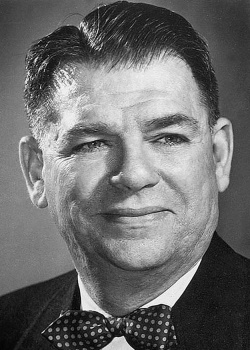
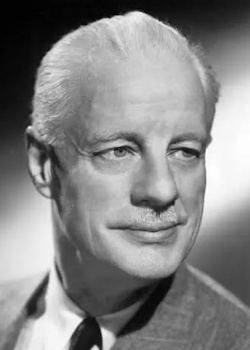
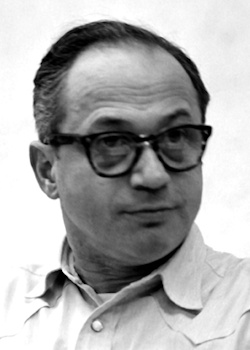
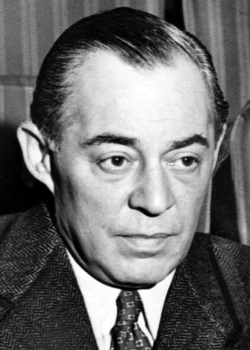 Composer Richard Rodgers and lyricist Oscar Hammerstein II had creative control, and ensured the film’s fidelity to their Broadway stage production. No songs from other composers were added to the film, however given that they were no longer restricted to a stage, they did alter the narrative flow of some scenes and their associated songs for better film pacing and development. Adolph Deutsch, who was tasked with arranging the background music and was renowned for scoring musicals, had previously won two Oscars for “Annie Get Your Gun” in 1950, and “Seven Brides For Seven Brothers” in 1954, and earned Academy Award nominations for two others, “Show Boat” in 1951, and “The Band Wagon” in 1953. For Oklahoma! Deutsch worked alongside arranger Robert Russell Bennett and conductor Jay Blackton, and all three men won Oscars for their work here.
With a new cast and media, the musical numbers were rehearsed, provided new keys of orchestration, which aligned with the singers, and then the soundtrack tracks were pre-recorded. For his soundscape, Deutsch understood that he had some of the finest songs of the day to work with, and so he chose to use five as leitmotifs for scenes between the song and dance performances. Foremost was, “Oh, What a Beautiful Mornin’”. He chose it as an idée fixe for its unabashed sunny optimism, which set the tone of the film, and served as the its essential unifying thread. Next was “The Surrey With The Fringe On Top”, which exudes a sunny, playful and happy-go-lucky charm. He utilized it for Curly as a Courting Theme for Laurey. The yearning romantic ballad “People Will Say We’re in Love” was used as a Love Theme for Curly and Laurey. The festive “The Farmer and the Cowboy” was used to fuel and propel scenes of dancing, celebration, and merriment. Lastly, the titular song “Oklahoma” was used as a transpersonal theme for the Oklahomans themselves, embodying their salt of the earth pride, independence, and hospitality.
“Overture” is a score highlight, one that offers in the finest of Hollywood traditions, an orchestral medley of three of the musical’s song melodies. We open with a bravado prelude from which is born at 0:15, a woodwind led rendering of “Oh, What a Beautiful Mornin’”, which blossoms at 0:33 as a valzer aggraziato atop the song’s refrain. At 0:56 we flow into the energetic “The Farmer and the Cowman”. A horn bridge takes us at 1:25 into “People Will Say We’re in Love” rendered elegantly as a valzer romantico. We conclude with a crescendo romantico and flow seamlessly into “Main Title”, a score highlight, where we are again offered a medley of wonderful song melodies rendered orchestrally. We commence with a refulgent fanfare declaration of the “Oh, What a Beautiful Mornin’” melody, and the opening credits unfold as red script against a panorama of the vast Oklahoma prairie, crowned with billowy cloud swept skies. At 0:09 a brief quote of “People Will Say We’re in Love offers a bridge from which is launched a spirited rendering of the “Oklahoma” song melody. A string bridge brings us at 1:15 to a sunny and strolling rendering of “The Surrey With The Fridge on Top” song melody as Curly McLain rides into center screen. A shimmering string tremolo usher in at 2:38 a grand prelude of the “Oh, What a Beautiful Mornin’” as the opening credits end. This takes us into the film proper with Gordon MacRae’s iconic performance of the song, “Oh, What A Beautiful Mornin’”, which earned him immortality for one of the greatest film openings in cinematic history. The scene offers a wondrous confluence of cinematography, melody, lyrics, and MacRae’s timeless vocal. The song speaks of a man’s unabashed happiness with a new day, and his life living on a blessed and verdant land of abundance.
 04:40 (*) “Curly Visits Laurey” reveals him arriving at her ranch carried with gentility by the song’s melody. He sneaks up and playfully scares Aunt Eller who is churning butter. He expresses his happiness singing the song’s refrain, which she enjoys. She asks him about his date to the Box Social tonight, and he asserts he has not thought about it yet. Laurey Williams come out of the house to hang her bird cage and also graces us by singing the song’s refrain. After some playful, banter about him taking her to the Box Social, he breaks out and sings the playful and happy-go-lucky courting tune “The Surrey With The Fringe On Top”. Afterwards the song melody retreats under the dialogue as he kids her that he was just foolin’ with her, and she takes offense. Yet he begins wooing her again by singing a romanticized reprise of the songs last three stanzas as he cradles her and she sways in his arms. Yet afterwards, reality returns as she realizes he is all talk and has no surrey. She storms off in a huff and Jud, the farm caretaker arrives with firewood and follows her inside. He emerges with Laurey and informs Curly he is taking her to the box social tonight. Curly bristles, but agrees to take Aunt Eller in his rig. (*) “Curly Departs” reveals his departure singing the final song stanza as Laury pouts. The song melody supports his ride through the corn fields, and also with sadness, Laurie as she goes into the house.
“Kansas City” reveals Aunt Eller and a bunch of Will Parker’s friends greeting him as he arrives at the Claremore train station. He shows Aunty and the boys his photo viewer, that reveals some risqué women, which he purchased in Kansas City. He then launches into the playful and comedic song. At 2:05 we shift to a spirited orchestra rendering of the song as Will begins to dance. We flow seamlessly into “Kansas City Ballet” a fun and spirited music and dance number. The melody becomes playful as Will begins tap dancing and treats us to a virtuoso performance, joined by tap counters by Aunt Eller, the boys, and gals. Eventually they join into a unified dancing ensemble. At 1:07 an accelerando propels an up tempo rendering of the dance as Will begins to dazzle us with a circular rope act. At 1:22 Will and the two gals leap aboard an open air freight car and we shift to a danza energico. The gals become frantic as the train departs, leaping into the arms of guys on the platform as Will continues to high kick dazzle us. We end with a rousing finish as the guys release a horse, which runs to the caboose, with Will leaping on it! 25:06 (*)
“Laurey and Annie” reveals Laurey swimming in a small lake supported by a tranquil rendering of the Main Theme melody. She swims to shore and begins dressing behind bushes as a carriage bearing Mr. Hakim and Ado Annie passes by. Ado Annie sees her and gets off, relating with glee that Mr. Hakim is taking her to the box social tonight. Laurey asks what about Will who has been courting her, and she expresses ambivalence. When Laurey asks, which one do you like best, Annie begins singing “I Cain’t Say No”, a silly little ditty with a strolling rhythm of a woman confused about love. The melody carries their walk home, as well as a scene shift to Mr. Hakim, a traveling con-man arriving with his cart titled; “Ali Hakim – Miss Tolivers Complexion Cream”. Aunt Eller comes out of the house aggrieved over his fake egg-beater. He placates her with some silk garters. The girls arrive home and he asks if there is anything she wants, and as Laurey shares her aspirations, he seizes the opportunity to sell her a magic potion used by pharaoh’s daughter, which she buys for two bits. Hakim makes Ado Annie an offer to join him at a hotel at Claremont, yet backs off when she asserts, he wants to marry her. Will then rides in and lifts her happily and declares to Hakim that he is going to marry her. He becomes amorous and at 36:56 (*) “I Can’t Say no Reprise” prelude of the song’s melody usher in him singing flirtatiously. They kiss, and the song melody becomes spirited as several wagons approach for a refreshment stop at the ranch on their way to Skidmore. Aunt Eller greets them and we flow into the refrain of the Main Theme as the men lift their galls from their carriages to the ground. They begin to dance supported by them singing as a chorus the refrain. Laurey frets as she sees Curly with a date. Aunt Eller invites the girls into the house to freshen up, while the men water the horses. Inside the girls gossip about Curly being with another girl as Laurey walks in. There is an awkward silence, and she launches into the song “Many A New Day”. It offers a pick yourself up by the bootstrap’s song of hope, with her singing with a carefree optimism. We flow seamlessly into “Many A New Day Ballet”, a wonderful score highlight atop the song melody rendered as a danza felice as the twelve girls dance balletically with carefree gentility. The music becomes sumptuous and at 2:35 and we close with them singing a reprise of the song’s final stanzas.
 “People Will Say We’re In Love” reveals Laurey and Curly each being prideful and playing hard to get. They discuss rumors that they are each stuck on each other and they launch into a duet of the lovely love ballad that unfolds with a strolling lyricism. Yet the moment is lost when he asks her to dump Jud and go with him to the social, and she declines, which angers him, and causes him to storm out. He heads over to Jud’s shack to pay a call, and begins to taunt him with subtlety, informing him that you never know what girls truly feel about you, until you’re dead. He begins singing in a satirical style “Pore Jud Is Daid”. Afterwards the two drop all pretenses, with each declaring their mutual interest in Laurey, followed by a warning for each of them to stay away from her.
In “Out Of My Dreams” Laurey is distraught as she does not know whether she should go out with Curly of Jud. She sniffs the Pharaoh’s Daughter elixir, closes her eyes and enters a dream state. We open with angelic, ethereal voices, singing the line “Out of your dreams…”. Laurey slowly opens her eyes, and begins singing the aspiration song. We flow seamlessly with ethereal wonderment into “Out Of My Dreams Ballet” a massive set piece, and score highlight. French horns sound as Laurey beholds Curly and Jud both dressed up fit and proper in orange shirts. At 0:27 a crescendo romantico carries her run as she bounds into Curly’s arms and is lifted skywards. A balletic danza romantico unfolds. At 1:21 a playful interlude borne by the Main Theme follows as she flirtatiously flutters around him. Yet it is fleeting, and at 1:40 she returns to his arms as the song melody shifts to a valzer romantico. At 2:07 a woodwind bridge usher in the Main Theme rendered as a danza felice, which supports a women’s dance troupe. Laurey and Curly join, and we shift to a valzer romantico, which swells grandly. This usher in at 3:00, a violin d’amore with harp adornment, shifting to flute as they join hands and look lovingly into each other’s eyes. At 3:13 bell chimes elicit Laurey’s run to her girlfriends, who kiss her and present her with flowers and a wedding dress, joined by a celeste waterfall as her veil descends from above. The girls resume the Main Theme as a danza felice, shifting at 3:51 to “The Surrey With The Fringe On Top” song melody rendered as a masculine danza forte as the men advance to join. At 4:16 the melody shifts to processione maestro as the bride’s maids arrive with the bride. As Curly lifts the veil, the musical narrative is shattered at 4:43 as Laurey looks up to see an angry Jud. Deutsch sow a dramatic musical narrative, shifting at 5:27 to an accelerando spaventoso as Laurey flees to the surreal one-dimensional church. She enters, and finds Jud standing with women of a bordello as a saloon piano play. The musical narrative shifts to a danza sensuale, which evolves into the “The Surrey With The Fringe On Top” melody rendered as a can-can dance.
At 5:37 Laurey tries to flee carried by a frenetic piano with contrapuntal strings, but is trapped. As she gazes around at the faces of the patrons, she realizes they include Curly, and all her friends. She is overcome and collapses as the music shifts to despair. A girl escorts her to, and then tosses her into Jud’s arms. Yet he tosses her aside at 6:58, grabs a can-can dancer, and the song melody shifts to a danza energico. At 7:34 Laurey tries to flee again, fails, and the piano led musical narrative becomes nightmarish as everyone stares at her. At 8:12 she collapses once more, and a can-can girl again with a trumpet burst escorts her to Jud who this time embraces her as “The Out of My Dreams” melody tries to gain voice. Yet a drum roll at 8:57 portends rejection, as Jud again abandons her for the can-can-girl and we launch into a festive reprise of the “The Surrey With The Fringe On Top” melody, which propels everyone again dancing. Laurey tries to join, yet the musical narrative becomes distorted as she twirls and is ignored by vacant stares. At 10:08 she is grabbed and forced into a can-can line dance. They abandon her, and at 10:29 silence brings her face to face with Jud. A violin tremolo propels her frenetic flight away from him until she ascends to the top of a dead-end stairs. At 10:28 orchestral rumbling supports her transport to the red lighted upstairs corridor of the bordello. A door opens, and she flees outside engulfed by deafening thunder clashes. At 11:04 dizzying strings support her standing with Jud on her left and Curly on her right. Horn declarations support her choice as she turns and runs into Curly’s arms. As Jud walks towards them Curly fires six pistol shots to no avail and we erupt at 11:24 on a crescendo violento as Jud lifts Curly over his head and throws him to the ground. A dire orchestral torrent swells as Jud and Curly fight for Laurey as a tornado approaches from behind. Jud fights off the town folks, and a crescendo di orrore swells and crests at 12:44 as he strangles Curly. The music slowly dissipates on a diminuendo of death as Laurey looks on in disbelief. At 13:10 we close with a molto tragico quote of “The Surrey With The Fringe On Top” as Jud wakes up Laurey on the porch.
 In “Entr’acte”, a prelude crowned with fanfare usher in at 0:16, a happy-go-lucky rendering of “The Surrey With The Fringe On Top” song melody. We conclude at 1:04 with a grand statement of the Love Theme. In an unscored scene everyone departs Aunt Eller’s ranch for the social. Jud and Laurey follow and fall behind when he slows down their carriage. He confesses his long-held feelings for her and pulls her in for a kiss, but she grabs the whip and snaps the horses who bolt out of control as the reins are lost and the brake handle snaps off. They careen out of control through the forest and then into the open, running parallel to a train. The horses rear up as the train crosses the road blocking their path and Jud steadies them. She grabs the reins, pushes him back and bolts off, leaving him stranded. “The Farmer And The Cowman” reveals everyone dancing to the songs festive melody. At 0:28 Andrew Carnes steps up and begins singing. A fight erupts and when Aunt Eller fires a gun and everyone freezes. We flow into “The Farmer And The Cowman Ballet” a score highlight that empowers with a danza festivamente, a wonderful confluence of virtuoso dancing and music.
Everyone is summoned to the auction to raise money to complete the school they are building. Aunt Eller is running the auction as Laurey finally arrives. Later Jud arrives and begins a bidding war with Curly for her gift basket. Curly sells everything he has; his saddle, his horse and his gun. He wins not only the gift basket, but Laurey herself. Jud is ready to fight, but Arnie makes them shake hands. Aunt Eller then pulls Curly away with an invitation to dance and the “danza festivamente reprises. Will and Ado Annie sneak away and he asks her to select a wedding date. She chooses August 15, the first day she was kissed, and then reminds him that he was not the one who kissed her. He insists that she stop flirting with all the other guys, and begins singing “All Er Nuthin’”, a playful, and comedic tit for tat song. We flow seamlessly into “All Er Nuthin’ Ballet” carried by an instrumental rendering of the melody as two girls arrive and begin dancing flirtatiously with Will, much to his delight.
Back at the dance, a switch of partners brings Laurey face to face with Jud. She runs off and he follows. He angrily comes to the realization that she believes that she is too good for the likes of him, and makes veiled threats. She fires him, and orders him to leave the ranch, but he glares, and says with menace, that she is never going to get rid of him. He storms off, and Laurey finds shelter in Curly’s arms as he arrives. She keeps kissing him, and becomes so amorous as to cause him to back off. When she tells him that she fired Jud and he threatened her, Curly says he will stay and stand guard. “People Will Say We’re In Love” offers a molto romantico reprise of the Love Theme, with new lyrics. We open with a romantic prelude when Curly begins speaking of marriage, and finally offers a proposal. She agrees, they join in a kissing embrace, and he speaks that he will have to give up his cowboy ways and become a farmer. They celebrate what will be a happy life together and he begins singing
Later during a cattle drive, Curly informs his boss Andrew Skidmore, that this will be his last cattle drive. Skidmore wishes him well, and assures him that he will attend the wedding. A reprise of the festive “The Farmer and the Cowboy” melody carries the trek of the townsfolk to Aunt Eller’s ranch for the wedding. The next night they are married as Jud peers in the window. “Oklahoma” offers wonderful musical highlight with yet another iconic song. It reveals Aunt Eller starting off the celebration with the famous song.
 Afterwards the happy couple change and are brought to the field where the climb atop a huge mound of hay, as Jud lurks in the shadows retrieving a torch. 2:13:07 (*) “Jud Strikes” reveals Jud arriving, carried by an ominous musical narrative with a torch after the crowd has left. He yells that he has a present for you two and torches the hay, which erupts in flames. Curly pushes Laurey to safety and then leaps atop Jud. The force of his impact cause Jud to be impaled by his own dagger. The crowd returns and find Curly kneeling over Jud, with him declaring that Jud fell on his own knife. They return to the ranch and decide to hold a trial in Aunt Eller’s kitchen as the prosecutor and judge are present. Curly claims self-defense and the judge declares his verdict – Not Guilty! With the exception of the Marshall, there is jubilation as the court adjourns. Bride and groom then depart on their honeymoon as towns folk swell in jubilation. We segue into “Finale: Oh, What A Beautiful Mornin’” atop a jubilant prelude of “The Surrey With the Fringe on Top” melody as Curly and Laurey ride off, escorted by towns folk in carriages, and cowboys on horses. At 0:31 we swell with exaltation as mixed chorus offers a film closing reprise of “Oh, What a Beautiful Mornin’”! (*) “End Credits” is supported by a rousing reprise of the “Oklahoma” song melody.
I commend Didier C. Deutsch and Charles K. Granata for this exceptional release of Roger’s and Hammerstein’s masterpiece, “Oklahoma”. The audio quality is excellent, as the technical team remixed and remastered the original six-channel stereophonic magnetic film session recordings, and the 1958 Capitol Records half-inch, three track 15-ips stereophonic master tapes. Rodgers and Hammerstein II are recognized as one of the greatest composer-lyricist teams in Hollywood history. Five of their hit Broadway shows were brought successfully to the cinema, including; Oklahoma! (1955), Carousel (1956), The King and I (1956), South Pacific (1958). and The Sound of Music (1965). Oklahoma began this marvelous run, and features a number of iconic songs, which have passed unto legend, including; “Oh, What a Beautiful Mornin’!”, and “Oklahoma!”. Yet it takes a skilled composer to weave together a musical narrative, which links the song and dance vignettes, and I believe in his day, Adolph Deutsch was second only to Alfred Newman in this regard. Deutsch took five of Rodgers’s song melodies and used them as leitmotifs, which created a unified musical narrative that propelled the film’s storytelling. The song and dance performances were wonderful, however, the emotional dynamics and character interactions in the intervening scenes were equally important to the film’s narrative, and Deutsch masterfully enriched these scenes with his musical adaptations. Indeed, I believe his music enhanced the song and dance performances, often filling in the gaps, and maintain the film’s forward momentum. Folks, I believe “Oklahoma!” offers one of Hollywood’s finest musicals, one the fully merited its Academy Award win. I highly recommend you purchase this quality album, and take in the film as well.
For those of you unfamiliar with the score, I have embedded a YouTube link to the Main Title;
https://www.youtube.com/watch?v=kkj4frsKahQ&list=PLy5kryT0xrJOe2D0-3sxSfCwehzj929fG&index=2
Buy the Oklahoma! soundtrack from the Movie Music UK Store
Track Listing:
- Overture (2:55)
- Main Title (2:54)
- Oh, What A Beautiful Mornin’ (2:33)
- The Surrey With The Fringe On Top (4:54)
- Kansas City (2:31)
- Kansas City Ballet (2:26)
- I Cain’t Say No (3:11)
- Many A New Day (3:07)
- Many A New Day Ballet (3:35)
- People Will Say We’re In Love (4:21)
- Pore Jud Is Daid (4:17)
- Out Of My Dreams (2:33)
- Out Of My Dreams Ballet (14:12)
- Entr’acte (1:28)
- The Farmer and The Cowman (3:52)
- The Farmer and The Cowman Ballet (1:28)
- All Er Nuthin’ (2:54)
- All Er Nuthin’ Ballet (1:52)
- People Will Say We’re In Love (reprise) (1:42)
- Oklahoma (3:18)
- Finale: Oh, What A Beautiful Mornin’ (1:37)
- Overture (LP Version) (4:51)
Angel Classic Musicals 7243-5-27350-2-6 (1955/2001)
Running Time: 76 minutes 42 seconds
Music and lyrics by Richard Rodgers and Oscar Hammerstein II. Score adapted by Adolph Deutsch. Conducted by Jay Blackton. Orchestrations by Robert Russell Bennett, Alexander Courage, and Albert Sendrey. Recorded and mixed by XXXX. Edited by Ralph Ives. Score produced by Adolph Deutsch. Album produced by Didier C. Deutsch and Charles K. Granata.

Shop at the Movie Music UK Store

Member of the

 MOVIE MUSIC UK