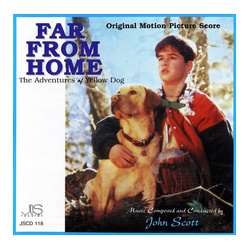
FAR FROM HOME: THE ADVENTURES OF YELLOW DOG – John Scott
 THROWBACK THIRTY
Original Review by Jonathan Broxton
Far from Home: The Adventures of Yellow Dog is a family-friendly adventure-drama written and directed by Philip Borsos. The film follows the journey of a teenage boy named Angus, played by Jesse Bradford, who is spending the summer with his family in a remote part of British Columbia. While there, Angus befriends a stray dog named Yellow, who has a mysterious past. After a series of unfortunate events, Angus and Yellow become stranded together in the wilderness when a storm hits. As the two navigate the challenges of the wild, they face dangers such as wild animals, the elements, and the need to find food and shelter, and must work together to find their way back to safety. It was a moderate success upon its release in the early months of 1995, and many found it to be a nostalgic throwback to the popular Walt Disney ‘wilderness adventure’ films of the 1950s and 60s.
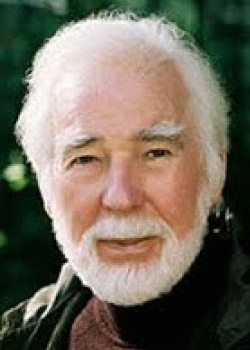
For all intents and purposes, Far from Home: The Adventures of Yellow Dog was the last major film scored by the great British composer, arranger, and virtuoso saxophonist John Scott. Although one or two of his subsequent films enjoyed a modicum of popularity – notably The Second Jungle Book: Mowgli & Baloo in 1997, and The New Swiss Family Robinson in 1998 – Far from Home was the last Scott-scored film to be given a wide cinematic release, and as such it is important from that point of view. It’s a shame that Scott’s career dwindled the way it did as comparatively early as it did; he was still only 65 in 1995 – roughly ten years younger than Alan Silvestri and James Newton Howard are now – and especially considering how many outstanding but under-appreciated works he has written since he first emerged into the international film music scene in the late 1960s. At the time of writing Scott is still a hale and hearty 94 years old, and is very much due for a rediscovery.
 Much like the film itself, Far from Home: The Adventures of Yellow Dog is a nostalgic throwback score, written for a full orchestra, featuring a rousing main theme, lots of broad canvas action and adventure, and no small amount of heart and emotion. The score is anchored by a prominent main theme, and several smaller secondary themes, all of which run beautifully together as the score unfolds. The main theme is introduced at the beginning and at the end of the opening cue, “Main Titles/Rabbit Hunt/Yellow Appears,” and is a gorgeously warm and inviting melody that initially emerges out of a small three-note motif for what sounds like woodwinds doubled by tasteful electronics. The variation in “Yellow Appears” is noticeably more hesitant, as one would expect as Angus and the dog meet for the first time.
Several subsequent cues feature the main theme prominently, including clear statements in “Family,” “Beach Games,” the trepidatious “Against the Elements,” “Roast Mouse for Dinner,” throughout “Lost in the Forest/A Bad Tumble,” and in the stirring and dramatic “Angus Rescued,” but a lot of the rest of the score actually emerges into a series of standalone vignettes and set pieces, a new idea for each new situation that Angus and Yellow find themselves in, each new danger that Angus and Yellow must face.
I like the sprightly Prokofiev-esque energy of the “Rabbit Hunt,” with its terrific rhythmic ideas jumping between strings and pianos. “Making Mischief” and the subsequent “Beach Games” are fun and buoyant, at times coming across almost like an Aaron Copland Rodeo variant, with pitch-jumping brasses and staccato strings taking center stage. There’s a wonderful sense of warmth and lyricism in “Angus’ Boat” and in the wholesome guitars of “Grandad’s Knife”. There’s a real feeling of anticipatory adventure and breathless excitement in the brassy nautical tones of “The Voyage,” although this turns darker and more threatening in the fantastic “Storm at Sea” wherein Scott introduces a more urgent percussive underbelly and endless brooding, churning orchestral figures that roll like ocean waves.
The rousing trilling brass passages in “Rescue Operation” are just brilliant, serious and a little militaristic, conveying the urgency of the need to find Angus and Yellow. I love the way Scott shifts what is essentially the same writing style over to the woodwinds in “Adrift in an Open Boat,” a perfect example of how changing the orchestration can subtly change the emotions of a piece; instead of it being urgent and dangerous, there is now a sense of solitude and isolation.
“Lighting the Beacon/The Trek” is a superb, evocative, energetic action cue which takes core elements from the main theme – notably the recurring three note motif – and runs them through a series of outstanding action variations that truly capture the massive scale and scope of the environment in which Angus and Yellow find themselves. I have noticed that there is often a hint of 1970s jazz in Scott’s action music – you can hear it in earlier works like The Final Countdown, Man on Fire, Shoot to Kill, even Lionheart – and that unique sound is very much in evidence again here, in the way he phrases certain things, what rhythms he adopts, and how he combines different instruments in specific ways.
Later cues like the thrilling “Attacked by Wolves,” and the vivid “Crossing the Chasm” are similar in their approach, while “Crossing the Lake/The Lynx/Observation Post” contains probably the score’s darkest and most dissonant moments, a bold and stark collision of low strings, intimidating brasses, and punchy and aggressive pianos that is really quite impressive.
“A Joyous Homecoming” is filled with relief, but then the reprise of the main theme in “What Became of Yellow?” is naturally underpinned with sadness and pathos as Angus comes to terms with the fact that his beloved dog may be forever lost in the wilderness. Finally, in the conclusive two cues “Yellow Returns” and the “Far From Home End Titles,” Scott lets his orchestra soar with the most emotional and powerful statements of the main theme in the entire score; it starts out again with the woodwinds doubled by electronics, and gets passed around from strings to acoustic guitars, before eventually bursting out into a magnificent full statement for the entire orchestra as Angus is reunited with his brave canine companion, they lovingly embrace, and all is right in the world.
What’s so great about this music – as is the case with all Scott’s music – is just how musical it is. That might sound like a stupid statement – all music is musical, after all – but there’s just something so delightful about Scott’s orchestrations, his combinations, the way he will highlight a certain instrument or a certain performance technique. It’s so colorful, so alive, sometimes playful, sometimes sinister, sometimes epic and sweeping. This type of writing, which really brings the best out in the full orchestra, sometimes feels like a lost art these days. It’s just a joy to hear a composer like Scott fully embracing everything an orchestra can do, and not having anyone tell him to dial it back, make it simpler, make it smaller. It’s outstanding.
The score for Far from Home: The Adventures of Yellow Dog was released on CD on Scott’s personal record label, JOS Records, but unfortunately it has been out of print for many years, and remains a high value collectable on the secondary market. It also appears to not be available on any of the major streaming platforms, and so as such it may be difficult to come by. However, if you do find yourself with the opportunity to hear it, I recommend it wholeheartedly, especially to those whose taste is for bold, thematic, orchestral adventure scores that wear their hearts on their sleeves.
Buy the Far from Home: The Adventures of Yellow Dog soundtrack from the Movie Music UK Store
Track Listing:
- Main Titles/Rabbit Hunt/Yellow Appears (4:09)
- Making Mischief (2:34)
- Angus’ Boat/Family/Grandad’s Knife (3:10)
- The Voyage/Storm at Sea (4:55)
- Rescue Operation (1:28)
- Adrift in an Open Boat (2:03)
- Beach Games (3:23)
- Against the Elements (1:16)
- Lighting the Beacon/The Trek (5:37)
- Attacked by Wolves (2:06)
- Roast Mouse for Dinner (1:44)
- Lost in the Forest/A Bad Tumble (4:10)
- Crossing the Lake/The Lynx/Observation Post (5:03)
- Grief and Distress (1:43)
- Crossing the Chasm (3:52)
- Angus Rescued (2:48)
- A Joyous Homecoming (1:25)
- What Became of Yellow? (4:01)
- Yellow Returns (3:37)
- Far From Home End Titles (4:02)
JOS Records JSCD-118 (1995)
Running Time: 63 minutes 06 seconds
Music composed and conducted by John Scott. Orchestrations by John Scott. Recorded and mixed by Dick Lewzey. Edited by Richard Bernstein. Album produced by John Scott.

Shop at the Movie Music UK Store

Member of the

 MOVIE MUSIC UK