Under-the-Radar Round Up 2024, Part 6
 Original Reviews by Jonathan Broxton
I’m pleased to present the latest installment in my on-going series of articles looking at the best under-the-radar scores from around the world.
This article, the sixth of 2024, covers another five scores from a wide array of genres and countries, including a spectacular documentary score about dinosaurs, a Japanese action thriller based on a popular TV series, and three scores for a trio of acclaimed short films: one from France, one from the Netherlands, and one from the United States, several of which are on the shortlists to receive Short Film Academy Award nominations.
ACMA GAME: THE FINAL KEY – Yugo Kanno
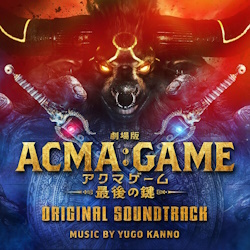 Acma Game: The Final Key is the conclusive part of Acma Game, a Japanese television action/fantasy/drama series adapted from the graphic novel of the same name. It stars Shotaro Mamiya as Teruaki, a gifted high school senior who was the heir of Japan’s wealthy trading company Oda Group until his father was murdered by a mysterious organization and he lost everything. Just prior to his death his father entrusted Teruaki with a mysterious key; 13 years later, having traveled the world accumulating knowledge, Teruaki has learned that his key is one of 99 similar keys that help their owners acquire power and fortune, and that if anyone were ever able to acquire all 99 keys, they would gain control over everything in this world; as such, he returns to Japan to avenge his father and take part in the Acma Game, a life-threatening battle of wits against rivals, all of whom are trying to acquire keys from each other. The show premiered on the Nippon TV network in April 2024, with the Final Key movie playing in cinemas at the end of October.
The score for Acma Game: The Final Key is by composer Yugo Kanno, who also scored the Acma Game TV series, and in many ways the scores can be considered part of one single unifying project – thematically, tonally, in terms of sound and scope, both scores are essentially identical, with The Final Key acting as a conclusive coda to the whole thing. Basically, you can consider this review of The Final Key to also be a review of the Acma Game TV score as I feel the same way about both projects, and enjoy them both enormously.
For anyone hesitant to dip their toes into the water, I would recommend listening to the 8-minute Acma Game suite first here – https://youtu.be/7jVwsTXUu-8?si=vrX7wg1DnaYWoCB9 – as it touches on all the best things the score has to offer, from the enormous orchestral forces to the prominent chanted choral work, the tasteful use of electronics, the elegant thematic ideas, and the imposing use of a pipe organ, all wrapped up in that distinctly Japanese sensibility that seamlessly combines elements of classical music with prog rock and subtle influences of Japanese folk music. The rest of the score extrapolates ideas and compositional techniques from the opening suite, with cues like “Five Spell Survival,” the first half of “Down True or False,” “Kagino Yukue,” and “Akumano Yorokobi,” especially standing out for their bombastic energy and for their sometimes extravagantly complicated orchestral and choral writing.
In addition to this there are also some interesting one-offs, too. The first part of “Senjou Battle” somehow blends everything that has come before it with guitars, harmonicas, and a groovy country rock vibe, and this then carries on into the second half of “Down True or False”. “Aegis Kyoudan” and “Aegis Kyoudan no Reihai” are more abstract, with some textures that oddly remind me of James Horner’s Thunderheart. “Chichitono Yakusoku” offers a downbeat piano variation on the main theme that is unexpectedly emotional and which I liked a lot, while “Tatakau Riyuu” arranges the theme for an ensemble that moves between tender woodwinds, pianos, and sonorous cellos, in a way that carries a lot of poignancy. The choral elegy in “Aisurumonono Tameni” is just stunning, and the sense of relief and emotional catharsis in the conclusive “Kibouno Kagi” ends the score on an outstanding note.
This is the side of Yugo Kanno I appreciate the most. I find him to be a frustratingly inconsistent composer; when he comes out with scores like Gunshi Kanbee, The Crimes Bind, Sherlock: Untold Stories, Yuria’s Red String of Fate, and these two, I think he’s writing some of the best film music in the world, but then on other projects he has a tendency to veer too much into weird experimentalism or, worse, dull anonymity. He’s like the Forrest Gump chocolate box of Japanese film music: you never know what you’re gonna get. With Acma Game, though, you’re getting a work of genuine high quality.
The scores for both Acma Game and The Final Key are available as import CDs from retailers like YesAsia, and are also available to stream and download from most of the usual online sources, on the VAP Records label.
Track Listing: 1. Acma Game (8:03), 2. Senjou Battle (2:34), 3. Aegis Kyoudan (1:18), 4. Aegis Kyoudan no Reihai (2:42), 5. Akumano Kagino Nazo (1:38), 6. Five Spell Survival (4:59), 7. Down True or False (6:48), 8. Kagino Yukue (1:20), 9. Chichitono Yakusoku (1:16), 10. Akumano Yorokobi (3:28), 11. Saigono Kagiga Motsu Chikara (3:27), 12. Tatakau Riyuu (3:30), 13. Sekaio Sukuu Kakugo (1:38), 14. Reverse Axis (0:45), 15. Aisurumonono Tameni (2:45), 16. Kibouno Kagi (3:21). VAP Records, 49 minutes 25 seconds.
BATTEMENT D’ELLE/THE DOVE SECRET – Romain Paillot
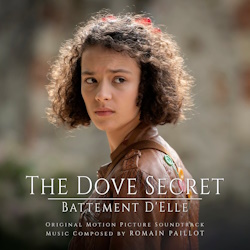 The Dove Secret, is known in French as Battement d’Elle, is a French language live action short film directed by Pierre Nogueras. The film is set in the French countryside in the 1940s and follows Jess, a young orphan who lives in a strict convent under the watchful eye of Joelle, the cruel and manipulative overseer, but who longs for freedom. Jess appears to have magical abilities, and reveals her gift when she resurrects a dove that was moments away from death. Eventually Jess runs away; first she finds refuge in a nearby church, where she befriends a compassionate priest, and then she encounters a troupe of traveling performers, whose lively camaraderie is threatened when one member collapses in distress – circumstances which require Jess to call on her healing powers save him.
The score for The Dove Secret is by the young French composer Romain Paillot, who some may remember from his work on the low-budget horror film Achoura a few years ago in 2019. Paillot is a terrific composer with a great ear for themes and melodies and great dramatic sense, and The Dove Secret is another superb example of that. Whereas Achoura was all about big, Gothic power, The Dove Secret is gentler and more tender and more intimate, but with a hint of magic too.
Mysterious strings and ghostly choirs give way to a pretty but slightly melancholic piece for woodwinds, and then eventually a more playful Elfman-esque march in “The Overture,” before Jess’s “Secret Powers” are revealed to a set of fantastical-sounding orchestral textures. There is a heavy dose of warm and endearing John Williams-style orchestral adventure in “Escaping The Covent,” including a gorgeous central recurring theme that is full of sweeping positivity. “The Warden of the Sacred” is quieter and more thoughtful, with some exquisite shifting string textures. “The Quest” focuses on noble-sounding horns and determined sounding strings, and then the “Finale” unexpectedly uses ticking-clock effects and more modern-sounding percussive textures alongside the orchestra, before rising to an deeply emotional, chorally-enhanced finish.
The Dove Secret is a lovely score, a brief but wholly entertaining reminder of what a promising talent Romain Paillot is, and I genuinely hope it serves to help him get bigger and more high profile assignments in the years to come. Unfortunately the score for The Dove Secret is not available for commercial purchase and as of the time of writing is not on any of the streaming services – Paillot submitted it for awards consideration purposes – but, as always, I hope this review inspires a release at some point in the future.
Track Listing: 1. The Overture (1:56), 2. Secret Powers (0:49), 3. Escaping The Covent (2:18), 4. The Keeper Comes (0:46), 5. The Warden of the Sacred (3:01), 6. The Quest (1:08), 7. The Finale (3:36), Promo, 13 minutes 37 seconds.
EDGE OF SPACE – Mark Baechle
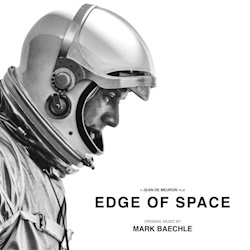 Edge of Space is a live action short film directed by Jean de Meuron. The film is set in 1961, during the height of the US-Soviet space race, and follows an ambitious USAF test pilot named Glen Ford who is recruited by NASA for a daring suborbital mission in an X-15 hypersonic rocket-powered aircraft with astronomical implications. The film has been shortlisted for the 2024 Oscars, and is in line to pick up a nomination in the Best Live Action Short Film category in the coming weeks.
The score for Edge of Space is by the Swiss-born, New York-based composer Mark Baechle, who has been writing music for documentaries and short films for almost 20 years, having cut his teeth working as an assistant to the likes of Elliot Goldenthal and John Corigliano, and as an orchestrator for Marcelo Zarvos, David Newman, Clint Mansell, and Nicholas Britell, among others.
As one would expect, considering its subject matter, the score is a celebration of warm, heroic Americana, and is pitched very much in the same vein as scores like Bill Conti’s The Right Stuff and James Horner’s Apollo 13. There is a sense of wonderment and aspirational enthusiasm in the “Opening Prologue,” which contains some superb brass crescendos and some soaring string writing, casting a noble and patriotic glow over the men and women of the early space race. The music is underpinned with proud snare drum licks in “Military Hangar,” has a sense of uncertainty and nervousness in “Godspeed,” and is somber and downcast in “Farewell,” especially in its use of pianos and vaguely jazzy muted horns.
There’s some wonderfully and flamboyant string writing underneath the portentous orchestral textures of “Ascending to the Heavens,” there are abstract but effective electronic tonalities adding a new dimension to the powerful music depicting the majesty of “Space,” and then in the conclusive “The Right Stuff” Baechle pens a stirring tribute to the entire concept, filled with moving string passages, appealing horn countermelodies, and more militaristic percussion.
It’s all very impressive, and will absolutely appeal to anyone who enjoys orchestral action and drama scores with a healthy dose of militaristic patriotism. It also serves as an excellent introduction to Mark Baechle’s music, and I very much hope to see him attached to projects with a bigger scope in future. Unfortunately there is no physical CD of Edge of Space available, but the score is available to stream and download from most of the usual online sources via the Joneswood Records label.
Track Listing: 1. Opening Prologue (1:29), 2. Military Hangar (0:43), 3. Godspeed (1:52), 4. Farewell (2:24), 5. The Cost (2:47), 6. X-15 (2:04), 7. Ascending To The Heavens (1:01), 8. Space (2:33), 9. The Right Stuff (3:51). Joneswood Records, 18 minutes 40 seconds.
THE ICE CREAM MAN – Nami Melumad
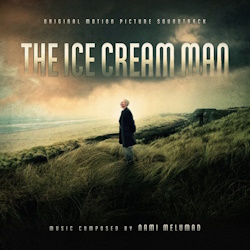 The Ice Cream Man is a critically acclaimed live action short film written, produced, edited, and directed by Robert Moniot. It is based on a true story and stars Noah Emmerich as Ernst Cahn, a popular Jewish ice cream parlor owner, who is targeted by Klaus Barbie – a German police officer and one of the most brutal Gestapo officers in Vichy France, who became known as the Butcher of Lyon – in the aftermath of the Nazi invasion of the Netherlands during World War II.
The score for The Ice Cream Man is by composer Nami Melumad, taking a break from her work scoring various Star Trek TV series to write something a little quieter, a little more emotional, perhaps a little more personal considering that she is of partly Dutch heritage herself. The score is lovely; poignant, melodic, emotionally resonant, and filled with gorgeous passages for a decent-sized orchestra that focuses on strings underpinned with horns and piano. The overarching tone of the score is one of somber seriousness but brushed with warmth and hope; cues like the opening “Holland, May 10th 1940,” “I’m Going to Give Them One,” “I’m With The Resistance,” and “Ursula and Ernst” are very much in this vein. The solo cello writing in the latter is notably excellent, a cherry on top of the ice cream sundae that is the rest of the score, if you’ll forgive the clumsy analogy.
Once in a while a more militaristic sound emerges, with more prominent snare drum riffs, while at other times the music has a subtle religioso sound, often achieved by the use of choral accents and tolling bells. Some cues are darker and more intense – notably “Three Spoons,” “Synagogue,” and especially the haunting and ghostly “We Have to Go, Now” with its broken allusions to pipe organ ice cream van tunes that eventually turn into a searing string elegy.
The final three cues – “February Strike,” “We’ll Meet Again,” and the “End Credits” see Melumad engaging in some of the strongest serious emotional writing of her career to date, treading the fine line between celebrating the lives of the Dutch resistance while also mourning the fate of so many of the people who fought. There are numerous outstanding moments of somber choral beauty in these cues, and I hope Melumad is given a chance to explore this side of her musical personality much more frequently going forward.
What I like about this score – in fact, what I like about a lot of the outstanding short film scores this year – is that Melumad says a lot, musically, in a short space of time. These are scores full of concise, direct emotions, conveyed with depth and intelligence, and no small amount of musical talent. There have been a lot of scores about World War II, Nazis, and the bravery of the men and women who stood up to fascism in a resistance, and despite its brevity The Ice Cream Man is up there with some of the best. As I mentioned above, the End Credits offer an especially outstanding summation of the score as a whole.
Unfortunately the score for The Ice Cream Man is not available for commercial purchase – Melumad submitted it for awards consideration purposes – but, as always, I hope this review inspires a release of it at some point in the future.
Track Listing: 1. Holland, May 10th 1940 (4:07), 2. I’m Going to Give Them One (1:34), 3. Three Spoons (2:54), 4. They Were Just Boys (1:43), 5. I’m With The Resistance (3:15), 6. We Have to Go, Now (2:17), 7. Repeat the Lie (1:14), 8. Synagogue (3:38), 9. Ursula and Ernst (2:42), 10. February Strike (3:07), 11. We’ll Meet Again (1:03), 12. End Credits (5:48). Promo, 33 minutes 28 seconds.
WHY DINOSAURS? – Raphaël Dargent
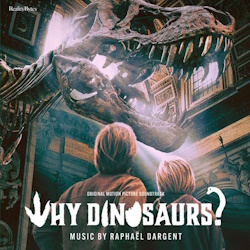 Why Dinosaurs? is a documentary feature film directed by and starring James L. Pinto and Tony Pinto. The film follows dino-obsessed James and his filmmaker father Tony on a journey around the world, interviewing world renowned paleontologists about the latest dinosaur research, digging up real dinosaur bones, and encountering dinosaur fanatics of all walks of life. The score for Why Dinosaurs? is by the Los Angeles-based French composer Raphaël Dargent, several of whose previous scores have been released by Moviescore Media, including the 2021 French drama L’Instant Présent and 2023 action thriller Silent as the Grave.
The score’s publicity material includes an excellent quote paragraph from Dargent, which reads: “Go big or go home! What else could you do when scoring a documentary about the largest animals to ever walk the Earth? For this heartwarming coming-of-age story of a father and son exploring paleontology, we’ve pulled out all the stops. We recorded a huge 75-piece orchestra, crafting themes as diverse as the dinosaur species themselves. Each musical motif is a unique brushstroke, capturing the essence of these magnificent creatures and the passion of those who study them. The result is a rich, full-bodied orchestral score mirroring the meticulous work of paleontologists. Like piecing together bones to reconstruct skeletons, we’ve woven a tapestry of melodies and harmonies, puzzling together to create a larger than life sound.”
Dargent did indeed go big, and the score is a treat from start to finish, featuring huge sweeping themes, and plenty of bombastic action, as well as some moments of poignancy and intimacy for the father-son relationship at the heart of the story. The big-name big orchestral composers of the 1980s – John Williams, James Horner, Jerry Goldsmith, Alan Silvestri, Basil Poledouris – are clearly the stylistic touchstones that Dargent was going for, and although the music inevitably falls short of those unattainable high standard, Dargent nevertheless acquits himself excellently by writing an enjoyable and engaging pastiche of that style that never outstays its welcome.
Numerous cues stand out for me, from the flamboyant title cue “Why Dinosaurs?” to the playful pizzicato of “Tales of Father and Son,” the dynamic sense of movement in “British Etymology,” and the darker and more brooding “From Egg to Screen”. I love the low, chugging cellos in “Rex-Traordinary Fossils” that are clearly inspired by Williams’s The Lost World, the off-kilter chord progressions of “Jurassic Legacy,” the bright brass writing in “Hollywood’s Raptor,” the sparkling woodwind-heavy energy of “Borealapelta,” the unexpected light James Bond vibe of “1960’s Dinos Eccentricities,” the subtle Latin textures of “A Walk in the Park,” the adventurousness of “Echoes of the Lost World,” the vibrant North African rhythms of “The Moroccan Spinosaurus,” and so much more.
From top to bottom this is excellent stuff, one of the most compelling documentary scores of the year, and one which will be a treat for anyone who yearns for that expansive, sweeping, thematic orchestral sound of the 1980s and 90s. More, please. The score is available to purchase as a CD On-Demand, or to stream or download, from Moviescore Media here: https://moviescoremedia.com/newsite/catalogue/why-dinosaurs-raphael-dargent/.
Track Listing: 1. Why Dinosaurs? (2:46), 2. Tales of Father and Son (1:55), 3. Ammonite (1:31), 4. British Etymology (1:08), 5. Jurassic Horizons (0:54), 6. From Egg to Screen (1:50), 7. Rex-Traordinary Fossils (2:09), 8. Jurassic Legacy (2:13), 9. Hollywood’s Raptor (2:36), 10. Feathers (1:33), 11. Borealapelta (2:30), 12. 1960’s Dinos Eccentricities (1:28), 13. A Walk in the Park (1:27), 14. New Dinosaur in Town (1:58), 15. Echoes of the Lost World (2:02), 16. Fossilized Aspirations (3:12), 17. The Moroccan Spinosaurus (2:57), 18. The Park That Roared (2:15), 19. Crystal Palace Oddities (1:21), 20. The Claw Conundrum (1:46), 21. Motion Reimagined (1:29), 22. In the Footsteps of Giants (2:01). Moviescore Media, 43 minutes 01 seconds.
*****
Thanks to Joel A. Griswell of https://www.thesoundtrackgallery.com for the superb cover art design for The Dove Secret and The Ice Cream Man.
-
February 7, 2025 at 7:01 amMovie Music UK Awards 2024 | MOVIE MUSIC UK

Shop at the Movie Music UK Store

Member of the

 MOVIE MUSIC UK