SEVEN CITIES OF GOLD – Hugo Friedhofer
 GREATEST SCORES OF THE TWENTIETH CENTURY
Original Review by Craig Lysy
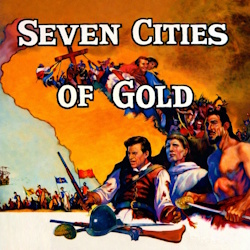
In 1951 the New York Times declared the novel “The Nine Days of Father Sierra” (1951) by Isabelle Gibson Ziegler a “brief, tender and impressive novel”. Sensing opportunity to 20th Century Fox Studios purchased the film rights and prepared for production in 1952. The project however stalled and in 1955 was reassigned for production to Robert D. Webb and his wife Barbara McLean with a $1.5 million budget. Webb would also take on directing duties, and he hired Richard L. Breen to write the screenplay. Webb brought in a fine cast, which included Richard Egan as Lieutenant José Mendoza, Anthony Quinn as Captain Gaspar de Portolà, Michael Rennie as Father Junipero Serra, Jeffrey Hunter as Matuwir, and Rita Moreno as Ula.
The film is set in 1769 C.E. in California and explores Captain Gaspar de Portolà’s expedition in search of the fabled Seven Cities of Gold. Father Junipero Serra is part of the expedition with a separate church mission to establish peaceful relations with the Indians and then build a string of missions up the California coast to support conversion efforts. The mission goes awry when second in command Lieutenant José Mendoza seduces and then betrays Ula, sister of the local chief. War breaks out and all seems lost as the Spanish are almost out of supplies and the relief ship has not arrived. Now faced with imminent defeat and the slaughter of his comrades, Mendoza decides to sacrifice himself to save the expedition. Afterwards, Captain Gaspar de Portolà decides to abandon the mission and return to Mexico City only to be rescued by the timely arrival of a Spanish galleon. Profit and loss information is not available. The film received no Academy Award nominations.
20th Century Fox Studios Director of Music Alfred Newman assigned Hugo Friedhofer to the project. Friedhofer was having a banner year, which would include five scoring assignments and he was eager to take on this historical drama. The film’s narrative offered a broad canvass on which Friedhofer could compose. As a morality play, we see faith and the cross juxtaposed by gold lust and the sword. The plays out with the quest to find the legendary “Seven Cities of Gold”, versus the religious zealotry of Father Junipero Serra who sought to bring Christ to the natives, and establish the Catholic church in California with a string of missions along its vast coast. This precipitates the inevitable clash of civilizations as Spanish and Indian cultures come into conflict due to illicit love, greed and misunderstanding.
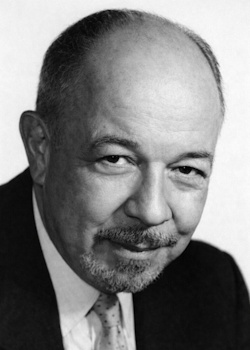 After viewing the film, I believe Friedhofer understood that he would have to infuse his soundscape the requisite Castilian auras, along with the indigenous sounds of the Indians, and the solemn religiosity of Father Serra. For his soundscape he composed four primary themes, two of which are western, and two that are American Indian. For the western themes, we have the Spanish Theme, which operates on both the personal and transpersonal levels. On the personal level is serves as a leitmotif for the austere Captain Portolá as commander of the expedition. On the transpersonal level it represents Spain’s military might, the conquistadores that will be used to conquer California, and expand the empire. It is usually rendered with pride by trumpets militare, and buttressed by field drums, which propel a marcia del conquistatore. Father Serra’s Theme supports his personal identity, and by extension, both the mission church, and maters of faith. Father is a kind, and gentle man, and his theme expresses these qualities with strings reverenti and woodwinds tenero, draped with auras of religiosity.
For the American Indian identities, we have Ula’s Theme, which I believe is the score’s most beautiful. Her theme speaks to her purity, innocence and loving nature, offering music, which is idyllic, serene, and with a sense of wonderment. As an embodiment of nature, it is borne by woodwinds tranquilli, and strings delicato draped with harp tresses. Like the Spanish Theme, the Indian theme also operates on personal and transpersonal levels. On the personal level its serves as the identity of Chief’s Miscomi and later Matuwir of the Diegueño tribe, and by extension on the transpersonal level, the cultural identity of the Diegueños tribe itself. When warlike it offers an aggressive staccato expression by menacing nativist drums and a harsh string ostinato, joined by woodwinds. During actual battle, it swells into a ferocious anthem. When benign, it offers a perpetuoso by muted drums. Lastly, to infuse the soundscape with the necessary cultural sensibilities, three traditional and folk songs arranged by Ken Darby were used; “Señorita Carmelita,” “El Trobador,” and “El Capotin”.
00:00 (*) “Logo” offers an extended version of Alfred Newman’s iconic fanfare for 20th Century Fox and CinemaScope. 00:20 (*) “Prologue” offers narration, which supports a montage of Spanish soldiers training, indigenous Indians, and Father Junipero Serra supported by a musical passage of shifting rhythms by drums militare: “This is a story of the Spanish conquest of California, and the search for the legendary Seven Cities of Gold. A story of primitive Indians, an army of mercenaries, and a man of God. His name was Father Junipero Serra, a Franciscan priest. While the conquering army carried muskets, he carried a cross. Where they sought treasure, he sought salvation.”
We flow into “Main Title” a score highlight, where Friedhofer masterfully establishes the film’s Spanish cultural identity with an extended rendering of the Spanish Theme. We commence atop grand declarations of the Spanish Theme by horns Spagnole as the opening credits unfold in red script against the backdrop of a map of New Spain and Nova California. At 0:52 the theme becomes sumptuous and romantic with a transfer of the melody to strings castigliane. At 1:11 the music darkens and we end on a diminuendo misterioso. “The Coach” reveals red script; “New Spain – 1769, On the road to Mexico City”. A carriage charges across the countryside escorted by Spanish cavalry, propelled by an energetic and galloping travel motif alight with Castilian flare. Don Gaspar Portolá, captain of the army, who exhorts the driver to hurry as they are late, and we see them charge through the village main street, the safety of the people, be damned. At 1:03 the carriage strikes and kills a woman, and a dirge-like sadness descends as the carriage stops, Captain Portolá gets out, and Father Serra kneels and provides his blessing. At 1:11 ethereal strings religioso voice Father Serra’s Theme as he meets a regretful Captain Portolá, who offers to transport the woman to a doctor in Mexico City. The music ends with grim finality as Father Serra declines, saying she is already dead and will be buried in the soil of her village. In a gesture of good will, Captain Portolá orders a horse be left for Father, so he may ride to Mexico City given his lame leg.
05:03 (*) “Mexico City” reveals a panorama of the city supported by trumpets militare fanfare declarations. “Headquarters” was dialed out of the film for the dialogue briefing by his excellency the governor of his commanders who are given orders to march and sail north and secure California for Spain. Friedhofer intended that the scene be supported by a grim rendering of the Spanish Theme. “Commissary” reveals Lieutenant José Mendoza bragging about his great, great grandfather’s glory serving under Cortez, only to be admonished by Father Serra who says the Indians were cruelly, and brutally massacred, and that his ancestor was ankle deep in their blood. Friedhofer supports with mariachi playing the festive Mexican tune “El Capotin”. The music is sustained as the Governor informs Captain Portolá that Father Serra will be accompanying him as Spiritual Director, will speak for the church, and has been empowered to establish missions throughout California.
The next day in “Expedition” reveals that Father Serra is aggrieved that Lieutenant Mendoza and Captain Portolá refuse him space to carry his sacred statuary, asserting that munitions are more important. He is asked to bless the expedition, does so, but then offers a rebuke for the cruel and inhumane manner that we Spanish treat the Indians. He declares that we kill them without mercy, steal their land and gold, and disrespect them because we believe them inferior due to their copper flesh. He punctuates his point by pressing a lit torch to his chest and declaring that all immortal souls receive God’s blessing and acceptance, their skin color after death, irrelevant. Music enters with a grim rendering of Father Serra’s Theme as he finishes his sermon to the stunned soldiers. He then blesses them and Captain Portolá, who then orders the regimen to depart. At 0:24 Friedhofer empowers the departure of the Spanish troops with resounding trumpets militare, buttressed by field drums, which propel a proud marcia del conquistatore. At 1:11 strings religioso join as we see Father Serra walking with his statues of the virgin Mary protruding from his saddle bag.
“Encounter” offers a wonder score highlight, which features masterful thematic interplay. It reveals the regimen trekking through a valley. The Spanish Theme has shed its bravado and shifted to a more tranquil and lyrical iteration. Slowly, undercurrents of unease manifest, creating a rising tension as Captain Portolá looks about warily. At 0:33 a dire crescendo ascends and crests violently as an avalanche of rocks tumble into the narrow path in front of the column. Its ferocity dissipates with the settling dust, which slowly reveals an Indian war party supported by menacing nativist drums and a harsh string ostinato emoting the staccato Indian Theme. Captain Portolá orders his loaded musket soldiers forward, yet Father Serra protests, saying there is a better solution than killing them. He takes a handful of trinkets and walks out alone to greet them. As Father Serra approaches the Indian Theme shifts from aggression to wariness as Captain Portolá restrains Lieutenant Mendoza from firing his gun. At 1:51 the spiritual serenity of Father Serra’s Theme slowly emerges and entwines as he gifts the chief and his warrior’s beaded necklaces, which he respectfully hangs around their necks. Slowly his theme becomes ascendent as the Indian Theme dissipates with their pacification. At 2:39 a solemn Spanish Theme joins as we see Captain Portolá deeply impressed by Father Serra. At Father Serra’s beckoning, he orders the regimen forward carried by their theme as we see dozens of armed warriors poised atop the hillside. The Spanish and Indian Themes entwine as they ride past the warriors, with the soldiers warily scanning the hillsides, fully aware of their vulnerability in the canyon. At 2:53 the Spanish Theme regains its serenity as they pass a waterfall, with the column winding through the canyon. The drums of the Indian Theme persist, yet they are distant and not threatening. At 3:25 the Spanish Theme swells as they ascend out of the valley. At 3:44 violins religioso support Father Serra’s thankful blessing for their safe passage. At 4:07 a beleaguered Spanish Theme informs us that the men are weary, and Captain Portolá orders them to setup camp for the night.
“Senorita Carmelita” reveals the men camped for the night and singing a love sick soldiers’ song. As Father Serra enters Captain Portolá’s tent, the song vocals retreat to the background. He brings wine to celebrate their friendship. Captain Portolá recognizes their differences, yet is gracious with his respect as they toast. Father Serra then departs and a man playing guitar offers the folk song “El Trobador”. As he passes through camp, he accepts José’s invitation to sit with him. The song melody continues, but the lyrics cannot be discerned. They share some wine and he counsels Father to not push his faith too far with these savages. They reminisce, yet the moment is shattered by an arrow strike in the back of the guitar player. Captain Portolá rouses the camp and orders more soldiers to the perimeters. He has had enough of Father’s interference, and we segue into “Decision”, which reveals Captain Portolá ordering Father Serra to return to Mexico City due to his worsening leg infection. The captain rebuffs his protests and departs, and we see Father despair that he will not be able to carry out the Church’s grand mission. His theme is shorn of its spiritual power, and transformed into an aching Pathetique. The animal care-taker Juan joins him and Father asks him to treat his leg wound as he would treat a mule’s. Juan declines, yet Father persists, and he relents, but cautions that the treatment of hot pitch and turpentine. At 1:11 horns solenne evoke the Divine as Father pets a mule, and asks; “How do mules pray?” Strings affanato support Juan’s grimace as he lifts Father’s habit to behold a horrific pustulated abscess. He begins the painful treatment, and gazes at Father who stoically mouths a prayer without flinching. We close at 2:08 with a spiritual misterioso, which dissipates on a diminuendo of uncertainty. 25:40 (*) Reveille” trumpets resound with reveille as the regimen prepares to depart. Captain Portolá asks Lieutenant Mendoza, as to Father Serra’s whereabouts, and he points to him standing over the grave of the guitarist, blessing him with holy water. They join him, order him to the liter, but Father refuses, lifting his habit to reveal the drained and healed abscess. He declares he will continue on with them to California to fulfill the Church’s mission.
Captain Portolá departs, and in “Jose and Serra” Lieutenant Mendoza asks Father, how did he do it, to which he answers, “With Beads my son”. Music enters with a sardonic statement of Father’s Theme as José offers a wry smile. At 0:08 the Spanish Theme with tambourine adornment emotes as a strolling travel motif as they cross a vast desert prairie. A shift to trumpet carries José up the hill to Father Serra. He castigates him for picking flowers and placing himself in danger. At 0:39 Father’s Theme warmly supports his joy of finding a new species of flower, which he offers to name after José. He orders him to return with him and stay with the column. At 0:50 as they turn and begin walking back, the Indian Theme drums support the appearance of dozens of warriors from the bushes. The Spanish Theme loses vitality and the strident Indian Theme swells on a crescendo violento as their horses run off and the Indian’s surround them. We see a growing panic in José’s eyes as he realizes that one rifle is no match against hundreds of spears. At 1:31 swirling aerial strings and trilling woodwinds support the flight of an eagle, a bird held sacred to the Indians. José yells, point his rifle and shoots down the eagle, which causes the Indians, who have never seen a rifle, to flee in fear.
“Sandstorm” reveals José and Father setting off on foot with half a canteen of water to regain the column supported by a beleaguered Spanish Theme, buttressed by a hopeful rendering of Father’s Theme. The winds pickup and soon they are engulfed in a sandstorm, which Friedhofer supports with impressionism, embedded with quotes of Father’s Theme. Father sees a light in the distance at 1:55, and as they walk towards it, the tempest dissipates, replaced by ethereal wonderment as a cabin comes into view. We segue into “The Miracle” atop the ethereal strings religioso of Father’s Theme as an man and his wife receive them, and serve them food. Friedhofer bathes us with a profound serenity with a musical narrative of stirring religiosity for one of the score’s finest and most evocative passages. No words are spoken, yet we discern that these are representations of Joseph, Mary and the swaddling infant Jesus. Both men collapse upon the table, and wake up under a massive cactus. José relates his dream, and is surprised that Father provides exact descriptions of the people and clothing of the people in his dream. He rejects as implausible that it was the holy family who saved them. In “Saved” José is unsure of what direction to go. Father replies, that it does not matter as God did not save theme, to then have us perish in the desert. Music enters with trepidation and uncertainty as José choses northwest. As they begin their trek José sees a search party in the distance and at 0:10 trumpets Spagnole declare the Spanish Theme as he yells, gains their attention, and they ride towards them. At 0:32 ethereal refulgence abounds as José has an epiphany of faith. Father smiles and walks to greet the men, while we see José acknowledging facially, that perhaps this was an act of God. We close with a declaration of Father’s Theme by French horns nobile as José rides to join Father who has catalogued another flower.
In “Plague” scouts bring news of two galleon’s anchored in the bay, one league ahead. Captain Portolá orders extra wine for the weary men and motions to move forward to join their comrades. Yet they are greeted by the naval commander who advises that they stay clear and camp above them as they suffer from plague. A dire musical declaration resounds, shifting with urgency as Father is summoned to give the last rites and rides off to the camp. He gallops off and the music shifts to strings tristi and a musical narrative of woe as he is greeted by Dr. Pratt who advises that they are under quarantine due to Scurvy and Typhus, which has claimed sixty men. He adds that all the other chaplains have taken ill, and that they are short of water as there has been no rain for six months. Father is taken to the dying man, yet sadly he arrives too late as the man has just died. “The Consecration” reveals Father giving blessings to the dead man. Later, tension surges at 0:30 as only one ship with a skeleton crew must return south to bring fresh troops and supplies. Captain Portolá assigns José to stay and command while he sets off by land to secure Monterey. Father intervenes, saying he can take José, as he is establishing a mission, which he can command. Later, he consecrates the ground on which he will build the mission, and rings its bell, that he has hung on a tree branch. We swell at 0:42 on a crescendo religioso as thunder cracks and the first rain in sixty days falls, a blessing from heaven for which Father offers a prayer of thankfulness. Yet as he prays, are woven portentous chords of discord.
“Portola’s Departure” reveals him making amends with his friend José who is bitter that he will miss the adventure of discovering the seven cities of gold. He promises him that he will share in the rewards of anything they find. They shake hands, and Captain Portolá orders his expedition onward empowered by a proud Spanish Theme as a marcia spiritoso. At 0:36 a diminuendo usher in the Indian Theme as we see a scout lurking behind a tree. Later that night, Friedhofer sow unease as the night watch become agitated after hearing hoots and squawking in the distance. The tension slowly escalates as we see several Indians preparing their attack, communicating with animal and bird noises. Their archers and spearmen move in with stealth empowered by an intensification of their theme as José inspects his soldiers at the perimeter wall. At 2:20 a crescendo violento supports the Indians shooting a volley of arrows, which the Spaniards manage to duck behind their wall. José orders his men to hold their fire until they move closer. The Indian commander Matuwir orders a charge given there was no response. A strident Indian Theme propels them. The battle is unscored with the Indians gaining the upper hand due to superior numbers, and the fact that they can refire arrows faster than the Spanish can reload their muskets. The tide of battle turns when the Spaniards fire a canon that frightens the Indians into retreat. José manages to take prisoner the Indian commander with an arm wound. In hospital Dr. Pratt treats him as he defiantly declares that he is Matuwir, grandson Chief Miscomi of the Dieguenos.
“Tell Them to Come” offers a poignant score highlight where Father impresses Matuwir with his kindness and caring spirit. We see him moved when Father declares that we are not your enemies, as we are born from the same mother, and under the same God. Friedhofer weaves a musical narrative empowered by a tender rendering of Father’s Theme, which over time, overcomes Matuwir’s fear and animus. In the morning Father cuts Matuwir’s restraints gifts him a sling for his wounded arm, and walks him the main gate carried by a solo oboe tenero. A tension surge at 2:21 supports a guard’s resistance to letting Matuwir pass, but yields to Father’s wishes. The Indian Theme carries Matuwir’s walk to freedom. As Father tends to his broken statuary we are graced with a stirring rendering of his theme. We close at 2:52 José erupts with anger at Father for releasing his hostage, declaring that he commands here, and that you must obey his commands. “Diegueño Village” reveals Father riding to the Diegueños village. Friedhofer joins the religiosity of Father’s Theme borne by lyrical strings nobile with a contrapuntal, non-war like drum empowered Indian Theme. However, at 0:59, the Indian Theme swells with aggression as his progress through the village is stopped by two volleys of spears. Father dismounts and walks forward and is confronted by Matuwir. His lieutenant Atanuk tries to strike him down, but Matuwir prevents him and then orders Father to go. Father is undeterred, insist on speaking to Chief Miscomi, and walks by Matuwir to the Chief’s hut.
“He Will Choose You” reveals that Miscomi is wary of the white man for he brings death and destruction. Father speaks of his God, the one God, and his message of peace and brotherhood. Father’s genuine friendliness and gentleness leads to a reconsideration, especially after he gifts the chief a scissors. Miscomi agrees to Father’s proposal to dwell in the land on the coast of the great sea, but says that he will not accept his God. Music enters as Father prepares to depart opening with a strident Indian Theme as Matuwir disperses the villagers. The religiosity of Father’s Theme joins on strings solenne as he invites Matuwir to visit. He declines, until Father promises to teach him how to make the sound of the bells. We see that he remains wary, and a sequence of tension chimes speak to this wariness. He finally accepts, yet declares he will not choose your God, to which Father replies; “He will choose you”. “At the Mission” seems to have been attached to a deleted scene. It offers a spritely Spanish tune played by a Mariachi ensemble. “Camp Day” reveals brick making and brick laying as the building of the mission commences. Friedhofer offer an idyllic musical passage, which blossoms at 0:57 as the priests’ gift the children clothes and cut their hair. We close on a diminuendo as Father sees José smitten with Ula, a beautiful young woman, and gently leads him away as we see her blushing. José is very direct in expressing his interest in the woman to Father.
58:15 (*) “Death of Miscomi” reveals the idyllic moment shattered by the ominous drum beat of the Indian Theme. The young Indians all flee immediately from the mission, and fear descends as the soldiers grab their muskets. A warrior arrives at the gate, asks to speak to grey robe, and the sentry asks, if those are war drums? The warrior answers, no, death drums. The warrior informs Father that Miscomi has died, and that Matuwir asks that Father come and give the blessing, to which he consents. At the village the men perform a ritualistic circular drum empowered dance around a sand painting to invoke the great spirit and to restore balance and harmony, which was disrupted by the chief’s death. Chirping woodwinds join as Matuwir is bestowed the feathered mantle of chief. He then asks Father to perform the blessing for Miscomi, and then to also bless him in marriage at the church. The drums continue to beat, as Father performs the blessing. Things however take a turn when Matuwir approaches with three women and asks for the wedding blessing. When Father asks, which one? Matuwir says, all three, as I am Chief! After Father explains it is not our way, adding God permits a man, one wife. Matuwir relents, and chooses the most beautiful of the three, Kukura. Father then says, please bring her tomorrow to the church for the wedding blessing.
“Jose and Ula” offers what I believe to be is the score’s most beautiful composition. It reveals José coming to a beach where four young Indian women playfully gather shells in the surf. Friedhofer creates an idyllic musical narrative with Ula’s Theme borne by woodwinds serene draped with harp glissandi. Warm strings and French horns join as José smiles and descends to greet them. At 1:05 the music softens and a delicate, woodwind borne romanza bearing Ula’s Theme unfolds as he introduces himself, and they begin to flirt, with the melody shifting to strings romantico when she finds that he has no wife. She runs into the surf, he follows, and they frolic carried by wondrous musical idyllicness. The music however sours at 2:06 when he takes liberty with her, by pulling her into his arms for a kissing embrace. She pulls back, hesitates, yet is slowly drawn back to him. She returns to his arms carried by a violin d’amore led, string borne crescendo romatico for a passionate kissing embrace. “Portola Returns” reveals the mission church completed and a sentry firing his rifle as he declares Portolá has returned! The mission’s inhabitants all rejoice as José comes out to view the return. A beleaguered marcia Spagnole supports the return of Captain Portolá’s battered and weary men who bear liters of wounded soldiers. Father suggests that the Indians depart and goes out to greet the captain. As he struggles to dismount, he orders Jose’ to take the wounded to hospital, to feed the men, and to double the perimeter guards. A dispirited musical narrative unfolds as he informs José and Father that the expedition was as worse as it could get, that five men are dead, and asks; “Have you ever seen men starve to death?”
In an unscored scene Captain Portolá relates that there is no Monterey Bay, just a barren land filled with savages. He asserts that since no supply ship has arrived, and that none will be coming. He then declares his decision to abandon the mission and return to Mexico City. Father protests saying they cannot abandon the mission, only to have José declare it a failure as not a single Indian has been converted. When Father counters that it takes time, Captain Portolá counters, time is a luxury we do not have. He orders José to ready the men for departure to Mexico City in the morning, and his announcement bring cheers from the men. A dispirited Father leaves them and enters the chapel. In “Prayer and Hilltop” we see Father kneeling before the altar in intense prayer supported by a solemn rendering of his theme. At 0:09 we shift to the Ula’s Theme as we see her running to José, with the music blossoming as she jumps into his arms for a joyous kissing embrace. Yet he does not reciprocate, and she declares that the rumors are true, that you are leaving. She insists on joining him, but he says no, that it is impossible as she is sister of the chief and he would never permit it. She counters that nothing is impossible as she runs away and we close darkly as an incredulous José gazes at her.
In an unscored scene Father persists in his argument that the Holy Virgin will ensure the safe arrival of the relief ship, and makes a veiled threat questioning his faith. Captain Portolá grudgingly relents and accepts Father’s proposal to remain nine more days, a novena, for St. Joseph’s Day. Six days later the captain oversees the loading of the ship with supplies as Father reminders him that three days of the novena remain, and to trust in the Lord. Matuwir arrives with his wife for a social call and Father who takes them to some rocks where they sit so he can continue his lesson. In the hills, a happy Ula joins José and brings good news – that Matuwir has agreed to let her depart with him, since I am your woman. He is clearly uncomfortable, as she kisses him, while below Matuwir points to them and as Father turns, he says, you will now have two marriages to perform. José then breaks Ula’s heart, telling her that his people will never accept her, and that she must return to her tribe. “Death of Ula” reveals that she is devastated, yells you do not want me, and runs sobbing along the cliff edge. Jose’ pursues, but before he can reach her, she loses her footing, and as she plummets to her doom a horrific horn driven passage follows, subsiding on a diminuendo of death as Matuwir arrives. At 0:23 a grieving rendering of Ula’s Theme supports Matuwir picking her up in his arms. He is devastated by his sister’s death and at 0:51 her theme shifts to a solo violin affanato, under pinned by muted drums of the Indian Theme. At 1:30 elegiac trumpets support José gazing down from above as an angry Matuwir tears off the beads José gifted her, glares at José, and caries her away as the music fades on a diminuendo of sadness. In an unscored scene José visits Father as the Indians have accused him of murder. He becomes enraged when Father declines to answer if he believes he murdered Ula, but advises that what he did, was a sin. José declares he did not kill her, and as he crushes his wine glass in an angry tirade, says he is not made of plaster, but flesh, that he will not be judged by savages, and that he is prepared to go to Hell as he storms out.
1:19:16 (*) “Matuwir Demands José” reveals Father hearing war drums in the distance. Captain Portolá joins Father on the church steps and advises that he cannot defend the mission and must flee south, leaving a rear guard. Father advises of a better, way, public punishment of José. Captain Portolá angrily rejects and storms away this saying he will not publicly flog a Spanish officer for the benefit of savages. In a scene shift we see Matuwir advancing with a large war party. He orders a single arrow with a white feather fired that strikes the entrance of the mission fence. He and four warriors then drop their weapons and advance to the gate to parley. Matuwir demands to see grey robe, and is admitted. He demands José be turned over so justice may be rendered. José reminds him that he saved his life, is not responsible for Ula’s death, and walks away with defiance. Matuwir demands grey robe surrender José to him, and Father, with sadness declines. Matuwir then gives the Indian sign for severing a friendship, and yells out a war cry. A fire arrow strikes the Spanish flag pole, and we watch their flag consumed in flames as the war drums resume. Every man glare at José, with a clear message to surrender himself or they will all die. Captain Portolá takes José by the arm, and orders him into the church immediately, which he grudgingly accepts. The men resume their duties as a relieved Captain Portolá looks on.
In “Sabotage” we shift to night and see Indian torches surrounding the mission as their war drums beat relentlessly. Friedhofer slowly builds tension texturally with strings and woodwinds playing over the drums as a warrior sneak up undetected to the mission outer wall and at 1:02 silently kills a sentry. The warrior, carried by an ostinato, then goes to the water hut and slices open every sack of water. In the morning Captain Portolá rages against the breech of security and loss of their water supplies. In a desperate move, he dispatches a party of men to retrieve thirty skins of water from the San Carlos, which is anchored in the bay. The relentless beating of the Indian Theme’s drums is sustained in 1:28:12 (*) “We Still Have Twelve Hours”. It is night time and as they prepare to sneak out to the ship, we see the San Carlos aflame, and Captain Portolá calls off the mission with the grim recognition, that they are now doomed. Father advises him that there are still twelve hours left of the novena, a long time. However, Captain Portolá remains unconvinced, and departs. Later Father tends to the church altar as José sleeps on a cot. He steps outside and is confronted by the sergeant and an armed detachment. He declares they are coming for Mendoza, but Father refuses, citing the church’s law of sanctuary. The sergeant presses forward, but Father takes his rifle, casts it to the ground, and orders him to return to his post as Captain Portolá watches from the shadows, and José listens from within the church. The sergeant grudgingly relents and departs with his men. Afterwards Captain Portolá advises Father that he will order an attack at dawn, when the novena expires, even though it will be futile.
“Sacrifice” was dialed out of the film, and I am unsure where the twenty-nine-minute cue was spotted in the extended scene. It offers an anguished quote of the Spanish Theme. It reveals it is morning and we see the men being given their rifles and ammunition as the relentless beat of the war drums continues unabated. Captain Portolá orders his cavalry to take the creek and hold it at all costs as José looks on. He then asks Father to give the men communion before they attack. We see José deciding that he cannot be the cause of the death of his friend Don Gaspar and the men. As Father administers communion José emerges from the church, kneels in contrition, offers a prayer of forgiveness, and declares his willingness to atone with his life. 1:34:30 (*) “José Accepts His Fate” reveals that after taking communion, he then turns and begins walking to his fate, caried by a trumpet declared Spanish Theme rendered as an elegy, which plays over the war drums of the Indian Theme. He bids with a hand wave, farewell to his friend Don Gaspar, and as he exits the fort, the drums go silent.
“Departure” reveals Father returning to the mission with a mule bearing the dead body of José. He advises Dr. Pratt, that they cut out his heart, and that they will bury him in the glen as the church bells echo there. A distraught Father then hugs José’s body as he sobs in anguish to the Mary Mother of God. Captain Portolá is moved by this gesture and a grim quote of the Spanish Theme enters as he returns to his quarters. Later, trumpets orgogliose resound as Captain Portolá orders the taking down of the Spanish flag as they prepare to depart and abandon the mission. We shift to the now empty church as carried by a sad rendering of Father’s Theme as he takes one last look at what could have been. In a final gesture he takes the last of the holy water and waters his rose bush as Captain Portolá asks if he is ready. Friedhofer offers pathos as Father collects his statuary but advises his fellow priest that he is leaving the church bell as he will never give up. At 1:34 a grim rendering of the Spanish Theme as a marcia maestoso supports Captain Portolá’s order to depart as he rides through the mission gate, joined by Father’s Theme as he and his assistant ride out. In the background, the drums of the Indian Theme sound as Matuwir and his warriors observe the Spanish departure. At 2:24 a diminuendo support Captain Portolá ordering a soldier to take a bearing from the adjoining hilltop. At 2:43 a crescendo glorioso swells on the Spanish Theme as the soldier sees the relief ship sail into the bay. He yells that the San Antonia has come, and a paean of thankfulness supports everyone racing to the hilltop to view the blessed event. At 3:32 trumpets resound as Captain Portolá orders the column to return to the mission. Yet father remains and kneels in prayer supported by a solemn rendering of his theme, as Captain Portolá watches and personally performs the sign of the cross over his chest. “End Title” reveal the men unloading supplies on the beach, and the ship’s captain declaring that they have brought two years of food, with more scheduled to arrive. In a gesture to Father, Captain Portolá orders that church supplies be transported before the ammunition. Music enters atop a reverential rendering of Father’s Theme as he is presented a gift – six church bells for the future missions he will establish. At 0:38 a cycle of bell gongs supported by horns and twinkling harp glissandi commence and support an aspirational Father repeatedly ringing the bell and declaring that he can hear the Indians coming, concluding with “The End”.
 I commend Bruce Kimmel and the late Nick Redman for this outstanding 2 CD album, which offers three wonderful scores by Hugo Friedhofer, all remixed and mastered for a rewarding listening experience. Films such as “The Seven Cities of Gold” offer narratives for which composers often dream; exploration, a search for the legendary Seven Cities of Gold, a clash of civilizations, imperialism, forbidden love, and religious zealotry. Friedhofer supports this narrative by empowering the Spanish Conquistadores with a bravado marcia militare draped with Castilian auras, which speaks to Spanish pride, superiority, and might. Juxtaposed is a more primal Indian Theme animated by drums and woodwinds. Noteworthy is how Friedhofer modulates the drum rhythms to reflect the emotions of the Indians. Interplay of these two themes is exceptional and effectively speaks to the inevitable conflict indigenous peoples and European imperialist. A third element, the solemn religiosity of Father Serra’s Theme, joins these two opposing musical narratives, and often works as a harbinger of kindness, de-escalation, and non-violence. How Friedhofer weaves these three musical narratives together is masterful. The most beautiful music of the score is linked to Ula, with Friedhofer gracing us with idyllic lyricism, purity of love, and innocence. Sadly, her theme never evolves into a love theme as José is only interested in carnal pleasure. Folks, I believe this to be one of Friedhofer’s finest scores, one which in every way enhanced the film’s storytelling, elevating it characters, aspirations, and conflicts. I highly recommend you purchase this quality album, which also includes the scores to “The Rains of Ranchipur”, and “The Blue Angel”, as well as taking in the film to experience the score in context.
For those of you unfamiliar with the score, I have embedded a YouTube link to a thirteen-minute suite: https://www.youtube.com/watch?v=mR4TDU8rg_M
Buy the Seven Cities of Gold soundtrack from the Movie Music UK Store
Track Listing:
- Main Title (1:31)
- The Coach (1:40)
- Headquarters (0:43)
- Commissary (2:35)
- Expedition (1:31)
- Encounter (4:40)
- Decision (2:31)
- Jose and Serra (1:44)
- Sandstorm (2:26)
- The Miracle (1:52)
- Saved (1:01)
- Plague (1:37)
- The Consecration (1:17)
- Portola’s Departure (2:47)
- Tell Them to Come (3:05)
- Digueno Village (1:24)
- He Will Choose You (0:57)
- At the Mission (1:32)
- Camp Day (1:28)
- Jose and Ula (2:50)
- Portola Returns (1:40)
- Prayer and Hilltop (1:14)
- Death of Ula (1:49)
- Sacrifice (0:28)
- Sabotage (1:40)
- Departure (4:16)
- End Title (1:29)
- Senorita Carmelita (Source) (1:57)
Kritzerland KR 20024-1 (1955/2012)
Running Time: 56 minutes 57 seconds
Music composed by Hugo Friedhofer. Conducted by Lionel Newman. Orchestrations by Edward B. Powell and Fred Steiner. Recorded and mixed by XXX. Score produced by Alfred Newman and Hugo Friedhofer. Album produced by Bruce Kimmel and Nick Redman.

Shop at the Movie Music UK Store

Member of the

 MOVIE MUSIC UK