WICKED, PART ONE – John Powell, Stephen Schwartz
 Original Review by Jonathan Broxton
I don’t think a stage musical had captured the attention of mainstream American society the way that Wicked did since the heyday of Andrew Lloyd Webber in the 1980s. It’s interesting how over the last thirty years or so, for the most part, Broadway and West End shows have started to slide out of popular culture and into a niche. It used to be that a new work by Rodgers and Hammerstein, or Stephen Sondheim, or indeed Lloyd Webber, would be big news. The showstopping main number would probably top the charts, and the music would quickly become part of public consciousness and the cultural lexicon. However, and with the obvious exception of Hamilton, the last time this really happened was when Wicked premiered on Broadway in 2004. It was a bonafide smash, making stars out of its two leads Kristin Chenoweth and Idina Menzel, and thrusting composer Stephen Schwartz back into the spotlight in a way he hadn’t been since his successes with Godspell and Pippin in the early 1970s. And now, twenty years after its stage premiere, Wicked has finally been turned into a movie.
Wicked is an adaptation of the 1995 novel Wicked: The Life and Times of the Wicked Witch of the West by Gregory Maguire and is essentially a prequel to the legendary 1939 film The Wizard of Oz, which was itself based on the 1900 novel The Wonderful Wizard of Oz by L. Frank Baum. The film is told from the perspective of the original film’s antagonist, the Wicked Witch of the West, and explores her childhood and her complicated relationship with Galinda, who herself becomes the Good Witch of the North. The Wicked Witch – whose real name is Elphaba Thropp – is born with green skin and grows up a victim of prejudice and injustice… until, that is, she is accepted into Shiz University when the school’s headmistress, Madame Morrible, recognizes Elphaba’s magical potential. Elphaba is assigned to be the roommate of the beautiful and perky but self-absorbed Galinda, and the two immediately clash due to their disparate personalities. However, as time goes on, the relationship between Elphaba and Galinda begins to thaw and they become friends, only to find their friendship tested when Elphaba begins to realize that something is not right in Oz, and a lot of it stems from the all-powerful Wizard, who rules the land from the Emerald City.
The film is directed by John M. Chu and stars Cynthia Erivo and Ariana Grande as Elphaba and Galinda, with support from Jonathan Bailey, Ethan Slater, Michelle Yeoh, and Jeff Goldblum. Like its 1939 predecessor, it is a visual feast for the eyes. The entire production is cloaked in eye-popping color, the sets and costumes are spectacular, and the staging is magnificent. All will be front runners for Oscars. Both Erivo and Grande excel in their roles, considering that Chenoweth and Menzel left some pretty massive ruby slippers to fill, with Grande especially impressing me with a really quite outstanding comic performance that her pop music career and general public persona gave no indication she had in her. The film explores some weighty topics – racism and intolerance, the complicated nature of female friendships, and even some political skullduggery – and at the time of writing it has already grossed more than half a billion dollars at the box office. And, remember, this is only Part One of the story: Part Two is scheduled to be released in cinemas some time in 2025. But, enough about all that, as most people will be here for the music.
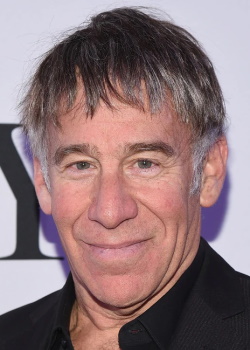 The score for the movie is a direct collaboration between Schwartz and composer John Powell, who worked together to craft a new orchestral musical accompaniment that sits alongside and complements the songs, taking thematic elements from one and embedding them deep within the other, so that they feel as though they have always been that way. It’s quite an undertaking; Schwartz as a composer is very much influenced by Stephen Sondheim, who was himself inspired by the leitmotif style of Richard Wagner’s operas, in the way that recurring ideas and characters have their own musical motifs that carry across multiple songs. While this is of course a familiar concept to film score fans, I think that it’s less common these days in musical theater, and so the way that Schwartz and Powell were able to bring that all out and translate it into a brand new score is really impressive.
However, there’s something I need to say first. Until very recently, I think I was probably the last person in the western hemisphere to have neither seen Wicked the musical, nor listened to its music. I was familiar in passing with two of its most famous songs – “Popular” and “Defying Gravity” – but beyond that, I was going into this movie experience completely blind. As such, I will offer this caveat: there is probably a lot of detail in this Wicked soundtrack that I’m missing. I still have not listened to any of the music from the second half of the show, and so any references in the score to songs that are not in Part One will go completely over my head. Similarly, I’m still not familiar enough with all the song melodies from Part One to be able to fully ascertain all the intricate little details that Powell likely gleaned from Schwartz’s work, at least not in the way that die-hard Wicked fans are. So, with that in mind, here’s my take.
First; the songs. From a musical point of view, they are outstanding. Obviously, the size of the orchestra here is much bigger than the one usually heard in live theater, because you can only fit so many people in an orchestra pit under a stage, but even with that in mind some of the arrangements are truly immense. The orchestra is often augmented by a decent sized rock band comprising guitars, drums, and synths, which gives the whole thing a much more contemporary sound than I had anticipated, and which would probably have old Harold Arlen and Herbert Stothart rolling in their graves, but once I got over my initial surprise at the instrumental makeup I found myself enjoying it immensely.
The orchestral opening to “No One Mourns the Wicked” is spectacular, dense and powerful and with some notably imposing brass carrying what eventually develops into Elphaba’s ‘wicked witch’ theme. There is a brief hint of what people know as the magical ‘Unlimited’ motif for strings and choir at the 42 second mark, before the main song kicks in, a vibrant and joyous dance number sung by Glinda and the residents of Munchkinland as they celebrate the Wicked Witch’s death at the hands of Dorothy Gale (as per the 1939 Wizard of Oz film). Ariana Grande reaches some astonishingly high notes that could shatter glass, and I really like the Marvin Hamlisch-style soft shoe jazz heard in the flashback sequence showing Elphaba’s mother having an affair with a mysterious stranger, but the thing I appreciate the most are Schwartz’s allusions to the music of the original film – for example, the ‘Unlimited’ melody incorporates the first seven notes of Arlen’s timeless Judy Garland song “Over the Rainbow,” and there are hints of the song “Ding Dong The Witch is Dead” in some of the rhythms Schwartz uses too.
“The Wizard and I” is Wicked’s ‘I want’ song, and is a powerful exploration of Elphaba’s hidden desires: to be accepted for who she is, and to work alongside the Wizard of Oz for the good of everyone. Michelle Yeoh’s vocals as Madame Morrible at the beginning of the song are a weak point, but once Erivo takes over it quickly becomes a blockbuster, with Elphaba belting for all she’s worth. Schwartz weaves the ‘unlimited’ motif all through the song’s underbelly, but what I really like about it are the lyrics: there’s so much irony and Oz lore foreshadowing here, as Elphaba sings about how she is “so happy she could melt,” and how “when people see me they will scream” – from what she hopes is love, except we sadly know that will not be the case.
“What Is This Feeling?” is a comic duet for Elphaba and Galinda expressing how much they hate each other in a variety of increasingly exasperated and insulting ways. “Something Bad” is a brief song performed mostly by Peter Dinklage in character as Dr. Dillamond, one of the professors at Shiz University, who happens to be a goat, and who informs Elphaba of his belief that that there is a nationwide conspiracy to stop animals from speaking.
“Dancing Through Life” is the main song performed by Jonathan Bailey as Fiyero, the impossibly handsome but stupefyingly unintelligent prince who comes to Shiz as a new student and immediately becomes one side of a love triangle involving Elphaba and Galinda. It’s an upbeat, intentionally vacuous celebration of willful ignorance that moves from light pop to disco and teen romance, set to a quite spectacular Cirque du Soleil-style dance sequence inside a revolving library. Later in the sequence, after Galinda has presented Elphaba with her iconic black hat in an attempt to embarrass her that ultimately backfires, Elphaba and Galinda dance to the same melody at the Ozdust Ballroom – the first time their chilly relationship begins to thaw – and Schwartz reprises one of the key motifs from “What Is This Feeling?” to ironically underscore the change.
Having now cemented their friendship, “Popular” is the song that underscores the scene where Galinda tries to give Elphaba a makeover, with terrible but hilarious results. The song is Galinda’s main song, and it’s a knockout: Schwartz says he imagined Galinda as ‘one of those cheerleaders – the most popular girl at school, who went out with the captain of the football team, was always the homecoming queen, the blonde with a perky nose,’ and it would have been easy for the character to be obnoxious as a result of that, but Grande’s performance is so adorably charming and so likeable, that her genuine (if misguided) desire to help Elphaba shines through. It’s frothy and bubbly and twinkly, and the mischievous growl that sometimes comes from Grande’s throat keeps it just the right side of sassy.
My favorite song of the ones I had never heard before is the downbeat romantic ballad “I’m Not That Girl,” in which Elphaba sadly sings about how Fiyero will never reciprocate her newfound feelings for him, since he’s already in love with Galinda, and Elphaba is just a green-skinned outcast who’s used to not being loved. There is just the right amount of bittersweet longing in Erivo’s voice, and Schwartz’s lyrics tenderly explore her reaction to emotions she never thought she would experience.
The Emerald City sequence features two songs. The first, “One Short Day,” is a boisterous song-and-dance sequence for the background cast extolling the virtues of the capital, featuring a hilariously perfect interlude in which the original Galinda and Elphaba, Kristin Chenoweth and Idina Menzel, appear in cameos as the leading ladies of the Emerald City Players, telling the propaganda-heavy backstory of the Wizard of Oz to the enthralled crowd in the style of a Busby Berkeley sequence from classic Hollywood. The second, “A Sentimental Man,” is an introspective piece performed in character by Jeff Goldblum as The Wizard that is mostly forgettable, but it quickly gives way to the pièce de résistance: Elphaba’s showstopper “Defying Gravity”.
She sings the song having just discovered the truth about the Wizard, his plans for Oz, and his plans for her specifically, and it speaks to her rebelliousness against that, against the rules that others have set for her throughout her life, and against the laws of physics themselves. As she mounts an enchanted broomstick for the first time she flies around the Wizard’s castle, taunting his Winkie guards, fully embracing her new ‘wicked witch’ persona by imploring people who want to find her to “look to the western skies”. Throughout the song Schwartz fully develops the theme for Elphaba that has been bubbling under the surface since the opening moments of “No One Mourns the Wicked,” and blends it with both the ‘unlimited’ motif and the ‘friendship’ motif that first appeared in “What Is This Feeling,” until the whole thing climaxes with a massive primal roar of triumph, Elphaba framed in silhouette against the setting sun, her cape billowing epically in the breeze. End of Part One… to be continued.
I can see why so many people love this music, and I found at least four of the songs – “The Wizard and I,” “Popular,” “I’m Not That Girl,” and “Defying Gravity” – to be truly magnificent, worthy of all the praise and acclaim. One thing I will say, though, is that in the songs that are led by an ensemble rather than by Erivo or Grande, I find myself succumbing to a feeling I’m describing as the ‘theater kid ick,’ a skin-crawling sensation I get when the whole thing veers too far into that overly-perky way-too-eager-to-please Disney Channel sound that I cannot stand, and which has affected far too many Disney movies and Broadway shows of late. I can’t really explain it – it’s something in the way they over-pronounce certain syllables, coupled with a distinct and specific tone of voice – but something about it just rubs me entirely the wrong way, and once or twice I got that here. To be clear neither Erivo nor Grande have it, but I did worry the first time I heard the ensemble performance of “No One Mourns the Wicked” that I was going to be bothered the whole time. Thankfully, that was not the case, and in the end 80% of the song performances are stellar.
 Moving on to the score; as I mentioned earlier, Schwartz and John Powell worked together to create an orchestral accompaniment to the songs that draws from the same thematic and motivic pool, and inhabits the same sonic world, but also builds on Powell’s own experience writing fantasy scores like Shrek and How to Train Your Dragon to enhance the drama and create a compelling score-based narrative. The end result is similarly triumphant; inevitably it plays second fiddle to the songs, as all the most dramatic moments are sung rather than acted, but Powell still finds plenty of opportunities to impress with his rich and varied cues.
The opening cue, “Arrival at Shiz University,” is a combination of the melodies from the school song ‘Dear Old Shiz,’ the ‘unlimited’ motif, and the melody from ‘Popular,’ arranged in Powell’s spectacular fantasy fanfare style, albeit with an unexpected touch of Thomas Newman in the orchestrations, especially in the way that Powell uses ‘zinging’ percussion textures. “Our Heroes Meet” opens with a jump scare chord as Elphaba surprises Galinda, bit then contains a light, cute, classically rich, almost dance-like foreshadowing of the melodies from ‘What Is This Feeling,’ ‘No One Mourns the Wicked,’ and ‘Popular,’ commenting on how their friendship will develop over time.
There’s a pleasant, whimsical theme for Elphaba’s sister in the lovely “Nessarose,” which then expands into something grander and more opulent in “Meet the Faculty.” This cue contains the first statement of the theme for Madame Morrible, which is itself based on the short verse she sings during the opening bars of ‘The Wizard and I’. Madame Morrible’s theme is very clever; in its first appearance here it is presented in a lush, elegant, magical manner, full of pizzicato strings and fluttering woodwinds, all befitting the persona she adopts at school. However, as the film develops, and the true nature of her relationship with the Wizard and her plans for Elphaba are revealed, Powell has a lot of fun playing around with tones and keys to illustrate her duplicitousness.
“Elphaba’s Power” is more frantic and at times almost out-of-control, reinforcing the idea that she has not yet mastered her magic, and I really like how the darker versions of her theme that run through the cue are often accompanied by subtle choral references to Herbert Stothart’s ‘tornado’ music from the original Wizard of Oz score. The subsequent “How to Loathe Your Roommate” is full of light chimes, dancing strings, fanciful woodwind textures, and playfully pretty references to ‘Popular,’ but it is also underpinned with a sharp sense of irony and frustration as Elphaba and Galinda immediately butt heads when they move in together.
“History Lesson” is a series of variations on Elphaba’s ‘wicked witch’ theme, surrounded by curious, undulating, sometimes quite dark magical textures that add a sense of importance and potential peril to Dillamond’s worries about the future of Oz. The subsequent “Levitate the Coin,” which underscores the first meeting between Elphaba and Madame Morrible in a private magic lesson, is an extended exploration of Morrible’s theme backed by yet more lithe and intricate orchestral passages; as I mentioned before, Powell is careful in how he develops her music, never wanting to show his hand too early, but the choral textures that blend in and out of the orchestra still cleverly hint at her deeper power.
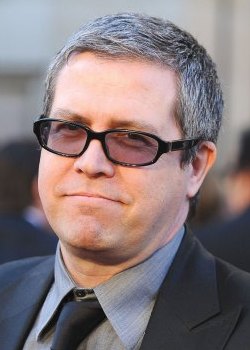 The theme for Fiyero, which is based mostly on the melody from the song ‘Dancing Through Life,’ is introduced in “Prince Fiyero of Winkie Country,” and comes across as a slightly more masculine version of the music that usually accompanies Galinda; air-headed and narcissistic, the male equivalent of a ‘pick me’ girl. However, whereas Galinda’s music is all chimes and tinkles and fairy dust, Fiyero’s sound is more that of a Hollywood matinee idol, sweeping romantic strings and slightly more emphasis on the brass. This sound continues on through “The Book Place” with the addition of a dancing piano, and then into “Elphaba at Ozdust,” where her entrance at the ‘forbidden dance’ is underscored by a cautious variation on Fiyero’s theme as he was the one who encouraged her to attend… until, that is, she is humiliated by her fellow dancers, and everything becomes very dark indeed. Powell combines low, intimate choral sounds with moody piano chords to really hammer home how distraught Elphaba is in this moment, and the emotional impact is palpable.
Things change in “Sharing Secrets” and “Look At You,” which together underscore the first scenes where Elphaba and Galinda’s relationship changes, and it turns from antagonism to friendship. These cues are part of the same sequence as the ‘Popular’ song, and so naturally they contain melodic references to it, but there are also bittersweet hints of Elphaba’s love song ‘I’m Not That Girl,’ as well a first clear performance of Elphaba and Galinda’s warm friendship theme, which appears to be based on part of the melody from ‘What Is This Feeling’. This is another theme that will become more prominent as the score develops, exploring the different dynamics of their relationship.
“Replacement Teacher” has lots of shifting tones, and features references to multiple different thematic ideas, to underscore the scene where guards burst into Dillamond’s classroom and arrest him, and then a new teacher comes in with a disturbing new idea: an animal being kept in a cage. Dark and imposing versions of Madame Morrible’s theme and the Unlimited motif wander around the cue’s periphery, subliminally indicating who is responsible for the outrage. I also like the little choral interlude at 3:15 that accompanies the moment where Elphaba’s poppies send everyone except her and Fiyero to sleep – more callbacks to Stothart’s original 1939 score and the scene where Dorothy falls asleep in the Wicked Witch’s enchanted poppy field. “Cub Rescue” is a brief action sequence that accompanies Elphaba and Fiyero rescuing the caged animal and fleeing the Shiz campus on bicycles; the subtle visual and musical callback to Stothart’s theme for Miss Gulch from The Wizard of Oz at 0:30 is a terrific in-joke. Eventually Elphaba and Fiyero end up in the forest outside the Shiz campus, and they bond to the lyrical strains of both Fiyero’s ‘Dancing Through Life’ theme and Elphaba’s longing romance theme from ‘I’m Not That Girl’. Powell expertly captures the conflict within Elphaba; she clearly is attracted to Fiyero, but knows that he will likely reject her for Galinda if she makes her true emotions known.
“Ozian Invitation” initiates the sequence where Elphaba receives a message from the Wizard of Oz inviting her to the Emerald City for an audience. A pretty music box theme accompanies the steampunk clockwork balloon that physically delivers the letter, and then it’s a whirlwind of excited emotions as Elphaba contemplates her lifelong dream of getting to meet the Wizard himself; the brief reprise of the melody from ‘The Wizard and I’ is timed perfectly. The arrival of the gleaming locomotive sent to take Elphaba to the Emerald City has a grand and pompous circus-like march, fully capturing the sense of occasion, but then in “Galinda Becomes Glinda” there are several dainty variations on the romance theme from ‘I’m Not That Girl’ that illustrate the confusion Elphaba feels as Galinda and Fiyero come to see her off from the station. As Elphaba boards the “Train to Emerald City” Powell interlaces a lovely solo violin version of the Friendship theme with a sweeping arrangement of the melody from ‘No One Mourns the Wicked,’ which then becomes celebratory and glorious as Elphaba pulls Galinda onto the train and they head to the capital together; to acknowledge this, at the 1:54, mark Powell erupts into a massive brass fanfare statement of Harold Arlen’s melody from “Follow the Yellow Brick Road.” We’re off to see the Wizard!
Elphaba and Galinda’s audience with the Wizard begins in the “Hall of Grandiosity,” which is appropriately regal and magisterial. The first appearance of Powell’s menacing new motif for the Flying Monkeys appears at 0:29 – a flurry of strings in an ostinato, backed by a low choir – and as the intrepid friends make their way into the presence of the Wizard Powell uses tension-filled strings, brass crescendos, and huge choral outbursts to fully capture the Wizard’s wonderful and terrible power. The subsequent “A Wizard’s Plan” underscores the first proper meeting between Elphaba and the Wizard after he has revealed his true self to her; Powell uses several statements of the theme from ‘The Wizard and I’ to capture Elphaba’s schoolgirl excitement at meeting her hero, and it’s all wonderfully warm and wholesome, especially when the cooing choir and sparkling chimes add yet more magic. However, things change in “The Grimmerie,” when Madame Morrible appears and convinces Elphaba to read from the eponymous spellbook. Madame Morrible’s theme is initially warm and welcoming here, but soon a dark and menacing motif for the Grimmerie emerges, harsh vocal textures set against undulating strings.
“Transformations” underscores the scene where Elphaba’s Grimmerie spell unintentionally but successfully causes all of the Wizard’s monkey guards to sprout wings – the birth of the flying monkeys! – and Elphaba realizes to her horror that the Wizard has no actual magical power of his own, and that he and Morrible have been manipulating her the entire time for their personal political gain. Powell’s music here is a series of deft and complicated orchestral and choral settings of the Flying Monkeys motif, the ‘Unlimited’ motif, Madame Morrible’s theme, and Elphaba’s Wicked Witch theme, often underpinned with bombastic action music rhythms, and notably powerful screaming brass; the sense of betrayal and anguish coming from Elphaba here is profound. The choral chanting that begins at 7:11 is clearly inspired by Stothart’s ‘March of the Winkies’ from the original Oz score (‘o-ee-yah, eoh-ah’), and the dastardly new choral arrangement of Madame Morrible’s theme at 7:38 fully reveals the extent of her deviousness.
“Monkey Mayhem” is the score’s central action cue, a vivid and raucous setting of the Flying Monkeys motif and the Winkie Guards motif within a series of massive orchestral outbursts, accompanying Elphaba and Galinda as they try to fight their way out of the Wizard’s castle and escape in his hot air balloon. Elphaba’s heroics are often accompanied by brief bursts of the ‘Unlimited’ motif and the Wicked Witch theme at their most dominant, and the action music overall is steeped in Powell’s personal stylistics, notably in the way he weaves complicated percussion patterns around and through the orchestra. Fans of his scores in the How to Train Your Dragon series, and for things like Shrek and Solo, will be especially entertained here.
The whole thing climaxes in the scintillating finale “All Around Defying Gravity,” in which Elphaba – sensing that she and Galinda are not going to escape from the Wizard’s castle intact unless she does something drastic – fully embraces her Wicked Witch persona, enchants a broomstick, and lifts off. Her moments of realization and growing defiance are scored with allusions to the Wicked Witch theme, the ‘Unlimited’ motif, and to a deconstructed version of the chorus of the ‘Defying Gravity’ song, which appears to be being used here as a motif for the concept of flight. The dramatic build-up that begins at the 3:12 mark unexpectedly reminded me of Hans Zimmer’s score for Man of Steel, especially in the way Powell pitches the tone of the percussion, while the epic sweep in the conclusion – as Elphaba and Galinda tearfully part – is as poignant as it is appropriate.
Honestly, I had not expected to enjoy Wicked as much as I did, nor did I expect the score to be as dense and rich and thematically complex as it turned out to be, but what John Powell and Stephen Schwartz have accomplished here is actually quite remarkable. Schwartz’s songs have been loved by millions for more than twenty years, and considering the level of intensity that Wicked’s fans love them, the pressure on him and Powell to make their movie version equally special must have been intense. But, somehow, they seem to have pulled it off. The way the two aspects of the music work together is exceptional – the interweaving of the song melodies, the apparent foreshadowings and allusions to things that won’t happen until Part Two, the way Powell has adapted and developed Schwartz’s tunes to suit the musical needs of the drama: it’s all outstanding, and the fact that Powell was able to craft several brand new themes, and even reference Harold Arlen’s songs and Herbert Stothart’s score from the 1939 film, takes it all to yet another level.
The score for Wicked was shortlisted for the Best Original Score Oscar yesterday, which is something I did not expect considering that scores for screen musicals based on pre-existing works usually fall foul of the Academy’s 80% adaptation rule; my guess is that it squeaked in on a percentage after being forensically examined by the music branch. With that in mind, considering how well received the film has been, and how much people love the music already, the chances of John Powell receiving his first Oscar win for this score have increased enormously. Wicked is an excellent musical achievement from start to finish, and for me is one of the outstanding scores of 2024.
Buy the Wicked soundtrack from the Movie Music UK Store
Track Listing:
- SONG ALBUM
- No One Mourns the Wicked (performed by Ariana Grande feat. Andy Nyman, Courtney-Mae Briggs, Jeff Goldblum, Sharon D. Clarke and Jenna Boyd) (7:27)
- Dear Old Shiz (performed by the Shiz University Choir feat. Ariana Grande) (1:11)
- The Wizard and I (performed by Cynthia Erivo feat. Michelle Yeoh) (5:36)
- What Is This Feeling? (performed by Ariana Grande and Cynthia Erivo) (3:48)
- Something Bad (performed by Peter Dinklage feat. Cynthia Erivo) (1:48)
- Dancing Through Life (performed by Jonathan Bailey feat. Ariana Grande, Ethan Slater, Marissa Bode, and Cynthia Erivo) (9:47)
- Popular (performed by Ariana Grande) (4:01)
- I’m Not That Girl (performed by Cynthia Erivo) (3:57)
- One Short Day (performed by Cynthia Erivo, Ariana Grande, Kristin Chenoweth, and Idina Menzel feat. Michael McCorry Rose) (6:32)
- A Sentimental Man (performed by Jeff Goldblum) (2:12)
- Defying Gravity (performed by Cynthia Erivo feat. Ariana Grande) (7:39)
- SCORE ALBUM
- Arrival at Shiz University (2:07)
- Our Heroes Meet (1:54)
- Nessarose (1:10)
- Meet the Faculty (3:34)
- Elphaba’s Power (3:35)
- How to Loathe Your Roommate (3:43)
- History Lesson (3:46)
- Levitate the Coin (2:17)
- All Around Something Bad (2:17)
- Prince Fiyero of Winkie Country (3:16)
- The Book Place (2:00)
- Elphaba at Ozdust (3:02)
- Sharing Secrets (2:00)
- Look at You (1:19)
- Replacement Teacher (3:49)
- Cub Rescue (1:45)
- Forest Feelings (2:02)
- Ozian Invitation (2:30)
- Galinda Becomes Glinda (3:36)
- Train to Emerald City (2:18)
- Hall of Grandiosity (2:40)
- A Wizard’s Plan (4:23)
- The Grimmerie (2:06)
- Transformations (8:10)
- Monkey Mayhem (3:40)
- All Around Defying Gravity (5:45)
Republic Records/Verve (2024)
Running Time: 53 minutes 58 seconds – Song Album
Running Time: 78 minutes 44 seconds – Score Album
SONG ALBUM
Music and lyrics by Stephen Schwartz. Conducted by Stephen Oremus. Orchestrations and arrangements by Greg Wells, Stephen Oremus, Jeff Atmajian, Jonathan Beard, Edward Trybek and Henri Wilkinson. Recorded and mixed by Nick Wollage and Robin Baynton. Edited by Jack Dolman and Catherine Wilson. Album produced by Stephen Schwartz, Greg Wells, and Stephen Oremus.
SCORE ALBUM
Music composed by John Powell and Stephen Schwartz. Conducted by Gavin Greenaway. Orchestrations by Jonathan Beard, Edward Trybek, Henri Wilkinson, Sean Barrett, Jennifer Dirkes, Benjamin Hoff, Steven Rader, Jacob Shrum, and Jamie Thierman. Additional music by Batu Sener and Markus Siegel. Special vocal performances by Holly Sedillos. Recorded and mixed by Nick Wollage and John Michael Caldwell. Edited by Jack Dolman and Catherine Wilson. Album produced by John Powell and Stephen Schwartz.
-
February 7, 2025 at 7:01 amMovie Music UK Awards 2024 | MOVIE MUSIC UK

Shop at the Movie Music UK Store

Member of the

 MOVIE MUSIC UK