GLADIATOR II – Harry Gregson-Williams
 Original Review by Jonathan Broxton
WARNING: THIS REVIEW CONTAINS PLOT SPOILERS. IF YOU HAVE NOT YET SEEN THE FILM, YOU MIGHT WANT TO CONSIDER WAITING UNTIL AFTER YOU HAVE DONE SO TO READ IT.
Almost 25 years after director Ridley Scott and lead actor Russell Crowe brought the swords-and-sandals Roman epic back to the Hollywood mainstream with their movie Gladiator – and won Best Picture at the Oscars to boot – we have a sequel in the shape of Gladiator II. It’s a wonderful example of old-fashioned epic filmmaking on a grand scale, full of massive battle scenes, opulent visuals, and heightened emotional drama.
The film is set in the Roman Empire circa the year 200AD during the reign of twin emperors Geta and Caracalla; it stars Paul Mescal as Hanno, a simple farmer living in the North African region of Numidia, who is taken prisoner by a Roman army led by General Acacius (Pedro Pascal) after they successfully attack and conquer his home city in a great naval battle; Hanno’s warrior wife Arishat is killed in combat. Hanno is taken to Rome as a slave and sold to a gladiator school owned by Macrinus (Denzel Washington), who promises Hanno an opportunity to kill Acacius if he wins enough fights in Rome. However, there is much more afoot; Acacius is secretly part of a plot to overthrow the stupid and corrupt emperors and intends to return Rome to its former glories. Macrinus, meanwhile, has his own plans for political advancement, and intends to use his gladiators to attain it. And as for Hanno… there is much more to him than meets the eye, and a lot of it relates to Acacius’s wife Lucilla (Connie Nielsen), and her former relationship with the gladiator Maximus, who died in the arena all those years ago.
The film co-stars Joseph Quinn and Fred Hechinger as Geta and Caracalla, Derek Jacobi reprises his role as Senator Gracchus from the first film, and Lior Raz, Peter Mensah, Matt Lucas, and Tim McInnerny feature in major supporting roles. The screenplay is by David Scarpa, who also wrote two other recent films for Ridley Scott, All the Money in the World and Napoleon. The below the line talent is all exceptional – the visual elements of the film, especially production design, costumes, and the like, are all going to major Oscar contenders – and the score is by Harry Gregson-Williams, who is working with Scott for the seventh time after scoring Kingdom of Heaven in 2005, The Martian in 2015, writing additional music for both Prometheus and Exodus: Gods and Kings, and writing both The Last Duel and House of Gucci in 2021, although he has known him longer, having scored films for Ridley’s late brother Tony Scott starting all the way back in 1998.
The original Gladiator was, of course, scored by Hans Zimmer and Lisa Gerrard; it is one of Zimmer’s career best works, and is one of the most beloved soundtracks of this century. To say that Gregson-Williams’s task was daunting is an understatement, but to his credit he was able to create a score which in no way eclipses what Zimmer and Gerrard did a quarter of a century ago, but is at least an appropriate continuation of that sound for a new generation. In an interview with Jazz Tangcay for Variety, Gregson-Williams explains that his idea was to build a score which was fully respectful of what Zimmer did, and which uses several of the thematic building blocks from that score to influence the themes of this one.
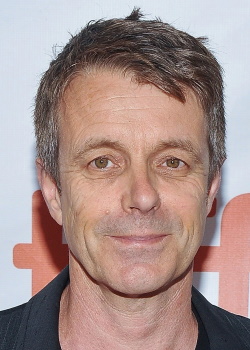 Gregson-Williams says that the jumping-off point was triggered by a line in the script that said “Lucius becomes Maximus” – because, spoiler alert, Hanno is actually Lucilla’s young son Lucius, who was sent away from Rome in secret after the events of the first film; Maximus was his father. Gregson-Williams further explains that he was drawn to the main theme for Maximus from the first film, and how it is built around a series of descending seventh notes; his theme for Hanno/Lucius is built around a similar chord progression and, as the film develops, the theme develops too, until by the end of the film the theme has entirely become Zimmer’s main Gladiator theme – Lucius becomes Maximus indeed.
Gregson-Williams’s musical palette is mostly rooted in the traditionally large western orchestral style, but also he wanted to bring some unique instrumental touches to the palette to illustrate certain concepts. To capture the regional sounds of Hanno’s North African home he often makes use of a ney flute, an instrument primarily used in Persian music, and then to capture the sound of Rome itself Gregson-Williams took a trip to a remote part of northern Spain to visit musicologist Abraham Cupeiro, who builds and plays ancient instruments such as the carnyx and the Iberian horn, based on nothing more than pictures and artists’ renditions of what instruments might have been used in Roman times.
For Denzel Washington’s character Macrinus, Gregson-Williams called on his old friend, electric cellist Martin Tillman, whose performance Gregson-Williams described as ‘slipping and sliding’ as elegantly as Macrinus himself does. To add a unique touch to the scenes where Hanno/Lucius has flashbacks to his life in Numidia with Arishat, Gregson-Williams used a group from London called Fretwork, which specializes in performances of renaissance and baroque instruments, notably the viola de gamba. Also included in the palette for their tonal qualities rather than their geographic specificity are a type of Finnish zither called a kantele, and an Iranian hammered dulcimer called a santur, among others.
There are numerous unique and interesting vocal elements in the score too. In addition to a fairly standard mixed voice choir Gregson-Williams hired Ethiopian vocalist Ejigayehu Shibabaw, known by her stage name Gigi, to add an unusual mystical sound to the scenes of Hanno/Lucius having visions of Arishat in the afterlife. Other cues include soprano Grace Davidson, countertenor Lior Attar – whose otherworldly voice was intended to be a part of the theme for Lucilla but was excised from most of the score at Scott’s request – a bank of throat-singers, and more; and then finally, as a callback to the original score, Gregson-Williams brought back vocalist/composer Lisa Gerrard, although her voice is used in a slightly different way here than Zimmer did in the first movie.
The “Gladiator II Overture” plays over the creative animated main title sequence, and makes excellent use of Lisa Gerrard’s moody, exotic voice – which intentionally brings back echoes of the ‘wheat field’ theme from the first score – alongside a pulsating action rhythm full of striking string figures, emphatic brass lines, rousing choral textures, and regional instrumentation to give it color. This then segues into the opening sequence, “Lucius, Arishat and the Roman Invasion,” which is a superb mix of emotion and action. The unnerving high-pitched woodwinds that open the cue are seemingly reminiscent of the motif for Emperor Commodus from the first film, but are actually a very brief allusion to the theme for his sister Lucilla; more on that later. They are quickly replaced anyway by the beautiful theme for Hanno and Arishat featuring Gigi’s unique vocal work. However, their idyllic relationship is rudely interrupted by a blast from the carnyx to herald the arrival of General Acacius and the Roman navy at the city walls, and they are both called to battle. All hell breaks loose at the five minute mark as a trebuchet bombardment begins and the first of the score’s major cues kicks in; Gregson-Williams has always been good at action and Gladiator II is no exception – strings surge, the brass roars, the percussion becomes ever more intense, the choirs add a level of emotional depth, and the continual use of the carnyx reminds listeners of the ancient setting. It’s brilliant, thrilling stuff, and anyone who liked Gregson-Williams’s battle music from scores like Kingdom of Heaven, or his Narnia films, will find this to be of a similar standard.
Interestingly, much of the rest of the score dispenses with the battle music, and instead settles down into a series of atmospheric explorations of character and politics. “I’ll Wait for You” introduces the first instance of the unusual idea that represents Hanno/Lucius’s visions of Arishat in the afterlife, and his desire to avenge her death. Gregson-Williams takes the Gigi vocal texture from the Hanno and Arishat love theme and surrounds it with unusual, sonically manipulated electronic textures to give it an ethereal and other-worldly feel; later in the cue deeply emotional Middle Eastern vocals add a touch of anguish to Hanno/Lucius’s devastation at Arishat’s death, and speaks to his relationship with his friend/adoptive father Jugurtha, the Numidian chieftain.
These sounds continue into the subsequent “Ostia,” which accompanies Hanno/Lucius’s arrival at the Roman port city on board a slave ship. There’s some imposing orchestral grandeur towards the end, but this cue also features the first appearance of the woodwind theme for Lucilla. As mentioned before, Lucilla’s theme appears to be a softer and more inviting version of Zimmer’s theme for her brother Commodus from the first film; I really like the subtle linking between the characters and two films, illustrating the familial connection, but changing the emotional intent. This is a clever bit of foreshadowing on Gregson-Williams’s part too; at this point in the story we don’t know that Hanno is Lucius or that he is Lucilla’s son – but Hanno obviously does, and as he remembers his former life when he sees the city of Rome looming on the horizon, Gregson-Williams’s music remembers too.
“Angry Baboons” is the first major action sequence, for the scene where Hanno/Lucius and his fellow trainee gladiators are forced to fight a pack of the aforementioned simians, while Macrinus looks on, impassively identifying talent. The music is an unnerving and dangerous-sounding combination of throat singers, shrill whistles that mimic baboon shrieks, and more war-like carnyx blasts, surrounded by a vicious and chaotic orchestral palette including a phalanx of enormous drums. I just wish the actual CGI baboons didn’t look ridiculously fake, one of the few visual missteps in the entire project.
Both “Acacius Returns” and “City of Rome” are spiritual successors to Zimmer’s “The Might of Rome” sequence from the first film, as Acacius is welcomed back home after securing his military victory in Numidia, but there is a hollow center to the pageantry here as Acacius has grown weary of it all, and wants nothing more than to return to Lucilla – after removing the conquest-hungry fools from the Emperor’s throne. Gregson-Williams has some fun subtly playing around with some of the chord progressions that accompanied Maximus’s triumphant parade in the first film, and then building atmosphere through a combination of Fretwork’s period strings, threatening drum cadences, and Grace Davidson’s cooing vocals.
“Defiance” is the second major action sequence, an aggressive explosion of guttural vocals that quickly emerges into a massive but brief burst of intense string-and-brass energy, underpinned by complicated Middle Eastern percussion. Later, “I See Him in You” again creates a sorrowful atmosphere via Fretwork’s increasingly prominent viola da gamba, but this time it combines with the fluttering woodwinds of Lucilla’s theme and the descending sevenths of Lucius’s theme, underscoring the scene where Lucilla visits her son in his cell deep beneath the colosseum and tries to explain her reasons for sending him away decades previously. The softly emotional statement of Maximus’s theme accompanies a later scene where Lucius finds Maximus’s shield and sword hanging on the wall, and the short cameo statement of the theme ensures the audience is aware of the significance of the moment.
“Acacius in the Colosseum” is the third major action sequence, underscoring the scene where Acacius – whose plans to overthrow emperors Geta and Caracalla have been thwarted by Macrinus’s machinations, resulting in his arrest – is sent to face Lucius and the gladiators in the colosseum as punishment. Gregson-Williams scores the scene cleverly, moving between moments of stabbing orchestral and choral fury, and more thoughtful strings, as they initially fight, but then both realize they have been manipulated by Macrinus, with Lucius also recognizing how much Acacius genuinely loves his mother. “Let the Gods Decide” is the climax of this scene, a host of solemn strings which become more anguished and angry as the cue unfolds.
Gregson-Williams’s cellist Martin Tillman takes center stage in “Macrinus’ Plan,” giving the ruthless political shenanigans cooked up by the ambitious slave owner an oily and snake-like sheen. Gregson-Williams combines Macrinus’s theme with elements of Lucius’s theme as the two men discuss their philosophies – Macrinus’s more nihilistic opportunism, versus Lucius’s more noble adherence to his father’s belief in Rome as a potential force for good, if only its leaders could live up to its ideals and promise. The intensity picks up dramatically in the final ninety seconds of the cue, and this leads into the subsequent “I Need You to Do This,” which blends powerful brass outbursts and imposing vocal chanting to give musical weight to the shocking scene where Macrinus ruthlessly beheads Emperor Geta in his own chambers, and then installs the immature and easily manipulated Caracalla and his pet monkey into solo rule… albeit with Macrinus whispering into his ear. The vocal writing here is especially outstanding in this second cue, a rich and vibrant combination of Ayo Adeyemi’s African vocals, and more traditional choral textures that recall some of writing from scores like Sinbad: Legend of the Seven Seas and even The Chronicles of Narnia: The Lion, the Witch and the Wardrobe.
“Now That I Have Found You” is a gorgeous cue that again combines Lucius’s theme and Lucilla’s theme together as mother and son now fully reconcile; Lucilla has been sentenced to death for her part in Acacius’s plot, and their meeting in her cell the night before her execution drips with emotion. The delicate combination writing for low orchestral textures, pretty flutes, and Fretwork’s viola da gamba, is outstanding, nuanced and perfectly enunciated, following the ebbs and flows of the conversation. “Echoes in Eternity” underscores the scene immediately before the final colosseum battle where Lucius, having now fully embraced his identity and donned his father’s armor, gives a rousing speech to his fellow gladiators, incites a slave rebellion, encourages them to embody the noble qualities his father espoused, and implores them to help him save his mother and the members of the senate who still believe in Rome as a concept. The music becomes grandly dramatic and war-like as it develops, and Gregson-Williams constantly alludes to the descending sevenths of Lucius’s theme throughout.
The score’s big action finale is “War, Real War,” which underscores the scene where Lucius and his gladiators battle with Macrinus’s Praetorian Guard inside the colosseum, and attempt to save Lucilla and the senators, as Macrinus and the increasingly insane Caracalla watch from the stands. This sequence is, more or less, Gregson-Williams’s equivalent scene to Zimmer’s “The Battle” from the first score, and initially it is a tightly-wound coiled spring of a cue that explodes into life. It is full of instrumental allusions to most of the score’s main themes, features notably rhythmic performances from the dulcimer and the kantele, and is awash in massive brass outbursts, huge banks of chanting chorales, and even some modernistic electronic textures. It doesn’t have the Holst-like quality of Zimmer’s outstanding cue, but it nevertheless fulfils its aims. The anguished statement of Lucilla’s woodwind theme in the cue’s final moments is gut-wrenching in context.
Finally, the conclusive “The Dream Is Lost” accompanies the score’s massive emotional climax as Lucius – having defeated Macrinus in combat and let him sink deep into the River Tiber – stands beneath the Gates of Rome, flanked on both sides by two opposing armies: one led by the Praetorian Guard who have just seen their leader die, and one led by Acacius’s second-in-command Darius. Here, finally, Lucius reveals his identity to everyone, and delivers an inspiring speech that unites the two armies and, for a time at least, offers a hopeful promise that Rome can return to its glories once more. Here, finally, Gregson-Williams allows Lucius’s theme to morph fully into Zimmer’s legendary theme for Maximus, and he performs it with all the rousing grandeur he can muster, surrounded by triumphant brass harmonies and stirring vocals. It’s what Gladiator fans have been waiting for, and the effect is spine-tingling, a wonderful reminder of how impactful film music like this can be.
Just a note: Track six, “Strength and Honor,” and track fifteen, “Smooth Is the Descent,” are placed out of order in terms of film context, and actually form part of the end credits crawl. In the former cue Gregson-Williams takes the theme for Lucius that had been brewing throughout the entire score and transforms it into Zimmer’s original Gladiator theme, allowing it emerge from the cue’s low, murky opening, until it becomes rousing, sweeping, almost rapturous in its orchestral grandeur. Then, in the second cue, Gregson-Williams presents a performance of Lucilla’s theme accompanied by the androgynous counter-tenor vocals of Australian singer Lior Attar, which is how he originally intended the theme to be heard before director Scott nixed the idea. It’s beautiful, wistful, moving, a sorrowful portrait of a mother’s love underpinned with bitterness and regret. The second half of the cue, which pairs Attar’s vocals with the light, prancing sound of the kantele and the santur dulcimer, and Middle Eastern percussion textures, is just superb.
The album ends with a direct needle-drop of “Now We Are Free” from the original Gladiator score, complete with Lisa Gerrard’s iconic vocals, which offers a good moment of Gladiator fan service, and which is of course musically excellent, but it doesn’t make much sense dramatically considering that that version of Maximus’s theme is directly related to his desire to be reunited with his wife and child in the afterlife, and so has no real bearing on what is happening to Lucius at the end of Gladiator II. I can’t really complain too much, though. The piece is iconic.
One thing that listeners and viewers will notice is that, on the whole, Gladiator II is a much quieter score than its predecessor, and Gregson-Williams’s new themes for this film aren’t as smack-you-in-the-face memorable as the ones Zimmer wrote 24 years ago. This is to be expected; film music has changed considerably since then, both in how it is used, and in terms of how prominent themes and melodies are, but even with that in mind I can see how some people will be disappointed with Gladiator II’s subtlety. What I can say, however, is that this is a great example of what Harry Gregson-Williams brings to a score in terms of his own personality. The whole score is awash in so many of the little compositional stylistic touches he likes, such as the way he uses strings in little circular figures, and how he surrounds them with an array of plucked and struck textures, and fans of his style will be delighted.
Not only that, the unusual instrumental textures, and the different vocal styles and tones, all allow Gladiator II to develop its own distinct personality, separate from what Zimmer did on Gladiator. As much as I adore that first score, one could easily argue that Gladiator II is actually a more authentic experience; it’s less likely to be crowd-pleasing, but will make people who appreciate those sorts of things sit up and take notice. Overall, for me, Gladiator II is an outstanding score, one of 2024’s best, and considering how effective it is in context, I think we’re very likely to see Harry Gregson-Williams picking up his first Oscar nomination in the new year.
Buy the Gladiator II soundtrack from the Movie Music UK Store
Track Listing:
- Gladiator II Overture (3:00)
- Lucius, Arishat and the Roman Invasion (8:34)
- I’ll Wait for You (5:50)
- Ostia (4:11)
- Angry Baboons (2:00)
- Strength and Honor (3:21)
- Acacius Returns (1:26)
- City of Rome (1:55)
- Defiance (0:55)
- I See Him in You (2:58)
- Acacius in the Colosseum (6:43)
- Let the Gods Decide (4:07)
- Macrinus’ Plan (3:33)
- I Need You to Do This (3:51)
- Smooth Is the Descent (4:21)
- Now That I Have Found You (2:43)
- Echoes in Eternity (2:15)
- War, Real War (3:29)
- The Dream Is Lost (2:45)
- Now We Are Free (written by Hans Zimmer, Lisa Gerrard, and Klaus Badelt) (4:17)
Decca (2024)
Running Time: 72 minutes 14 seconds
Music composed and conducted by Harry Gregson-Williams. Orchestrations and arrangements by Stephen Barton, Max McGuire, Ho-Ling Tang and Ryder McNair. Featured musical soloists Richard Harvey, Martin Tillmann, Abraham Cupeiro and Hugh Marsh. Special vocal performances by Lisa Gerrard, Ayo Adeyemi, Ejigayehu ‘Gigi’ Shibabaw, Grace Davidson, Lior Attar and Antonio Lizana. Recorded and mixed by Alan Meyerson, Peter Cobbin and Kirsty Whalley. Edited by Tony Lewis. Album produced by Harry Gregson-Williams.
Leave a comment

Shop at the Movie Music UK Store

Member of the

 MOVIE MUSIC UK
The music throughout the long credits is some of the best. “Strength and Honor” is superb. It has a fantastic build, the huge brassy minor chord at 1:40/1:42 is just sublime, and unexpectedly modulates into a ‘pesante’ (I think that’s the term Mahler used) uplifting full orchestral Honor Him theme, followed by the horn section taking us to the heavens. Luvvit!
I find interesting that Angry Baboons samples some of the percussion of Vangelis’ Bagoas’ Dance.
What’s the order of the end credits cues?
I’m afraid I don’t know, sorry!
I don’t know, but I thought the score throughout the extraordinarily long credit sequence was superb, really did justice to the time spent reading those credits!