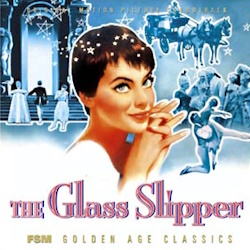
THE GLASS SLIPPER – Bronislau Kaper
 GREATEST SCORES OF THE TWENTIETH CENTURY
Original Review by Craig Lysy
After the stunning commercial and critical success of Lili in 1953, MGM began searching for another vehicle to showcase French dance star Leslie Caron. Well, they finally found one, a 1944 play about Cinderella called “The Glass Slipper” by Eleanor and Herbert Farjeon. They purchased the film rights assigned Edwin H. Knopf, who had produced Lili, to production with a budget of $1.998 million. Charles Walters was tasked with directing, and Anatole de Grunwald was hired to write the screenplay, however he was eventually replaced by Helen Deutsch who had written Lili. Leslie Caron would play Ella, and joining her would be Michael Wilding as Prince Charles, Elsa Lanchester as Widow Sonder, Amanda Blake as Birdena, Lisa Daniels as Serafina, Barry Jones as the Duke, and Estelle Winwood as Mrs. Toquet, the fairy godmother.
The film offers a stylized retelling of the classic Cinderella fairy tale as a quasi-musical with dance numbers to showcase Caron’s balletic skills. The prince returns from his schooling and comes across Ella, whose sad eyes he remembered from his childhood. After a misunderstanding where she pushes the prince into a pool, they reconcile and he invites her to attend the royal ball at the palace, held in his honor. She does so, wins his heart yet has to flee before midnight leaving a single glass slipper. He eventually finds her, places the slipper on her foot and declares her the princess for which he will marry.
The same creative team, which made “Lili” a success reprised their roles, with choreographer Roland Petit hired to oversee his dancers from the Ballet de Paris. However, despite the investment of money and talent the film was a commercial failure, losing $387,000. Critical reception was muted and the film failed to earn any Academy Award nominations.
MGM Pictures sought to bring back the creative team used for “Lili”, hoping to duplicate its success. As such Bronislau Kaper’s Academy Award winning score for “Lili” ensured his attachment to the project. On this new effort he understood that Caron was the film’s centerpiece and that he would need to support her musically with three choreographed balletic routines with the dancers from the Ballet de Paris. Central to the film’s narrative is the romance between Ella and the prince and he conceived a love theme song for the film “Take My Love” with lyrics provided by Helen Deutsch, which would serve as a leitmotif for the couple. In an interview regarding the film Kaper related;
“I like pictures like Lili and another one with Leslie Caron, The Glass Slipper, because they contain songs and dances that are part of the storyline and they have to shoot to your music. This way, you are not carrying the burden of someone else’s mistakes. Usually, you come to a picture that is finished, and it is like inheriting cancer”.
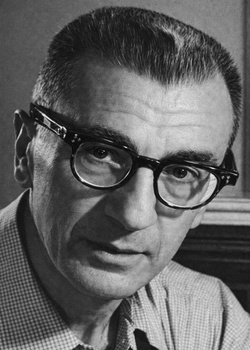 For his soundscape Kaper provides five primary themes, including; The Love Theme for Ella and Prince Charles, which is based on the melody of his song “Take My Love”. It is composed with an ABA construct with the A Phrase offering a string borne romance for string rendered often as a waltz, while the woodwind borne B Phrase evokes Ella’s yearning heart. The Dream Theme supports episodes where Ella is transported into one of her dreams, or her dream is realized in the here and now. Kaper, again with Caron in mind, expresses the theme in dance form draping it with a shimmering radiance and a magical sense of wonderment. Ella’s Theme speaks to the sadness of her life and sense of alienation from both her step-family and townsfolk. A solo flute triste leads the lyrical theme, which again emotes in dance form. The Palace Theme supports the ducal palace, home of prince Charles, but also Ella’s aspirational residence. It emotes with proud fanfare declarations by horns reale, court pomp, and majestic regality. Kaper uses both its fanfare and the entire theme throughout the film. The Dell Theme supports Ella’s beloved sanctuary stream fed pool and grotto where she takes solace from a cold and cruel world. Kaper offers a beautiful, soothing and tranquil woodwind borne pastorale. Lastly, we have Mrs. Toquet’s or the Fairy Godmother’s Theme. A bass clarinet and kindred woodwinds offer a plodding, albeit waddling cadence infused with silly and comedic embellishments, which bely her true identity. Lastly, Kaper infuses the requisite cultural sensibilities with a number of 18th and 19th century European dances, including; minuets, a polonaise, waltzes and a polka. One interesting thing to note is that the score was conducted by Miklós Rózsa, one of the only instances where the great maestro conducted a film score on behalf of someone else.
“Main Title” offers a score highlight where Kaper perfectly sets the tone of the film. It opens with heraldic trumpets reale fanfare as the MGM studio logo displays. At 0:06 the film title begins the roll of the opening credits, supported by the grand, and opulent eloquence of the Palace Theme. A diminuendo usher in at 0:32 a beckoning quote of the Love Theme by oboe tenero. Next, a grand reprise of the Palace Theme supports the display of Bronislau Kaper’s credit. We then at 0:48 again flow into the Love Theme expressed as a valzer romantico. At 1:26 we segue atop horns maestoso into “Rich Old Duke” where narration establishes the story’s setting in a European kingdom where three days of celebration have been declared by the duke for the return of his heir, Prince Charles who has been studying abroad. A maestoso rendering of the Palace Theme is supports. At 1:55 we flow into the film proper with a happy rendering of the Palace Theme as we see performers and the merriment of townsfolk. We close with a prescient coda of the Love Theme as Ella gazes from behind a fountain with a sense of wonderment as town decorations are setup.
“Ella Picks Up Ball” reveals Ella, taunted and ridiculed by townsfolk for being covered with cinder soot. She insults them back and as she crosses a bridge a solo flute voices her theme, rendered as a danza triste. At 0:21 playful woodwinds animato support her tossing a ball back to a performance monkey who has lost it. A playful musical narrative of delight unfolds as they toss the ball back and forth. After its handler takes the monkey away, Ella resumes her walk carried by her sad theme. At 1:04 we shift to a comedic musical narrative as three women express their disapproval to Ella, and she sticks her tongue out, punctuated by horns sardonica. As Ella returns home her theme shifts to and fro as narration introduces us to her cruel stepmother and two daughters from Hell; Birdena and Serafina. At 2:30 we segue into “Parade” as Prince Charles rides through town in a procession, greeted by cheering crowds. Kaper supports his progress with the Palace Theme rendered as a pompous marcia celebrative.
“I Don’t Care” reveals Ella quarreling with her step-sisters. She flees, running out of the town and into the surrounding woods carried by strings angosciati. At 0:12 we segue into “Her Own Place”, a beautiful score highlight. Kaper introduces his Dell Theme, a soothing pastorale, within which is woven phrases of her theme as she reaches her sanctuary. He creates a tranquil and idyllic musical narrative, which cradles Ella in her refuge from a cruel world. At 1:07 a bass clarinet and kindred woodwinds introduce Mrs. Toquet’s eccentric and plodding theme as she arrives. At 1:41 a weeping Ella’s Theme supports Toquet’s discovery of her crying by a pool. She introduces herself, compliments Ella and sits down to talk. In “Tell Me Now” the two begin to converse and we see Toquet’s genuine warmth and caring nature disarm Ella as they begin to bond, when they realize they are both outcasts. Ella relates the tale of a fortune teller advising her mother, that one day her daughter would live in the palace. Toquet offers warmth, and maternal tenderness when she tells Ella that she is very interested in what she feels and thinks. Music joins with the Dream Theme borne by solo flute delicato and tremolo violins as Ella opens up. The theme blossoms with a shift of the melodic line to lush strings, before returning to where it began with a solo flute. The two call each other friends and agree to meet here again. At 0:59 Toquet’s eccentric and plodding theme carries her departure. At 1:13 the Dream Theme blossoms joyously as a smiling Ella beaming with happiness heads home.
“Pantomic Ballet” reveals her stepmother ordering her to the potato patch following a quarrel with her two daughters. A harp glissando carries her exit, and shifts to a beleaguered Dream Theme as she sits and harvests potatoes. In her thoughts we hear her saying she doesn’t care because one day she is going to live in the palace. At 0:35 grand horns reale fanfare declare a majestic Palace Theme as she sits atop the ducal throne. Yet the music slowly sours and dissipates as we see her confused, unsure of what she is supposed to do. At 1:25 she is draped by harp glissandi and returns to the potato patch, supported once more by a beleaguered Dream Theme. Yet at 1:38 the music gains happiness as she smiles and is again seen sitting on the throne. Once more grand horns reale fanfare declare a majestic Palace Theme as we see her smiling and no longer wearing her soiled dress, but instead wearing a beautiful blue dress. Yet once more the music sours as we see her again confused. She notices that she lacks shoes and at 2:23 bubbling woodwinds of delight supports her discovering shoes beneath the throne. A comedic musical narrative unfolds as she makes several attempts to pull down the drapes over the throne. At 3:30 a crescendo dramatico swells as she prepares to leap to grab a large tussle over the throne. A drum roll launches her leap as she grabs the tussle, which collapses the throne’s canopy. We close with her return to the potato patch, again supported by a beleaguered Dream Theme as she snaps back to reality due to her stepmother’s calling her name.
(*) “Ducal Palace” offers fanfare reale declarations that support a visual of the palace. In “Woodland” Charles and his royal aide Kovin travel in the woods to his secret hideaway he discovered as an eight-year-old boy. A strolling promenade gentile supports their walk, blossoming into a gorgeous pastorale. At 0:57 a wistful solo flute tenero voices a plaintive Love Theme as he relates that by chance, he met a five-year-old girl here, who was crying. The melody shifts to solo violin and kindred strings as he relates that within her sadness, he saw a tragic figure who seemed alone in the world. As they settle down and rest by the pool the music takes on an idyllic, dream-like sensibility until 2:58 when the bubbling woodwinds felice of her theme carry Ella’s run to the pool. The music slows and shifts to a misterioso as she takes off her shoes and prepares to soak her feet, yet stops when she hears a grunt. She climbs a boulder and at 3:32 supported by muted horns spots Charles resting. He looks up and sees her, and we close with a coda of the Love Theme. “Spies” reveals Charles telling Kevin that he recognizes her sad and rebellious eyes, which triggers Ella’s anger as she pushes Charles into the pond. A watery harp glissando caries his fall, punctuated by an inglorious fanfare declaration of the Palace Theme. Scampering music supports Ella fleeing the scene. At 0:19 a harp glissando and a playful Palace Theme reveal Kovin in town inquiring about the girl. He discovers widespread dislike and is told of her boast that one day she will live in the palace. At 0:43 a harp glissando carries us into “Cousin Loulou” with narration revealing her ignoble rise to riches due to blackmail. We see a nauseating display as stepmother and her daughters fawn over her. Kaper supports with a musical narrative of faux court pomp. At 1:44 the music sours as they notice Ella has no shoes, which makes her seem like a peasant. She is ordered to put shoes on, and she runs out saying she left them in the dell.
“Allow Me” reveals Ella returning to the pool carried by the Love Theme borne as a flowery pastorale. She again encounters Charles who has her shoes. He graciously asks her to sit and then places the shoes on her feet. She apologizes for pushing him into the water and accepts his request to sit and talk to her. She is surprised by his knowledge of her dream to live in the palace. They slowly begin to bond as we see him clearly drawn to her, and he shocks her by gifting her an invitation to the ball. Kaper supports the scene with an extended exposition of the yearning Love Theme with beautifully embellished orchestration, for one of the score’s finest passages. “Charles Alone And First Kiss” reveals Ella saying that she could not possibly attend as she does not know how to dance. Charles gently leads her through the steps of the minuet, humming the notes of the Love Theme to support. Slowly she learns the dance, with them finally dancing together as a couple. He is enraptured with her, and she is delighted as his humming of the Love Theme, shifts to a waltz sensibility. Music enters atop a tentative Love Theme when he gently cradles her cheeks and kisses her. We see her sense of confusion, and the theme swells with both drama and sadness as she runs away. At 0:25 we segue into “Take My Love” where we see Charles in his study playing the Love Theme on a clavichord. Kevin joins him, and Charles (dubbed by Gilbert Russell) begins singing the song. The confluence of melody and lyrics are rapturous. At 2:25 the song melody continues on the clavichord as we see that he is completely enamored by the thought of Ella as Kovin interrupts, and advises that he does not look well. He pointed rejects Kovin’s counsel against pursuing this romance.
We flow into “Kitchen Ballet” a magical cue that begins with Charles completing an instrumental rendering of the Love Theme on clavichord. At 0:18 we shift to Ella’s bedroom atop a tender statement of the Love Theme. She day dreams of joining Charles’ cooking crew and we are transported into her dream. The confluence of Caron’s balletic beauty and grace, elaborate and colorful impressionist sets, and Kaper’s musical eloquence is superb. At 0:32 the music becomes dream-like and we shift to the palace kitchen where a playful, and bubbling cadence opens the dream as we see various pots and kettles rocking back and forth as rotisseries turn to the music’s cadence. At 1:05 we shift to balletic dancing Scullery maids, again supported with a danza giocosa by bubbling woodwinds of delight. At 2:40, three declarations by heraldic trumpets reale support the entry of the head chef, Charles who descends stairs flanked by his assistants. Prim and proper musical strolling supports Charles inspection of his kitchen. At 3:34 Charles finds a problem, snaps his fingers and a frenetic musical narrative is launched as his assistants scurry madly around the kitchen fetching trays of vegetables and spices. At 3:46 a diminuendo of unease supports Charles examining each of the platters. At 4:07 he takes a pinch of spice and drops it into a soup pot, offers a voile gesture, and lush strings of homage support his assistants bowing and curtsying to his magnificence. At 4:25 flute and harp support the arrival of Ella who proceeds to grace us with her balletic beauty, which Kaper supports with an exquisite, eloquent and tender musical passage borne by a solo violin delicato draped with harp adornment. At 5:15 soft woodwinds gentile usher in a danza felice, which unfolds as eight assistants join, taking turns performing graceful lifts. At 5:50 the solo flute delicato and strings tenero support Charles and her at last meeting as the Dream Theme is reprised to support her dance through the kitchen. At 6:44 bubbling woodwinds of delight carry the female assistants who encircle them, the moment crowned at 7:05 with a warm sumptuous statement of the Palace Theme. Delicate pizzicato strings carry them to the massive cake cauldron, and as Charles stirs, Ella begins a spritely balletic dance, empowered by an amazing scherzo. Strings energico propel the dance by the male assistants, and then the full ensemble of dancers. We conclude grandly at 9:11 as they all look into the pot. A stepped crescendo supports the cake’s dough rising, achieving a grandiose climax as a massive cake appears on stage, dwarfing Charles and Ella. At 9:32 a birdlike ascent motif support Charles thrusting her up to the cake’s top tier where a solo violin delicato supports her transformation into a white tutu with a diamond tiara. As she ballet dances a music box rendering of the Dream Theme supports. A spritely dance unfolds as she dances atop the third cake tier, descends and dances around the second tier, and finally, the third tier. An accelerando empowers her dance around the cake and we conclude with grandiosity as she leaps down into Charles’ arms.
In an unscored scene, Mrs. Touquet visits and when Ella shows her invitation to the ball, she encourages her to attend and make her way to the kitchen to see her man. “Preparation For Ball” reveals Ella preparing Birdena and Serafina supported by the faux pomp of their pretentiousness in an animated musical narrative. At 0:35 we segue into “Off To The Ball” as stepmother and her two immaculately dressed daughters parade out to the carriage. A plaintive rendering of the Love Theme support Ella’s disappointment as she extinguishes the candles and sits dejectedly by the fireplace. At 2:51 tremolo strings of wonderment support the arrival of Mrs. Toquet. “Ella Dressing” offers a beautiful score highlight with wondrous thematic interplay, which evokes a magical realization of Ella’s dreams. At 0:10 a solo violin delicato leads a shimmering Dream Theme as she brings Ella to the backyard where she beholds a resplendent pick gown. The theme shifts to a danza gentile adorned with twinkling wonderment as Touquet attaches the hoop dress rings, tosses her glass slippers, and places a diadem on her head. At 2:16 pizzicato strings animato support her cautious descent down the stairs. At 2:42 we segue into “There’s Your Coach” as she steps out into the courtyard and beholds a magnificent coach with two coachmen (transformed mice). She is very thankful and the Love Theme borne on yearning strings supports her entering to coach. The Love Theme shifts to a music box iteration bearing a sparkling, dream-like wonderment as Mrs. Toquet advises Ella that she must return before midnight. At 3:31 warm French horns carry her departure with the Palace Theme blossoming with happiness as she arrives at the palace. At 4:16 we segue into “Jugglers” atop an animated circus-like source cue, which supports juggler entertainers. The music wafts into the courtyard and supports Ella’s stair ascent to the palace’s main door. She is escorted to the landing and then with trepidation, slowly descends to the main floor as people stare in amazement.
“Polonaise” reveals a flock of dashing suitors surrounding, with one taking her to the dance floor. As she graces the dance floor, Kaper supports by rendering in ¾ time, the Palace Theme as a polonaise. Her suitor tries to engage her in conversation, but she is distracted as she looks for her cook among the kitchen personnel serving. She abandons her partner to follow a kitchen attendant through a door, but is pulled back by a new admirer and we segue at 0:53 into “First Minuet”, an original composition, whose spritely triple meter elegance again allows Ella to grace the floor. We flow into “Polka Nimm Sie Hin” by Johann Strauss Jr., another spritely tune offered in 2/4 time. At 0:54 we segue into “Second Minuet”, which reveals Kovin has noticed Ella and rushes off to inform Charles. They discover that she is dancing with the duke. Once again, she is distracted and looking for her cook, and the duke becomes flustered when he is unable to engage her in conversation of obtain her name. She flees to a kitchen attendant, and asks for the cook, only to be taken by the arm by Charles as we flow into “Waltz”, where Kaper transforms the Love Theme into a gorgeous valzer gentile. When he calls her Cinderella, she recognizes him and they stop dancing. He then awkwardly attempts to explain his deception. As they leave the dance floor in search of a quiet less exposed area, cousin Lou Lou, stepmother and her daughters pursue, attempting to discover the identity of this mystery girl.
“Chase” reveals Ella fleeing the pursuing women and losing Charles in the process as he is forced by protocol to acknowledge the various dignitaries. As she flees, Kaper propels her flight with a spritely scherzo. At 0:45 she loses a glass slipper and as the clock chimes at midnight, Charles picks up the glass slipper supported by a sad rendering of the Dream Theme. The theme swells on a crescendo dramatico as we see the coach rapidly traveling down the road. We crest at 1:30 as the coach crashes. A diminuendo supports Ella asleep in a pumpkin patch wearing her peasant dress, and we close with a forlorn coda of the Love Theme. An intervening, unscored scene reveals the duke consenting to Charles request to marry her, even though she is a commoner. News spreads through the palace and at 1:50 we segue into “Village Gossip” for a truly silly little ditty of a number, which supports palace staff gossiping. “Ella Packs” reveals Cousin Lou Lou and the family gossiping and mocking the Egyptian princess Tehara that the prince plans to marry. Ella is upset, runs upstairs and begins packing supported by a plaintive rendering of the Love Theme. At 0:55 the Dream Theme joins on a solo oboe triste as she picks up the glass slipper. She despairs, saying he will soon marry a princess, and buries her head in her bed sheets as she cries that he is going to be married.
At 1:10 a descent of despair is joined by dreamy harp glissandi as we flow into “Tehara Ballet”. A dirge like procession reveals Charles and an exotically dressed Egyptian princess walking hand in hand through an ornate columned corridor. We hear Ella crying out “I wish I was dead!”, and at 1:35 we see her lying dead on a three-tier platform as an impassioned Love Theme brings Charles to her. An aspirational Dream Theme joins as he bends over and kisses her, and as she comes to life the theme blossoms with life. A thankful Love Theme draped with harp glissandi joins as they hold hands and he draws her off stage into the darkness, the theme now blossoming with happiness as they are transported to vine covered corridor. Yet their bliss is shattered at 3:16 with dissonance as the camera displays the Egyptian princess standing under a grand door arch. A menacing musical narrative unfolds as their attempt to flee is blocked by soldiers. Kaper sow panic as they are forcibly separated and kept apart. They escape and at 4:02 a molto tragico expression of the Love Theme supports their recapture, with her being torn from his kissing embrace. At 4:25 three menacing black robed councilors arrive to a strident musical narrative, thrusting their law books in Charles face. At 4:53 the Love Theme, now full of despair supports Charles’ walk to rejoin the princess. The theme become grieving as he repeatedly ignores Ella’s pleading and rejoins the princess. We culminate with a final grand and molto tragico declaration of the Love Theme as they pass through the doorway, and the massive doors close behind. At 6:16 resolute horns of finality resound as Ella collapses with devastation. An aching entwining of the Love and Dream Themes supports her balletic displays of grief as she, and the music slowly descend unto death.
At 7:58 we segue into “Goodbye” carried by a mournful musical narrative as Ells sits on her bed holding the glass slipper and weeps. At 8:27, she realizes her dream is shattered and a solo oboe triste emotes the Dream Theme as she packs the glass slipper and clothes in a knap sack. The sad theme is sustained as she sneaks out of the house through the window and down the roof, returning to her sanctuary in the dell. At 9:35 Mrs. Toquet’s plodding theme supports her arrival. She finds Ella weeping and she attempts to console Ella supported by a comedic if not silly musical narrative, but the despair of the Love Theme snuffs out her efforts, and so she departs. At 11:49 we segue atop shimmering radiance into “End Title And Cast”. The dell’s pastorale is reborn, as woodwinds introduce the Love Theme, which warms on strings romantico at 12:21 as Charles arrives. He says he is looking for Princess Tehara. He says the only clue he has is a glass slipper, which he places on Ella, who suddenly realizes, that she is the princess he seeks. At 12:37 Ella is joyous and the Love Theme blossoms as a valzer romantico as Charles takes her hand and places a resplendent white cloak over her. They turn, and behold the town folk and her step family, who all bow and curtsy. At 13:23 narration, supported by Mrs. Toquet’s Theme informs us of that fairy godmother has returned from whence she came, as she disappears. We close the film at 13:38 joyously atop the Love Theme, which closes with a grand flourish, as the narrator declares that Charles and Ella lived happily ever after.
I would like to thank Lukas Kendall and Film Score Monthly for this wonderful release of the complete score to Bronislau Kaper’s “The Glass Slipper”. The score remix and digital mastering offers excellent audio quality and a most enjoyable listening experience. I believe Kaper understood that this was Ella’s story, and that his music needed to support her dreams, aspirations and yearning for love and acceptance. To that end I believe he created a score, which brought this timeless fairy tale to life with compositions that were magical, wondrous, whimsical and romantic. Ella’s sad theme spoke to her unfulfillment and alienation from her family and town, with the Love Theme bringing a remarkable transformation, which allowed her to at last realize her dreams. Kaper graces us with elegant waltzes, a polonaise, polka and minuets, all perfectly conceived and designed to support Caron’s balletic artistry and the film’s many dance routines. Other compositions include a pastorale and scherzo, offering musical eloquence, which in every way elevated this film’s narrative. Folks, the beauty, elegance and eloquence of Kaper’s score almost managed to salvage the film, which performed poorly at the box office. I believe it to be one of the finest score’s in Kaper’s canon and I highly recommend you purchase this quality two CD album.
For those of you unfamiliar with the score, I have embedded a YouTube link to a wonderful ten-minute suite; https://www.youtube.com/watch?v=kf1bdMLkQ20
Buy the Glass Slipper soundtrack from the Movie Music UK Store
Track Listing:
- Main Title/Rich Old Duke (2:39)
- Ella Picks Up Ball/Parade (4:12)
- I Don’t Care/Her Own Place (2:03)
- Tell Me Now (1:31)
- Pantomic Ballet (4:06)
- Woodland (4:00)
- Spies/Cousin Loulou (1:58)
- Allow Me (2:58)
- Charles Alone and First Kiss/Take My Love (written by Bronislau Kaper and Helen Deutsch) (3:27)
- Kitchen Ballet (11:06)
- Preparation For Ball/Off to The Ball (3:02)
- Ella Dressing/There’s Your Coach/Jugglers (6:04)
- Polonaise/First Minuet (1:24)
- Polka Nimm Sie Hin (written by Johann Strauss Jr.)/Second Minuet (3:10)
- Waltz (2:13)
- Chase/Village Gossip (2:12)
- Ella Packs/Tehara Ballet/Goodbye/End Title and Cast (14:23)
- Ending To Palace (Revised Alternate) (2:02)
- Ella Picks Up Ball (Alternate) (2:35)
- Pantomic Ballet (Alternate) (4:52)
- Take My Love (Clavichord) (written by Bronislau Kaper and Helen Deutsch) (1:53)
- Kitchen Ballet (Alternate) (13:26)
- After The Dream (written by Daniele Amfitheatrof) (1:24)
- Preparation For Ball/Off to The Ball (Alternate) (3:35)
- Polka Nimm Sie Hin (written by Johann Strauss Jr.) (Alternate) (0:55)
- Ella Packs/Goodbye/Tehara Ballet/End Title and Cast (Alternate) (21:08)
- Outtakes Medley (1:05)
- Tehara Ballet Conclusion/End Title and Cast (Outtake) (5:28)
- Take My Love (Vocal Fragments) (written by Bronislau Kaper and Helen Deutsch) (0:38)
- Bronislau Kaper and Miklos Rozsa Crosstalk (0:22)
Film Score Monthly FSMCD Vol. 8, No. 19 (1955/2005)
Running Time: 129 minutes 51 seconds
Music composed by Bronislau Kaper. Conducted by Miklós Rózsa. Orchestrations by Robert Franklyn. Additional music by Daniele Amfitheatrof. Recorded and mixed by XXXX. Score produced by Bronislau Kaper. Album produced by Lukas Kendall.

Shop at the Movie Music UK Store

Member of the

 MOVIE MUSIC UK