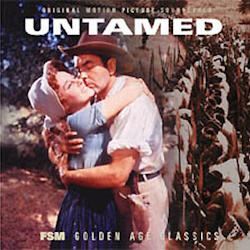
UNTAMED – Franz Waxman
 GREATEST SCORES OF THE TWENTIETH CENTURY
Original Review by Craig Lysy
The genesis Untamed lies with South African Helga Moray, who wrote a 17-page outline of the story that drew inspiration from one her female ancestors. Her handiwork caught the eye of producer William Bacher who saw a story that needed to be brough to the big screen. He purchased the film rights, which allowed Moray to expand her story into a full-fledged novel. After being rejected by many studios due to cost concerns, 20th Century Fox agreed to finance the film to exploit their new CinemaScope technology. Bacher and Bert E. Friedlob were assigned production with a $3.56 million budget, Henry King was tasked with directing, and a team of writers that included Michael Blankfort, Frank Fenton, Talbot Jennings and William Bacher would write the screenplay. A fine cast was assembled, led by Tyrone Power as Paul van Riebeck and Susan Hayward as Katje O’Neil. Joining them would be Agnes Moorehead as Aggie O’Toole, and Richard Egan as Kurt Hout.
The story begins in1847 in Ireland and traces the fortunes of Paul van Riebeck a Boer cavalry commander and Irishwoman Katje O’Neil. In 1847 Paul has arrived in Ireland to purchase horses for his troops and has a fateful meeting with Katje, who falls in love with him. Yet it is unrequited as Paul, a single-minded patriotic zealot, has no time for romance and returns to South Africa. Ireland suffers the Great Famine when Katje marries Shawn Kildare. They subsequently emigrate in hope of finding a better life. Their son is born on the voyage to South Africa and they and their nanny Aggie O’Toole on an 800-mile trek to Hoffen Valley where free farm land awaits. A Zulu attack along the way kills Shawn and it comes to pass that she reunites with Paul who admits that he does love her. After many trials and tribulations, they at last overcome all obstacles to realize their love. The film was a commercial failure, losing over $1 million dollars, which ended Tyrone Power’s stellar 18-year career with the studio. Critical reception was also uncomplimentary and the film received no Academy Award Nominations.
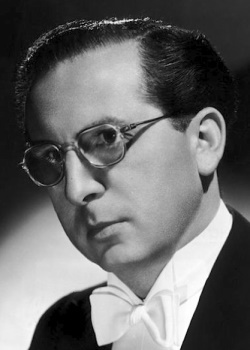
Alfred Newman was director’s Henry King’s composer of choice, having collaborated with him on seventeen prior films. However, Newman was not available. As Director of Music at 20th Century Fox he recommended Franz Waxman to King, who was pleased to accept the two-time Oscar winner whose career was ascendent. I believe that upon viewing the film Waxman understood that, at is core, was story was really Katje’s quest to find love and happiness. The film’s title speaks to her mercurial, tempestuous and willfulness as she, much like in the manner of a 19th century man, defies social conventions to gain her goals.
 For his soundscape, Waxman composed six primary themes; the Main Theme offers an epic, grand and sweeping statement borne by strings nobile, and empowered by horns orgogliose fanfare. It speaks to the pioneering spirit, which promised a better life to those who sought it, exuding confidence, boldness, and heroism. I believe it to be one of the finest themes in Waxman’s canon. On the transpersonal level it serves as an anthem for settlers aspiring to create a Dutch Free State, while on the personal level it serves as a heroic leitmotif for Paul, the commander of the commandos who leads the fight. The Conflict Theme speaks to the circumstances and apparently insurmountable impediments, which for most of the film keeps Paul and Katje from realizing their love. Borne by solo cello triste, though also rendered at times by woodwinds and strings, it unfolds with a descending contour of futility, reflecting that both embrace what seem to be are irreconcilable goals; he subordinates love for his patriotic vison of a free Dutch state, while she cannot accept him placing duty over loving her.The Love Theme for Katje and Paul arises in the aftermath of the battle, when Paul discovers the now widowed Katje. It offers a classic Golden Age sensibility, borne by lush strings romantico. Within the notes I discern a yearning as each desires the other, as they both impede love’s blossoming due to differing life priorities. When at last all obstacles are overcome, its blossoming is rapturous.
The Travel Theme opens with horns bravura and then proceeds forward with a plodding stepped ascent, joined by horn counters, and empowered by a steady drum cadence. It supports all scenes of traveling the countryside and speaks of the aspirations and determination of these settlers to realize a new life. The Zulu Theme does not offer an identity for them as the indigenous people, but instead is expressed from the settler’s perspective. Hence it follows Hollywood tradition of depicting indigenous people vis-à-vis white people as uncivilized, brutal and aggressive. Low register flutes join with pizzicato strings, which speak to their aggression and menace. During battle, they are empowered by nativist drums of war and menacing chanting. The Hoffen Valley Theme must be viewed as analogous to the Israelites entering the Promised Land of milk and honey. This river enriched fertile and verdant valley offered free farmland and a new life. Waxman speaks to this musically from the perspective of the settlers with trumpets resounding to empower a paean of celebration as they behold a panoramic view of the Promised Land. Lastly, Waxman speaks to cultural sensibilities of the late 19th century by interpolating a waltz and polka by Johann Strauss, Sr.
“20th Century-Fox Fanfare with CinemaScope Extension” resounds with Alfred Newman’s iconic studio fanfare, offering an extended rendering that also supports its promotion of its CinemaScope technology. “Main Title” offers a magnificent score highlight! It opens with narration by Katje as we see the verdant Limerick County of Ireland. A woodwind pastorale supports with the idyllicness shattered when a hunting trumpet resounds as a fox darts out of a hedge and runs away. Trumpeting fanfare of the hunt propels horseback hunters and their dogs who pursue across the rolling hillsides. At 1:05 the film title displays and the roll of the opening credits unfold empowered by Waxman’s grand and sweeping heraldic Main Theme, perhaps the finest in his distinguished canon. There is an air of nobility and regality in the notes, and notable is how each of its melodic phases is crowned by fanfare. At 2:01 crescendo magnifico propels Katje forward until 2:27 when tension surges as she leaps a wall in front of Paul, causing him to be thrown from his horse as a trumpet sounds.
“Fox Hunt” reveals Katje joining an aggrieved Paul. He rejects her flirtations, lifts her off her horse, and installs his saddle on her mount, asserting that since her carelessness caused his horse to be lamed, that she must now walk back to the manor. He rides off and she is furious that he was right, and that he rejected her advances. Waxman supports the scene from afar with a repeating fox hunting fanfare motif playing in the background. At 0:44 the music softens and assumes a regal air as they engage in repartee. “Sperl Polka” reveals Katje waiting on the terrace while inside the party guests dance to Johann Strauss Sr.’s vibrant polka. Paul joins, imperiously extends his hand, and says I believe this is our dance. She hesitates, as she is repelled yet also attracted, but never the less accepts. (*) “Paul and Katje Dance” reveals the two gracing the dance floor supported by source music, a valzer gentile I could not identify. In “Goodnight”, after the guests have departed her father’s house, Katje ascends the stairs and meets Paul on the landing. Waxman introduces his plaintive Conflict Theme, used to express a conflicted romanticism; she desires him, yet is also repelled by his demeanor, while he also desires her, yet is consumed by the imperative of patriotism. Weeping strings and a cello triste join in an aching, descending contour of frustration and unfulfillment. She purposely assumes an alluring and inviting body posture, and at 0:56 Paul succumbs, as a crescendo appassionato erupts as he forcefully takes her into a kissing embrace.
“O’Neill’s Garden” reveals Katje riding in and advising Paul that they will be attending a party Saturday. He discloses that he will be sailing back to South Africa Saturday, which brings her much disappointment. A sad musical narrative bound to the Conflict Theme supports as he describes South Africa as too dangerous and untamed a land for her to live. She declares that she can live anywhere, as long as it is with him. At 1:25 warm French horns nobile empower the Main Theme replete with muted trumpets militare as he informs her that he commands a commando group fighting for the creation of a Dutch Free State. Fighting for this dream makes a domestic life on a farm and raising a family, impossible. Slowly the music descends into sadness as she at last understands his determination. When she asks if this fight is more important than their love, he answers, yes, which at 2:18 causes her to depart in a huff, propelled by descending strings irato, and a Conflict Theme emoted with aggrieved finality. At 2:29 a foreboding Main Theme sounds as Paul thanks, and says goodbye, to his host Squire O’Neil, and Shawn Kildare. At 3:26 the Main Theme regains its purpose and vitality as Paul rides out with the horses to the port. Woven within the musical narrative are plaintive contrapuntal phrases of the Conflict Theme when Katje enters the courtyard as Paul departs. At 3:42 forlorn woodwinds voice a growing despair as narration by Katje informs us that the potato blight had transformed the emerald island into a desolate wasteland where people suffered hunger, plague, and death. After her father died, she decided to take his advice and leave Ireland for a better life. At 4:17 a nautical musical narrative empowered by windy strings supports Katje’s narration; her marriage to Shawn, the six-month voyage to South Africa, and the birth of their son Terrence. At 4:44 horns of hope resound as the ship approaches Cape Town harbor. We close with a diminuendo of uncertainty as Katje asks Shawn if he is afraid of what lies ahead, and he answer, “Not with you.” At 5:10 we segue into “Cape Town Street” where thanks to the generosity of the DeGroot family, they travel through town in their carriage carried by a spritely travel motive. At 5:37 the music brightens with trumpets of hope as Maria DeGroot discloses that many will be heading to the Hoffen Valley up north where a family may receive as much free land as they can farm. At 6:13 the music darkens as Maria says they will face danger crossing Zulu lands; however, it regains its vitality when Maria discloses that Paul and his commandos will be providing an escort.
They meet Simon Hout the caravan leader who advises them of the dangers. When Shawn informs him that he can ride, shoot, farm and drive a wagon, Simon welcomes him and they depart to his office to sign an agreement. Later in the week they prepare their wagon for departure and we meet their neighboring wagon, the Joubert family from France’s Basque region, as well as Kurt Hout, Simon’s son, and the caravan’s second in command who we see lusts for Katje. In “Vorwärts” (Forward!) Simon issues the order to depart, which Waxman supports with horns bravura, which launch the Travel Theme, which propels the caravan. At 0:57 a diminuendo supports Kurt halting the caravan as he gifts Katje two birds he shot, and advises at 1:25 that they will son cross into Zulu lands. A foreboding statement of the Zulu Theme by drums, low register flutes and pizzicato string supports. At 2:01 Kurt orders the caravan forward empowered resolutely by the Travel Theme joined by magnificent panoramas of the countryside. At 2:22 trumpets declare the Main Theme as we see a steer’s skeletal head at a riverbank with “van Rebeck” inscribed on it. The music loses it vitality and becomes grim as Simon voices concern to Kurt that Paul has not joined to escort them as we see the caravan traversing the shallow river to the Zulu shore. At 2:56 The Main Theme fanfare resounds as Katje points out the steer head to Aggie. Waxman sow tension as Kurt and another man reconnoiter and come upon a Zulu village at 3:31. The menace of the Zulu Theme supports their grim discovery that there are no men present in the village.
“The Accident” reveals Simon’s growing concern that every Zulu village the pass is devoid of men. As we see the caravan crossing the hilly vistas Waxman weaves a musical narrative with undercurrents of tension, empowered by interplay of the Travel and Zulu Themes. At 1:15 trumpets bravura resounds as Kurt rides to the edge of a great cliff and we are offered an imposing panorama of the Hoffen Valley. Simon halts the caravan but at 1:40 a crescendo terrore commences as Shawn’s wagon break fails causing his wagon to careen into the Joubert’s wagon. The collision causes the steer mounting strut to shatter separating the steers from the wagon, which now careens out of control. The crescendo achieves a horrific climax as Joubert, who was fetching water watches his wagon roll off the cliff carrying his wife and children to their death. Simon’s second son Pete returns from scouting and warns that there are thousands of Zulu encamped along the river ahead. He orders Pete to circle to the north of their camp and locate van Reibeck. Simon then orders battle preparations to create and fortify a wagon circled defense perimeter. It is now nearly sunrise and fifty men armed with rifles await the attack.
“Zulu Attack” is not an original composition and the album presentation lacks the warriors chanting in their native language IsiZuku. Instead, Waxman supervised the composite of twelve drum overlays, drum loops, short shakers and quasi-vocal proclamations, in a slow building crescendo terrore. In a scene shift Paul is alerted by Tschaka of the impending Zulu attack. He orders the commandos awakened for a forced ride to rescue the caravan. Returning to the caravan, the Zulu charge then halt in an expansive line and chant with angry spear gestures intended to frighten their enemies. Simon changes tactics and orders all the men to mount their horses. They will try to parlay for peace but must be prepared to fight if their offer is refused. Simon’s offer is rejected and the Zulu charge, forcing him to retreat to the wagons. The battle is joined with the men shooting and the women reloading the rifles. The frontal assault is repelled, and the Zulu withdraw. They regroup, restart their chanting and spear threat gestures and Kurt advises that they will continue to charge until the last of them are dead, or we are all dead. An elephant tusk horn sounds and the second attack is launched. This time they assault the encircled wagon on all sides. The settlers take casualties with Joubert and Shawn both killed. “The Commandos” offers a tour de force. It reveals Paul arriving and he orders a charge through the Zulu encirclement. Waxman unleashes a maelstrom of orchestral violence propelled by a charging Main Theme fueled by woodwinds furioso and blaring horns irato. They change the tide of battle and the Zulu flee under withering rifle fire.
In “Paul Finds Katja”, as they celebrate, Maria informs Paul that Katje’s husband was killed. He is stunned to see her, and greets her, offering condolences as they reacquaint. Waxman introduces their nascent Love Theme borne tenderly by yearning strings. Later, the Main Theme joins with Irish auras as Paul admits to Kurt that he met Katje in Ireland. When he says that she is now alone, the music darkens at 1:16 when Kurt discloses that he guarded her during the fight. The two friends then make preparations to resume the journey. At 1:30 the caravan is seen once more on the move supported by the Travel Theme. It plays under the dialogue as Kurt gifts Katje flowers, and they discuss her past in Ireland, her acquaintance with Paul, and her future plans. He is more than interested, but after he departs Katje jettisons the flowers revealing her feelings. At 2:19 the Main Theme joins as Paul and Kurt discuss the future, with Paul having a single-minded focus of creating a free Dutch state, and Kurt eschewing politics and fighting for a settled farm life with a wife. At 3:02 we flow into “Hoffen Valley” atop a slow building crescendo of anticipation as they ascend a large hill towards its crest. At 3:15 trumpets resound and empower a paean of celebration as we behold a panoramic view of the expansive Hoffen Valley.
“After the Dance” reveals the settlers celebrating their arrival with a small ensemble playing a polka. Katje exits her wagon in a stunning, low neck line emerald dress. Aggie signals her disapproval as cultural tradition calls for minimum of two and a half years for widows to mourn, that they dress only in black, and certainly not partake in dancing. Katje retorts that life goes on, and that she is going to live. Kurt immediately asks her to dance, and she does so with an intent to reach Paul when the dancers rotate partners. She insists Paul talk to her and they head off for some privacy, unaware that Kurt is trailing. She asks why he has been avoiding her, and he responds that Kurt had made his intentions known. Music enters atop a clarinet tenero as she drops all pretenses and reveals that she loves him, not Kurt, and that she came to South Africa because she loved him. Within the musical narrative remnants of the Conflict Theme resurface, however at 1:10 when he declares to her his love and difficulty leaving Ireland, the Main Theme is transmuted into a Love Theme, which blossoms on strings romantico as the Conflict Theme dissipates. They join in a kissing embrace, yet at 1:38 the music sours and becomes foreboding as Kurt witnesses their kiss and swells with anger.
“After the Fight” reveals an angry Kurt attacking Paul with a whip. Tschaka tosses his whip to Paul and a brutal fight ensues. The fight is unscored with music entering with a brutal stinger joined by horns irato as Kurt loses, passing out from Paul’s suffocating grip. At 0:31 we segue into “By the River” a beautiful score highlight, where we witness Paul and Katje selecting land by the river on which they will build their home, to be called Abinbloem, where they can forge a new life together. Waxman supports with an idyllic musical narrative within which he weaves with masterful interplay the Main, Hoffen Valley, and Love themes. At 2:11 we commence a montage of their house being built supported by a mechanistic motif. At 2:32 strings felice support Katje welcoming Paul home with a kiss, yet seeds of discord arise as her vision of an empire run by their family is contrasted with his vision of ensuring the creation of the Dutch Free State. At 2:55 muted trumpets militare and drums evoke a foreboding musical narrative empowered by the Main Theme as we see a conflicted Paul struggling to reconcile his new life with Katje and his vision for the Dutch Free State. Katje sees that he is troubled and comes to his side to comfort him. At 4:29 the Love Theme unfolds for a beautiful extended exposition, joined by the Main Theme, which has regained its strength and confidence as his spirits are lifted.
“Back to the Commandos” reveals Katje and Aggie moving into the new house as natives chant to drive away the evil spirits. Christian arrives and informs Paul that he must return to the commandos or disband them as it has been three months and they are restless without purpose. Paul agrees and Christian departs as Katje arrives. Music enters atop the Love Theme as Katje pulls out every romantic tool at her disposal to keep Paul home. He succumbs to her love and defers telling her of his decision. At 0:40 Paul returns to the house later that night to find Katje sleeping. He has decided to return to the Commandos and the Main Theme is emoted with sadness and regret as he kisses her and then departs. At 1:22 rolling drums and muted horns militare sound as Simon wishes Paul success in creating a Dutch Free State. He asks Simon to tell Katje that he will return in 6 months to a year, yet at 1:41 we surge angrily on a dissonant crescendo furioso as Katje rides in aggressively. She dismounts and at 1:52 a diminuendo of pain supports her slapping him, and saying she hates him for this as the townsfolk gasp in disbelief. Paul turns his back on her, mounts his horse, and orders the column of commandos forward propelled at 2:09 by a marcia militare in which a proud Main Theme is interwoven.
“Kurt Is Back” reveals he and Maria visiting. Katje’s bitterness from Paul’s desertion induces her to initiate a gambit, subtly luring and then ensnaring Kurt with an offer to manage the farm, and win her heart if he does it well. A foreboding musical narrative borne by tremelo strings and warning woodwind calls unfolds, shifting to alluring strings as she reels Kurt in. Kurt takes the bait declaring that he will show her that he is the right man for her, not Paul and at 1:07 the music surges with forceful determination as he pushes aside the native plowman and takes control of the plow as Katje watches with self-satisfaction. At 1:27 we end with a diminuendo of uncertainty with undercurrents of tension a Katje calls Kurt in for dinner and he objects that his former girlfriend Julia works as Katje’s house servant. “Planting” reveals Kurt plowing the land as Katje sow seeds. Waxman supports with a plodding cadence that empowers a musical narrative of toil. Kurt orders two natives to cut down Katje’s and Paul’s special tree and at 0:43 the crescendo of alarm surges as Katje countermands Kurt’s order, saying this is her land and she decides what trees are cut down. A diminuendo of discomfort follows as Kurt reluctantly agrees, acknowledging to Katje that Aggie had informed him of the tree’s significance (an emblem of their love). As she returns to the house, a sad refrain of the Main Theme informs us of her thoughts of Paul. At 1:14 she joins Aggie in the house carried by the despair of the Conflict Theme borne with regret by woodwinds and strings tristi.
“Lightning” reveals Julia trying to worm herself back into Kurt’s heart be saying Katje is just using him, and will abandon him after the harvest. He spurns her saying that he will not be tricked again. Katje calls Julia into the house as a thunderstorm approaches and orders Kurt to steady the oxen, who are agitated. He glares at the emblem tree, grabs an axe and begins chopping the tree down. Music enters atop an accelerando by strings furioso, within which is woven the Conflict Theme as Katje races towards the tree, screaming for Kurt to stop. At 0:22 an orchestral torrent with ferocious surges erupts as Kurt drops all pretenses as he declares that you are mine, and that I intend to cut this tree, and Paul out of your life. The music swells with anger and menace as he pushes her against the trunk and forces himself on her. She resists, and declares she is having a baby. He calls her a liar, and slaps her to the ground. At 0:59 the music is silenced as lightning strikes the tree, splitting it in half, with a massive branch falling on Kurt crushing his right leg. Musical urgency follows as Katje stands up buffeted by fierce winds. She hears Kurt cries for help, and runs to him. At 1:24 he yells for her to get help and a grotesque crescendo di orrore surges and propels a musical narrative of pain empowered by shrill horns and timpani strikes, which voice his agony.
“After the Storm” reveals the women tending to Kurt’s broken leg. The native foreman informs Katje that the swollen river makes the journey to the town for a doctor, impossible. She begs the man to amputate his leg or he will die. He declines as he dislikes Kurt, but is eventually persuaded by her pleading. Music enters atop writhing strings of pain in the aftermath of Kurt’s agonal screams as his leg is amputated without anesthetic. An aching musical narrative of woe follows as the women try to cope. The next day at 0:40, we see their farm overrun by mud flows with everything laid waste. Waxman supports with a dirge joined by surges of pain as Katje gazes at the devastation, and recoils in pain, overwhelmed. The dirge resumes as Aggie asks what is to become of us. She says when the river recedes, they will take Kurt into town, and when Aggie asks, what then? At 1:16 the music erupts with angry defiance when Katje declares, we will rebuild and replant! A sobering passage follows as they again contemplate the magnitude of what faces them. Months later, at 2:15, the Travel Theme supports their journey into town as Katje narrates the birth of her second son, whom she named Paul. As she enters the town, we see Kurt with a crutch glaring as they pass.
In an unscored scene a man selling merchandise in town declares that he will no longer accept payment in Dutch guilders, demanding only gold nuggets. When Katje asks to see one, he reveals it and says the hills are full of them. “The Diamond” reveals Katje back at her farm where she is auctioning off her house wares for gold nuggets found by the natives. Music enters when a native offers her not a gold nugget, but instead a huge diamond! She is awestruck and a surreal textural musical narrative unfolds borne by ethereal quivering strings joined by a glockenspiel’s twinkling effervescence, which voice both her delight and covetousness. She gives the native the remainder of her wares and then lifts her son up celebrating Irish good fortune and the rich life the diamond will bring. At 0:43 the music darkens with uncertainty as she entertains the possibility that this may not be a diamond. We shift to town where a jeweler confirms it is a diamond. Katje narrates of her new life of wealth and privilege at her massive estate in Cape Town, the renovated childhood home of Paul. Waxman supports by sowing a musical narrative of gentility, within which is woven the twinkling sparkle of the Diamond Motif. Muted French horns usher in a wistful passage where she recalls her Irish days, as she speaks of her new life with her boys, but also of her loneliness. She speaks of her disappointment from her fruitless searches for Paul. At 1:34 muted horns maestoso support her speaking of the realization of Paul’s dream with the formation of a Dutch Free State. A reprise on muted trumpets joined by grim drums, and draped in martial auras supports her disclosure of Paul’s demand that they have a representative in the National Assembly at Cape Town. He is received by Captain Eaton who informs him that Governor Gray refuses an official meeting, but extends an unofficial opportunity to meet at a gala being held tonight at Abinbleom. He accepts and we see he perceives by the name, which he and Katje named their lands in Hoffen Valley, that he will reacquaint with her.
“Sorgenbrecher” reveals Katje hosting the gala ball at Abinbloem. To establish old world ambiance, Waxman interpolates the classic Viennese waltz by Johann Strauss Sr. as we see ladies dancing in a bouquet of colorful gowns with dashing men and military officers. Captain Eaton introduces Paul to the mistress of Abinbloem, Mrs. Kildare. She is gracious and uses her role as hostess, high-standing in the community, and charm to lasso Governor Sir George Gray into agreeing to meet with Paul the next day. Paul thanks her, and then says that she has changed, adding that she is more beautiful than ever. He compliments her on the beauty of Abinbloem and she accepts his offer to dance. “At the Beach” offers a beautiful romantic score highlight. Paul and Katje walk along the beach and Waman supports with a wistful exposition of the Love Theme as both speak of their enduring love. At 1:04 they join in a kiss and the conflict theme is transmuted on a hopeful trumpet, which suggests that the impediments of their love have been overcome.
“Paul’s Son” reveals Paul meeting Katje’s two sons. After removing a splinter from the youngest, he is stunned when he learns his name is Paul. They run off and Katje joins Paul who demands to know why he was not told he had a son. A tormented musical narrative unfolds with a reborn Conflict Theme as she bitterly accuses him of abandoning her to be the father of a nation. She rebukes him and says since he is leaving her once more, that he is also abandoning his son. At 1:50 a crescendo irato fueled by the Conflict Theme swells when she orders him out and says she never wants to see him again. At 2:12 we segue into “To Kolesburg” as Katje’s narration informs us that her profligate spending caused her to lose Abinbloem to creditors. She would have to begin anew and so sets off in a wagon with Aggie and the boys to the Kolesburg region to try to cash in on the recent diamond discovery. At 3:02 the music becomes foreboding when they meet a caravan fleeing the town, which they are told was taken over by bandits. She is advised to turn back as the town is completely lawless, but she is determined to regain her wealth and at 3:17, over Aggie’s objections proceeds o carried by the Travel Theme. At 3:39 the music surges with violence as we see chaos with men fighting on the street. At 3:58 we close with tremolo strings of menace as Katje is accosted by a ruffian. Warning shots from Kurt, his boss saves her, and Kurt orders them moved into his quarters for safety as his friends.
In an unscored scene Kurt orders Aggie and the boys out, and then he and Katje reacquaint, with the tension palpable. He raves that Kolesburg is his, and that he will subdue every town in the state until he rules them all. He sees through her and says that you lost it all; Abinbloem, your money, and Paul. They are interrupted by a henchman who warns him of an impending attack by van Riebeck and his commandos. He boasts that he intends to kill Riebeck, and if you came back for diamonds, here are some, and he contemptuously slams several on the table for her to take. He then rebukes her for lying to Paul, to him, and to God, using all of us for your own selfish ends. He then departs to kill van Riebeck and orders her guarded. Van Riebeck arrives to find a ghost town, and enters after splitting his column with Christian told to counterattack on his order from the other side of town. A warning rifle shot elicits Paul to call out their leader, and Kurt orders him to advance alone. Kurt declares that the town is his and he does not recognize van Riebeck’s authority. He orders Paul to leave as he is surrounded. Paul at gun point realizes his disadvantage, turns about and returns to his column. He orders an attack; they charge and a battle ensues. Although winning, Paul orders a retreat to draw the bandits into the open. Kurt takes the bait and orders a pursuit. Paul then signals the other column to attack and the cavalry ride in from behind putting Kurt’s men in a pincher. Now trapped, they surrender en masse.
In “Finale”, Kurt grabs young Paul and threatens to kill him unless Paul surrenders. He gives up the boy, takes his horse and then draws his gun to kill him. Music enters atop dire horns of death and drums as Tschaka impales Kurt with a lethal spear toss. At 1:11 a martial Main Theme supports Paul assuming control of the town as the bound bandits walk in disgrace. Paul thanks Tschaka and turns command of the commandos over to Christian. At 0:41 as Christian rides out, the Main Theme swells with a pride with a triumphant exposition. At 1:04 a diminuendo supports Paul and Katje locking eyes. The Love Theme joins hesitantly as she asks, “What now Paul?” He reaches into his tunic, pulls out a ring, and places it on her finger joined joyously by their yearning Love Theme as they hug and kiss, at last united. When she asks where to? He answers, Hoffen, back to the land. At 2:17 they all board the wagon and as they ride off, the Main Theme joins with the Love Theme, swelling on a paean of joy, which ends in a glorious flourish.
I would like to thank Lukas Kendall and his technical team for offering Franz Waxman’s magnificent complete score for “Untamed”. The original six-track 35mm magnetic film sources were remixed and digitally remastered to produce good audio quality, although some cues were derived from only three tracks. One source cue, a waltz was lost and is not included. Katje’s unflinching search for wealth, a good life, and love served as the nexus of this story. Unfortunately, Paul was the right man, but at the wrong time and Waxman captured her frustration and resentment masterfully with a sad and tormented theme, which unfolds with a descending contour of bitterness and futility. Juxtaposed was their yearning Love Theme, heard fleetingly in the middle of the film when they were able for brief respites, to set aside their differences. Later, when they at last overcome all obstacles, it blossoms rapturously. The Main Theme dominates as a heroic horn laden anthem of Dutch settler determination to create a Dutch Free State, but also as an emblem for Paul, their commander who fights on their behalf. The theme’s juxtaposition with the textural, ethnic and nativist Zulu Theme expressed by drums, pizzicato strings and ferocious chanting worked well in contrasting the white colonialist settlers and indigenous people. Folks, this was a flawed film that effectively ended Tyrone Power’s stellar eighteen-year career at 20th Century Fox. Waxman was able to mitigate many of the film’s flaws with a well-conceived and executed score, and a wondrous Main Theme for the ages. Film Score Monthly has done it again, and I highly recommend you purchase this wonderful album, a Waxman gem too often overlooked.
For those of you unfamiliar with the score, I have embedded a YouTube link to the finale: https://www.youtube.com/watch?v=xN4JQ5gm-8k
Buy the Untamed soundtrack from the Movie Music UK Store
Track Listing:
- 20th Century Fox Fanfare with CinemaScope Extension (composed by Alfred Newman) (0:19)
- Main Title (2:35)
- Fox Hunt (1:39)
- Sperl Polka (composed by Johann Strauss, Sr.) (1:29)
- Goodnight (1:01)
- O’Neill’s Garden/Cape Town Street (7:04)
- Vorwarts (3:56)
- The Accident (2:32)
- Zulu Attack (2:07)
- The Commandos (1:56)
- Paul Finds Katja/Hoffen Valley (3:56)
- After the Dance (1:55)
- After the Fight/By the River (6:30)
- Back to the Commandos (2:34)
- Kurt is Back (1:58)
- Planting (1:56)
- Lightning (3:05)
- After the Storm (3:03)
- The Diamond (2:10)
- Sorgenbrecher (composed by Johann Strauss, Sr.) (2:24)
- At the Beach (1:17)
- Paul’s Son/To Kolesburg (4:14)
- Finale (2:44)
Film Score Monthly FSMCD Vol. 4 No. 4 (1955/2001)
Running Time: 62 minutes 24 seconds
Music composed and conducted by Franz Waxman. Orchestrations by Edward B. Powell and Leonid Raab. Recorded and mixed by XXXX. Score produced by Franz Waxman. Album produced by Lukas Kendall.
Leave a comment

Shop at the Movie Music UK Store

Member of the

 MOVIE MUSIC UK
“UNTAMED” by Franz Waxman is a captivating musical journey that beautifully complements the film’s themes of adventure and resilience. Waxman’s ability to blend orchestral depth with emotional nuance truly elevates the storytelling. His score not only enhances the visuals but also resonates with the audience long after the credits roll. A timeless masterpiece!