MARY SHELLEY’S FRANKENSTEIN – Patrick Doyle
 THROWBACK THIRTY
Original Review by Jonathan Broxton
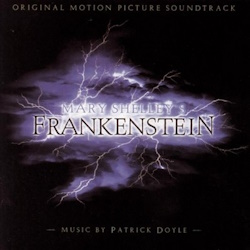
Following the critical and commercial success of Bram Stoker’s Dracula in 1992 there was a brief resurgence and interest in Hollywood for making faithful adaptations of classic horror novels. Mary Shelley’s Frankenstein was director Kenneth Branagh’s attempt to bring the classic 1818 story back to the big screen, with high production values, a star-studded cast, and a more intellectual focus on its dark philosophical themes of creation, ambition, and the consequences of playing God. Branagh himself plays scientist Victor Frankenstein, who after the passing of his mother becomes obsessed with defying death. Victor moves to Germany to study science and medicine with his friend Henry Clerval (Tom Hulce), and marries his long-time love Elizabeth (Helena Bonham Carter). Eventually Frankenstein has a breakthrough where he discovers how to bring inanimate matter to life; wanting to take things further, he begins collecting human body parts, which he stitches together and tries to bring to life. Miraculously, Frankenstein succeeds, but the resulting creature (Robert De Niro) is grotesque and terrifying, leading Victor to abandon it in horror. The Creature, left to fend for itself, struggles with loneliness, rejection, and a desire for companionship; it learns language and human behavior but is consistently met with fear and violence from the people he meets, and in time vows revenge on Victor for bringing him into a world that hates him.
Like Bram Stoker’s Dracula, I was a big fan of Mary Shelley’s Frankenstein. It has some quite lofty artistic intentions, and as such it’s a completely different animal from the classic 1931 Boris Karloff movie, and from the campy but hugely entertaining slate of Hammer Frankensteins from the 1960s and 70s starring Peter Cushing and Christopher Lee. I loved the look, the style, and the inherent melodrama of Branagh’s film, as well as the deeper emphasis in the philosophical implications of Frankenstein’s obsession inherent in the screenplay by Steph Lady and Frank Darabont. I loved the supporting cast full of great British character actors – Aidan Quinn, Ian Holm, John Cleese, Richard Briers, Robert Hardy, Celia Imrie, a young Hugh Bonneville – and I especially loved the score, which was written by Branagh’s long-time friend and professional collaborator Patrick Doyle.
Frankenstein was the second Doyle score of 1994 after Exit to Eden, and the third in a trio of outstanding large-scale Gothic horror and thriller scores after Dead Again in 1991 and Needful Things in 1993. In many ways Frankenstein is the culmination of that style, a magnificent example of Doyle’s personal blend of brooding dramatic atmosphere, sweeping romance, and spectacularly powerful action and suspense. Thematically the score is fairly simple, comprising of a main theme for Victor, a main theme for the Creature, and a love theme for Victor and Elizabeth; each of these three ideas is embedded deeply into the fabric of the score, which in turn luxuriates in rich and opulent orchestrations full of both deep romanticism and Gothic sumptuousness. Doyle’s ensemble is fairly traditional – a large symphony orchestra conducted by David Snell, recorded at Air Studios in London – but he does augment it with some notably bombastic percussion, especially in the action sequences, as well as the sound of a church organ, which Doyle says was intended to be a reflection of some of the religious iconography Branagh used in the film. Interestingly, and unlike many similar Doyle scores of the period, there is no choir, which is perhaps a little disappointing considering how good Doyle is at writing for voices, but it is of no detriment to the score as a whole.
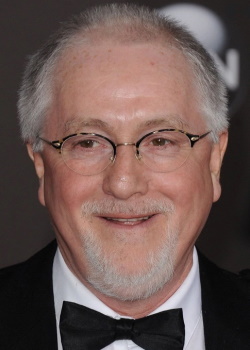 The love theme was actually written before production on the film began, and has its origins in a piece that Branagh asked Doyle to write for a ballroom scene, which was intended to feature a song set to the lyrics of Lord Byron’s 1817 poem “So, we’ll go no more a roving.” Although the ballroom scene remains in the film, the song idea was eventually discarded, but the melody Doyle wrote would become the rapturous romantic theme for Victor and Elizabeth. Their theme is a pretty, romantic piece in waltz time, with a noticeably gorgeous cascading waterfall of strings at key moments. It is heard several times throughout the score, initially in a soft and hesitant variation towards the end of “There’s An Answer,” and then later in the gentle “I Won’t If You Won’t,” the slightly darker and apprehensive “A Risk Worth Taking,” “Even If You Die,” “The Reunion,” and “Please Wait,” before fully coming into its own in the rapturous “The Wedding Night,” which underscores the passionate climax of Victor and Elizabeth’s relationship before things turn desperately tragic.
The main title theme for Victor, as first heard in the opening cue “To Think Of A Story,” is a slightly dirge-like theme for low churning strings, heavy brass, and rumbling percussion that seeks to capture the essence of Victor’s character: he is of a slightly downbeat disposition at the best of times, prone to bouts of melancholy, only really being invigorated and energized by his work. The overall tone of Victor’s theme reminds me of Doyle’s score for Henry V, and can almost be read as if he was drawing musical parallels between the two men, and their obsession with success and victory no matter the cost. It does appear in multiple cues throughout the score, including as part of the dainty representation of Victor’s happy family life in “There’s An Answer,” as part of a restless scherzo in “A Perilous Direction,” and in the surprisingly jaunty “The Journal,” but it is perhaps not quite as prominent as one might have expected.
Instead, a lot of focus is given to the theme for the Creature, whose musical identity is carried by a huge, howling brass motif that reminds me in places of something a composer like Elliot Goldenthal might have written for a score like this, or of the unusual fading, echoing brass motif Don Davis would write for The Matrix in 1999. You can hear it in several cues, notably towards the end of the prologue sequence in “To Think Of A Story,” and then later in cues like “Friendless” and “Yes I Speak,” parts of which underscore scenes of the Creature briefly bonding with an elderly blind man who takes pity on him and is kind to him – mostly because he cannot see him – before society shuns him once more. In several of these cues Doyle blends the themes for Victor and the Creature together in clever ways, clearly illustrating their bond, a twisted father-and-son relationship forged in fire.
However, the score’s tour-de-force piece is undoubtedly the monumental “The Creation,” which embeds both the Creature’s theme and Victor’s theme into an utterly staggering action cue which underscores the scene where Branagh harnesses the forces of lightning (and electric eels!) and uses them to bring the Creature to life for the first time. Doyle’s music churns and boils with brutal passion, capturing the essence of Frankenstein’s obsession with obtaining God-like power over life and death. As Victor swings across his laboratory on a series of chains and pulleys, bare chested and glistening with sweat, Doyle’s music erupts into a series of massive brass outbursts backed by church organs, pounding drums, and banks of swirling strings. It’s just tremendous, and remains one of the standout cues of Doyle’s entire career, even thirty years later.
Several other vigorous action cues also enliven the score, each containing a relentless sense of forward motion, frantic pacing, and complicated orchestral passages. “What’s Out There?” and the first few moments of “There’s An Answer” feature in the film’s opening sequence of Frankenstein regaling Aidan Quinn’s character Captain Walton, the commander of the ship which picks up Frankenstein in the Arctic Circle, with his life story. Later, the tempestuous “Evil Stitched To Evil,” the agitated “The Escape,” and the unusually florid “The Honeymoon” all build on some of the ideas heard in the Creation cue, albeit with less emphasis on overwhelming power, and more of a sense of impending tragedy and darkness.
“William!” is an unrelenting piece of dramatic underscoring for the scene where the Creature – seeking vengeance on Frankenstein – ruthlessly murders Victor’s younger brother and frames the family housekeeper Justine for the crime. The subsequent “Death of Justine/Sea of Ice” also revisits some of the ideas from the Creation cue with a sense of tragedy and loss as poor Justine is hung by a lynch mob for a crime she did not commit; it’s interesting how Doyle’s use of the music from “The Creation” – the birth of an innocent – also works for scenes involving the death of one.
“Elizabeth” cleverly takes elements of the love theme and embeds them into the orchestrations and stylistics of the Creation sequence as a horrifying illustration of both the depths of Victor’s depravity, and his love for his wife, who has been brutally murdered by the Creature. As Victor desperately tries to bring her back to life by stitching her head onto poor Justine’s body, Doyle’s music cries out in frantic anguish. In the subsequent “She’s Beautiful” the Creature tries to claim Victor’s latest abomination as his bride, and Doyle initially scores the scene with a sickened and unhealthy-sounding variation on the score’s love theme, but inevitably the tragedy deepens even more when the Bride – horrified by her own reflection – commits suicide by setting herself on fire, and Doyle’s music intensifies to match the roar of the flames.
The conclusive “He Was My Father” underscores the film’s final scene of the Creature standing beside Victor’s funeral pyre out on the ice fields of the Arctic, contemplating his own existence, and allowing himself to ultimately be consumed by the inferno as well. Doyle blends Victor’s theme and the Creature’s theme together once more in a deeply emotional statement that drips with tragedy and pathos, the inevitable culmination of Victor’s misguided hubris, and builds to an impressive finale.
Mary Shelley’s Frankenstein is not as thematically complex as something like Henry V, and it does not quite reach the beautifully emotional heights of something like Much Ado About Nothing, but it is possibly the best example of sheer overwhelming Gothic power from the first decade of Patrick Doyle’s career. The one-two punch of the gorgeous love theme for Victor and Elizabeth, and the immensity of the Creation sequence, remain all-time highlights of the genial Scotsman’s work, and if you appreciate horror scores which build on the stylistics of things like Dead Again and Needful Things, while also maintaining an atmosphere of oppressive but tonally appealing tragedy throughout, then this will tick all your boxes.
Buy the Mary Shelley’s Frankenstein soundtrack from the Movie Music UK Store
Track Listing:
- To Think Of A Story (3:26)
- What’s Out There? (2:51)
- There’s An Answer (4:37)
- I Won’t If You Won’t (2:00)
- A Perilous Direction (3:21)
- A Risk Worth Taking (3:22)
- Victor Begins (0:54)
- Even If You Die (2:16)
- The Creation (2:02)
- Evil Stitched To Evil (4:46)
- The Escape (1:49)
- The Reunion (0:48)
- The Journal (1:04)
- Friendless (2:11)
- William! (2:46)
- Death of Justine/Sea of Ice (3:57)
- Yes I Speak (5:39)
- God Forgive Me (0:59)
- Please Wait (3:21)
- The Honeymoon (1:19)
- The Wedding Night (2:08)
- Elizabeth (4:14)
- She’s Beautiful (3:37)
- He Was My Father (6:10)
Epic Soundtrax EK-66631 (1994)
Running Time: 69 minutes 37 seconds
Music composed by Patrick Doyle. Conducted by David Snell. Orchestrations by Lawrence Ashmore. Recorded and mixed by Paul Hulme. Edited by Roy Prendergast. Album produced by Patrick Doyle and Maggie Rodford.

Shop at the Movie Music UK Store

Member of the

 MOVIE MUSIC UK