PRINCE OF PLAYERS – Bernard Herrmann
 GREATEST SCORES OF THE TWENTIETH CENTURY
Original Review by Craig Lysy
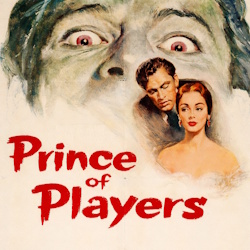
In February of 1953, 20th Century Fox studio executive Daryl F. Zanuck came upon the novel “Prince of Players” by Eleanor Ruggles. He decided that a film adaptation of the biographical story of thespians Edwin “Ned” Booth and his notorious brother John Wilkes Booth would be an excellent vehicle for their rising star Richard Burton, who had just signed a seven film contract. Philip Dunne was placed in charge of production and provided a budget of $1.57 million, Moss Hart was hired to write the screenplay, and Dunne would also direct. The cast included; Richard Burton as Edwin “Ned” Booth, Maggie McNamara as Mary Devlin, John Derek as John Wilkes Booth, and Raymond Massey as Julius Brutus Booth.
The film explores the life of bothers Ned and John, son of the legendary thespian Junius Brutus Booth. Both follow in their father’s footsteps, with Ned gaining notoriety and eclipsing his brother John with his excellent performances. The brothers grow apart, with Ned marrying Mary Devlin, who he met on tour, while John pursues political ambitions by actively supporting the Confederacy during the Civil War. When John assassinates President Abraham Lincoln, the theaters and thespians become targets of the public’s fury. Yet Ned weathers their fury, and eventually wins the day and respect of an enraged theater crowd by refusing to leave the stage despite being pummeled by insults, vegetables and a myriad of objects. The Shakespearean film did not resonate with the public and was a commercial disaster, achieving a loss of $920,000. It also failed to earn any Academy Award nominations.
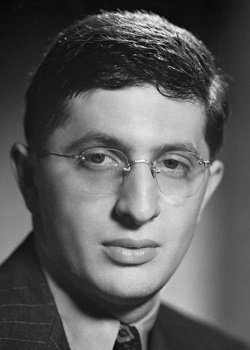
Philip Dunne, a renowned screenwriter for 20th Century Fox, was making his directorial debut. He was greatly impressed by Bernard Herrmann’s score for “The Ghost and Mrs. Muir”, and on that basis he requested that Director of Music Alfred Newman assign him to the project. Herrmann was quite eager to take on the assignment as he was an avid fan of English literature. He immediately bonded with director Philip Dunne who collaborated with him in deciding where to spot the music. They agreed that the thespian soliloquys were to be unscored, allowing the beauty of Shakespeare’s words to carry the scene. Instead, Herrmann would support in a manner similar to a cinematographer, using music as aural draping to set the tone of each theatrical scene. He also understood that his music would have to impart drama and energy to maintain pacing for the dialogue rich film narrative.
 For his soundscape, Herrmann offered four primary themes. The Booth Family Theme, or Main Theme, which uses low register sinuous strings, alludes to their hereditary familial madness. Herrmann imbues it with sadness and pain, but also futility in that its expression never achieves resolution. Kindred is the Madness Theme, which offers a tortured ascending stepped crescendo by celli and bass. Like the Main Theme it too never achieves resolution as the family’s madness is a curse, endemic and inescapable. Juxtaposed are two themes, Ned’s Theme offers a gentle lullaby borne by a solo oboe tenero, which voices a son’s love and admiration for his father. Mary’s Theme, the only feminine identity, and also the score’s only romantic theme. Borne gently, and warmly by a solo oboe tenero draped by soft strings it speaks to her kind nature, but also her capacity to calm Edwin’s raging seas of madness. There are a number of beautiful set pieces, my favorite for the picnic scene which offers an idyllic romanza, which is not presented on the album. Lastly, Herrmann penchant for textural writing using repeating succinct motifs is again used to set the mood, speaking to the emotional dynamics unfolding on the screen.
“Prelude” offers a dazzling score highlight; a fanfare rich composition unique to Herrmann’s canon. The piece is more precisely described as an overture. Alfred Newman’s 20th Century Fox fanfare has been replaced by molto dramatico fanfare declarations. The fanfare makes a stepped descend while a torrent of strings furioso swirl as the film title displays, followed by the roll of the opening credits, which display against a stage curtain. At 0:15 we reverse course as the four-note horns bravura declarations of the Madness Theme ascend, buttressed by the strings furioso and trumpets energico. At 0:45 we shift to a marcia maestoso until 1:30 when another stepped horn descent engulfed by strings furioso supports script that relates the popularity of Shakespeare’s play on the American stage. As horns bravura resurge, the script adds that this is a true story of a famous theatrical family, which made history on and off the stage. We close grimly at 2:11 as we enter the film proper and the theater manager comes on stage to announce a delay to the impatient crowd.
“The Boy” reveals a New Orleans theater poster announcing that Junius Brutus Booth, “America’s Greatest Actor” will star in King Lear. Herrmann offers a musical narrative of sadness as Edwin “Ned” Booth pauses at the poster, then follows the sound of his father’s oration to a saloon. The Junius has been drinking and is entertaining the patrons as Ned repeatedly calls out – “Father”. Junius stumbles and falls as Ned declares that he is the great Junius Brutus Booth, who must go to the theater and prepare for this evening’s performance. “King Lear “Storm” Scene” reveals Ned studying back stage as his father’s words resound;
“Blow, winds, and crack your cheeks! rage! blow!
You cataracts and hurricanoes, spout
Till you have drench’d our steeples, drown’d the cocks!
You sulphurous and thought-executing fires,
Vaunt-couriers to oak-cleaving thunderbolts,
Singe my white head! And thou, all-shaking thunder,
Smite flat the thick rotundity o’ the world!”
Herrmann with an orchestral storm providing a remarkable composition, which offers a wave-like orchestral tempest atop swirling strings furioso, shifting to and from sinusoidal woodwinds over abyssal bass. “The Closet” reveals Junius spurning Ned’s offering of dinner and instead heads out to the saloon. Outside the saloon’s entrance, Ned’s begging causes Junius to relent and they go home. Music enters darkly, atop the Booth Family Theme borne by sinuous strings grave as they enter their hotel room. Junius is plagued by withdrawal cravings for alcohol and says he must leave. Ned bars the door and pleads, which leads Junius at 0:32 to lock himself in the closet. Woodwinds join the strings in a painful narrative of despair as Ned begs his father to come out, saying he will sing to him as it always seems to cure the madness. Junius relents, apologizes, and says he loves him, as he collapses on the bed fretting “If only I could sleep”. At 1:13 the music warms with Ned’s Theme, empowered by a son’s love for his father as he caresses him. We close atop strings tranquilli as Ned tenderly sings a lullaby.
“Homecoming” reveals the slave Old Ben calling out to Miss Asia Booth, that her father has returned, which elicits her to run out and happily greet him and Ned. Herrmann supports with a tender, folksy musical narrative as Asia takes her father into the house. At 0:46 the music darkens and becomes foreboding as Ned’s older brother Johnny rides in. He begs Johnny to not see father right now as his sickness always worsens when he sees him. Later Johnny and Junius run down the stairs and Johnny offers up Ariel’s opening lines from Shakespeare’s “The Tempest”, much to the delight of his father;
“All hail, great master! Grave sir, hail! I come
To answer thy best pleasure, be ’t to fly,
To swim, to dive into the fire, to ride
On the curled cloud. To thy strong bidding, task
Ariel and all his quality”.
In gratitude, Junius gives Johnny permission to perform “Richard II”. “The Tour” reveals the Booth’s on tour with a June 14, 1850 Globe Theater poster displaying “Junius Brutus Booth as Richard II. A repeating eight-note motif by spritely pizzicato strings supports a montage of scenes showing steam and sail ships along with other theaters displays. There are sour horn interludes also, which support theater posters saying “Performance Cancelled”. “The Dressing Room” offers a fine example of how Herrmann evokes powerful emotions between father and son. It reveals Ned, now a young man in a San Francisco theater dressing room with his father. Junius despairs, saying he cannot go on. Herrmann sow his despair with a repeating four-note descending motif, which shifts from violins tristi to and fro with forlorn woodwinds. At 0:42 Junius asks Ned why, he must again play Richard II? A solo oboe tenero supports a son’s love and admiration as he says this is his first performance in San Francisco, that the people have waited a year, and that they must not be denied a performance by the greatest thespian who has ever lived. Dark, foreboding strings join as Junius forces a smile, and then dons the king’s crown. Yet during the performance Junius repeatedly forgets his lines causing a stirring in the audience, and angst with his fellow performers off stage.
“The Tempest” offers another score highlight of aching pathos. After the performance, Junius in his dressing room, informs the tour sponsor David Prescott and Ned, that he is abandoning the tour and returning home. Prescott has leveraged his entire fortune for the tour and pleads with compliments and exhortations that Junius to please reconsider. Junius then discloses that he can no longer act, yet Prescott persists. A dejected Junius turns to Ned and says that perhaps it would have been better to stage “The Tempest”. He then voices Prospero’s words, which he asserts seem more fitting;
“Our revels now are ended. These our actors,
As I foretold you, were all spirits and
Are melted into air, into thin air:
And, like the baseless fabric of this vision,
The cloud-capp’d towers, the gorgeous palaces,
The solemn temples, the great globe itself,
Yea, all which it inherit, shall dissolve
And, like this insubstantial pageant faded,
Leave not a rack behind. We are such stuff
As dreams are made on, and our little life
Is rounded with a sleep”.
Herrmann sees a weary, and broken man, and supports the pathos of his soliloquy with a solo elegiac clarinet and a retinue of kindred woodwinds, which descend in despair unto dissolution. As Junius departs he tells Prescott that the contract calls for a Booth to perform and points to Ned, declaring, there is your Booth! Junius then hands Ned the crown, thus passing the torch. We flow into “The Camp” atop a grim string descent as Ned informs Prescott to be still, as you have just seen a king abdicate. At 0:05 horns bravura resounds as we change scenes to a mining camp. When the crowd learns that Junius Booth will not be performing, they become incensed, begin shooting their guns, and force Prescott to flee back stage. He informs Ned that we dare not go on, which infuriates him. He takes the stage, silences the crowd and declares that he is the son, and a Booth will give you the greatest performance of Richard you have ever seen. He then offers a performance of the ages unsupported by music crowned with effusive applause.
Back stage in “The Dawn”, Prescott offers effusive praise to Ned and plans for another tour of the east coast. Yet Ned seems distracted, saying that he only gave a good performance, not a great one. After a patron offers him a drink, Ned takes the bottle and storms out. As he stands alone facing the mountains, he bellows to his father that he played Richard II as the film’s opening fanfare dramatico resounds. Yet the horns sour and with dire descending declarations offer the Booth Madness Theme as he falls to his knees and asks, is there madness in me also. Adding, am I as you father, now tinted? He collapses and with the coming of dawn at 0:51 Herrmann offers an aching elegy of regret as Prescott finds him. He brings ill tidings, saying that his father died alone on a steamer to New Orleans. Ned’s Theme borne by a solo oboe voices his love for his father, joined by sorrowful strings as he voices his regret that he was not with him. Back east Ned walks by the Ford Theater with a poster, which reads; “John Wilkes Booth, son and successor of Junius Brutus Booth in The Taming of the Shrew”. He enters, is greeted by Asia and escorted to her private box. She asks that he remain behind the curtain so as to not unsettle John’s performance.
In “Edwin’s Tour”, after the performance, the brothers have a warm public reunion, yet behind closed doors old grievances resurface when Edwin refuses John’s offer to be his manager, criticizes his nascent acting abilities, and then in a fiery rebuke says that he has earned the right to carry on father’s legacy and will continue to tour. Dire horns resound as he storms out of the dressing room and we shift to swirling strings energico as a newspaper article announces that Edwin Booth will begin a tour of the South. In a scene change, Prescott stands outside the New Orleans playhouse next to a poster that reveals Edwin Booth in “Romeo and Juliet” with Mary Devlin. “Mary” reveals her seeking out Edwin at a brothel as he is late for rehearsal. An oboe delicato bears her theme, which is draped with strings tenero. She finds him drunk and rude as he imperiously demands to know who she is. When she says she is his Juliet, he begins Romeo’s soliloquy, to which she responds as we bear witness to the balcony scene. His heart is captured by her performance and at 0:28 we segue into “Exit” as they depart for the theater carried by the tender sweetness of her oboe borne theme. Later she enacts the death scene and the curtain closes to end the play, which elicits Edwin offer a kiss, yet the call of the audience ends the moment and they take to the stage to offer their bows.
“The Warning” reveals Edwin leaving the stage and Mary, who watches him return to his dressing room and slam the door. We see that she is hurt by this callousness and Herrmann speaks to this with a repeating, descending line by weeping strings full of heartache. As she walks to his door, she is intercepted by a matronly fellow actor who counsels her to not be swept away, as the Booths are tinged with madness. With that Edwin opens the door, looks Mary in the eye, and tells her what the woman said is quite right. He adds for her to be careful of the Booths, and then bids her good night as he closes his door. We flow into “Confession” atop horns irato as Edwin angrily knocks a chair to the floor. Herrmann reprises the same motif heard in “Warning”, but in a lower register and much darker iteration informing us that despite his behavior, his feelings for Mary are real. Undeterred she goes in and say it isn’t goodbye. He grabs her and says to look into his eyes and behold a drunkard, libertine and a man tinted with his father’s madness. She will not be put off, expresses her belief in him, her love and desire to spend her life with him voiced by her theme at 0:48, which blossoms on strings romantico when he takes her into his arms and kisses her. When Prescott interrupts, he is informed that they are getting married, and agrees to make the arrangements at their next tour stop, Mobile.
(*) “Picnic” offers an idyllic romanza, one of the score’s most beautiful passages. It supports their mutual confessions of undying love, and the happiness of their lives together. The moment is lost when their manager Prescott arrives in a row boat and delivers Edwin an urgent letter from his sister. (*) “John in Trouble” reveals Edwin riding in a carriage with Asia asking how Johnny got mixed up with this. She relates that critics have been harsh in the North, declaring that he is less talented than you, while in the South, they extol him. She wonders if she contributed to him falling in with a bad crowd. Herrmann unsettles us with a portentous and foreboding musical narrative. They arrive in town and Edwin goes inside a saloon where John rages against the tyranny of the North and demands that the abolitionist John Brown who raided a Virginia town and seized its armory be executed for his crimes.
“John Brown” offers another score highlight where Herrmann masterfully speaks to the madness that consumes John. It reveals the brothers having a drink and reacquainting. Edwin makes John a startling offer; co-star with him in performing Shakespeare’s repertoire in London, where they would alternate lead roles. John is thankful; however, he asks Edwin to follow him saying that he has a different role to play. Music enters atop foreboding drum strikes. At 0:08 horns sinistri sound and channel simmering anger and palpable menace as they walk on a terrace and we see the silhouette of John Brown pacing in his jail cell. At 0:21 a diminuendo supports John reveling in the knowledge that this northern abolitionist will hang in the gallows in the morning to answer for his crimes. At 0:42 horns malevole surge and propel a diabolical musical narrative within which is woven the Booth Family Theme. John rages for a role far greater that anything Shakespeare ever conceived, where the smell and taste of blood is real, not imagined. Edwin is taken aback and struck incredulous as he tries to fathom the hatred that now consumes his brother. John is called away, and as he departs, he commends Edwin for what he believes is the best portrayal of Hamlet in history, adding that he should inform Asia that she has failed. At 1:45 horns malevole resound buttressed by dire drum strikes to empower John’s departure and reprise musical menace as we again see Brown pacing in his cell.
“Hamlet Sequence” offers a poignant score highlight, which concludes with royal grandeur. It reveals Edwin in his London hotel room raging, and consumed by Hamlet’s lines. Mary calls him to bed as she says it is increasingly difficult to conceal her pregnancy. He hugs her passionately and declares, behold, the dark prince comes. We shift the stage curtain opening supported by horns dramatico, which give way to horns full of foreboding, which presage Hamlet’s doom. Low register strings emote the sinuous Booth Family Theme as Edwin startles Mary in her box. Prescott arrives and orders him to the stage, which he dutifully does after a parting kiss. At 0:34 dire horns resound thrice and then dissipate as Prescott queries Mary, who seems in obvious pain. He departs the box and at 0:54 horns reale declaration announce the arrival of Hamlet on stage, followed by dark and foreboding horn calls and quotes of the Booth Family Theme, which dissipate into nothingness. Hamlet sits on his throne and begins one of the greatest soliloquys in stage history with Burton offering a performance for the ages.
Music resumes at 1:34 atop muted trumpets and woodwinds in a foreboding passage, which unsettles us as we shift to later in the play where Hamlet reproaches Ophelia, and all women. At 1:57, the apparition of Hamlet’s father appears, which Herrmann supports with anguish using a spectral organ perpetuoso draped with ghostly, pleading unison strings in their highest register. Later the strings descend into despair. At 3:58 Horns dramatico resound as we shift to later in the play when Hamlet confides to Haratio; “Horatio, I am dead. Thou livest. Report me and my cause aright to the unsatisfied.” Hamlet dies, and at 4:18 the four-note quotes of the Booth Family Theme voices a lamentation, crowned be repeating declarations by horns reale. We conclude magnificently, with grandeur, as Hamlet is carried away upon his shield.
In “Lullaby”, Edwin is informed by Prescott after the play that Mary has collapsed, was taken home, and is being seen by a doctor. Edwin is frantic and rattles the doctor to save her, and not the child. He is then informed that she suffers from a lung ailment, and must rest. She insists he continue the tour, his lifelong dream while she rests. He acquiesces to her wishes, confesses his undying love and we are graced by her theme rendered tenderly, and with love as a lullaby as he lays in bed with her. “Interlude” reprises the fanfare, which supported Hamlet’s death scene in cue 16. A newspaper article announces that Edwin Booth will continue for six additional weeks at the Prince Charles Theater, and we see crowds applauding his performances. In “The Camp #2” we learn that Mary has delivered a baby girl, which leads Edwin to cancel his performance and rush to her bedside. He is thankful, and addresses the fact that Juliet has been born on foreign soil by pulling out an American flag, which he drapes over the headboard. As Prescott and he toast, horns bravura repeated resound, yet at 0:14 the music darkens with a scene change, which shows John meeting with Confederate officers under the Confederate flag. At 0:24 a foreboding travel motif carries John’s departure by horse.
“The Package” reveals John at home with Asia questioning him why he is making frequent trips from the South during war. He deflects by saying he is acting again in Philadelphia. Music enters with grave statements of the Booth Family Theme when she picks up his jacket, which is slung over a chair, and a package falls out, which he grabs defensively. Dire horns resound and usher in an unsettling and disconcerting musical narrative, tinged with madness, which unfolds as John raves, revealing to her his loyalty and collaboration with the south. At 0:33 the music descends into sadness as he discloses that he is a courier bringing messages to Confederate agents in the North. She calls him a traitor, and at 0:46 the music darkens, voicing her disdain, and descends bitterly into sadness as she declares that she worshipped him all his life, and now there is nothing left. Confederate agents arrive on horseback and John tells them he will join them shortly. He mocks Edwin for performing on a little stage, compared to his great stage aiding the Confederacy. As he departs, we segue seamlessly into “The Traitor” atop dire horn declarations as he declares, let Edwin act, I prefer to be a traitor. A crescendo dramatico carries his departure as Asia runs out calling his name and begging him not to go. The music dissipates in despair until 0:24 when major modal horns bravura herald Edwin’s ship sailing on the high seas. At 0:32 a tender Mary’s Theme carries their arrival to their apartment in New York, yet there is an undercurrent of sadness as she struggles physically, requiring Edwin’s assistance to climb the stairs. Later in the bedroom she reads a headline brought by Prescott, announcing the return of America’s greatest actor, Edwin Booth in Hamlet. At 0:49 her theme becomes forlorn as Prescott enforces the doctors order that she leave at once for cooler climates, thus missing Edwin’s opening night.
“Illness” reveals Mary taking Prescott’s hand and making him promise to guard, and take care of Edwin until she is strong enough to return. Herrmann drapes the scene with Mary’s Theme bearing a portentous sadness. “The Letter” reveals Edwin offering a stellar performance of Hamlet, yet he is disturbed by Mary’s absence. Music enters with repeating dire declarations of the Madness Theme as he angrily storms out of the theater ignoring Prescott’s pleading. At 0:14 strings tenero bear Mary’s Theme as she reads a letter from Prescott, in which he begs her to summon the strength to come to New York for Edwin’s sake. We shift to the Booth Family Theme with despair as Prescott informs her that Edwin is wallowing in alcohol, unable to perform, and that he can no longer reach him. The doctor arrives, and she relates that she is better and would like to travel to New York. He takes her pulse and says that they will first try a walk around the room, then a short trip in a month, and maybe in three months consider a trip to New York. After the doctor departs in “Mary’s Death”, we see that she is determined to see Edwin and gets out of bed. A grim, and tortured musical narrative unfolds within which is woven the Booth Family Theme as she struggles to walk. At 1:01 a crescendo of desperation struggles as her servant enters and orders her to bed, yet Mary declares that her husband needs her and to help her dress. At 1:14 the crescendo weakens and begins a descent of expiration, culminating with her tragic death.
“The Shroud” reveals a drunk and blathering Edwin in his dressing room. Prescott reads to him a telegram stating that his wife is dying. He tosses Edwin against the wall, orders the performance cancelled, and hires a carriage to take him and Edwin to Mary. Music enters as an anguished threnody full of regret as Edwin is taken to her room and left alone. As he gazes at her dead body, he paraphrases Romeo’s grieving words from Act II, Scene 2 of “Romeo and Juliet”: “O, speak again, bright angel, Speak again, Speak. . .”
“The Grave” reveals Edwin at Mary’s burial. He kneels and voices Romeo’s words from Act V, Scene 3, of “Romeo and Juliet”: “Oh, my love, my wife! Though death has sucked the honey from your breath, it has not yet had the power upon your beauty. I still will stay with thee and never from this palace of dim light, depart again.” Music enters as he kneels later and touches her tombstone in a rainstorm; “Mary Delvin Booth 1842 – 1865. Grieving horns affanato sound and we close with a last sorrowful reprise of Mary’s Theme, which ends with finality. Winter passes, spring blossoms, and we see Edwin at Mary’s gravesite as Asia and Prescott watch. He joins them and says that he wants to see his daughter, and will resume acting for Mary’s sake. Church bells begin ringing, joined by canon shots, and Prescott says it must mean peace and that the war is over. Prescott and Edwin depart and Asia thanks God, saying now Johnny will be safe.
“Murder” reveals John arriving at the For Theater and advising the horse boy to hold the horse as he will not be long. As the well-known John Wilkes Booth, he raises no suspicions as he ascends the stairs to the balcony boxes. He enters through the box door undetected as the guard is inattentive and focused on the comedy unfolding on stage. He shoots Lincoln in the head, pulls out a knife and yells out to the crowd “Sic Semper Tyrannis” (Thus always to tyrants). Music enters in the aftermath as Booth leaps down to the stage, breaks his leg, and makes a frantic escape from the theater on horseback. Frenetic stings and harsh drum spikes drive a narrative of desperate flight. “The Newspaper” reveals Prescott interrupting Edwin’s rehearsal with a headline of “Famous Actor John Wilks Booth Assassinates President Lincoln”. Dire horns declarations, which descend in despair support a stunned Edwin. At 0:15 the horns reprise as a devastated Asia gazes at the headline. One last horn declaration at 0:32 crowns Asia saying “May God protect him”. In an unscored scene, army patrols scour the countryside, riding past posters offering a $100,000 reward for information leading to the arrest of Booth. They corner John in a barn, which they set afire to flush him out. Yet he commits suicide with his pistol.
“Finale” reveal angry patrons entering the reopened Ford Theater for Edwin’s portrayal of Hamlet. Zealots rail against the corruption of theaters with calls for all actors to be run out of town. Prescott informs Edwin that a mob is ready to lynch him, but he is undeterred and says the show will go on. Adding that he owes his profession a debt, and intends to pay it lest Johnny’s crime forever end acting. He again asks that players who are willing assemble on stage. The curtain rises and a man yells murderer, which triggers the crowd to pummel the actors with food. All flee accept Edwin who sits on his throne stoically. Eventually the crowd stills in silence. Finally, a man shouts out, Booth, you have guts! You are all right, and begins clapping. One by one others join until the whole audience is applauding. Music enters with a yearning Mary’s Theme as Edwin turns and looks up at the box where she always sat. We hear her voice quote Act II, Scene 2 from “Romeo and Juliet”: “Good night, good night! parting is such sweet sorrow, That I shall say good night till it be morrow.” We close the film at 0:25 with fanfare by trumpets trionfante.
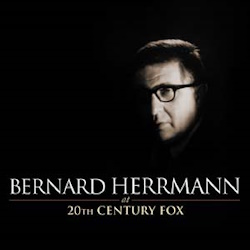 I commend Robert Townson and the late Nick Redman for the premiere of Bernard Herrmann’s masterful score to “Prince of Players,” which was released in 2011 as part of their Bernard Herrmann at 20th Century Fox” Box Set. The technical team’s remixing, digital mastering, editing and score restoration offers good audio quality and a rewarding listening experience. I believe Bernard Herrmann understood that this film at its core was a biopic of a very gifted, yet very troubled family plagued by madness brought on by impassioned acting. He realized that the genius of the Booth’s would manifest with their oratorial soliloquys. It was his task to reveal the toll taken emotionally by their acting and the resultant madness. Two themes for the Booth family speak to their tortured lives and consummation by madness. Throughout the film’s narrative we feel in the music the sadness, self-torture and pain of their gift, a blessing, but also a curse in which Junius and Edwin seek relief in alcohol, while John seeks relief in political violence. Set against this torturous musical narrative of pain, suffering and violence are the gentleness, tenderness and healing power of love expressed in Mary and Ned’s Themes. Herrmann intuitively understood that to better understand darkness, juxtaposition with light is necessary. I believe he succeeded on all counts, with the emotional power his music enhancing the film’s storytelling and acting performances.
Although The Bernard Herrmann at 20th Century Fox Box Set is only available at secondary markets and is prohibitively expensive, other releases of the score also exist; including on Varese’s 1999 release ‘Bernard Herrmann at Fox Vol.2’ paired with the scores for Garden of Evil and King of the Khyber Rifles and as an extended re-recorded suite conducted by Bill Stromberg on the 1996 Marco Polo release of Garden of Evil. Whichever way you find it, I believe it is well worth the investment. I also recommend you take in the film to fully appreciate Herrmann’s mastery of his craft.
For those of you unfamiliar with the score, I have embedded a YouTube link to a seven-minute suite; https://www.youtube.com/watch?v=NGCX3BaToZE
Buy the Prince of Players soundtrack from the Movie Music UK Store
Track Listing:
- Prelude (2:19)
- The Boy (0:32)
- King Lear “Storm” Scene (0:41)
- The Closet (2:03)
- Homecoming (1:11)
- The Tour (0:30)
- The Dressing Room (1:25)
- The Tempest (0:59)
- The Camp (0:19)
- The Dawn (2:02)
- Edwin’s Tour (0:20)
- Mary / Exit (0:47)
- The Warning (0:47)
- Confession (1:16)
- John Brown (1:58)
- Hamlet Sequence (5:10)
- Lullaby (0:47)
- Interlude (0:18)
- The Camp #2 (0:39)
- The Package (1:37)
- The Traitor (1:20)
- Illness (0:39)
- The Letter (0:55)
- Mary’s Death (1:32)
- The Shroud (0:57)
- The Grave (0:35)
- Murder (0:35)
- The Newspaper (0:42)
- Finale (0:39)
Varese Sarabande CD Club VCL 1211 1128 (1955/2011)
Running Time: 33 minutes 24 seconds
Music composed and conducted by Bernard Herrmann. Orchestrations by Bernard Herrmann. Recorded and mixed by XXXX. Score produced by Bernard Herrmann. Album produced by Nick Redman and Robert Townson.

Shop at the Movie Music UK Store

Member of the

 MOVIE MUSIC UK