A STAR IS BORN – Harold Arlen, Ira Gershwin, Ray Heindorf
 GREATEST SCORES OF THE TWENTIETH CENTURY
Original Review by Craig Lysy
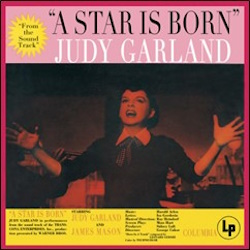
In December of 1952 producer Sid Luft approached director George Cukor and proposed that he remake the Selznick International Film’s “A Star Is Born” (1937) with his wife, Judy Garland making a comeback to star in the lead role. Cukor agreed and the two men received the green light to proceed from Warner Brothers. Luft would produce the film, whose budget soared to $5 million due to 41 sick days and a two-week drug rehabilitation withdrawing from all the medications she had become addicted to, which extended filming to nine months. George Cukor took the reins to direct, and Moss Hart was hired to write the screenplay, which was adapted from the screenplay of the 1937 film. For the cast, Judy Garland would star as Esther Blodgett, in her first film in four years. Joining her would be James Mason as Norman Maine, Jack Carson as Matt Libby, and Charles Bickford as Oliver Niles.
The film explores the sad life of singer Esther Blodgett and her tragic romance with Norman Maine. She is an aspiring singer whose singing and film career he fosters, bringing her to stardom, while his acting career is in decline, due to worsening alcoholism. They marry, yet the more her star rises, the more his fades with ever worsening alcoholism. When one night Norman hears Esther tell her manager that she is suspending her career to care for him, he realizes that he is ruining her life, goes out for a swim and drowns himself. She is devastated and becomes a recluse until her old bandmate Danny convinces her to sing at a charity function. When she is introduced, she greets he cheering fans with; “Hello, everybody. This is Mrs. Norman Maine”. While the film performed well commercially, it just could not overcome the massive $5 million production expense and so ended up losing money. There was universal critical acclaim with critics declaring it Garlands greatest performance. The film earned six Academy Award nominations; for Best Actor, Best Actress, Best Art Direction, Best Costume Design, Best Song, and Best Scoring of a Musical Picture.
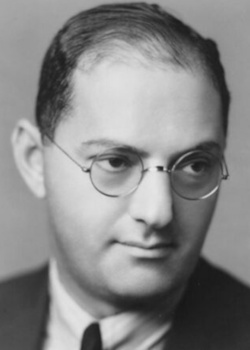
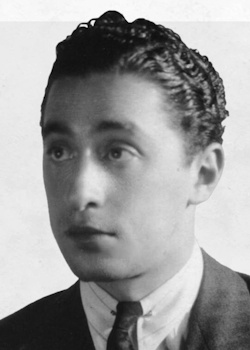 Warner Brothers director George Cukor selected the highly regarded and much-awarded Ray Heindorf to be the Musical Director for the film. His record of success was legend with fourteen Academy Award nominations for Best Score for a Musical Picture, including; Calamity Jane (1954), The Jazz Singer (1953), The West Point Story (1951), Look for the Silver Lining (1950), Romance on the High Seas (1949), My Wild Irish Rose (1948), Night and Day (1947), San Antonio (1946), Rhapsody In Blue (1946), Wonder Man (1946), Up In Arms (1945), and Hollywood Canteen (1945). Winning two awards for This Is The Army (1944), and Yankee Doodle Dandy (1943). Veteran Harold Arlen, who had nine Academy Award nominations for best song, and one wine for “Over The Rainbow” from the Wizard of Oz (1939) would compose the songs with lyrics provided by Ira Gershwin.
Heindorf was a master in scoring Musicals and understood that he would be afforded excellent songs empowered by Judy Garlands peerless voice. Essential in unifying the film’s musical narrative would be utilizing a number of song melodies as leitmotifs to weave together the films numerous song and dance vignettes. At the very core of the film’s narrative is the tragic story of Esther’s love for Norman, a man held captive by the ravages of alcoholism, a disease that not only destroyed him, but caused great pain and suffering to all those around him. Heindorf in a masterstroke chose to use the melody from what is now regarded as one of Judy Garland’s and the film’s greatest song “The Man That Got Away” as a Love Theme. The pathos of her heartache are found in the lyrics. Two other song melodies are also used; “It’s A New World” which speaks to Esther’s aspiration for love, and her determination to make it work with Norman. “Lose That Long Face” offers a pull yourself up by your boot straps song, which voices the inevitable disappointment and despair of Esther living with an ever-failing alcoholic and trying to find the strength to carry on.
“Overture” offers a score highlight, which feature three of Arlen’s finest song melodies. As the Warner Brothers logo displays, we open with dramatic flair, which replaces Max Steiner’s iconic fanfare. A prelude commences as the opening credits roll, with a brief quote of “It’s A New World” at 0:21 supporting the film title. At 0:27 we launch into the spirited “Lose That Long Face”. At 0:54 we down shift into the aspirational “It’s A New World”, concluding at 1:25 with the determined, pull yourself up by the bootstraps, “The Man That Got Away”. We close with a wistful coda of “It’s A New World”. We flow into the film proper with “Night Of The Stars”, which offers three sub-cues; (The Show/Why/Salute To The Lions). Narration informs us of a Hollywood charity gala for the Motion Picture Relief Fund. We open in “The Show” with a spirited orchestral rendering of “The Man That Got Away” as we see the stars taking their seats. At 0:29 we segue into “Why” with Heindorf channeling circus music as cowboys and cowgirls perform on horses. At 1:17 we segue into “Salute to the Lions” atop circus fanfare as the drunk Norman Maine wreaks havoc on the stage,
“Gotta Have Me Go With You” reveals Esther conceiving an impromptu and creative way to integrate the drunken Norman into her dance routine, which averts a scandal of public embarrassment for him. We open with Glenn William’s stage orchestra supporting with fanfare grandioso for an over-the-top introduction. At 0:26 Esther takes the stage with two male dancers and launches into a spirited swing tune. At 2:06 the orchestra takes up the tune as she cringes when she sees Norman forcing his way on stage. She grabs him and pulls him into the dance, somehow making it work with the routine.
 We end with a coda of the song melody as the crowd applauds with laughter. “Norman At Home” reveals him being put to bed by his butler, who is told to hide his car keys by Norman’s publicist Matt. Most of the cue was dialed out of the edited scene. Music enters at 0:35 with languorous strings as Norman wakes up hours later. At 0:51 a refreshed and sober as Norman gets dressed empowered by an orchestral reprise of “Gotta Have Me Go With You” until 1:15 when the rest of the cue is dialed out due to editing. The music from 1:16 offers a playful and comedic musical narrative. “Passion Oriental” reveals Norman off on a hunt for the woman performer who saved him from public humiliation. He arrives at the Coconut Grove night club, which Heindorf supports with a classic Rumba dance replete with muted trumpets, sultry woodwinds and soft bongo rhythms. The club manager Bruno suggests he try finding the singer at the Bleu Bleu club, a musician’s hangout on Sunset Boulevard. He enters in “The Man That Got Away”, which provides a musical highlight, which showcases Judy Garland’s peerless vocal. The cue offers an expanded soft jazz rendering of the song melody by a small ensemble comprised of two trumpets, trombone, and alto and tenor saxophone, clarinet, bass, piano and drums. Most this from 0:00 – 2:50, was dialed out in the film. At 2:51 Esther gets up and begins singing the song, whose lyrics speak of a woman’s heartbreak since her man left her. The confluence of her voice, and song lyrics is sublime.
“Cheatin’ On Me” reveals that after the performance, Norman is supremely impressed and pulls her aside. He offers effusive praise, arguing that she has star quality, and is so much more than a band singer. Heindorf supports with jazzy background instrumental rendering of the song melody by a small ensemble of piano, drums, tenor saxophone, and trombone. Norman takers her to his home and spends the rest of the evening trying to convince her that she is so much more than she realizes. He offers her a screen test the next day and departs, saying he will see her in the morning. In “I’m Quitting The Band…” music enters with “The Man That Got Away” melody after Norman calls Matt and informs him that he has found a star. Afterwards he begins drinking again and at 0:33 the melody shifts with harp arpeggios as we see Esther’s lying in bed awake, contemplating Norman’s offer. She puts on a night gown, and goes upstairs to Danny’s hotel room as the melody shifts to strings. She wakes him up and a diminuendo supports her telling him that she is quitting the band. He is shocked and asked what happened? She relates that Norman opened her eyes and helped her realize she can be what she has always dreamed of.
“The Man That Got Away” from 0:00 – 3:24 ended up on the editing room floor. It offers an extended exposition of the song melody that is just wonderful. Norman gets drunk, and misses their date when the film crew whisks him away for a few weeks to star in a seafaring picture. At 3:25 woodwinds introduce the song melody, which transforms into a wonderful danza gentile as we see a montage of shots of Esther passing the days waiting to hear from Norman. We conclude on a diminuendo of uncertainty as we see the director yelling “Cut!” to a rescue scene at sea. “Esther In The Boarding” reveals Esther out of money and desperate as she seeks lodging at the low end Lancaster Hotel. She answers a call for an audition and agrees to be there at nine am in the morning. The 2:31 minute cue offers another wonderful exposition of the Main Theme, with only a fragment surviving the editing cuts. “The Trinidad Coconut Oil Shampoo Commercial” reveals her singing a voice over limerick for a shampoo product. The cue offers unmastered archival monaural sound with Garland singing with a Spanish accent. (The sound for this song in the film is much better than the album).
Norman sees her commercial and manages to track her down at the Lancaster Hotel. He apologizes for being Shanghaied and takes her to “Oliver Niles Studio” carried by a vibrant big band rendering of the “Lose That Long Face” song melody. At 0:15 we down shift on a diminuendo of uncertainty as three make-up artists fret over Esther’s nose. “Esther’s Awful Makeup” reveals her exiting the department with make-up so awful, that Norman fails to recognize her. He laughs and takes her to his private apartment at the studio where they take off her awful makeup and redo her as she normally does. A harp glissando introduces a plaintive Main Theme borne by weeping strings. At 1:08 we spring to life atop the “Lose That Long Face” song melody as he exhorts her to believe in herself and make us both proud. “First Day In The Studio” reveals a bewildered Esther being led around the studio where she meets people in every department who all welcome her, but are too busy to give her the time of day. A vibrant Main Theme carries her departure from studio CEO Oliver Niles. At 0:29 a diminuendo a dejection supports her becoming trapped in a turnstile. (*) “Niles Agrees to Esther” reveals Norman luring Oliver to his studio apartment. Oliver is beside himself as his star singer has abandoned the film, bringing production to a halt. Norman opens his window purposely so Esther, who is outside belting out “The Man That Got Away” fills the room. Oliver gradually realizes that she has a fine voice and selects her to replace his wayward singer, much to Norman’s satisfaction.
 “Born In A Trunk” offers an outstanding score highlight, which showcases Garland’s vocals, dancing, and showwomanship. It reveals Esther and Norman watching a sneak preview of her film from the balcony. We open with “Swanee”, which ends her performance. It is a crowning success, wowing the audience who applaud effusively. The song melody is sustained as she takes her bows to the audience. Afterwards she thanks the audience; she sits down on the stage and begins singing “Born In A Trunk”, which recalls through flashbacks, her breaking into show business as a little girl with her parents. A string prelude ushers in at 4:58 Esther singing “I’ll Get By”. At 8:02 we flow with silliness into playful and sassy “Black Bottom” sung by Esther and women’s chorus. At 9:41 we segue atop Spanish flair into “The Peanut Vendor”. Two patrons again interrupt, saying “Sing Melancholy Baby!” Esther accommodates as we shift to her singing the song at an elegant club, in a formal gown with grand piano accompaniment. We segue at 10:15 into “My Melancholy Baby”, sung with love and tenderness. At 12:28 she launches back into vibrant and spirited rendering of “Swanee”. We return to the present with her sitting on the stage and we conclude with her singing, and ending the show with a choral and orchestral flourish.
“Easy Come, Easy Go” reveals Esther, Norman, Oliver and other studio executives at the Macombo night club celebrating the stunning success of her screening, which has catapulted her to stardom. Heindorf supports the night club ambiance with a danza gentile. Norman says that his job is finished, and it is time for her to move on and realize your dreams. She expresses her love for him, but he says she has come too late, and that he destroys everything he touches. Yet she persists and he finally weakens and succumbs to her affection and optimism. “Here’s What I’m Here For” reveal Esther at a prerecording session for her next film. The song is a testament of yearning love seeking forgiveness and when the words are joined with Garland’s vocals, we are overcome.
Afterwards he proposes to her and she joyfully accepts as the orchestra musicians applaud. They go to visit Oliver, who gives his blessings, and time off for their honeymoon. After they depart, Matt questions Oliver sanctioning the union, to which he confides that he hopes she may turn Norman around and stop his decline. “The Honeymoon” reveals them getting married by a Justice of the Peace in a jail. As our lovers drive away a joyous Main Theme carries them away and latter support their night time arrival at the Lazy Acres Motel. A diminuendo romantico supports their room entry, sealed with a kiss. As she freshens up, Norman turns on the radio and the announcer declares the number one tune, “It’s A New World”, by Vicki Lester, Esther’s stage name. She rejoins him, and at 1:09 a diminuendo tenero supports him turning off the radio, preferring that she sing it live, just for him. In “It’s A New World”, she agrees and we are graced by the confluence of her voice, and song lyrics, which speak to the happiness of love’s blossoming.
Sadly, Norman cannot overcome his alcoholism, which causes expensive production delays for his latest film. His career continues to slump, and Oliver breaks the sad news that the studio is buying out his contract. Norman is gracious and requests that he deliver the news to Esther. Days later in “Someone At Last”, Norman greets Esther’s arrival home with a homemade dinner. She is thankful, and in a gesture of love, offers a full theatrical performance for him in the living room of their beachfront Malibu house. A prelude of the song’s melody usher in and supports Vicki shouting “Lights! Camera! Action!” At 2:19 we have a vibrant instrumental interlude. At 2:38 we down shift to a comedic plodding pace, until 2:50 when we a raucous rendering of the song melody. At 3:04 we flow into a valzer gentile joined by Vicki singing with a German accent, followed in turn by a dramatic fanfare orientale, a women’s chorus sung with Chinese accents, nativist African drums, a melodramatic misterioso, and festive Latin rhythms
Afterwards they share one of the happiest moments of their lives. Yet the moment is lost when the doorbell rings and Norman, whom the courier calls Mr. Lester, is asked to sign. We see on Norman’s face that he has been so reduced in stature as to be no longer recognizable. (*) “Academy Award Banquet” reveals the annual dinner held at the Ambassador Coconut Grove. A montage of Hollywood elite is supported by a regal fanfare empowered musical narrative. Inside Esther expresses her anxiety to Oliver that Norman has yet to arrive. The nominees for Best Actress in a Leading Role are announced and Miss Vicki Lester in declared the winner. She is thunderstruck, and as she goes up to receive the Oscar, she tells Oliver that she wishes Norman was here. As she gives her acceptance speech, clapping from the rear interrupts, and reveals a drunken Norman staggering in. The audience is aghast as he pushes himself past Oliver and kisses Vicki on stage. He then goes on to steal her moment of triumph by pathetically bellowing that he needs a job. As he waves his hand, he accidentally slaps her in the face. She maintains her composure and escorts him back to her table where she lovingly comforts him as he demands a drink.
“Lose That Long Face” reveals Vicki shooting her latest song and dance film. An orchestral prelude of the song’s melody launches her singing the hopeful, pull yourself up by your boot straps song. Afterwards in her dressing room, Oliver visits, returning from a three-month trip across the country. He relates that all people want to see is her in another movie. We see that something ails her when he asks how is Norman? She tries to redirect the conversation but turns to him and says that he is in a sanatorium, trying hard to stop drinking. She asks him, as a lifelong friend; why does Norman try to destroy himself? He says he does not know, and that he has tried repeatedly to help him to no avail. She then breaks down in tears saying how painful it is to watch someone you love just crumble away before your eyes, adding a bitter truth – that love is not enough. She reveals how at times she hates him as the cycle just keeps repeating itself. He is moved, and says he will try to get him back to work. She returns to the stage thankful, and reprises the last lines of the song for a closeup. In an unscored scene, Oliver visits Norman at the sanitarium and they head out to the sun porch, with his attendant Mr. Cuddles chaperoning. Norman says he is well and will be leaving in a week. He is stunned when Oliver offers him a script with a fine part to play. Yet his pride is wounded when he discovers he is not the lead and plays only a small part. He feigns that a big deal awaits at another studio. Oliver departs leaving the script and Norman thanks him for dropping in.
(*) “Matt’s Rebuke” Horse Race track trumpets resound. Norman attempts to reacquaint with old friends, but although they are polite, they are also cool and unreceptive. Matt shows up and rebuffs Norman’s overtures, unleashing a firestorm of contempt he kept inside during all those years he was forced to bail him out. When he tells Norman to stop complaining as you can just live off your wife now, Norman angrily punches him, but Matt pummels him to the ground. A crowd assembles and they think he fell because he was once again drunk, with some voicing hurtful words. Now publicly humiliated, Norman fall off the wagon unable to cope, goes to the bar, and orders a scotch. At home Esther frets to Oliver that Norman has been gone for four days without a word. A telephone reveals Norman has been arrested on a charge of public drunkenness and they rush out to post bail. In court the judge rebukes Norman for crashing his car and then fighting with officers. He sentences him to ninety days in jail, which elicits Esther to approach the bench. She pleads that she will take full responsibility for Norman, and promises the court that this will never happen again. The judge relents and remands Norman to his wife.
“Norman Overhears The Conversation” reveals Norman asleep with Esther and Oliver on the balcony. His bedroom window is open and he hears her disclose to Oliver that she is ending her career to take care of Norman. In a testament of love, she reveals her undying love and commitment to the man she loves dearly. Oliver then offers a sober assessment, that decades of heavy drinking has withered away whatever talent Norman once had, that he is but an empty shell of a man that he will never regain what has been lost. Yet Esther is fervent and determined to save her husband. Oliver concedes and makes arrangements to void her studio contract. Norman is overcome with guilt and sobs in the bedroom. Music enters with a sad, and aching quote of the song “There’s No Place Like Home”. As Norman walks to the closed deck sliding door, harps introduce a plaintive instrumental rendering of “It’s A New World”. He gazes out at the ocean and we realize that he will end her misery with one last swim. At 1:26 a diminuendo of resignation supports his knock on the deck door. He play-acts a warm smile, and good humor, which she happily welcomes. He advises that he is committing to a heath routine, which includes daily swimming. He asks that she sing with the kitchen window open while he swims, which she happily agrees to.
In “It’s A New World Reprise” Norman takes one last adoring look at Esther and then with the sun setting, walks out to the beach for his last swim as Esther tenderly sings a wistful version of the song. The next day Oliver and Matt read the headlines; “Ex-Film Star Victim of Accidental Drowning”. Matt oversees the Studio’s response, as we shift to funeral services at a church supported by organ reverenziale. As Vicki exits a crowd surrounds her, with one man tearing off her veil. A week later Oliver confides to Matt that he has been unable to reach Vicki for a week. They enter Norman’s studio apartment and Oliver discloses to Matt that it is a shame you never got to truly know him. At home, Vicki sits alone in the library by the fireplace as her butler advises that he is turning in. Danny arrives and joins her in the library. He says she is not dressed, and that they need to head out to the Shrine Auditorium for the benefit she committed to. Yet she is trapped in a pity party and refuses. Danny dresses her down and she relents. “Finale: End Credits” reveals Vicki walking out on the stage and declaring, “Hello everybody. This is Mrs. Norman Maine, with the crowd responding with heartfelt applause. At 0:21 we flow into a heartfelt instrumental rendering of “It’s A New World”, joined by mixed chorus singing the two closing lines of the song, which conclude with a choral flourish as “The End” displays.
I would like to thank Didier C. Deutsch and Darcy M. Proper for this latest reissue of the musical “A Star Is Born”. Many of the cues have been digitally remastered in stereophonic sound, however some of the vocal performances came for monaural sources. Although there is some variance is audio quality, I believe the peerless vocal of Judy Garland remains undiminished, and argue that the album provides a good listening experience. Ray Heindorf was a Hollywood legend, who had a distinguished career over four decades from 1929 – 1972, in which he earned nineteen Academy Award nominations and four wins. I believe Heindorf understood that Judy Garland’s portrayal of Esther was the film’s nexus, with her rising to stardom shackled to the self-destructive alcoholism of Norman, the love of her life. He masterfully used the song melodies of three Harold Arlen songs, “The Man That Got Away” “It’s A New World” and “Lose That Long Face” to express Esther’s yearning and aspiration for love, suffering for love’s sake, and love’s steadfast determination to overcome all obstacles. Folks, in my judgment the musical narrative woven by Heindorf once again reveals his genius. In scene after scene this film’s storytelling is enhanced, an enduring testament of the capacity of a composer to empower and elevate a film. For lovers of Musicals, this film served as Judy Garland’s magnificent comeback from the ravages of drug addiction. The confluence of music, her peerless vocals, and her outstanding acting achieve sublimity. I highly recommend you purchase the album and take in the film.
Buy the A Star is Born soundtrack from the Movie Music UK Store
Track Listing:
- Overture
- Night of The Stars (The Show/Why/Salute To The Lions)
- Gotta Have Me Go With You (performed by Judy Garland, Don McKabe, and Jack Harmon)
- Norman At Home (Gotta Have Me Go With You) (Outtake)
- Passion Oriental
- The Man That Got Away (performed by Tommy Noonan and Judy Garland)
- Cheatin’ On Me (performed by Buddy Cole, Nick Fatool, Babe Russin, and Hoyt Bohannon)
- I’m Quitting The Band… (The Man That Got Away) (Partial Outtake)
- The Man That Got Away (Instrumental) (Partial Outtake)
- Esther In The Boarding (The Man That Got Away) (Partial Outtake)
- Oliver Niles Studio (Lose That Long Face)
- Esther’s Awful Makeup (The Man That Got Away)
- First Day In The Studio (The Man That Got Away)
- Born In A Trunk Medley (performed by Judy Garland)
- Easy Come, Easy Go
- Here’s What I’m Here For (performed by Judy Garland)
- The Honeymoon (The Man That Got Away/It’s A New World)
- It’s A New World (performed by Judy Garland)
- Someone At Last (performed by Judy Garland and James Mason)
- Lose That Long Face (performed by Judy Garland)
- Norman Overhears The Conversation (It’s A New World)
- It’s A New World (Alternate Take) (performed by Judy Garland)
- The Last Swin (The Man That Got Away) (Outtake)
- Finale: End Credits (performed by Judy Garland)
- When My Sugar Walks Down The Street (Outtake) (performed by Judy Garland and Jack Baker)
- The Trinidad Coconut Oil Shampoo Commercial (performed by Judy Garland)
Columbia – Sony Music CK 65965 (1954/2004)
Running Time: 78 minutes 00 seconds
Music composed and conducted by Ray Heindorf. Songs written by Harold Arlen and Ira Gershwin. Orchestrations by Skip Martin. Recorded and mixed by XXXX. Score produced by Ray Heindorf. Album produced by Didier C. Deutsch and Darcy M. Proper.

Shop at the Movie Music UK Store

Member of the

 MOVIE MUSIC UK