Under-the-Radar Round Up 2024, Part 4
 Original Reviews by Jonathan Broxton
I’m pleased to present the latest instalment in my on-going series of articles looking at the best under-the-radar scores from around the world.
This article, the fourth of 2024, covers another six scores from a wide array of genres and countries: a French period courtroom comedy, a new adaptation of a classic of French literature, two Japanese TV scores, a Chinese animated fantasy film, and a Swedish TV series remake of a beloved children’s adventure!
LES CHÈVRES!/THIS IS THE GOAT! – Christophe Julien
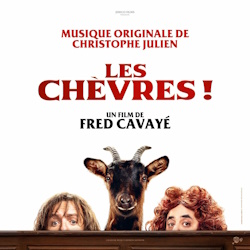 Les Chèvres, known in English as This Is The Goat, is a historical comedy film set in 17th-century France directed by Fred Cavayé, starring Dany Boon as Maître Pompignac. The story follows a lawyer who has never won a case but sees a path to personal and professional redemption when he gets hired to defend a young, innocent girl wrongfully accused killing a Marshal of France – only to find out his client is in fact a goat. The film co-stars Jérôme Commandeur, Claire Chust, Grégory Gadebois, Alexandre Desrousseaux and Marie-Anne Chazel, and was received to mostly positive reviews when it opened in French cinemas earlier this year.
The score for Les Chèvres is by the exceptionally talented young French composer Christophe Julien, whose work over the past couple of years on scores like Au Revoir La-Haut (2017), Délicieux (2021), and Second Tour (2023) has impressed me greatly. This score is a light, playful, quirky score which fuses medieval-adjacent instrumentation and compositional techniques with the humor of an Ennio Morricone comedy score. The main theme, “Les Chèvres,” is a wonderful Renaissance-style dance that somehow blends the flamboyant dancing strings and woodwinds of the period with a twangy jaw harp and gruff chanting voices in a combination that shouldn’t work at all, but does.
The rest of the score unfolds with similar stylistics and a similar attitude “Un Long Voyage” opens with a more determined and forthright variation on the main theme that is just terrific. There is gorgeous flute-led love theme in “Amour Impossible” which is strongly influenced by Morricone’s delicate love themes of the 1970s like La Califfa. Other cues of note include the more sinister and spookily threatening sounds of “La Savoye,” the appealing religioso choral sounds of “Notre Dame,” and the pseudo-spaghetti western guitar textures of “Duel,” which are a perfect parody of all the musical tropes from A Fistful of Dollars.
Both “La Victoire” and “Un Accident” have a brilliant homage to James Horner’s 4-note danger motif, buried within more dark and brooding orchestral textures. The final moments of “Un Espoir” drip with unexpectedly poignant emotion, and the final moments of “La Veuve Piquet” explode into a witty, vivacious string dance.
Les Chèvres is an outstanding comedy score, one the best of the year so far, and especially appeal to those who enjoy the playfully lyrical and romantic side of 1970s Ennio Morricone; Christophe Julien’s music is a loving homage to that sound, and he pulls it off superbly. Unfortunately there is no physical CD of Les Chèvres available, but the score is available to stream and download from most of the usual online sources, on the Pathé Film Soundtracks label.
Track Listing: 1. Les Chèvres (2:45), 2. Un Long Voyage (1:58), 3. Amour Impossible (3:55), 4. La Savoye (1:45), 5. Notre Dame (1:18), 6. Duel (1:40), 7. L’Enquête (1:42), 8. La Victoire (3:38), 9. Un Espoir (1:41), 10. La Veuve Piquet (1:44), 11. L’Amour de Josette (1:04), 12. La Révélation (3:38), 13. De l’Autre Côté de la Corde (1:32), 14. Un Accident (3:07), 15. Une Démonstration (1:44). Pathé Film Soundtracks, 33 minutes 03 seconds.
LE COMTE DE MONTE CRISTO/THE COUNT OF MONTE CRISTO – Jérôme Rebotier
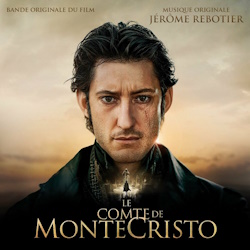 The Count of Monte Cristo is one of the greatest novels in all of French literature; written by Alexandre Dumas in 1844, it tells the story of Edmond Dantès who – after spending fourteen years in the island prison of Château d’If for a crime he didn’t commit – manages a daring escape and assumes the identity of the Count of Monte Cristo to exact his revenge on the three men who betrayed him. This latest version of the story, released in France under its original title Le Comte de Monte Cristo, is written and directed by Matthieu Delaporte and Alexandre de la Patellière (who also wrote the screenplay for last year’s French-language TV adaptation of The Three Musketeers) and stars Pierre Niney as Dantès, with Bastien Bouillon, Anaïs Demoustier, Laurent Lafitte, and Anamaria Vartolomei in supporting roles.
The score for Le Comte de Monte Cristo is by French composer Jérôme Rebotier, who has impressed me of late with his scores for Sahara (2017), Le Meilleur Reste à Venir (2019), L’Aventure des Marguerite (2020), and À Propos de Joan (2022). As one would expect, Rebotier’s score is appropriately melodramatic, with plenty of romance, dark drama, swashbuckling action, and period-specific orchestrations. However, at times it also unexpectedly contemporary, and sees Rebotier using much more modernistic compositional techniques, and even some electronic and synthetic textures, to add a different dimension to the score and make it more relevant for today’s youthful audiences.
The opening cue, “Tempête,” actually has something of Hans Zimmer’s Dark Knight score about, a mass of overwhelming brass notes and shrill, percussive strings, and this approach is present in much of the score’s action music. It seems to depict Dantès as less of an elegant aristocrat and more of a tool of dark, brutal vengeance; a relentless hammer, rather than an ivory-handled dagger; later cues such as the nimble “Dantès Reprend des Forces” and “Le Piège Se Referme” follow this pattern excellently. On the other hand, the main “Vengeance (Thème de Monte Cristo)” actually feels quite sad and has an undercurrent of bitterness to its superficial beauty that is quite compelling; variations of this sound in cues like “Le Bal d’Eugénie” build on this dichotomy. Surrounding this is quite a lot of appropriately suspenseful and dramatic string-and-piano music, moodily accompanying Dantès incarceration in Château d’If; I especially like how Rebotier uses layers of percussion to create a sense of urgency in “Dantès Rejoint Faria,” and then again later in “Le Racket”.
The relationship between Dantès and his love Mercédès is captured by a delicate, whispery love theme for trembling strings, which is revisited with pleasing regularity in cues like the sparkling “Edmond et Mercédès,” “Le Mariage” and “Monte Cristo Raconte à Mercédès”. Elsewhere, cues like “Le Trésor,” “Les Années Faria,” and “Les Traîtres” revel in a sense of ornate classicism that is really impressive, and speaks to both the period and the Frenchness of the overall setting. “Dorul (Chanson d’Hydée)” features a lovely, evocative, mysterious performance by Turkish vocalist Gülay Hacer Toruk that reminded me in places of Gabriel Yared’s score for The English Patient. “Le Duel,” the two-part “L’Évasion,” “Chasse à Courre,” “L’Assassinat,” and the dramatic “La Confrontation” are stark and militaristic action cues that leave a positive impression.
One thing that works against the score, unfortunately, is the length of the soundtrack album; at almost 96 minutes, it really is too much, and although the quality of the writing is generally outstanding, it often feels repetitive to the point that it cannot really sustain that sort of scope, and the middle section in particular drags a little as it gets bogged down into too much suspenseful murkiness.
In terms of dramatic musicality, however, Rebotier’s score is excellent, and it comes recommended to anyone who may enjoy a historical/period drama/thriller score which has a great deal of classical influence, but doesn’t stick slavishly to genre conventions and sometimes feels decidedly modern. Unfortunately there is no physical CD of Le Comte de Monte Cristo available, but the score is available to stream and download from most of the usual online sources, on the Milan label.
Track Listing: 1. Tempête (3:19), 2. Mercédès (1:58), 3. Le Trésor (3:57), 4. Dorul (Chanson d’Hydée) (3:49), 5. Haydée (1:42), 6. Edmond et Mercédès (3:10), 7. L’Arrestation (3:31), 8. Le Mariage (1:01), 9. Vengeance (Thème de Monte Cristo) (1:36), 10. Le Château d’If (Version Longue) (3:26), 11. Dantès Rejoint Faria (2:21), 12. Mort de Faria (1:48), 13. Le Domaine (2:08), 14. Le Bal d’Eugénie (1:51), 15. Dantès Reprend des Forces (1:00), 16. Haydée Supplie Albert (1:40), 17. Le Piège Se Referme (2:05), 18. Le Duel (2:05), 19. L’Évasion (Part 1) (2:36), 20. L’Évasion (Part 2) (1:40), 21. La Mort du Cerf (2:07), 22. Le Revenant (1:27), 23. La Folie (2:03), 24. Chasse à Courre (1:02), 25. L’Éducation d’André (1:40), 26. Le Récit d’Angèle (4:23), 27. Les Années Faria (1:25), 28. Le Dîner d’Auteuil (3:33), 29. Les Plans (1:55), 30. Albert et Haydée (1:07), 31. Les Traîtres (2:12), 32. Le Racket (2:20), 33. Opium (2:40), 34. Monte Cristo (2:20), 35. Le Trésor (Reprise) – Adieux à Eugénie (2:49), 36. L’Assassinat (Version Longue) (3:24), 37. Albert Rejoint Haydée (2:35), 38. Monte Cristo Raconte à Mercédès (1:37), 39. La Haine de Fernand (0:59), 40. La Confrontation (3:45), 41. La Vie d’Après (4:12). Milan Records, 96 minutes 18 seconds.
HANASAKI MAI SPEAKS OUT 2024 – Yugo Kanno, Masahiro Tokuda
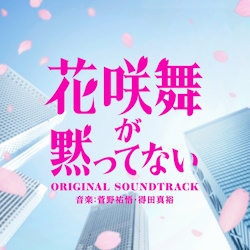 Hanasaki Mai Speaks Out 2024 is a Japanese TV series adapted from the novel ‘Fushoji’ by Ikeido Jun, and is probably the first and only entry into the ‘bank fraud detective’ genre. The show stars Mio Imada as Hanasaki Mai, who works as a teller for a branch of Tokyo Daiichi Bank. When Hanasaki is transferred to the bank’s head office, she soon finds herself being asked to solve crimes and scandals across all aspects of the bank, helping customers who are victims of fraud, and identifying and fixing internal scandals. It could be a TV show about my day job! The show is a remake of the 2014 show of the same name, and premiered on Japanese NTV network in April 2024.
The score for Hanasaki Mai Speaks Out 2024 is a joint effort by composers Yugo Kanno and Masahiro Tokuda. Kanno is, of course, the composer of such excellent film and TV scores as Gunshi Kanbee (2014), The Crimes That Bind (2018), and Yuria’s Red String of Fate (2023), among many others. This is the first music that I have heard from Tokuda, but based on the quality of this score, I will certainly be seeking his music out more in future; he has been contributing music to Japanese TV shows and movies since 2013.
Kanno’s contribution is the main title suite, “Hanasaki Maiga Damattenai,” and it is just gorgeous. Sweeping, thematic, and fully orchestral, it sparkles with good-natured optimism, tender lyricism, a touch of romance, a touch of heroism, and a touch of mystery, all in an attempt to capture the can-do spirit and inherent goodness of Hanasaki Mai and her innate desire to help people. There’s a sequence beginning at around the 4:20 where Kanno turns the theme into a rousing, almost militaristic march full of rat-a-tat snares, swirling strings, and flamboyant brass fanfares that Ron Goodwin would have been proud to call his own. Quite how Kanno was inspired to write music for a bank fraud investigator I really don’t know, but you can be sure I will be using this music as my personal work theme going forward!
Tokuda’s music is, almost inevitably, less rousing than Kanno’s but there is still a great deal to recommend. “Elite Jyoseikouin Syousenkyou Reiko” has the more modern, urban sound of a contemporary thriller, urgent string figures and tinkling pianos surrounded by forceful electronic pulses. “Super Heroine Hanasaki Mai” is funky and upbeat, with a throwback disco beat, groovy Bill Conti-style strings, electronic sweeteners, and sampled pop vocals which almost make it sound like the extended version of a theme from a 1980s sitcom (in a good way).
There are three versions of the “Shiawasena Omoide” theme, one for full orchestra, one arranged with a more prominent acoustic guitar, and one arranged for a more prominent solo piano. The name of the theme translates to ‘Happy Memories,’ and Tokuda’s music reflects this concept perfectly, being warmly sentimental and endearingly wholesome throughout. Bizarrely, the actual melody reminds me very much of Michael J. Lewis’s score for the 1969 period comedy The Madwoman of Chaillot, if that means anything to anyone. The conclusive “Atsui Omoi” is charmingly whimsical and upbeat, and again features piano and guitar alongside the orchestra.
This is a brief, but wholly delightful score from an unlikely TV source, and will appeal to anyone who enjoys music that unabashedly thematic, lyrical, and pointedly emotional. The score for Hanasaki Mai Speaks Out 2024 is available as an import CD from retailers like YesAsia, and is also available to stream and download from most of the usual online sources, on the Nippon Television Music label.
Track Listing: 1. Hanasaki Maiga Damattenai (6:27), 2. Elite Jyoseikouin Syousenkyou Reiko (2:23), 3. Super Heroine Hanasaki Mai (2:46), 4. Shiawasena Omoide (4:17), 5. Shiawasena Omoide (Guitar) (3:02), 6. Shiawasena Omoide (Piano) (4:13), 7. Atsui Omoi (2:56). Nippon Television Music, 26 minutes 00 seconds.
INTO THE MORTAL WORLD – Roc Chen
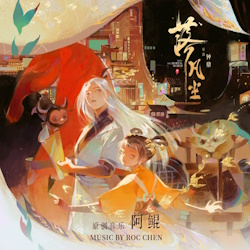 Into the Mortal World is a Chinese animated feature film directed by Ding Zhong, and is an adaptation of the classic Chinese-language fairy tale of the same name. The story follows an immortal named Jinfeng, the son of the Cowherd and the Weaver Maid. Jinfeng’s mother has been unjustly accused of a crime and banished from divine world; determined to clear her name, he descends to the mortal world, embarking on a perilous quest to gather the “mansion spirits” he needs to secure atonement for his mother’s sins. Along his journey, Jinfeng encounters Fanning, a lively and lovely girl with a hidden past.
The score for Into the Mortal World is by the Los Angeles-based Chinese composer Roc Chen, who over the past decade or so has established himself as one of the go-to composers for big budget action, sci-fi, fantasy, and historical epic scores in Chinese cinema, through works such as Chinese Zodiac, Guardians of the Tomb, and the films in the Wandering Earth series, as well as similar TV works like Royal Nirvana in 2020 and The Age of Awakening in 2021.
Everything about Into the Mortal World is outstanding. It is a sweeping, thematic fantasy adventure score for a full western symphony orchestra, which is then imbued with a huge amount of traditional Chinese instrumental textures – erhu, dizi, pipa, and more – as well as multiple types of vocals, depending on what emotions Chen is attempting to convey. Tonally it ranges from beautiful and mystical (“Into the Mortal Night,” “The Story of Zhinu”) to passionately romantic and/or deeply moving (“Fanning’s Heart,” “Truth of Mother,” “Portrait of Mother,” “Descend,” “Heart-to-Heart on the Rooftop”), from quirkily amusing and comedic (“Yummy Hot Pot,” “Fanning,” “Fanning’s Solution,” “Trapped in Dungeon,” the unexpectedly jazzy “Spicy”), to moody and sinister (“Split,” “The Serpent-Prowled Village,” “Seeking Mother in Scripture Library”), to broad and expansively adventurous (“Qigu Town,” “Heartstrings,” “United Siblings”).
There is also a significant amount action music too, especially in the score’s second half when Jinfeng’s quest really kicks into high gear. In cues like the scintillating “Clash with Lingbi,” “Prelude,” “Earth Bat of Girl,” the more playful “Jinfeng vs. Fanning,” “Master’s Remembrance”, “Rooftop Battle,” “Fire Tiger of Tail Appears,” “Oops, Fire Tiger Licks Chili Oil,” and especially the brilliant “Battle With Fire Serpent of Wings” Chen increases the scope of the score significantly, with more intricate string writing, increased use of fast-paced percussive rhythms, prominent brass, and even some subtle electronic enhancements that give the score a defiantly modern twist.
Thematically the score is dense and complicated, with multiple recurring ideas that come back throughout the score, including one prominent ascending 2-note motif that is clearly recognizable across multiple tracks, but without movie context it’s difficult to know exactly what they all represent and how they all fit together, and some of them are similar enough to each other that they lose a little specificity at times – but even with that in mind, as a pure listening experience, it is all magnificent. In terms of its approach it reminds me very much of Tan Dun’s Oscar winning score for Crouching Tiger Hidden Dragon, crossed perhaps with Klaus Badelt’s The Promise and the music composers like Shigeru Umebayashi wrote for the various popular wuxia movies that were released in North America in its wake.
Anyone who knows me and my taste knows that epic orchestral scores enhanced by traditional instruments represent one of my absolute favorite genres of film music, and Roc Chen’s Into the Mortal World is one of the best examples of this I have heard in years. There is no physical CD available, sadly but the score is available to stream and download from most of the usual online sources, on the Bilibili Music label.
Track Listing: 1. Into the Mortal Night (2:07), 2. Fanning’s Heart (3:25), 3. Return to Star Hall (1:35), 4. Truth of Mother (3:43), 5. Qigu Town (1:20), 6. Farewell, Sister (1:02), 7. The Story of Zhinu (5:11), 8. Heartstrings (1:22), 9. Portrait of Mother (1:04), 10. United Siblings (2:01), 11. Clash with Lingbi (4:54), 12. Yummy Hot Pot (0:51), 13. Descend (2:24), 14. Split (4:40), 15. Prelude (1:59), 16. Earth Bat of Girl (1:14), 17. Capture Mansion Spirits (0:59), 18. Fanning (1:23), 19. Fanning’s Solution (0:50), 20. Memories (2:14), 21. Seeing Regular Family (0:22), 22. Jinfeng vs. Fanning (1:05), 23. The Star Hall (4:11), 24. Trapped in Dungeon (0:48), 25. Fanning the Annoying? (0:53), 26. Walk in the Field (0:37), 27. Fanning’s Idea (1:28), 28. Golden Ox of Ox (0:23), 29. Stop, Kid (0:49), 30. Master’s Remembrance, Rooftop Battle (2:44), 31. Pitter-Patters of Her Feet (0:20), 32. Healing Elixir (0:22), 33. The Cure (0:23), 34. Double-Flavor Hot Pot (0:33), 35. Spicy? (0:58), 36. Fire Tiger of Tail Appears (2:22), 37. Oops, Fire Tiger Licks Chili Oil (1:07), 38. Double-Flavor Hot Pot Again (0:33), 39. Not Some Big Shot (0:31), 40. Heart-to-Heart on the Rooftop (4:30), 41. Think Together (0:21), 42. The Battle-Scarred Field (0:33), 43. Sow Discord (0:37), 44. Suspicion (1:03), 45. The Serpent-Prowled Village (1:11), 46. Strategizing Against the Serpent (0:24), 47. Eve of the Battle (0:47), 48. Battle with Fire Serpent of Wings (5:19), 49. Jinfeng Returns Home (0:53), 50. Jinfeng Rushes Back (1:23), 51. Arrival (0:42), 52. You Promised (0:47), 53. Seeking Mother in Scripture Library (1:27), 54. Imminent Calamity (1:03), 55. Longing (0:53), 56. Crisis (0:42), 57. Power Up (0:59), 58. As the Producer Insisted (1:03). Bilibili Music, 88 minutes 54 seconds.
THE NAME OF THE GAME IS A KIDNAPPING – Kei Haneoka
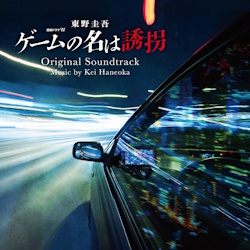 The Name of the Game is a Kidnapping is a Japanese TV series based on the popular novel by Keigo Higashino. The show stars Kazuya Kamenashi as Shunsuke, a high-flying advertising executive, who unexpectedly finds himself being sidelined from an important project by Katsuragi (Atsuro Watabe), the vice president of the client company. With his pride wounded and his career in jeopardy, things appear to be going badly for Shunsuke, until he unexpectedly meets Katsuragi’s daughter Juri (Ai Mikami). She also holds a grudge against her father, who refuses to give her early access to her inheritance; in order to exact some revenge on him, they decide to stage a fake kidnapping, with the idea being that Katsuragi will pay a large ransom for Juri, and then they will abscond with the money. Of course, things immediately go wrong…
The score for The Name of the Game is a Kidnapping is by composer Kei Haneoka; the only previous experience I have of his music is from his score for the anime television series Kono Oto Tomare! from 2019, but on the strength of his work here he is certainly someone I will be investigating in the future. Haneoka’s score is really good – it’s clearly a thriller score, with some serious and dramatic moments throughout – buy it’s also thematic and tuneful in all the best ways, in the way that a lot of thriller scores in the 1980s and 90s used to be. It has an inherent musicality that I really appreciate, and it’s a world away from the ’ambient drone’ sound that often tends to dominate this genre today.
The “Main Theme for The Name of the Game is a Kidnapping” is a perfect example of this, a dark and dramatic string piece underpinned with thrusting percussion, that has a clear sense of propulsion and forward motion that is really exciting an engaging in the way that it underlines the seriousness of the situation, but also the budding romance that emerges between Shunsuke and Juri, despite their desperate circumstances. The theme is present in several cues in the score, notably “Meticulous Kidnapping Plan,” and then at the end of the album Haneoka re-arranges it as two different instrumental versions, one for piano, and one for guitar. There is also an invigorating theme for Shunsuke himself – “Shunsuke Sakuma’s Theme” – which is built around a stirring string melody, but which is bolstered by modern percussive electronics, guitars, and even a synth choir, and is just terrific.
Other cues of note include the coolly modern synth tones and dance-like strings of pieces like “Kidnapping Game Starts,” “Reversal of the Situation,” “Cyberplan,” and “Backdoor Negotiation,” the dark action of “Ransom Transport Vehicle,” the frenetic and brutally thrilling “Car Chase,” the sparkling textures and subtle undercurrents of romance in “Starry Sky That The Two Looked Up At,” and the eerie, glassy pianos in “Signs of a Fall”. Some of the action music stylistics occasionally reminded me of Don Davis and his Matrix scores, especially in the way the brass is placed prominently in the mix, some of compositional touches of that, and the way that all combines with the electronics.
I’m also especially fond of the gorgeous, poignant string-based love theme in “Someone Who Understands Me,” which reaches some stunning heights in its second half. The conclusive trio comprising “Early Dawn,” “The Invisible Future of Two People,” and “Two People Who Will Never Meet Again” offer more subdued, reflective variations on this theme featuring a prominent solo piano, and end the score on a thoughtful note.
Overall this is really good stuff from Haneoka, a sophisticated modern thriller score that expertly blends live orchestrations with electronic textures, has a stunningly beautiful love theme, and which builds up a heady sense of energy without ever losing its sense of musicality or its thematic center. The score is available as an import CD from retailers like YesAsia, and is also available to stream and download from most of the usual online sources.
Track Listing: 1. Main Theme for The Name of the Game is a Kidnapping (5:08), 2. Kidnapping Game Starts (2:21), 3. Ransom Transport Vehicle (2:41), 4. The Whole Story of the Kidnapping Game (2:28), 5. Car Chase (2:59), 6. Reversal of the Situation (3:24), 7. Starry Sky That The Two Looked Up At (2:25), 8. Someone Who Understands Me (3:47), 9. Shunsuke Sakuma’s Theme (5:24), 10. Meticulous Kidnapping Plan (2:06), 11. Cyberplan (1:40), 12. The Night Before the Deal (3:06), 13. Backdoor Negotiation (2:19), 14. Unexpected Trouble (2:46), 15. Signs of a Fall (2:12), 16. Early Dawn (1:51), 17. The Invisible Future of Two People (2:26), 18. Two People Who Will Never Meet Again (3:09), 19. Main Theme for The Name of the Game is a Kidnapping (Piano Version) (2:43), 20. Main Theme for The Name of the Game is a Kidnapping (Guitar Version) (1:47), 21. Shunsuke Sakuma’s Theme (Piano Version) (1:45). Wowow Entertainment, 58 minutes 13 seconds.
RONJA RÖVARDOTTER/RONJA THE ROBBER’S DAUGHTER – Johan Söderqvist
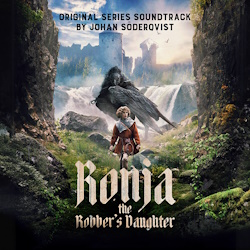 Ronja the Robber’s Daughter, or Ronja Rövardotter, is Swedish fantasy television series for Netflix, based on the classic 1981 book by Astrid Lindgren. The story follows the adventures of Ronja, a young girl born into a band of robbers in a medieval Scandinavian fortress. As Ronja grows up she makes friends with Birk, the son of a rival clan of robbers. As the rivalry between their fathers intensifies, Birk and Ronia eventually decide to run away to the woods, where they embark on a series of adventures with the wood’s indigenous magical creatures. This is the third notable adaptation of the story after a beloved 1984 film and a 2014 Japanese anime; this version was directed by Lisa James Larsson and stars young Kerstin Linden in the title role.
I had never heard of the original Ronja Rövardotter until fairly recently, when a series of internet memes pointed out that composer Ludwig Göransson’s main theme from the recent Star Wars series The Book of Boba Fett had a startling similarity to a particular piece from Björn Isfält’s score for the 1984 film, which is something that Göransson would undoubtedly have seen in his childhood. While I’m certainly more familiar now than I was a few years ago, I’m still not informed enough to know how much (if any) of Isfält’s old score has influenced Johan Söderqvist’s new score, but I do know this: Söderqvist’s score is a ton of fun, a lovely combination of classic orchestral adventure scoring and more ambient modern electronic tonalities, with some clear influences from traditional Swedish folk music.
The main theme, “Ronja the Robber’s Daughter,” is a superb anthem for a chamber orchestra backed by traditional Nordic instruments and a gruff chanting Viking choir, which cleverly balances the innocence and adventurousness of Ronja against the fearsome nature of her ‘robber’ family. Several cues really lean into the Swedish folk music sound, with cues like “Ronja Is Born,” “The Spring Shout,” the rousing “The Robbers’ Life,” “Birk,” “Morning in the Mattis Fortress,” “Winter,” and the quirkily playful “The Rump-Goblins” being especially notable for their unique instrumentation, gently pastoral and spiritual attitude, and sometimes effusive dance-like melodies. Once in a while some of the chord progressions in these cues remind me of Carter Burwell’s score for Fargo, the main theme for which was itself based on an old Scandinavian folk tune.
Söderqvist uses various pipes and flutes, bagpipes and hurdy-gurdys, and what sounds like a nyckelharpa fiddle in many of these cues, to excellent effect, and then in some cues he works in some primal sampled animal sounds too, bringing everything even closer to nature. “The Wolf Song” and the more masculine-sounding “Robber Song” are actual folk songs, sung in Swedish, and are quite lovely.
There is also a gentle and appealing friendship theme for “Ronja and Birk” that crops up with pleasing frequency, and features a prominent medieval-sounding harp as its centerpiece. I especially like the statements and variations in “Ronja Goes to the Lake,” the more subdued and pensive “Ronja’s Longing,” and the determined-sounding “Ronja Goes Skiing”.
Some cues take these sounds and work them into sequences of action and suspense, often alongside a larger orchestral ensemble, varied choral sounds, and some modernistic electronic percussive textures; “Attacking the Borka Cave,” the more abstract “The Gray Dwarves,” “The Assault,” the carefree “Stealing the Gunpowder,” and the vivacious and dainty “Sneaking Out Into the Night” are especially impressive in this regard. Elsewhere, cues “The Rover” and “The Children Play” are expansive and full of joy, but also have a sort of new-age vibe that I really enjoy, while both “It Hurts” and “Rascal and Wilding” has the soft, breathy vocal textures sounds of a lullaby.
Overall, this is an excellent score, one of Johan Söderqvist’s career best, and will especially appeal to anyone who enjoys orchestral scores with a folk music inflection, or who has an affinity for music that has a medieval, pastoral, or new-age vibe running through it. Unfortunately there is no physical CD of Ronja the Robber’s Daughter available, but the score is available to stream and download from most of the usual online sources, on the Music Super Circus label.
Track Listing: 1. Ronja the Robber’s Daughter (1:13), 2. Ronja Is Born (1:02), 3. The Spring Shout (3:44), 4. Attacking the Borka Cave (2:03), 5. The Robbers’ Life (1:47), 6. The Gray Dwarves (2:03), 7. Birk (0:51), 8. Ronja and Birk (1:13), 9. Wile-Wings (2:35), 10. The Wolf Song (2:42), 11. The River (1:30), 12. The Scoundrel (1:17), 13. Out Robbing (1:33), 14. Ronja Goes to the Lake (1:34), 15. Borka’s Theme (1:00), 16. The Assault (2:11), 17. The Children Play (1:21), 18. Ronja’s Longing (1:47), 19. Stealing the Gunpowder (3:18), 20. The Robber Song (1:42), 21. Morning in the Mattis Fortress (0:56), 22. It Hurts (1:38), 23. Winter (0:41), 24. It’s Snowing (1:13), 25. Feast in the Mattis Fortress (0:27), 26. In the Cave of the Wile-Wings (0:35), 27. The Rump-Goblins (1:25), 28. Starving (2:35), 29. Ronja Goes Skiing (1:08), 30. The Friendship of Mattis and Borka (1:21), 31. Sneaking Out Into the Night (2:12), 32. The Robbers Play in the Snow (0:37), 33. The Snow Is Melting (0:46), 34. Ronja Steals Food (1:01), 35. Rascal and Wilding (1:16), 36. Borka Steals from Mattis (1:25), 37. End Credits – Season 1 (2:24), 38. Ronja the Robber’s Daughter – Epilogue (2:15). Music Super Circus, 60 minutes 02 seconds.
-
February 7, 2025 at 7:01 amMovie Music UK Awards 2024 | MOVIE MUSIC UK

Shop at the Movie Music UK Store

Member of the

 MOVIE MUSIC UK