LA STRADA – Nino Rota
 GREATEST SCORES OF THE TWENTIETH CENTURY
Original Review by Craig Lysy
Director Federico Fellini said he conceived the story for his film La Strada from a well of melancholia. He collaborated with Tulio Pinelli and Ennio Flaiano to write the screenplay, but then struggled to find financing. Undeterred, he as director actually began filming before securing financial support as this was a passion project. Eventually Ponti-De Laurentiis Cinematografica signed on for production with Carlo Ponti and Dino De Laurentiis joining as producers. For the cast, Fellini was determined to cast Anthony Quinn as the lead and although repeatedly rebuffed, Quinn eventually agreed to take the part of Zampanó. Joining him would be Giulietta Masina as Gelsomina, Richard Basehart as Il Mato, and Aldo Silvani as Il Signor Giraffa.
The film offers the tragic story of a simple-minded and dreamy young woman Gelsomina. The strongman and street performer Zampanó’s companion Rosa, Gelsomina’s sister has died, and he returns to ask her mother for Gelsomina to take her place. Since the family is impoverished, Gelsomina is sold and joins Zampanó’s show as a clown, dancer and trumpet player. She is a carefree and gentle soul whom Zampanó mistreats and never offers an encouraging word. One day she forges a bond with high wire artist Il Matto, which arouses Zampanó’s jealousy and the two men come into conflict. He eventually kills Il Matto, which breaks Gelsomina’s spirit and she descends into mindlessness and despair. Zampanó abandons her and discovers years later from a family that took her in that she had died, wasted away with a broken spirit. The film ends with great pathos as a drunken Zampanó cries alone on the beach for Gelsomina, full of regret. The film was a commercial success however critical reception was very mixed, with some critics quite harsh. Yet the film has aged well and the consensus today is that it may be Fellini’s greatest film. The film earned two Academy Award nominations, including Best Screenplay, winning one for Best Foreign Language Film.
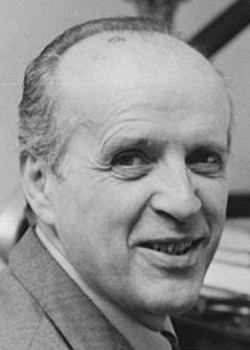 Director Federico Fellini had bonded with composer Nino Rota after their two previous collaborations, The White Sheik in 1952 and I Vitelloni in 1953. Rota once described his collaboration as one that was fated to exist, and that when they worked together, everything always managed to perfectly fall into place. Due to Fellini’s often-disjointed imagery and fragmentary narrative style, Rota’s was always tasked to write a score, which provided cohesion and continuity. Remarkably, it was Rota’s melodious, stanzaic music, which provided the essential gravity, a cohesive unifying force, which held Fellini’s film together.
Fellini first viewed the film after it had been completed and for his soundscape, he conceived four primary themes, including; the Main Theme, which is wistful and born by yearning strings tristi. Notable are its pleading five-note phrases, which never resolve, and portend tragedy. It serves as an idée fixe, which permeates the story providing a unifying thread that holds the film’s tapestry together. The Circus Theme opens with a trumpet glissando, and then offers a festive, vibrant, carnivalesque musical narrative, which perfectly captures the energy and joy associated with circuses. The Showman Theme is linked to the Circus Theme and often joins in its musical narrative, although sometimes it is employed as a separate stand-alone theme, or joined with the Main Theme. It speaks to Zampanò’s bravado and showmanship as he travels around Italy entertaining people with his Strongman show. Rota infuses its four-note phrasing with energy, yet there is also a string borne pathos, which is woven in the notes that presages tragedy, as Gelsomina, will ultimately meet the same fate as her sister Rosa. Gelsomina and Zampanò’s Theme is borne by strings tristi that offers a stepped, descending contour of suffering and despair. Like the Main Theme, Rota never allows it to resolve as she is ruthlessly dominated by Zampanò’s brutality, which snuffs out joy, and her will to live.
(*) “Studio Logo” offers the De Laurentiis studio anthem borne by refulgent fanfare declarations by trumpets trionfante and a retinue of aspirational wordless woman’s choir, which culminate in a regal flourish. We flow seamlessly atop the sad and wistful, string borne yearning of the Main Theme into “Road Theme” a score highlight where Rota introduces his primary themes, which establish the tenor of the film as the film title displays and the roll of the opening credits unfold. At 0:48 we launch into the vibrant and festive Circus Theme. At 1:14 its iteration shifts into a tragic string borne rendering of the theme, which closes the credits. “He Also Gave Me 10,000 Lire…” offers a poignant score highlight as Gelsomina is sold by her mother to strongman Zampanò who is visiting. Gelsomina runs home to discover he has brought news of her sister Rosa’s death. He offers to buy Gelsomina for 10,000 Lire to replace Rosa. Her mother, who is impoverished and widowed with too many mouths to feed, tearfully agrees. Zampanò demonstrates his goodwill by gifting the kids with money to go buy cheese, salami and wine as a disconsolate Gelsomina walks away. Music enters with despair emoted by Gelsomina and Zampanò’s Theme as she says goodbye to family and town folk. At 0:28 the sad Main Theme carries her to the motorized wagon, and we conclude with a molto tragico statement of the Road Show Theme.
“Zampanò Arrives!” was dialed out of the film. It reveals Zampanò, a true showman, preparing to perform his signature act in front of a captive street audience – expanding his chest to break a tightly encircling chain. A wide-eyed Gelsomina watches from the cart as he enlarges his chest to snap the chain. Rota conception was to express the Circus and Showman themes as a rousing marcia Festivamente. Having watched the scene with and without the music, I like the energy the music infuses into the scene. Later in “Gelsomina” we see the two eating along the roadside. A wide-eyed Gelsomina watches Zampanò eat with a sense of bemusement, carefully flinging spoonfuls of her meal away when he is not looking. Music enters as Zampanò fetches her clothes, saying his women must be properly dressed. A sad, almost bleak musical narrative unfolds on their theme as he has her practice introducing him, yet she lacks the energy and bravado he is seeking. At 0:53 film and album lose synchrony. On the album a solo violin triste voices his disappointment as he walks away. Yet in the film, Gelsomina begins a playful dance with a goofy expression animated by her theme.
(*) “Zampanò Teaches Gelsomina” reveals him teaching her how to play the trumpet and drum, as musical accompaniment is needed to announce and enhance his performance. She is not very good and so he tears off a thin branch of a bush and fashions a whipping stick. He uses it to make her play in a manner that supports a bravado introduction to a crowd. She is taken aback, scared, but begins to improve. Rota offers a comic and at times sardonic musical narrative, which weaves together the trumpet glissando, Circus Theme and Showman’s Theme. (*) “Go Inside and Sleep” reveals Zampanò calling Gelsomina to bed, but she is wary and says she will sleep outside. He insists, and throws her into the back of the wagon where they both sleep side by side. Rota supports with a plaintive rendering of the Main Theme. Later she sits up and watches him as he sleeps, as she offers a sad smile and wipes a tear from her eye. (*) “The Farce” reveals him performing the chain breaking act with Gelsomina dressed with clown makeup and playing the drum. He says that following his next act, a farce, his ‘wife’ will pass a hat around. She dons a cap and steps out in front of the crowd empowered by the mocking trumpet glissando, and the Circus and Showman’s Themes. She steals the show with a comic performance, which surprises Zampanò.
“La Trattoria” reveals Zampano taking her out to dinner. They order and music joins as we see them eating lamb spaghetti and wine. Rota supports the trattoria’s ambiance with a festive danza energico. Zampanò deflects Gelsomina’s probing as to the city in Italy, he was born. He is drunk, orders more wine, and then invites a red headed woman to join them. She does and as she offers a toast, we shift at 2:23 to a new trumpet propelled danza festivamente. He shows off his money, and accepts her invitation to go watch the fireworks, ordering two bottles of wine to go. “The Solitude of Gelsomina” reveals Zampanò abandoning Gelsomina on the street, saying she should wait for his return. She sits on the curb all night, and refuses a sympathy offering of soup. A woman passing by advises her of where Zampanò is and she runs off to find him. She finds him passed out next to his cart, and cannot rouse him. A sad, and pathetic musical narrative unfolds, which speaks to her sad, lonely, and unfulfilling life. We open with dejection upon Gelsomina and Zampano’s Theme as she walks away. At 0:49 a bubbling Gelsomina’s Theme supports as she smiles while picking some flowers. As she wanders Rota weaves a tapestry of loneliness with interplay of the Main, Gelsomina and Zampano’s, and her themes.
(*) “Time To Leave” reveals Gelsomina planting tomato seeds in an effort to establish a permanent residence in town. Zampanò finally wakes up hung over and is dismissive of her gardening, and orders her to board as they are leaving. We see her spirits deflate and Rota uses the Main Theme as a travel motif as she sits with her back to him looking back as the town recedes from view. There is both sadness and futility in the notes. She finally turns and asks if he was a womanizer like this with her sister. He rebuffs her saying to shut up and not talk about things like this, and then gifts her an apple. “The Wedding Lunch” reveals Zampanò and Gelsomina performing at a wedding, yet they are completely ignored save three small children. Undeterred Gelsomina announces a dance and Rota supports her playfulness with a trumpet led danza comica replete with glissandi by shifting horns sardonica. “The Sick Child” reveals the matriarch calling Zampanò and Gelsomina to eat. They accept, yet Gelsomina allows herself to be pulled upstairs by two children. A misterioso unfolds as she is taken to the bedroom of Oswaldo, who is sick and bedridden. They ask her to make him laugh and at 0:36 she begins a danza comici. Yet they are interrupted by a stern nun who chases them out.
“Zampanò And The Widow” reveals Zampanò and the matriarch, who is a widow having lost two husbands, eating alone in the house. She says she will not marry again, but adds she is still human with needs, which clearly arouses Zampanò. When Gelsomina joins, she is given a plate of pasta, and the widow invites Zampanò upstairs on the pretext that her first husband’s clothes would fit him, and she no longer needs them. Zampanò offers Gelsomina a wry smile, and tells her to stay put as he goes upstairs. She responds with a wink, and a smile. Rota supports with an accordion led rendering of the Main Theme tinged with sadness. Later in “I’m Leaving!” we see Zampanò trying on his new clothes. Gelsomina is wistful and speaks of a beautiful rainy day, and then asks that he teach her to play the trumpet. He ignores her and then comments on how good he looks in his new clothes. Gelsomina begins to sob and falls into a small pit, refusing his offer to help her climb out. With the crow of a rooster, she climbs out and tells Zampanò she is leaving, adding that she likes being an artist, but does not like him. He calls her an idiot and she storms out saying she is going home. After returning the clothes he gave her, she begins her tearful walk home carried a by a sad and aching rendering of the Main Theme. At 0:36 her dispirited theme joins as she decides to sit by the road.
In “The Three Musicians –” she is surprised by the arrival of a three-man marching band playing a flute, clarinet and horn, which Rota supports with a playful marcia comici. She smiles and happily follows them, her spirits lifted. At 0:41 we segue into “The Procession” with a scene shift to the nearby town, which reveals a religious procession. Rota supports with a plodding processione solenne. At 1:33 a dramatic descent leads to an intensification of the procession’s music, which supports Gelsomina being swept along by the crowd to the cathedral. Later that night in “The Fool On A Wire”, we see a tightrope walker called Il Matto (the fool) crossing high above the town square. An announcer declares that he will now recross the square with a dangerous act – pausing to eat a plate of spaghetti. Rota juxtaposes his rope walk by supporting with a child-like, music box tune. At 0:52 a twirling accelerando supports a wind gust knocking him off balance an he twirling around the rope with his balance bar. At 1:09 musical wonderment supports his audacious head stand, followed by a backwards walk. At 1:17 carnivalesque circus music support Il Matto passing a wide-eyed Gelsomina on the ground as he boards a car. As he looks out the window he locks eyes with the Gelsomina’s admiring, wide-eyed smile, which he returns, his departure crowned with a flourish.
(*) “Get In!” reveals her stranded in the town square harassed by some drunk men. A pathetic rendering of her theme supports, but is interrupted by the arrival of Zampanò. He orders her to get in, but she refuses. He again orders her to get in and she says no, never again and tries to run away. He catches her, slaps her in the face, and compels her to get it, which she does. He then tells her to shut up and drives away. In (*) “Zampanò Joins The Circus”, the next morning Gelsomina is awakened by a braying donkey. She is drawn to a barn by the sound of a violin playing the Main Theme. When she looks in, she sees Il Matto playing a miniature violin, which brings a smile to her face. The moment is lost when Zampanò orders her to sit down and eat with him, and Signor Giraffa, the circus owner and his wife. Zampanò agrees to join the circus and Giraffa shows him the main tent, which can seat four hundred people. Inside he is introduced to Il Matto, a fool, and an acrobat, who is playing a spritely Gelsomina Theme on his miniature violin. Il Matto rubs Zampanò the wrong way and he walks away in a huff with Gelsomina in tow. (*) “The Fool Performs” reveals him performing his acrobatic act supported by a drum roll as he twirls aloft, followed by celebratory fanfare as he returns to the ground and departs festively atop a donkey. He returns, does a clown act dance with two other clowns supported by the festive music and then departs to applause.
“The Giraffa Circus” reveals Giraffa announcing a new act, “The Man of Steel”, empowered by the trumpeting fanfare with horn glissandi, which support Zampanò and Gelsomina’s entry into the ring. Rota empowers their performance with a spritely exposition of the Circus Theme with bubbling woodwinds and pizzicato strings animato, accented with the horn sardonica glissandi motif. Il Matto repeated teases him during his act and afterwards flees as an enraged Zampanò pursues, intent on killing him. (*) “Go To Sleep” reveals Gelsomina helping Zampanò who is still furious at Il Matto, wash up before going to bed. He climbs in and orders her to bed, but she hears Il Matto playing the Main Theme on his miniature violin and she follows its sound to him. They smile and he motions for her to return, which she does carried by his violin. (*) “Zampanò Is Arrested” reveals Giraffa having Il Matto train Gelsomina for a new act while Zampanò is in town. It is a farce with him playing the Main Theme on his miniature violin as she pursues him with trumpet blasts. Zampanò returns and becomes enraged, stopping the act. Il Matto continues to provoke him, and when he douses him with a pail of water, Zampanò goes into a murderous frenzy, chasing him with a knife and throwing the circus into chaos. He is arrested and that night Gelsomina sits despondently in the cart.
“Gelsomina And The Fool” offers a poignant score highlight. It reveals Il Matto inviting her out to sit under the stars. He admits to her that he cannot resist teasing Zampanò. When he asks does she like him, she says no, and he invites her to come with them as part of the circus. She weeps, saying she is of no use to anyone and is sick of living. Il Matto counsels her that she has choices; remain with Zampanò, join the circus, or join him. He adds that everyone, including her, has a purpose in life. Since she decides to stay with Zampanò, Il Matto drives them to the police station to await Zampanò’s release. Rota weaves a poignant tapestry with interplay of Zampanò and Gelsomina’s Theme, the Main Theme and Gelsomina’s Theme. (*) “Good Bye” reveals their arrival at the police station. Il Matto says he will be leaving, gifts her a souvenir, a necklace, says goodbye and walks aways happily as she looks up teary eyed. Their parting is supported by a sad rendering of the Main Theme, which concludes fortissimo as he skips away. When Zampanò emerges from jail, she calls to him, and says she chose to stay with him. Rather than be thankful, he instead says she could have gone with them. As she fetches his coat from the cart, their tragic theme supports. As the drive along the sea, the Main Theme joins with the Showman’s Theme as a travel motif. They stop, and the little girl in her burst forth atop a paean of joy, which carries her as she runs down to the beach. Zampanò takes his shoes off and wades into the water. Yet when she says she believes it was right to stay with him, he replies of course as why would anyone go back to poverty. This upsets her and she berates him as she storms off.
In (*) “Gelsomina Performs” they pick up a nun who was hitchhiking and take her to her convent. They ask for lodging as it will soon be dark and they are low on gasoline. Mother Superior agrees to house them in the barn. They are given dinner, and when a sister inquires if she performs with him, he answers yes playing drums and the trumpet. He orders her to play the trumpet for sister and Gelsomina plays a tender statement of the Main Theme. Later that night as bed down for the night, Gelsomina’s efforts to elicit Zampanò acknowledgement that he values her, that her welfare matters to him, and even an overture to marriage, are gruffly rebuffed. She grabs her trumpet and begins playing the Main Theme, yet Zampanò’s bark snuff’s it out. In the middle of the night, she finds him trying to reach commemorative silver hearts mounted on a wall, but his arm is too big to fit through the lattice. He demands she with her slimmer arms do it, but she refuses, earning a brutal slap to the face. “Departure From The Convent” reveals a nun wiping tears from Gelsomina’s face as Zampanò prepares to depart. She asks her to stay with them, yet Gelsomina declines. As they depart and she looks back at the nun and convent, she forces a smile, yet aching strings tristi emoting the Main Theme with interplay of the Showman Theme inform us of her true feelings. This musical narrative supports a montage of scenic views of them traveling the countryside.
“Farewell To The Fool” was dialed out of the film. It reveals Zampanò stopping when he discovers Il Matto repairing a flat tire roadside. Il Matto puts on a friendly façade as hatred simmers in Zampanò’s eyes. He grabs Il Matto and proceeds to pummel him, despite Gelsomina’s pleading, with the third punch causing his head to smash into a corner edge of the car roof. Il Matto stumbles and collapses causing Gelsomina to cry out and run to him. Zampanò joins them, finds his head bleeding and watches him die as Gelsomina cries out in agony. Zampanò fears a murder charge, and so carries his body and places it under a bridge, and then pushes the car over the bridge. The cue opens with Gelsomina playing an elegiac Main Theme on her trumpet. At 0:28 Il Matto’s voices “Gelsomina, Gelsomina”, which usher in a reprise of the Main Theme on strings tristi. The next day as Zampanò performs his strongman act, he barks at her to offer a drum roll, but all she can do is weep as she keeps repeating “Il Matto is hurt”.
“The Journey Continues” reveals Zampanò traveling during winter across mountainous roads. Rota energetically propels their progress with the Main Theme rendered as a travel motif. He stops the cart and voices his frustration demanding to know what is wrong with her? He says there is nothing to worry about as Il Matto’s death looks like an accident and no one suspects them. He then departs to find food as she weeps inside. As he prepares a fire and collects snow to melt, Gelsomina begins to walk away. He runs to retrieve her and finds her weeping, with a vacant affect, unwilling to speak. Later he brings her food, which she refuses. He orders her to stop crying to no avail and acquiesces to her insistence that he not sleep in the cart with her. The next day at a rest stop, she finally comes out, smiles, and speaks, saying that she likes this place. Rota supports with an eerie pall as a confused Zampanò looks on. Her woodwind borne theme joins as she sits degtached with her thoughts and smiles. She comes over to help make the soup as he voices his grievances, attempting to rationalize Il Matto’s death. When he says they will perform in the next town to make money, she begins to weeps and again says “Il Matto is hurt”. He offers to return her to her mother, and then with angry frustration shouts that he cannot go on like this, as he points to his head and say you are sick up here!
Later in “Zampanò Abandons Gelsomina” she lays down, and says “You killed him”. After she falls asleep, he unloads her clothes, leaves some money, her trumpet, and departs, abandoning her as a sad Main Theme borne by flute triste plays. (*) “Circus Medini” reveals a circus band empowered by a festive musical narrative driving down the town’s main street promoting their circus as a throng of kids follows. (*) “Zampanò Learns of Gelsomina’s Fate” reveals him walking from the circus encampment into town. He buys a spumoni and as he walks, he hears an angelic woman’s voice singing a wordless, la, la, la, la, Main Theme. He sees a woman hanging clothes on a clothes line and asks where she learned that song? She answers, that her father found a girl named Gelsomina on the beach and kindly took her in. She learned the song form her. When he asks where she is, the woman informs him that she lost her will to live, wasted away, and died. Back at the beach acrobats perform for a crowd empowered by a festive trumpet and drum borne narrative. Trumpets empower a march as Zampanò is introduced to perform his strongman act. A Drum roll supports him breaking the chains. In “Zampanò On The Beach – Finale” Zampanò gets drunk, gets into a fight with the bar owner and locals, and wanders to the beach, yelling that he has no friends, and wants to be alone. The cue begins as he sits down, begins to weep uncontrollably in deep anguish, regretting his treatment of Gelsomina and his part in causing her death. At 0:37 we shift from his weeping, to a last, wistful reprise of the Main Theme, that usher in a grand, final statement of their theme, which ends with a flourish.
The audio quality of the score is archival with a number of the cues embedded with sounds from the film. Rota understood that at its core, this was Gelsomina’s story, her journey of self-discovery, and yearning for love and acceptance. Given that this story offers a tragedy, Rota infuses his soundscape with a pervasive sadness, with only fleeting moments of happiness, and festive exuberance during the circus scenes. Worth noting is that with the exception of the Circus Theme, none of the other primary themes resolve until the film’s ending. This is purposeful with Rota informing us of Gelsomina’s futility in finding happiness, the meaning of life, and being loved, since Zampanò is a man incapable of providing them. Also masterful is that Rota’s music often plays in juxtaposition to Gelsomina’s facial expressions, which offer a façade exposed by the supporting music. I recall the lyrics to the song “Smile” by John Turner and Geoffrey Parsons, which speak to this;
“Smile, though your heart is aching
Smile, even though it’s breaking. . .”
Rota’s music empowers this film, gives it heart, and ultimately elicits us to feel the pain of Gelsomina’s broken heart, and her suffering, bringing us to tears as Zampanò weeps on the beach in anguish. In the final analysis, I believe that it is Rota’s music, which allowed Federico Fellini to realize his vison. Folks, this score demands a rerecording as it is what I believe one of Rota’s finest. I recommend that you take in the film to fully appreciate his mastery of his craft.
For those of you unfamiliar with the score, I have embedded a YouTube link to a six-minute suite; https://www.youtube.com/watch?v=tcecJ0WjI38
Buy the La Strada soundtrack from the Movie Music UK Store
Track Listing:
- Tema Della Strada (1:50)
- Mi Ha Anche Dato 10.000 Lire… (1:09)
- E Arrivato Zampanò! (1:33)
- Gelsomina (1:06)
- La Trattoria (4:14)
- Solitudine di Gelsomina (1:44)
- Il Pranzo di Nozze (1:05)
- Il Bambino Malato (1:07)
- Zampanò e la Vedova (1:47)
- Io Me Ne Vado! (0:49)
- I Tre Suonatori – La Processione (1:49)
- Il Matto Sul Filo (1:52)
- Il Circo Giraffa (1:44)
- Gelsomina e Il Matto (1:56)
- Addio Del Matto (1:08)
- Il Viaggio Continua (1:15)
- Partenza Dal Convento (0:41)
- Zampanò Abbandona Gelsomina (0:46)
- Zampanò Sulla Spiaggia – Finale (1:10)
Legend CD 7 (1954/1992)
Running Time: 27 minutes 50 seconds
Music composed by Nino Rota. Conducted by Franco Ferrara. Orchestrations by Nino Rota. Recorded and mixed by XXXX. Score produced by Nino Rota. Album produced by Sergio Bassetti and Maurizo Bultazzoni.

Shop at the Movie Music UK Store

Member of the

 MOVIE MUSIC UK